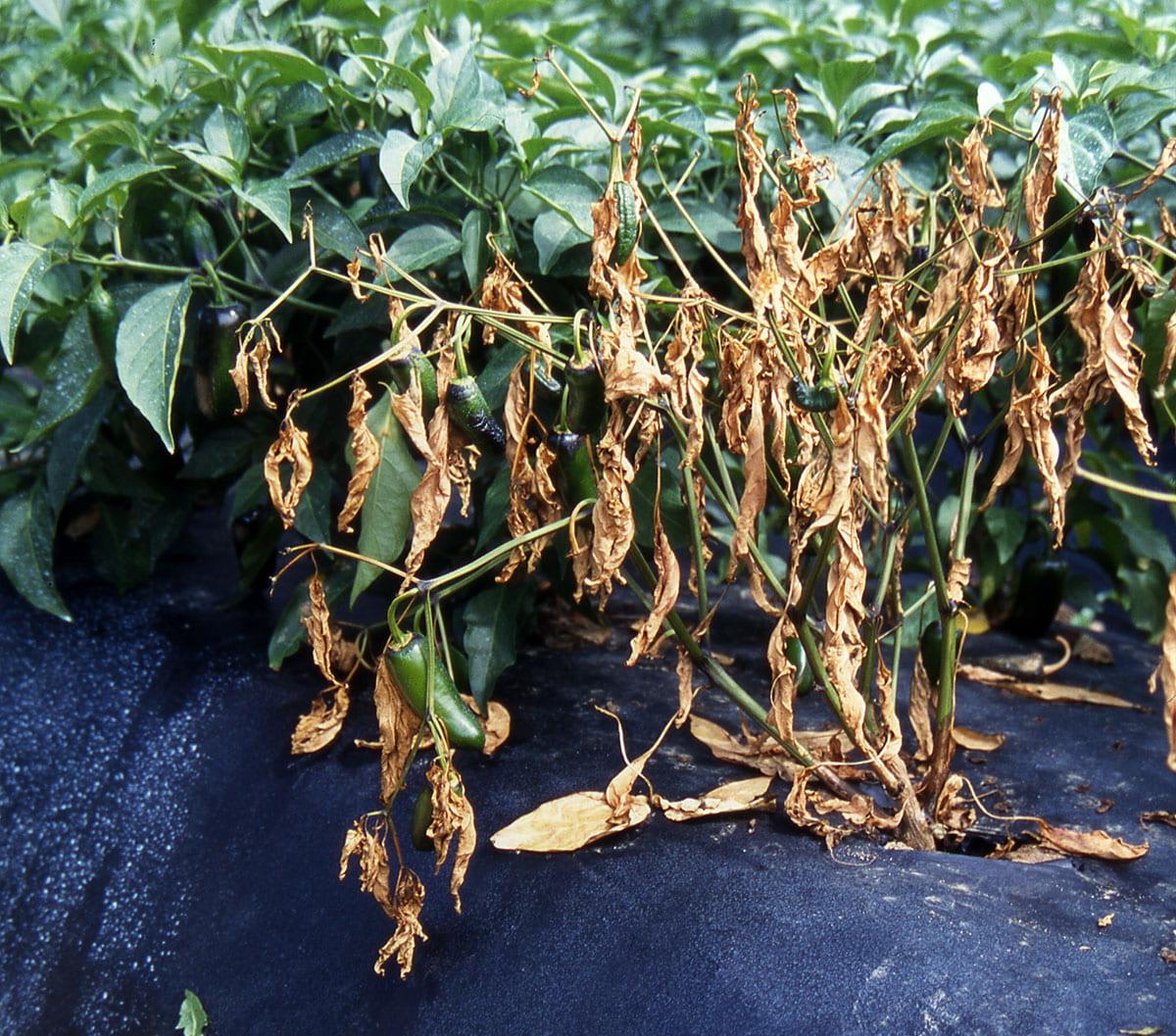
Picture this: You've been caring for your pepper plants all season. They're thriving in your garden or field, flowering beautifully, setting fruit. Then one morning you notice something troubling. A plant that looked perfectly healthy yesterday is now wilting, despite consistent watering. The leaves droop, the stem looks soft and discolored near the soil line, and within days the entire plant collapses and dies.
What happened? Chances are, your pepper has fallen victim to Phytophthora blight, one of the most destructive and devastating diseases affecting pepper growers worldwide. This water-borne pathogen can destroy entire crops in warm, wet conditions, claiming 100% of plants when conditions are perfect for disease spread. The silver lining? With early detection and a proactive management strategy, you can protect your peppers and keep this aggressive disease at bay.
This comprehensive guide walks you through everything you need to know about pepper phytophthora, from identifying the first warning signs to implementing prevention strategies and treatment options that work.
What is Phytophthora Blight?
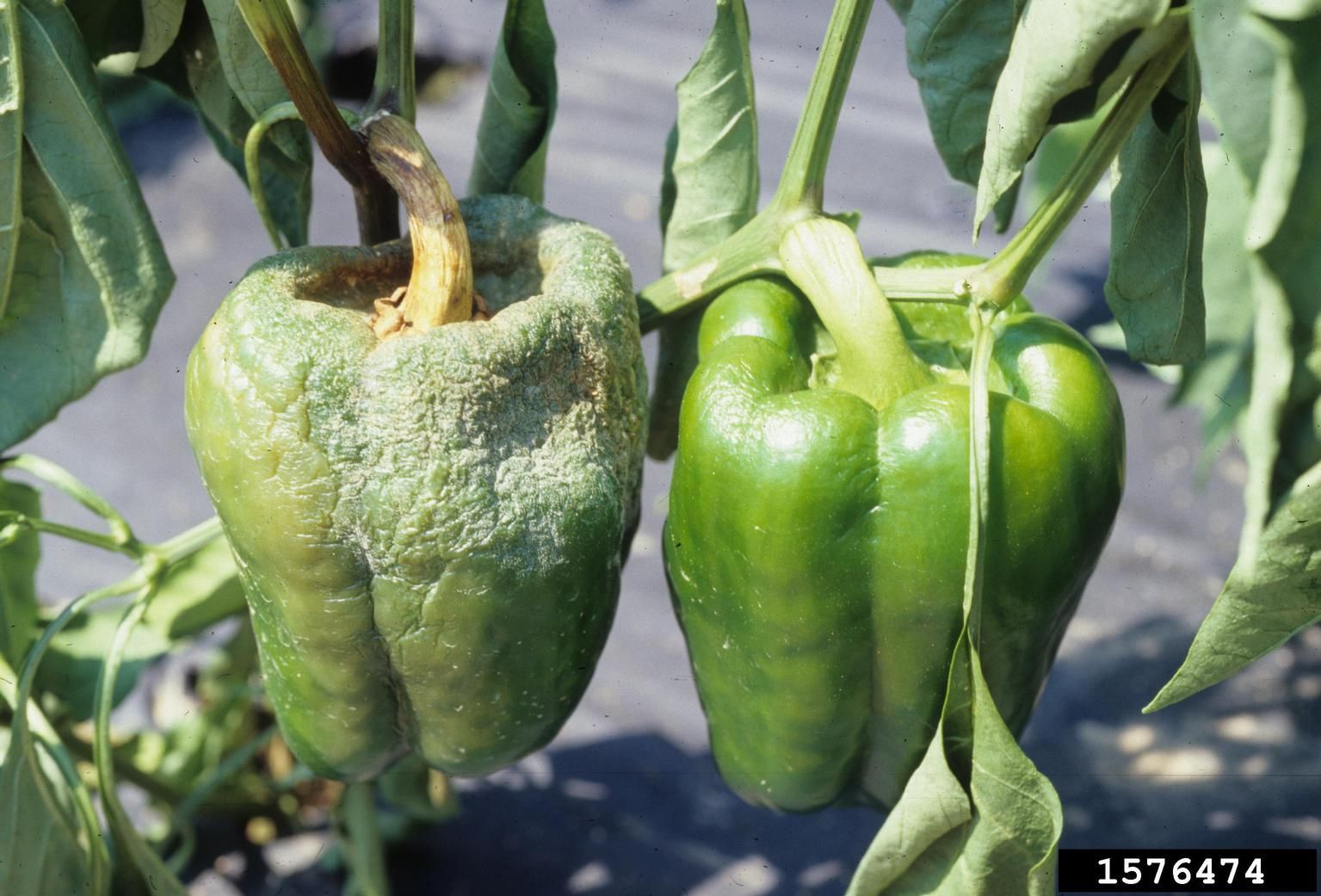
Phytophthora blight sounds like a fungal disease, but it's actually caused by an organism called a water mold, or oomycete. The scientific name is Phytophthora capsici. Despite not being a true fungus, this pathogen behaves like one and spreads with remarkable efficiency through soil and water.
The name Phytophthora literally means "plant destroyer" in Greek, and for good reason. This pathogen is closely related to the organism that caused the Irish Potato Famine in the 1840s, underscoring just how destructive these organisms can be. P. capsici is one of the most aggressive and broad-ranging plant pathogens, affecting peppers, tomatoes, eggplant, cucurbits, beans, and many other crops.
Here's what makes this pathogen particularly dangerous: It produces special survival structures called oospores that can remain dormant in soil for 10 to 14 years, waiting for the right conditions to strike. Once conditions favor infection, the disease cycle moves rapidly. Under ideal warm, wet conditions between 75 and 91 degrees Fahrenheit, the pathogen can destroy an entire pepper crop in just a few weeks.
Unlike many plant diseases that are easier to manage once you understand their triggers, phytophthora is relentless. Once established in a field, management becomes extremely difficult and requires an intensive, multi-pronged approach combining cultural practices, resistant varieties, sanitation, and fungicides.
Identifying Symptoms and Early Signs
Recognizing phytophthora blight early is your best defense. The disease presents differently depending on which part of the plant gets infected, but there are telltale signs to watch for.
The most common symptom on peppers is crown rot, which appears as soft, water-soaked lesions on the stem right at or just above the soil line. These lesions start out dark and water-soaked, almost as if the stem tissue has been submerged in water. As the disease progresses, the lesions expand upward along the stem, sometimes extending several inches. The infected tissue becomes brown, mushy, and eventually girdles or encircles the stem completely, cutting off water and nutrient transport.
When crown rot girdles the stem, the entire plant wilts suddenly despite adequate soil moisture. This sudden wilting despite proper watering confuses many gardeners who assume their plants are underwatered. Within days, the affected plant dies completely.
Peppers can also develop fruit rot when fruits touch contaminated soil or when water containing spores splashes soil onto developing peppers. Fruit rot appears as soft, water-soaked spots that quickly become covered with a white, powdery or cottony growth. This white coating is actually millions of the pathogen's reproductive structures called sporangia. Once fruit rot develops, the fruit becomes unmarketable and may continue rotting even after harvest.
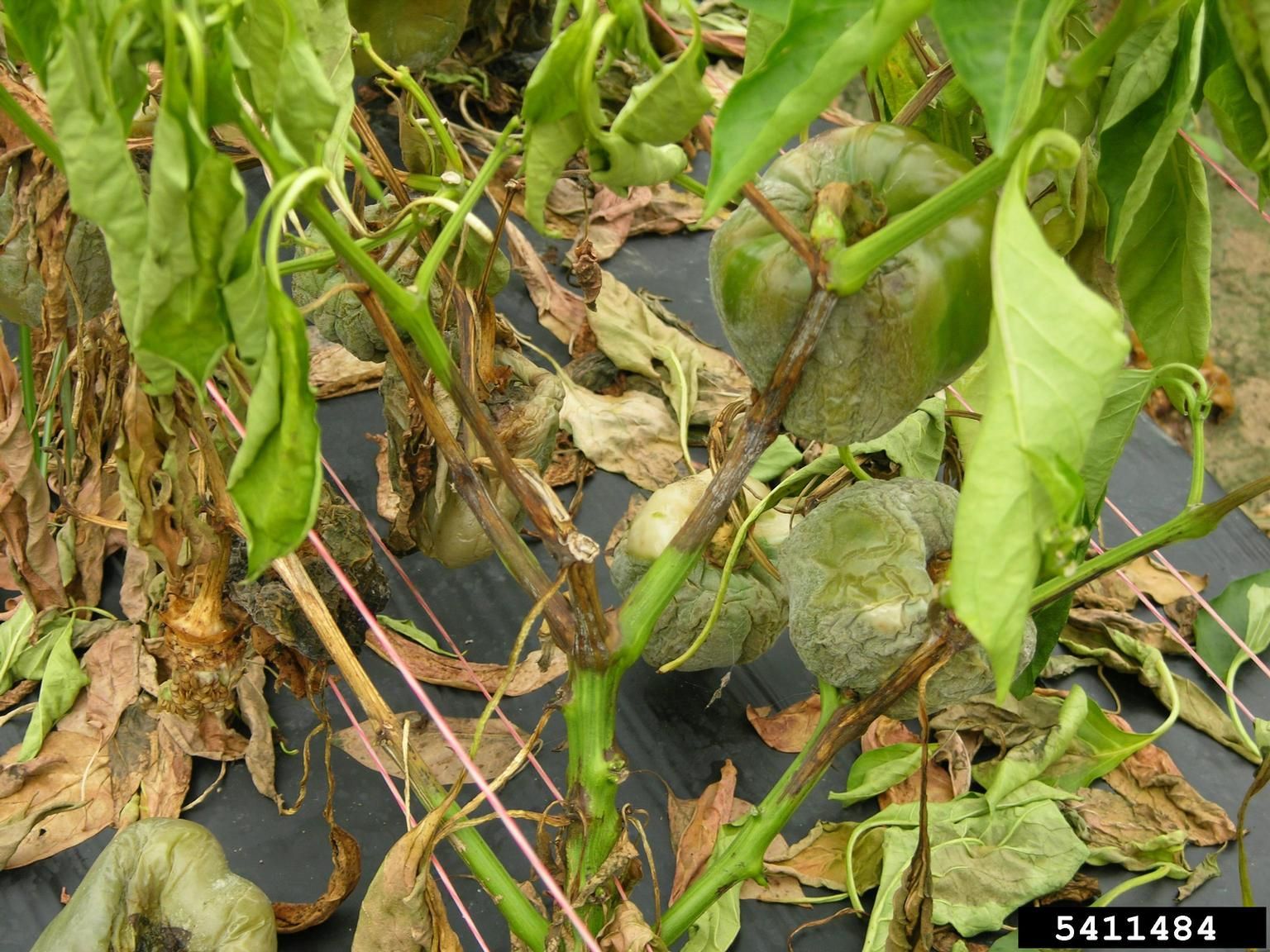
Root rot occurs underground and isn't visible until plant collapse. Roots become brown and mushy when infected, and the plant can't absorb water or nutrients even though soil moisture is adequate.
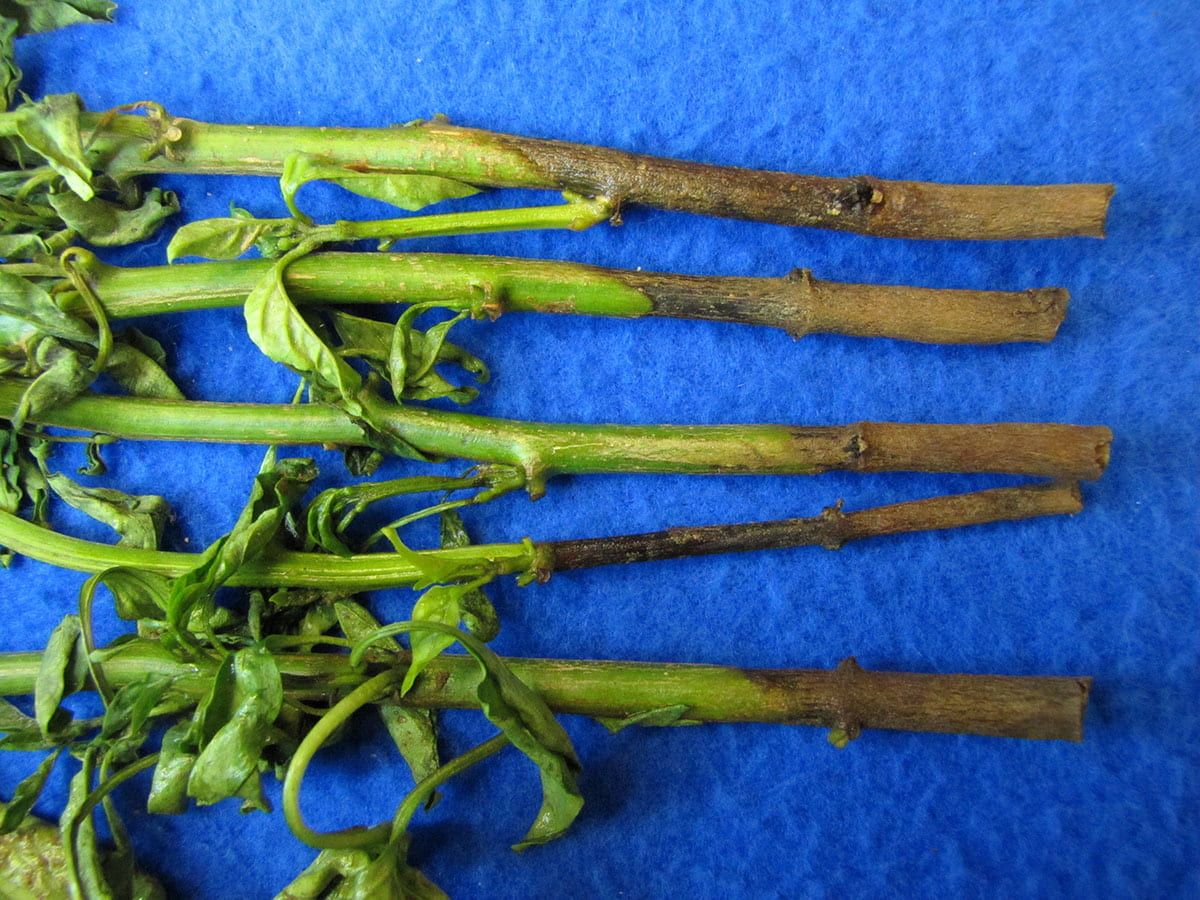
Field pattern: Phytophthora blight symptoms rarely appear randomly throughout a field. Instead, they first appear in low-lying areas where water pools after rain or irrigation. If you spot wilting pepper plants in areas that tend to stay wet or hold water, phytophthora should be high on your suspect list.
The disease progresses rapidly once it starts. A small localized area of infection can spread to the entire field within two to three weeks under favorable conditions.
Environmental Conditions and Disease Spread
Phytophthora blight thrives under very specific conditions, and understanding these triggers is key to prevention. The pathogen is completely dependent on moisture for survival and reproduction.
Temperature and moisture requirements are the critical factors. The disease develops fastest when soil temperatures sit between 75 and 91 degrees Fahrenheit with saturated or near-saturated soil. Temperatures above 95 degrees slow disease development, and temperatures below 60 degrees essentially halt it. During spring and fall cooler periods, the disease slows dramatically. But during summer when temperatures spike and heavy rain or irrigation creates saturated soils, conditions become ideal for explosive disease spread.
Soil saturation is the main trigger. The pathogen needs 24 to 48 hours of saturated soil to complete its life cycle. Once soil is waterlogged, dormant oospores germinate and release zoospores, which are motile spores with tails that can actively swim through soil moisture to reach plant roots. It's not a passive process. These zoospores literally swim toward pepper roots, drawn by chemical signals released by the plant.
Water splash and overhead irrigation accelerate disease spread. Once the disease starts, abundant new spores (sporangia) form on infected tissue. These spores are easily splashed onto above-ground plant parts by rain or overhead irrigation water. Each sporangium can release dozens of zoospores, and these swimming spores spread the disease rapidly through the field. One infected fruit can harbor millions of spores.
Irrigation water quality matters. If you're irrigating from a pond, creek, or other surface water source that has received runoff from an infested field or neighboring farm, you're essentially introducing the pathogen directly to your clean field. The pathogen survives beautifully in standing water. Well water is much safer because it hasn't been exposed to surface contamination.
Field history and equipment movement: Once the pathogen establishes in a field, it persists indefinitely. Even after five or more years without growing susceptible crops, viable oospores remain in the soil. Equipment moved from infested fields to clean fields can carry contaminated soil containing millions of spores. Shoes, transplants, and tool handles are common transmission routes.
Weather patterns: Extended rainy periods or unusually wet seasons create the perfect storm for phytophthora spread. Growers in areas with monsoon seasons or those who received above-average rainfall often see phytophthora problems spike dramatically in wet years.
Prevention Strategies: Your Best Defense
Since phytophthora is so difficult to control once established, prevention is truly your best strategy. An ounce of prevention is worth a pound of cure with this pathogen. Implement these strategies before planting season begins.
Site Selection and Drainage
The foundation of phytophthora management starts with where you plant. Never, ever plant susceptible crops including peppers in low-lying fields prone to flooding or poor drainage. Even if your field has never had phytophthora before, poor drainage creates ideal conditions for disease development.
Choose fields with naturally good drainage. The soil should slope or have natural water flow paths that remove standing water within 24 hours of heavy rain. If water pools in certain areas of your field, don't plant peppers there. Plant non-host crops like corn or beans instead.
Before planting, conduct a drainage assessment. Dig holes and see how quickly water drains. If water stands for days, that field is too risky for peppers. Consider investing in drainage improvements like installing tile drainage or creating swales to channel water away from planting areas.
Sanitation Practices Are Non-Negotiable
Disease-free status is your best asset. Never import soil from unknown sources on equipment when moving to a new field. Always assume borrowed equipment may carry the pathogen unless you know for certain it came from a clean source.
Clean all equipment thoroughly before moving from an infested field to a clean field. Use a power washer to remove all soil from undercarriages, tire treads, and all crevices. Don't compost or dump pepper culls from other farms in your fields. That fruit may carry the pathogen, and you'll be introducing spores directly into your soil.
Use only disease-free, certified transplants from reputable nurseries. If you produce your own transplants, use well water for irrigation rather than surface water that might contain spores.
Water Management Is Critical
This is where prevention truly shines. Water management alone can prevent phytophthora establishment in many situations.
Use drip irrigation instead of overhead sprinklers. Drip systems keep water confined to the root zone and don't create splashing that spreads spores. If you must use overhead irrigation, do it early in the morning so foliage dries quickly. Never irrigate at night when leaves stay wet for extended periods.
Water deeply but not excessively. Peppers don't need constant wet soil. Allow soil to dry between waterings to the point where it's moist but not soggy. Fix leaky irrigation lines immediately. A constantly seeping line creates perfect conditions for pathogen activity.
Use well water or clean surface water for irrigation. Never draw irrigation water from ponds or creeks that receive runoff from other farms, especially those known to have phytophthora problems.
Resistant Varieties Offer Real Protection
Pepper varieties with genetic resistance to phytophthora are now available, and using them is one of the most effective prevention tools. Varieties like Paladin show moderate to good resistance to crown rot and fruit rot caused by P. capsici. Revolution, Declaration, and Aristotle also offer some resistance, though not as much as Paladin.
Resistant varieties don't provide 100% protection, but they significantly reduce disease risk. Research shows that susceptible varieties like Red Knight and Alliance can suffer 60 to 100% plant mortality in infested fields, while Paladin suffers only 5 to 26% mortality when combined with fungicide treatments.
If you're growing in a field with a history of phytophthora or in a wet climate, always choose a resistant variety. Check seed catalogs for phytophthora resistance ratings (look for "P" designations).
Fungicide Prevention Programs
Certain fungicides can be applied preventively before symptoms appear. The most commonly recommended products contain mefenoxam or metalaxyl as active ingredients. These work best when applied as a soil drench at transplanting time, creating a protective barrier around developing roots and the crown where infection typically starts.
Products like Ridomil Gold combine mefenoxam with copper for broader protection. Newer products include fluopicolide (Presidio), mandipropamid (Revus), and combination products like Zampro that contain two different active ingredients for improved efficacy.
Important note: Apply preventive fungicides before disease symptoms appear. Waiting until you see wilting or lesions means the pathogen has already established, and fungicides become much less effective at that stage. Start preventive programs at transplanting and follow recommended spray schedules throughout the season.
Crop Rotation with Realistic Expectations
Crop rotation helps but won't eliminate the pathogen from infested soils. Because oospores survive so long, rotating crops won't provide the clean slate that rotation offers for other diseases. However, planting susceptible crops only once every three years minimum does help prevent spore accumulation.
Rotate peppers with non-host crops like corn, beans, or small grains rather than other nightshade family crops like tomato, which also host the pathogen.
Treatment and Management Options for Established Disease
If phytophthora has already appeared in your field, management becomes more challenging. There is no cure once plants are infected, but these strategies can reduce losses.
Fungicide Management for Existing Disease
If your field is infested, fungicide programs must be more aggressive. Rather than preventive applications, you need a season-long spray schedule starting at planting and continuing through harvest.
Research shows that combining genetic resistance with weekly fungicide applications provides the best results. For example, the resistant variety Paladin treated with Revus or Presidio weekly had only 5 to 6% plant mortality compared to 20 to 100% mortality in untreated susceptible varieties.
Best performing fungicides include:
Mefenoxam plus copper (Ridomil Gold/Copper)
Fluopicolide (Presidio)
Mandipropamid (Revus)
Ametoctradin plus dimethomorph (Zampro)
Fluazinam (Omega 500F)
Always apply fungicides preventively, before visible symptoms appear. Never wait to spray until you see disease. Additionally, alternate between different fungicide chemistries to prevent resistance development. Using the same fungicide repeatedly year after year leads to resistant pathogen populations that no longer respond to treatment.
Water Management Intensifies
In infested fields, water management becomes even more critical. Every effort to prevent soil saturation pays dividends.
Improve field drainage by subsoiling or breaking beds to allow water to infiltrate and move through soil. Install drainage trenches between bed rows. Use raised beds at least 9 inches high with a central crown that sheds water. Break beds (dig trenches through them) to prevent water from pooling in low areas.
Minimize irrigation. Use drip application only, apply water in early morning, and avoid creating wet conditions. Some successful growers reduce irrigation frequency in infested fields, accepting slightly drier conditions as a tradeoff to prevent disease.
Roguing Out Infected Plants
When phytophthora appears in a localized area, immediately remove infected plants and a border of asymptomatic plants around them. Dig out the plants completely, including roots. Dispose of infected material far from the field. Do not compost.
After roguing, break beds or trenches through the affected area to sever root connections and prevent zoospores from swimming up the rows to infect adjacent plants. This physical barrier can slow disease spread within the field.
Integrated Pest Management Approach
No single method controls phytophthora effectively. Combine resistant varieties, fungicides, water management, sanitation, and cultural practices into an integrated program. Research consistently shows that combining two or three methods provides better results than relying on any single approach.
For example: Plant resistant variety Paladin, apply weekly fungicide sprays starting at transplanting, use drip irrigation to avoid soil saturation, and scout fields regularly for early symptom detection.
Harvest Strategically
In infested fields, harvest fruit early and frequently. Pick fruit as soon as it reaches market maturity rather than waiting for full color development. Asymptomatic infected fruit (fruit that looks healthy but is already infected internally) will develop rot symptoms within one to two weeks of harvest. Harvest in the morning before temperatures rise, and inspect harvested fruit regularly during storage and transport.
Do not display or store peppers from infested fields in the same location as peppers harvested in previous years, even if the field was left fallow or planted to a cover crop. The pathogen survives in soil and can infect healthy fruit stored on infested ground.
Organic Management Options
Organic growers have limited chemical options. The only OMRI-approved effective product is fixed copper fungicide formulations. Copper provides moderate control but is less effective than synthetic options. Copper works best when applied preventively and combined with excellent cultural practices and resistant varieties.
Soil amendments with biocontrol organisms show promise in research. Products containing Trichoderma harzianum or Bacillus subtilis applied to soil before planting may help suppress the pathogen, but availability is limited and results are inconsistent.
Early Detection and AI-Powered Diagnosis
Early detection is your secret weapon against phytophthora. Catching the disease in its earliest stages, even when symptoms are just barely visible, allows you to implement management strategies before widespread plant death occurs. Yet diagnosing phytophthora correctly in the early stages can be challenging. Crown rot can resemble other root rots. Fruit rot might look like other fungal diseases. Many growers struggle to distinguish phytophthora from similar-looking conditions.
This is where technology can help. Using tools like Plantlyze's AI-powered plant diagnosis tool (visit plantlyze.com) can help you identify symptoms quickly and receive management recommendations specific to your crop and climate. Snap a photo of a crown lesion, wilting plant, or fruit rot symptom and receive instant feedback. This eliminates guesswork and speeds up your response time significantly.
Once you've identified the disease through professional diagnosis or AI tools, cross-reference the specific management strategies in this guide matched to your particular climate zone and growing system. Early action backed by accurate diagnosis is the best insurance against crop losses.
Conclusion and Action Steps
Phytophthora blight is serious, but it is manageable with a proactive, multi-pronged approach. The key is starting prevention measures before the disease arrives rather than scrambling to control it once it's established.
Prevention is far, far easier than treatment. Take these action steps immediately:
Assess your field's drainage. Is water removal adequate after heavy rain? If not, make drainage improvements before planting.
Source resistant pepper varieties. For your next planting, select Paladin or other phytophthora-resistant varieties.
Implement water management. Switch to drip irrigation if you're currently using overhead systems. Fix any irrigation leaks immediately.
Practice strict sanitation. Clean all equipment when moving between fields. Never import soil of unknown origin.
Monitor regularly during the growing season. Scout fields weekly, especially after heavy rain. Look first in low-lying areas prone to water accumulation.
Plan your fungicide strategy. If your field has a history of phytophthora, plan preventive fungicide applications starting at transplanting.
The best phytophthora strategy combines cultural practices, resistant varieties, good water management, sanitation, and when necessary, targeted fungicide applications. No single method works alone, but together they create an environment where phytophthora cannot establish or spread.
Your pepper crop is worth protecting. Start your prevention strategy today.
References
University of Connecticut Extension: Managing Phytophthora Blight (Phytophthora capsici)
https://ipm.cahnr.uconn.edu/managing-phytophthora-blight-phytophthora-capsici-chemicals-or-alternatives/