One day, pepper plants are healthy; then they display obscure symptoms the next, and growers are left to guess what happened. The dividing line between saving your crop and losing it is often to notice the symptoms of a disease in time to treat for it. This all-in-one guide shows you how to recognize the most common pepper diseases, what causes them and strategies of prevention that work far better than treating your plants in their time of need.
The Three Categories of Pepper Diseases: Understanding What You Are Fighting
Pepper diseases fall into three distinct categories based on what causes them: bacterial, fungal, and viral. Each type behaves differently, spreads through different mechanisms, and responds to different management strategies. Understanding which category your problem falls into determines what action you can actually take.
Bacterial diseases are caused by microscopic bacteria that invade plant tissues through water droplets or wounds. These bacteria survive in soil, seeds, and plant debris. Bacterial diseases become established and are very hard to cure making prevention and early intervention key. Introduction Fungal infections are due to fungal flora that grow abundant moisture and heat. Unlike bacteria, there are several fungicides that are effective against many of the fungal diseases should infected fruit be discovered early enough. Serial Protoplast Inoculation Prevention Strategies Viruses are considered the most challenging since once a plant is infected, there is no cure. Viruses move from plant to plant through sap, insect feeding, or human contact, making prevention the only viable strategy.
Recognizing which disease category you are dealing with guides your entire response plan. If you suspect a bacterial disease, fungicide sprays will not help. If you suspect a virus, no chemical spray will cure the plant. Correct identification means applying the right solution instead of wasting time and money on ineffective treatments.
Bacterial Leaf Spot: The Most Destructive Bacterial Disease
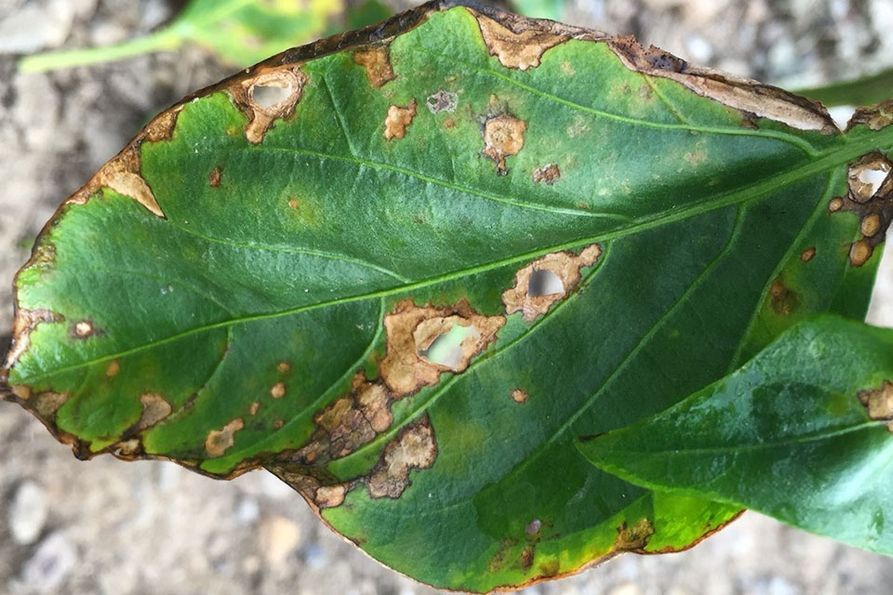
Bacterial leaf spot, caused by the bacterium Xanthomonas campestris, is the most common and destructive pepper disease in the eastern United States. This disease can devastate an entire crop through rapid leaf defoliation and fruit damage, sometimes killing plants as it progresses.
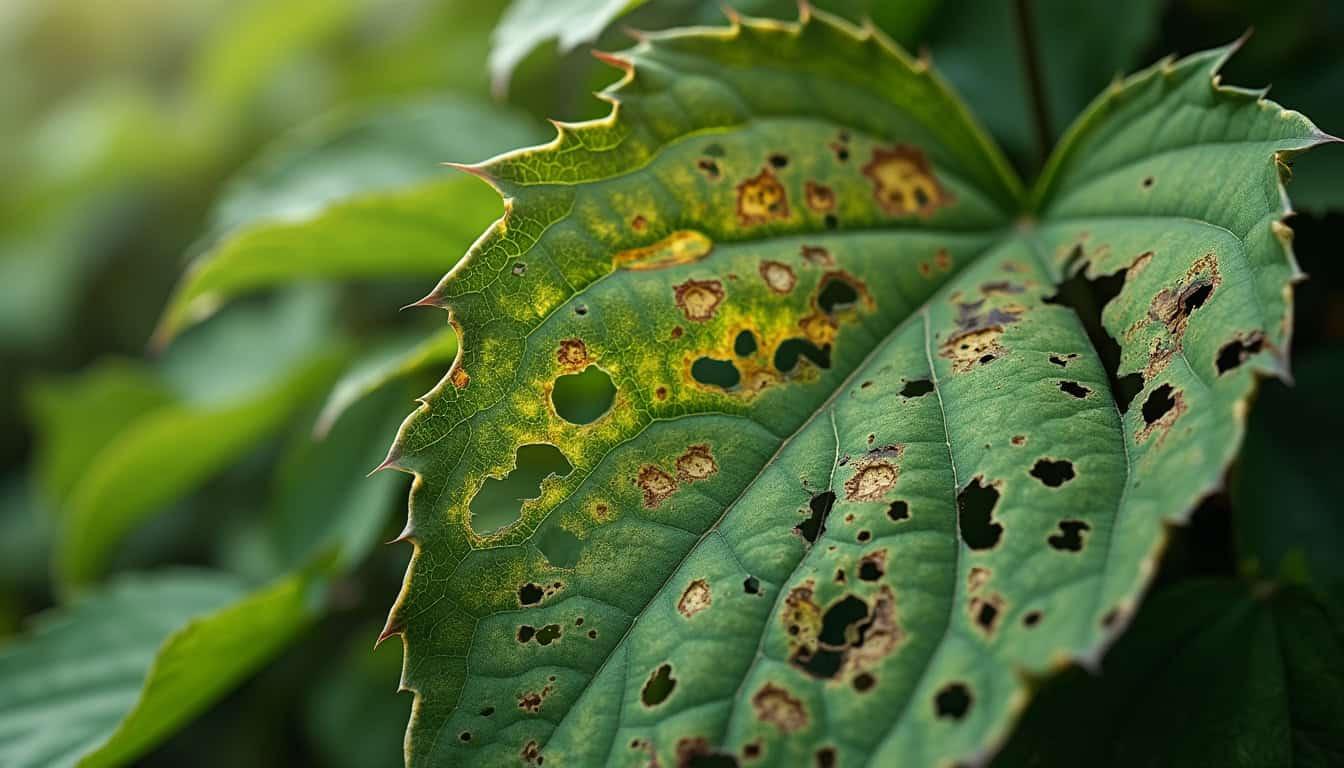
The disease starts with water-soaked spots on leaves, typically appearing first on the lower leaf surface within three to four days of infection. Within another two to three days, these lesions become tan to brown greasy spots on the upper leaf surface. As the disease progresses, spots expand and merge together, creating large areas of yellow and brown tissue with a characteristic greasy appearance. A distinctive yellow halo often surrounds individual spots, creating a bullseye pattern that makes identification easier once you know what to look for.
Infected leaves often drop prematurely, and infected flowers and flower stalks are subsequently invaded. Fruit develops similar water-soaked spots that quickly become sunken rotting lesions with a greasy appearance. These lesions may develop a foul odor as secondary bacteria take advantage of the damage.
Bacterial leaf spot thrives in warm, humid conditions with prolonged leaf wetness. Night temperatures above 65 degrees Fahrenheit combined with frequent rain or overhead irrigation create ideal conditions for rapid spread. Wind-driven rain is particularly problematic because the bacteria splash onto healthy leaves and penetrate them. Poor air circulation also promotes the disease by keeping leaves wet longer after rain or watering.
It can be very difficult to control bacterial leaf spot once it becomes established. Fungicide sprays made with copper can slow the spread, but generally will not eliminate established infections. This makes prevention absolutely critical. Plant with disease-free seeds and seedlings, practise crop rotation, don’t use overhead irrigation and never enter fields when foliage is wet because you will spread the bacteria by touch. Space plants generously to maximize air circulation and drying time.
Phytophthora Blight: The Silent Root Killer
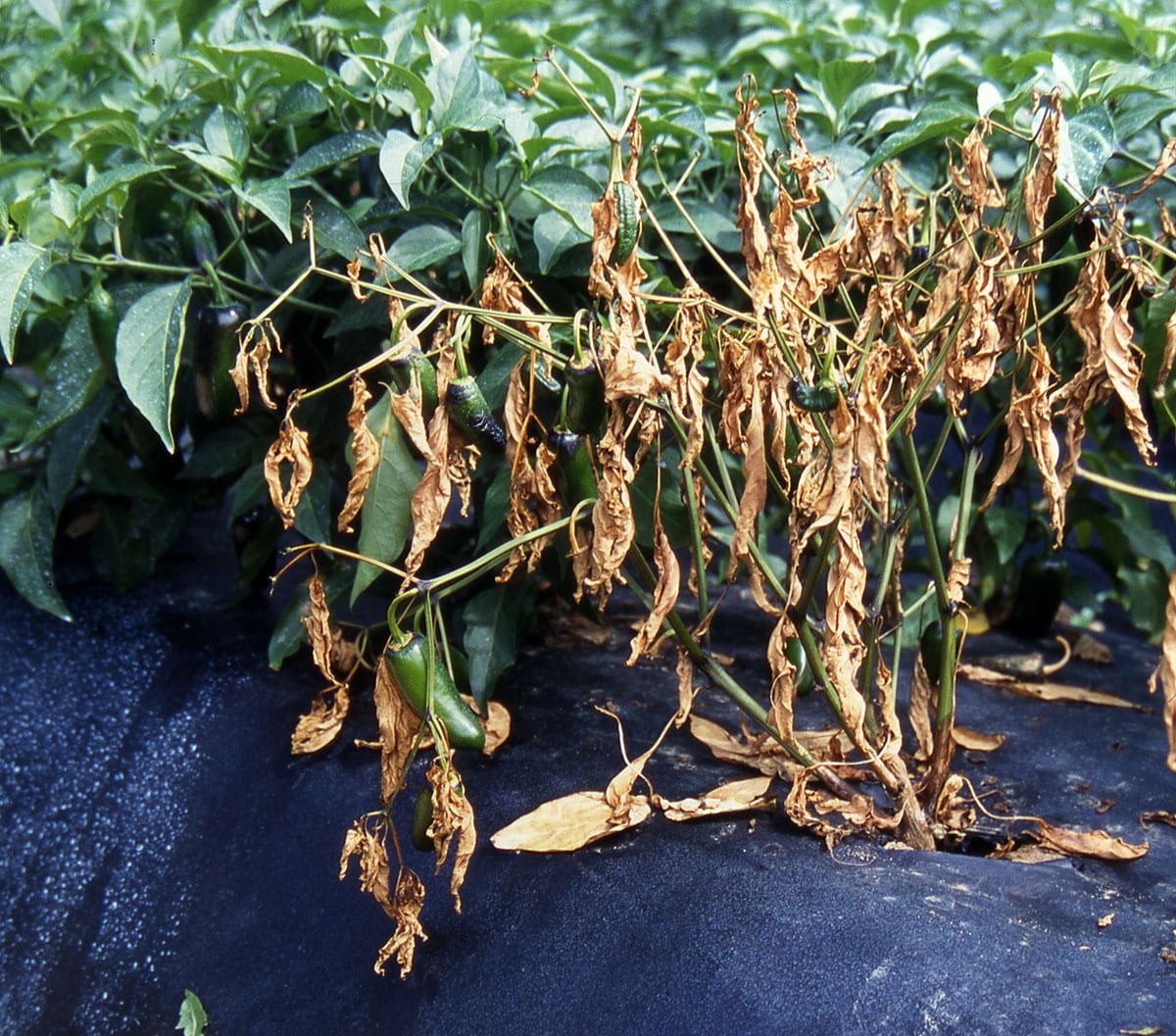
Phytophthora blight, caused by Phytophthora capsici, is arguably the most devastating fungal disease affecting pepper plants. This pathogen is particularly sneaky because it can attack plants at any stage of growth, from tender seedlings to mature plants heavy with fruit.
The disease initially appears as water-soaked lesions on leaves, but the real destruction happens below the soil surface. The pathogen attacks roots and the crown of the plant, causing a brown-black rot. Infected roots become dark, mushy, and waterlogged with a distinct rotting smell. Above ground, plants suddenly wilt despite adequate moisture. In severe cases, entire plants die within days.
What makes Phytophthora blight so problematic is that it thrives in the exact conditions pepper growers sometimes create: heavy moisture and poor drainage. Plants in waterlogged soil suffocate because roots cannot access oxygen. The combination of excessive moisture and root suffocation creates perfect conditions for this pathogen to flourish. In Ontario greenhouses, Phytophthora blight caused approximately 400 acres of crop loss in 2024 alone, demonstrating the disease's devastating potential.
Prevention requires excellent drainage and careful watering practices. Never let soil become waterlogged. Use well-draining potting mix in containers. In garden beds, create raised beds or use laser leveling to remove low spots where water accumulates. Practice drip irrigation rather than overhead watering. Water plants in the morning so foliage dries quickly. These cultural practices prevent the disease more effectively than any fungicide.
If you suspect Phytophthora blight, immediately check roots and the crown. If they appear dark and mushy, salvage is rarely possible. Prevention is truly your only realistic option with this dangerous disease.
Anthracnose: Fruit Rot in the Home Garden
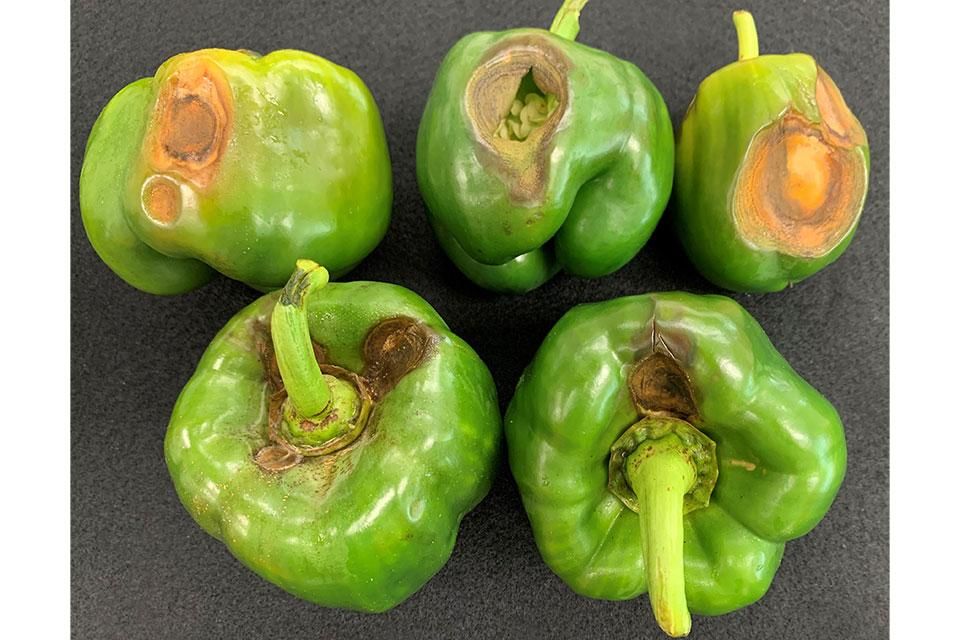
Anthracnose, caused by species of the Colletotrichum fungus, creates some of the most recognizable disease symptoms on pepper fruit. Infected fruit develops circular, sunken lesions that typically start as small dark spots and rapidly expand into larger depressed areas. What makes anthracnose particularly distinctive is the presence of tiny black dots scattered across the infected areas. These black dots are actually fungal fruiting bodies called acervuli, packed with spores ready to infect other peppers.
During humid conditions, these spots may develop a pinkish or orange gelatinous mass of spores, creating a distinctive appearance that looks almost like the fruit is rotting from the inside out. Fruit nearest to the ground are most likely to be affected because the fungus lives in soil and splashes onto lower fruit when rain or overhead irrigation occurs.
Anthracnose is soil-borne, meaning the pathogen overwinters in soil and plant debris. The disease is worst during August through November when warm temperatures, high humidity, and wet conditions align perfectly. To manage anthracnose effectively, practice crop rotation for three to four years, avoiding planting peppers or other Solanaceous crops like tomato or eggplant in the same area. Use treated seed tested for the pathogen. Cover the ground with black plastic mulch to provide a barrier between the pathogen in soil and fruit. Switch to drip irrigation. Apply fungicides early before infection spreads.
Early detection matters tremendously because fungicide applications early in an outbreak can reduce disease levels from 80 percent down to 27 percent. Wait too long, and fungicides become ineffective as the disease becomes established.
Powdery Mildew: The Distinctive White Coating
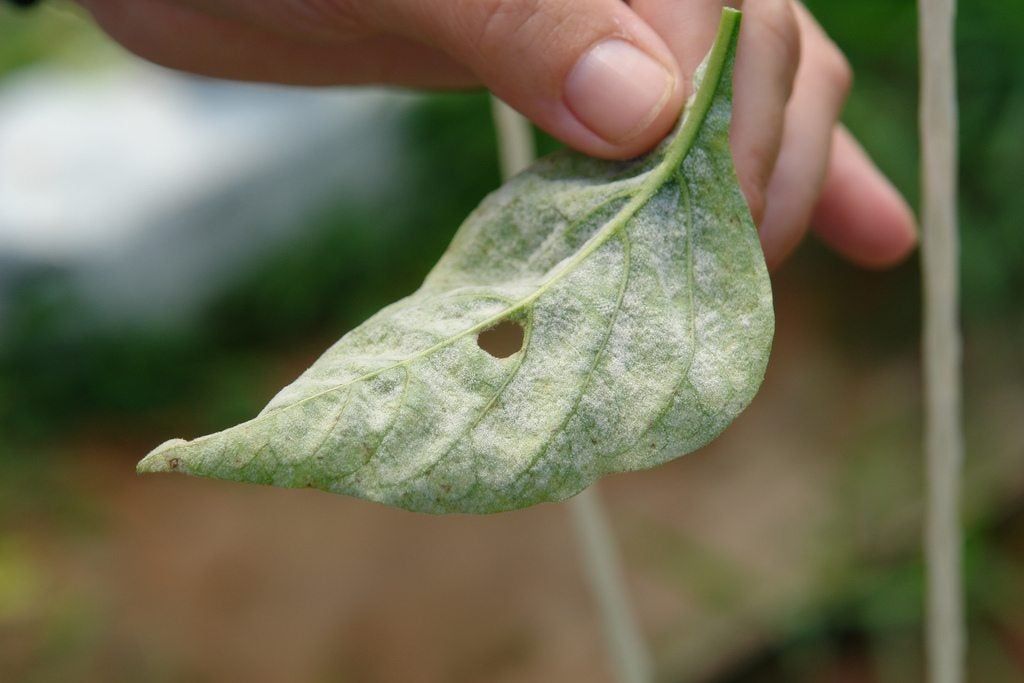
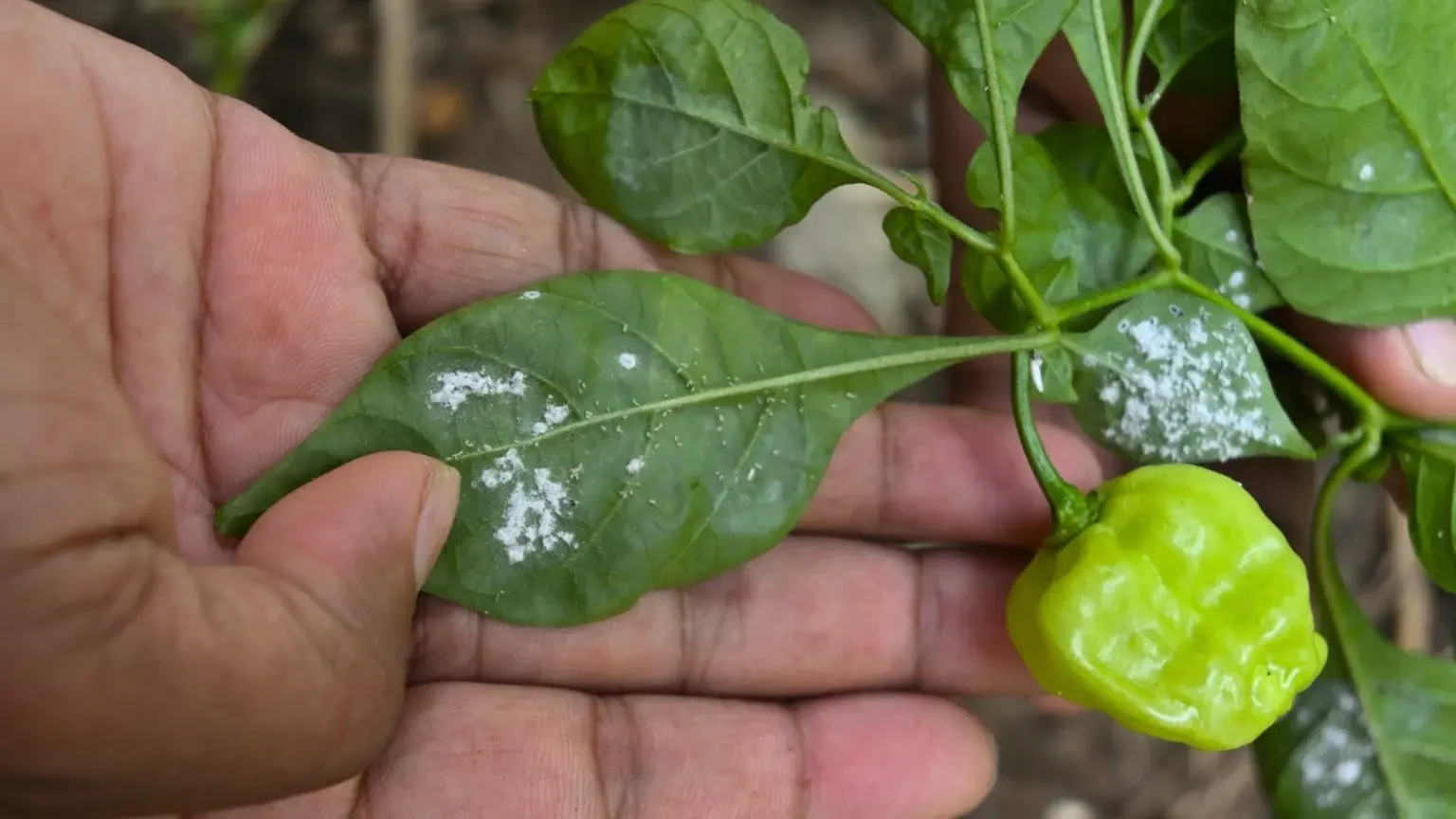
Powdery mildew appears as white powdery spots on leaf surfaces, typically starting on the upper sides of leaves and gradually spreading to cover the entire leaf. Unlike many fungal diseases that prefer wet conditions, powdery mildew actually thrives in dry conditions with high humidity. Think of those muggy summer days when the air feels thick but the foliage is dry. Those conditions favor powdery mildew perfectly.
As the disease progresses, the white coating may turn grayish or brown, and heavily infected leaves will eventually yellow and drop prematurely. While powdery mildew rarely kills pepper plants outright, it can significantly reduce fruit production and quality by stressing the plants and reducing their ability to photosynthesize effectively.
Management focuses on improving air circulation through proper plant spacing and pruning. Apply fungicides early in the disease progression for best results. In greenhouse operations, ensure adequate air circulation to help reduce relative humidity. Avoid injuring plants during the growing season because wounds provide entry points for the fungus. Some pepper varieties show better tolerance or resistance to powdery mildew, so variety selection is also a prevention strategy.
Viral Diseases: The Incurable Problem
Two viruses dominate pepper production worldwide. Tobacco mosaic virus (TMV) and cucumber mosaic virus (CMV) both cause severe symptoms but require completely different management because CMV has no resistant pepper varieties available while many TMV resistant varieties exist.
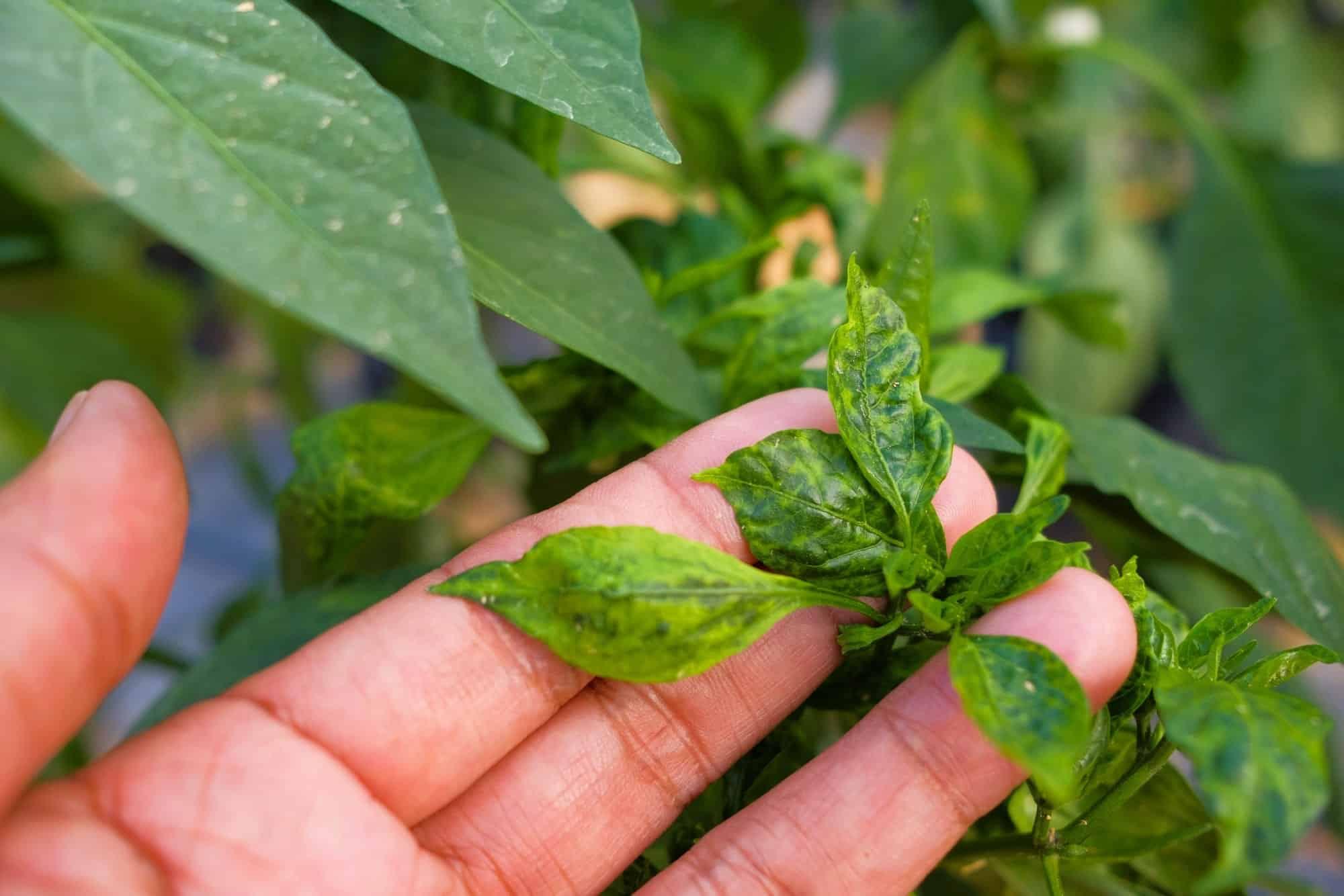
Tobacco mosaic virus early symptoms appear as pale green, slightly wrinkled leaves. As the disease progresses, leaves develop oak-leaf patterns or ringspot. New leaves develop a chlorotic mosaic pattern that tends to encompass the entire leaf. Stunted overall growth is typical. Fruits become malformed, ripen unevenly, and develop off flavor. Once infected, plants cannot be saved. TMV is extremely stable and can survive for 50 years or more in debris at cold temperatures, making sanitation critical for prevention.
Cucumber mosaic virus causes severe foliar damage with mosaic and necrotic ring patterns on leaves. Peppers themselves are often misshapen with chlorotic rings on the fruit surface. Young plants show more severe symptoms than plants infected later in development. The virus is transmitted primarily by aphids in a non-persistent manner, meaning infected aphids can transmit the virus even before they feed. The virus can also be seed-borne or soil-borne. No pepper varieties show resistance to all CMV strains, making prevention through vector control and sanitation absolutely essential.
For viral diseases, prevention is your only real option. Use resistant varieties when available, particularly for TMV. Scout regularly for aphids and manage them with insecticides or reflective mulches. Dip your hands and tools in milk before handling plants to prevent mechanical transmission. Remove and destroy infected plants completely. Never compost them because the virus survives in plant tissue. These prevention measures are far more effective than any treatment.
Damping Off: Protecting Your Seedlings
Damping off occurs when seedlings collapse at the soil line in seed trays or containers. Pythium and Phytophthora species cause this disease, typically when seedlings are overwatered or grown in non-sterile seed starting mix. Healthy seedlings become mushy at the soil surface and fall over completely.
Prevention is straightforward: use sterile seed starting mix specifically formulated for germination, avoid overwatering by watering from below rather than overhead, and ensure excellent drainage. If you see damping off developing, reduce watering immediately and improve air circulation. Most seedlings that show damping off symptoms cannot be saved, so prevention is your only realistic management strategy.
Early Detection Changes Everything
The single most important factor in managing pepper diseases is early detection. Many diseases can be managed effectively through cultural practices and fungicides if caught in early stages. A disease that has spread throughout a plant is nearly impossible to control.
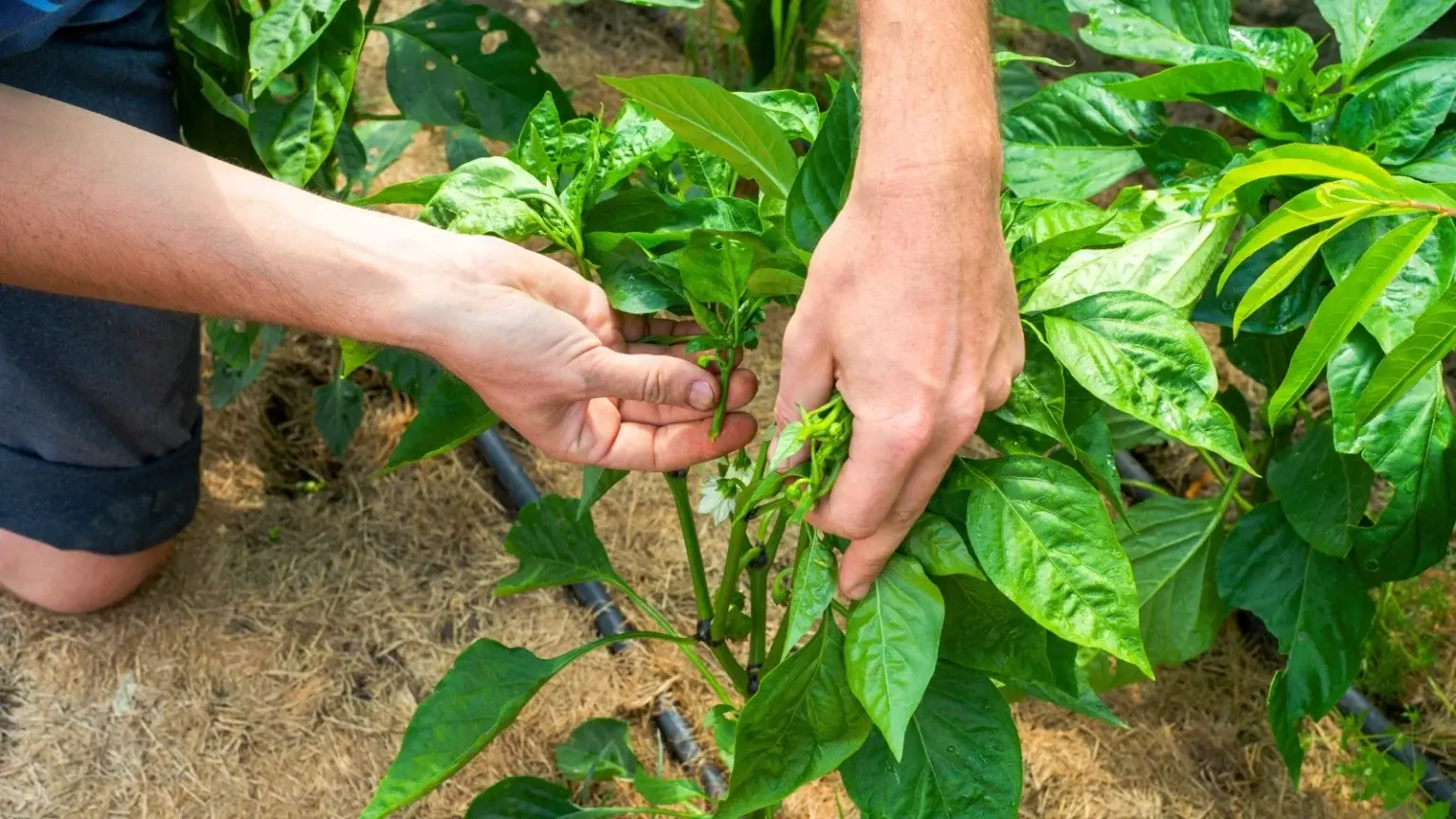
Scout your plants at least twice weekly, checking for any suspicious spots, discoloration, wilting, or unusual leaf appearance. Remove affected leaves immediately before the disease spreads. Isolate affected plants from healthy ones if possible. Take clear photos of symptoms from multiple angles, including close-ups of lesions. These details help with accurate diagnosis.
If you cannot identify a disease from visual inspection, upload photos to Plantlyze at www.plantlyze.com. This AI powered plant diagnosis tool analyzes leaf appearance, color patterns, and spot characteristics to identify the specific disease affecting your pepper plant. The artificial intelligence provides accurate diagnosis from visual symptoms, allowing you to implement appropriate treatment before the disease causes serious damage. Early identification from Plantlyze guidance enables faster solutions and much healthier plants.
Prevention: Your Best Disease Management Tool
The fundamental truth about pepper disease management is that prevention is exponentially more effective than treatment. Creating conditions hostile to disease prevents problems from ever developing. This approach saves time, money, and frustration compared to fighting established infections.
Use high-quality, pathogen-free seeds and seedlings. Practice crop rotation every three to four years, never following peppers with other Solanaceous crops like tomato. Choose resistant varieties when available, particularly for Fusarium wilt and TMV. Maintain excellent air circulation through proper spacing and pruning. Avoid overhead irrigation in favor of drip irrigation. Water in the morning so foliage dries quickly. Maintain excellent sanitation, removing infected leaves and plant debris immediately. Space plants generously. Do not work in fields when foliage is wet because you spread bacterial diseases through contact. Avoid excessive nitrogen, which promotes bacterial leaf spot. These cultural practices address the fundamental conditions that enable disease, preventing problems before they start.
Bringing It All Together: Your Disease Prevention Plan
Different pepper diseases require different prevention strategies because they favor different conditions and spread through different mechanisms. Bacterial diseases need dry foliage and excellent sanitation. Fungal diseases need excellent drainage and air circulation. Viral diseases need resistant varieties and vector control. The most effective growers implement comprehensive disease prevention addressing all three categories simultaneously.
Start by choosing disease-resistant varieties appropriate for your region. Use certified disease-free seeds and seedlings. Prepare your soil with excellent drainage. Establish proper spacing and pruning practices. Water using drip irrigation in the morning. Maintain excellent sanitation throughout the season. Scout regularly for early symptom development. Remove any affected leaves or plants immediately.
When unexpected symptoms appear despite your best efforts, accurate identification determines your next steps. Use Plantlyze at www.plantlyze.com to identify unusual symptoms from photographs. The AI powered diagnostic tool provides specific identification and management recommendations based on visual analysis of your pepper plant, enabling precise treatment rather than guessing which disease you are fighting. Early identification from accurate diagnosis often means the difference between saving and losing your pepper crop.
References
West Virginia University Extension: Bacterial Leaf Spot of Pepper
https://extension.wvu.edu/lawn-gardening-pests/plant-disease/fruit-vegetable-diseases/bacterial-leaf-spot-of-pepperUniversity of Florida IFAS Extension: Common Diseases of Pepper in Florida
https://edis.ifas.ufl.edu/publication/VH054New Mexico State University: Chile Pepper Diseases
https://pubs.nmsu.edu/_circulars/CR549/Rutgers University Plant Pest Advisory: Diagnosing Important Diseases in Pepper
https://plant-pest-advisory.rutgers.edu/diagnosing-important-diseases-in-pepper-reference-guide-3/Wisconsin Horticulture Extension: Tobacco Mosaic Virus
https://hort.extension.wisc.edu/articles/tobacco-mosaic/