Your lettuce heads look perfect until harvest day. Everything is growing beautifully, on schedule, thriving. Then you pull back the outer leaves and find it: brown, crispy leaf tips on the inside leaves. The problem has been developing for weeks, invisible until it's too late. The entire head is now unmarketable. This scenario plays out thousands of times every season for lettuce growers worldwide. But here's the thing—tip burn is one of the most preventable problems in lettuce cultivation once you understand what's actually happening.
Tip burn costs growers millions of dollars annually in lost crops and reduced marketability. The frustrating part is that it develops silently, hidden inside the head where you can't see it until severe damage has occurred. Yet with the right knowledge and environmental controls, you can completely eliminate this problem from your operation. This guide reveals the actual science behind tip burn, exposes common misconceptions, and provides proven treatment and prevention strategies used by leading commercial growers.
If tip burn is already affecting your current crop, you can get instant analysis of the damage severity using Plantlyze's AI plant diagnostic tool, which identifies the exact conditions causing the problem and recommends targeted solutions.
Understanding What Tip Burn Really Is
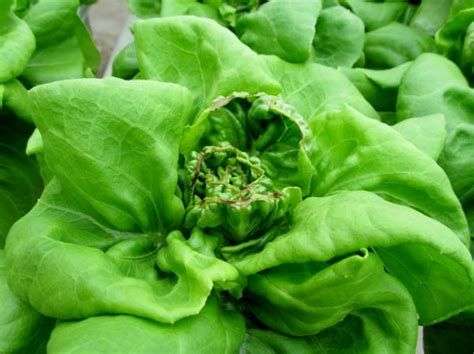
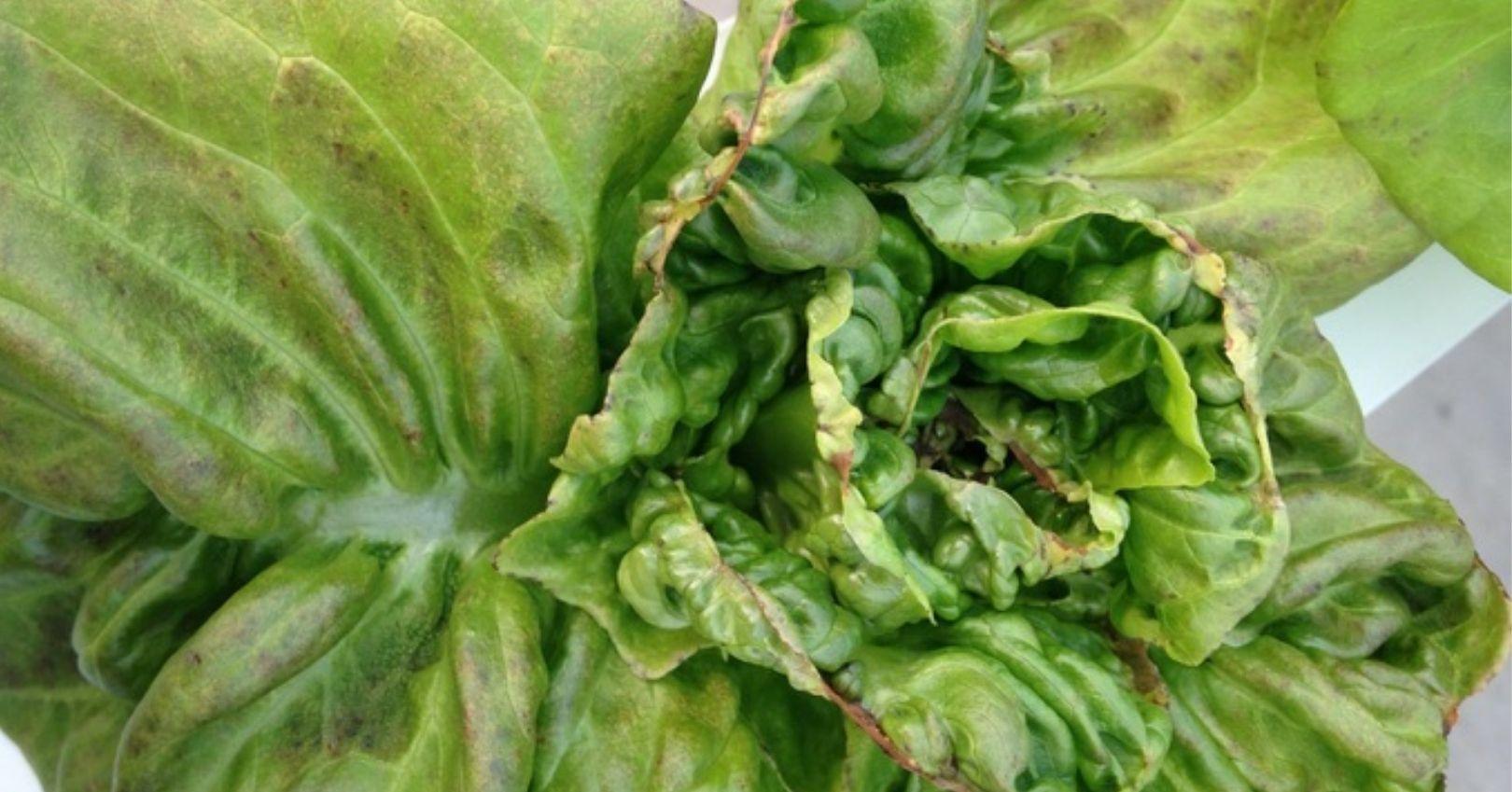
Lettuce tip burn is a physiological disorder, not a disease. This distinction matters because it changes how you fix the problem. The condition appears as browning, necrosis, and curling of leaf tips and margins, primarily on young leaves enclosed in the center of the lettuce head. The affected tissue dies because cells collapse due to calcium deficiency in that specific location.
Here's where most growers go wrong: they assume tip burn means the soil or nutrient solution lacks calcium. Testing often reveals adequate calcium levels everywhere in the system. This seeming contradiction confuses growers and leads them down the wrong treatment path. The reality is more nuanced.
Calcium is a fundamentally immobile nutrient. Unlike nitrogen or potassium which can move from old leaves to new leaves, calcium cannot redirect itself. Once calcium enters a leaf, it stays there. Calcium moves through plants only one way: with the water flowing upward through the xylem (the plant's water-conducting tissue) in response to transpiration. When a leaf transpires water through its surface, that transpiration pulls water and dissolved calcium upward from the roots. But here's the critical insight: if a leaf isn't transpiring, calcium cannot reach it, even if calcium is abundant in the roots.
This is why inner leaves of lettuce heads are vulnerable. These young, tightly enclosed leaves sit inside a high-humidity microclimate created by the surrounding older leaves. Because they're protected from the drying air around them, they transpire much less water than outer leaves. With reduced transpiration comes reduced calcium transport. By the time calcium deficiency becomes visible as tip burn, weeks of poor calcium delivery have already damaged the developing tissue.
The Environmental Factors That Trigger Tip Burn
Understanding the triggers is the first step toward prevention. Tip burn develops when environmental conditions simultaneously promote rapid growth while restricting transpiration. Think of it as the plant growing too fast while calcium delivery can't keep pace.
High light intensity accelerates plant growth dramatically. In plant factories and greenhouses with intense lighting, lettuce grows extremely fast. This rapid growth means the plant demands enormous quantities of calcium in new tissues. A daily light integral (DLI) above 16 to 17 mol per square meter per day consistently triggers tip burn in susceptible varieties. The irony is that more light produces faster growth but also suppresses transpiration in the tightly enclosed inner leaves, creating a perfect storm for tip burn development.
Humidity and air circulation interact in complex ways. High daytime humidity reduces the vapor pressure deficit, in other words, it makes the air thick and heavy with moisture so that water cannot easily leave the surface of the leaves. Low nighttime humidity reduces root pressure. Root pressure is defined as the water pressure which pushes up nutrient solution through the plant at night when stomata are closed and transpiration is zero. Some growers think high humidity prevents tip burn, but the opposite is often true. What actually prevents tip burn is high nighttime humidity specifically combined with good daytime air circulation. The high humidity at night maintains root pressure and guttation (the process where root pressure pushes nutrient solution to leaf margins), while daytime air circulation promotes transpiration in outer leaves.
Limited air movement around the growing tip creates a stagnant microclimate. Without adequate air circulation, the meristem (the actively growing tip of the plant) sits in a pocket of still, humid air. This restricted airflow amplifies the humidity barrier. Even if overall greenhouse humidity is moderate, the microclimate immediately around the growing tip can be saturated.
Plant density directly affects air circulation uniformity. When lettuce plants are packed too densely, air can flow over the tops of the canopy but cannot penetrate to the inner regions of individual plants. The result is excellent environmental conditions on the outer surface and terrible conditions inside each head. The ideal density for hydroponic lettuce is 24 to 25 heads per square meter. Higher densities exacerbate tip burn risk because the stagnant air inside the dense canopy cannot reach the developing leaves.
Temperature fluctuations and salinity stress also contribute. Rapid temperature changes stress the plant and disrupt water uptake. High salt levels in the nutrient solution (high electrical conductivity) reduce root pressure and overnight guttation, preventing calcium from reaching leaf margins. These secondary factors are less critical than light and humidity, but they amplify tip burn risk when combined with other stressors.
Proven Treatment Strategies That Work
The good news is that once you understand the physiology, effective solutions become obvious. These strategies work because they restore calcium transport to the growing meristem.
Vertical airflow directed at the growing tip is the most effective single intervention. Research consistently shows that downward airflow aimed specifically at the meristem eliminates tip burn in up to 100% of plants under summer greenhouse conditions, even without other modifications. The mechanism is elegant: the moving air creates a local pocket of low humidity right where new leaves are developing. This low humidity increases transpiration in those critical inner leaves, pulling calcium upward and restoring nutrient delivery to the affected tissue.
The optimal air velocity ranges from 0.4 to 0.7 meters per second directed downward into the plant canopy. This isn't hurricane force wind that stresses plants. It's gentle enough that you'd barely feel it if you put your hand in it. The key is uniformity and consistency. Twenty four hour a day mechanical ventilation maintains constant low humidity around the meristem and continuous calcium transport. Some growers use fans with timers, but round the clock airflow produces better results because calcium delivery happens at night when other growth processes occur.
Humidity management requires balancing contradictory needs. High humidity at night (above 95%) increases root pressure through guttation, pushing nutrient solution upward through the plant. But high daytime humidity (above 70% to 80%) suppresses transpiration and restricts calcium movement to new leaves. The solution is variable humidity control: maintain high humidity overnight to maximize overnight calcium transport, then reduce humidity during the day to increase transpiration in rapidly growing tissues. This is most practical in controlled environment agriculture where humidity can be actively managed.
Light intensity must be strategically managed, particularly in plant factories. Keep the daily light integral below 17 mol per square meter per day for most lettuce varieties, especially during the critical phase from 10 to 25 days after transplanting when tip burn symptoms typically emerge. Some growers reduce light intensity by adjusting photoperiod length or lowering lamp intensity. Yes, this slightly reduces yields, but the trade off is worthwhile because the crop is fully marketable rather than being discarded due to tip burn.
Temperature stability prevents stress-related tip burn triggers. Avoid rapid temperature swings. Maintain consistent day and night temperatures within a 5 to 8 degree range. Extreme heat combined with high humidity creates particularly challenging conditions for calcium transport.
Nutrient solution management supports calcium delivery. Ensure adequate calcium in your hydroponic nutrient solution (typically 140 to 160 mg per liter). But equally important is maintaining balanced potassium and ammonia levels. Excess potassium or ammonia interferes with calcium uptake at the root level. Many growers adding extra calcium actually make the problem worse by creating nutrient imbalances that suppress calcium absorption.
Maintain nutrient solution pH between 5.5 and 6.8. Outside this range, calcium chemistry changes and availability decreases even when levels are adequate. Monitor pH at least weekly in hydroponic systems. Electrical conductivity should stay within appropriate ranges for your specific nutrient formulation. Excessive salt levels reduce root pressure and nighttime guttation, preventing calcium from reaching leaf margins.
Modern calcium mobilizing biostimulants represent a newer approach. Research published in 2025 shows that calcium mobilizing chemical biostimulants can reduce tip burn severity by 85 to 88% without reducing final harvest yields. These biostimulants improve calcium transport through both the symplastic pathway (through cells) and apoplastic pathway (through cell walls), effectively delivering calcium to the meristem by mechanisms beyond transpiration-based transport. At concentrations of 0.5 milliliters per liter, these products eliminate tip burn in most cases. This approach is particularly valuable for growers in situations where meristem aeration or humidity control are difficult to implement.
Genetic Solutions: Selecting Resistant Cultivars
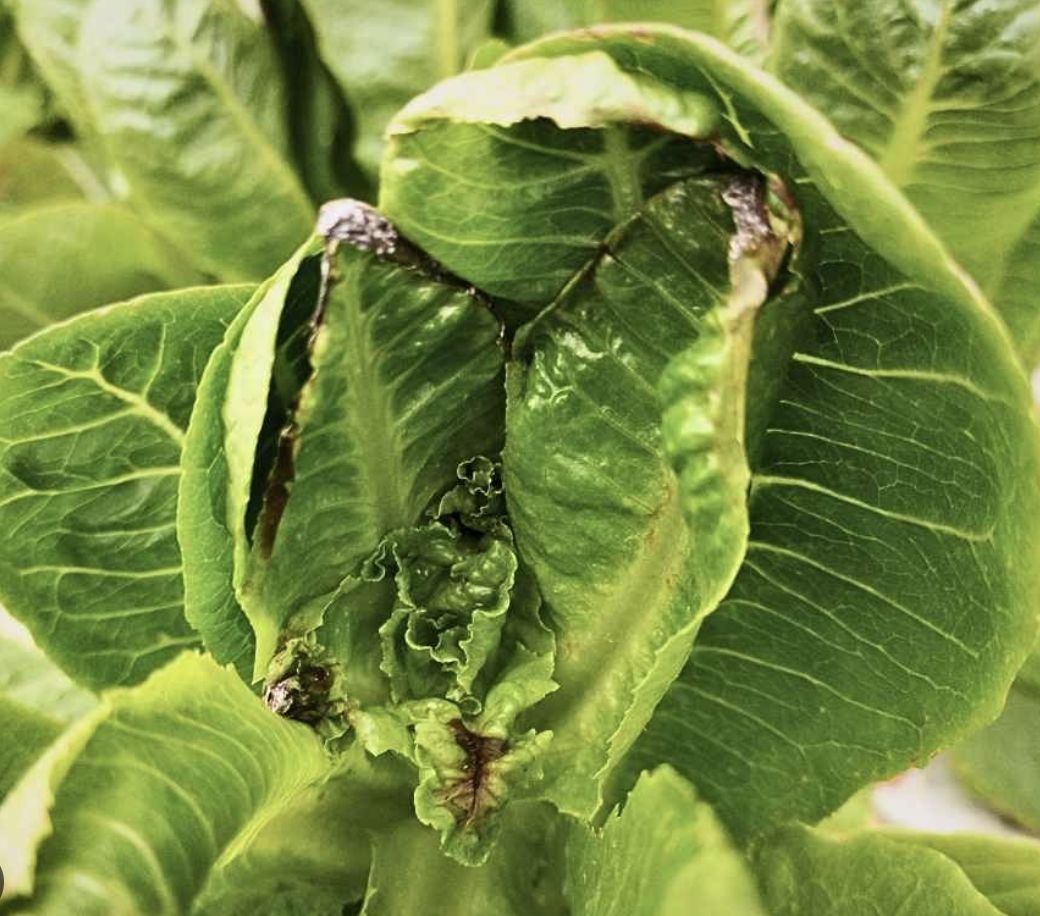
Not all lettuce varieties are equally susceptible to tip burn. Cultivar choice is one of the most significant factors influencing tip burn risk, and selecting the right variety for your season is a straightforward prevention strategy.
The most tip burn resistant iceberg lettuce cultivars include Casino, Kingsway, Ponderosa, Raider, Toronto, Silverado, and Rabello. Among romaine types, Cosmic, Donatus, and Verdi show excellent tip burn resistance. For green leaf lettuce, Nevada, Tropicana, and Azirka varieties demonstrate good tolerance. Red leaf varieties with strong tip burn resistance include Rouxai.
Conversely, buttercrunch, dragoon, and many traditional butterhead lettuce varieties are highly tip burn sensitive. These varieties develop visible symptoms within 16 to 24 days of transplanting under conducive conditions. If you're growing during seasons when tip burn is likely (summer months in most regions), select resistant varieties rather than trying to overcome genetic susceptibility through environmental management alone.
Genetic resistance is independent of yield potential, meaning resistant varieties aren't inherently lower yielding than sensitive ones. This makes cultivar selection a win-win strategy. You get the same yield with dramatically reduced tip burn risk simply by choosing the right genetics for your production window. Test resistant cultivars in your specific growing environment to confirm performance before committing to large production runs.
Complete Prevention Protocol: Step by Step
Rather than trying to manage individual factors independently, successful tip burn prevention requires a systematic approach addressing all variables simultaneously.
Week before transplanting: Test and calibrate all equipment. Verify that ventilation fans work uniformly across the growing space. Test humidity and temperature sensors. Ensure nutrient solution pH and EC are correct. Select a tip burn resistant cultivar appropriate for the season.
At transplanting: Establish baseline environmental readings. Document humidity, temperature, light intensity, and air velocity at the plant canopy level. Set up continuous monitoring. Begin establishing the humidity protocol: high overnight (above 95%), moderate to low daytime (60 to 75%).
Days 1 to 10 after transplanting: Monitor plants daily for stress signs. Keep light intensity moderate. Ensure air circulation reaches every plant, not just the tops of rows. Verify that nutrient solution parameters remain stable. Early intervention in this critical window prevents problems from developing.
Days 10 to 25 after transplanting: This is the highest risk period when tip burn symptoms typically emerge. Intensify monitoring during this window. Check plant meristems every 2 to 3 days, gently separating outer leaves to inspect inner leaves. Look for browning or necrotic spots at leaf tips. If early symptoms appear, increase airflow velocity immediately and reduce daytime humidity.
Days 25 to harvest: If no symptoms have appeared by day 25, the crop is essentially safe. However, continue monitoring until harvest because a few sensitive plants may still develop symptoms. Maintain environmental protocols for consistency.
Using Modern Diagnostics for Early Detection
Visual inspection requires experience and frequent monitoring. Modern AI powered plant diagnostic tools can identify the early stages of tip burn before visible symptoms become severe. Plantlyze analyzes leaf photos and detects subtle discoloration and damage patterns that indicate calcium deficiency is developing. This early warning system gives you days to respond before tip burn becomes obvious.
Early detection means you can increase airflow velocity, reduce humidity, or apply a calcium mobilizing biostimulant while the problem is still minor. This intervention window is critical. Catching tip burn at day 18 instead of day 24 means the difference between a few affected leaves and entire heads being compromised.
The speed advantage of modern diagnostics is substantial. You don't need to wait for visual symptoms to become obvious. You don't need extensive growing experience to recognize what you're looking at. Upload photos and get answers immediately.
Conclusion: Taking Control of Tip Burn
Lettuce tip burn is frustrating precisely because it develops invisibly and strikes at harvest time. But understand the physiology, implement proven environmental controls, and select resistant cultivars, and the problem essentially disappears. You're not fighting an intractable disease. You're managing environmental conditions to ensure calcium reaches the growing meristem.
The keys are clear: manage airflow and humidity to maintain transpiration in the meristem, keep light intensity moderate, select tip burn resistant varieties for your season, maintain balanced nutrient solutions, and monitor continuously for early detection.
Ready to eliminate tip burn from your operation? Visit plantlyze.com today and upload plant photos to get a comprehensive diagnosis and prevention strategy tailored to your specific growing conditions. Even if your current crop shows symptoms, early detection and targeted intervention can minimize losses and prevent the problem in your next crop. The growers who thrive are the ones who monitor closely, understand the underlying causes, and act decisively when conditions start to shift. Your lettuce can be consistently perfect once you're controlling the factors that matter most.
References
1. NCBI/PMC (2025) – A calcium-mobilizing biostimulant provides tipburn control in hydroponic lettuce
https://pmc.ncbi.nlm.nih.gov/articles/PMC12699602/
2. USDA ARS – Beyond the Limits of Tipburn in Lettuce
https://www.ars.usda.gov/ARSUserFiles/50820500/GPRG/2004PublicationsandSummaries/ExploringLimitsCropProductivity%5BArticle%5D.pdf
3. UC IPM (2014) – Tipburn / Lettuce / Pest Management
https://ipm.ucanr.edu/agriculture/lettuce/tipburn/
4. Wiley Online (2023) – Tipburn resilience in lettuce (Lactuca spp.)
https://onlinelibrary.wiley.com/doi/full/10.1002/jsfa.12523
5. E-GRO (2023) – Lettuce tipburn sensitivity trial – Preliminary results
https://e-gro.org/pdf/E810.pdf