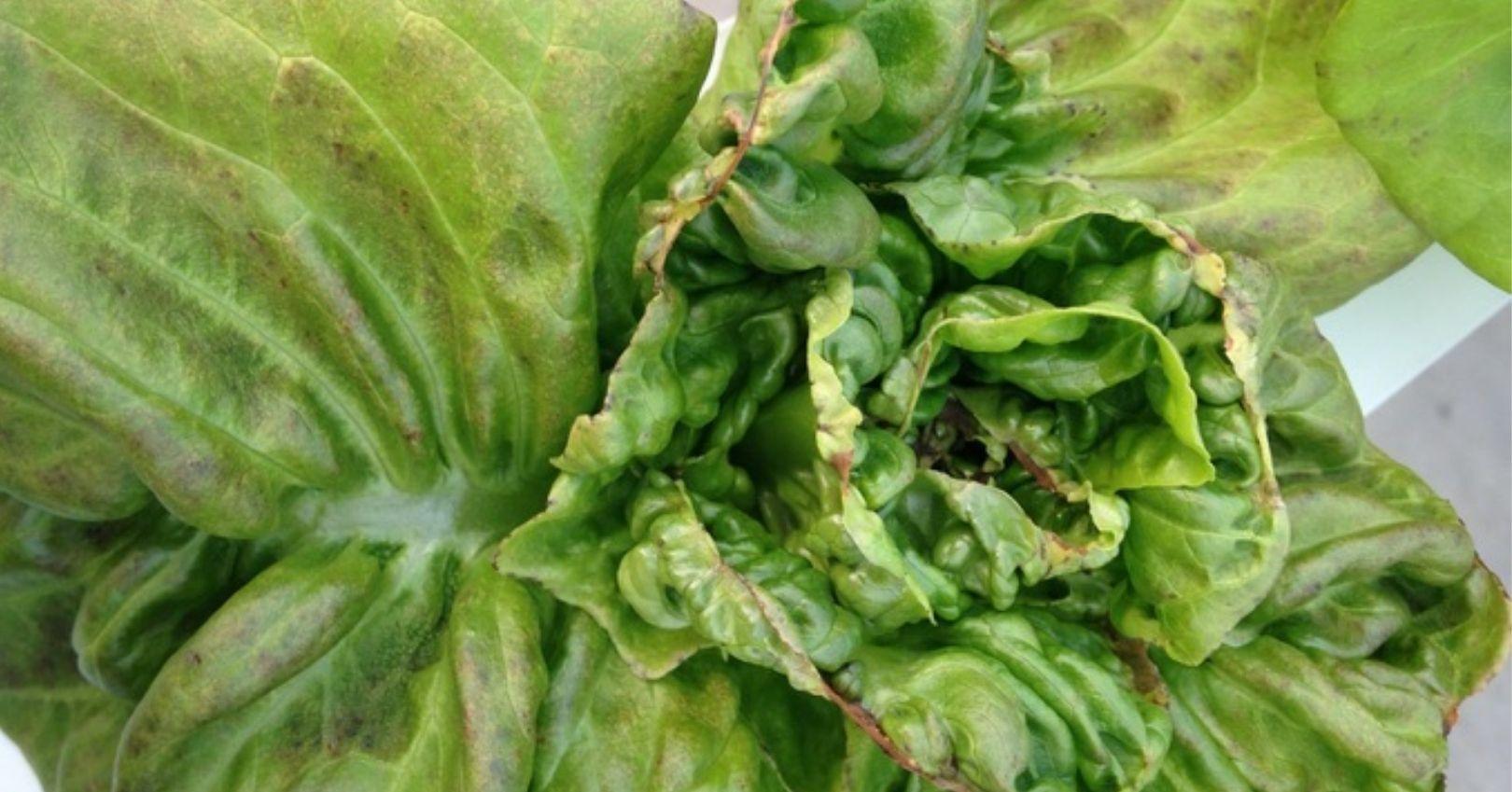
You've been tending your lettuce crop for weeks. The seedlings looked vibrant. But suddenly, the lower leaves start turning yellow. The stems feel weak. Growth stalls. Panic sets in. Is it disease? Pests? Or something simpler that you're missing? The answer is usually hidden in your nutrient levels, and it's far more fixable than you think.
Lettuce nutrient deficiency doesn't have to derail your crop. Whether you're growing in hydroponic systems, raised beds, or traditional soil, understanding what your plants need and recognizing early warning signs makes the difference between thriving plants and wasted resources. This guide walks you through identifying every major nutrient deficiency, understanding what's actually happening inside your plants, and implementing solutions that work fast.
If you're already noticing symptoms in your plants, you can get an instant diagnosis using Plantlyze's AI plant analysis tool, which identifies nutrient issues in seconds by analyzing leaf photos. But first, let's explore what's really going on beneath the surface.
Understanding Plant Nutrient Basics
Here's the thing about plant nutrition: lettuce needs more than just water and sunlight. Plants actually require seventeen essential nutrients to grow properly, split into two major categories. Macronutrients (nitrogen, phosphorus, potassium, calcium, magnesium, and sulfur) are required in large quantities because they form the structural backbone of plant tissue and drive major metabolic processes. Micronutrients (iron, boron, manganese, molybdenum, copper, and zinc) work in smaller amounts but are absolutely critical for enzyme function and metabolic pathways.
When a plant lacks any of these nutrients, it can't complete essential biological processes. Think of nutrients as tools in a toolbox. You might have ninety percent of the tools you need, but that missing one essential tool stops the entire job. The plant doesn't just slow down slightly. Instead, it starts consuming its own tissue reserves, shutting down non-essential processes, and displaying visible deficiency symptoms.
The timeline of symptom development varies by nutrient. Some deficiencies show visible changes within two to three weeks. Others take longer to manifest but cause significant damage by the time you notice them. What's critical to understand is that once you identify the deficiency, the plant won't magically reverse the damage already done. Recovery is about forward growth. New leaves that emerge after you correct the problem will be healthy. Those yellowed, damaged leaves won't turn green again, but they'll be replaced by vibrant new growth as the plant redirects resources.
Identifying Macronutrient Deficiencies
Macronutrient deficiencies represent the most common nutrient problems in lettuce, and fortunately, they're also the easiest to diagnose visually.
Nitrogen Deficiency
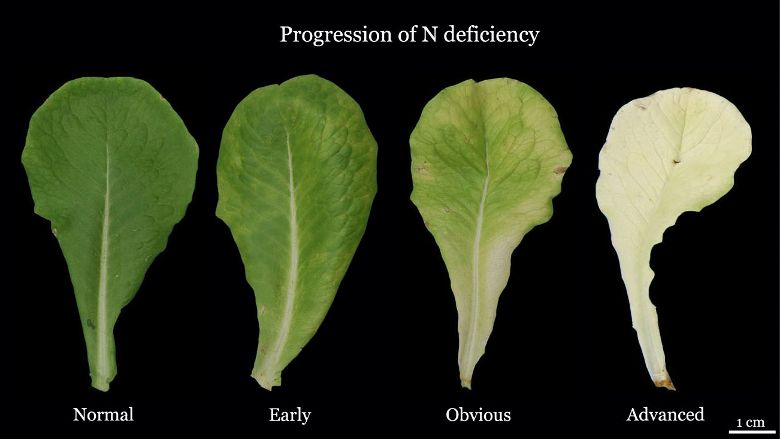
Nitrogen is your lettuce's fuel. Without it, the plant basically starts digesting its own older leaves to survive. This is why uniform yellowing (chlorosis) of the older leaves is nitrogen's signature symptom, progressing from the bottom of the plant upward. You'll notice the lowest leaves turn pale yellow while the upper foliage remains green, creating a clear visual gradient as the deficiency progresses over three to four weeks.
Beyond the color change, affected plants look stunted and pale overall. The entire plant has a washed-out appearance compared to healthy green lettuce. Growth slows dramatically. Leaves that should be expanding instead stay small and thin.
Nitrogen deficiency develops relatively quickly in hydroponic systems where nutrient ratios aren't dialed in correctly. In soil, it's often triggered by poor drainage, excessive rainfall leaching nitrogen through the soil, or depleted soil that hasn't been amended. The fix is straightforward: increase nitrogen in your nutrient solution or apply a nitrogen-rich fertilizer like calcium nitrate or ammonium nitrate, depending on your system. Most growers see improvement within two to three weeks of correction.
Phosphorus Deficiency
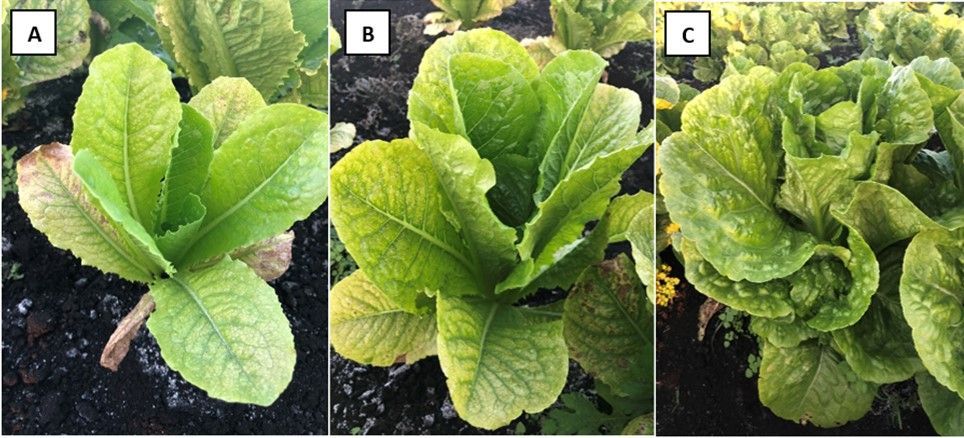
Phosphorus deficiencies hit differently than nitrogen. Here, stunted growth is the primary symptom, not leaf yellowing. Plants affected by phosphorus deficiency look compressed, almost as if someone reduced them to half their normal size. Leaves may turn darker green than normal, and you might notice purple or reddish discoloration developing on stems and leaf undersides.
The real economic impact of phosphorus deficiency shows up in heading failure. If you're growing heading varieties of lettuce, a plant with inadequate phosphorus often refuses to head at all, staying in a loose rosette pattern instead of forming a compact, marketable head. The root system also suffers. Instead of developing robust secondary roots, phosphorus-deficient plants form fewer roots and may show root discoloration and stunting.
Timeline matters here. Without phosphorus, you'll see growth slowdown within three weeks, but the heading failure might not become apparent until you're much further into the season. The problem is that by then, you've invested weeks of growing time. This is why phosphorus management should be front-loaded. Rather than waiting for symptoms, growers should maintain proper phosphorus levels from transplant onward. Once detected, adjust your nutrient formula to increase the phosphorus ratio and you'll see new growth begin to normalize within two to three weeks.
Potassium Deficiency
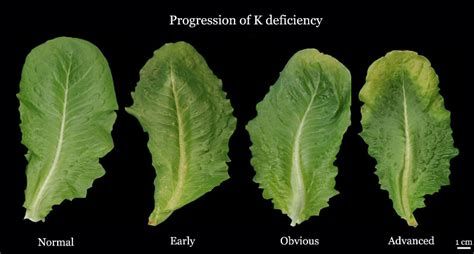
Potassium deficiency announces itself through yellowing at leaf edges while the center of the leaf stays green, a pattern called marginal necrosis. You'll notice this first on the lower leaves, then progressively moving upward as the deficiency worsens. The yellowing typically starts at the leaf margins and gradually spreads inward, creating a distinctive two-tone appearance.
Beyond the color change, potassium-deficient plants develop weak stems that struggle to support the plant's weight. If you touch the stem, it feels fragile and bendable rather than firm. As the deficiency advances, those yellow leaf edges develop brown, papery, necrotic spots that look almost like burn damage.
Potassium deficiency is particularly problematic because it directly impacts the plant's structural integrity. Weak stems mean the plant cannot support itself properly, cannot transport water and nutrients efficiently, and becomes more susceptible to physical damage. Fix potassium deficiency by increasing potassium in your nutrient solution. Most growers use potassium nitrate or potassium sulfate as their primary potassium source. You'll notice improvement in new growth within two to three weeks, though the weak stems already formed won't suddenly strengthen.
Calcium and Magnesium Deficiencies
Calcium and magnesium deficiencies often get confused because they both affect leaves, but they manifest in completely opposite locations on the plant, which is your primary clue.
Calcium deficiency appears on the newest (youngest) leaves at the growing tip. You'll see scattered necrotic spots develop, and the leaf tips often show characteristic tip burn that's sometimes mistaken for fungal disease. The tissue appears water-soaked initially, then browns and dies. If you're growing lettuce susceptible to tip burn (like romaine varieties), calcium deficiency will make the problem significantly worse. Interestingly, calcium deficiency is often triggered not by calcium shortage in the nutrient solution, but by environmental stress. Inconsistent watering, high heat, or low humidity can prevent calcium from moving properly into new leaves even when calcium is present in the soil or nutrient solution.
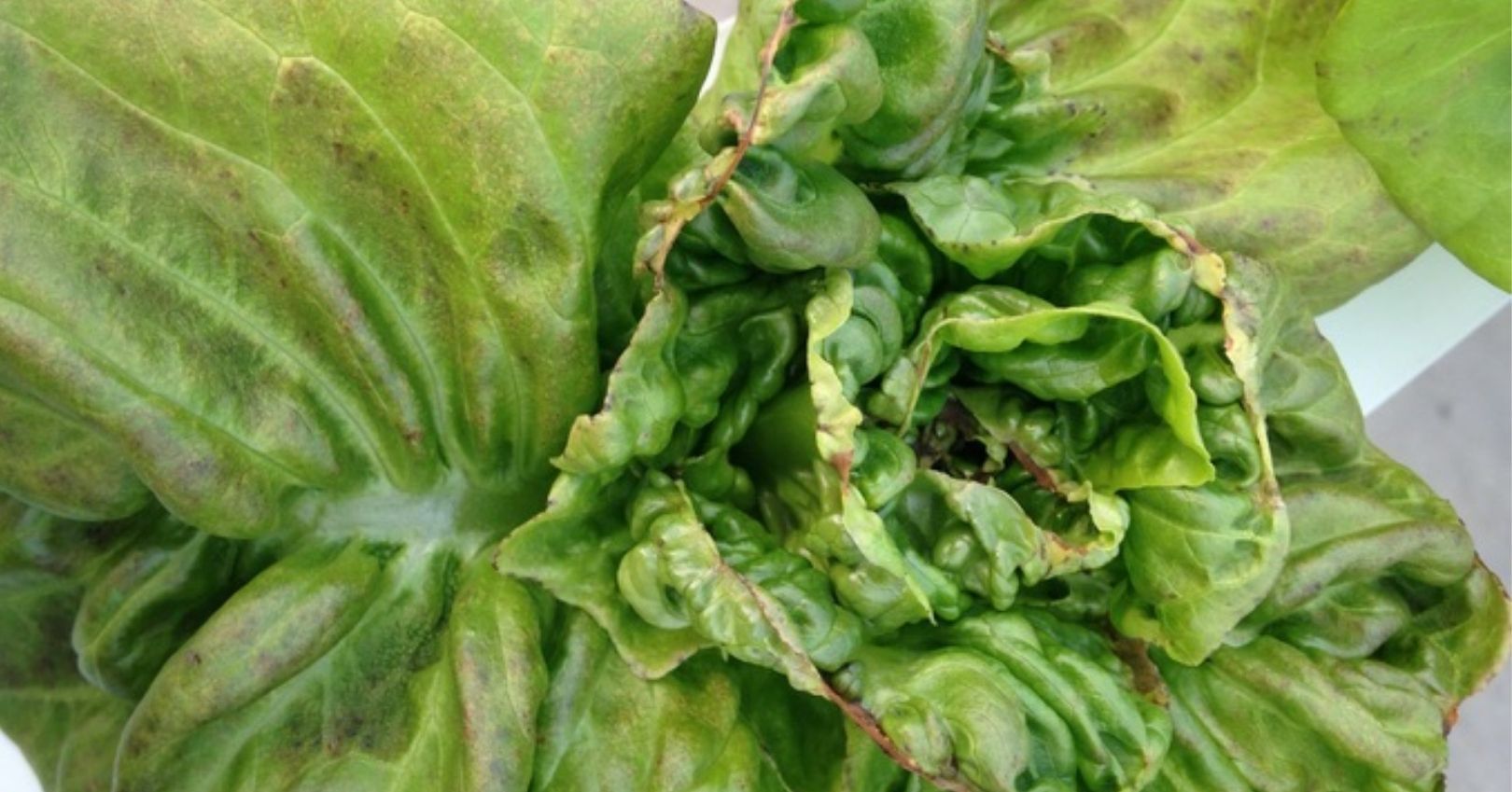
Magnesium deficiency works in reverse, affecting the mature (older) leaves while new growth stays unaffected. The primary symptom is interveinal chlorosis, meaning the tissue between the green leaf veins turns yellow, creating a striped pattern. After fourteen to twenty days, marginal necrosis develops around the leaf edges. The yellowing is distinctive because the veins stay green while the tissue between them yellows. This pattern is your diagnostic key to distinguishing magnesium from iron deficiency, which can look similar at first glance.
Fix calcium deficiency by addressing environmental stress first (consistent watering schedule, humidity management) and adding calcium supplements if needed. Magnesium deficiency responds quickly to magnesium sulfate (Epsom salt) applications, either added to the nutrient solution or applied as a foliar spray. You'll see new leaves return to normal color within one to two weeks, though existing yellowed foliage won't recover.
Identifying Micronutrient Deficiencies
Micronutrient deficiencies are the silent killers of lettuce crops. They don't announce themselves as loudly as nitrogen deficiency. Often, growers spend weeks troubleshooting while the real culprit is a simple lack of boron or iron. These deficiencies require more detective work to identify accurately.
Iron Deficiency
Iron deficiency produces interveinal chlorosis on the newest (upper) leaves, making it distinguishable from magnesium deficiency by location alone. The youngest leaves at the growing tip turn yellow between the veins while the veins remain green. The pattern is crisp and clear, not the fuzzy yellowing of some other deficiencies.
Iron deficiency is particularly common in lettuce growing in high-pH soils or nutrient solutions. When pH rises above 7.5, iron chemistry changes and plants cannot absorb it efficiently, even if iron is present in abundance. This is called iron lockout. In hydroponic systems, iron deficiency often indicates a pH problem rather than an iron shortage. Before adding more iron to your system, check your pH first.
Fix iron deficiency by lowering your growing environment's pH to the optimal range (5.5 to 6.8 for most lettuce varieties) and adding chelated iron if needed. You'll see new growth return to normal green color within one to two weeks of correction.
Boron Deficiency
Boron deficiency doesn't produce obvious leaf yellowing. Instead, you'll notice distorted, stunted new growth at the growing tip. The leaves emerge twisted or curled rather than expanding normally. Leaf tip dieback is common, where the very tips of new leaves turn brown and die. The plant looks deformed rather than simply discolored.
Boron is essential for cell formation and structural development. Without it, new tissue cannot form properly. This is why symptoms appear on the newest growth. Once new leaves form without adequate boron, they're permanently distorted and cannot be corrected. The damage is visible and irreversible to existing leaves.
Boron deficiency is less common than other micronutrient deficiencies, but it can develop quickly once it starts. Add boron to your nutrient solution using a boron supplement (borax solution or commercial micronutrient mixes containing boron). New growth that emerges after correction will be normal.
Manganese Deficiency
Manganese deficiency creates yellowing between the veins on older (lower) leaves, similar to magnesium and iron deficiency at first glance. The key distinction is location. If interveinal chlorosis appears on the lower, older leaves first, suspect manganese before iron or magnesium.
Manganese deficiency is particularly common in alkaline or high-pH soils, similar to iron. Like iron, manganese lockout is a pH problem more than a nutrient shortage. Raising pH above 7.5 prevents manganese absorption even when manganese is abundant in the soil.
Fix manganese deficiency by checking and adjusting pH to the optimal range for lettuce, then add manganese sulfate if needed. You'll see improvement in new growth within two to three weeks.
Solutions, Prevention, and Recovery Strategy
Now that you can identify deficiencies, let's talk about fixing them. The solution pathway depends on whether you're growing in hydroponic systems or soil-based media, and whether you've identified the exact deficiency.
Immediate Actions: Once you've identified a deficiency, your first move is to supply the missing nutrient. In hydroponic systems, adjust your nutrient solution by adding the appropriate fertilizer or supplement according to manufacturer directions. In soil systems, apply a targeted nutrient supplement or foliar spray for faster absorption. For macronutrient deficiencies, soil application works but takes longer because the nutrient must be transported through the root system.
pH and EC Adjustments: Before assuming you need more nutrients, check your pH and electrical conductivity (EC). Many apparent nutrient deficiencies are actually nutrient lockout caused by improper pH. Your growing environment's pH should stay between 5.5 and 6.8 for optimal nutrient availability in most systems. EC (which measures total dissolved solids and nutrient concentration) should stay within 1.2 to 1.8 dS/m for lettuce, depending on your specific nutrient formulation.
Testing and Verification: The fastest way to confirm a deficiency is tissue testing. Unlike guessing based on visual symptoms, tissue sampling gives you objective data. Send a sample of recently matured leaves to a laboratory that offers plant tissue analysis. You'll receive results showing which nutrients are low, confirming your diagnosis. Tissue testing typically takes one to two weeks, which is why many growers use it for mid-season assessment and adjustment rather than emergency diagnosis.
Progressive Solution Timeline: Week one, identify the symptom pattern and take photos for reference. Week two, test nutrient levels through tissue sampling or soil testing. Week three, apply the targeted correction. Week four and beyond, monitor improvement and adjust as needed based on new growth. This timeline prevents panic-driven over-correction, which can create nutrient imbalances that trigger secondary deficiencies.
Prevention Strategy: Prevention is always easier than correction. Maintain balanced nutrient solutions from day one. Test pH weekly minimum in hydroponic systems, twice monthly in soil systems. Conduct tissue sampling at mid-season when plants are actively growing. Document what works for your specific variety, water source, and growing conditions. This record becomes invaluable when growing the same crops in future seasons.
The Role of Technology in Modern Plant Diagnosis
Lettuce deficiency diagnosis has traditionally relied on experience. A seasoned grower examines leaves closely, recognizes patterns, and makes an informed guess. But even experts can misidentify deficiencies because symptoms overlap. Nitrogen and magnesium both cause yellowing. Iron and manganese both cause interveinal chlorosis. Without tissue testing, confirmation takes weeks.
Modern AI-powered plant diagnosis tools have accelerated this process dramatically. Plantlyze is an AI-powered plant care diagnostic tool that analyzes plant images and identifies nutrient deficiencies, pests, and diseases in seconds. For lettuce growers, this means you can upload a leaf photo and receive a diagnosis within moments instead of waiting for lab results or relying solely on visual experience. You'll know exactly which nutrient is likely missing and how urgently you need to act.
The advantages are substantial. Speed of diagnosis means you can intervene before significant damage occurs. You don't need advanced botanical knowledge to use the tool. Cost-effectiveness becomes clear when you realize how many expensive lab tests you eliminate. Continuous monitoring becomes feasible because the friction of getting diagnosed information drops dramatically.
Technology doesn't replace experience, but it accelerates it. A seasoned grower might take thirty minutes to diagnose a deficiency by examining plants closely. An AI tool can complete the same analysis in three seconds, freeing you to focus on actually fixing the problem rather than spending hours guessing at the cause.
Conclusion: Taking Action Now
Lettuce nutrient deficiency doesn't have to derail your crop. You now understand how to recognize nitrogen, phosphorus, potassium, calcium, and magnesium deficiencies in macronutrients, plus iron, boron, and manganese deficiencies in micronutrients. You know where to look for each symptom and understand the timeline for recovery once you correct the problem.
The plants that thrive aren't always grown by people with the most experience. They're grown by people who monitor closely and act decisively when symptoms appear. Early detection transforms a potential disaster into a minor adjustment. Regular pH testing, nutrient concentration monitoring, and quick corrective action mean the difference between a healthy, productive crop and wasted time and resources.
Your next step is simple. If you're noticing symptoms right now in your lettuce, don't wait for lab results. Ready to stop guessing about plant problems? Use Plantlyze to diagnose nutrient deficiencies instantly. Visit plantlyze.com and upload a photo of your lettuce plants today—get answers in seconds, not days.
Once you've identified the specific deficiency, apply the targeted correction outlined in this guide. Monitor new growth over the next two to three weeks. Document what happens. Build your knowledge base. The more attentive you become to your plants' signals, the faster you'll recognize problems and the healthier your crops will be.
References
1. NCBI/PMC (2025) – Exploring Nutrient Deficiencies in Lettuce Crops
https://pmc.ncbi.nlm.nih.gov/articles/PMC11991055/
2. E-GRO/Michigan State Extension – Dialing In Lettuce Fertility
https://e-gro.org/ebooks/DIALING%20IN%20LETTUCE%20FERTILITY%20A%20GROWERS%20NUTRIENT%20MANAGEMENT%20AND%20DIAGNOSTIC%20GUIDE.pdf
3. LSU AgCenter – Crop Nutrient Deficiencies and Toxicities
https://www.lsuagcenter.com/~/media/system/5/5/6/4/55646c0ef9404ad2073c46b006e13b51/crop%20nutrient%20deficiencies%20and%20toxic
4. Royal Horticultural Society (2025) – Nutrient Deficiencies
https://www.rhs.org.uk/prevention-protection/nutrient-deficiencies
5. Extension Missouri (2025) – How Excess Nutrients Cause Deficiencies
https://extension.missouri.edu/publications/g9069