If you've ever noticed yellowing leaves with a fuzzy white coating on your lettuce, you've likely encountered downy mildew. This disease ranks as the most significant threat to lettuce growers worldwide, responsible for massive crop losses every growing season. Whether you manage a commercial field or maintain a home vegetable garden, downy mildew can strike without warning, weakening plants and making them vulnerable to other infections.
The good news? Downy mildew is highly preventable when you understand what causes it and recognize the early warning signs. This guide covers everything you need to know about identifying lettuce downy mildew, implementing proven prevention strategies, and managing the disease if it appears in your crops.
You'll learn the science behind why this pathogen thrives in certain conditions, discover which prevention methods actually work, and get practical steps you can implement immediately. By the end of this article, you'll have a comprehensive plan to keep your lettuce healthy and disease-free.
What is Lettuce Downy Mildew and Why It Matters
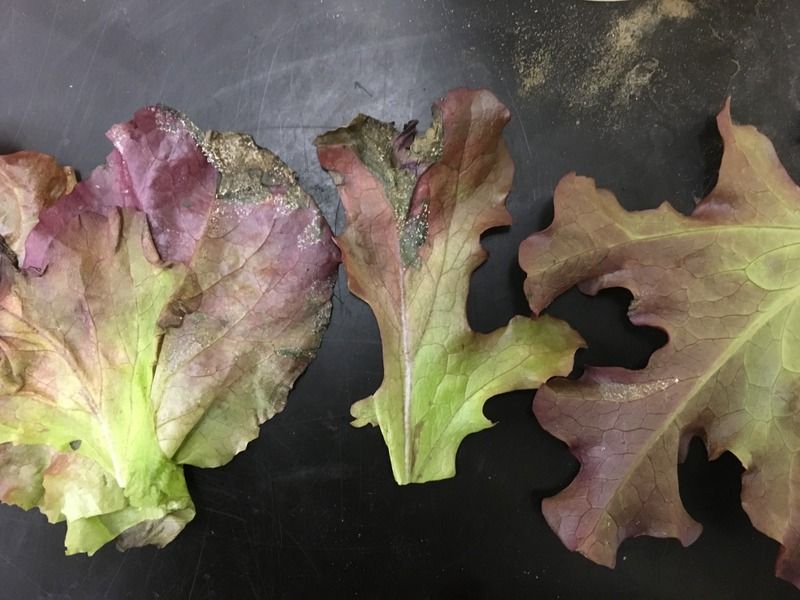
Lettuce downy mildew is a disease caused by a microscopic organism called Bremia lactucae. Here's something that surprises many gardeners: it's not actually a fungus. Instead, it belongs to a group of organisms called oomycetes, which are sometimes called water molds. This distinction matters because it affects how the disease spreads and how you treat it.
Bremia lactucae is an obligate parasite, meaning it can only survive by infecting living lettuce plants. Rather than killing the plant outright, it acts like a persistent pest that steals nutrients while keeping the host alive. This weakens the lettuce's immune system and makes it vulnerable to secondary infections from bacteria and fungi that can cause serious crop damage.
What makes lettuce downy mildew so dangerous is its incredible speed. The pathogen forms new spores inside the host just five to seven days after infection has taken place. In such a short period, millions and millions of new spores are formed and released into the air to attack neighboring plants. A minor problem can turn out to be an enormous outbreak within slightly more than a week’s time if conditions stay right because that is how fast reproduction takes place.
This biology of algae informs the knowledge that multi-pronged, immediate, and consistent approaches toward its control must be applied. Therefore, a single-method approach rarely succeeds against an organism that reproduces this quickly-considerably faster than most crop pests or diseases.
Key Takeaway: Lettuce Downy Mildew Basics
Caused by Bremia lactucae (an oomycete, not a fungus)
One of the most important lettuce pathogens worldwide
Reproduces rapidly (new spores in 5 to 7 days)
Weakens plants, enables secondary infections
Prevention is far more effective than treatment
How to Identify Lettuce Downy Mildew Early
Visual Symptoms on Leaves
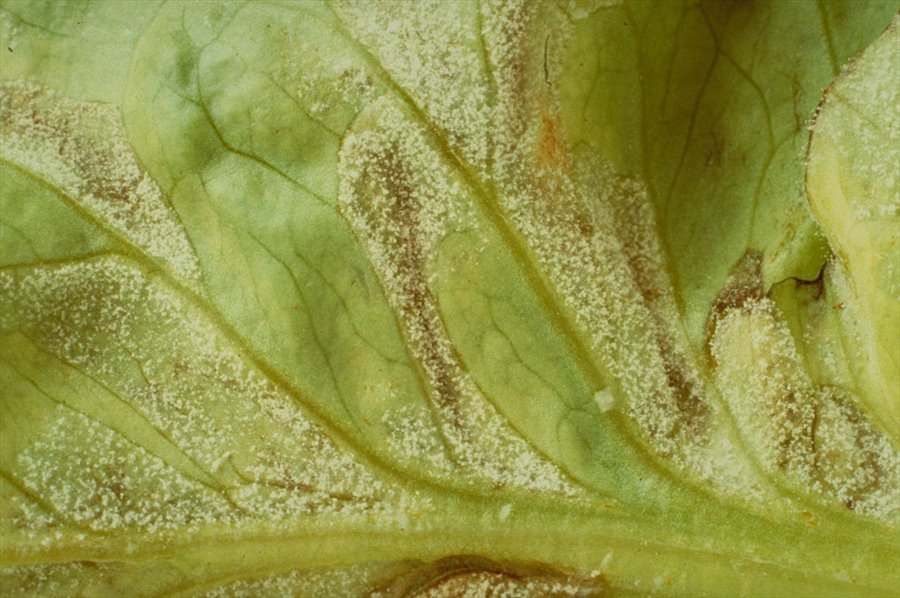
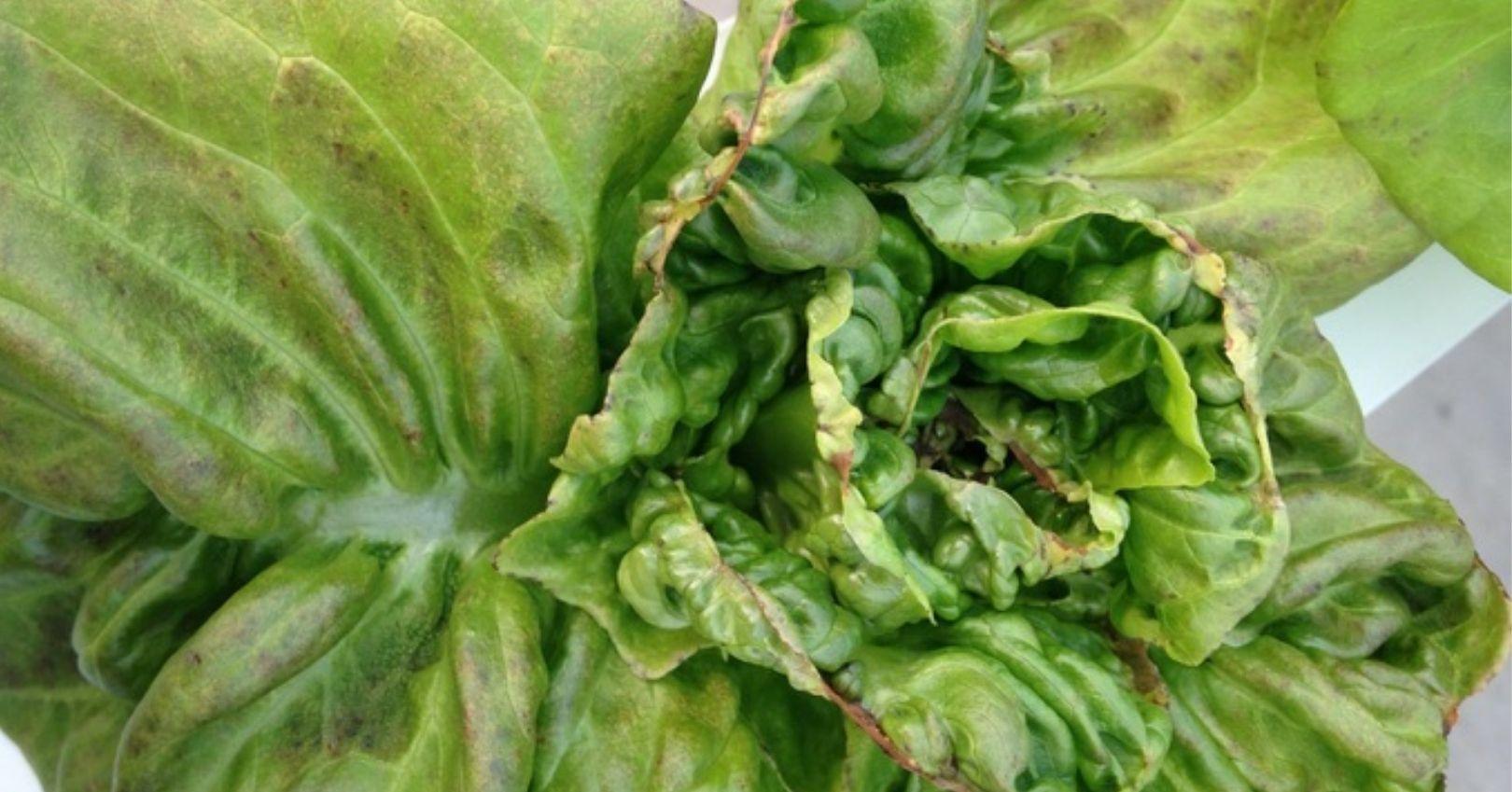
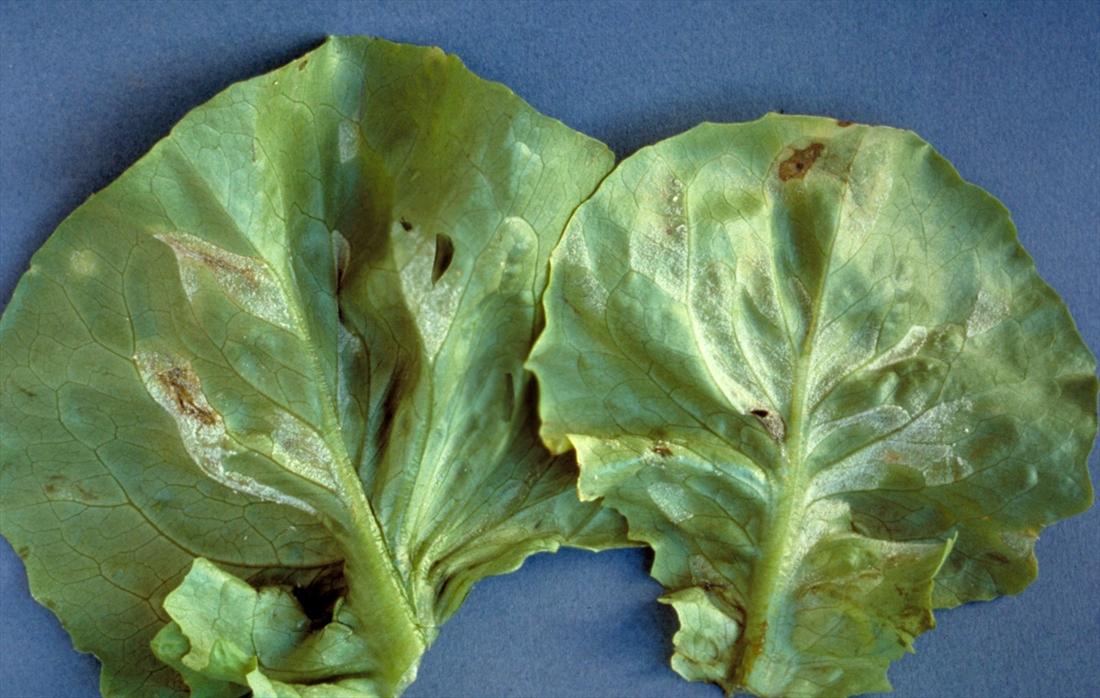
The symptoms of lettuce downy mildew are distinctive enough that experienced growers can spot them from across a field. On the upper surface of leaves, you'll see patches that start as light green to yellow. These aren't random splotches but angular patches that follow the pattern of the leaf's veins. The geometry of these lesions is important: rather than round or circular, they appear as sharp edged rectangles or diamonds that align with where the leaf veins meet.
The undersurface tells the real story. Look at the underside of a leaf on an infected plant and you will observe what the plant tries to do in response to the pathogen: A white, fluffy coating develops there directly beneath those yellow patches. That cottony or powdery appearance is where downy mildew gets its name-it's also what truly confirms the diagnosis. At this stage, however, notice how fervently active the pathogen must be because it has started raining spores (pathogen reproduction).
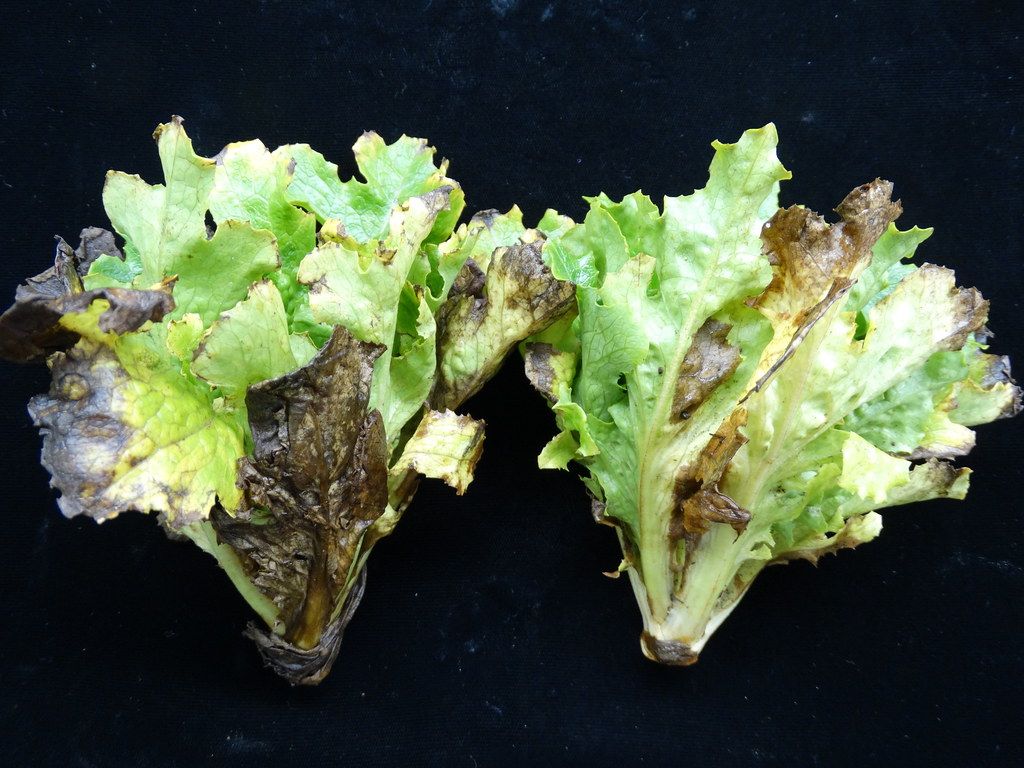
As the infection progresses, the affected tissue transitions from yellow through brown and finally dries up completely. In advanced stages, entire sections of leaves may die and crumble. On young seedlings, the situation is more severe. If downy mildew infects seedling cotyledons (the plant's first leaves), the entire plant may die before it has a chance to establish.
Severity Indicators
Not all downy mildew infections are equal. Understanding the severity helps you decide how urgently to respond. Here's what progression typically looks like:
Early stage (Days 1-3): Barely noticeable yellow spots appear on older outer leaves. You might miss this unless you're looking carefully.
Active infection (Days 4-7): White fuzzy growth becomes visible on leaf undersides. Spots expand and multiply. This is your critical window for treatment.
Spread phase (Days 8-14): Multiple leaves show symptoms. The disease moves inward toward the lettuce heart. Spores are being produced heavily and spreading.
Established infection (Days 15 and beyond): Many leaves are damaged. The plant is severely weakened. Treatments become less effective because the pathogen has already penetrated leaf tissue.
Decline phase (Days 21 and beyond): Entire leaves die and may fall. Secondary infections by bacteria or fungi become likely. Crop loss is significant.
The key insight: severe infection doesn't happen suddenly. It develops through these stages over weeks. This means you have opportunities to intervene at each stage if you're monitoring regularly. Early detection can mean the difference between saving your crop and losing it completely.
What Conditions Allow Downy Mildew to Thrive
The Perfect Storm: Cool and Damp
Downy mildew thrives in specific environmental conditions. Understanding these conditions is like knowing the password to preventing the disease. The pathogen favors cool temperatures, typically between 50 and 65 degrees Fahrenheit. This is why lettuce downy mildew becomes problematic in spring and fall when conditions are ideal, and why it's less common during hot summers.
However, temperature is not the only requirement. The most crucial requirement is moisture. Spores of Bremia lactucae need water to germinate and infect. If the leaves are dry, even if the spores land directly on them, there will be no infection. This explains why overhead irrigation becomes a problem-it keeps the leaves wet for long hours thereby creating exactly what condition the pathogen requires.
Consider it this way: every time you are watering your lettuce overhead, you are providing potentially several hours of ideal infection conditions. Morning dew compounds the problem because leaves stay wet well into the daytime. In greenhouse environments, this combination of cool temperatures and constant moisture is almost a factory for rapid pathogen spread-a perfect setup
Geography and season. Coastal and foggy regions provide natural moisture in abundance to favor the disease. The temperature and humidity “sweet spot” run from early summer to mid-autumn in most areas. Knowing your general area helps benchmark when lettuce risk runs highest.
Crop Density and Air Circulation
The way you plant lettuce affects high-density disease risk. The field creates its own microclimate. Air movement between the closely spaced plants is greatly reduced. Lack of adequate air circulation means that moisture remains on the leaves much longer than it would in a more loosely spaced arrangement.
10,000 lettuce plants per acre widely spaced. The field of the closely spaced plants traps humidity. On a cool morning, dew forms and stays long. The moisture which ought to have evaporated remains on the leaves for hours more than necessary. This extended time of wetness is exactly what the pathogen needs so that its spore can successfully germinate.
Nor is this solely a problem of greenhouses. In the open fields, excessive density creates humid microclimates. This has, in part, been one among many reasons that spacings are so carefully calculated by commercial growers-optimizing yield per acre and allowing another aspect of air movement to control disease pressure.
Infected Plant Debris
Infected plant material is a source for the pathogen. Previous season's infected leaves can harbor dormant spores. While Bremia lactucae doesn't survive in soil for extended periods, it persists on plant residue. Cross-contamination risks come from equipment and tools that contact infected material and then contact healthy plants.
Preventing Lettuce Downy Mildew Before It Starts
Here's what research consistently shows: preventing downy mildew is far more cost-effective and successful than trying to cure it after infection occurs. This section covers the prevention strategies with the strongest track record.
Select Disease Resistant Varieties
The most effective long-term strategy is growing lettuce varieties that have genetic resistance to downy mildew. Plant breeders have developed cultivars that can resist infection from most (though not all) strains of Bremia lactucae that currently exist.
How does resistance work? It's not that resistant varieties are immune. Rather, their genetics make it harder for the pathogen to establish infection. Even if spores land on the leaf and conditions are favorable, the plant's internal defenses prevent the pathogen from penetrating tissue and reproducing.
What does this mean practically? When shopping for lettuce seeds or transplants, look for seed labels that include "DM" followed by numbers or letters. This notation indicates resistance to specific downy mildew races. For example, "DM1, DM3, DM5" means the variety has resistance to those specific pathogen races.
Here's an important caveat: resistance isn't permanent. Downy mildew constantly evolves. New races emerge that can overcome resistance developed in previous decades. This is why seed companies continuously breed new resistant varieties, and why your variety that performed perfectly last year might be less effective this year.
The takeaway: start with resistant varieties as your foundation. Don't rely on them alone, but make them the basis of your strategy. They're particularly valuable for commercial growers where disease pressure is highest.
Optimize Your Watering Practices
How you water dramatically impacts downy mildew risk. The single most important principle: keep leaves dry. Every hour that moisture sits on lettuce foliage is an hour that Bremia lactucae spores could be germinating.
This is why drip irrigation or soil-level watering is strongly preferred over overhead sprinklers. Drip systems deliver water directly to the root zone, leaving foliage completely dry. Even in humid environments where morning dew forms anyway, drip irrigation prevents you from adding hours of additional moisture.
If you currently use overhead irrigation and can't switch to drip immediately, adjust your timing. Water in early morning, around 5 to 7 AM. This allows foliage to dry quickly as temperatures rise during the day. Never water in late afternoon or evening. Night irrigation means leaves stay wet throughout the cool nighttime hours, which is exactly when the pathogen is most active.
Steps to improve your watering:
1. Assess your current watering system (overhead sprinkler, drip line, hand watering).
2. If you are using overhead sprinklers then shift the timing to early morning immediately.
3. Transition to drip irrigation in the next 1-2 seasons if possible and ensure that
4. Drip lines deliver water consistently without splashing foliage.
5. Monitor leaf moisture after watering to check whether your system is working or not.
Think of water management as your first line of defense. The pathogen cannot succeed on dry leaves, no matter how favorable other conditions might be.
Improve Air Circulation
Air movement prevents moisture from accumulating on leaves and reduces the humidity in the microclimate around plants. Even if you can't control other factors, improving air circulation is usually possible.
For commercial growers, the typical spacing is from 6 to 12 inches, depending on the variety of lettuce. The closer it is spaced, the higher per square foot yield can be achieved; however, this also lets in high disease pressure. With wider spacing, low diseases but high yield per acre can be obtained. Most growers set their operations at an optimum point for both.
Active air movement inside a greenhouse. Install fans that create gentle circulation without damaging plants. The goal isn't to create wind, but rather to keep air from becoming stagnant.
Pruning lower leaves in high-humidity climates can help. Remove any leaves that touch soil (where moisture is highest) and lower leaves that are shaded by upper foliage. This removes some infection sites and improves air penetration.
The principle: wherever you see wet leaves lingering in shade, that's a spot that favors downy mildew. Target those areas first when thinking about spacing and circulation improvements.
Practice Crop Rotation
Crop rotation breaks the disease cycle by giving the pathogen an inhospitable environment. Bremia lactucae doesn't survive in soil, but it can persist on plant residue. By rotating away from lettuce, you remove the host that the pathogen needs. A typical rotation might look like this:
Year 1: Lettuce
Year 2: Tomatoes or peppers
Year 3: Beans or legumes
Year 4: Other crops
Year 5: Return to lettuce
The minimum rotation interval is three to four years of not planting lettuce in the same field. Longer intervals are better because any remaining infected plant debris has more time to decompose completely.
Why not rotate with other leafy greens? Because Bremia lactucae can infect spinach, endive, and related species. You're only breaking the cycle if you actually grow non-host plants.
Field Sanitation and Cleanup
Infected plant material is a reservoir for the pathogen. Managing it properly breaks the infection chain.
Do this:
Remove infected leaves daily during the growing season
Disinfect all tools and equipment with a 10 percent bleach solution between plants and fields
Don't let fallen infected leaves sit in the field
After harvest, thoroughly clean storage facilities, transport containers, and equipment
Inspect transplants carefully before planting (greenhouse sources are common disease vectors)
Even small amounts of infected plant material can seed the next epidemic. A single diseased leaf left in a field can harbor thousands of dormant spores ready to infect next season's crop.
Post-harvest cleanup is often overlooked but critical. If you transport lettuce from multiple fields in the same vehicle, you can spread disease between locations. Clean the truck between loads during harvest season.
Prevention Checklist: Your Foundation for Success
☐ Select resistant lettuce varieties (DM notation on seed)
☐ Use drip irrigation or water at soil level only
☐ Water in early morning (5 to 7 AM)
☐ Space plants for adequate air circulation
☐ Establish crop rotation (3 to 4 year minimum)
☐ Remove infected leaves immediately
☐ Disinfect tools between plants and fields
☐ Clean equipment thoroughly after harvest
Implement 3 to 4 of these consistently equals high success rate. Combine all of them equals best protection possible.
Regular monitoring is one of the most effective prevention tools. Plantlyze makes this easier by analyzing plant photos to detect early symptoms you might miss. Check out Plantlyze.com for automated plant health monitoring.
Managing Lettuce Downy Mildew When Prevention Fails
Fungicide Options and Application
If downy mildew appears despite your prevention efforts, fungicides become important. Understanding how they work is critical because using them incorrectly wastes money and builds pathogen resistance.
Most available fungicides work as protectants. This means they prevent infection from occurring, rather than curing an existing infection. The protective residue on the leaf surface blocks spore germination. Once infection is already established and the pathogen is inside the leaf tissue, fungicides are much less effective.
This has one crucial implication: timing matters enormously. Apply fungicides before infection occurs or at the first sign of symptoms. Waiting until the disease is obvious means most of the damage has already happened.
Common active ingredients include copper, mancozeb, oxathiapiprolin, and others. Each has different properties regarding effectiveness against different downy mildew races and environmental conditions.
The most important management practice with fungicides is resistance management. Rotate between different chemical classes. Never apply the same active ingredient more than required by the label without rotating to a different chemical class. The pathogen adapts quickly. Using the same fungicide repeatedly selects for resistant strains within the population. By the next season, that fungicide may be ineffective.
Biological Control Options
Biological controls offer an environmentally friendly alternative or complement to chemical fungicides. These are living organisms or their byproducts that suppress the pathogen.
Beneficial microorganisms work through two mechanisms. Some, like Trichoderma harzianum, induce the plant's own immune system to fight the pathogen. Others, like Bacillus subtilis, directly antagonize the pathogen, competing for resources or producing substances that inhibit growth.
The advantage of biological controls is environmental safety and the reduced risk of pathogen resistance. The disadvantage is they're often slower-acting than chemical fungicides and may require reapplication throughout the season.
Many growers find that combining biological controls with cultural practices (sanitation, spacing, irrigation) provides adequate protection while minimizing chemical inputs.
Cultural Control Methods
Beyond fungicides, you have practical cultural methods. Regular scouting and leaf removal breaks the infection cycle. Use of organic, pathogen-free mulch prevents splash-up of spores. Tillage practices that incorporate infected debris help decompose the source material. The integrated pest management (IPM) approach combines all these methods.
Building a Downy Mildew Management Plan for Healthy Lettuce
Integrated Pest Management Approach
Here's what research consistently shows: preventing downy mildew is far more effective when you combine multiple strategies. The integrated pest management (IPM) approach brings together prevention, monitoring, and treatment into one comprehensive system.
IPM philosophy recognizes that no single solution works perfectly. Instead, you layer multiple strategies so that if one fails, others compensate. This system-based approach is more resilient and sustainable than relying on any single method.
Why do single-method approaches often fail? Because downy mildew is an adaptive organism. If you rely solely on fungicides, resistance develops. If you rely only on resistance, new races emerge. If you depend only on isolation, one lapse in sanitation spreads disease. But when you implement multiple strategies simultaneously, the pathogen struggles to overcome all of them.
Implementation requires consistency over time. You're building a management system that improves with experience. Each season teaches you something new about conditions on your specific property and how the pathogen behaves in your environment.
Creating Your Personal Monitoring Schedule
Consistent monitoring catches downy mildew before it spreads. The question is not whether to check, but how regularly.
Weekly checks will always catch something early. What should be checked for depends on the growth stage of the plant. On young seedlings, cotyledons and first true leaves; on older plants, begin with the examination of outer leaves. Record observations: date, place, intensity or severity of symptoms- weather conditions! These observations reveal patterns over seasons.
Using these observations improves your strategies. If you consistently see disease during cool, wet weeks, you know to increase fungicide frequency then. If disease appears in certain field sections, those areas might have drainage or spacing problems to address. If transplants arrive with early symptoms, you've identified a propagation source issue.
Seasonal Monitoring Timeline
March to April: Scout seedlings twice weekly. Check greenhouse humidity. Monitor transplant watering.
May to June: Field checks twice weekly. Note humidity patterns. Plan irrigation adjustments.
July to August: Weekly checks. Hot weather reduces pressure, but maintain vigilance. Scout for secondary infections.
September to October: Increase checks to twice weekly as cool, wet weather approaches. Prepare fungicide rotation plan.
November to January: Post-harvest cleanup. Inspect storage facilities. Plan next season's resistant varieties.
Frequently Asked Questions About Lettuce Downy Mildew
Can I eat lettuce with downy mildew?
Not recommended. While downy mildew itself isn't toxic, the quality and texture are compromised. The affected leaves are unappetizing. Removing outer infected leaves doesn't eliminate the problem. The disease can become systemic, meaning the pathogen has invaded even the inner head.
More concerning: research shows that downy mildew infection weakens the plant's natural defenses, potentially increasing susceptibility to dangerous bacterial contamination like E. coli or Salmonella. If you have downy mildew lettuce, it's safest to discard it.
How quickly does downy mildew spread?
Downy mildew reproduces with alarming speed. New spore generation occurs within 5 to 7 days of initial infection. If conditions remain favorable, this rapid reproduction cycle continues, creating waves of new infections.
Consider this timeline: Day 1 spore formation begins. Days 5 to 7 new spores are released. These travel on wind or water to neighboring plants. Within another 5 to 7 days, those plants show symptoms and produce more spores. In just 14 days, you could have three generations of infection spreading across your field.
This rapid lifecycle is why early detection and rapid response are so critical. Waiting even a few days to act can mean the difference between controlling an outbreak and losing significant crop.
Is downy mildew a fungus?
No. Downy mildew is caused by an oomycete, not a true fungus. This distinction matters because it affects treatment options.
Oomycetes have cell walls made of cellulose (like plants), while fungi have cell walls made of chitin. This difference means that some fungicides effective against fungi don't work on oomycetes. For example, sulfur controls many fungal diseases but is ineffective against downy mildew. Conversely, copper is effective on oomycetes but only marginally effective on some fungi.
Understanding that downy mildew is an oomycete helps you choose the right treatment approach and explains why certain common fungicides don't help.
What is the best prevention method?
Disease resistant varieties form your strongest defense. Plant breeders have developed lettuce varieties with proven resistance to downy mildew. Look for seed labels with "DM" notation indicating which pathogen races the variety resists.
However, resist relying on resistance alone. New pathogen races emerge regularly that can overcome any single source of resistance. The best approach combines resistant varieties with multiple cultural practices: proper spacing for air circulation, drip irrigation to keep leaves dry, and crop rotation to break the disease cycle.
When you implement three to four prevention methods together, your success rate increases dramatically compared to using any single strategy.
Building a Comprehensive Approach to Lettuce Health
Lettuce downy mildew doesn't have a single solution. No resistant variety is immune to every race of the pathogen. No fungicide works perfectly in all conditions. No single cultural practice eliminates all risk.
That's actually good news. It means you have multiple leverage points where you can reduce risk. You develop an integrated system by applying the approaches, and one component of the system happens to fail, another will function. This is what makes the entire protection mechanism strong-in other words, we do not expect any single approach to work perfectly.
The principles are applicable-whether it is a large-scale commercial farm or just a small home garden: infection is prevented by integrating resistant varieties with good hygiene and moisture management practices. Constant monitoring so that any problem can be detected early enough. In case prevention fails and disease attacks, then proper treatment measures should be applied immediately.
The grower notices something particular to his property every season, in the conditions over which lettuce downy mildew develops aggressively. He remembers all of these observations from year to year and applies them preventatively as he becomes that much more effective at prevention and management. Successful growers view it as an ongoing management challenge rather than a problem that can be 'solved' and forgotten about.
Plantlyze is designed specifically to help growers like you maintain healthy plants through early disease detection. Whether you're doing weekly field walks or managing multiple greenhouse sections, consistent monitoring is your competitive advantage. Start your free plant diagnosis at Plantlyze.com and make early detection your secret weapon against disease.
References
UC Integrated Pest Management - Lettuce Downy Mildew https://ipm.ucanr.edu/agriculture/lettuce/downy-mildew/
Royal Horticultural Society - Lettuce Downy Mildew https://www.rhs.org.uk/disease/lettuce-downy-mildew
Frontiers in Plant Science https://www.frontiersin.org/journals/plant-science/
UC Davis CPPSI - Plant Pathology Research https://cppsi.ucdavis.edu/
CABI Digital Library https://www.cabidigitallibrary.org/
NIH PubMed Central https://pmc.ncbi.nlm.nih.gov/