If you've noticed water-soaked spots on your lettuce leaves that turn orange-tan and develop a fuzzy coating, you may have encountered anthracnose. This fungal disease caused by Microdochium panattonianum ranks among the most destructive lettuce pathogens, particularly in spring when cool, wet weather creates ideal conditions for rapid spread. Whether you manage a commercial operation or grow lettuce at home, anthracnose can suddenly appear and devastate your crop if you're not prepared to recognize and respond to it.
The challenge with anthracnose is that it persists in soil microsclerotia and spreads through water splash, making it fundamentally different from airborne diseases like downy mildew. Understanding this soilborne nature is critical because your prevention strategy depends entirely on managing soil, water, and field history rather than relying solely on resistant varieties or fungicides.
This guide covers everything you need to know about identifying anthracnose early, implementing prevention strategies that actually work, and managing the disease if it appears in your fields. By the end, you'll understand why field history matters most and how to make decisions that protect your lettuce from this persistent soilborne threat.
What is Lettuce Anthracnose and Why It's a Serious Threat
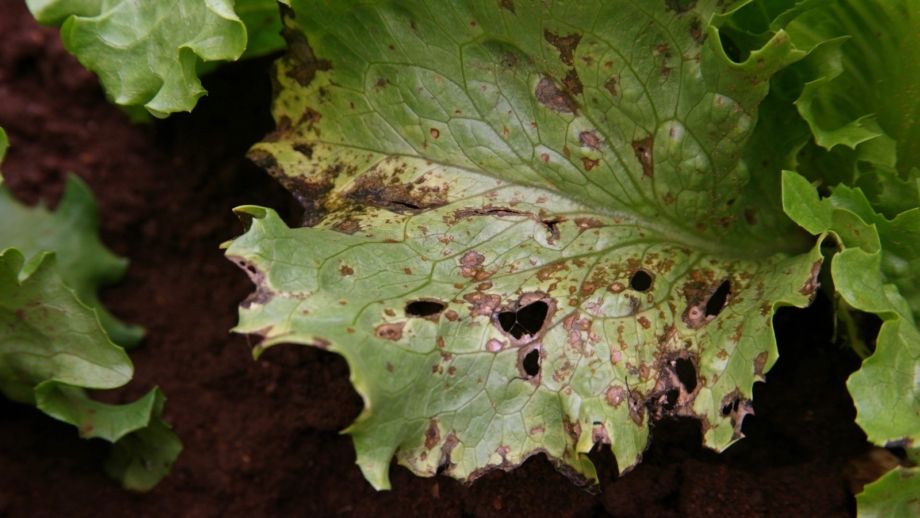
Lettuce anthracnose is caused by a fungus known as Microdochium panattonianum, although growers occasionally find other Colletotrichum species with almost identical symptoms. This disease proves unique in the mode of its life cycle; it is a soilborne pathogen that forms lesions on leaves. That creates an interesting complexity from the management perspective.
The fungus survives winter and between crops as microsclerotia in soil. These microsclerotia are remarkable for their persistence, surviving in moist soil for 18 weeks and in dry plant residue for up to 78 weeks. This means contaminated soil from one season can still harbor the pathogen four years later, which is why field history becomes your most important management tool.
When spring rains bring cool, wet conditions, the microsclerotia become active. Water splash from rain or irrigation carries the fungal spores and microsclerotia from soil onto lettuce leaves, particularly the outer leaves close to the ground. The fungus then colonizes the leaf tissue, creating the characteristic water-soaked lesions that expand and eventually turn into the distinctive shot-hole symptoms that give the disease its name.
What makes anthracnose particularly dangerous is its speed and severity. Once infection establishes in leaf axils (the protected areas between stems and leaves), the disease spreads rapidly. The fuzzy fungal growth produces millions of spores that can travel on water droplets to nearby plants, creating secondary infection waves. On seedlings, anthracnose can be catastrophic, sometimes killing the entire plant before it establishes.
The economic impact is significant. In years with favorable spring conditions, growers report losing 30-50% of their spring lettuce crop to anthracnose if field history is unfavorable and prevention measures aren't in place.
Key Takeaway: Lettuce Anthracnose Basics
Caused by Microdochium panattonianum (a soilborne fungus)
Microsclerotia survive 18 weeks to 4 years in soil
Water splash transmits spores from soil to leaves
Spring cool and wet conditions trigger outbreaks
Prevention far more effective than treatment
Field history is the critical management factor
How to Identify Lettuce Anthracnose Early
Visual Symptoms on Lettuce Leaves
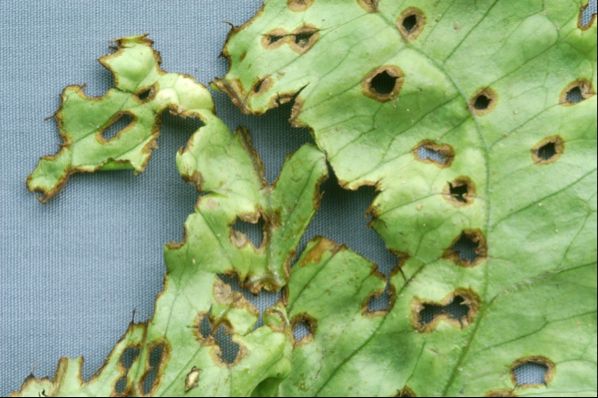
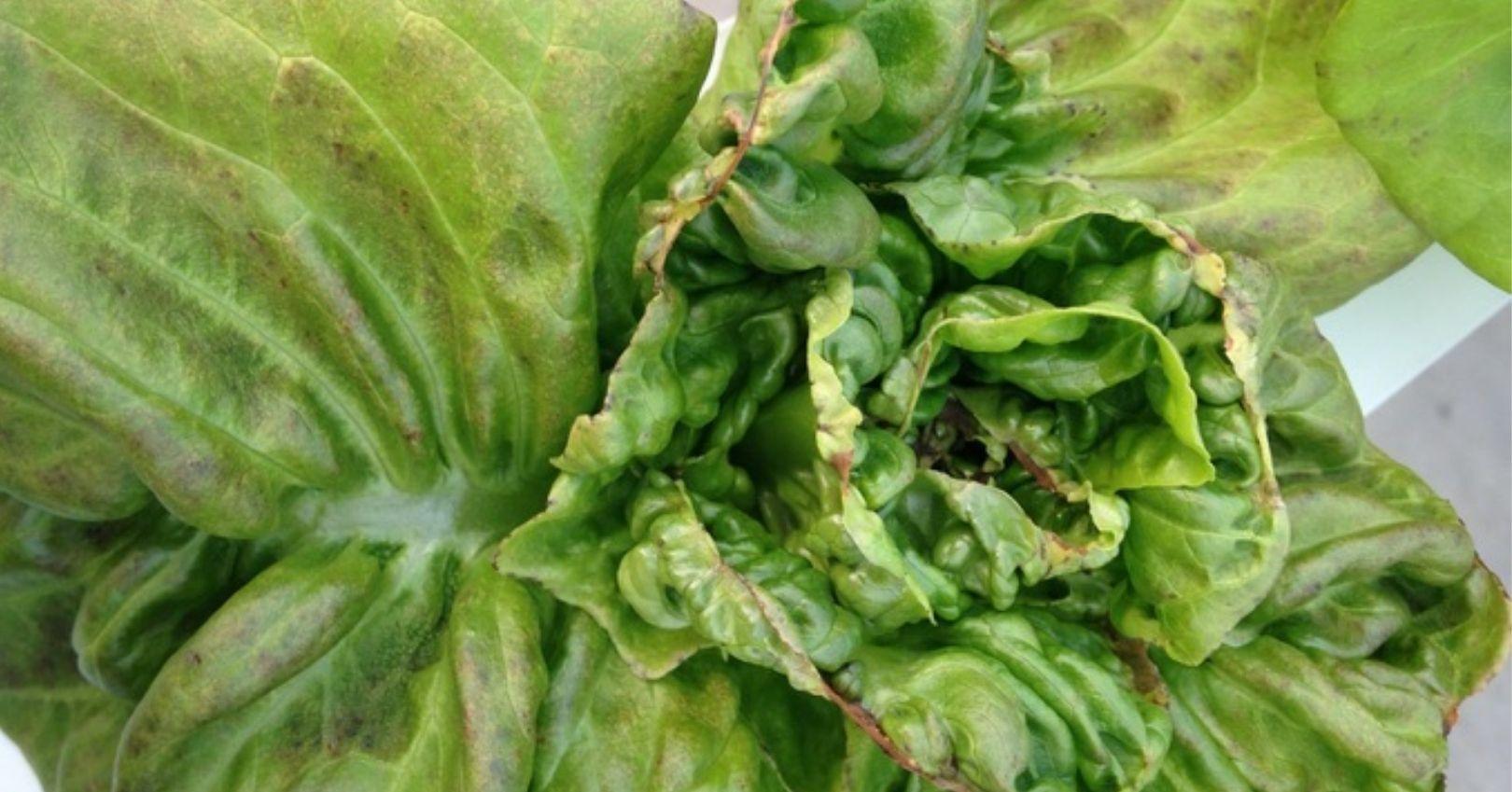
The symptoms of lettuce anthracnose are distinctive once you know what to look for, though early detection requires careful observation. The disease begins with small water-soaked spots that appear on the outer leaves closest to the soil. These initial lesions are circular or irregular in shape and feel soft and wet to the touch.
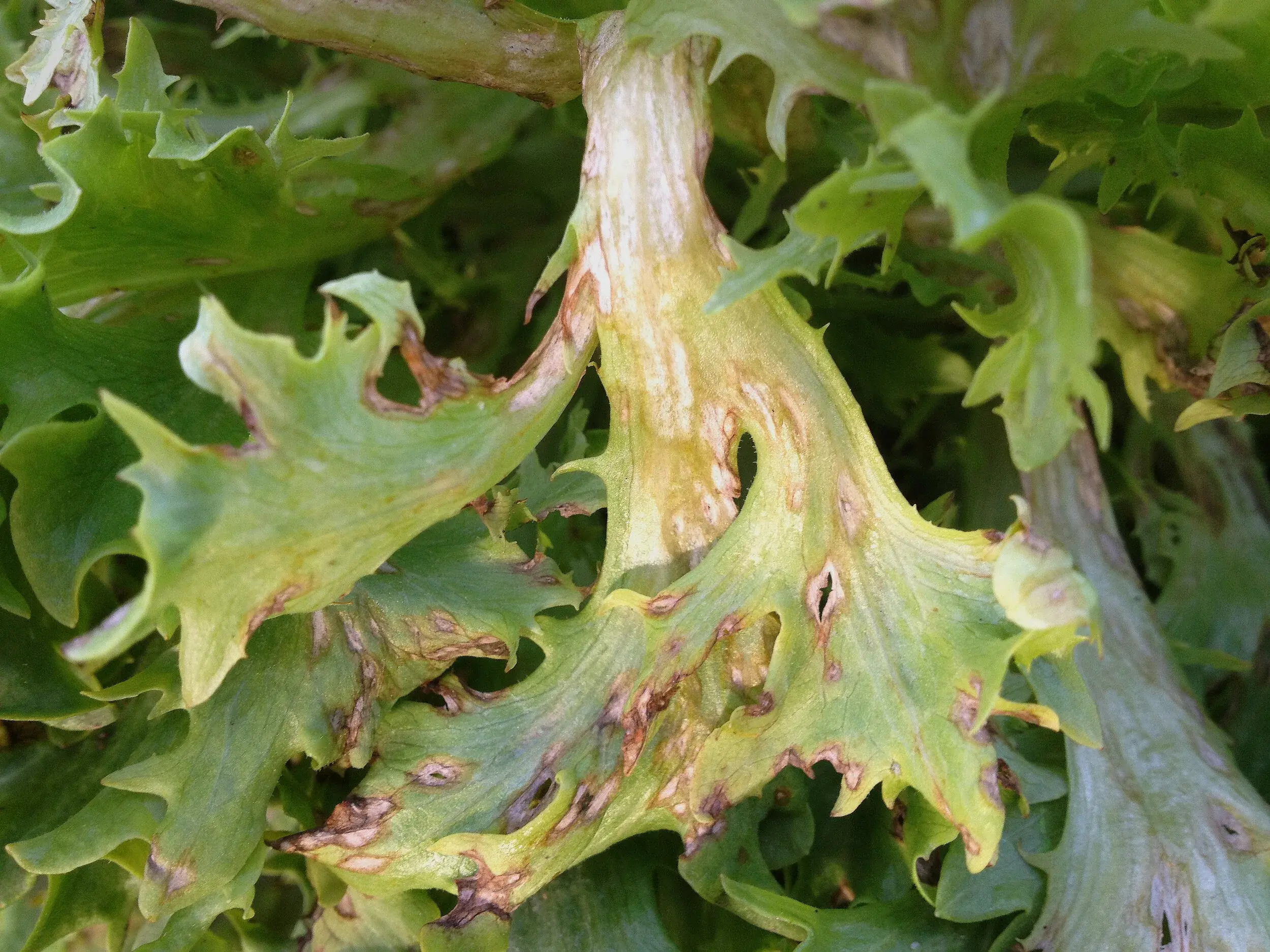
As the lesion progresses over several days, the center transitions from water-soaked through orange to tan-colored. A distinctive white to pink fungal growth appears on the lesion surface, which is the fungus producing spores. This fuzzy appearance is how you definitively confirm anthracnose rather than other leaf diseases.
With time, the lesion edges dry out and the center tissue dies and desiccates. Eventually, the dead tissue falls out entirely, creating a "shot-hole" appearance where it looks like something punched holes in the leaves. In advanced cases, entire leaflets can be affected, causing significant defoliation and stunting of the plant.
Seedlings are particularly vulnerable. If anthracnose infects the cotyledons (the first leaves), the seedling often dies before producing true leaves. This makes anthracnose especially devastating in nurseries and early production stages.
Where Symptoms Appear
Anthracnose has very specific location preferences on the plant, which helps you scout efficiently. The disease strongly prefers leaf axils, which are the protected angles between the main stem and leaf petioles. These locations stay wetter longer because spray doesn't reach them easily, and they retain moisture from irrigation splash and rain.
The lower outer leaves are first affected because they are closest to the soil, where microsclerotia reside. The disease then advances in an upper and inward direction toward the head of lettuce and higher leaves. In commercial lettuce, outer leaves are usually removed at harvest and discarded; this may mask any early presence or development of the disease. Therefore, careful scouting is required on inner leaves and axils.
Once you see lesions on inner leaves or multiple leaves showing symptoms, the disease has become established and crop loss is likely significant.
Severity Stages
Understanding disease progression helps you make treatment decisions. Here's what you'll observe as anthracnose develops:
Early stage: Barely visible small water-soaked spots appear on outer leaves. Many growers miss this stage unless scouting carefully.
Active infection: Water-soaked spots clearly visible, turning orange-tan. White-pink fungal growth present. This is your critical window for intervention.
Spread phase: Multiple leaves show lesions. Disease moves inward. Defoliation becomes noticeable. Fungal growth produces spores spreading to nearby plants.
Advanced stage: Shot-hole symptoms visible on many leaves. Significant defoliation reduces photosynthetic area. Plant growth stunted. Crop quality compromised.
Severe loss: Outer leaves severely damaged or missing. Inner head compromised. Crop unmarketable. Significant economic loss.
Early detection at stage 2 can mean the difference between managing the disease and losing the crop. Waiting until stage 3 or later makes recovery unlikely.
Quick Symptoms Checklist
Upper Leaf SurfaceDisease Characteristics
☐ Water-soaked spots on outer leaves ☐ White to pink fuzzy growth
☐ Lesions turn orange-tan over time ☐ Shot-hole (holes in leaf tissue)
☐ Lesions in leaf axils preferred ☐ Affects lower leaves first
If you see this pattern, anthracnose is likely present. Begin management immediately.
What Conditions Allow Anthracnose to Develop
Cool, Wet Weather is the Perfect Storm
Anthracnose has very specific environmental requirements, which makes weather prediction crucial for management. The fungus favors temperatures around 15 degrees Celsius (59 degrees Fahrenheit), making spring the highest-risk season for most regions. This temperature preference is why anthracnose explodes during spring rains and cool periods but remains dormant during hot summers.
Moisture is equally critical. The microsclerotia and spores require a minimum of 8 hours of continuous leaf wetness to cause infection. However, in leaf axils where moisture naturally accumulates, infection can occur even without extended free water because the protected environment maintains humidity.
The combination of cool temperatures and spring rain is what creates disease epidemics. A single rainfall event can splash millions of fungal structures from soil onto leaves. Every time it rains while temperatures stay cool and leaves remain wet, each raindrop event becomes a new infection opportunity. This is why spring weather forecasts become your disease management calendar.
Geographic location matters tremendously. Coastal areas with fog and regular spring rains see more anthracnose than inland regions with similar temperatures but less moisture. Spring growers in rainy climates are at particular risk. Understanding your local climate pattern helps you predict outbreak years versus safe years.
Soil and Water as Disease Vectors
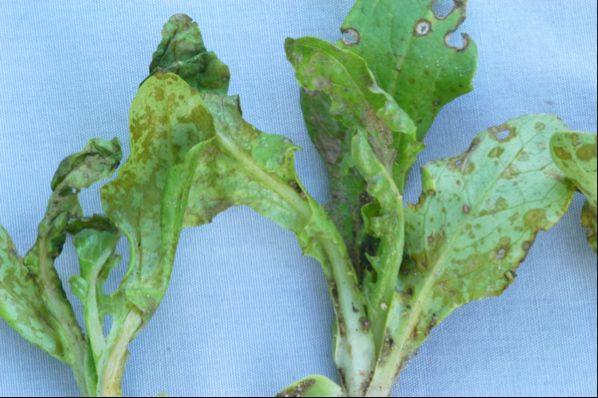
The fundamental difference between anthracnose and airborne diseases is that soil is the primary inoculum source. Microsclerotia in soil are splashed onto leaves through rain impact or overhead irrigation, making water management absolutely critical to disease prevention.
This soilborne transmission means fields have distinct disease histories. A field that had anthracnose two years ago may still harbor enough microsclerotia to cause an outbreak. Contaminated soil from infected equipment or contaminated transplants becomes a major disease vector. A single dirt clod carried from an infested field to a clean field can introduce the disease.
Rain-splash transmission occurs primarily in the first 10 meters from soil surface, which is why planting new lettuce crops at least 10 meters away from previously infected fields is recommended. This distance does not eliminate but only reduces in minimizing a splash-borne infection, therefore emphasizing the importance of quarantine and field history.
Overhead irrigation applied during cool, wet weather will dramatically increase disease pressure by creating extended leaf wetness. On the other extreme is drip irrigation delivering water only to the soil, hence minimizing the condition requirements of the fungus. This is why irrigation method becomes a primary management decision in high-risk situations.
Infected Plant Residue and Carryover
Previous seasons' infected plant residue serves as a major reservoir for microsclerotia. The fungus can survive on dried leaf material for months, and in soil as microsclerotia for years. A field where you grew infected lettuce two years ago can still pose significant risk.
Soil microbial communities can influence how long microsclerotia survive. Soils with high biological activity may have faster residue decomposition and microsclerotia degradation. Soils tilled to bury residue can also preserve microsclerotia in anaerobic conditions of the soil, until the survival period.This carryover mechanism makes thorough post-harvest cleanup essential. Any infected plant material left in the field at harvest remains a dormant pathogen source. Even composting lettuce residue may not completely eliminate microsclerotia unless temperatures exceed 60 degrees Celsius consistently.
Preventing Lettuce Anthracnose Before It Starts
Here's what field research consistently shows: preventing anthracnose is far more effective and economical than treating it once established. Prevention focuses on three strategies: avoiding high-risk situations, managing moisture, and reducing soil inoculum through rotations.
Avoid High-Risk Fields and Times
Your most powerful prevention tool is field history. Fields that grew infected lettuce in the past three to four years carry high microsclerotia loads. Growers who track disease in each field over years develop predictive accuracy about which fields are safe for spring lettuce.
If you have spring lettuce options, plant in fields with no anthracnose history whenever possible. If high-risk fields are your only option, seriously consider waiting to plant until summer when cool, wet conditions are less likely. The financial calculation of delaying planting often works out better than losing the crop to disease.
For fields with some disease history but not recent infection, closely monitor spring weather forecasts. If long range forecasts remain cool and wet, then increase prevention even in the lower risk fields. If long range forecast is warm and dry for the spring, disease pressure will be minimal and prevention can be de-emphasized.
Transplants are a significant factor . Infected transplants introduce the pathogen to clean fields. Carefully inspect all transplants before planting. If any show anthracnose symptoms, reject the entire lot. Nursery-sourced disease is one of the most common ways clean growers get infected fields.
Eliminate Leaf Wetness Through Irrigation
How you deliver water to your lettuce directly impacts anthracnose pressure. The single most important principle is simple: keep leaves dry. Every hour that leaves stay wet during cool weather is an opportunity for infection.
Drip irrigation and furrow irrigation deliver water to the soil without wetting foliage, making them strongly preferred in anthracnose-prone situations. Even in rainy climates, drip irrigation minimizes the additional moisture from your irrigation system, reducing the total hours of leaf wetness.
Overhead sprinkler irrigation is problematic in spring because it simultaneously wets leaves (creating infection conditions) and carries soil splash (the inoculum) onto the plants. In most cases, overhead irrigation during spring anthracnose season represents a disease management failure.
If you currently use overhead irrigation and can't transition to drip immediately, strictly avoid overhead watering during cool, wet spring periods. Water only during warm, dry daytime hours when foliage will dry rapidly. Never irrigate in late afternoon or evening when leaves will stay wet overnight, which is when the fungus is most active.
Steps to improve your irrigation management:
Assess your current system and identify if leaves get wet during irrigation
Plan transition to drip or furrow irrigation for high-risk seasons
If overhead is necessary, apply only during warm, dry midday hours
Never apply water after 2 PM if cool evening temperatures expected
Monitor leaf dryness after irrigation to verify system is working
Optimize Plant Spacing and Sanitation
Plant spacing provides airflow, therefore directly reducing humidity that creates high pressure of disease. A densely packed field always provides a very humid microenvironment, hence moisture stays long on the leaves. Usual recommendations for lettuce spacing vary between 6 and 12 inches depending on variety and type of production.
In anthracnose prone areas, consider wider spacing to maximize airflow. Yes, this reduces yield per acre, but it also reduces disease pressure significantly. The financial trade-off between slightly lower plant density and avoiding crop loss often favors wider spacing in high-risk areas.
Sanitation means removing infected plant material from the field immediately during production. Any leaf showing anthracnose symptoms should be removed and destroyed. This prevents the diseased leaf from producing millions of new spores that can spread to neighboring plants.
Equipment sanitation prevents spreading microsclerotia between fields. Wash all equipment that touched infected fields before moving to clean fields. A 10 percent bleach solution disinfects tools effectively. Soil trapped in equipment cleats or frames is a major disease vector between fields.
Post-harvest field cleanup is essential. Remove all plant residue from the field and either destroy it or compost at temperatures exceeding 60 degrees Celsius. Any residue left in the field carries dormant microsclerotia into next season. Deep burial through tillage can work but may preserve microsclerotia in anaerobic conditions rather than eliminating it.
Between season field sanitation includes cleaning all storage containers, transport vehicles, and packing equipment before use on clean fields. Cross-contamination through shared equipment is a common disease transmission route.
Select Tolerant Varieties
Here's an important reality about anthracnose resistance: no widely available commercial lettuce varieties have good anthracnose resistance. Modern breeding efforts focused resistance on downy mildew and other airborne diseases, leaving anthracnose management dependent on other methods.
Some older lettuce varieties show better field tolerance to anthracnose than modern varieties, though the difference is not dramatic. The challenge is that newer varieties were specifically bred for resistance to downy mildew, which sometimes came at the expense of robust anthracnose tolerance.
Plant breeders are actively working on anthracnose resistance in lettuce, but resistant varieties aren't yet commercially available. Check with your seed supplier for any tolerance information, but don't rely on variety selection as your primary anthracnose prevention strategy.
Crop Rotation Strategy
Crop rotation is your long-term disease suppression tool. The minimum rotation period for anthracnose-contaminated fields is four years because microsclerotia can survive that long in soil. Four-year rotations break the disease cycle, though they don't completely eliminate dormant microsclerotia.
A typical rotation sequence might look like this:
Year 1: Lettuce (anthracnose develops)
Year 2: Tomatoes or peppers
Year 3: Beans or legumes
Year 4: Other crops or fallow
Year 5: Lettuce again (after 4-year break)
Why not rotate with other leafy greens? Because Microdochium panattonianum can infect spinach, endive, and related species. You're only breaking the cycle if you plant truly non-host crops.
Keep detailed field history records noting where anthracnose appeared, severity, year, and what was planted. Over several seasons, patterns emerge showing which fields are highest risk. Fields with severe anthracnose two years ago remain riskier than fields that had it four or more years ago.
Prevention Checklist: Your Foundation for Success
☐ Field history should be checked before planting spring lettuce.
☐ Use drip irrigation or irrigate at soil level only.
☐ Do not overhead irrigate during cool, wet spring weather.
☐ Adequately space plants for air circulation.
☐ Four-year crop rotation minimum.
☐ Remove infected leaves immediately during season.
☐ Disinfect equipment between fields
☐ Clean all equipment thoroughly after harvest season
☐ Inspect transplants before planting
☐ Plan crop rotations with documented field history
Implement 4-5 of these consistently equals high success rate. Combine all of them equals best protection possible.
Regular monitoring is one of the most effective prevention tools. Consistent field scouting catches anthracnose early before spread becomes widespread. Plantlyze makes this easier by analyzing plant photos to detect early symptoms you might miss. Check out Plantlyze.com for automated plant health monitoring.
Managing Anthracnose When Prevention Fails
Fungicide Options and Challenges
If anthracnose appears despite your prevention efforts, fungicides become an important management tool, though with significant limitations. Understanding why anthracnose is difficult to control with fungicides helps you make realistic decisions about treatment.
Most fungicides work as protectants, meaning they prevent infection from occurring rather than curing existing lesions. The protective residue on the leaf surface blocks spore germination. However, once the fungus has already penetrated leaf tissue and established, fungicides have limited effectiveness.
The fundamental challenge with anthracnose fungicides is spray coverage. The disease prefers the protected areas in between stems and leaves, commonly referred to as leaf axils. These are extremely difficult places for any spray to reach. Even with advanced spraying techniques today, nothing has yet been developed that can perfectly emulate the infections which take place even while fungicides are being applied. That is another big reason cultural prevention (avoiding leaf wetness) works better than fungicides.
Common fungicide options include prochloraz (which requires closed-head lettuce to work), mancozeb, carbendazim, and copper compounds. Each has different effectiveness profiles. The reality is that under high disease pressure in leaf axil locations, fungicide effectiveness is modest at best.
Do not use the same active ingredient more than once per season if you are applying fungicides. Resistance management is critical. Rotate between different classes of fungicides. The pathogen adapts quickly if the same product is used repeatedly-in resistance development can render a formerly effective fungicide useless within a single season in high-pressure situations.
Biological and Cultural Control Options
Biological controls are more environmentally friendly with lower resistance risk compared to chemical fungicides. Bacillus subtilis and Trichoderma spp. can control the fungus by competition and through immunity induced in the plant.[8,9] The disadvantage is that they act slower than chemical fungicides. Re-application may also be necessary.
Cultural control methods remain highly effective. Manual leaf removal of infected leaves breaks the infection cycle and prevents spore production. In commercial operations, hiring workers to scout and remove infected leaves costs less than chemical treatments and is more effective at stopping spread.
Using organic, pathogen-free mulch prevents splash-up of microsclerotia from soil onto lower leaves. Tillage practices that bury infected residue can help, though must be deep enough to keep microsclerotia away from the soil surface where lettuce roots absorb them.
The integrated approach combines fungicides, cultural control, and cultural practices for best results. Relying on fungicides alone almost always fails under moderate to high disease pressure.
When to Treat Lettuce Anthracnose
Right TimeWrong Time
Early symptoms on outer leaves Advanced infection, extensive defoliation
Predicted rain after warm period Leaves already shot-holed and dying
Fungal growth visible but limited Crop already significantly damaged
Young plants with high commercial value Mature lettuce near harvest
Fungicides are protectants, not cures. Timing is critical, and early treatment at first symptoms offers better outcomes than waiting until disease is obvious.
Consistent field scouting catches anthracnose before it spreads widely. Plantlyze makes monitoring easier by analyzing plant photos to detect early symptoms you might miss. Check out Plantlyze.com for automated plant health monitoring.
Building a Sustainable Anthracnose Management System
Integrated Disease Management Approach
This is what research consistently shows: prevention, monitoring, and treatment work best as an integrated system. In other words, no approach works perfectly. You have to layer systems so that if one fails, others succeed.
Integrated pest management recognizes the interaction of field history, weather, variety, method of irrigation-and timing of fungicide application. All these factors must be addressed in your management system rather than by any single tool available.
Record which field grew lettuce and when in the same notebook with observations of where anthracnose appeared together with outbreak-conducive weather conditions, variety planted, and fungicides applied. Over several years of patience through seemingly meaningless scribbling, a person can tell an outbreak year long before it happens and makes management decisions accordingly.
Seasonal Monitoring and Response
Spring is the critical period for monitoring. As soon as the soil warms up and there are spring rains, in fields with any history of the disease, start scouting. Scout once a week during cool, wet periods and twice a week if anthracnose has already been detected.
What to look for: starting from the outer leaves which are closer to the soil, carefully inspect leaf axils. Look for water-soaked spots and early lesion development. Record what you observe: date, place, number of leaves affected, intensity of the disease. This becomes your field history record.
When it is warm and dry, pressure from the disease is reduced. You may decrease scouting frequency but should not completely stop because some inoculum remains in the soil and on plant residue which will again become problematic when conditions favor cool wet weather.
Rain is your trigger for increased vigilance. When it is forecast, plan to respond immediately after rainfall. Scout within 24 to 48 hours of rain so that infections can be spotted early and caught before they establish. If scouting finds infections at an early stage, begin fungicide applications immediately. If the field is clean, make a judgment as to whether preventive fungicide application is justified or not.
Seasonal Monitoring Timeline
March to April: Scout seedlings and transplants. Check greenhouse conditions. Monitor weather for warm versus cool patterns.
May to June: Increase field checks to weekly. Note humidity patterns. Plan irrigation adjustments if rain expected.
July to August: Hot weather reduces disease pressure. Continue monitoring but less intensively. Scout for secondary problems.
September to October: Cool fall weather can trigger second outbreak. Increase checks if cool, wet conditions return. Prepare field cleanup.
November to January: Post-harvest cleanup. Inspect fields for remaining residue. Plan next season's crop rotations and field selection.
FAQ About Lettuce Anthracnose
Is anthracnose the same as downy mildew?
No. These two diseases are very different because they come from completely different pathogens. Anthracnose is a soilborne fungus (Microdochium panattonianum) and Downy Mildew an airborne oomycete (Bremia lactucae). Key differences: Anthracnose, water-splash transmitted from the soil to create orange-tan lesions with visible fungal growth; Downy mildew, air-borne spore pathogen creating geometrically patterned yellow lesions with white undersurface growth. One works better on one disease than it does another! So yes, indeed important for effective management that we get our identification right.
Can infected lettuce be sold or eaten?
Not recommended. Infected leaves are visibly damaged and quality is severely compromised. The aesthetic damage alone makes the crop unmarketable. More importantly, anthracnose infection weakens the plant's natural defenses and immune system, potentially increasing susceptibility to secondary bacterial contamination like E. coli or Salmonella. Food safety considerations make it safest to discard infected crops rather than attempt to salvage them.
Why is anthracnose so hard to control with fungicides?
The main problem is with spray coverage. Anthracnose likes those protected areas of leaf axils, between stems and leaves where hardly any spray can reach. It develops infections in these sheltered locations even while you are busy applying fungicides to the exposed surfaces of leaves. That is why cultural prevention methods such as eliminating leaf wetness by controlling irrigation prove more effective in stopping anthracnose than chemical fungicides.
What's the best long-term solution for anthracnose?
Begin by not planting in fields with recent history of anthracnose. Rotate the lettuce crops to at least four years apart from one another. Inspect transplants before planting, and maintain good field records for prediction of outbreak years, if possible also switch to drip irrigation so that there will be no leaf wetness on the crop. This is a better way of managing anthracnose than dependence on any single method becausecom bined approaches always work better thansingly applied ones.No system is perfectly resilient but several strategy combinations build up resilience.
Taking Control of Lettuce Anthracnose
Lettuce anthracnose requires vigilant management and detailed field record-keeping. Unlike diseases with simple solutions, anthracnose management demands an integrated approach that combines prevention, monitoring, and treatment based on your specific field history and weather patterns.
The growers who succeed with anthracnose are those who treat it as an ongoing management challenge requiring systematic decision-making throughout each growing season. Each spring presents new weather patterns and field conditions. That knowledge compounds over time, making you increasingly effective at predicting and preventing anthracnose problems before they develop.
The critical factors: your field history (most important), moisture management through irrigation choices, plant spacing and sanitation practices, and seasonal monitoring schedule. Get these right, and anthracnose becomes a manageable challenge. Neglect any of them, and the disease can still surprise you with devastating crop losses.
Anthracnose requires consistent attention and good documentation, but the investment pays off in healthier crops and fewer losses. Plantlyze is designed specifically to help growers like you maintain healthy lettuce through early disease detection and systematic monitoring documentation. Whether you're managing multiple fields or a home garden, consistent monitoring is your competitive advantage. Start your free plant diagnosis at Plantlyze.com and take control of anthracnose before it takes control of your crop.
References
1. University of California IPM - Anthracnose of Lettuce
https://ipm.ucanr.edu/agriculture/lettuce/anthracnose/
2. CABI Digital Library - Microdochium panattonianum
https://www.cabidigitallibrary.org/doi/full/10.1079/cabicompendium.32559
3. PNW Handbooks - Lettuce Anthracnose
https://pnwhandbooks.org/plantdisease/host-disease/lettuce-lactuca-sativa-anthracnose
4. Frontiers in Plant Science - Fungal Pathogens
https://www.frontiersin.org/journals/plant-science/articles/10.3389/fpls.2025.1634557/full
5. NIH PubMed Central - Green Management of Postharvest Anthracnose
https://pmc.ncbi.nlm.nih.gov/articles/PMC10302910/
6. AUSVEG - Developing a Strategy to Control Anthracnose in Lettuce
https://ausveg.com.au/app/data/technical-insights/docs/VG10123.pdf