Your lettuce crop looks healthy this morning, but by next week, you notice something troubling. Yellow patches on older leaves. A fuzzy white growth underneath. Your plants are wilting despite regular watering. What started as a single plant affected is spreading across your rows.
This scenario plays out for thousands of growers every season. Lettuce diseases strike quickly and can devastate an entire crop if you don't catch them early. The good news is that most major lettuce diseases show visible warning signs before they cause serious damage. By learning to identify these symptoms, you can take action immediately and save your harvest.
Lettuce diseases spread rapidly in the cool, moist conditions that lettuce actually prefers to grow. One infected plant can infect dozens of neighbors in just a few days. This is why early identification is your best defense. When you spot disease symptoms at day one rather than day seven, you have time to isolate infected plants, adjust growing conditions, and apply treatments that actually work.
This guide walks you through identifying the seven most common and destructive lettuce diseases, what causes them, and how to spot them before they take hold of your entire crop.
Why Catching Lettuce Diseases Early Saves Your Harvest
Timing is everything in disease management. The moment a disease appears, the pathogen is actively spreading. Downy mildew can affect 60 percent of a crop in some regions if conditions stay cool and wet. Sclerotinia can survive in soil for over ten years, creating a persistent threat season after season. Botrytis spores release into the air constantly during humid conditions, drifting from plant to plant with any air movement.
The challenge facing most growers is simple: you are managing fields by eye and experience. Manual scouting takes time. Diseases that spread by wind or water splash move faster than most growers can scout. By the time you notice symptoms on ten percent of plants, the pathogen has likely colonized another twenty percent you haven't checked yet.
The difference between catching disease on day one and day seven often means the difference between saving your crop and losing it. Early stage infections respond to treatment. Late stage infections don't. This is why understanding what to look for is so valuable.
Modern diagnostic tools now exist to help confirm your visual observations. When you're uncertain about a symptom or need a quick diagnosis before treating, AI-powered plant identification tools can analyze a photo and tell you exactly what you're facing. This removes guesswork and gets you treating the right disease, not a symptom that looks similar but needs a different approach.
Downy Mildew: Identifying the Most Damaging Fungal Disease
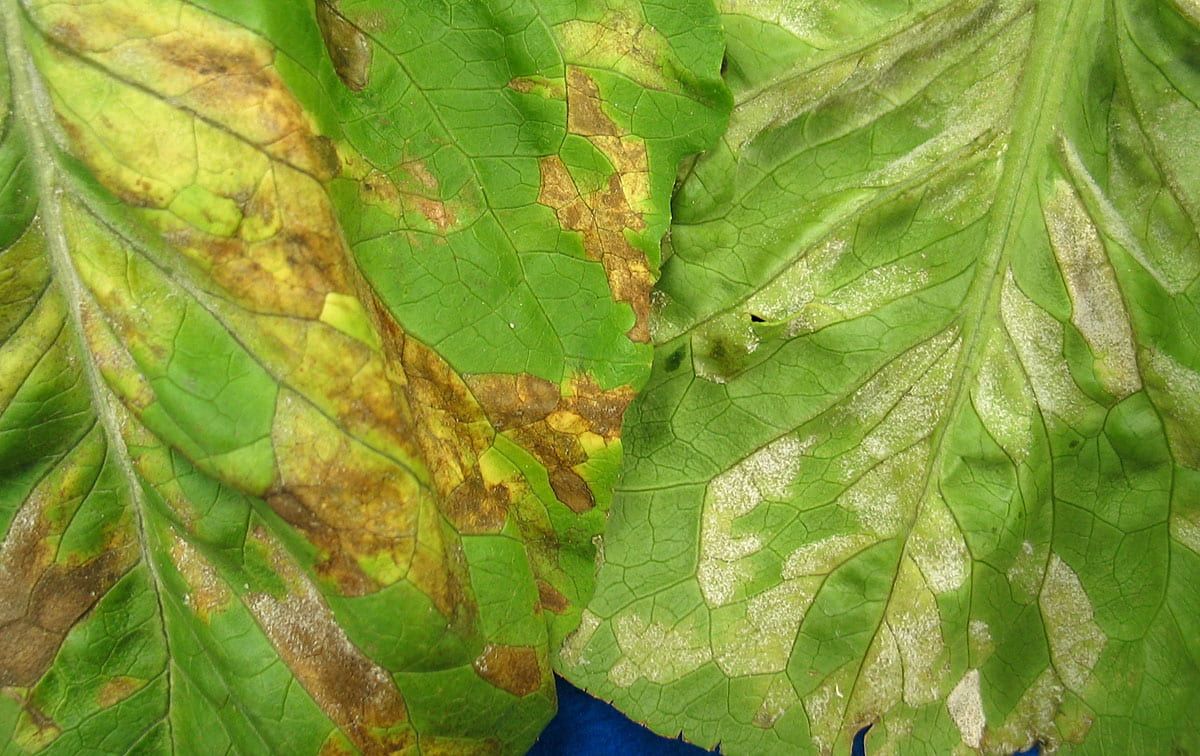
Downy mildew is the most economically important disease affecting lettuce worldwide. It appears suddenly in cool, wet weather and spreads relentlessly once it starts.
What Downy Mildew Looks Like
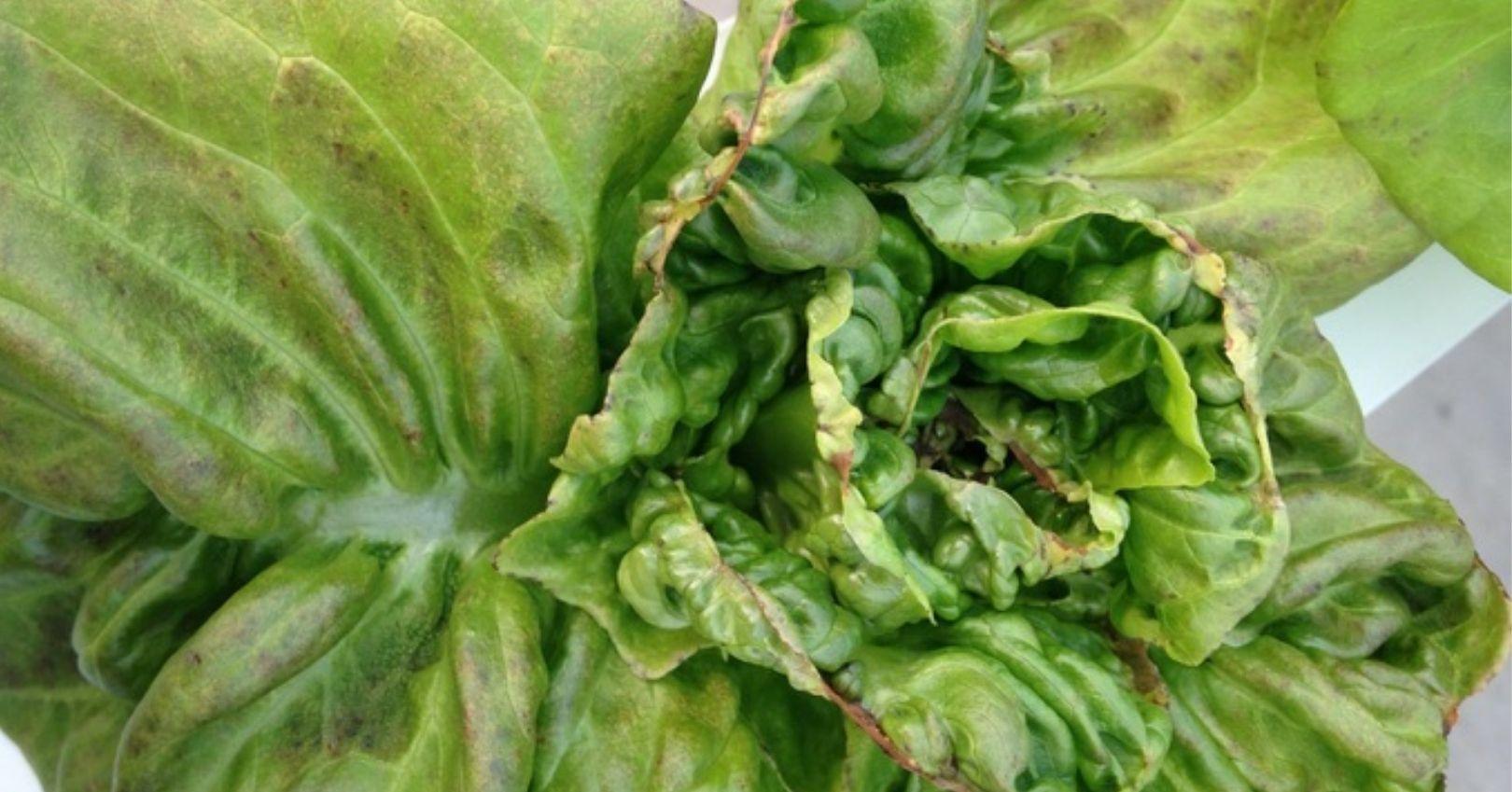
The disease shows itself first on older, lower leaves. You'll see pale yellow to light green angular patches on the upper leaf surface. These patches don't have smooth edges like other diseases. They follow the veins of the leaf, creating an angular, almost geometric appearance.
The key identifying feature is what's underneath. Flip the leaf over and look at the underside of those yellow patches. You'll see a white, fluffy cottony growth. This is the spore producing structure. Under a magnifying glass, the fuzzy growth has a distinctive branching pattern, almost like tiny trees growing upside down. As the disease progresses, these patches turn brown and dry up, but the white fuzz underneath often remains.
Downy mildew can infect young seedlings and cause them to die. If you're seeing stunted greenhouse transplants with white growth on their cotyledons, downy mildew is likely the cause.
Conditions That Trigger Downy Mildew
This disease thrives in the exact conditions lettuce loves. Cool temperatures between 50 and 72 degrees Fahrenheit are ideal. The fungus produces spores at night after a dry dark period followed by high humidity. Infection happens in just three to four hours if free moisture sits on the leaves.
This is critical. If your lettuce leaves don't dry until 10 a.m. or later, infection occurs. If leaves dry by 8 a.m., no infection happens that day. In coastal California lettuce regions, this timing difference determines whether you get downy mildew or not.
Damp, cool conditions and moisture on leaves are absolutely required. Sunny, warm days with quick drying prevent downy mildew. Cloudy, cool days with morning dew and fog create perfect conditions.
How It Spreads and Progresses
Downy mildew spreads through wind-dispersed spores. These tiny spores travel on air currents, landing on healthy plants downwind of infected ones. The spores germinate and penetrate the leaf tissue directly. One infected plant produces spores that infect others within days.
The fungus grows inside leaf cells, not on the surface. This is why the white fuzz you see is actually the fruiting structure poking through the leaf, not a surface mold. The damage occurs invisibly inside the leaf tissue first.
Once infection takes hold, new spores release within a week. This rapid reproductive cycle, combined with favorable cool, wet conditions, creates epidemics. A single infected plant today becomes dozens of infected plants a week later.
Sclerotinia Rot: The Crown Killer You Must Recognize
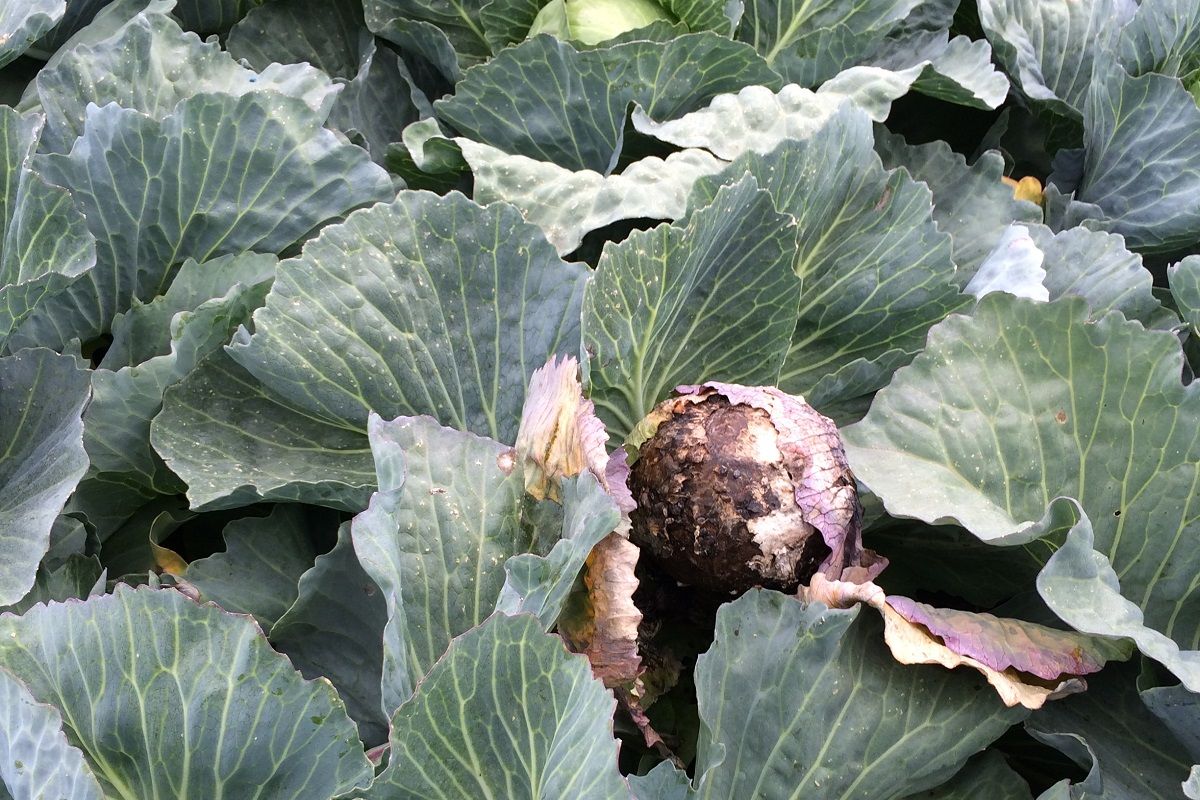
Sclerotinia rot, also called lettuce drop, differs from downy mildew in a critical way. While downy mildew is a foliar disease affecting leaves, sclerotinia attacks the stem and crown. This makes it harder to catch early because the damage happens where you can't always see it clearly.
Visual Signs of Lettuce Drop
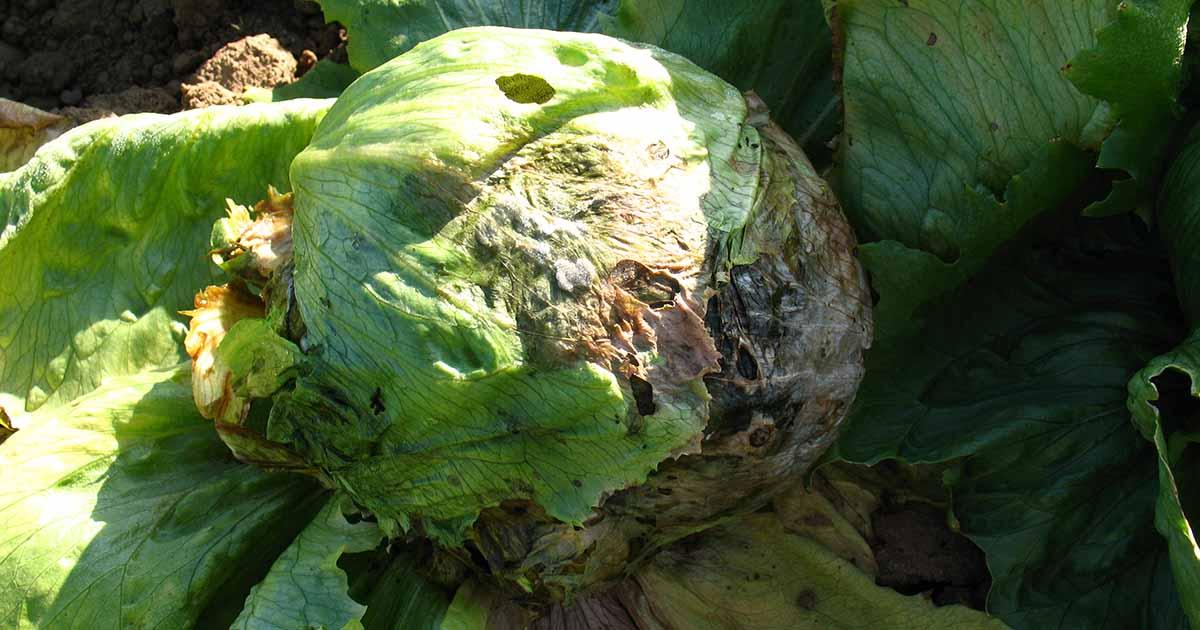
The first visible symptom is often wilting on a seemingly healthy plant. You see one plant in a row suddenly drooping. When you investigate, you find the culprit at the crown and stem. There's dark, watery soft decay on the main stem or upper root tissue.
Here's the diagnostic key: look for white cottony mycelial growth, not gray. This is extremely important because two other diseases also cause mold growth. Sclerotinia produces white, fluffy growth. Botrytis produces gray fuzzy growth. The color difference tells you exactly what you're fighting.
On the undersides of affected leaves and on the crown itself, you'll find small to large black bodies embedded in the white mycelium. These are sclerotia, the survival structures of the fungus. They look like tiny grains of black sand or larger irregular pellets, depending on which Sclerotinia species you have.
Lower leaves yellow first, then the entire plant collapses. This rapid wilting is the hallmark of sclerotinia. One day the plant looks mostly normal except for some decay at the base. Two days later, it's dead.
Two Species, Two Sclerotia Sizes
Two species of Sclerotinia cause lettuce drop, and they produce different sized survival bodies. Sclerotinia minor produces small sclerotia, ranging from one-sixteenth to one-eighth inch in diameter. Sclerotinia sclerotiorum produces larger sclerotia, from one-quarter to three-eighths inch or sometimes larger.
Both species cause similar symptoms and similar disease progression. The main practical difference is that recognizing the sclerotia size helps confirm your diagnosis. Both require soil presence and moisture to cause problems.
Why Sclerotinia Spreads Persistently
This is the truly scary part of sclerotinia. The disease is soil-borne. Those black sclerotia survive in soil for over ten years, even when buried deeply. This means a field that was infested five years ago is still infested today. The pathogen is just waiting dormant in the soil.
When conditions turn favorable, the sclerotia germinate. They produce fruiting structures that release spores into the air. These spores land on lettuce plants and cause infection. But here's the cycle: once the plant is infected, it produces thousands of new sclerotia that fall to the soil. These become next year's inoculum.
This is why sclerotinia is so persistent and why rotation alone doesn't solve it. The pathogen stays viable in soil through drought, cold, and fallow periods. Susceptible plants grown in infested soil will get the disease.
Botrytis Grey Mould: Spotting the Wind-Borne Threat
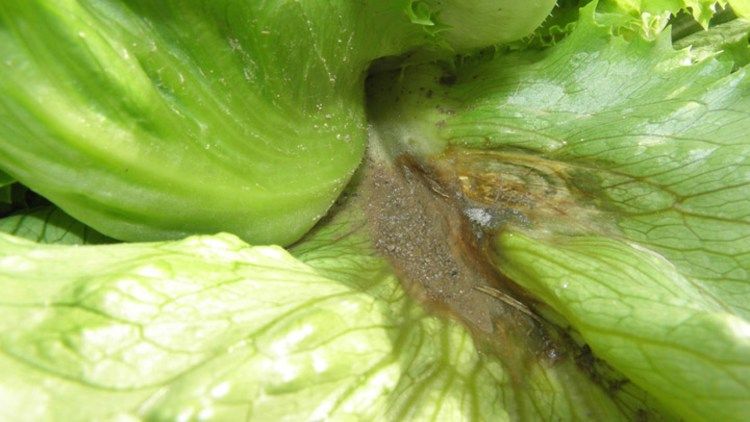
Botrytis is a common fungus that affects many crops. On lettuce, it causes grey mould. Unlike sclerotinia, which attacks the crown, botrytis typically attacks plant leaves and bases, creating a different disease picture.
Recognizing Botrytis on Lettuce
Botrytis starts as small necrotic spots on upper leaf surfaces. These spots may have yellow halos around them. As the disease progresses, gray fuzzy growth develops, particularly at the plant base and on damaged or senescing tissue.
This is the color difference that distinguishes it from sclerotinia. Remember: botrytis is gray. Sclerotinia is white. That one visual difference tells you which disease you have and which treatment approach you need.
The fuzzy growth looks dusty and smoky, not the fluffy white of sclerotinia. When you touch it or brush the leaf, spores release in a visible cloud. This dusty appearance is diagnostic. You can literally see the spores releasing from the plant.
Black sclerotia may eventually form in botrytis infections, but they start as gray growth. The color progression matters for identification.
How Wind and Water Spread Grey Mould
Botrytis spores spread through wind and water splash. The fungus produces enormous numbers of conidia, the asexual spores. These release and disperse by any air movement. In greenhouses, opening a door, running a fan, or even turning on irrigation triggers a massive release of spores.
The spores are tiny and light. They settle on healthy plants and germinate if conditions are right. High humidity and moderate temperatures (around 65 to 75 degrees Fahrenheit) favor rapid sporulation and infection. The fungus needs over 60 percent relative humidity to sporulate but can infect at lower humidity.
Unlike downy mildew, botrytis also spreads through water. Rain splash carries spores from plant to plant. Overhead watering spreads the disease. This is why drip irrigation and careful watering practices help prevent botrytis spread.
Botrytis vs. Sclerotinia: Key Differences
Both diseases cause wilting and decay, but the visual differences are clear once you know what to look for. Botrytis shows gray fuzzy growth. Sclerotinia shows white cottony growth. Botrytis affects leaves and plant bases. Sclerotinia centers on crown and stem decay. Botrytis spreads through air currents and water. Sclerotinia is soil-borne and persistent.
Treatment approaches differ too. Botrytis benefits from humidity reduction and improved air circulation. Sclerotinia requires soil management and sometimes crop rotation.
Powdery Mildew: The Dust-Like Coating on Leaves
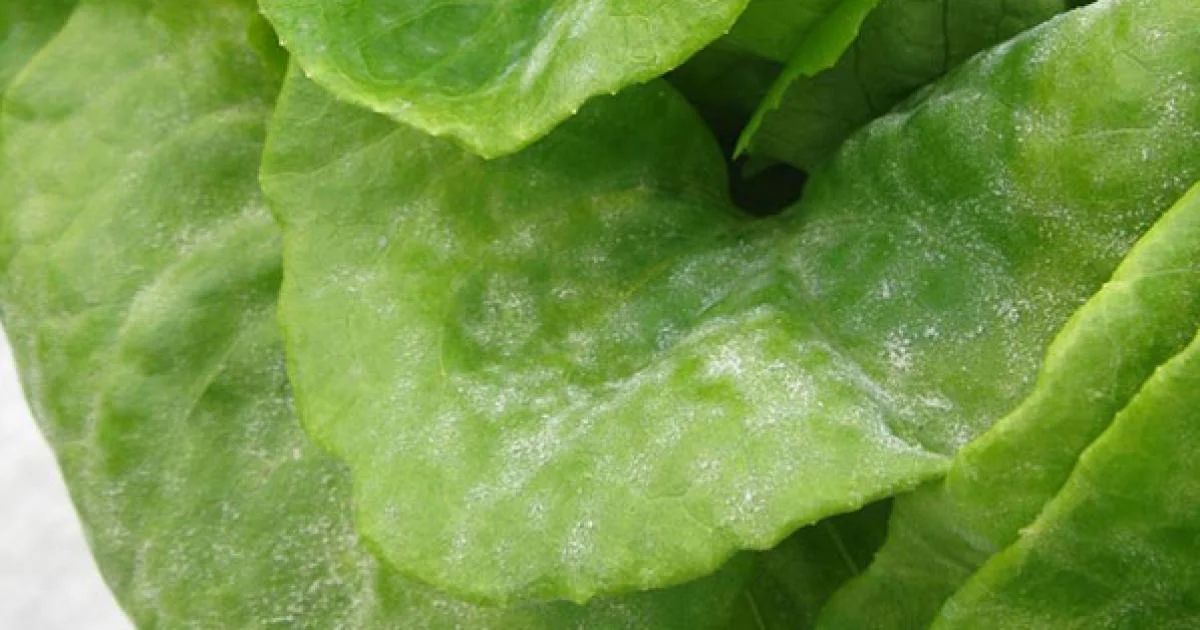
Powdery mildew looks different from every other disease covered so far. Instead of fuzzy growth or spots, it appears as a visible dust coating the leaf surface.
What Powdery Mildew Shows
Gray-white powdery or dusty material coats the upper leaf surface. This coating is composed of fungal spores. You can wipe it away, and it comes off like powder on your fingers. It also affects stems and can coat flowers if lettuce bolts.
Unlike downy mildew, which shows white fuzz underneath leaves, powdery mildew sits on top. Unlike botrytis, there's no necrotic spots or decay. The powdery appearance is the disease. Infected leaves remain relatively intact but are covered in this gray-white powder.
Conditions Favoring Powdery Mildew
Powdery mildew is unusual among lettuce diseases because it prefers slightly warmer temperatures and actually thrives with high humidity during nights and dry days. This is different from most fungal diseases that prefer constant moisture.
The disease develops best with humid nights followed by dry days. Good air circulation actually reduces powdery mildew severity, which is the opposite of some other diseases. Stagnant air and heavy foliage density increase problems.
Prevention Through Environment Control
Since powdery mildew favors poor air circulation and humidity, your management strategy focuses on environment. Increase air movement with fans. Remove lower leaves to improve circulation underneath the canopy. Space plants further apart to reduce density.
Remove infected plant material immediately to reduce spore sources. Infected leaves can be stripped if the plant is otherwise healthy. Choose resistant cultivars when available. These practices reduce powdery mildew severity without necessarily requiring chemical treatment.
Anthracnose: Water-Soaked Lesions and Shot Holes
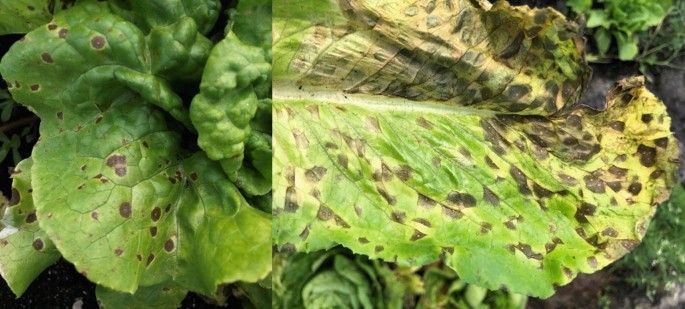
Anthracnose is a disease many growers don't immediately recognize because the symptoms look different from the mold diseases covered so far. This is a fungal disease that causes spotting rather than fuzzy growth.
Identifying Anthracnose on Lettuce
Anthracnose creates small circular to angular water-soaked lesions on lower leaves. These spots have a distinctive wet appearance initially, almost like the tissue is drowning. The centers turn necrotic, dying and turning brown.
Here's the dramatic part: as the necrotic tissue dies and dries, it falls out. This creates shot holes in the leaf, like someone shot tiny holes through the foliage. These shot holes are pathognomonic for anthracnose. If you see this pattern, you've found your disease.
Sunken lesions develop along veins and midribs, creating a distinctive network pattern on the leaf. Severe infections cause leaves to turn entirely brown and collapse. This usually affects lower, older leaves first, similar to downy mildew.
The Timeline of Anthracnose Infection
Here's what makes anthracnose dangerous: infection happens incredibly fast. If free moisture sits on leaves for two to four hours, infection is possible. This means a single dew period can infect your plants.
The fungus requires cool conditions (between 41 and 86 degrees Fahrenheit) and high humidity. It overwinters as microsclerotia in soil, which means infected soil in your field can cause problems year after year, similar to sclerotinia.
Why Anthracnose Spreads
Anthracnose spreads through water splash and air currents. Rain and overhead watering splash the fungus from plant to plant. Even natural leaf wetness from dew causes spread. Cool conditions and high humidity create perfect environments for rapid colonization.
Septoria Leaf Spot: Distinguishing It From Downy Mildew
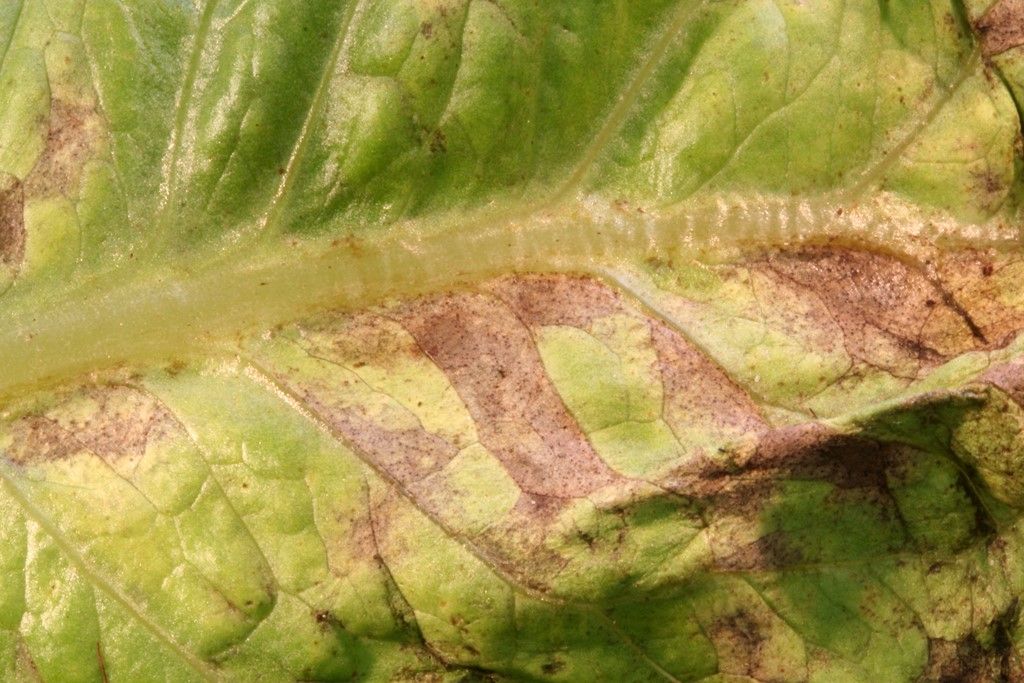
Septoria leaf spot is often confused with downy mildew because both cause angular leaf spotting. Understanding the differences helps you identify it correctly.
Visual Clues for Septoria
Septoria creates brown spots with angular outlines on older leaves. Within these brown spots, you'll see tiny black dots. These black dots are the disease's spore-producing structures, fruiting bodies embedded in the leaf tissue.
The spots appear localized and discrete, not the diffuse yellowing of downy mildew. Seedlings infected with septoria show yellow leaf markings on young foliage. As plants mature, brown spots with black dot centers become the dominant symptom.
How to Tell Septoria Apart
The key diagnostic feature is the black dots inside brown spots. If you see brown lesions without black dots inside, it's not septoria. If you see angular yellowing with white fuzz underneath, it's downy mildew, not septoria. These distinctions matter because treatment approaches differ.
Septoria affects seedlings and mature plants equally, unlike downy mildew which is often more severe on young plants. The disease persists on seed and in crop debris, so seed selection and sanitation are important.
Lettuce Mosaic Virus: The Seed-Borne Disease With No Cure
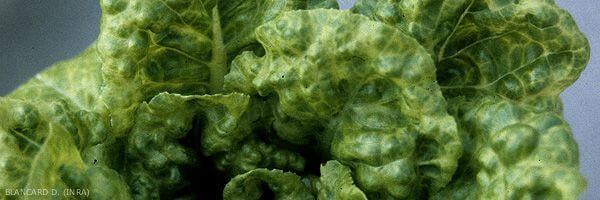
Viral diseases differ fundamentally from fungal diseases. No fungicide touches a virus. Antibiotics don't work. Once a plant is infected, that plant is lost. This makes understanding mosaic virus critical for prevention rather than treatment.
Signs of Viral Infection
Leaf rolling in young plants is often the first visible symptom. Leaves curl and twist abnormally. As the virus progresses, light green to yellow mottling develops across foliage, creating an irregular patchwork pattern.
Plants become dwarfed and stunted. They don't grow normally even if all growing conditions are perfect. Yellowing intensifies as the disease progresses. Severely infected plants are obviously sick compared to healthy neighbors.
Why Mosaic Spreads Through Seed
Lettuce mosaic virus lives inside seed tissue. This means infected seed produces infected plants. The virus also overwinters in wild lettuce species and weeds. These wild plants act as a reservoir.
Once plants are infected, aphids spread the virus between plants during feeding. A single aphid can inoculate dozens of plants. This is why aphid control matters when mosaic is present.
Prevention Focus for Mosaic
Unlike fungal diseases where treatment is possible, your only strategy for mosaic is prevention. Use certified virus-free seed from reputable suppliers. Don't save seed from infected plants. Implement rigorous aphid management to prevent spread between plants.
Remove infected plants immediately to prevent aphid spread. Weed management is critical because wild lettuce and related plants can harbor the virus. Don't allow volunteers or wild lettuce to grow near your crop.
How to Develop Disease Identification Skills
Knowing what diseases look like is one thing. Actually recognizing them in your own crop is another. This skill develops through practice and attention.
Scout Your Crop Regularly
Walk your rows at least twice weekly. Make disease scouting a habit, not an afterthought. Check the same plants each week to track changes. Look at lower leaves first because this is where moisture collects and where many diseases start.
Look for any change from normal. Yellow patches. Discoloration. Fuzzy growth. Soft decay. Spots. These signals mean you need to investigate closer. Most diseases are easiest to catch when symptoms are just beginning.
Examine Both Leaf Surfaces
Many diseases show differently on the upper versus lower leaf surface. Downy mildew symptoms are most visible on the leaf underside. Powdery mildew shows on the top. Flip leaves and look at both sides. A magnifying glass helps identify small lesions and spore-producing structures.
Take note of the exact appearance and location. Is it on lower leaves only or throughout the plant? Is it on upper or lower leaf surface? Does it have a particular color or pattern? These details help narrow down which disease you have.
Keep a Photo Record
Photograph suspected disease symptoms regularly. Note the date, location in the field, and plant condition. Over time, you build a visual library of diseases you encounter. Compare your photos to disease guides when you're uncertain.
Photos also help you communicate with extension specialists or consultants if you need expert diagnosis. A clear photo tells them what you're seeing better than a verbal description.
Learn From Experience
Each growing season teaches you something about disease patterns. Weather patterns trigger specific diseases. Temperature and humidity logs help you predict when disease risk is highest. Years of experience teach you the early warning signs that experienced growers just know.
When you're uncertain about a symptom or need quick confirmation before making treatment decisions, modern tools can help. Plantlyze is an AI-powered plant care and diagnosis platform that analyzes photos of your plants and provides accurate disease identification. You can take a photo of a suspicious symptom, upload it to Plantlyze, and get immediate diagnosis and treatment recommendations. This takes the guesswork out of identification and helps you treat the right disease, not a look-alike symptom. Visit Plantlyze.com to see how AI-powered plant diagnosis can support your disease management decisions.
Preventing Lettuce Diseases Before They Start
Prevention is always more cost-effective than treatment. Once disease takes hold, you're managing damage. If you prevent disease from starting, there's nothing to manage.
Cultural Practices That Work
Maintain adequate air circulation through spacing and pruning. Remove lower leaves that create humidity pockets. Water plants at the base using drip irrigation, never overhead. This keeps foliage dry and prevents water-splash disease spread.
Remove affected leaves and entire plants immediately when you spot disease. Don't wait. The longer infected material stays in your field, the more inoculum it produces. Sanitize tools between plants, especially when moving from diseased to healthy plants.
Rotate crops to break disease cycles. Alternating lettuce with non-host crops reduces disease pressure in subsequent years. This strategy works best for diseases like sclerotinia that survive in soil, though the effects are long-term.
Environmental Controls
Use drip irrigation systems that keep foliage dry. Wet foliage is the single biggest risk factor for most lettuce diseases. Eliminating leaf wetness eliminates infection opportunity.
Space plants for adequate air movement. Crowded plants create humidity pockets where diseases thrive. Good spacing improves light penetration and drying, both of which suppress disease.
Control humidity in protected growing environments. In greenhouses or high tunnels, ventilation management is crucial. Morning ventilation dries plants early, reducing infection windows. Excess humidity late in the day creates perfect conditions for disease spread.
Monitor temperature ranges for each disease. Downy mildew thrives in cool weather. Botrytis favors specific humidity and temperature combinations. Understanding these relationships helps you predict when disease risk is highest.
When to Consider Treatment
If disease appears despite prevention efforts, early treatment provides the best results. Fungicide applications work on early infections. Advanced infections where the plant is already heavily colonized respond poorly to treatment.
Some diseases like lettuce mosaic have no chemical cure. Your only option is removing infected plants. Other diseases like powdery mildew respond well to fungicides or sulfur applications. Understanding which diseases are treatable tells you whether to treat or remove plants.
Prevention is always more cost-effective than treatment. A single fungicide application costs less than losing a crop. Spending time on prevention practices saves money and heartache later.
Take Action: Protect Your Lettuce Crop Today
Early disease identification prevents crop loss. Visual signs appear before serious damage occurs. Regular crop scouting catches problems when they're manageable. Different diseases need different approaches, and knowing which disease you have determines which solution works.
The best growers don't just react to disease. They scout regularly, identify symptoms early, and act immediately. This approach saves thousands of dollars in prevented losses.
While your own visual inspection is always your first defense, you now have tools to support your disease management decisions. If you're unsure about a symptom you're seeing in your lettuce crop, take a photo and visit Plantlyze.com. The AI-powered platform analyzes your photo and provides accurate diagnosis along with tailored treatment recommendations for your specific conditions. This removes uncertainty and helps you make confident decisions about whether to treat, remove plants, or adjust growing conditions.
Your lettuce crop depends on your ability to spot disease early. With the knowledge from this guide and modern diagnostic support, you have everything you need to keep your plants healthy and your harvest safe.
References
UC Davis Plant Pathology
https://cppsi.ucdavis.eduUC IPM (Integrated Pest Management)
https://ipm.ucanr.edu/agriculture/lettuce/downy-mildew/Utah State University Extension
https://extension.usu.edu/vegetableguide/leafy-greens/dropNIH/PMC (National Institutes of Health)
https://pmc.ncbi.nlm.nih.gov/articles/PMC11207035/CABI Digital Library (Centre for Agriculture and Bioscience International)
https://www.cabidigitallibrary.org/doi/full/10.1079/cabicompendium.9611University of Arizona Cooperative Extension
https://acis.cals.arizona.edu/agricultural-ipm/vegetables/lettuce/diseases