Why Eggplant Leaves Turn Yellow: Understanding Nutrient Deficiency
If your eggplant plants look sick with yellowing leaves, stunted growth, or reduced fruit production, nutrient deficiency is likely the culprit. Many gardeners mistake these symptoms for disease, but the solution is much simpler. Eggplants have high nutrient demands and show deficiency symptoms quickly, often within weeks of planting in poor soil.
The good news is that deficiency symptoms differ by nutrient, which helps you identify the exact problem. Early identification allows you to fix problems before harvest loss occurs. Understanding optimal soil conditions prevents most deficiency issues from developing in the first place.
Multiple correction methods exist from soil amendments to foliar sprays, giving you flexibility in how you address problems. Whether you prefer organic approaches or synthetic fertilizers, solutions work effectively when applied correctly. Plantlyze's AI plant diagnosis tool helps identify deficiency symptoms instantly from a single photo, taking the guesswork out of diagnosis.
Eggplants Need Heavy Feeding: The NPK Story
Eggplants remove approximately 3.16 pounds of nitrogen, 0.18 pounds of phosphorus, and 2.13 pounds of potassium from soil for every tonne of production. These three macronutrients are the most critical and the most common deficiency problems you will encounter. Understanding each one helps you prevent and treat deficiencies before they damage your harvest.
Nitrogen Deficiency: The Most Critical Problem
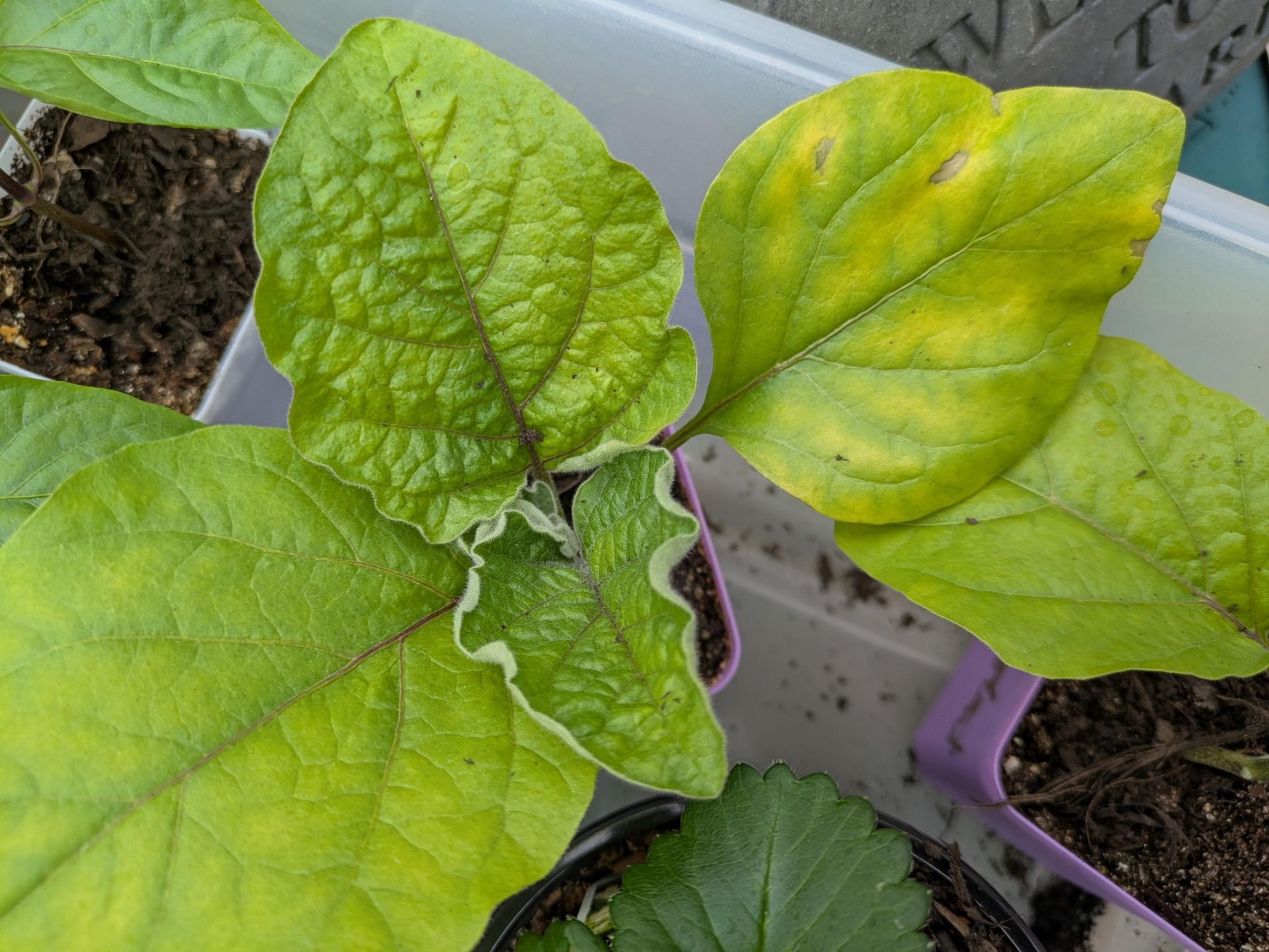
Nitrogen deficiency causes the most dramatic yield loss of any single nutrient deficiency. Research shows that nitrogen deficiency alone results in 99 percent loss of above ground biomass and 97 percent loss of root biomass when plants receive no nitrogen at all. This makes nitrogen the most limiting nutrient for eggplant production.
Pale yellow leaves that start on older lower foliage first are the hallmark of nitrogen deficiency. Yellowing progresses to all leaves as deficiency worsens, eventually affecting even the newest growth. Stunted growth with smaller plants than normal appears alongside reduced leaf size and fewer total leaves. Poor flowering and minimal fruit development follow as the plant struggles to produce the energy it needs for reproduction.
Nitrogen is essential for chlorophyll production, which drives photosynthesis and sugar creation. Without nitrogen, your plants cannot make the sugars they need for growth and fruit production. Additionally, nitrogen deficiency interferes with your plant's ability to absorb other nutrients, creating a cascade of deficiencies that compounds the problem.
Phosphorus Deficiency: The Growth Limiter
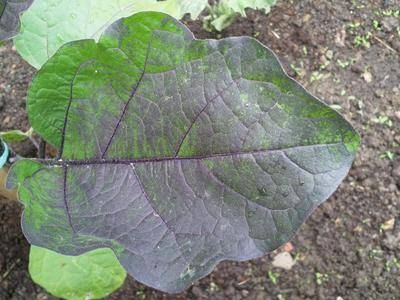
Phosphorus deficiency stunts plant growth and delays fruiting. This nutrient plays crucial roles in energy transfer, fruit development, and root establishment. Plants deficient in phosphorus simply cannot develop the vigor needed for large harvests.
Stunted growth with noticeably smaller plants appears first. Small leaves compared to healthy plants become obvious when you compare deficient plants to well-fed neighbors. Older leaves turn dark green, blue, or purple red as phosphorus becomes immobilized in the tissue. Leaf deformation and curling follow, along with purple streaks or blackish spots on leaf stems and petioles.
Poor root development and weak root systems prevent the plant from accessing water and other nutrients effectively. Delayed flowering and maturation mean your harvest comes later or not at all. Phosphorus drives energy production and fruit development. Without adequate phosphorus, your plant simply cannot develop the robust root system and flowering infrastructure needed for large harvests.
Potassium Deficiency: The Weakener
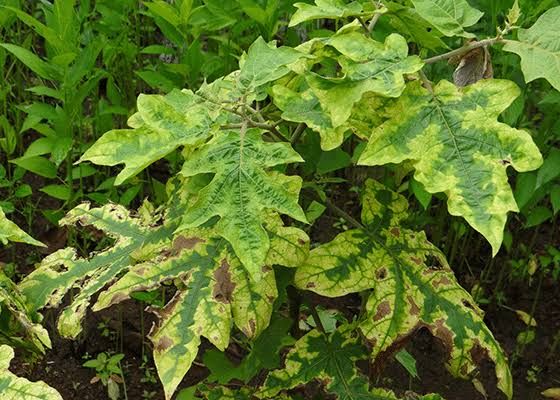
Potassium deficiency research shows that plants lose 94 percent of above ground biomass and 93 percent of below ground biomass when potassium is completely absent. This nutrient is critical for plant structure, disease resistance, and water regulation. Deficient plants weaken and cannot support heavy fruit loads.
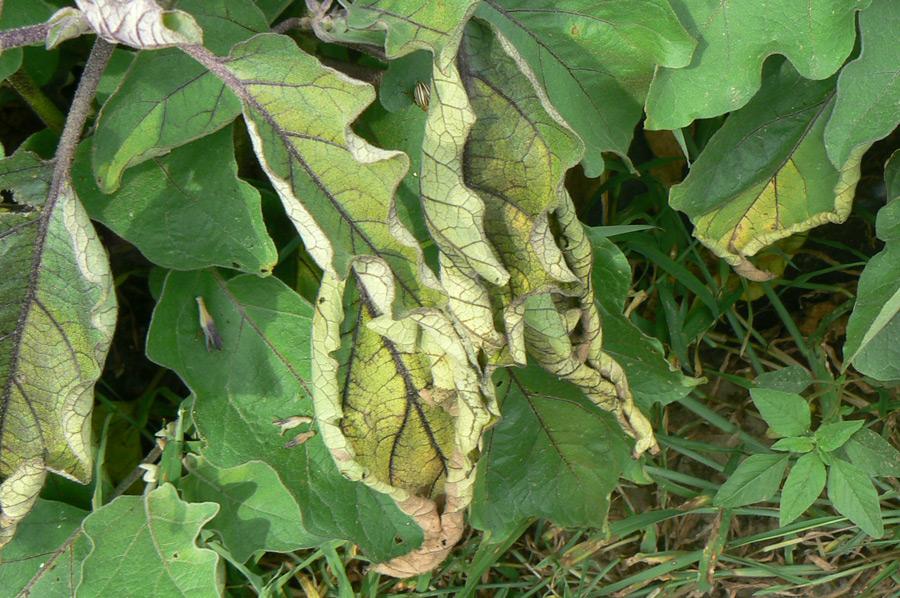
Yellowing and browning along leaf edges and margins appear first, starting on older leaves. Leaf margin scorch appears water-soaked initially before margins turn brown and dry as deficiency progresses. Leaves curl and wilt even with adequate water, a characteristic sign of potassium shortage. Stunted growth and weak stems that cannot support fruit loads follow.
Reduced fruit size and poor fruit quality represent the harvest-reducing impact of potassium deficiency. In severe cases, leaf margins show necrosis and dark spots that make the foliage look diseased. Potassium regulates water movement in plants, activates enzymes, and strengthens cell walls. Without adequate potassium, your plants weaken and cannot support heavy fruit loads or resist disease pressure effectively.
Beyond NPK: Magnesium, Calcium, Sulfur, and Trace Elements
While nitrogen, phosphorus, and potassium grab most attention, eggplants also require adequate supplies of secondary macronutrients and trace elements. Deficiencies in these nutrients create distinct symptoms you can learn to recognize and correct quickly.
Magnesium Deficiency: The Chlorophyll Robber
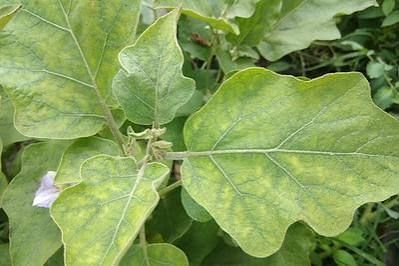
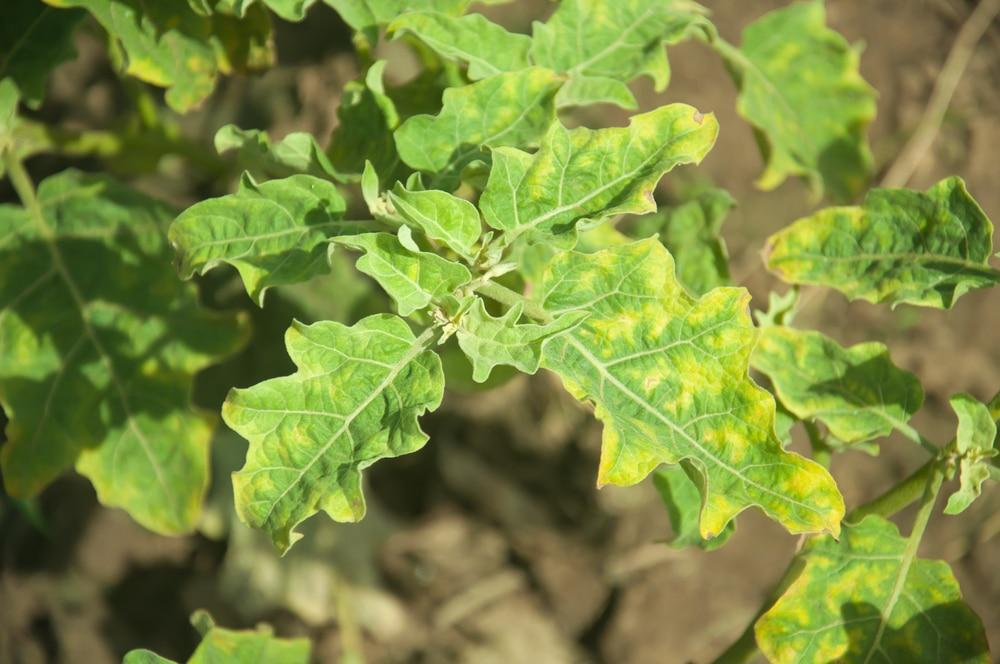
Magnesium is at the center of every chlorophyll molecule. When magnesium is deficient, chlorophyll production stops, and yellowing (chlorosis) appears between leaf veins while the veins themselves stay green. Brown spots often develop on the yellowed areas as the deficiency progresses.
This interveinal chlorosis pattern is distinctive and easy to recognize once you know what to look for. The green veins contrasting with yellow tissue between them create a striking appearance. Sandy soils naturally low in magnesium, overly acidic soils, excessive potassium or calcium competition, and over-irrigation all contribute to magnesium deficiency in your garden.
Calcium Deficiency: The Blossom End Rot Problem
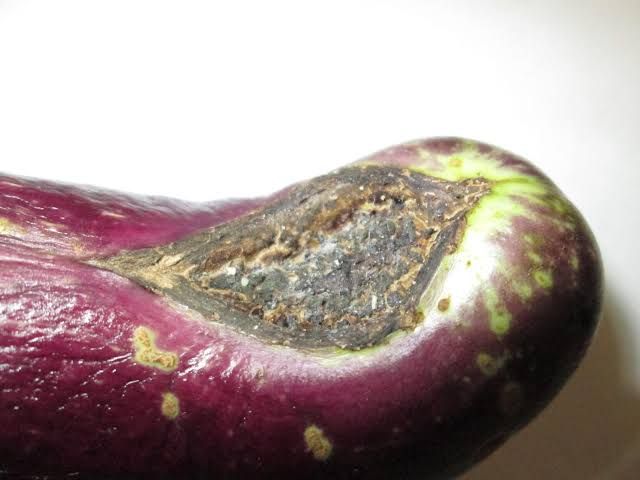
Calcium deficiency creates the distinct problem called blossom end rot. Water soaked, bronze colored spots appear at the blossom end of the fruit where the flower once attached. Eventually these spots turn dark, dry, and leathery, making the fruit completely unmarketable.
Stunted new growth, scorched young leaf tips, and stunted root growth also occur with calcium deficiency. Fluctuating soil moisture and drought stress are the most common causes. High soil salinity, excessive nitrogen, or excessive potassium also interfere with calcium uptake by the plant. The key to preventing blossom end rot is consistent soil moisture, not drought stress followed by heavy watering.
Sulfur and Micronutrient Deficiencies
Sulfur deficiency causes uniform yellowing of younger leaves, since sulfur is immobile and deficiency shows on newest growth first. Stems thin, growth stunts, and reduced flowering follows. Iron deficiency creates interveinal chlorosis on newest leaves while older leaves stay green, causing growth to slow and yield to decrease.
Zinc deficiency shows yellowing with interveinal patterns, narrower or wavy leaf margins, and stunted growth with clustered rosette-like leaves. Brown or tan spots develop on foliage as deficiency worsens. Boron deficiency causes stunted growth at the growing tip, twisted curled new leaves, and death of growing points. Weak brittle stems, reduced flowering, and misshapen fruit represent serious yield threats from boron deficiency.
Soil pH: The Hidden Key to Preventing Nutrient Deficiency
Many gardeners apply fertilizer and still see deficiency symptoms. The real issue is often soil pH, which controls whether plants can actually absorb nutrients even when they are present in soil. Testing and adjusting pH solves many seemingly mysterious deficiency problems.
The Optimal pH Range for Eggplants
Most sources recommend pH between 5.8 and 6.5 for eggplants. At this range, most macronutrients and micronutrients are available for plant uptake. Recent research shows that soil pH between 7.0 and 7.5 actually provides optimal availability of major nutrients like nitrogen, phosphorus, and potassium. However, at these higher pH levels, trace elements like boron and molybdenum remain available while iron, zinc, and copper become less available.
When soil pH drops below 5.0, nutrient availability becomes severely restricted. Research shows that at pH 4.5, calcium and magnesium availability drop by 61 to 78 percent compared to pH 7.5. At the same acidic pH level, toxic levels of aluminum accumulate in soil, which further prevents nutrient uptake by plant roots.
What This Means for Your Garden
Before assuming you have nutrient deficiency, test your soil pH. Simple home pH test kits cost just a few dollars and give you immediate answers. Most universities offer affordable soil testing services that measure both pH and nutrient levels.
If soil is too acidic, add lime according to soil test recommendations. If soil is too alkaline, sulfur amendments can lower pH. These adjustments alone often eliminate deficiency symptoms within weeks. Soil pH can shift over time due to rainfall, fertilizer type, and decomposing organic matter, so test annually to stay on top of changes.
Prevention Works Better Than Treatment: Start with Soil
An ounce of prevention truly is worth a pound of cure when it comes to nutrient deficiency. Building healthy, nutrient rich soil before planting prevents most deficiency problems from developing. Your initial soil preparation sets the stage for the entire growing season.
Pre-Planting Soil Preparation
Work 20 to 30 pounds of well rotted compost or manure into every 100 square feet of garden. Organic matter improves soil structure, increases nutrient holding capacity, and provides slow release nutrients throughout the growing season. Never use fresh manure because fresh manure can burn plants and introduce pathogens. Only use well decomposed manure that has aged at least 6 months.
Most universities offer affordable soil testing services. Testing tells you exactly what nutrients are already in your soil and what you need to add. This prevents both deficiency and excess nutrient problems. You might discover that your soil has adequate nutrients but wrong pH, saving you from unnecessary fertilizer spending.
Choosing and Applying the Right Fertilizer
For pre-planting, use balanced fertilizers like 10-10-10 or 5-10-10. These provide adequate nitrogen, phosphorus, and potassium for strong plant establishment. Apply fertilizers at rates of 1 to 2 pounds per 100 feet of row for side dressing, or according to soil test recommendations.
Once plants begin flowering, switch to fertilizers higher in phosphorus and potassium to support fruit development. Many gardeners use 5-10-10 formulations at flowering time to shift nutrient ratios toward fruit production. This transition helps maximize yield when plants are setting and developing fruit.
Creating Long-Term Soil Health
Each year, add 1 to 2 inches of compost around plants but not touching stems. Compost slowly releases nutrients while improving soil structure year after year. Organic mulch decomposes slowly, adding nutrients to soil continuously. Plus mulch keeps soil moist and regulates temperature, reducing stress and nutrient uptake problems.
Healthy soil contains billions of beneficial microbes that help plants absorb nutrients more efficiently. Organic matter, compost, and diverse plant life all support these beneficial organisms. When you build soil health, you build a system where plants naturally absorb nutrients more effectively.
When Deficiency Appears: How to Fix It Fast
Despite your best efforts at prevention, deficiency symptoms sometimes appear. The good news is that correction is straightforward once you identify the problem. Acting quickly prevents symptoms from worsening and permanent yield loss.
Identify the Specific Deficiency
Match your plant symptoms to the descriptions in the previous sections. Look at which leaves show symptoms first and what the pattern looks like. Nitrogen deficiency shows first on old leaves. Iron and zinc show first on young leaves. This distinction helps you identify the exact problem.
Make sure symptoms are not from disease, pest damage, or watering issues. Deficiency symptoms have characteristic patterns that distinguish them from other problems. Use Plantlyze.com and upload a photo of your affected plant to get AI powered diagnosis confirming which nutrient is deficient. This takes the guesswork out of correction and ensures you apply the right solution.
Soil Application Solutions
For nitrogen deficiency, apply nitrogen fertilizer through drip irrigation or as a side dressing at the soil surface. Nitrogen is mobile in plants, so foliar application also works quickly. Most gardeners see improvement within 7 to 10 days of nitrogen application.
For phosphorus deficiency, apply phosphorus fertilizer as a side dressing to the soil. Phosphorus is immobile, so soil application is more effective than foliar spraying. Work the fertilizer into the top inch of soil around plants and water thoroughly.
For potassium deficiency, apply potassium fertilizer at the soil surface around plants. Water in thoroughly to help nutrients reach the root zone. For secondary nutrients and micronutrients, most balanced fertilizers contain these elements. If deficiency persists, consider specialized fertilizers containing the specific micronutrient you need.
Foliar Spray Application: The Fast Fix
Plants absorb nutrients applied to leaves much faster than nutrients applied to soil. In some cases, foliar nutrient absorption occurs within hours to days. Magnesium, iron, zinc, and boron respond exceptionally well to foliar application. These micronutrients absorb quickly through leaf surfaces.
Apply foliar sprays in early morning or evening when stomata (pores on leaves) are open. Avoid spraying during hot midday hours when sprays evaporate before absorption. Mix foliar fertilizer according to label directions and spray thoroughly to coat both leaf surfaces. Repeat every 7 to 10 days until symptoms disappear.
Drip Fertigation for Ongoing Management
Drip irrigation combined with fertilizer (called fertigation) delivers nutrients slowly throughout the season. This prevents feast-famine nutrient cycles that stress plants. Install drip lines before planting and connect to a fertigation system that automatically delivers dilute fertilizer solution through the drip lines.
Precise nutrient delivery reduces leaching losses and ensures consistent plant nutrition. You can adjust nutrient ratios based on growth stage, applying more nitrogen early and shifting to phosphorus and potassium at flowering. This flexibility makes fertigation the most sophisticated approach for commercial growers.
Sustainable Solutions: Organic Approaches to Nutrient Management
Organic gardeners and those seeking sustainable practices have effective options for preventing and correcting nutrient deficiencies. These methods build soil while providing nutrients.
Compost and Aged Manure
Apply 5 to 10 tons per hectare before planting, or 20 to 30 pounds per 100 square feet. Work into the top 8 inches of soil before planting eggplants. Compost releases nutrients gradually, providing consistent feeding throughout the season. Quality compost also improves soil structure and water holding capacity dramatically.
Side dress established plants with 1 to 2 inches of finished compost around (but not touching) stems monthly during the growing season. This ongoing application maintains nutrient levels as plants grow and produce fruit. Never use fresh manure because it can burn plants and introduce pathogens. Always use well-aged manure that has decomposed for at least 6 months.
Plant-Based and Microbial Biostimulants
Plant extracts or beneficial microorganisms enhance nutrient uptake efficiency by plants. Research shows that biostimulants can reduce mineral fertilizer requirements by up to 40 percent while maintaining yield. Microbial biostimulants show particularly strong results in improving nutrient availability.
Apply according to product label directions and combine with soil-applied fertilizers for best results. The beneficial microbes in these products colonize the root zone and help plants access nutrients more efficiently. Some products also contain plant hormones that encourage root growth and nutrient absorption.
Digestate from Organic Waste
Digestate results from anaerobic digestion of livestock waste or organic material. It contains slow-release nutrients and organic matter. Apply at 90 tons per hectare (approximately 40 tons per acre) before planting for nitrogen equivalent of 280 kg per hectare.
Digestate provides nutrient value similar to mineral fertilizers while building soil organic matter. Fruit quality improves with digestate compared to synthetic fertilizers. The organic matter in digestate improves soil structure and water holding capacity over time.
Get Expert Nutrient Diagnosis Instantly with Plantlyze AI
Nutrient deficiency diagnosis can be tricky because symptoms sometimes look similar across different nutrient problems. Plantlyze removes the guesswork with AI-powered plant diagnosis technology.
Upload a photo of yellowing leaves or stunted growth and the AI technology analyzes the specific symptom pattern. You receive instant identification of which nutrient is deficient with customized correction recommendations for your specific plant. Track your corrections and monitor improvement over time using the app's plant tracking features.
Plantlyze confirms deficiency diagnosis before you spend money on fertilizers. This prevents wasting fertilizer on the wrong nutrient and saves time versus research and manual diagnosis. The platform provides specific application rates and timing for your plant and creates a history of what works in your garden.
Visit Plantlyze.com today and upload a photo of your yellowing eggplant. Get instant expert diagnosis and customized treatment recommendations. No more guessing about nutrient deficiency or wasting money on the wrong solutions.
Seven Nutrient Management Mistakes That Cost Harvests
Learning from the mistakes others make prevents you from repeating them in your own garden. These seven common errors cost significant harvests when overlooked.
Applying fertilizer without testing tops the list of mistakes. Without soil testing, you might add nutrients that are already abundant, creating imbalances that interfere with plant nutrition. Test soil before planting and base fertilizer choices on test results. This simple step prevents wasted money and better results.
Ignoring soil pH causes ongoing problems even when you apply fertilizer regularly. Even with adequate nutrients present, wrong pH prevents plant uptake. Test and adjust soil pH to optimal range of 5.8 to 6.5. This single adjustment often eliminates deficiency symptoms within weeks.
Using too much nitrogen creates lush foliage but delays fruiting and reduces yield. Excessive nitrogen makes plants grow vegetatively at the expense of flowers and fruit. Follow soil test recommendations and avoid over-fertilizing early season. Transition to higher phosphorus-potassium fertilizers at flowering.
Over-watering causes excessive water to leach nutrients from soil and creates root problems that limit nutrient uptake. Water deeply but less frequently, keeping soil moist not soggy. Consistent soil moisture allows roots to absorb nutrients steadily throughout the season.
Never adding organic matter gradually reduces soil fertility and organic matter over time. Without compost or manure, soil becomes depleted and compacted. Add compost or well rotted manure annually. This ongoing amendment maintains soil health and nutrient levels.
Waiting too long to treat deficiency allows small symptoms to become severe problems. Small deficiency symptoms visible on a few leaves indicate early-stage problems. Scout plants regularly and treat symptoms immediately when first noticed. Early treatment prevents yield loss.
Misidentifying the problem wastes money and time while the real problem continues. Applying the wrong nutrient wastes money and time while the real problem continues. Use Plantlyze or university extension resources to confirm diagnosis before treating. Correct identification ensures you apply the right solution.
Healthy Plants Start with Healthy Soil
Eggplants have high nutrient demands and show deficiency symptoms visibly and quickly. Nitrogen, phosphorus, and potassium are the most critical macronutrients for eggplant production. Secondary macronutrients and micronutrients also play important roles in plant health and productivity.
Soil pH controls nutrient availability even when nutrients are present in the soil. Prevention through soil building works better than treatment after deficiency appears. Multiple correction methods exist from soil application to foliar sprays and drip fertigation. Organic and synthetic options both work effectively when applied correctly.
This season, test your soil pH and nutrient levels before planting. Adjust pH to 5.8 to 6.5 range if needed. Add compost or manure before planting eggplants. Use balanced fertilizer at planting and transition to higher phosphorus-potassium at flowering. Scout plants weekly for early deficiency signs and treat problems immediately when symptoms appear.
Track what works in your garden for future seasons. Take notes about which fertilizers worked best and when symptoms appeared. This information helps you refine your nutrient management strategy year after year.
Nutrient deficiency is preventable and easily correctable once you understand the symptoms. Healthy soil is the foundation of healthy eggplants. Start with soil, and your eggplants will thrive with vigorous growth and abundant production.
Download the Plantlyze app at Plantlyze.com and photograph any plants with concerning symptoms. The AI technology diagnoses problems instantly and provides treatment recommendations based on what it sees in your photo. Whether you are dealing with yellowing, stunted growth, or poor fruiting, Plantlyze helps you identify the exact nutrient deficiency and fix it fast. Get expert guidance for your eggplant crop today and never guess about nutrient management again.
References
NIH/National Center for Biotechnology Information: https://pmc.ncbi.nlm.nih.gov/articles/PMC8177653/
Clemson University HGIC: https://hgic.clemson.edu/
UC Statewide IPM: https://ipm.ucanr.edu/
University of Delaware Extension: https://sites.udel.edu/weeklycropupdate/
Frontiers in Plant Science: https://www.frontiersin.org/journals/plant-science/