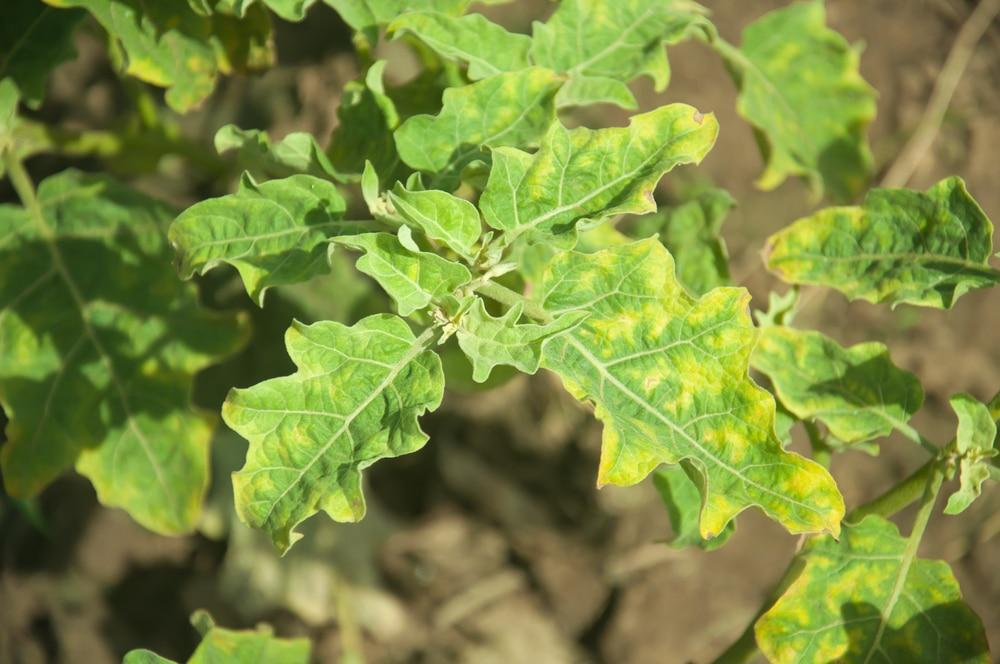
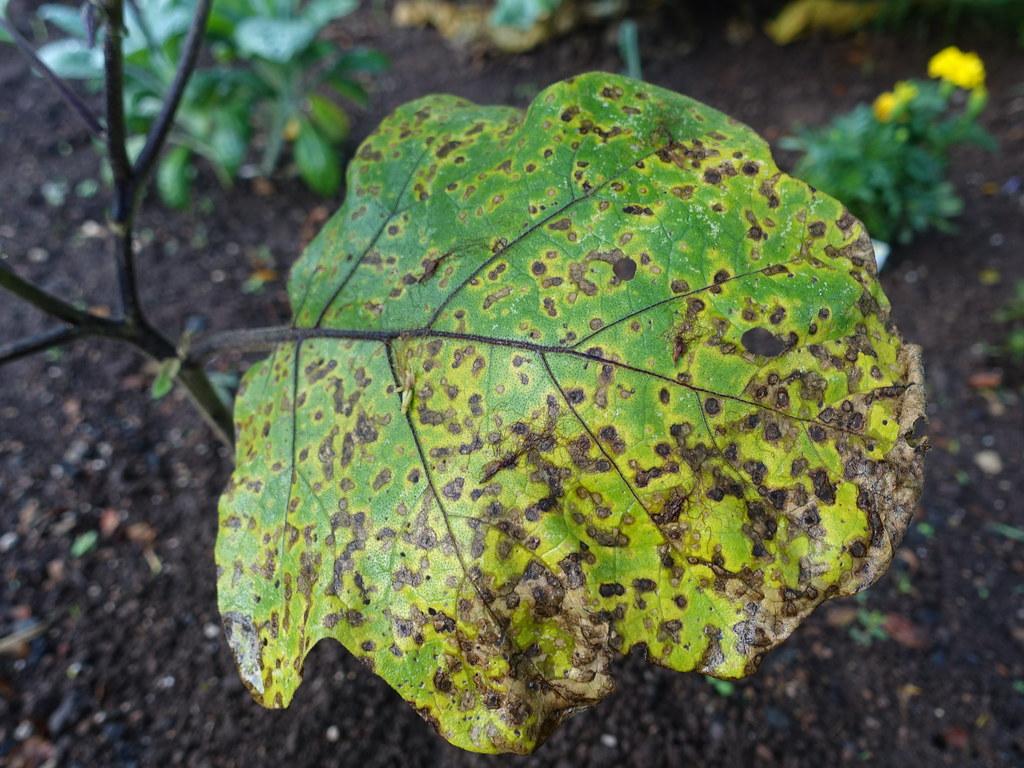
You notice small spots appearing on your eggplant leaves. At first, they seem harmless, just a few tiny marks here and there. But within days, the spots multiply, merge together, and your once lush green foliage looks like it has been splattered with paint. The leaves turn yellow, curl up, and start falling off. Your eggplant plants look sickly, and fruit production drops dramatically. You are facing leaf spot disease, one of the most common yet destructive problems that can plague your eggplant crop.
Leaf spot diseases can defoliate your eggplants and slash fruit production by half if left unchecked. The frustrating part is that multiple pathogens cause similar symptoms, and each requires a different treatment approach. The good news is that with proper identification and targeted management, you can stop these spots in their tracks and restore your plants to health.
What Is Eggplant Leaf Spot?
Eggplant leaf spot is not a single disease. Several different diseases result in spotting of eggplant leaves. The primary offenders are Cercospora melongenae, Alternaria melongenae, Xanthomonas campestris pv. vesicatoria and Septoria lycopersici-yes, quite a mouthful! Each pathogen usually attacks with its own particular signature assault on your plants-learning to recognize these signatures is the first step toward effective control.
These diseases are common all over the world, particularly in warm humid climates where moisture remains on leaf surfaces. They have a severe economic impact with some growers reporting total defoliation in outbreak years. When leaves drop prematurely, photosynthesis is reduced, plant vigor declines and fruit size and quality suffer dramatically.
What makes leaf spot diseases especially challenging is that fungal and bacterial pathogens require completely different treatments. Fungal leaf spots respond to fungicides, while bacterial leaf spots require bactericides or copper based products. Using the wrong treatment wastes money and time while the disease continues to spread. This is why accurate identification is the foundation of successful management.
Recognizing the Symptoms: Spot the Differences
Each leaf spot pathogen creates distinctive symptoms. Learning to spot these differences helps you choose the right treatment immediately.
Cercospora Leaf Spot Symptoms
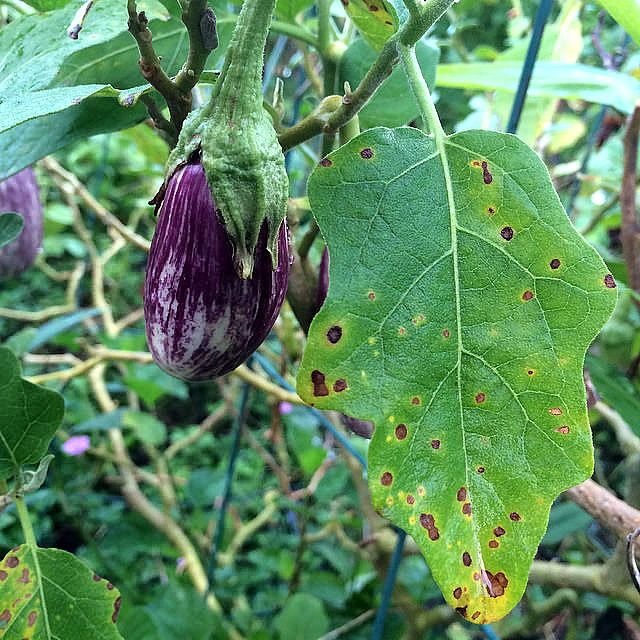
Cercospora leaf spot starts as small circular spots with tan to light brown centers. These spots develop dark purple to black borders that make them stand out against the green leaf background. The disease typically begins on lower leaves and progresses upward as spores splash onto higher foliage.
As spots age, their centers may fall out, creating shot holes in the leaves. This gives infected foliage a ragged, tattered appearance. The spots remain relatively small, usually 4 to 10 millimeters in diameter, but they can be numerous enough to cover entire leaves. Cercospora thrives in warm temperatures between 25 and 30 degrees Celsius combined with high humidity.
Alternaria Leaf Spot Characteristics
Alternaria leaf spot develops target-like dark brown to black circular lesions with distinct concentric rings. The spots enlarge to one or two centimeters in diameter and a bright yellow halo develops around the lesions. Target pattern is the key diagnostic feature that separates Alternaria from other leaf spots.
In severe cases, Alternaria causes massive defoliation as spots coalesce and leaves die prematurely. The disease favors warm wet weather, especially during periods of frequent rain or heavy dew. Alternaria can also infect stems and fruit, causing rot that further reduces yield.
Bacterial Leaf Spot Identification
Bacterial leaf spot caused by Xanthomonas campestris creates small water soaked spots that quickly turn dark brown to black. Unlike fungal spots, bacterial lesions are angular in shape because they are bounded by leaf veins. This angular pattern is the most reliable field diagnostic feature.
The spots develop yellow halos and may coalesce into large necrotic areas. In humid conditions, you can see bacterial ooze on the leaf surface, appearing as tiny water droplets or a slimy film. Bacterial leaf spot spreads rapidly during warm temperatures and splashing rain, making it particularly destructive during wet growing seasons.
Septoria Leaf Spot Features
Septoria leaf spot produces small circular spots with dark brown borders and tan centers. Look closely at the centers with a hand lens, and you will see tiny black fruiting bodies that look like pepper grains. These are the spore producing structures of the fungus.
The disease starts on lower leaves and progresses upward, favored by moderate temperatures and prolonged leaf wetness. While less common than Cercospora or Alternaria, Septoria can cause severe defoliation when conditions are favorable.
Diagnostic Comparison for Accurate Identification
The key to successful management is distinguishing between these diseases in the field. Fungal leaf spots have distinct borders and textures. Cercospora spots have dark borders with tan centers. Alternaria shows target like concentric rings. Septoria displays tiny black fruiting bodies in the centers.
Bacterial leaf spots are angular and water soaked, bounded by leaf veins. They lack the distinct borders of fungal spots and show bacterial ooze in humid conditions. Using a hand lens helps you see fruiting bodies or bacterial streaming for confirmation.
When symptoms are unclear, laboratory testing provides definitive identification. However, most gardeners can make accurate field diagnoses by carefully observing spot shape, color pattern, and progression.
How Leaf Spot Diseases Spread and Thrive
Understanding disease cycles helps you break them effectively. Fungal leaf spot pathogens produce spores that spread through wind, rain splash, contaminated tools, and even on your hands and clothing. These spores land on wet leaf surfaces, germinate, and penetrate the leaf tissue.
Bacterial leaf spot pathogens spread primarily through rain splash, contaminated seed, insects, and mechanical transmission. Bacteria enter leaves through natural openings or wounds, multiply in the moist leaf interior, and ooze out to spread to new infection sites.
All leaf spot pathogens survive between growing seasons in plant debris, soil, weed hosts, and seed. They overwinter in infected leaves that fall to the ground, waiting for spring rains to splash spores onto new growth. This is why garden sanitation is critical for long term control.
Infection requires free water on the leaf surface combined with warm temperatures. Most leaf spot pathogens thrive at 25 to 30 degrees Celsius with high humidity. Each rain event or heavy dew period creates opportunities for new infections. During favorable weather, multiple infection cycles can occur in a single growing season.
Weed hosts play a major role in disease persistence. Many broadleaf weeds harbor leaf spot pathogens without showing severe symptoms, acting as reservoirs that reinfect your eggplants each year. Contaminated seed can introduce bacterial leaf spot to clean gardens, making seed source critical.
Proven Prevention Strategies
Prevention is far more effective than treatment when dealing with leaf spot diseases. An integrated approach combining multiple strategies gives the best protection.
Cultural Practices That Stop Disease Before It Starts
Always use disease free seed and transplants from reputable suppliers. Inspect seedlings carefully before purchasing, rejecting any with spots or lesions. If you save your own seed, treat them with hot water or bleach solutions to eliminate bacterial pathogens.
Practice crop rotation with non solanaceous crops for two to three years. This starves pathogens by removing susceptible hosts. Rotate with cereals, beans, or root crops to break disease cycles.
Remove and destroy all plant debris after harvest. Do not compost infected leaves, as spores can survive and spread when you use the compost. Burn debris or seal it in plastic bags for disposal.
Space plants adequately to promote good air circulation. Proper spacing allows leaves to dry quickly after rains or dew, reducing infection opportunities. Remove lower leaves that touch the soil to prevent spore splash from ground to foliage.
Water at the base of plants using drip irrigation or soaker hoses. Avoid overhead watering that wets foliage and creates ideal conditions for spore germination. If you must use sprinklers, water early morning so leaves dry quickly in the sun.
Soil and Plant Management Techniques
Improve soil drainage and maintain proper plant nutrition. Balanced fertilization keeps plants vigorous and better able to resist infection. Avoid excessive nitrogen, which promotes lush growth that stays wet longer and is more susceptible to disease.
Control weeds throughout the garden and surrounding areas. Many weeds host leaf spot pathogens and provide bridges between crops. Keep garden edges clean to reduce pathogen reservoirs.
Monitor plants weekly for early symptoms. Walk your garden at least once a week, inspecting the undersides of lower leaves where diseases typically start. Early detection allows you to remove infected leaves before disease spreads.
Resistant Varieties and Clean Planting Material
Research varieties with resistance to specific leaf spot pathogens in your region. Some eggplant varieties show tolerance to certain diseases. Test new varieties on a small scale before planting large areas.
Source disease free seed from reputable suppliers. Many seed companies test for bacterial pathogens and treat seed to eliminate contamination. The small extra cost is worth the disease prevention.
Consider grafting onto resistant rootstocks for soil borne pathogen management. While leaf spots are primarily foliar diseases, healthy roots support vigorous plants that resist infection better.
Treatment Options When Prevention Fails
Even with perfect prevention, leaf spot diseases can appear during exceptionally wet seasons. When they do, you have several treatment options.
Fungal Leaf Spot Control
Several fungicides effectively control fungal leaf spots when applied properly. Protectant fungicides like chlorothalonil, mancozeb, and copper based products prevent new infections when applied before symptoms appear.
Systemic fungicides like azoxystrobin, trifloxystrobin, and pyraclostrobin provide curative action on early infections and protect new growth. These should be applied when symptoms first appear and repeated every 7 to 10 days during favorable conditions.
Ensure thorough coverage of leaf surfaces, especially the undersides where diseases start. Spray in the morning or evening to avoid leaf burn and allow adequate drying time. Rotate fungicide classes to prevent resistance development.
Follow label instructions carefully regarding rates, timing, and pre harvest intervals. Overuse of fungicides can lead to resistance and environmental concerns. Integrate fungicides with cultural practices for best results.
Bacterial Leaf Spot Control
Bacterial leaf spot is more difficult to control chemically. Copper based bactericides provide some protection when applied preventively. Streptomycin sulfate is effective in some regions but restricted in others.
Application timing is critical for bacterial control. Begin sprays before infection occurs or at the first sign of disease. Apply every 5 to 7 days during wet periods when bacteria spread rapidly. Avoid working in fields when plants are wet, as this spreads bacteria mechanically.
Remove infected leaves to reduce inoculum. Disinfect tools between plants with bleach solution or alcohol. Rogue severely infected plants early to prevent epidemic spread.
Biological Control Agents
Several biological control agents can help manage leaf spot diseases. Bacillus subtilis applied as foliar spray competes with pathogens and induces plant resistance. It works against both fungal and bacterial leaf spots.
Trichoderma harzianum applied as soil drench or foliar spray colonizes plant surfaces and suppresses fungal pathogens. Streptomyces lydicus provides preventive protection against multiple leaf spot fungi.
Apply biological controls before disease appears or at the first symptoms. These products work best when integrated with cultural practices that reduce disease pressure. Multiple applications maintain effective populations throughout the growing season.
Integrated Disease Management Approach
No single method provides complete control of leaf spot diseases. The most effective strategy combines multiple approaches into an integrated disease management program. Start with prevention through cultural practices, add resistant varieties when available, and use targeted treatments during high risk periods.
Scout your garden at least twice weekly during favorable conditions. Pay close attention to lower leaves where diseases typically begin. Keep detailed records of which diseases appear, when they appear, and which control methods work best in your garden.
Act immediately at the first sign of disease. Remove infected leaves the same day you notice symptoms. The faster you reduce inoculum, the slower disease spreads to healthy foliage. Adjust your management strategy based on previous season results, focusing on practices that proved most effective.
When to Seek Expert Help: Modern Diagnosis Tools
Accurate identification is critical for effective treatment, but leaf spot diseases can be difficult to distinguish. The difference between fungal and bacterial leaf spots determines which products will work. Modern AI powered tools provide instant, accurate diagnosis without guesswork.
For gardeners struggling to identify which leaf spot is attacking their eggplants, Plantlyze provides AI powered plant diagnosis that distinguishes between Cercospora, Alternaria, bacterial, and other leaf spot diseases within seconds. Simply upload a photo of your affected leaves and receive an analysis based on the latest agricultural research.
Visit plantlyze.com to get instant answers about your plant's health and receive personalized treatment recommendations. The AI tool helps you identify the specific pathogen causing spots, saving valuable time and preventing wasted money on ineffective treatments. Early and accurate diagnosis means you can apply the right treatment while it can still make a difference.
Conclusion: Your Action Plan for Healthy Eggplant Foliage
Leaf spot diseases are manageable with proper identification and integrated management. Your three pillars of defense are prevention through sanitation and cultural practices, early detection through regular monitoring, and accurate identification followed by targeted treatment.
Start your next growing season with disease free seed and transplants. Space plants properly for good air circulation and water at the base to keep foliage dry. Monitor plants constantly during warm wet weather, checking lower leaves weekly. Most importantly, learn to distinguish between fungal and bacterial spots so you can apply the right treatment immediately.
Seeing spots spread across your eggplant leaves is concerning, but each season gives you a chance to improve your management strategy. With these tools and techniques, you can look forward to healthy, spot free foliage and abundant harvests.
References
Diseases of Eggplant (Solanum melongena L.) and Sustainable Management
https://plantpathologyquarantine.org/pdf/PPQ_14_1_9.pdfIsolation and identification of Xanthomonas euvesicatoria causing bacterial spot of eggplant
https://aloki.hu/pdf/2205_48414849.pdfDraft genome sequences of 11 Xanthomonas strains associated with bacterial spot of eggplant
https://pmc.ncbi.nlm.nih.gov/articles/PMC10323804/Identification of fungal pathogens associated with fruit rot of eggplant
https://www.thepharmajournal.com/archives/2021/vol10issue7/PartA/10-8-192-325.pdf