How To Protect Your Plants And Get A Healthy Harvest
Eggplants look strong and glossy from the outside but they can be surprisingly sensitive on the inside. A few weeks of wrong weather, a hidden fungus in the soil or a small mistake in watering can turn promising plants into wilted stems and rotten fruits. Many gardeners only notice that something is wrong when leaves start to yellow or fruits begin to collapse. At that point it can feel like the whole season is lost.
This guide walks through the most common eggplant diseases, how to recognize them early and what to do about them. The language stays practical and friendly so you can apply it directly in your garden or farm. When symptoms are confusing or several problems overlap you can also use the AI powered plant diagnosis tool Plantlyze at plantlyze.com to quickly identify what is going on and choose the right treatment path.
Why Eggplant Diseases Matter For Your Garden Or Farm
Eggplants are attacked by more than fifteen important diseases worldwide. In severe cases these problems can destroy between half and almost all of the potential yield if they are not managed in time. This is especially serious in countries where eggplant is a staple vegetable and a cash crop.
Most global production comes from Asia with India and China producing the majority of the world supply. That means hot and humid climates where many fungal diseases thrive. The good news is that most eggplant diseases follow clear patterns. If you know what to look for and act early you can save a large part of your harvest and keep your soil healthier for future seasons.
Recognizing Common Eggplant Diseases
Symptoms You Can See Before It Is Too Late
Verticillium Wilt
Silent Vascular Disease In The Soil
Verticillium wilt is a soil borne fungal disease that attacks the water transport system inside the plant. The fungus lives in the soil as tiny resting bodies and can survive there for more than a decade even without host plants. Once it infects the roots it moves into the vessels that carry water and nutrients.
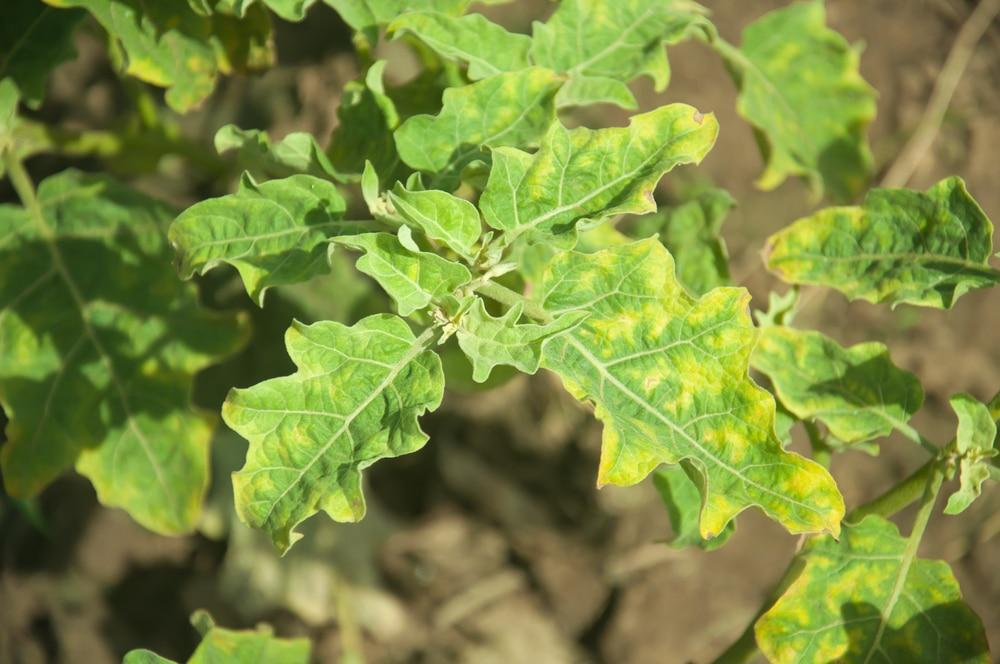
Early signs are easy to miss. Often one side of the plant starts to wilt while the other side still looks normal. You may see V shaped yellow areas on older leaves that point toward the veins. As the disease progresses leaves dry up and drop, stems may show brown streaks inside if you cut them open and the whole plant can collapse during warm sunny weather when water demand is high. In badly infested soil yield loss can reach about half of the expected harvest.
Fusarium Wilt
Root And Stem Disease That Mimics Drought
Fusarium wilt is also caused by a soil borne fungus but it behaves a little differently. It enters through the roots and attacks both the root system and the internal vessels. At first the lower leaves turn yellow and the plant looks stunted compared to its neighbors. Leaves drop from the bottom upward and the plant often looks like it is suffering from drought even when the soil is moist.
If you gently pull up a sick plant you may see dark brown rotting roots instead of fresh white ones. On wet stems there can be white to pink fungal growth that looks like cotton or powder. Warm temperatures and poor drainage make Fusarium much more aggressive. In vulnerable fields severe infections can destroy around forty to fifty percent of the crop.
Powdery Mildew
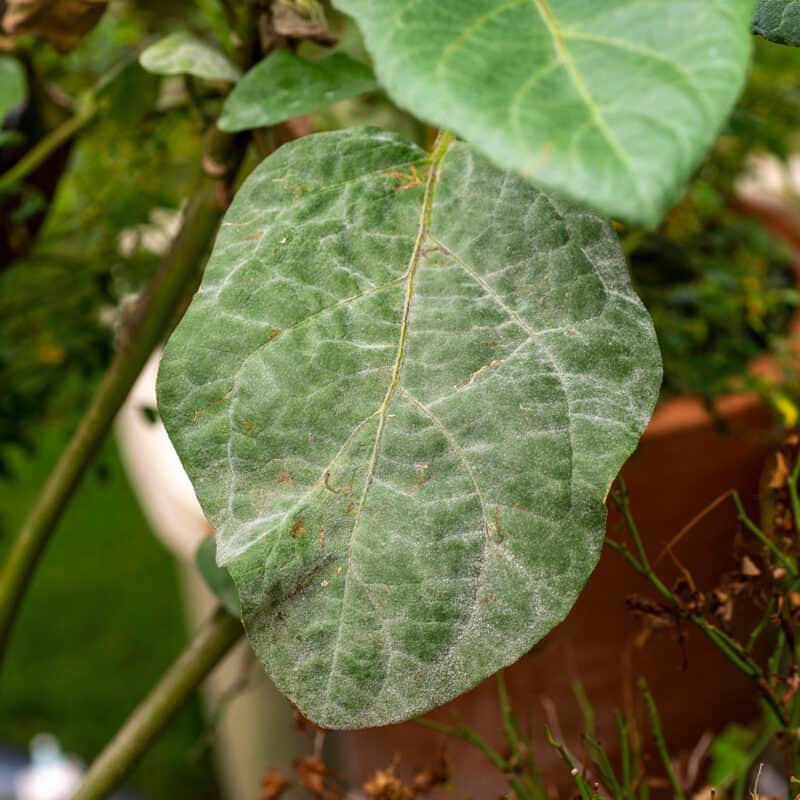
White Coating On Leaves And Stems
Powdery mildew is the disease that most gardeners recognize easily. It is caused by a group of fungi that live on the surface of leaves. The signature sign is a white flour like coating that appears first on the underside of leaves or along the veins. Over time that coating spreads, becomes thicker and may turn slightly brown.
Affected leaves curl, become dry and eventually fall off. The disease prefers situations with moderate humidity and poor air circulation. Unlike many other fungi it does not require free water on the leaf surface so it can spread even in dry weather if the canopy is dense. The positive side is that powdery mildew is usually easier to manage than soil diseases when you act early.
Phomopsis Blight And Fruit Rot
From Small Stem Spots To Rotten Fruit
Phomopsis blight is feared mainly because of the damage it causes to fruits. The fungus can infect stems, leaves and fruit but the most painful losses occur just before harvest when fruits start to rot. On stems you might first notice small sunken brown spots with a slightly darker halo. These can expand and cause dieback of branches.
On fruits the disease starts as pale sunken spots that gradually enlarge and become dark and wrinkled. In humid conditions you may see small black or brown dots inside these areas. These are fungal structures packed with spores. Hot and moist weather especially during flowering and early fruit development is ideal for this pathogen. In unmanaged fields losses of up to about thirty percent of marketable fruit are common.
Anthracnose
The Hidden Post Harvest Threat
Anthracnose refers to a group of diseases caused by Colletotrichum species. On eggplant fruit it appears as small round water soaked spots that later sink and turn dark. In humid conditions a pink gel like mass may ooze from these lesions. What makes anthracnose sneaky is that infection often happens in the field but symptoms may only appear during storage or transport.
A crate of fruits can look healthy at harvest and still develop widespread rot a few days later. This is why careful handling and proper sanitation are so important. Leaves can also be affected with small irregular spots but fruit loss is usually the greatest concern.
Target Spot
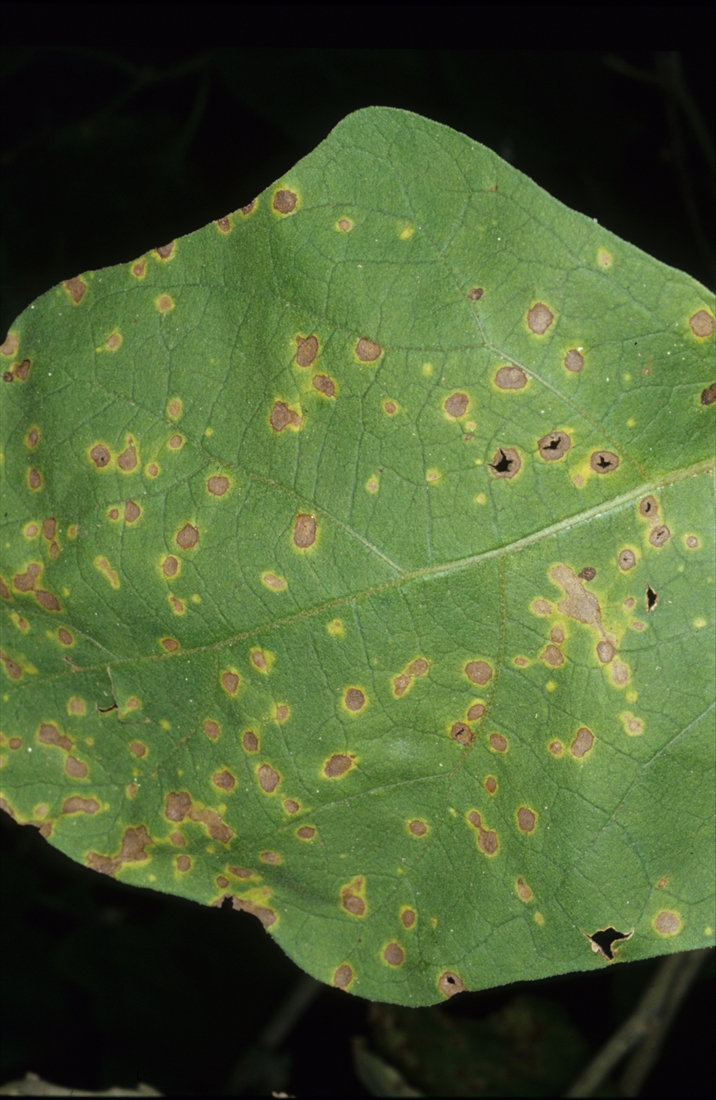
Inner Canopy Leaf Blight In Warm Humid Areas
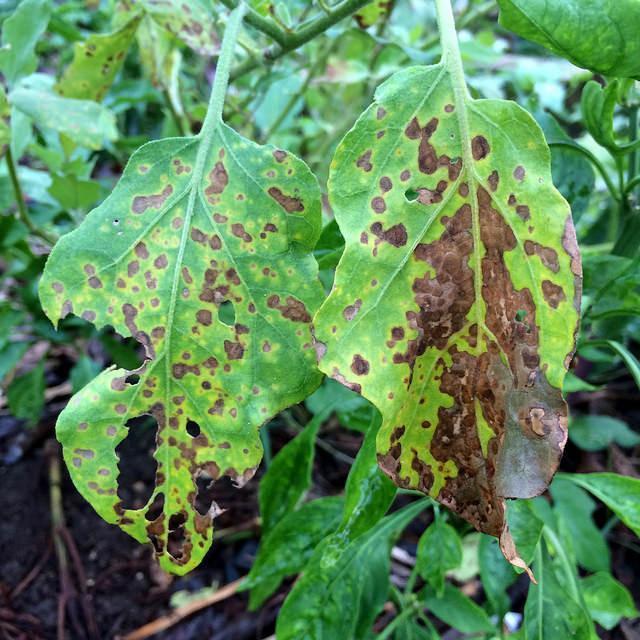
Target spot is caused by a fungus that can infect hundreds of different plant species. On eggplant it usually shows up first on older leaves in the middle of the canopy where air circulation is poor. The spots are initially small and round but they expand and may develop a faint ring pattern, which is why they are called target spots.
Over time many lesions merge into large dead areas and leaves can drop prematurely. The fungus spreads through seeds, air and water splash and can survive in plant debris in the soil for several years. It prefers warm temperatures and long periods of leaf wetness which are common in tropical and subtropical climates.
Treating Eggplant Diseases
A Tiered Strategy That Starts With Prevention
Tier One
Prevention And Cultural Control
Prevention is the strongest and most reliable form of disease management. Once soil borne fungi like Verticillium and Fusarium are well established they are extremely difficult to remove. This is why cultural practices deserve the first and longest section in any disease treatment guide.
Start with crop rotation. Avoid planting eggplant or other related crops like tomato, potato or pepper on the same plot for at least two or three years. Instead choose unrelated crops such as corn, beans, peas or grasses. This rotation starves the specialized fungi over time and reduces the amount of infectious material in the soil.
Sanitation is the next critical pillar. Always try to buy disease free seed or seedlings from trusted sources. Remove severely infected plants including their roots and dispose of them away from the garden. Burning is better than composting in this case because many fungi survive normal compost temperatures. Clean and disinfect pruning shears, knives and staking tools when you move from plant to plant to avoid carrying spores.
Good cultural practices also make plants less attractive to disease. Give each plant enough space so that leaves can dry quickly after rain or irrigation. Gentle pruning of dense foliage improves airflow, especially in humid climates. Choose well drained soil and incorporate compost to improve structure. Avoid long periods of standing water around the root zone. Drip irrigation keeps leaves dry and delivers water directly to the roots, reducing the spread of leaf diseases. Mulch helps prevent soil particles and spores from splashing onto the lower leaves during rain.
Finally think about plant strength and genetics. Healthy plants with balanced nutrition and regular watering resist disease better than stressed ones. When possible select varieties that have documented resistance or tolerance to wilt diseases. In regions with chronic wilt problems farmers often graft eggplant scions onto resistant rootstocks from related species. This approach keeps the desired fruit quality while giving the root system extra protection against soil pathogens.
Tier Two
Biological And Organic Intervention When Disease Appears
Even with strong prevention some disease pressure is inevitable. Biological and organic tools can slow down or limit infections without harming beneficial organisms.
One of the most studied allies is Trichoderma harzianum. This beneficial fungus colonizes the root zone and competes with harmful fungi for space and nutrients. It can also trigger plant defenses. Gardeners can apply it as a seed treatment, soil drench or root dip at transplanting time. It works best in well structured soil with enough organic matter where microbial life is active.
Pseudomonas fluorescens is a helpful bacterium that lives around the roots and produces substances that inhibit many plant pathogens. It can be sprayed on leaves or applied to the soil. Research shows that it can reduce the severity of Phomopsis and anthracnose when used as part of an integrated program. Bacillus subtilis is another beneficial bacterium that produces natural antibiotics and has both preventive and mild curative effects on several leaf and fruit diseases.
Besides these living agents several organic friendly inputs help manage disease. Sulfur based products are traditional tools against powdery mildew. They prevent the fungus from forming spores and spreading. Apply sulfur when temperatures are moderate and avoid the hottest part of the day to prevent leaf burn. Potassium bicarbonate is effective against powdery mildew and some leaf spots. It changes the pH on the leaf surface and damages fungal cells. Many formulations of this compound are allowed in organic production.
Neem oil is widely known as an insecticide but it also has some activity against fungal pathogens and the mites that can weaken plants further. For all these products repeat treatments are often necessary because they work on the surface of the plant and can be washed away. Compost teas and other sources of beneficial microbes can further improve soil health and overall plant immunity when used carefully and with good hygiene.
Biological tools are especially effective when used at the very first sign of disease. Waiting until leaves are heavily covered with spots or powder makes control much more difficult. At that stage combining these measures with precise diagnosis is very helpful. If you are uncertain which disease you are dealing with, taking clear photos of leaves and fruits and running them through Plantlyze at plantlyze.com can give you a fast and data based identification before you choose treatments.
Tier Three
Chemical Fungicides As A Last Resort
Sometimes even strong cultural and biological measures are not enough, especially in high value commercial production. In those situations chemical fungicides may be considered as a last step in an integrated program. The goal is to prevent catastrophic loss rather than relying on chemicals as the main solution.
Common active ingredients used on eggplant in many regions include carbendazim, mancozeb, tebuconazole and copper oxychloride. Carbendazim has activity against some wilt and blight pathogens. Mancozeb offers broad spectrum protection on leaves and fruits, including powdery mildew and anthracnose. Tebuconazole is often used against Phomopsis and other fruit rots. Copper formulations can help suppress some bacterial and fungal problems.
It is important to remember that these products rarely cure soil diseases once they have deeply colonized the root and vascular system. The chemical may not reach the internal tissues where fungi live. Overuse can also create resistant pathogen populations and leave residues on produce. Always follow local regulations and label instructions, respect pre harvest intervals and wear protective equipment. When possible combine chemical treatments with rotation, sanitation and resistant varieties to reduce the number of applications needed.
When To Seek Professional Diagnosis
Using AI To Support Your Decisions
Many eggplant diseases share similar symptoms. Wilting can result from Verticillium, Fusarium, root damage or even simple drought. Leaf spots can look confusingly alike to the untrained eye. Guessing can waste time and money if the chosen treatment does not match the real problem.
If you notice strange patterns on leaves or fruits and are not sure what they indicate it is helpful to document them with clear photos from different angles. You can then use the AI powered diagnosis tool from Plantlyze at plantlyze.com. By analyzing images it compares your plant with thousands of disease examples and suggests the most likely cause. This early and accurate detection increases the success rate of later treatments and can prevent unnecessary spraying. After you know the probable disease you can return to this guide or to the detailed resources on Plantlyze to plan your next steps.
Quick Prevention Checklist
Simple Habits That Protect Your Eggplants
Use this checklist as a summary before each new season:
Buy healthy and clean seeds or seedlings from trusted sources.
Plan at least a three year rotation where eggplant and related crops do not return to the same bed.
Space plants generously so that leaves can dry quickly after rain.
Install drip irrigation and avoid frequent overhead watering.
Walk through your plot at least once a week to spot early signs of disease.
At the first suspicious symptom take photos and check the diagnosis with Plantlyze or a local expert.
Apply biological controls such as Trichoderma around the roots in early growth stages.
Remove and dispose of crop residues soon after the last harvest.
Clean and disinfect tools and stakes before storing them for the next season.
References
University of Florida IFAS Extension
https://edis.ifas.ufl.edu/
(Peer-reviewed agricultural research and integrated pest management guides)Cornell University College of Agriculture and Life Sciences
https://blogs.cornell.edu/livegpath/
(Long Island Vegetable Health program with detailed disease diagnostics)Food and Agriculture Organization (FAO) - United Nations
https://www.fao.org/
(Official UN agency for agriculture, authoritative on crop diseases and yields)American Phytopathological Society (APS)
https://www.apsnet.org/
(Premier scientific organization for plant disease research and classification)