Why Eggplant Pests Are Your Garden's Biggest Challenge
Growing eggplants can feel rewarding until pests arrive and devastate your hard work. Unlike tomatoes or peppers, eggplants seem to attract every insect pest in your garden, and once they settle in, they multiply quickly. The problem is not just one pest but several different insects and diseases that each require specific management strategies.
Here is the good news: you can control most eggplant pests before they cause serious damage. Early identification combined with organic and integrated pest management (IPM) methods work far better than broad-spectrum chemical sprays. Chemical treatments harm beneficial insects that naturally control pests, leaving you dependent on more spraying. This guide teaches you proven strategies that prevent problems and stop pest outbreaks before harvest loss occurs.
Whether you are a first-time gardener growing eggplants in containers or managing acres of commercial production, these methods apply to your situation. The key is understanding which pests to watch for, recognizing damage early, and choosing the right control method at the right time. Your success depends on consistent scouting and quick action when you spot the first signs of trouble.
Identifying the Six Most Destructive Eggplant Pests
Knowing which pest you are dealing with changes everything about your treatment approach. Different pests respond to different control methods, and misidentification leads to wasted time and money on ineffective treatments. Let me walk you through the most common eggplant pests so you can recognize them before they damage your crop.
The Eggplant Fruit and Shoot Borer: Your Most Serious Threat
The eggplant fruit and shoot borer (EFSB) is the most destructive eggplant pest worldwide, and it can reduce your yield by 50 percent or more if left uncontrolled. This small brownish moth lays eggs on shoots and developing fruits. When larvae hatch, they tunnel inside the plant tissue, leaving you with wilted shoots that appear healthy from the outside.
You will notice freshly wilted shoot tips even though the plant received adequate water. If you cut open the affected shoot, you will see dark tunnels with larval droppings inside. The fruit damage is equally frustrating: small dark holes appear on the fruit surface where larvae entered, making the eggplant unmarketable. Multiple generations occur each season in warm climates, creating constant pressure.
Early removal of infested shoots and frequent scouting are your best defenses against EFSB. You can also use pheromone traps to monitor when moths are active and time your spray applications. Biological controls using Trichogramma wasps and earwigs provide excellent long-term management when populations are detected early.
Flea Beetles: The Spring Assassins of Seedlings
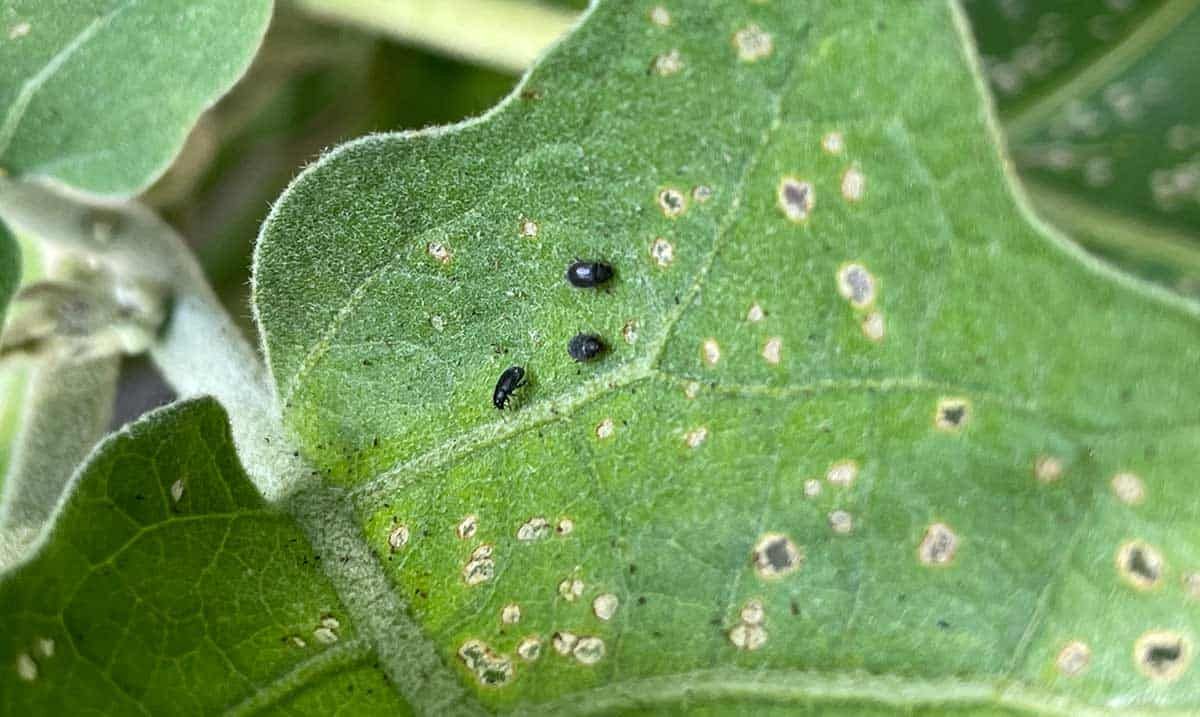
Flea beetles appear early in the season when transplants are still small and vulnerable. These tiny jumping beetles create a very distinctive damage pattern that you cannot miss once you know what to look for. Small round holes appear across the leaf surface, giving leaves a skeletonized appearance as if someone used a tiny hole punch on every leaf.
Young eggplant seedlings and transplants suffer the most severe damage because they have limited leaf area and less vigor than mature plants. Once plants reach 12 inches tall and begin flowering, flea beetle damage becomes less critical to plant survival. However, early season damage still reduces plant size and delays fruiting. Beneficial nematodes applied to soil can control beetle larvae in the root zone before adults emerge.
The damage appears worst during cool spring weather when flea beetles are most active. If you scout your plants twice weekly during early season, you can catch infestations before they cause serious damage. Yellow sticky traps placed near transplants help monitor beetle populations and reduce pest numbers simultaneously.
Aphids: The Disease Vectors That Multiply Rapidly
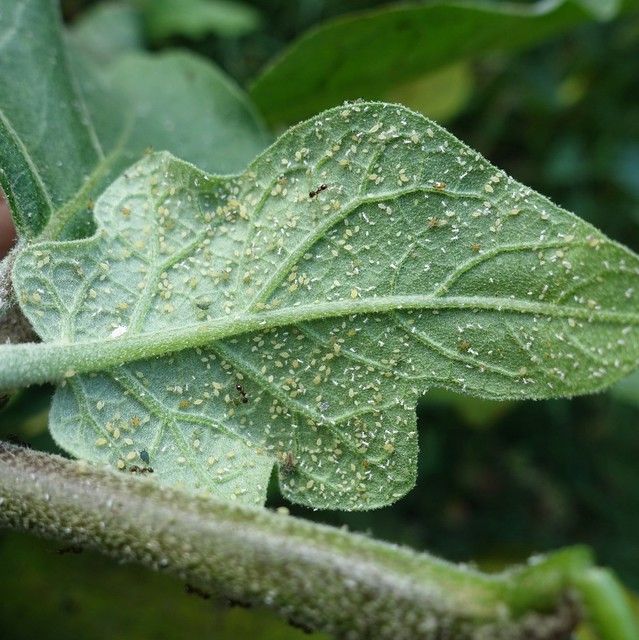
Aphids are soft-bodied insects that cluster on new growth and the undersides of leaves where they suck plant sap. At first glance, aphid damage seems minor compared to other pests, but aphids transmit viral diseases that can destroy entire plants. A small aphid population explodes into thousands within two weeks under warm conditions.
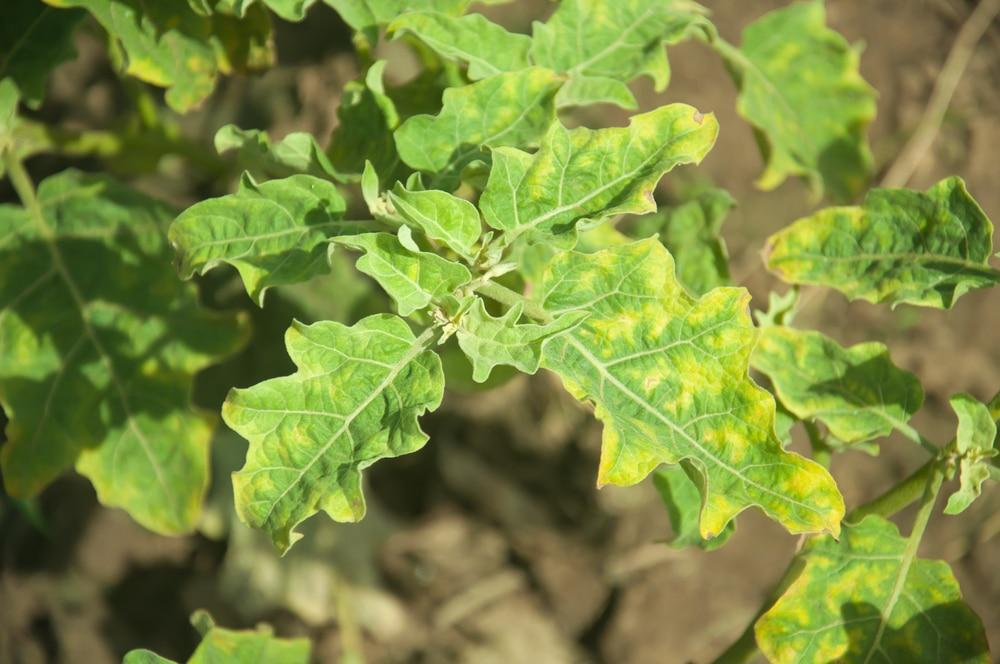
You will notice yellowing leaves, curled foliage, and a sticky honeydew residue on leaves that turns black with sooty mold. Aphids appear in colors ranging from green to black to pink depending on species and environmental conditions. Early detection is critical because small populations respond to simple organic sprays, but large populations require stronger intervention.
Yellow sticky traps attract and trap flying aphids before they establish colonies. Ladybugs are voracious aphid predators that you can encourage by planting flowering cover crops nearby. Neem oil spray applied every 7 to 10 days controls aphids effectively without harming most beneficial insects when applied in evening hours.
Colorado Potato Beetles: The Striped Defoliators
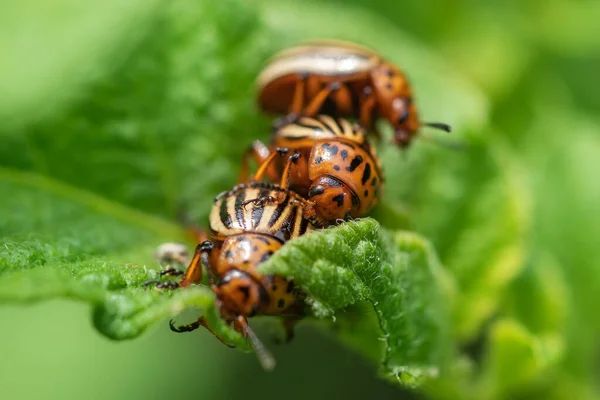
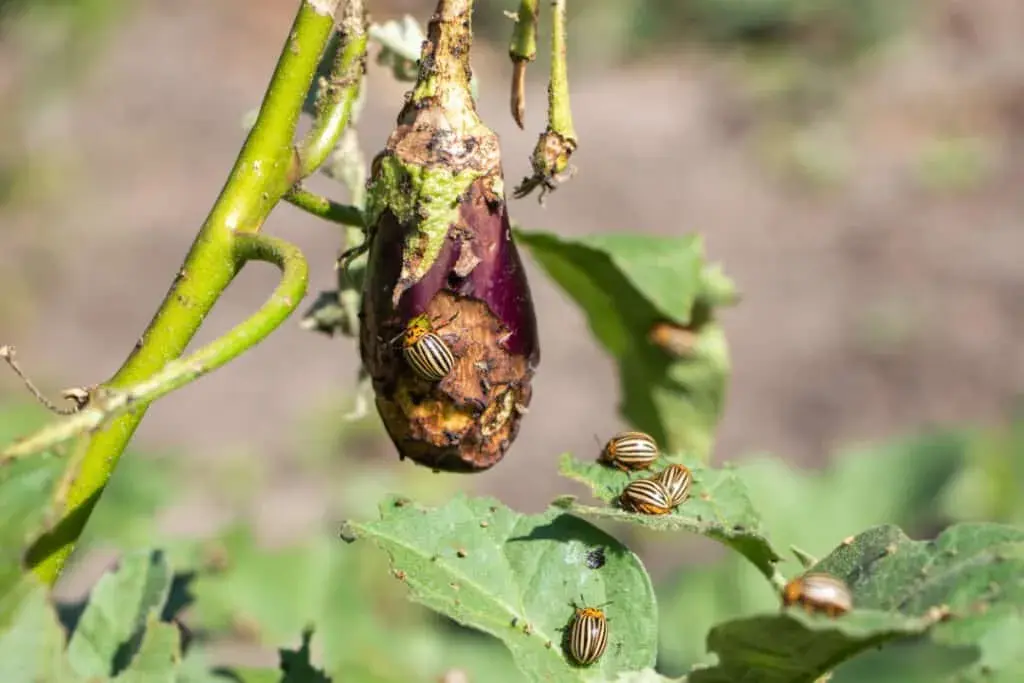
Colorado potato beetles are instantly recognizable with their orange and black stripes, but their yellow larvae with dark spots are equally voracious. These beetles strip eggplant leaves faster than most other pests, sometimes defoliating entire plants in days if populations go unnoticed. The damage is so severe and sudden that it catches many gardeners by surprise.
Both adult beetles and larvae feed on leaves, meaning damage accelerates as the season progresses and population size increases. In some regions, Colorado potato beetles are not a serious eggplant issue, but they can be devastating in others. Hand picking beetles into a bucket of soapy water controls small populations effectively before populations build.
Diatomaceous earth applied to plants when wet from morning dew damages the beetles' waxy outer coating and causes death. Spinosad sprays provide excellent control when populations are detected early. Rotating your crop away from potato and tomato fields reduces the risk of beetles colonizing your eggplants initially.
Whiteflies, Leafhoppers, and Thrips: The Flying Insect Brigade
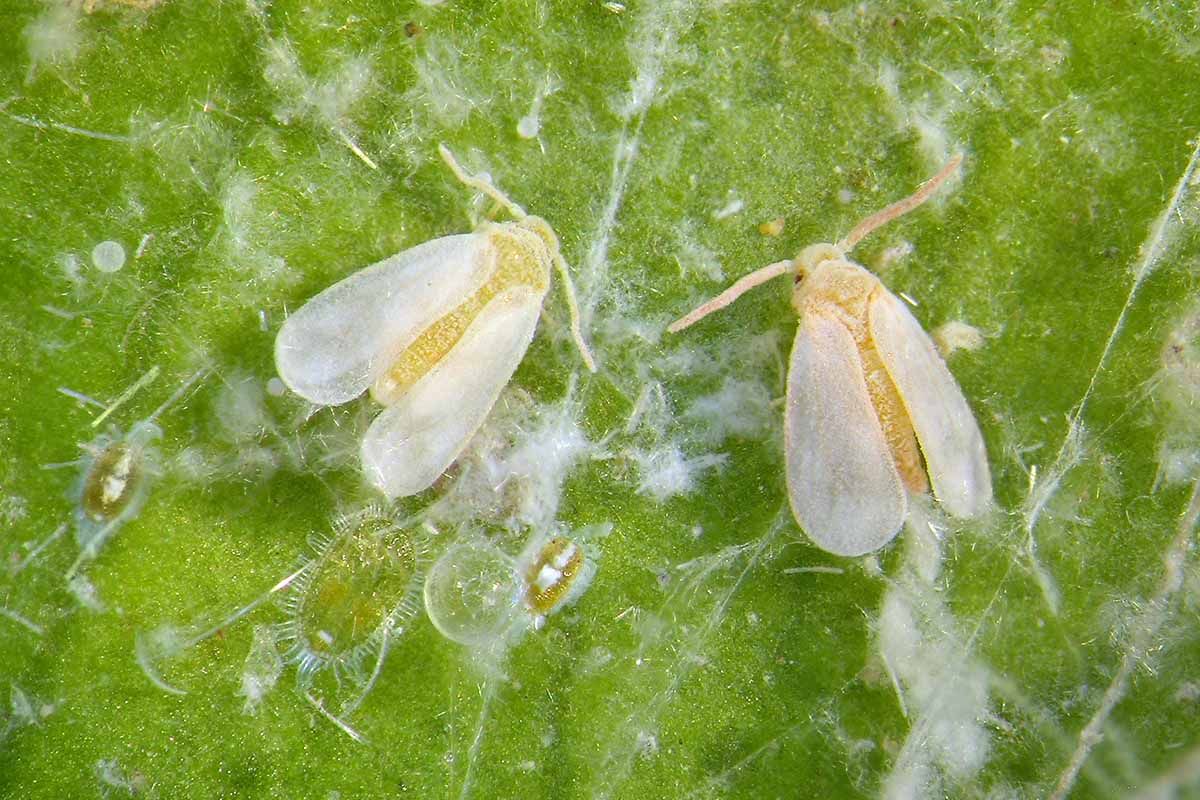
Whiteflies are tiny pale-colored flying insects that rise in clouds when you brush plant foliage. Leafhoppers are similar but smaller, and thrips are thread-like insects barely visible to the naked eye. All three cause stippling damage on leaves where they feed, and all can transmit viral diseases between plants.
You may not notice these pests until populations explode because they hide on the undersides of leaves. Heavy infestations cause rapid wilting and yellowing as thousands of insects drain plant juices. The real danger comes from viruses they transmit, which cause sudden plant collapse and total crop loss in extreme cases.
Yellow sticky traps placed throughout your eggplant planting catch these flying insects and reduce populations significantly. Maintaining good air circulation through proper plant spacing allows you to spot these pests before they build to damaging levels. Insecticidal soap applied every 5 to 7 days controls soft-bodied stages effectively.
Stop Pests Before They Start: Prevention Strategies That Work
Prevention is always more effective than trying to eliminate established pest populations. An ounce of prevention truly is worth a pound of cure when it comes to eggplant pest management. The practices that prevent most pest problems are the same ones that improve overall plant health and productivity.
Build Healthy Soil and Rotate Your Crops
Strong healthy plants resist pest damage far better than weak plants growing in poor soil. Eggplants grow best in loose, well-draining soil rich in organic matter. Adding 2 to 3 inches of compost mixed with beneficial microbes improves soil structure and plant vigor simultaneously.
Rotating your eggplant crops away from other nightshade family plants like tomatoes, peppers, and potatoes breaks disease cycles in the soil. Many soil-borne pathogens survive in soil for several years waiting for susceptible hosts. By rotating crops, you starve these pathogens and prevent buildup of soil-dwelling pest populations.
Plant eggplants in a different garden bed each season, ideally with at least three years between plantings of nightshade crops in the same location. If space is limited, at least rotate to a different corner of your garden. This simple practice prevents many problems from establishing themselves year after year.
Use Drip Irrigation and Maintain Proper Plant Spacing
Overhead watering with sprinklers spreads fungal spores and creates wet foliage conditions that pathogens love. Drip irrigation delivers water directly to soil level where plants absorb it, leaving foliage dry and less attractive to fungal diseases. This single change often reduces fungal disease pressure by 50 percent or more.
Water early in the morning so any accidental foliar wetting dries quickly in the rising sun. Never water in evening hours when wet foliage remains wet through the night, creating ideal conditions for powdery mildew and other fungal problems. Keep mulch pulled back at least 2 inches from plant stems to prevent moisture accumulation around the base.
Spacing plants 12 to 18 inches apart allows air circulation through the canopy, which dries foliage and prevents humidity pockets where pests and diseases thrive. Dense plantings create microenvironments perfect for pest colonization. Good air flow also makes it easier for you to scout plants and spot problems early.
Select Disease-Resistant Varieties from Quality Sources
Not all eggplant varieties handle pests and diseases equally. Some varieties are bred specifically for resistance to bacterial wilt, powdery mildew, or other common problems. Starting with resistant varieties is like having an insurance policy against certain pest problems.
Use certified, disease-free seed and transplants from reputable nurseries. Buying bargain seedlings from unknown sources risks bringing disease and pest problems directly into your garden. Strong healthy transplants establish quickly and grow vigorously, which improves their ability to tolerate pest pressure.
Avoid thin, weak, or yellowing transplants even if they are cheaper. These plants require months longer to establish and produce fruit. The cost of disease-resistant seeds is insignificant compared to the value of the harvest you will save.
Proven Organic Solutions for Active Pest Problems
When pests still appear despite prevention efforts, you need safe, effective treatment options that do not harm beneficial insects or the environment. Organic treatments work best when pest populations are caught early before they explode. Start with the gentlest option first and escalate only if populations do not respond.
Yellow Sticky Traps and Physical Removal
Yellow sticky traps are non-toxic monitoring tools that also reduce pest populations by catching insects on their adhesive surface. Place traps at plant canopy height where flying insects work. You need approximately one trap per group of 4 to 5 plants to provide meaningful control.
Check traps weekly and replace them when they become crowded with dead insects. Early season placement catches pests before populations build to damaging levels. Traps work best for aphids, whiteflies, leafhoppers, and thrips. The traps help you identify which insects are present so you can choose the right control method.
For eggplant fruit and shoot borer, hand picking infested shoots is the most practical control method. Scout plants two to three times weekly during peak EFSB season and remove any wilted shoots by pruning them from the plant. Place infested shoots in a sealed bag and dispose of them away from your garden to prevent larvae from escaping and reinfesting plants.
Neem Oil Spray: The Gardener's Workhorse
Neem oil is a natural extract from neem tree seeds that disrupts insect feeding and reproduction. It works best on soft-bodied insects like aphids, spider mites, and whiteflies, but also provides some control on beetles and caterpillars. Neem oil also suppresses some fungal leaf diseases including powdery mildew when applied preventatively.
Mix 1 to 2 tablespoons of pure neem oil per gallon of water and spray thoroughly to coat both leaf surfaces. Apply in evening hours when pollinators are not active and temperatures are below 85 degrees. Spray application timing is critical because heat causes neem oil to burn foliage. Repeat applications every 7 to 10 days as needed, but stop spraying once plants begin flowering heavily.
Neem oil works best as a preventative applied before pest populations explode. Once heavy infestations establish, stronger organic options may be needed. Combine neem oil spray with other control methods for better overall results. Never spray neem oil on stressed plants or those suffering from water stress.
Spinosad and Other Organic Insecticides
Spinosad is a naturally derived compound from soil bacteria that targets specific insect nervous systems. It works well on caterpillars, beetles, and other hard-bodied insects that neem oil does not control effectively. Spinosad breaks down rapidly in sunlight and soil, leaving no harmful residues.
Rotate between different organic insecticide products to prevent insects from developing resistance. One effective rotation schedule uses neem oil in week one, spinosad in week two, and Bacillus thuringiensis (BT) in week three, then repeating the cycle. This rotation maintains control pressure while varying the mode of action.
Apply sprays in late evening to protect beneficial bees and other pollinators. Always follow label directions for application rates and safety precautions. Do not spray when beneficial insects are active or when pollinators are visiting flowers. Spinosad is toxic to many beneficial insects, so careful timing maximizes effectiveness while minimizing harm.
Insecticidal Soap for Soft-Bodied Insects
Insecticidal soap is made from fatty acids that disrupt insect cell membranes, causing death. It works only on soft-bodied insects like aphids, whiteflies, and spider mites that come into direct contact with the spray. The insects must be present on the plant when you spray because soap does not provide residual protection.
Mix 3 to 4 tablespoons of pure castile soap per gallon of water. Spray plants thoroughly to coat all leaf surfaces and let the soap sit for 30 minutes before rinsing if desired. Some gardeners find that allowing the soap to dry on foliage improves effectiveness, but you can rinse it off if you prefer. Repeat applications every 5 to 7 days until pest populations decline.
Insecticidal soap is one of the safest organic options and does not harm most beneficial insects. It is ideal for use on eggplants with open flowers because pollinators are not affected. This makes soap the best choice for controlling aphids during active flowering when other sprays must be avoided.
Release the Beneficial Bugs: Biological Control Strategies
Biological control uses natural predators and parasites to manage pests without any chemical interventions. Nature has already evolved thousands of solutions to pest problems, and releasing beneficial insects allows you to harness these natural control mechanisms. Biological control works best in combination with other IPM strategies.
Parasitoid Insects That Attack Pests at the Egg and Larval Stages
Trichogramma wasps are tiny parasitoid insects that attack EFSB eggs before they hatch into damaging larvae. A single female Trichogramma wasp can parasitize dozens of moth eggs, preventing them from developing into shoot-boring larvae. When populations are strong, parasitoid wasps provide control that equals or exceeds what many organic sprays deliver.
Earwigs are generalist predators that feed on developing larvae of several eggplant pests. Creating habitat for earwigs by providing shelter and mulch encourages populations. Earwigs emerge at night and feed extensively on insect pests, making them valuable allies in your eggplant garden.
Order commercially available parasitoid colonies from biological control suppliers and release them when plants are small. Release wasp populations weekly throughout the season for best results. Reducing your use of broad-spectrum pesticides allows parasitoid populations to survive and establish. Most parasitoids require 2 to 3 weeks to show visible pest control results, so patience is necessary.
Predatory Insects and Beneficial Nematodes
Ladybugs are voracious aphid predators that consume dozens of aphids daily at all life stages. A single ladybug colony can suppress aphid populations that would otherwise explode. Encourage natural ladybug populations by planting flowering plants that provide nectar and pollen throughout the season.
Spiders, ants, and praying mantises feed on multiple pest species including EFSB larvae, flies, and other insects. These generalist predators provide ongoing control across many pest problems. Simply leaving mulch and plant debris in place provides shelter and habitat where these predators live and hunt.
Beneficial nematodes are microscopic organisms that infect and kill soil-dwelling larval stages of flea beetles, other beetles, and flies. Apply beneficial nematodes to soil according to label directions when pest populations are high. Moist soil conditions are necessary for nematode effectiveness, so apply after irrigation or rain.
Microbial Controls and Fungal Bioinsecticides
Beauveria bassiana is a fungal organism that naturally infects and kills many insect species. Applying Beauveria bassiana products according to label directions creates an epidemic among pest insects without affecting plants. Multiple applications are often necessary because the fungus must spread through pest populations gradually.
Bacillus thuringiensis (BT) is a soil bacteria that produces proteins toxic to caterpillars but harmless to humans and other organisms. Apply BT when caterpillar damage first appears and repeat every 7 to 10 days as needed. BT works only on caterpillars, so it does not control beetle pests or other insect groups.
Beneficial soil microbes from compost including Trichoderma species suppress plant diseases and improve overall plant health. Adding quality compost to your eggplant beds annually introduces these beneficial organisms and builds disease suppressive soil.
Your Month by Month Integrated Pest Management Calendar
Successful eggplant pest management combines multiple strategies timed throughout the growing season. You cannot just apply one control method once and expect success. Instead, you need a calendar approach that matches the right strategy to seasonal pest pressure and plant growth stage.
Early Season Focus: Prevention and Early Detection
During transplanting and early growth, your focus is prevention and monitoring. Plant disease-resistant varieties in well prepared soil with compost and beneficial microbes. Set up yellow sticky traps immediately after planting to catch early season pests before populations build.
Space plants 12 inches apart and establish your drip irrigation system before pest pressure develops. Begin weekly scouting for early pest signs including small holes, wilting, or yellowing. Any early detection of pests allows rapid response before populations explode. This period is critical for setting the stage for the entire season.
Mid Season Focus: Active Management and Preventative Spraying
During heavy flowering and fruit development, pest pressure typically increases as insect populations build. Continue yellow sticky trap monitoring but increase frequency to twice weekly. Begin removing infested EFSB shoots at least once weekly if pests are present.
Apply neem oil preventatively every 10 days before pest populations reach damaging levels. You are trying to suppress populations before they require stronger interventions. Begin parasitoid wasp releases if EFSB moths are active based on pheromone trap catches. This period requires consistent effort but prevents later season crises.
Late Season Focus: Intensive Monitoring and Rapid Response
Peak production is when pests cause maximum damage to your harvest. Scout plants 2 to 3 times weekly looking for any signs of pest activity. Remove any heavily infested fruits immediately to prevent spread to clean fruit nearby.
Rotate organic spray products weekly to maintain control pressure while preventing resistance development. Continue weekly shoot pruning for EFSB control. At this stage, pests are competition for your harvest, so do not hesitate to apply stronger organic controls if populations spike.
Get Expert Pest Identification with Plantlyze AI Technology
Sometimes quick, accurate pest identification is the difference between stopping an outbreak and watching your harvest disappear. Plantlyze uses artificial intelligence to identify pests from photos in seconds, eliminating guesswork about which pest you are dealing with. This technology connects you with expert recommendations tailored to your specific problem.
Taking a photo of damaged foliage or the pest itself and uploading it to Plantlyze returns instant identification with specific treatment recommendations. The AI technology recognizes disease patterns and pest characteristics that might take experienced gardeners hours to identify correctly. You get customized solutions based on your exact situation rather than generic advice.
Plantlyze helps you track pest history in your specific garden location, providing alerts when regional pest pressure increases. The platform integrates with your garden planning so you remember which treatments worked best for your conditions. Visit Plantlyze.com today and upload a photo of any eggplant pest damage to get instant identification and exact treatment recommendations for your situation.
Seven Pest Control Mistakes That Cost You Harvests
Learning from the mistakes others make prevents you from repeating them in your own garden. These seven errors appear regularly in eggplant gardens everywhere and each one costs significant harvests.
Mistake One: Using Broad Spectrum Chemical Pesticides
Chemical sprays kill everything they contact, including beneficial insects that naturally control pests. This elimination of beneficial insects creates a pest management treadmill where you must spray repeatedly because natural enemies are gone. Beneficial insects like ladybugs and parasitoid wasps eliminate far more pests than any spray you could apply.
Mistake Two: Spraying During Daytime Hours
Spraying during day harms pollinating bees and reduces insecticide effectiveness. Insects are more active in evening hours, making evening applications more effective at controlling pests. Daytime sprays also get washed away by sun exposure before pests are adequately exposed to the treatment.
Mistake Three: Waiting Too Long to Act
Small pest populations that you notice early respond to gentle treatments quickly. Waiting until populations explode requires stronger, more frequent interventions and results in greater harvest loss. Scout consistently and treat problems at first sign of damage.
Mistake Four: Ignoring Soil Preparation
Weak plants struggling in poor soil attract pests and develop diseases more readily. Strong plants growing in healthy soil tolerate pest feeding and disease pressure far better. The most important step you can take is building healthy soil before planting.
Mistake Five: Using Overhead Watering Systems
Overhead watering spreads fungal spores via water splash and creates wet foliage conditions that pathogens love. Drip irrigation eliminates these problems entirely. This single change often reduces disease pressure enough to prevent serious problems.
Mistake Six: Planting Too Densely
Poor air circulation promotes fungal diseases and provides ideal humid conditions where many pests thrive. Dense plantings also prevent you from easily scouting plants for pest damage. Proper spacing improves disease management and makes pest detection possible.
Mistake Seven: Ignoring Crop Rotation
Planting the same crop in the same location year after year allows soil-borne diseases to build to epidemic levels. Three-year crop rotations prevent buildup of specialized pathogens. This long-term approach prevents many problems from developing.
Take Control of Your Eggplant Garden This Season
You now understand the major eggplant pests, how to identify them before they cause serious damage, and exactly what to do when pests appear. Prevention through cultural practices eliminates most problems before they start. Early detection through regular scouting catches pest populations while they are still manageable.
Combining multiple control strategies creates more effective pest management than any single approach alone. Yellow sticky traps for monitoring, organic sprays for direct control, beneficial insects for long-term management, and cultural practices for prevention work together to keep pest populations below damaging levels. Start with prevention first, use regular scouting to catch problems early, and apply organic treatments only when needed.
This season, begin with soil preparation and crop rotation to set the stage for success. Plant disease-resistant varieties in well-spaced rows with drip irrigation established before planting time. Set up your yellow sticky traps the moment transplants are in the ground. When you spot the first signs of pest damage, act quickly with the gentlest treatment that provides effective control.
For plant identification help, download the Plantlyze app at Plantlyze.com and get expert guidance for your eggplant crop. Whether you are growing eggplants in containers on a patio or managing commercial production fields, Plantlyze's AI technology makes pest management simple and successful. Take control of your eggplant garden starting today.
References
World Vegetable Center - https://worldveg.tind.io/record/39452/files/e03410.pdf
UC Statewide IPM - https://ipm.ucanr.edu/agriculture/eggplant/