Introduction
Most carrot diseases are preventable with simple habits. Prevention is cheaper and easier than treating an outbreak, yet many gardeners treat disease as bad luck rather than the result of specific conditions they can control. The good news is that carrots are relatively disease-free when grown with attention to moisture, soil health, and rotation.
This guide walks you through practical prevention strategies that work for home gardeners and small growers. You will learn to recognize early disease signs, understand what causes them, and take action before problems spread. If you ever notice strange spots on leaves or rotting patches on roots, you can snap a photo and let Plantlyze at plantlyze.com help identify the disease before it spreads further through your garden.
Why Carrot Diseases Happen
Understanding disease begins with understanding the disease triangle. Infection requires three things happening at the same time: a susceptible carrot plant, a disease organism such as a fungus or bacteria, and an environment that favors that organism. Remove any one piece and infection cannot occur.
The Disease Triangle Simplified
Plantlyze A susceptible host means a carrot variety with no resistance to a particular disease. Disease organisms include fungi like Alternaria and Cercospora, bacteria like those causing bacterial leaf blight, and oomycetes that cause root rots. The environment is the third critical piece. Long periods of wet foliage encourage fungal leaf blights to spread. Saturated soil encourages root rots and damping off in seedlings. Poor air flow from tight spacing or heavy weeds keeps leaves wet longer than necessary.
Controlling any of these three factors reduces disease pressure. You cannot eliminate the disease organism from your garden entirely, so focus on the two factors you can control: choosing healthy resistant plants and managing the environment to be less favorable to disease.
How Moisture and Air Flow Drive Disease
Fungal diseases thrive on wet foliage. A leaf that stays wet for twelve hours or more becomes vulnerable to infection from spores landing on its surface. Plantlyze The longer wetness persists, the greater the infection risk. Early morning overhead watering that allows foliage to dry by mid-morning creates less risk than evening watering when leaves stay wet all night.
Soil saturation encourages different diseases than leaf wetness. Root rots and crown rots develop in waterlogged conditions where soil organisms thrive and plant roots struggle to breathe. Poorly drained soil creates ideal conditions for these destructive diseases.
Air flow matters tremendously. Carrots planted too close together or surrounded by weeds keep their foliage perpetually damp from dew or irrigation. Spores move easily between crowded plants. Good air flow means leaves dry faster and fungal spores are less likely to find conditions perfect for germination.
How Stress Increases Risk
Carrot plants under stress from nutrient deficiencies, drought, or physical damage become more vulnerable to infection. A healthy vigorous carrot can often fight off diseases that would devastate a weakened plant. This is why soil preparation and consistent moisture matter for disease prevention, not just for growth.
Recognizing the Main Carrot Diseases Early
Early recognition lets you take action before diseases spread. Here are the most common carrot diseases and their identifying features.
Alternaria Leaf Blight
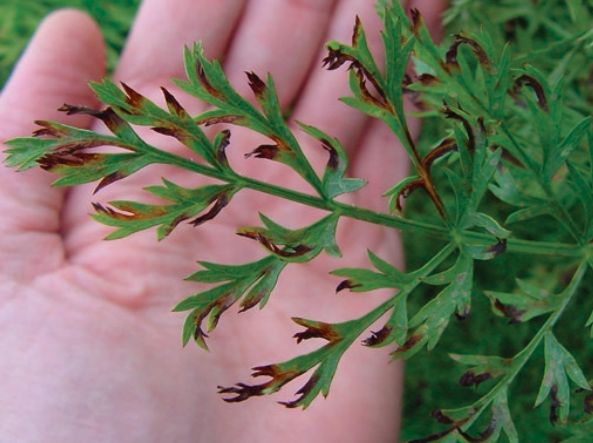
Alternaria is the most common leaf disease on carrots in many regions. Dark brown to black spots appear on older leaves first, usually with a yellow halo surrounding each spot. Leaves may wilt and die back from the tips as the disease progresses. The disease spreads upward from older to younger leaves over days or weeks depending on weather.
Cercospora Leaf Blight
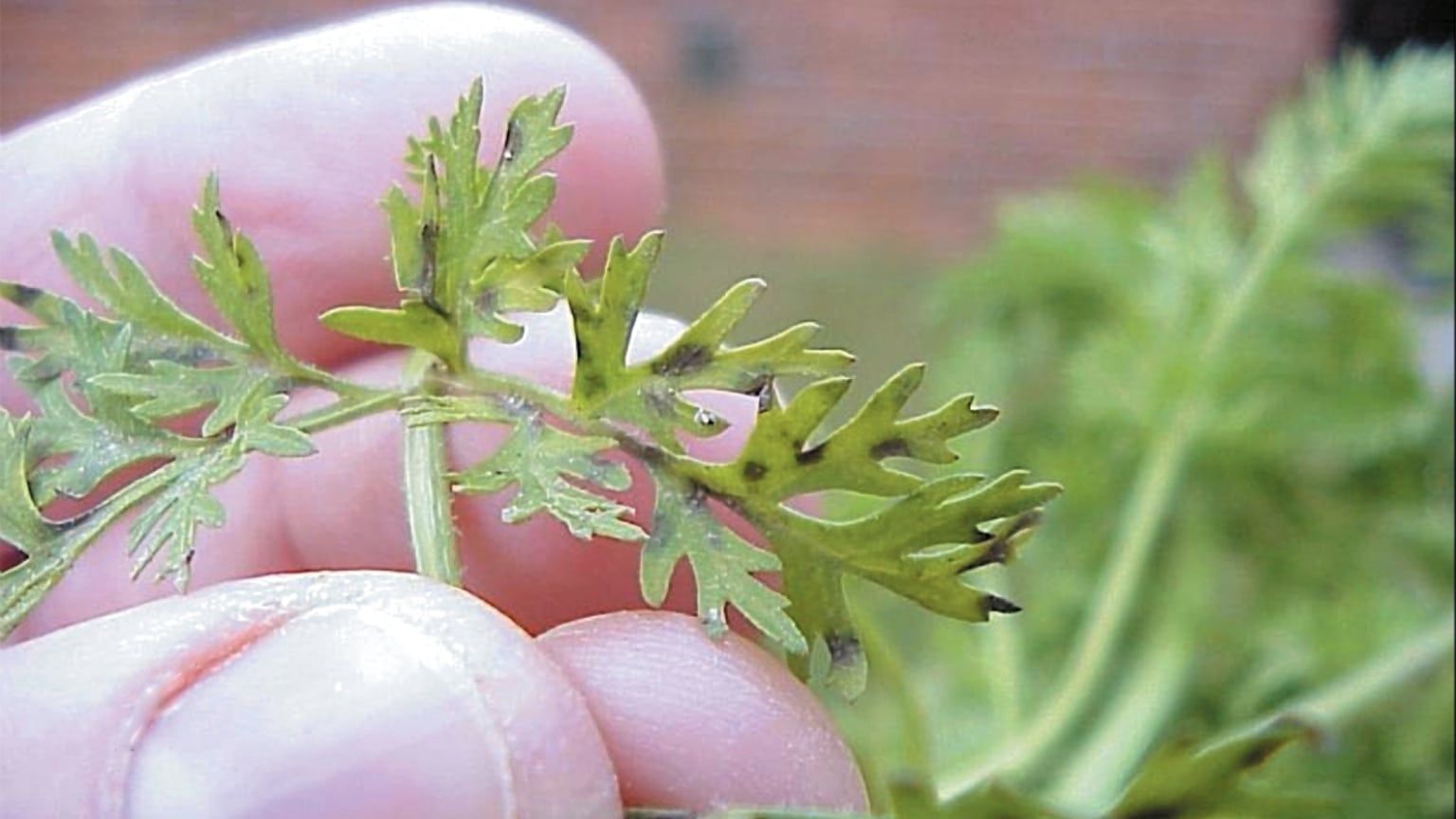
Cercospora produces smaller tan spots than Alternaria with darker borders creating a distinctly speckled appearance. These spots often appear on younger leaves rather than older foliage. Infected foliage looks speckled and thin as spots multiply. Cercospora is less aggressive than Alternaria in cool climates but can devastate crops in warm humid regions.
Bacterial Leaf Blight
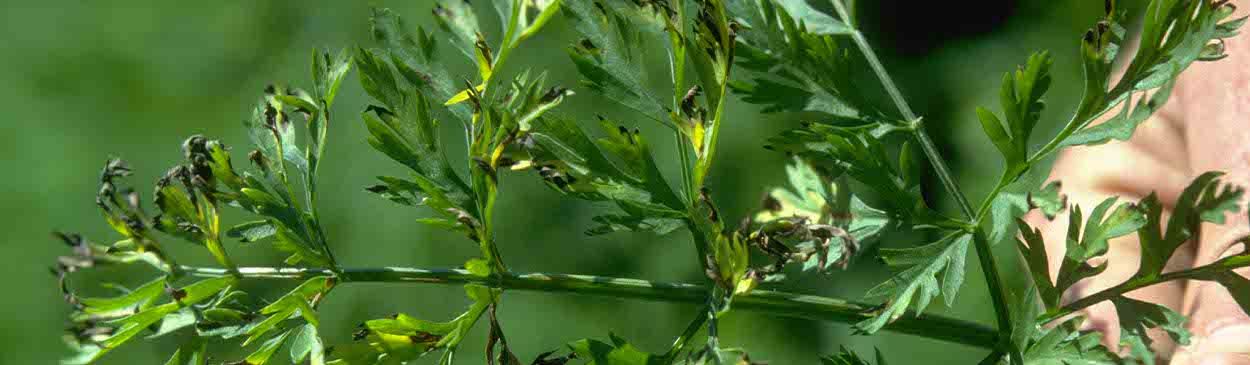
Bacterial leaf blight starts as water soaked spots that quickly turn brown and papery. Spots often begin along leaf edges where water collects. The disease spreads rapidly during warm wet weather, sometimes appearing seemingly overnight. Bacterial infections cannot be cured once established, making prevention absolutely critical.
Root Rots and Crown Rots

Root rot diseases are harder to detect than leaf blights because they occur underground. Soft watery decay appears near the top of the root or crown area. Brown to black lesions appear on the sides of roots. Plants may wilt suddenly on warm days even though soil is moist because the root system is rotting. Plantlyze By the time root rot symptoms appear above ground the root is usually too damaged to save.
Damping Off in Seedlings
Damping off collapses seedlings right at the soil line. The thin stem shrivels and the seedling falls over even though it appeared healthy moments before. This disease is caused by several soil fungi and occurs during the vulnerable germination period. Seeds sown in cold waterlogged soil are most at risk.
If you are unsure whether a leaf spot is serious or which disease you are seeing, you can upload a clear close photo to Plantlyze at plantlyze.com for AI supported identification within moments.
Core Prevention Strategy: Healthy Seed and Healthy Soil
The best disease prevention starts before planting. Clean seed and healthy soil give carrots their first advantage against disease.
Start with Clean Seed
Buy seed from reputable suppliers only. Certified disease free seed costs more but eliminates many seed borne pathogens before you plant. Check that seed packets indicate testing or certification.
Hot water treatment can reduce seed borne fungi but is usually done by commercial suppliers rather than home gardeners. If you harvest and save carrot seed from your garden, research proper drying and storage to prevent fungal contamination.
Choose Tolerant or Resistant Varieties
Some carrot varieties show tolerance to leaf blights. Bolero and Apache are known to perform better in humid regions where leaf blights are common. Nantes types generally show good disease tolerance across regions. Check your seed catalog for disease resistance information and choose varieties suited to your climate challenges.
Variety choice reduces the number of sprays needed throughout the season. A tolerant variety grown with good sanitation and rotation may never need fungicide applications.
Focus on Soil Health
Well-drained soil reduces root rots dramatically. Sandy soil with low organic matter often has poor water holding capacity, but at least excess water drains away. Clay soil holds water and invites root rot disease. The solution is adding organic matter.
Work two to three inches of compost or aged manure into the top eight to twelve inches of soil before planting. Organic matter improves both drainage and water holding capacity depending on your soil type. It also feeds beneficial microbes that compete with disease organisms for space and nutrients.
Keep soil evenly moist but never waterlogged. Carrots prefer consistent moisture rather than feast and famine watering. A steady one inch of water weekly prevents both drought stress and waterlogging.
Avoid very alkaline soils if scab-like problems are common in your area. These problems are less frequent in neutral to slightly acidic soil. A simple soil test tells you your pH and guides any adjustment needed.
Crop Rotation that Actually Reduces Carrot Diseases
Crop rotation is the most powerful long-term disease prevention tool. Many fungi survive in carrot debris and soil for two to three years. Without carrots or related hosts, their population drops naturally.
Why Rotation Works
Plantlyze Carrot soil fungi cannot survive indefinitely without their preferred host. Over two to three years their numbers decline dramatically. A four-year rotation is ideal when possible but three years provides significant disease reduction. This is why moving carrots to a different bed each year matters.
Simple Rotation Rules for Carrots
Do not plant carrots or close relatives in the same bed more than once every three years. Close relatives include parsley, parsnips, celery, and dill. These all share similar soil diseases with carrots.
Avoid planting after other root crops that share soil diseases. If scab or rot have been problems, do not plant carrots after potatoes. Lettuce, beans, peas, and leafy greens make excellent rotation crops that reduce disease pressure.
Use cereals or grasses as rotation crops where possible. These rarely host carrot diseases and actually help improve soil structure. Spring oats or winter rye cover crops between carrot plantings provide excellent disease break.
Common Rotation Mistakes
Moving carrots only a short distance within the same bed does not work. Soil pathogens spread through the bed and remain active. Move carrots to a completely different garden section.
Planting other susceptible hosts like potatoes before residue fully decomposes wastes rotation value. Wait until debris is incorporated and decomposed before planting another crop in that spot.
Not removing infected debris after harvest leaves disease sources in place. Chop carrot tops and any debris into the soil rather than leaving them on the surface where disease spreads to next season's crop.
Water and Air Management to Stop Leaf Blights
Simple irrigation and spacing habits have enormous impact on leaf disease prevention.
Water Timing and Method
Plantlyze Prefer drip irrigation or soaker lines that keep foliage completely dry. Water delivered directly to soil roots means leaves stay dry even during frequent watering. This is the single best step to prevent leaf blights if you have any irrigation option available.
If overhead watering is your only option, water early in the morning so foliage dries quickly in the sun. Never water in the evening when leaves will stay wet all night. Avoid frequent shallow watering that keeps the soil surface wet all day. Instead, water deeply but less often so soil drains between waterings.
Spacing and Air Flow
Follow packet spacing recommendations so carrot foliage is not packed tightly. Thin seedlings promptly to proper spacing even though it feels wasteful. Crowded carrots mean crowded foliage that cannot dry properly.
Remove weeds aggressively. Weeds block air flow and hold moisture around carrot foliage. A weed-free carrot bed dries faster and experiences fewer leaf infections.
Managing Leaf Wetness Duration
The concept of leaf wetness duration is critical. Fungal spores need twelve or more hours of continuous wetness to germinate and infect. Shorter wet periods mean fewer infections succeed.
Combine proper spacing with early day irrigation to minimize the hours leaves remain wet. A well-spaced bed with morning drip irrigation rarely develops leaf blights even in humid regions.
Sanitation Habits that Break Disease Cycles
Simple sanitation habits prevent diseases from becoming established problems.
After Harvest
Remove or chop carrot tops and infected debris immediately after harvest. Do not leave cull carrots or diseased leaves on the soil surface where they continue spreading spores. Incorporate residue into soil quickly so it decomposes rather than remaining as a pathogen source.
A pile of carrot debris left sitting is a disease factory. Either bury it, compost it in a hot pile, or burn it if local regulations allow. Do not leave it exposed.
During the Season
Remove heavily infected leaves if only a few plants show symptoms early in the season. This is worth the effort when disease is just starting. Once disease affects ten to twenty percent of plants, removal becomes impractical.
Disinfect tools when moving between infected and healthy beds. A simple dip in bleach solution or alcohol between plants prevents spreading diseases on pruners or cultivation tools. This is especially important for bacterial leaf blight which spreads easily on contaminated equipment.
Storage Sanitation
Store only clean undamaged carrots. Bruised or cut carrots develop storage rot quickly. Remove as much soil as possible before storing. Soil harbors fungal spores that cause storage rot.
Keep storage temperature close to freezing (zero to one degree Celsius) with high humidity. Research suggests cooler storage dramatically reduces storage disease development. Proper conditions mean carrots remain fresh for months without rot.
Fertilization and Plant Vigor Without Overdoing Nitrogen
Balanced nutrition supports healthy disease resistant plants. Too little nutrition stresses plants and invites disease. Too much nitrogen creates soft lush foliage that is actually more susceptible to blights.
How Nutrition Affects Disease
Stressed carrots with poor nutrition are more vulnerable to many diseases. They lack the vigor to fight off infections. A moderately fertile soil supports healthy vigorous plants that can fend off disease pressure.
Excess nitrogen gives lush soft foliage that stays wet longer and provides ideal conditions for fungal infections. Heavy late-season nitrogen applications push new tender growth that is particularly vulnerable to disease. This is especially problematic if combined with regular overhead watering.
Balanced Fertilization Guidelines
Conduct a soil test before planting if possible. Testing reveals what your soil needs and prevents wasteful over fertilization. Apply moderate nitrogen and adequate potassium and phosphorus based on test results. Avoid heavy repeated nitrogen applications.
Side-dress nitrogen once during the growing season when carrot greens are about four inches tall. This timing supports root development without pushing excessive foliage. Do not fertilize again after mid-summer.
Organic Matter and pH Management
Compost improves soil structure and water balance. Well structured soil with good organic matter rarely experiences the waterlogging that encourages root diseases. Add two to three inches of compost annually to carrot beds.
If soil is very alkaline consider elemental sulfur instead of lime to move pH closer to neutral. Some scab-like issues are less frequent in slightly acidic soil. A soil test guides this decision.
Integrated Disease Management in Organic and Low-Spray Gardens
Most home gardens can manage diseases without frequent sprays when cultural practices are solid.
When Cultural Control Alone is Enough
Many small gardens can manage with clean seed, good rotation, proper spacing, and sanitation. Fungicides are a last tool, not the first. Start with the prevention strategies in this guide and monitor your results.
If you rarely see disease problems, continue what you are doing. Do not spray chemicals if you do not need them. Your garden is already winning against disease.
Organic Compatible Tools
Copper-based products work for leaf blights when used according to label directions. These work best on newly developing disease before it spreads widely. Apply copper once every seven to ten days during susceptible periods.
Biological controls using beneficial fungi or bacteria are available for some diseases but are less reliable in home gardens. Research what is available for your region and disease concerns.
Never assume that a product works everywhere in all conditions. Resistance develops to some fungicides if used repeatedly. Follow label directions for frequency and timing. Correct interval use prevents resistance while maintaining effectiveness.
When to Consider Fungicide Sprays
Consider sprays when you face persistent wet weather and a history of severe leaf blight in previous years. Plantlyze Extension guidance suggests considering treatment when scouting shows twenty to twenty five percent of leaves with disease lesions. At this point disease is spreading rapidly and foliage needs protection to avoid yield loss.
Most home gardeners never reach this threshold because prevention practices work. If you do see this level of disease, a copper spray every seven to ten days can slow the spread and allow you to salvage the crop.
Using Plant Diagnostics and Technology Wisely
Technology becomes helpful when you combine it with good observation and cultural practices.
Why Early Detection Matters
Many leaf blights can be slowed if caught at first small spots. A few infected plants can be removed before disease spreads widely. Root rots are much harder to fix once advanced because by the time symptoms appear above ground the root is usually too damaged to save.
Regular scouting of your plants catches problems at early stages when action is most effective. Walk your carrot bed once or twice weekly looking at both sides of leaves and checking the soil around plant bases.
How Plantlyze Fits Into a Prevention Plan
You still need good soil, clean seed, and proper rotation. Plantlyze becomes your visual assistant when something looks off. If you are unsure whether a leaf spot is serious or how to respond, upload a clear close photo to Plantlyze at plantlyze.com and get AI supported suggestions for diagnosis and next steps within moments.
This combines your human observation with artificial intelligence to identify problems accurately. You remain in control of the decision about whether to spray, remove plants, or continue monitoring.
Combining Human Observation with AI
Keep notes on weather and practices in a simple garden journal. Record when you water, what you observe about plant health, and any problems that arise. This context helps diagnosis accuracy when you use Plantlyze or talk with local gardeners.
Diagnosis is most accurate when image quality is good plus you provide context about recent weather and plant history. Close photos of affected leaves plus notes about timing and conditions guide better identification than photos alone.
Seasonal Checklist for Carrot Disease Prevention
Repeat this checklist each growing season to maintain consistent disease prevention.
Before Planting
Choose clean seed and disease-tolerant varieties matched to your climate. Plan your three-year rotation and mark it on a calendar so you do not repeat mistakes. Prepare well-drained organic-rich soil by adding compost or aged manure. Test soil pH and adjust if needed.
During Growth
Water at soil level using drip irrigation or soaker lines when possible. Thin plants to proper spacing for good air flow. Scout leaves weekly for early disease spots. Remove heavily infected leaves if few plants show disease. Fertilize once with balanced nutrition, not excess nitrogen.
At Harvest and Storage
Harvest on time when roots reach desired size. Remove and bury or compost carrot tops and all debris. Store only clean undamaged carrots in cool conditions with high humidity. Monitor storage regularly for developing rot and remove any affected carrots quickly.
Use this checklist each season. Consistency prevents diseases from establishing themselves as permanent problems.
Conclusion
Most carrot diseases are preventable when you manage moisture, soil, and rotation. Small consistent habits beat emergency spraying every time. Clean soil, proper spacing, drip irrigation, and crop rotation form a disease prevention system that works year after year.
Start with one or two improvements this season. Perhaps that means buying clean seed and planning a better rotation schedule. Next season add another practice such as switching to drip irrigation. Use Plantlyze whenever you see something unfamiliar to keep your crop healthy and learn about diseases before they become problems.
Your garden rewards consistent observation and gentle prevention more than any chemical spray. Build these habits now and carrot diseases become rare concerns rather than common disasters.
References
Cornell University Vegetable Program
https://www.vegetables.cornell.edu/pest-management/disease-factsheets/carrot-leaf-blight-diseases-and-their-management/SARE (Sustainable Agriculture Research and Education)
https://www.sare.org/publications/crop-rotation-on-organic-farms/University of Wisconsin Department of Plant Pathology
https://vegpath.plantpath.wisc.edu/diseases/carrot-alternaria-and-cercospora-leaf-blights/