You've spent months nurturing your carrot crop, anticipating a harvest of straight, beautiful roots ready for the kitchen. Then harvest day arrives and you pull up something unexpected: misshapen, gnarled carrots covered in lumpy swellings and bizarre forking patterns that make them virtually unusable. You've encountered one of the most devastating carrot pests that most home gardeners never see coming until it's too late: root knot nematodes.
These microscopic roundworms operate silently beneath the soil surface, multiplying generation after generation, systematically destroying your carrots' ability to develop properly. The frustrating part? The plants above ground might look relatively normal until you dig up those damaged roots. Understanding root knot nematodes, recognizing their damage, and implementing prevention strategies can save your carrot harvest and protect your garden for years to come.
This guide walks you through everything you need to know about carrot root knot nematodes, from identifying the first warning signs to implementing proven management strategies that work in both home gardens and commercial operations.
What Are Root Knot Nematodes Really?
Root knot nematodes are microscopic roundworms that spend most of their life cycle inside carrot roots, feeding on plant cells through a needle like mouthpart called a stylet. The most common species attacking carrots is Meloidogyne hapla, known as the Northern root knot nematode, which overwinters in soil and causes particular problems in northern growing regions.
These aren't insects you can see with your naked eye. A single soil sample can contain hundreds or thousands of them, invisible to gardeners until the damage becomes obvious. What makes root knot nematodes particularly dangerous to carrots is the crop's extreme sensitivity. While other vegetables like beets and radishes can tolerate light infestations, carrots have virtually no tolerance for these parasites.
The life cycle operates like a biological invasion. Eggs hatch in the soil, releasing infective juvenile nematodes that actively search for carrot roots within just a few inches of where they're located. Once they find a host, they penetrate the root and migrate to a feeding site where they remain for the rest of their lives. As they feed, they inject hormones into root cells, causing massive cell divisions that create the characteristic swollen knots or galls that give these nematodes their name.
A single female nematode can lay hundreds or even thousands of eggs during the growing season. Under optimal soil conditions (temperatures between 60 and 75 degrees Fahrenheit), these eggs can develop into new generations in as little as four weeks. This means one infected carrot bed can quickly become a nematode population explosion if left unchecked.
Identifying Root Knot Nematode Symptoms in Your Carrots
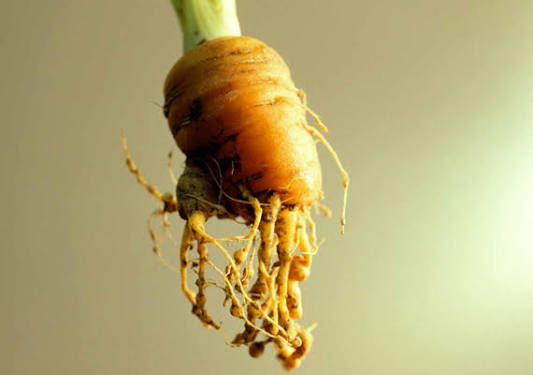
The telltale signs of root knot nematode infection appear in two places: above and below the soil surface. Learning to recognize these symptoms means you can catch problems early and take action before yield losses become catastrophic.
Above-ground symptoms often mimic nutrient deficiencies or drought stress, which frustrates many gardeners initially. Infected carrot plants develop stunted growth, appearing smaller and less vigorous than neighboring healthy plants. Foliage may turn yellowing or pale, even when you're providing adequate water and nutrients. In severe infestations, entire sections of your carrot bed might show localized stunting, creating a patchy appearance.
Plants may wilt during heat stress even when soil moisture is adequate because the damaged root system cannot absorb water efficiently. Growth becomes slow and uneven, with some carrots far behind others in the same row despite identical care and conditions. None of these symptoms immediately scream "nematode problem," which is why root knot nematodes are so dangerous. Many gardeners attribute the poor performance to soil quality or environmental stress rather than pest damage.
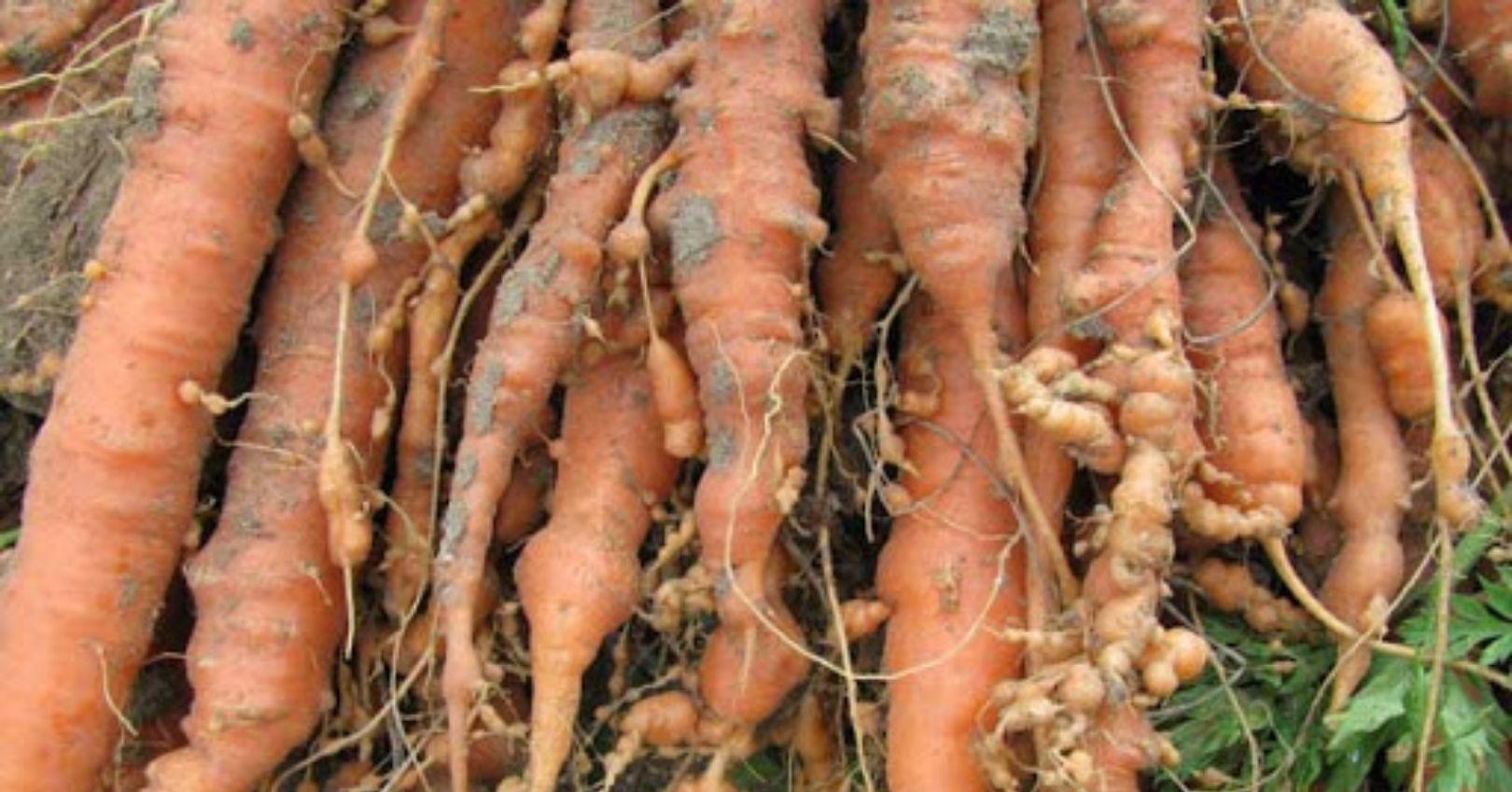
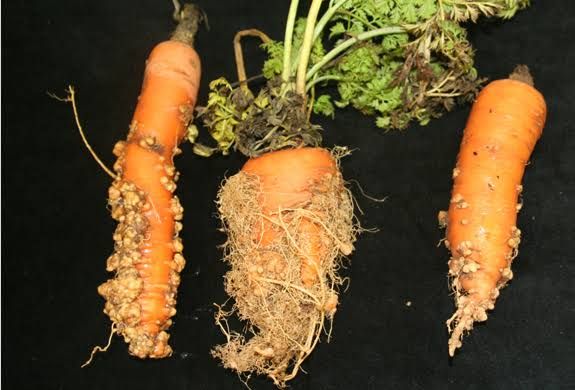
Below-ground symptoms tell the real story. Dig up an infected carrot and the damage becomes unmistakable. Rather than straight, smooth taproots, you'll see grotesquely forked, twisted, and gnarled roots. The carrot surface is covered in bumps, knots, and galls from small pea sized to much larger formations. These galls are actually feeding sites where nematodes have induced root cells to divide abnormally.
Secondary roots are particularly affected, appearing hairy or stubby as they attempt to grow around nematode feeding sites. The roots become brittle and break easily, and if left in the ground through fall and winter, nematodes often create large galls in lenticel (breathing pore) areas. When you slice a carrot lengthwise, the tissue under these galls often appears woody and discolored.
The most devastating aspect: these damaged carrots are largely unmarketable and difficult to clean during harvest. Even if you're willing to eat them, the texture becomes tough and unpleasant near gall sites, making storage and preparation frustrating.
How Root Knot Nematodes Damage Carrot Root Development
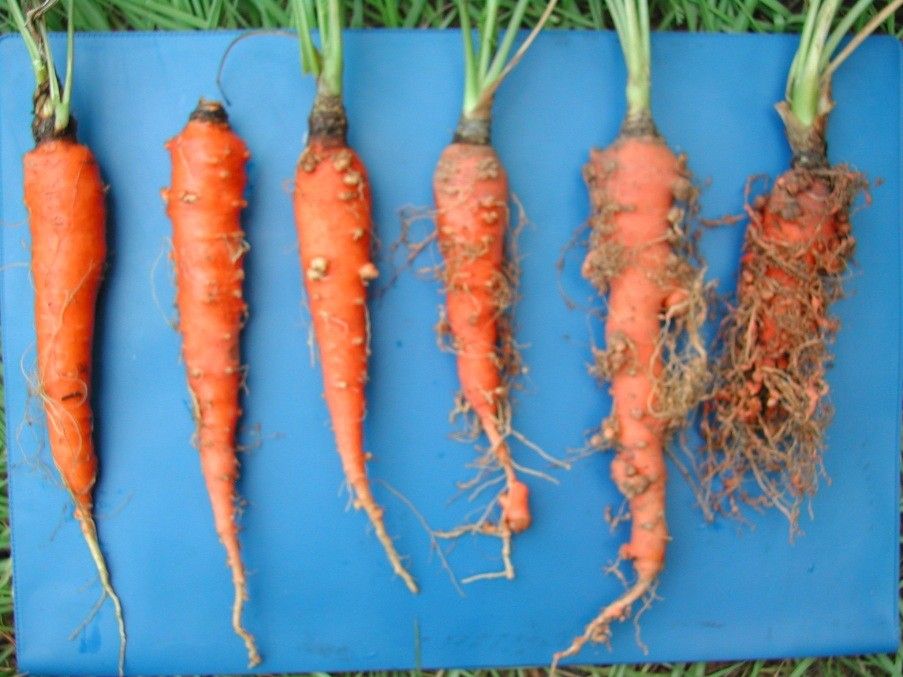
Understanding the damage mechanism helps explain why carrots are so vulnerable and why prevention matters more than any treatment applied after infection occurs.
As juvenile nematodes feed on root cells, they disrupt the plant's ability to transport water and nutrients from the soil. This causes immediate stunting and yellowing because the root system simply cannot function properly. The root galls themselves represent wasted plant energy. The carrot uses tremendous resources trying to compartmentalize these feeding sites, creating hardened, woody tissue that reduces the root's nutritional value and market quality.
For commercial growers, yield reduction is catastrophic. Research shows that root knot nematode infestations can reduce carrot yield by 50 percent or more in severely infested fields. Even moderate infestations cause significant losses. The combination of reduced marketability and yield loss makes root knot nematodes economically devastating to carrot production.
At the cellular level, the nematode injections create giant feeding cells that become enlarged and full of unusual structures. The plant attempts to wall off this damage through suberization (creating cork-like barriers), but this process uses energy that could otherwise go into normal root growth. The result is stunted root development combined with tissue deformities that render the carrot unsuitable for sale or consumption.
Beyond direct feeding damage, root knot nematodes create wounds that allow secondary pathogens to enter. Fungi and bacteria exploit these entry points, causing additional rot and deterioration. A heavily infested carrot root may host a dozen different organisms by harvest time, each contributing to further degradation.
Testing Your Soil for Root Knot Nematode Presence
The best time to discover you have a nematode problem is before you plant carrots, not after harvest when damage is obvious. Soil testing for nematodes requires professional service because identifying nematodes under a microscope requires specialized expertise, but the investment is worthwhile for preventing infestations.
Timing is critical. Fall testing for spring planting works exceptionally well because it gives you sufficient lead time to implement management strategies before planting. Spring testing also works, though it leaves less time for implementing some control measures like soil fumigation, which requires weeks between application and planting.
For proper sampling, take soil cores from the top 12 inches of several locations across your planned carrot bed, compositing them into one sample. Include some root tissue from previously grown carrots if available, as nematodes are often found both in soil and embedded in root material. Send samples to your university extension service or a certified nematology laboratory.
Results will indicate the nematode species present and the population density per 100 cubic centimeters of soil. For carrots, the threshold for action is very low. Even populations of one to ten juveniles per 100 cubic centimeters can cause economic loss in carrot crops. Unlike some vegetables that tolerate moderate nematode populations, carrots essentially have zero tolerance.
If testing reveals nematode presence, you have several months to develop a management plan rather than facing the harvest day shock of discovering the problem then.
Organic and Natural Control Methods That Actually Work
For home gardeners and organic producers, chemical fumigation isn't an option or preference. Fortunately, several proven organic management approaches can significantly reduce nematode populations, though understanding their strengths and limitations is important.
Crop rotation with non-host plants is the foundation of nematode management. The key word here is non-host. Planting the same crops year after year allows nematode populations to build unchecked. Instead, rotate carrots with crops that don't support nematode populations. Excellent non-host options include corn, cereals, wheat, barley, rye, and sorghum. These crops starve the nematode population because the juveniles cannot establish feeding sites on their roots.
Plan a minimum three-year rotation before returning carrots to infested soil. The longer the break, the more nematode decline. Four to five-year rotations provide better results than three-year cycles. Track your planting history carefully so you don't accidentally return carrots too soon to fields you've determined have nematode problems.
Soil solarization harnesses heat to kill nematodes. During the hottest months of summer, cover infested beds with clear plastic, sealing the edges. The heat that builds under the plastic kills many nematode life stages present in the soil. Solarization requires four to six weeks of intense heat and works best in climates with sustained temperatures above 85 degrees Fahrenheit. This approach takes time but requires no chemicals and remains effective for several months after treatment.
Cover cropping offers dual benefits. Certain cover crops actively suppress nematode populations while improving soil health. Marigolds release natural compounds toxic to root knot nematodes. Planting marigolds as a cover crop or intercropping them with carrots suppresses nearby populations. The approach works best for home gardens where intensive labor is feasible but can also scale to commercial operations.
Incorporating high quality compost into infested soil encourages beneficial microorganisms that naturally suppress nematode populations. While compost alone won't eliminate established infestations, it contributes meaningfully to management when combined with other strategies.
Resistant Varieties and Non-Host Crop Selection
Currently, no completely nematode-resistant carrot varieties exist commercially, though plant breeding programs are actively developing them and trials are ongoing. This means varietal selection alone won't solve the problem, but it remains worth monitoring seed catalogs for future releases of resistant cultivars.
Since resistant carrots aren't available, your protection strategy focuses on interrupting the nematode life cycle through crop rotation. Identify which crops are truly non-hosts versus those that merely tolerate infestations without building populations significantly.
Excellent non-host crops include corn, winter wheat, rye, barley, and sorghum. These crops lack the suitable root characteristics that infective juveniles require, so nematodes cannot establish and multiply on them. After growing a non-host crop, nematode populations naturally decline because no new generation develops.
Poor rotation choices include other root vegetables like beets, radishes, onions, and parsnips. While these crops may tolerate light infestations, they'll still host nematode populations and maintain them at problematic levels. When you finally plant carrots again, you'll have the same or higher nematode populations as before your "rotation."
Plan your garden layout carefully. Identify beds that have shown nematode damage historically and dedicate them to non-host crops for the next three to five years. Rotate other beds in a sequence that maximizes non-carrot crops. This requires thinking several seasons ahead but prevents the frustration of repeatedly planting carrots into nematode-infested soil.
Chemical and Professional Management Options
For commercial growers and severe infestations, chemical options exist but require careful consideration of regulations, timing, and environmental concerns. These approaches should be discussed with your county extension agent or professional pest management consultant.
Preplant soil fumigation can reduce nematode populations to manageable levels before planting. Several fumigants are registered for nematode control, though availability and restrictions vary by region. Common options include Vapam HL (metam sodium) and Telone II, though regulations regarding these products are increasingly restrictive in environmentally sensitive areas.
Fumigation requires careful timing because applications must occur weeks before planting. Allow adequate time for soil to off-gas and cool before introducing seeds or transplants. The process is expensive and creates temporary restrictions on field access. For these reasons, fumigation typically makes sense only for severe infestations on high-value commercial operations.
Newer approaches like seed treatments with small amounts of abamectin have shown promise in reducing nematode impact on susceptible crops, though these applications are still relatively new and availability varies. Discuss these options with your agricultural extension service to understand what's approved and effective in your region.
For most gardeners, the time, cost, and environmental concerns around chemical fumigation make crop rotation and soil management preferable. Prevention through proper rotation proves more cost effective and environmentally sound than reactive chemical treatments.
Preventing Nematode Spread to Uninfected Areas
Once nematodes establish in one location, preventing their spread to clean soil requires consistent attention to sanitation and management practices.
Equipment sanitation is essential. Nematodes can survive in soil clinging to tractors, tilers, and hand tools. Before moving equipment from an infested bed to a clean one, remove all visible soil with high pressure water spray. This single practice prevents most inadvertent field-to-field spread. If you suspect equipment moved between infested and uninfected soil, wash it thoroughly before using on clean beds.
Irrigation management matters significantly because water can carry nematode juveniles short distances. Avoid irrigating infested fields and allowing water to drain into ditches or ponds shared with clean areas. If using pond water for irrigation, understand that nematodes can survive in standing water and be transported. Keep irrigation water in holding ponds long enough for nematodes to settle to the bottom, then pump water from near the surface rather than the bottom.
Garden hygiene practices reduce spread within home gardens. Clean your hands and tools after working in infested beds. Remove all carrot debris thoroughly at season end, as nematodes can survive in root material left in the field. Till fallow areas periodically during summer to expose nematodes to desiccation and heat.
Prevent weeds from establishing in infested areas because many weeds serve as alternative hosts for nematodes, maintaining populations between carrot crops. Consistent weeding removes host plant material that nematodes depend on.
Using Plantlyze to Monitor Your Carrot Root Health
Once you've implemented nematode management strategies, monitoring your carrot plants throughout the season helps you confirm whether populations are declining and whether plants are recovering. The Plantlyze AI powered plant care diagnosis tool provides real time feedback on your carrot health status.
If you notice unexpected plant decline or yellowing despite adequate care, upload images of affected plants and roots to Plantlyze. The platform's AI analysis can identify signs consistent with root knot nematode damage, including visible root galling and characteristic plant symptoms. This capability helps distinguish nematode damage from nutrient deficiencies, drought stress, or other problems causing similar above-ground symptoms.
Early detection through regular Plantlyze monitoring allows you to adjust management strategies midseason. If populations remain high despite your efforts, you can intensify cultural controls or plan more aggressive rotations for subsequent seasons. If populations are declining, continued monitoring confirms your strategies are working.
Visit Plantlyze.com to access this comprehensive plant health monitoring tool and explore additional resources for managing carrot pests and diseases throughout the growing season.
Moving Forward With Nematode Free Carrots
Root knot nematodes are undeniably one of the most frustrating carrot pests, operating invisibly until harvest day reveals their devastating impact. But understanding their biology, recognizing their symptoms early, and implementing proper management strategies puts you firmly in control.
Testing your soil before planting removes the guesswork. Crop rotation with non-host plants forms the cornerstone of long-term nematode management. Organic approaches like soil solarization, cover cropping with marigolds, and maintaining soil health through compost work together to suppress populations naturally.
For those unfortunate enough to discover established infestations, the setback is temporary if you commit to long-term rotation management. Three to five years of non-host crops will break the nematode cycle. Patience combined with consistent management transforms infested soil back into clean, productive carrot growing ground.
The effort invested in prevention and early detection prevents the heartbreak of harvest day discovery. Clean soil, proper rotation, and consistent monitoring create the conditions where carrots thrive and nematode populations decline toward elimination. Your future carrot harvests will reward this diligence with beautiful, straight, marketable roots that make every bit of management effort worthwhile.
References
Root Knot Nematode Identification and Management -- https://extension.usu.edu/vegetableguide/root-crops/nematodes
Carrot Nematode Management and Integrated Control -- https://ipm.ucanr.edu/agriculture/carrot/nematodes/
Northern Root Knot Nematode Control in Carrots -- https://pnwhandbooks.org/node/2420/print