Introduction
Most zucchini disease problems are preventable. The key is learning to identify diseases early, before they destroy your harvest. By the time yellowing leaves become severe or fruit begins to rot, disease has often spread throughout the plant.
This comprehensive guide teaches you to spot every major zucchini disease at its earliest stages. You will learn what powdery mildew actually looks like, how to distinguish downy mildew from other leaf problems, and which bacterial diseases require immediate plant removal. Armed with this knowledge, you can catch problems fast and save your crop.
Whether you are a beginning gardener worried about mysterious white spots or an experienced grower preparing for disease season, this guide covers everything. Visual identification combined with proven prevention strategies puts you in control of your zucchini's health.
Note: Want real time disease identification? Try Plantlyze.com, an AI powered plant care and diagnosis tool that instantly identifies zucchini diseases from a single photo and provides personalized treatment recommendations.
Why Early Disease Detection Saves Your Zucchini Harvest
The Cost of Late Detection
When you finally notice something is wrong with your zucchini, the disease has usually been progressing for days or weeks. A few powdery mildew spots today become total leaf coverage in one week. Early wilting signals that disease has already invaded the plant's vascular system.
Late detection often means losing the entire harvest. A plant that could have been saved with early treatment becomes worthless. The fruit stops developing. Leaves die back. You end up harvesting nothing.
Prevention vs. Treatment Approach
The best disease management is prevention, not treatment. Once you understand what diseases look like at first appearance, you can intervene immediately. Early neem oil application stops powdery mildew in its tracks. Early removal of affected leaves prevents spread to healthy foliage.
This is why vigilance matters. Spending five minutes daily inspecting your zucchini plants prevents hours of crisis management later. You spot problems when they are still minor and treatable.
Common Environmental Conditions That Trigger Disease
Fungal diseases thrive in specific conditions. Powdery mildew appears when temperatures are warm and humidity is high, especially during mid to late summer. Downy mildew prefers cool, wet weather, typically at the beginning or end of the growing season.
Understanding these patterns helps you predict disease risk. Hot, humid summers mean powdery mildew is coming. Plan prevention accordingly. Early season rainfall signals downy mildew might appear. Monitoring the forecast gives you a heads-up to watch closely and potentially apply preventive sprays.
Identifying Fungal Diseases on Zucchini Leaves
Powdery Mildew (White Powdery Dust)
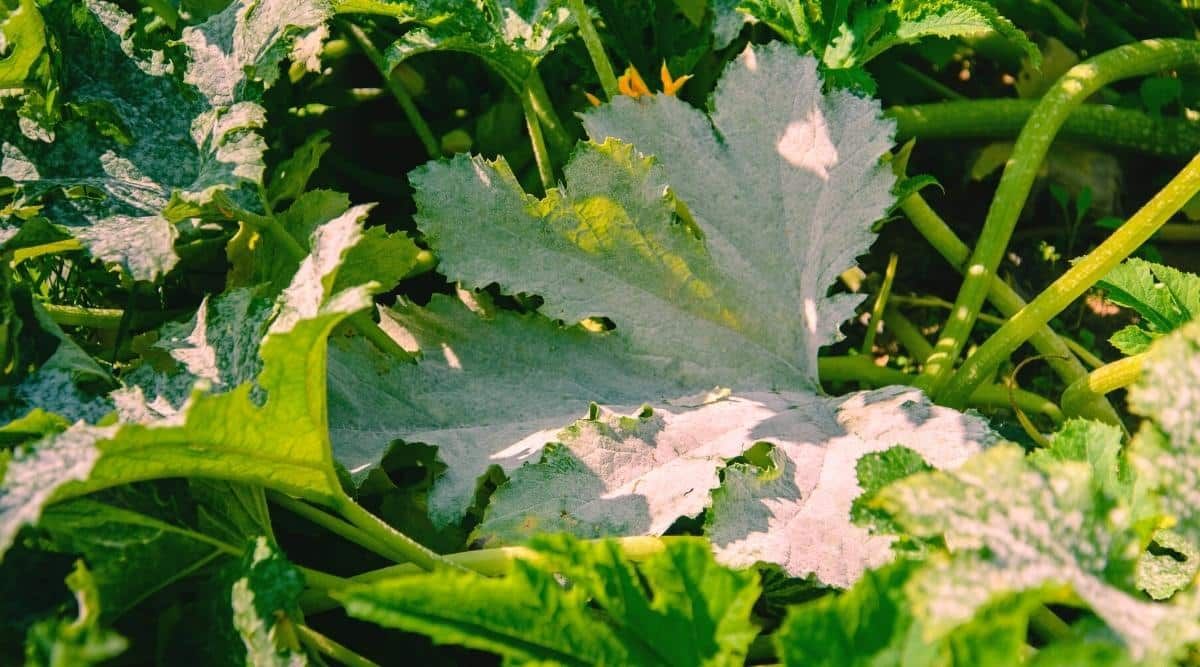
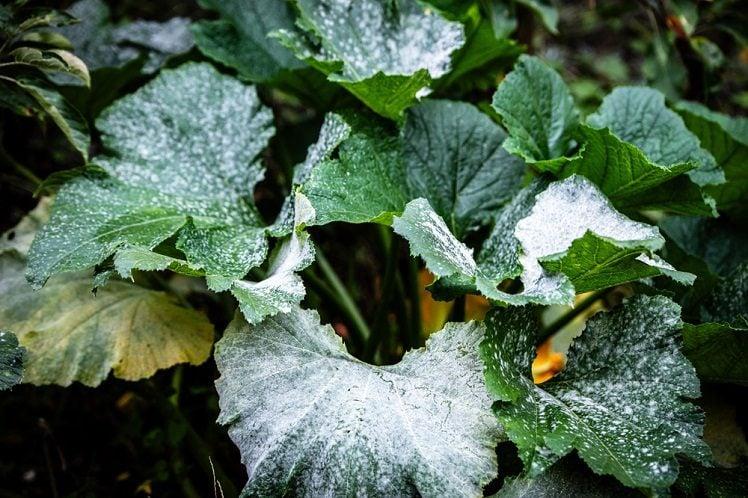
Powdery mildew is the most common zucchini disease, caused by several fungi including Podosphaera xanthii, Erysiphe cichoracearum, and Sphaerotheca fuliginea. The name describes the appearance perfectly: white or gray powdery dust covering leaves.
Powdery mildew starts as circular white spots on leaf surfaces, usually appearing on upper leaf sides first. As the disease progresses, these spots merge into larger whitish blotches. Affected leaves turn yellow or brown and eventually die. The plant loses its ability to photosynthesize.
To treat powdery mildew early, remove infected leaves carefully and dispose of them in the trash. Do not compost them, as spores may spread. For active infection, diluted neem oil wiped on leaf surfaces works well. Wettable sulfur sprays and potassium bicarbonate fungicides are also effective. Apply every 7 to 10 days until disease clears.
Prevention is far easier than treatment. Once you see any white spots, start preventive sprays immediately before the disease covers the entire plant. Good air circulation around plants significantly reduces powdery mildew pressure.
Downy Mildew (Yellow Spots with Gray Undersides)
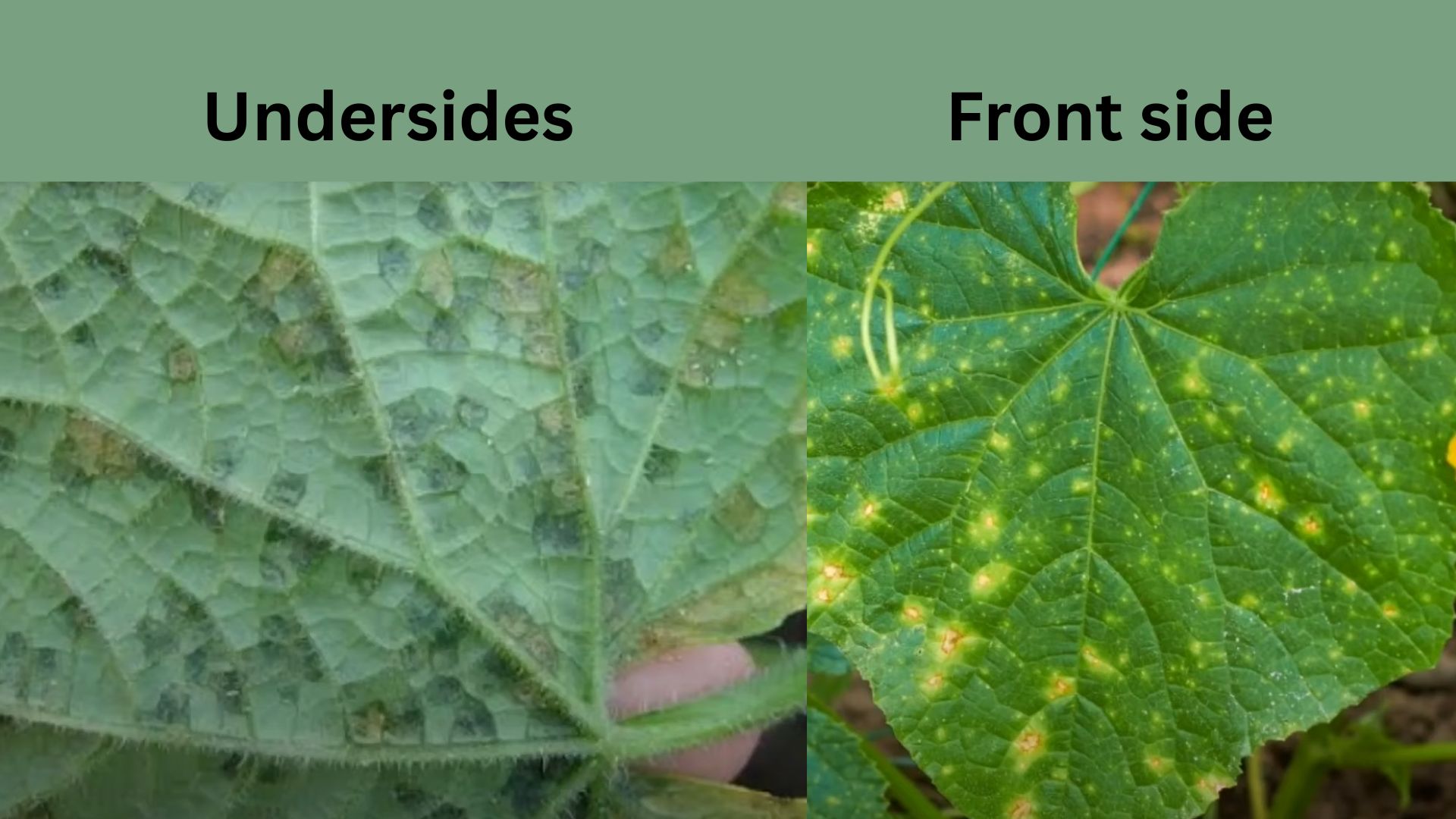
Unlike powdery mildew's white dust, downy mildew causes yellow or pale green blotchy spots on the upper leaf surface. The distinguishing feature is a gray or purple fuzzy growth on the undersides of affected leaves.
Downy mildew is caused by a water mold (oomycete) called Pseudoperonospora cubensis. These pathogens need moisture to spread, so they thrive during cool, wet weather, typically at the season's beginning or end. Affected leaves will eventually turn brown and may curl.
To treat downy mildew, apply a diluted neem solution or organic fungicide to affected areas. However, if the disease has heavily colonized your plant and it is late in the season, removing the entire plant is often the best option. Do not compost infected plants, as the pathogen can survive in debris.
The key difference from powdery mildew is the fuzzy undersides and yellow spots rather than powdery white coating. Once you know what to look for, downy mildew is easy to identify.
Alternaria Leaf Blight (Brown Halos)
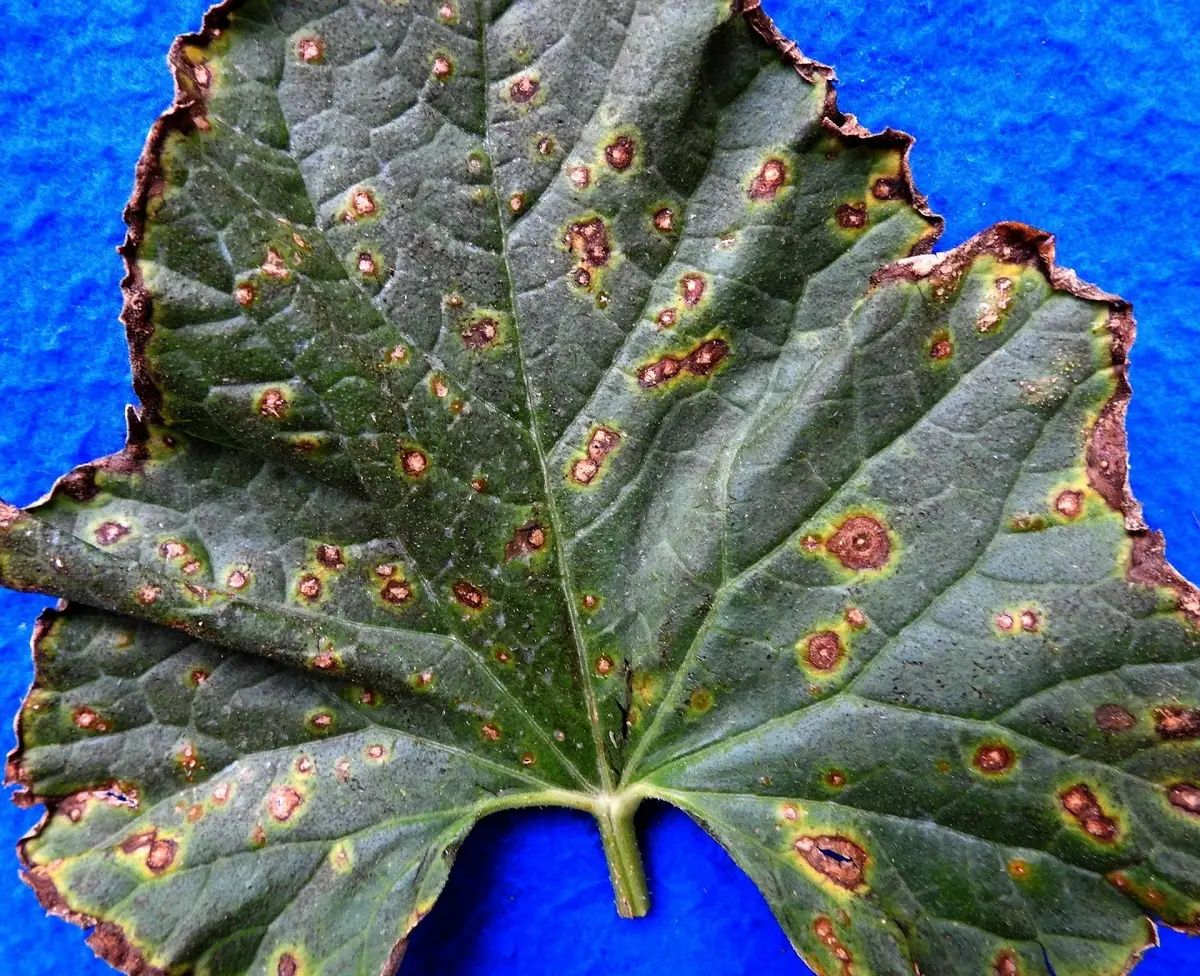
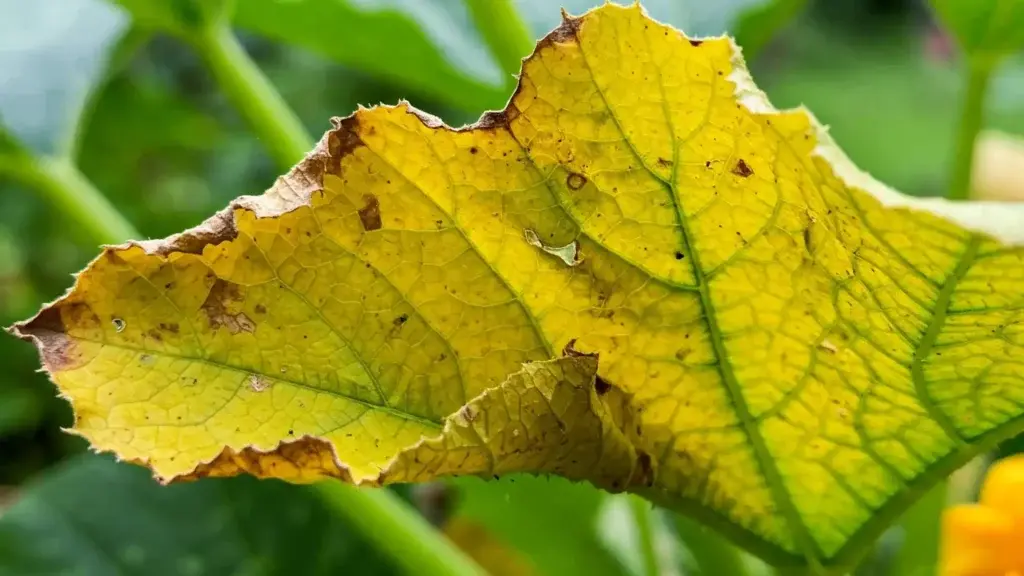
Alternaria leaf blight starts as yellow brown spots with a yellow or green halo around each spot. These lesions typically appear first on older leaves, then spread to younger foliage.
The fungus, Alternaria cucumerina, thrives in hot, humid weather with rainfall. Left untreated, the spots expand and merge together. Leaves curl up and die. The disease can also create lesions on fruit, making them unmarketable.
Treat Alternaria leaf blight with copper-based fungicide sprays applied every 7 to 10 days. Copper fungicides also work preventively if you have had Alternaria problems in past seasons. Biofungicides containing Bacillus subtilis offer an organic alternative.
You can also prevent Alternaria by ensuring good air circulation and avoiding overhead watering that keeps leaves wet for extended periods.
Septoria Leaf Spot (Round Spots with Dark Margins)
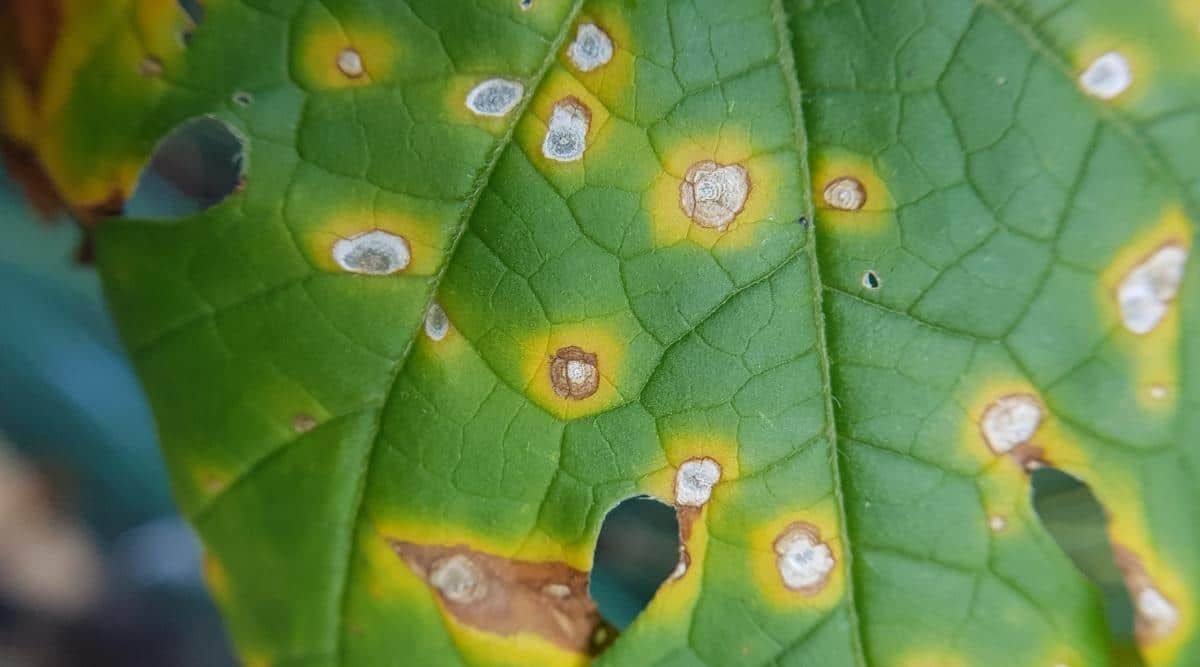
Septoria leaf spots are distinctly beige or white round spots with dark brown margins. The spots may merge together to create larger brown dead regions on the leaf.
The fungus survives on old plant debris in the soil. Prevent Septoria by removing all crop debris at season's end and rotating crops to a different location the following year. If spotted during the growing season, prune away infected leaves immediately.
Treat Septoria with potassium bicarbonate or organic copper fungicide, applying to nearby healthy leaves to prevent spread. Clean up your garden beds thoroughly in fall to prevent the fungus from overwintering. Proper sanitation is your best defense.
Recognizing Bacterial Diseases and Wilts
Bacterial Leaf Spot (Yellowing Margins)
Bacterial leaf spot causes small spots with yellow margins that gradually enlarge and become necrotic (dead). The disease also creates small beige, indented spots on zucchini fruit itself.
Caused by Xanthomonas campestris bacteria, this disease thrives in hot, moist weather. Unlike fungal diseases that you can treat with fungicides, bacterial leaf spot is difficult to control once established. Prevention through disease-free seed and crop rotation is critical.
The best defense is buying certified disease-free seed since this is a seed-borne pathogen. If you catch it very early, copper-based fungicide might slow the spread. However, once the disease takes hold, you should pull and destroy affected plants to prevent further spread to neighboring plants.
Bacterial Wilt and Plant Collapse
Bacterial wilt caused by Erwinia tracheiphila causes entire plants to wilt suddenly, with leaves turning dark green and dull. Discoloration appears on stems. The plant can decline rapidly, sometimes dying within days.
This disease is spread by cucumber beetles as they feed. The bacteria clog the plant's vascular system, preventing water and nutrient movement. Once wilting begins, the plant usually cannot be saved.
Prevention focuses on pest control. Manage cucumber beetles aggressively through hand-picking, row covers, sticky traps, and insecticidal sprays. Reducing cucumber beetle populations prevents bacterial wilt transmission before it starts.
When to Remove Entire Plants
If your zucchini shows severe wilting that does not respond to watering, or if bacterial leaf spot has affected most leaves, remove the entire plant. Do not compost diseased plants, as pathogens survive in compost and spread the disease to next year's garden.
Destroying one infected plant now prevents disease spread to your entire zucchini patch. This is hard emotionally but necessary practically. A single infected plant can devastate your entire crop if bacteria spread to neighbors.
Viral Diseases and Mosaic Patterns
Zucchini Yellow Mosaic Virus Identification
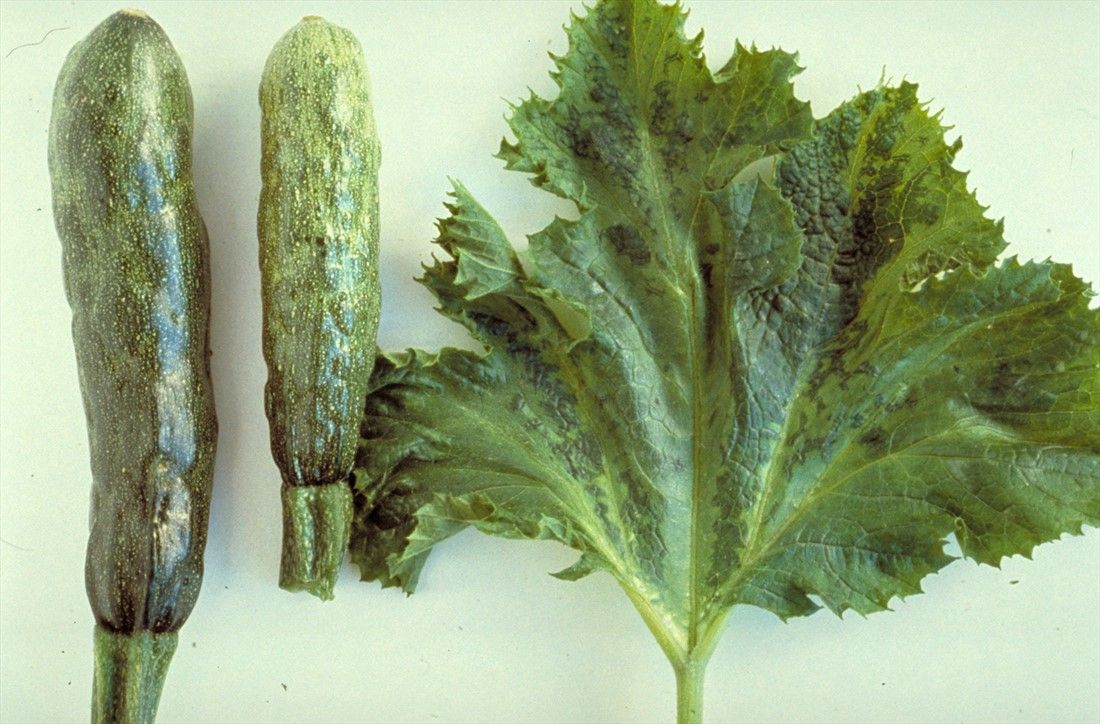
Zucchini Yellow Mosaic Virus (ZYMV) causes yellow mosaic patterns, severe leaf malformation, blisters, and extreme reduction in leaf size. Leaves may show necrosis (dead tissue). Plants become severely stunted.
Affected fruit develops knobby deformations that make them unusable. Early infection can prevent fruit set entirely. Later infections produce small, deformed, unmarketable squash. The entire plant may fail to produce abundance.
ZYMV is spread by aphids as they feed. Once the virus infects a plant, there is no cure. Remove and destroy infected plants to prevent spread to nearby plants.
Deformed Fruit and Stunted Growth
When you see small, deformed zucchini with rough skins or leaves that look puckered, cupped, or stringy, viral infection is likely. A mottled mosaic pattern of yellow and pale green on leaves confirms viral disease.
Viral-infected plants quickly become stunted and wither. They stop producing fruit or produce only misshapen, undersized fruit. Unlike fungal diseases that you can sometimes manage, viral diseases have no treatment.
The solution is removing infected plants immediately. Do not compost them. Prevent future viral infection by controlling insect vectors (aphids and cucumber beetles) that spread viruses.
Pest Control as Prevention
Since pests spread viruses, controlling pests is your primary virus prevention strategy. Use sticky traps to catch flying insects. Hand-pick larger pests like cucumber beetles. Row covers protect young plants before flowering when pest damage matters most.
For severe infestations, organic insecticides containing spinosad or azadirachtin (neem) can control aphids. Alternate between different insecticide types to prevent resistance.
Selecting Resistant Varieties
The best long-term viral disease solution is planting virus-resistant varieties. Revenue zucchini is resistant to Zucchini Yellow Mosaic Virus, Watermelon Mosaic Virus, and Cucumber Mosaic Virus. This single variety covers the major viral threats.
When selecting seeds or transplants, look for resistance codes. "ZYMV" means resistance to Zucchini Yellow Mosaic Virus. "WMV" indicates Watermelon Mosaic Virus resistance. "CMV" shows Cucumber Mosaic Virus resistance. Prioritize varieties with multiple resistances for maximum viral protection.
Common Zucchini Pests and Associated Diseases
Squash Vine Borers (Sudden Wilting)
Squash vine borers are the larvae of a large hummingbird-like moth. Damage appears as small holes near the base of stems exuding beige sawdust-like material (frass).
The larvae tunnel inside stems, causing the plant to wilt suddenly despite adequate soil moisture. Multiple borers feeding inside a single stem will cause it to gradually rot and kill the plant. Healthy looking plants can collapse within days once borer damage becomes severe.
Prevent squash vine borers by covering plants with row covers in spring before moths lay eggs. For established infestations, place a cardboard or paper collar around the base of the plant to prevent borers from reaching the stem. Some gardeners also bury the stem slightly deeper than it was planted, allowing the plant to root along the buried stem and compensate for borer damage.
Cucumber Beetles (Foliage Damage and Disease Spread)
Cucumber beetles are easily recognized by their yellow and black coloring. They feed on zucchini foliage, creating holes and leaving deep marks on fruit. More dangerously, they spread Bacterial Wilt disease as they feed.
Hand-pick beetles when you see them and dispose of them. Use sticky traps to catch flying beetles. Yellow sticky traps specifically attract cucumber beetles. For heavy infestations, row covers protect young plants until flowering begins, after which you can remove covers and allow pollinators access.
Squash Bugs and Yellow Vine Disease
Squash bugs are large brown insects that feed on plant sap. They also spread Cucurbit Yellow Vine Disease, a bacterial disease that causes leaves to yellow and curl, stems to discolor yellow, and roots to rot.
Squash bugs lay distinctive brown egg clusters on leaf undersides. Destroy egg clusters before they hatch. Hand-pick adults and dispose of them. Interestingly, Black Zucchini varieties have fewer squash bug problems than traditional green zucchini varieties.
Prevent squash bug damage and disease by crop rotation, removing old vines from the compost pile, and using row covers. If squash bugs are persistent in your garden, selecting Black Zucchini or newer resistant varieties is worthwhile.
Aphids and Viral Spread
Aphids are tiny green, black, or red insects that pierce plant tissue and suck sap. As they feed, they transmit viral diseases between plants.
Controlling aphids prevents virus spread. Companion planting with nasturtiums and radishes attracts predatory insects that consume aphids. These trap crops lure aphids away from zucchini. Organic insecticide options include azadirachtin (neem) and spinosad products.
Organic and Natural Treatment Options
Neem Oil and Sulfur Sprays
Neem oil derived from the neem tree effectively controls powdery and downy mildew. Dilute neem oil according to package directions and spray affected foliage. Repeat every 7 to 10 days until disease clears.
Wettable sulfur also works well against fungal diseases but should not be applied when temperatures exceed 85 degrees Fahrenheit, as high heat can damage plants. Apply sulfur early in the morning or late afternoon.
Both neem oil and sulfur are organic-approved and safe for food crops when used as directed. Spray until leaves are wet but not dripping.
Potassium Bicarbonate Fungicides
Potassium bicarbonate is an organic fungicide effective against powdery and downy mildew. It works by changing the pH on leaf surfaces, making them inhospitable to fungal spores.
Potassium bicarbonate is non-toxic and degrades quickly after application. Spray according to package directions, usually every 10 to 14 days. It works best on young infections rather than advanced disease.
Copper-Based Treatments
Copper fungicides effectively treat Alternaria leaf blight, Septoria leaf spot, and bacterial leaf spot at early stages. Copper ions disrupt fungal and bacterial cell function.
Apply copper fungicide every 7 to 10 days for disease control or preventively if you have had past disease problems. Avoid applying copper on hot days to prevent leaf burn. Organic-approved copper fungicides are available at garden centers.
When to Remove Plants vs. Treat
If more than half of a plant's foliage is affected by disease, or if wilting suggests vascular disease, remove the entire plant. Treatment rarely succeeds once disease becomes this advanced.
Early treatment works best. Spotted one or two leaves with powdery mildew? Remove those leaves and spray. Found bacterial leaf spot on a few leaves? Remove those leaves immediately and apply copper fungicide. Caught vine rot from squash vine borers? Attempt treatment with collars and supplemental feeding.
But if disease covers most of the plant, the plant cannot recover even with treatment. Remove it to prevent spread to neighbors.
Prevention Strategies That Actually Work
Crop Rotation for Long-Term Disease Control
Crop rotation is the single most important disease prevention practice. Plant zucchini in a different garden location each year, ideally rotating every 3 to 4 years before returning to the original spot.
Many zucchini diseases, especially soil-borne fungi like Fusarium and Verticillium wilt, build up in soil over years of growing the same crop. Rotating breaks the disease cycle by starving pathogens of their preferred host.
Additionally, plant squash where legumes (peas, beans) grew the previous year. Legumes fix nitrogen in the soil, providing natural fertilizer for hungry zucchini.
Selecting Disease-Resistant Varieties
Disease-resistant varieties are your easiest defense. Revenue zucchini resists multiple viruses. General Patton straightneck squash and ZS-23 zucchini have powdery mildew tolerance.
Look for resistance codes on seed packets. "PM" indicates powdery mildew resistance or tolerance. "ZYMV," "WMV," and "CMV" indicate resistance to specific viruses. Selecting resistant varieties does not guarantee disease prevention, but it dramatically reduces your disease risk.
Cultural Practices and Garden Management
Good air circulation around plants significantly reduces fungal disease pressure. Space plants appropriately rather than crowding them. Prune lower leaves to increase airflow.
Water soil directly, never overhead. Wet leaves create ideal conditions for fungal spores to germinate. Watering at the base keeps foliage dry and disease-free.
Mulch heavily to prevent soil splash onto leaves during rain, which spreads fungal spores. Remove lower leaves that touch the ground where fungal spores accumulate in soil.
Plant in full sun. Shaded areas have poor air circulation and stay damp longer, favoring disease development. Avoid planting zucchini near tomatoes, as this increases disease spread between crops.
Sanitation and Debris Removal
Remove all diseased foliage and plant parts during the season. Dispose of them in the trash, not the compost pile. Fungal spores survive composting and spread disease the following season.
At season's end, remove all old zucchini plants and debris from the garden. Do not leave dead vines in the bed. The fungi and bacteria survive in plant debris, waiting to infect next year's crop. Clean up thoroughly before winter.
Sterilize garden tools between plants using a 10 percent bleach solution (one part bleach to nine parts water). Dirty tools spread disease from plant to plant.
Plantlyze: AI Powered Disease Identification and Plant Diagnosis
Growing healthy zucchini requires constant vigilance for disease. You need to spot problems early, but many diseases look similar at first. Is that white spot powdery mildew or natural leaf variegation? Does yellowing mean nutrient deficiency or disease?
Plantlyze.com, an AI powered plant care and diagnosis tool, removes the guesswork. Simply photograph your zucchini plant, and the AI instantly identifies diseases, pests, and nutrient issues with remarkable accuracy.
With Plantlyze, you receive specific treatment recommendations for whatever problem the app identifies. No more wondering whether to apply sulfur or neem oil. No more questioning whether a plant should be removed. The AI tells you exactly what disease you have and the best treatment for your situation.
Many gardeners use Plantlyze throughout the season as an early warning system. Catch diseases at first appearance before they spread. Receive instant identification and treatment guidance. Prevent harvest loss through early, informed decision-making.
Visit plantlyze.com today to start identifying zucchini diseases with AI assistance. Protect your harvest and grow confident in your disease management skills.
Conclusion
Zucchini disease management begins with identification. Learning to spot powdery mildew, downy mildew, bacterial leaf spot, and viral mosaic patterns at their earliest stages gives you time to intervene. Early treatment often saves the plant. Delayed response often means total crop loss.
Combine early detection with proven prevention strategies: crop rotation, resistant varieties, good cultural practices, and aggressive sanitation. These fundamentals prevent most zucchini disease problems before they start.
When problems do appear, you now know exactly what you are looking at and how to respond. Armed with this knowledge, your zucchini will thrive disease-free throughout the growing season. Want expert-level disease identification? Use Plantlyze.com to diagnose problems instantly and ensure your zucchini stays healthy from planting through harvest.
References
American Phytopathological Society. https://www.apsnet.org/edcenter/apsnetfeatures/Pages/ZucchiniYellowMosaic.aspx
UC IPM. https://ipm.ucanr.edu/home-and-landscape/powdery-mildew-on-vegetables/pest-notes/
UConn Extension. https://ipm.cahnr.uconn.edu/consider-planting-disease-resistant-summer-squash-and-zucchini/
INRA Ephytia. http://ephytia.inra.fr/en/C/18657/Zucchini-squash-Protection-methods