Your zucchini plants were thriving just days ago, producing more fruit than you could harvest. Then one morning, you notice the leaves on a single vine looking dull and droopy. By afternoon, that vine is completely wilted. By next day, the entire plant is dead. Welcome to bacterial wilt, one of the most devastating diseases of summer squash. Bacterial wilt is caused by the bacterium Erwinia tracheiphila and is spread exclusively by striped and spotted cucumber beetles, making beetle control the critical factor in prevention. Unlike fungal diseases, this infection cannot be spread through soil, water, or contaminated tools. Understanding the beetle vector is the key to protecting your entire squash and cucumber crop. This comprehensive guide reveals everything you need to know about identifying, preventing, and managing bacterial wilt with strategies that keep your garden productive and disease free.
What Is Zucchini Bacterial Wilt?
Bacterial wilt is caused by the bacterium Erwinia tracheiphila, a pathogen that colonizes plant vascular tissue with devastating consequences. What makes this disease unique is that it spreads exclusively by striped and spotted cucumber beetles, not through soil, water, or contaminated tools. This critical distinction means that beetle control is disease control.
Here's how the disease works: bacteria multiply inside water conducting vessels called xylem. As bacteria multiply, they create a slimy ooze matrix that plugs the xylem, blocking water movement throughout the plant. Without water delivery, even well watered plants cannot absorb moisture, causing the characteristic wilting symptom. Once bacteria invade the xylem, they spread rapidly throughout the plant, explaining why wilting progresses so quickly from a single vine to the entire plant.
Susceptibility varies significantly among crops. Cucumbers and muskmelons are highly susceptible, often dying within days of infection. Zucchini and summer squash are less severely affected but still vulnerable. Pumpkins show moderate susceptibility. Watermelon is naturally resistant and cannot be infected. Young plants are most vulnerable to infection, with symptoms sometimes appearing in as few as 4 days on highly susceptible varieties like cucumbers. Less susceptible crops like squash may take several weeks to show symptoms.
Identifying Zucchini Bacterial Wilt Symptoms
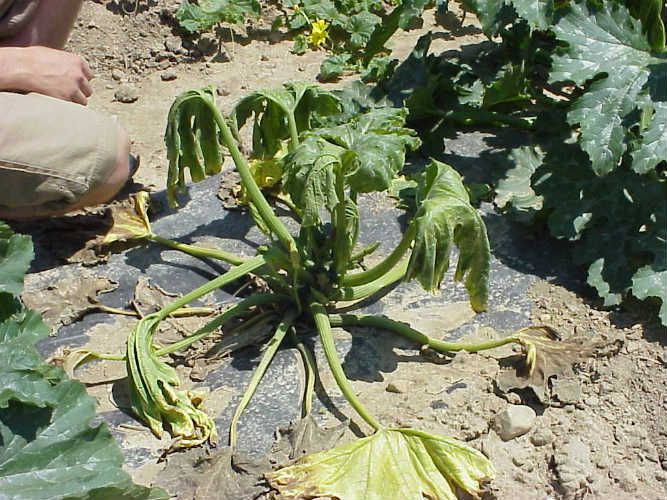
Early detection provides your best opportunity for intervention. Learning what to look for helps you catch the disease when management is still possible.
Early Warning Signs:
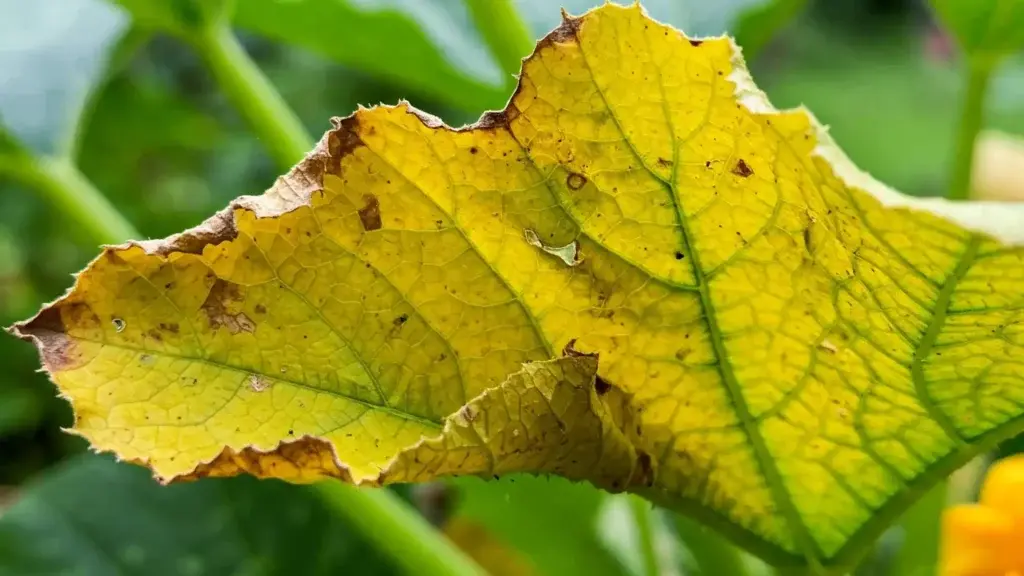
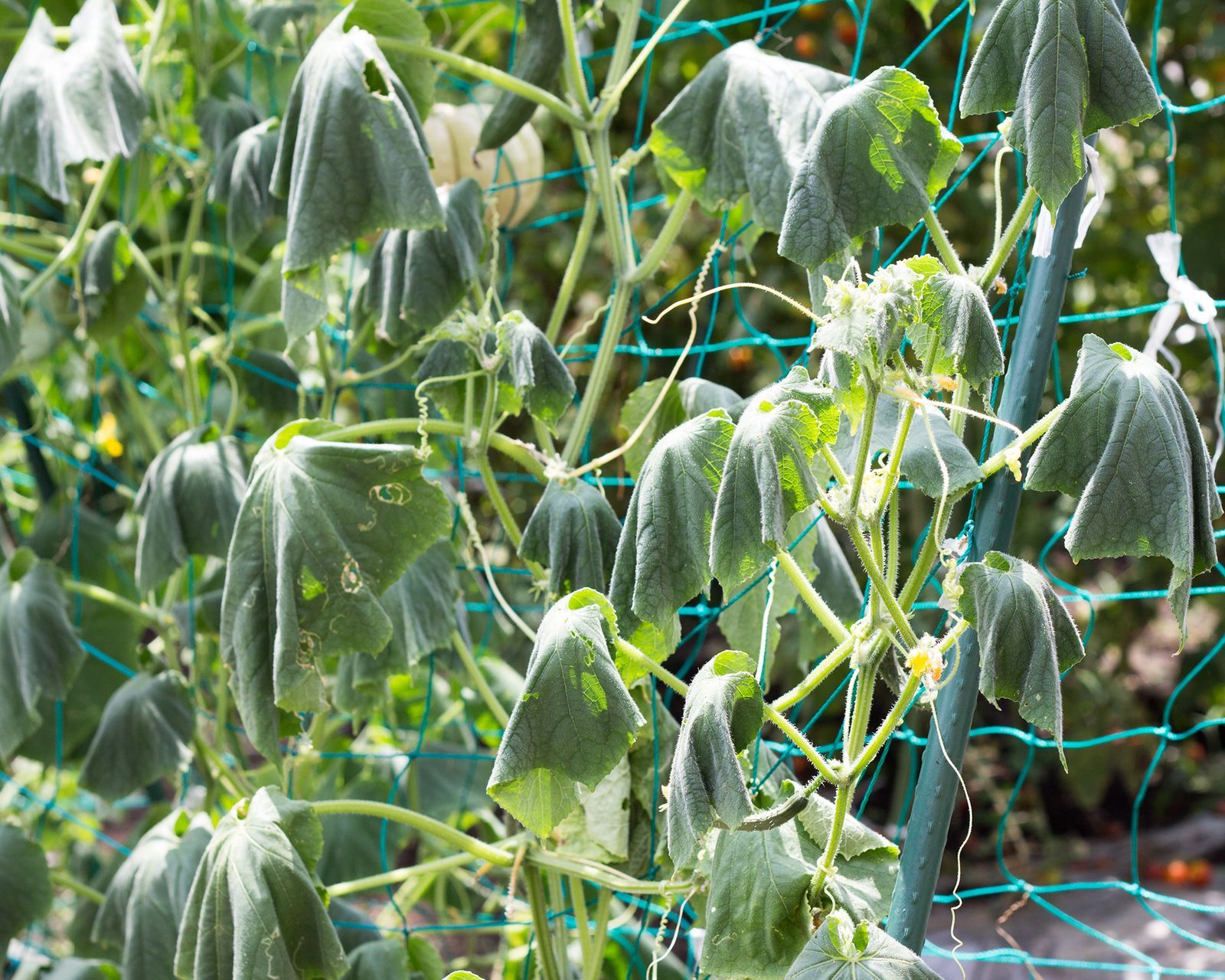
The first visual sign appears as individual leaves or groups of leaves turning dull green, losing their normal vibrant appearance. You may notice wilting, particularly on a single vine or runner, often most obvious during the day when temperatures rise. Here's an important detail: plants may partially recover at night but wilt again when temperatures rise during the day. This partial recovery confused many gardeners initially. The wilting then spreads along individual runners, eventually affecting the entire vine. Leaves progress from dull green to yellowing and browning of tissue between the veins. Progressive wilt becomes permanent over several days to a week.
Advanced Symptoms:
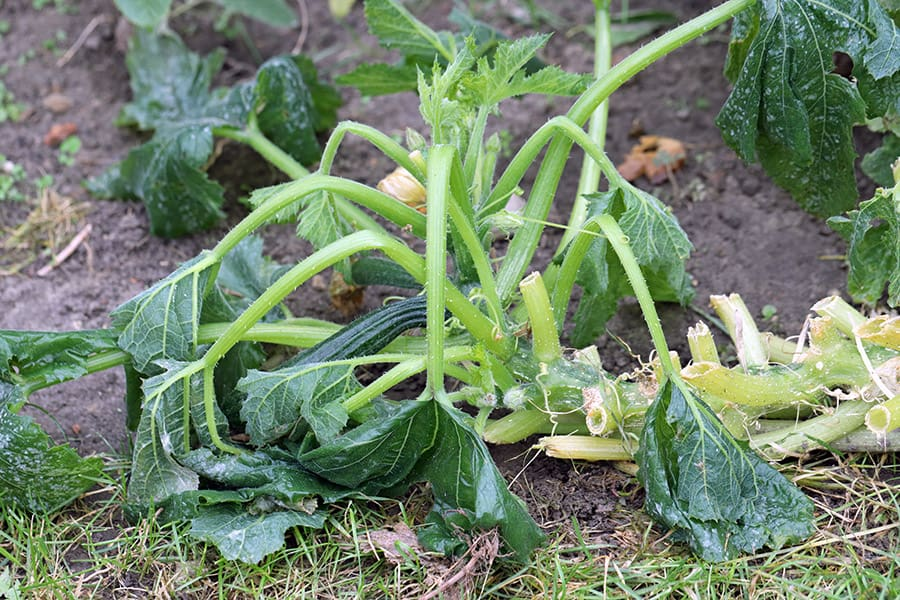
Complete collapse of affected runners occurs as the disease advances. Eventually, the plant's crown is affected, resulting in entire plant death. Yellowing and browning appears between main veins while the veins themselves remain green. Collapsed foliage and vines turn brown, shrivel, and die completely. The speed of decline is shocking: disease can kill previously healthy plants rapidly, sometimes in just days.
Diagnostic Tests to Confirm Bacterial Wilt:
The sticky thread test works reliably for confirming bacterial wilt. Cut the wilted vine near the base of the plant. Cut a section approximately 2 to 3 inches long from the vine. Slowly pull the two cut ends apart while observing carefully. Look for characteristic thin strands of sticky bacterial material stretching between the two pieces. These sticky threads appear like delicate spider webs if bacterial wilt is present. This test works best for cucumbers and melons but less reliably for squash and pumpkins.
Alternatively, try the bacterial ooze test. Cut a vine and place the cut end in a glass of water. Wait approximately 15 minutes. Observe the water for bacterial ooze streaming from the cut end. Visible bacterial streams confirm bacterial wilt diagnosis.
Why Early Recognition Matters:
Early identification allows removal of infected plants before they become major beetle food sources. This prevents beetles from acquiring more bacteria on infected plants. It stops further spread to nearby healthy plants. Your remaining plants have a better chance of survival.
The Culprit: Understanding Cucumber Beetles and Disease Transmission
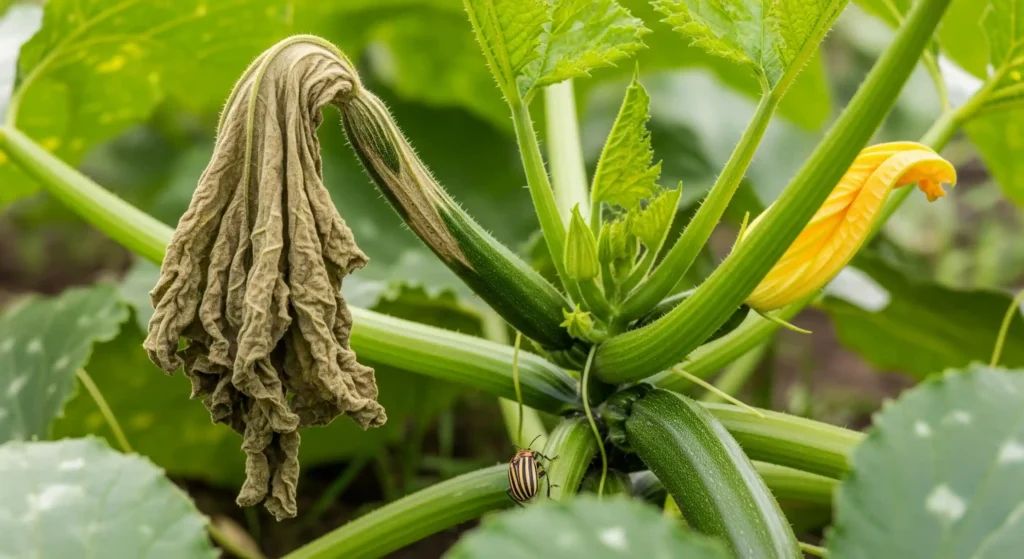
Here's the critical insight: beetle control equals disease control. Understanding how beetles transmit bacterial wilt shows you exactly where to focus prevention efforts.
Striped Cucumber Beetle:
These small insects have a black head, yellow to orange thorax, and yellow and black stripes on their wing covers. They measure approximately one quarter inch long, making them easy to overlook. They feed on foliage, flowers, and developing fruit. Adults overwinter in soil and emerge in spring. Larvae feed on roots and root systems, causing additional plant damage beyond disease transmission.
Spotted Cucumber Beetle:
These beetles have a black head, yellow to yellowish green body with 12 black spots. They measure approximately three eighths inch long, slightly larger than striped beetles. Their behavior and feeding damage mirror striped beetles. This species is primarily found in southern regions but spreading northward.
How Bacterial Wilt Spreads:
The bacteria overwinter inside the digestive gut of adult cucumber beetles. Not all beetles carry the bacteria; only those that fed on infected plants the previous year. When infected beetles emerge in spring, they feed on young cucurbit plants. Bacteria are deposited on plant tissue through beetle mouthparts contaminated with bacteria and frass (beetle feces) deposited into feeding wounds. Feeding damage creates open wounds where bacteria easily enter plant tissue.
Once bacteria invade the xylem (water conducting tissue), they colonize and multiply rapidly. The more feeding damage and higher beetle population presence, the greater the instance of bacterial wilt. A second generation of striped cucumber beetles may acquire bacteria while feeding on infected plants still remaining in the field late in the season.
The Critical Understanding:
Bacterial wilt cannot spread through soil, water, or contaminated tools. Bacterial wilt spreads only through cucumber beetle feeding damage. Therefore, beetle control is disease control. No cucumber beetles equals no bacterial wilt. Copper fungicides and other disease sprays are entirely ineffective because bacteria reside inside plant tissues, unreachable by surface applications.
Timeline of Infection:
Spring marks adult beetle emergence from soil as plants grow. Early summer brings peak beetle feeding activity, creating the highest infection risk. Mid summer to early fall brings infection symptoms appearing on previously infected plants. Fall sees some plants becoming sources of bacteria for second generation beetles.
Environmental Factors and Growing Conditions Affecting Risk
Several seasonal and environmental factors influence your bacterial wilt risk significantly.
Seasonal Timing and Beetle Emergence:
Spring beetle emergence, typically late April to June in northern regions, represents the most critical period for protection. Young plants are most vulnerable to infection during this time. Early beetle populations are smaller but devastating on tender plants. Protection during this period prevents the majority of seasonal losses.
Summer brings peak beetle activity as warmth accelerates beetle reproduction and feeding. Higher temperatures mean faster disease progression once infected. Peak zucchini productivity overlaps perfectly with peak beetle activity. Late summer brings a second generation of beetles that can acquire bacteria from infected plants still in gardens.
Growing Conditions Affecting Beetle Attraction:
Young, tender plants are most attractive to beetles, creating the highest feeding damage potential. Healthy vigorous growth paradoxically attracts beetles through plant vigor signals they detect. Weakened plants show visible wilting symptoms faster when infected. Overcrowding creates dense planting that attracts more beetles and makes management difficult. Weeds nearby harbor both beetles and alternate hosts for bacteria. Previous year beetle overwinter sites affect spring beetle population density significantly.
Regional Variation:
Northern regions have shorter beetle seasons (May to August) with delayed emergence and typically one main generation. Southern regions experience extended beetle seasons with multiple generations and earlier spring emergence. Soil type affects overwintered beetle populations significantly. Mulch management influences beetle emergence rates from soil. Irrigation type influences whether garden provides quality beetle habitat.
Prevention Strategies: The Complete Approach
Prevention represents your best defense because no cure exists once plants are infected. A comprehensive, multi layered approach provides excellent protection.
Early Season Protection: Most Critical Phase
Use floating row covers from plant emergence through flowering. Lay covers immediately after planting or transplanting. Covers must be in place as soon as plants emerge from soil if you are direct seeding. Row covers create a physical barrier that beetles cannot penetrate. Keep covers snug around plants and edges of the garden bed. Remove covers once plants begin flowering to allow bee pollination. This protection during weeks 1 through 8 prevents the majority of seasonal infections.
Reapply covers during succession plantings to protect new plantings. This is critical if you make late spring or early summer plantings for fall harvest.
Conduct weekly plant inspections during early season peak beetle activity. Check plants 2 to 3 times per week during peak beetle season. Later in the season, weekly inspections suffice. Look for adult beetles, yellow eggs on leaf undersides, and characteristic feeding damage. Remove beetles by hand if populations are small. Crush any yellow egg clusters found on leaves immediately.
Cultural Control Methods
Crop rotation prevents beetle buildup in any location. Rotate cucurbit crops to different garden locations each year since beetles overwinter in soil. Keep cucurbits (zucchini, cucumber, melon, pumpkin, squash) out of the same area for 1 to 3 years. Use non cucurbit crops as rotation between seasons.
Weed management removes beetle habitat and food sources. Remove all weeds from garden area, especially spring weeds. Many weed species host both beetles and bacteria. Mow the perimeter around gardens to eliminate beetle habitat. Proper weed control significantly reduces beetle populations.
Trap cropping using perimeter traps can redirect beetle pressure. Plant Blue Hubbard squash as a trap crop around susceptible crops. Beetles prefer Hubbard squash and feed there preferentially. You can sacrifice the trap crop to protect your main crop. This strategy works best on medium to large scale gardens.
Plant spacing should be at least 18 to 24 inches apart in all directions. Wider spacing improves air circulation and visibility for monitoring. Overcrowded plants are harder to monitor and spray. Hand picking beetles becomes more feasible with proper spacing.
Variety Selection
Choose bacterial wilt resistant zucchini varieties when possible. Perseus offers excellent resistance to bacterial wilt. Tromboncino shows resistance and offers dual use as summer and winter squash. Cocozelle, an Italian heirloom, has some resistance. Shintokiwa, a Japanese variety, shows resistance.
Moderately tolerant summer squash options include Butternut squash, which shows moderate susceptibility but plants survive longer. Acorn squash wilts slower than zucchini.
Consider naturally resistant crops. Watermelon is completely resistant to bacterial wilt and cannot be infected. Use watermelon as a replacement if bacterial wilt is a severe problem in your garden.
Early Season Beetle Control Sprays
Neem oil spray protocol: Mix 2 teaspoons neem oil and 1.5 teaspoons dish soap per 4 cups water. Apply with a spray bottle, ensuring good coverage on leaf undersides. Apply only in early morning or evening after pollinators are inactive. Repeat every 1 to 2 weeks during peak beetle activity. Neem prevents beetles from feeding and causes eventual starvation.
Kaolin clay spray creates a film that beetles find unattractive for feeding and egg laying. Apply when adult beetles are present, before egg laying begins. Coat all foliage thoroughly. Reapply after rain or approximately every 7 to 10 days. This approach doesn't kill beetles but effectively repels them.
Pyrethrin spray provides a natural organic insecticide that kills beetles on contact. Apply only in early morning or late evening. This spray kills beneficial insects too, so use judiciously. Repeat applications may be needed for continued control.
When Infection Occurs: Immediate Management
Once bacterial wilt symptoms appear, the plant cannot be saved. Swift response prevents further spread.
Immediate Actions
Remove infected plants completely and immediately. Once symptoms appear, the plant cannot be saved. Prompt removal stops the plant from becoming an additional beetle food source. Pull the entire plant including roots from the garden. Do not leave infected plant material in the garden. Dispose of plants in trash only, never compost infected material. Symptoms appear too late for treatment to work because bacteria are systemic throughout plant tissues.
Prevent infected plants from becoming beetle food sources. Infected plants become feeding grounds for beetles to acquire more bacteria. Removing infected plants reduces bacterial reservoirs for the remainder of the season. Second generation beetles cannot acquire bacteria if source plants are removed promptly.
Preventing Spread to Adjacent Plants
Apply neem oil or kaolin clay to neighboring healthy plants immediately. Increase inspection frequency to catch new infections immediately. Consider covering nearby plants with row cover temporarily if practical. Remove any beetles found on or near the infected plant location.
Prevent cross contamination by avoiding touching healthy plants after handling infected ones. Wash hands thoroughly after removing infected plants. Keep debris from infected plants away from healthy plants. Keep pruning tools clean though tool transmission is uncommon.
Assessment for Resistant Varieties
If bacterial wilt repeatedly infects your garden, plan to plant bacterial wilt resistant varieties next season. Replace susceptible varieties with Perseus, Tromboncino, or other resistant types. Combine resistant varieties with improved beetle control. Consider growing watermelon if bacterial wilt is a chronic problem.
Diagnosing Bacterial Wilt Versus Other Squash Problems
Preventing misdiagnosis ensures you apply the correct management strategy.
Bacterial Wilt Characteristics:
Dull green leaves gradually wilt. A single vine or runner affects first, then spreads. Wilting may recover partially at night but returns during the day. Eventually wilting becomes permanent and plant death occurs. The sticky thread test produces spider web like strands. The bacterial ooze test shows bacteria streaming from cut stems. Cucumber beetles are visible on or near affected plants. Wilting happens regardless of soil moisture because the plant has water but cannot use it due to xylem blockage.
Squash Vine Borer: A Different Problem
Squash vine borer causes sudden complete wilting of plant or vine, different from the progressive wilt of bacterial wilt. Visible holes appear at the plant base or along the lowest 8 inches of stem. Sawdust like frass (excrement) is visible near holes. A white caterpillar with brown head may be found inside the stem. Borer activity occurs inside stem tissue, not vascular blockage. Symptoms appear sudden rather than progressive. No cucumber beetles are present; this is an entirely different pest. Wilting results from physical stem damage, not systemic bacteria.
Wilts from Drought Stress:
Plants wilt during hot days but recover when temperature drops. Soil moisture is actually dry when you check it. Plants recover completely with adequate watering. No cucumber beetles are present. Plants recover fully; wilting is not progressive to death. Drought wilt affects the whole plant uniformly, not a single vine first.
Fungal Wilts (Fusarium or Verticillium):
Gradual yellowing occurs before wilting develops. Sometimes half the plant looks normal while the other half wilts. Vascular discoloration appears visible when stem is cut lengthwise. Brown discoloration of vascular tissue is present. No sticky bacterial ooze appears. The slimy ooze test is negative.
Diagnostic Decision Tree:
Are cucumber beetles present or evidence of feeding? (Bacterial wilt yes, others no)
Does the sticky thread test produce spider web strands? (Bacterial wilt yes, others no)
Is bacterial ooze visible in the water test? (Bacterial wilt yes, others no)
Is there a hole at the plant base with sawdust? (Vine borer yes, bacterial wilt no)
Is soil dry when checking? (Drought stress yes, bacterial wilt no)
Is brown vascular tissue visible in cross section? (Fungal yes, bacterial wilt no showing sticky ooze)
Bacterial Wilt in Containers and Small Spaces
Container gardening presents unique challenges and advantages for bacterial wilt management.
Container Advantages
Container plants are more visible and accessible for beetle inspection. Beetles are easier to spot on smaller plant surfaces. Hand picking becomes practical in containers. Regular scouting is quicker with fewer plants to monitor.
Container plants are simpler to cover with floating row covers. Covers stay in place better on defined container areas. Remove covers once flowering begins for pollinator access.
Infected container removal is straightforward. Simply remove the container from your growing area. No need to dig plants from ground. Quick quarantine of infected plants prevents beetle spread. Bringing new containers to replace dead plants is practical.
Container Challenges
Limited plant volume means smaller genetic diversity. Loss of a single plant represents higher percentage of harvest. Disease spread between nearby containers happens faster. Beetle populations concentrate on fewer plants.
Container Specific Prevention
Space containers adequately at least 18 to 24 inches apart. This allows inspection access and beetle monitoring. Improved air circulation results. Space containers 18 to 24 inches apart for effective management.
Use row covers strategically. Cover entire container and plant with floating row cover. Remove during flowering only. Container placement remains visible to pollinators but prevents beetle access. Reapply cover after flowers fall and new flowers set.
Conduct daily beetle monitoring on container plants. Check container plants daily during early season. Remove any beetles found immediately. Container plants are more visible, making daily checks feasible. Daily scouting during peak season prevents infestations.
Second Plantings and Succession Planting Strategies
Late season plantings can succeed if you time them correctly and use protective strategies.
Late Season Plantings
Plant new zucchini varieties in late June to July for fall harvest. Choose fast maturing varieties, 45 to 50 day types that reach harvest before fall beetles become a major problem. This escapes peak second generation beetle activity. Staggered plantings provide continuous harvest throughout the season. Production occurs in cooler fall weather.
Choose quick maturing varieties for late plantings. Select bacterial wilt resistant varieties when available. Examples include early maturing heirloom varieties and quick growing hybrids. Late June to July plantings avoid the worst of second generation activity. Late August plantings escape beetle season entirely in many regions. Choose timing based on your local beetle emergence and frost dates.
Protection for Late Plantings
Row covers remain valuable for late plantings. Use the same row cover protection on late plantings. Covers provide excellent protection for 6 to 8 weeks. Remove covers once plants begin flowering. Excellent insurance against residual beetle populations exists.
Check new plantings daily just like spring plants. Late season beetles may carry bacteria from early season infections. Removal of any beetles prevents secondary infections. Consider covering nearby plants with row cover temporarily if practical.
Use bacterial wilt resistant varieties for late plantings if available. This provides two layers of protection. Reduces risk of late season loss to disease.
Why Treatment Doesn't Work Once Infected
This is the critical reality that changes everything about how you manage bacterial wilt.
Once Bacterial Wilt Symptoms Appear, the Plant Cannot Be Saved
Bacteria live inside xylem vessels throughout the plant. Systemic infection exists throughout all plant tissue. Surface sprays cannot reach vascular systems where bacteria reside. The plant cannot move water upward, making wilting permanent. Plant death occurs regardless of any spray treatment.
Why Sprays Don't Work:
Copper sprays are entirely ineffective against systemic bacterial wilt. Bacteria reside inside plant tissues, unreachable by surface applications. Antibiotics are not approved for garden use. All treatment focuses on prevention of infection, not cure of systemic infection.
Preventive Sprays Work Before Infection:
Neem oil prevents beetles from feeding, reducing transmission. Must be applied before infection occurs. Kaolin clay repels beetles from plants. Works before beetle activity reaches peak. Applied early season before infection begins.
This critical distinction means 100 percent of effort goes toward prevention, not treatment. Beetle control prevents infection. Row covers prevent beetle access. Early plant removal stops beetle food source. Resistant varieties prevent infection. Sprays support these approaches.
Resistant Varieties and Variety Selection
Choosing the right varieties provides foundation for success.
Zucchini and Summer Squash with Bacterial Wilt Resistance:
Perseus zucchini offers excellent bacterial wilt resistance. It's a standard green zucchini type with good productivity and size. It's readily available from seed catalogs. Recommended for regions with bacterial wilt problems.
Tromboncino squash offers dual purpose use as summer and winter squash. Shows significant bacterial wilt resistance. Italian heirloom type with vining growth habit. Extended harvest window available.
Cocozelle, an Italian heirloom type, shows some bacterial wilt tolerance. Excellent flavor and productivity. Open pollinated variety.
Shintokiwa is a Japanese variety with resistance. Less common in seed catalogs but specialty seed suppliers may carry it. Good flavor and productivity.
Moderately Tolerant Varieties:
Butternut squash isn't resistant but wilts slower than zucchini. Longer timeline before plant death allows more fruit production before disease appears. Can salvage some harvest before wilting occurs.
Acorn squash shows moderate tolerance. Continues producing for several weeks after infection. Plants several crops for consistent harvest.
Naturally Resistant Crops:
Watermelon is completely resistant to bacterial wilt. Cannot be infected by Erwinia tracheiphila. Consider watermelon if bacterial wilt is chronic in your garden. Different flavor profile and growing needs apply.
Variety Selection Strategy:
For high bacterial wilt risk areas: Choose Perseus or Tromboncino. For moderate risk: Mix resistant with moderately tolerant varieties. For low risk: Any variety works; focus on personal preference. For chronic problems: Replace zucchini with watermelon entirely.
Plantlyze for Rapid Disease Diagnosis
Unsure if wilting zucchini indicates bacterial wilt or another problem like squash vine borer? Upload a plant photo to Plantlyze's AI powered diagnosis tool at plantlyze.com and receive instant identification distinguishing bacterial wilt from squash vine borer, drought stress, and fungal wilts. Plantlyze can distinguish between all causes of zucchini wilting. Simply photograph the wilted plant including beetles if present, and receive expert level diagnosis in seconds, helping you respond appropriately.
If you notice wilting zucchini and can't immediately identify the cause, Plantlyze eliminates guesswork. Upload a photo and confirm whether you're dealing with bacterial wilt or a different problem requiring different management. Weekly photo documentation of your zucchini plants with Plantlyze helps track plant health progression. Early identification of disease or pest problems means faster response and better outcomes.
Troubleshooting and Common Mistakes
If bacterial wilt appears despite your prevention efforts, systematic troubleshooting identifies the issue.
If Bacterial Wilt Appears Despite Prevention:
Reassess your row cover timing. Were covers installed at plant emergence? Are covers still in place during peak beetle activity? Check for gaps or tears allowing beetle entry. Confirm covers were removed only during flowering, not before.
Evaluate beetle control sprays. Are sprays applied properly in early morning or evening? Thorough leaf coverage, especially on undersides? Applied at recommended intervals of every 1 to 2 weeks? Wrong spray product chosen?
Examine plant spacing. Are plants too close together? Spacing of less than 18 to 24 inches attracts more beetles. Dense plantings are hard to monitor for beetles. Wider spacing allows better inspections.
Check for weed hosts. Do weeds in the garden area harbor beetles? Are surrounding areas weeded? Do perimeter areas provide beetle habitat? Weeds need removal to reduce beetle populations.
Common Mistakes to Avoid:
Don't wait to remove infected plants hoping they recover. Infected plants become beetle food sources. Beetles acquire and spread bacteria to neighbors. Remove immediately upon diagnosis.
Don't use copper sprays thinking they prevent infection. Copper sprays are ineffective against systemic bacterial wilt. Bacteria reside inside plant tissues unreachable by surface sprays. Save resources and focus on beetle control instead.
Don't forget to remove row covers for pollination. Covers prevent both beetles and pollinators. Remove covers when flowering begins. Without pollinators, no fruit develops regardless. Time cover removal correctly for your region.
Don't plant the same variety in the same location repeatedly. Same locations concentrate beetles season to season. Rotation breaks the beetle overwintering cycle. Plant in different locations each year. Use 1 to 3 year rotation minimum.
Your Zucchini Success Action Plan
Bacterial wilt is devastating, but it's preventable through understanding and consistent action. The key insight is that beetle control equals disease control. Prevention is far superior to treatment because no cure exists once infected. Early season protection is the most critical period. Early plant removal stops disease amplification. Resistant variety selection provides a strong foundation. Two to three prevention methods together provide excellent protection.
This Week:
Scout your garden for cucumber beetles and assess your current situation. Note beetle populations and any wilting plants.
Before Spring Planting:
Plan your beetle control strategy. Order row covers for early season protection. Research resistant varieties for your region.
At Planting Time:
Install row covers immediately after planting. Plan your cover removal date for when flowering begins. Mark your calendar to ensure timely removal.
Early Season (May to June):
Check plants 2 to 3 times weekly for beetles. Apply spray if beetles appear. Watch for early wilt symptoms.
Once Flowering Begins:
Remove row covers to allow pollination. Maintain beetle monitoring even without row cover protection. Check for beetles at least weekly.
Late Season Plantings:
Repeat the protection cycle for succession plantings. Same row cover strategy works. Continue beetle monitoring.
If Bacterial Wilt Appears:
Remove infected plant immediately. Increase monitoring on neighbor plants. Apply beetle control spray to nearby plants.
Fall:
Document what worked well. Plan improvements for next season. Order resistant varieties if needed. Prepare for next year's growing season.
Bacterial wilt is preventable through understanding the beetle vector and implementing consistent prevention. By implementing multiple prevention strategies during spring's critical beetle season, you can grow abundant, diseasefree zucchini and squash all season. The combination of row covers, beetle monitoring, resistant varieties, and organic sprays removes bacterial wilt from your growing challenges forever.
References
1. UConn Integrated Pest Management - Bacterial Wilt
https://ipm.cahnr.uconn.edu/bacterial-wilt/2. Wisconsin Horticulture Extension - Bacterial Wilt of Cucurbits
https://hort.extension.wisc.edu/articles/bacterial-wilt-of-cucurbits/3. University of Minnesota Extension - Bacterial Wilt of Cucurbits
https://extension.umn.edu/disease-management/bacterial-wilt5. University of Kentucky Plant Pathology - Bacterial Wilt of Cucurbits
https://plantpathology.mgcafe.uky.edu/files/PPFS-VG-11.pdf