You're walking through the garden center in early spring, and those tomato seedlings are calling to you. The urge to plant them immediately is almost irresistible. But wait. Planting tomatoes at the wrong time is the fastest way to guarantee a disappointing harvest. The difference between planting too early and planting at the right time often determines success or failure for your entire tomato crop.
Timing tomato planting correctly requires patience, which is exactly what most gardeners struggle with in spring. Every gardener wants to get growing as soon as possible, but rushing into the ground one or two weeks too early creates problems that haunt you all season. Plants sit stunted in cold soil, never achieving the vigor of plants planted at the right time. The frustrated gardener blames variety selection, watering, or nutrients, never realizing the real problem was the planting date.
This complete guide walks you through every aspect of tomato planting timing. Whether you live in the frozen north with a ninety-day growing season or the warm south with nine months frost-free, you'll find guidance specific to your region. Understanding your frost date, soil temperature requirements, and growing season length transforms timing from guesswork into science.
Understanding Your Frost Date
Your average last frost date is the single most important number for timing tomato planting. Understanding what it means and how to find it is the foundation of success.
What is the Last Frost Date?
The last frost date is the date when the last spring frost typically occurs in your area. It's based on historical weather records collected over many decades. This date is an average, meaning there's a fifty percent chance of frost occurring on or after this date and a fifty percent chance that frost has finished. It's not a guarantee.
Your last frost date varies significantly by region and even within neighborhoods. Valleys and low-lying areas experience frost later than hilltops and elevated areas. Urban areas stay warmer than rural areas. Understanding your specific last frost date is critical because frost at 32 degrees Fahrenheit or below kills tomato plants and destroys your plans.
Tomatoes are extremely frost sensitive. A hard frost below 28 degrees Fahrenheit kills plants within hours. Even a light frost at 32 to 34 degrees Fahrenheit damages tissue and slows growth significantly. This is why tomato planting cannot happen until frost danger is past.
Finding Your Frost Date
Finding your last frost date is simple. Search "last frost date" plus your zip code in any search engine. Old Farmer's Almanac has an interactive frost date calculator. The USDA Hardiness Zone website provides frost date information. Your county extension office can give you exact dates for your location. Local gardening groups on social media often discuss frost dates in your specific area.
Once you find your frost date, add one to two weeks to it. Many experienced gardeners don't plant at their average last frost date because some years frost arrives later than average. This buffer time provides protection against unexpected late frosts that can ruin your entire crop.
Regional Variation Across the United States
New England (Zones 5-6) averages last frost around May 10 to 20. The short frost-free season (100-130 days) means early planting within days of frost date is necessary.
The Mid-Atlantic (Zones 6-7) has last frost dates April 15 to May 1, with 130 to 170 frost-free days. Gardeners can wait one to two weeks after frost date for soil to warm.
The Southeast (Zones 7-8) enjoys last frost dates March 30 to April 15, with 170 to 210 frost-free days. Longer growing season allows more flexibility in timing.
The Midwest (Zones 4-6) has last frost dates May 15 to June 1, with 100 to 150 frost-free days. Short season demands quick planting once conditions allow.
The Pacific Northwest (Zones 6-8) averages April 15 to May 15, with 140 to 180 frost-free days. Mild but variable springs require careful monitoring.
The Southwest and Southern California (Zones 8-10) can plant March 1 to April 1 with 200 plus frost-free days. Some gardeners plant in fall for winter harvest.
Northern Plains and Rockies (Zones 3-5) have the latest dates, May 20 to June 10, with only 80 to 120 frost-free days. Every day counts in these short season areas.
The Critical Role of Soil and Air Temperature
Many gardeners watch air temperature but ignore soil temperature. This is a critical mistake that causes stunted growth and disappointing harvests throughout the season.
Soil Temperature Matters More Than Air Temperature
Soil temperature is more important than air temperature for tomato success. The minimum soil temperature for planting is 50 degrees Fahrenheit, though 50-55 degrees is barely acceptable. Optimal soil temperature is 60 degrees Fahrenheit or warmer. Below 50 degrees Fahrenheit, soil is simply too cold for healthy tomato growth.
In cold soil below 50 degrees Fahrenheit, phosphorus becomes unavailable to plants. This causes distinctive purple or dark red discoloration on leaf undersides and stems. Root development is severely stunted. Plants sit dormant even when air temperatures are pleasant. Nutrient uptake nearly ceases. The plant never recovers from this early cold damage, and growth remains slow all season.
Use a soil thermometer to check actual soil temperature before planting. Don't guess based on air temperature. Some garden centers sell inexpensive soil thermometers, or online retailers carry them. Taking two minutes to check soil temperature saves months of frustration.
Air Temperature Sweet Spot
Daytime temperatures of 70 to 80 degrees Fahrenheit are optimal for tomato growth. Nighttime temperatures of 60 to 70 degrees Fahrenheit are ideal. Plants can survive nighttime temperatures as low as 40 degrees Fahrenheit, but they're severely stressed and don't grow well.
Nighttime temperatures below 55 degrees Fahrenheit cause blossom drop. When temperatures dip below this threshold, tomato flowers fall off before setting fruit. You can plant and care for your tomato perfectly, but if nighttime temperatures stay cold, you won't get fruit until temperatures warm sufficiently.
Equally problematic is excessive heat. Nighttime temperatures above 75 degrees Fahrenheit cause blossom and fruit drop. Daytime temperatures above 86 degrees Fahrenheit cause pollen to burst and flowers to abort. In extremely hot climates, early planting captures the mild spring season before peak summer heat arrives.
Why Early Planting Fails
Research consistently shows that early planting doesn't produce earlier harvests. In fact, early planting often produces later harvests than properly timed planting. Early planting in cold soil causes plants to sit dormant and stunted while waiting for soil to warm. Later plantings start in warmer soil and grow vigorously from day one. By mid-summer, the later plantings have caught up and surpassed the early plantings.
The difference is dramatic. An early planting in 50-degree Fahrenheit soil and a properly timed planting in 60-degree Fahrenheit soil started weeks apart can produce their first ripe tomatoes on nearly the same date. The later plantings actually finish stronger and produce higher quality fruit. This is why every experienced tomato grower eventually learns to wait.
Timing Indoor Seed Starting
Most seed packets recommend starting seeds indoors six to eight weeks before the last frost date. But more conservative gardeners adjust this timing based on their willingness to manage seedlings indoors.
The Six to Eight Week Rule
The traditional rule is to start seeds indoors six to eight weeks before your last frost date. This timing is generally correct, but some gardeners find a more practical approach is to count six to eight weeks before their actual outdoor planting date (not their last frost date). If your last frost date is April 15 but you plan to plant May 1, count back eight weeks from May 1 instead of April 15.
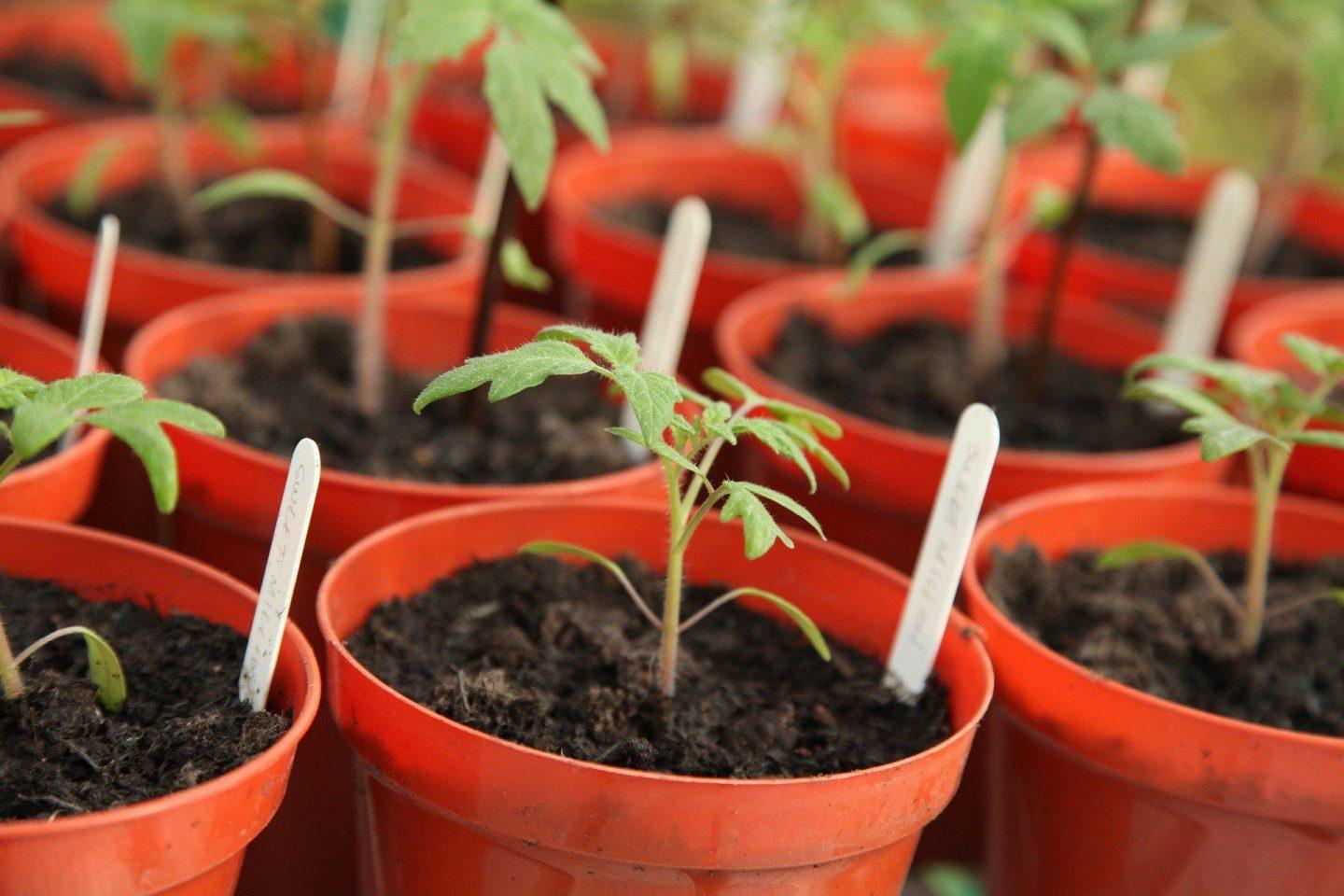
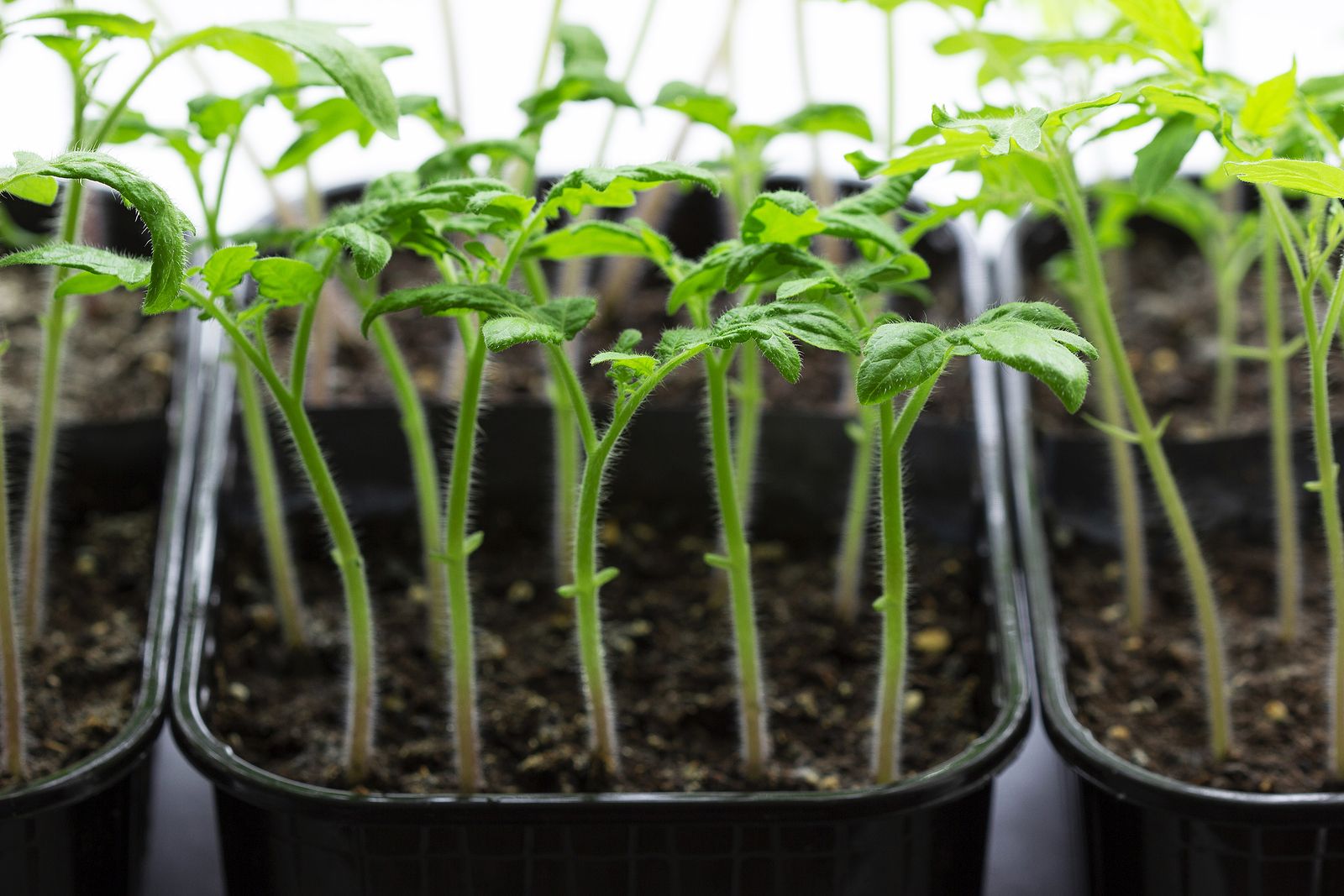
Seeds germinate in seven to fourteen days at temperatures of 70 to 75 degrees Fahrenheit. Once seedlings emerge, they need fourteen to sixteen hours of light daily from a grow light positioned four to five inches above plants. Keep seedlings at 58 to 60 degrees Fahrenheit during the day to prevent legginess. These cooler temperatures encourage stocky, compact growth rather than tall, spindly growth.
By week six to eight after germination, your seedlings should be six to eight inches tall with six to eight true leaves. These seedlings are ready for hardening off before outdoor planting.
Seedling Readiness Timeline
When seedlings develop their second set of leaves (called true leaves), they're ready to pot up into larger containers. The first set of leaves that emerge are seed leaves (cotyledons), not true leaves. Wait until you see the second set of opposite leaves before potting up.
Transplant seedlings into deeper containers once they have two to three true leaves. This gives roots more space for development. Continue potting up as seedlings grow, graduating to progressively larger containers every two to three weeks. By week six to eight, your seedlings should be ready for hardening off.
Seedling readiness indicators include six to eight true leaves, stocky stem about pencil width, dark green color throughout the plant, six to eight inches of height, and no flowers or small fruit. Plants with flowers or fruit have wasted energy on reproduction rather than root development and will be slower to produce after transplanting.
The Hardening Off Process
Hardening off is the critical process of gradually acclimating seedlings grown indoors to outdoor conditions. Begin this process seven to ten days before your planned outdoor planting date. On day one, place seedlings in a protected, shaded location for two to three hours. Bring them back inside.
Each day, gradually increase their outdoor time and light exposure. By day three or four, seedlings should handle six to eight hours of dappled light. By day seven to ten, they should tolerate full direct sunlight for several hours. Reduce watering slightly during hardening off to slow growth and toughen the plants. This tough preparation prevents transplant shock and creates plants more resilient to wind, variable temperatures, and direct sun.
Planting Dates by Climate and Growing Season Length
The length of your frost-free growing season is the ultimate determinant of planting timing strategy. Understanding whether you live in a short, average, or long season area is absolutely critical.
Short Growing Seasons (Less than 120 Frost Free Days)
If you live in a short season area, timing is critical because you have a narrow window for tomatoes to mature. These areas include mountain valleys, northern plains, and high elevation regions. Your planting strategy must be aggressive and immediate.
Plant at your last frost date (or even slightly before with protection). Select early maturity varieties that ripen in 52 to 70 days. Determinate varieties that ripen all fruit together work well because they finish within your growing season. Consider determinate types rather than indeterminate varieties, which require 10-12 weeks to reach maturity.
Use row covers or cloches to warm soil two weeks before planting. Black plastic raises soil temperature 5-10 degrees Fahrenheit, speeding early growth. Have frost cloth handy for unexpected late frosts. Alternative approaches include using hoop houses or greenhouses to extend the season on both ends.
Mountain valleys might have frost dates May 20 to June 10. Northern plains often experience frost May 15 to June 1. These short-season gardeners cannot afford to wait for perfect soil and temperature conditions.
Average Growing Seasons (120-170 Frost Free Days)
Average growing season areas have more flexibility than short season gardeners but not as much as long season gardeners. These regions include the Mid-Atlantic, Midwest, and parts of the Pacific Northwest.
Plant one to two weeks after your last frost date. Check the ten-day forecast for frost risk before committing to planting. Soil temperature should be 55-60 degrees Fahrenheit minimum. Nighttime air temperature should be above 50 degrees Fahrenheit consistently.
Select both early and mid-season varieties since you have enough season for multiple varieties. April 15 to May 1 is typical for the Mid-Atlantic. May 1 to May 15 is typical for the Midwest. If your last frost date is April 1, wait until April 15 or later before planting when soil has warmed and frost risk is lower.
Long Growing Seasons (170+ Frost Free Days)
Long growing season gardeners have the luxury of waiting for optimal conditions. These regions include the Southeast, Southwest, and Southern California.
Plant two weeks after your last frost date. Lower risk from late spring frosts means you can wait patiently. Soil has more time to warm thoroughly before planting. Reduced risk of severe spring weather allows more relaxed timing. These gardeners have excellent opportunity for multiple plantings and succession harvests.
The Southeast with last frost March 30 to April 15 can plant mid-April to early May. Southern California with frost March 1 to April 1 can plant mid-April or later. These regions don't need to rush.
Month-by-Month Planting Calendar
Create your own regional calendar using this guide as foundation.
January Phase: Research tomato varieties for your climate and growing conditions. Order seeds from catalogs offering varieties matching your needs. Calculate your last frost date and write it prominently in your gardening notebook. Plan your seed starting dates working backward from frost date. Short season gardeners in northern regions may need to start seeds in late January.
February Phase: Start tomato seeds indoors if your last frost date is late April or earlier. Short season gardeners plant seeds indoors early to mid-month. Average season gardeners plant mid to late month. Set up grow lights and create a warm location for seedling growth. Check that your lighting setup provides adequate illumination for healthy growth.
March Phase: Continue monitoring seedling progress weekly. Pot up seedlings as they develop more leaves and outgrow their containers. Adjust lighting height as seedlings grow. Keep seedlings at proper temperature to prevent legginess. Average season gardeners finish seed starting this month. Long season gardeners start seeds mid to late month.
April Phase: All regions are working with seedlings indoors now. Southeast and Southwest areas begin the hardening off process. Midwest and Pacific Northwest still have indoor seedlings. Begin checking soil temperature weekly in your garden. Average season areas begin waiting for soil to warm properly.
May Phase: New England, Midwest, and Northern Rockies begin their critical planting window. Most of the United States can plant sometime in May. Check ten-day forecasts religiously before planting. Mid-Atlantic and Pacific Northwest experience peak planting weeks. Watch for unexpected late frost warnings.
June Phase: Latest plantings happen in the coldest climates. Northern Rockies window closes early June. Most direct seeding is completed by early June. Keep frost cloth handy for late unexpected frosts. Monitor soil and air temperature for success.
The Common Mistakes Gardeners Make
Understanding common mistakes helps you avoid them in your own garden.
The Impatience Problem
The biggest mistake is planting too early because weather feels warm. Spring sunshine creates warm air temperatures that feel perfect for planting, but soil may still be 45-50 degrees Fahrenheit. This disconnect between air temperature and soil temperature catches many gardeners.
When cold soil prevents nutrient uptake, plants show phosphorus deficiency symptoms (purple coloration on leaf undersides). Growth stalls until soil warms naturally. Later plantings actually catch up and surpass early ones. Frost damage risks outweigh any possible benefit from earlier planting. No gain in harvest time occurs despite earlier planting. The lesson is hard-earned: patience pays.
Ignoring Soil Temperature
Watching air temperature while ignoring soil temperature guarantees problems. The cold soil effect includes stunted root development, nearly ceased nutrient absorption, yellowing lower leaves indicating nitrogen starvation, and plants struggling all season from early cold stress.
Use a soil thermometer before planting. It costs under ten dollars and solves 90 percent of early season tomato problems. Check soil moisture and temperature together before finalizing your planting date.
Not Accounting for Growing Season Length
Not every variety works in every climate. Planting a ninety-day beefsteak in a 100-day growing season fails because fruit never ripens before frost. Sixty-day early varieties are ideal for short seasons. Long season gardeners can grow anything because they have months of growth window.
Know your frost-free days and choose matching varieties. Read seed packets carefully noting maturity days. Choose varieties finishing at least two weeks before your first fall frost date.
Frost Protection Strategies
Sometimes planting timing is perfect but unexpected frost threatens your tender transplants.
If You Get a Late Frost Warning
Protection methods include frost cloth or garden fabric covers that protect plants from several degrees of frost. Plastic coverings trap heat, with clear plastic adding about twenty degrees Fahrenheit of warming and dark plastic adding five to ten degrees Fahrenheit. Temporary row covers work for unexpected frost events.
Water soil heavily before frost as moist soil holds heat better than dry soil. Remove covers during the day to prevent cooking plants in warmed air. Monitor weather forecasts carefully during the vulnerable period after planting.
Hoop Houses and Greenhouses
For dedicated gardeners, season extension structures change everything. Hoop houses allow two to three weeks earlier planting. High tunnels protect from late spring frosts and extend season on both ends. Significant investment is required, but serious tomato growers find it worthwhile.
Container Growing Flexibility
Grow tomatoes in pots you can move indoors if frost threatens. Plant earlier in containers than ground. Move plants inside on frost warning nights. Containers dry out faster than ground beds so more frequent watering is necessary. This flexible protection method works for all climates.
Your Personalized Tomato Planting Timeline
Create your own personalized timing chart for accuracy. Find your average last frost date by searching online or contacting your extension office. Determine your frost-free days by researching or calculating from frost dates. Choose your planting date, typically one to two weeks after frost date depending on season length. Count backward to find seed starting date, typically six to eight weeks before frost date or four to six weeks before planting. Note hardening off dates, seven to ten days before outdoor planting.
Sample Timeline for April 15 Last Frost Date (Mid-Atlantic):
January 30: Order seeds, plan timing decisions
February 15: Set hardening off date, seedlings should be ready early March
March 1: Start seeds indoors (eight weeks before last frost)
March 15: Seedlings emerge, provide grow lights immediately
March 30: Pot up seedlings into larger containers
April 15: Last frost date (but still risky for tender plants)
May 1: Safe planting date (soil warm, frost risk low)
Check soil temperature and ten-day forecast before planting.
Sample Timeline for May 20 Last Frost Date (Northern Plains):
February 15: Order seeds and supplies needed
March 20: Set hardening off date, seedlings ready mid-April
April 1: Start seeds indoors (seven weeks before last frost)
April 15: Seedlings emerging, provide grow lights
May 1: Pot up seedlings into larger containers
May 20: Last frost date (but can wait longer)
June 1: Safe planting date (soil definitely warm)
Later plantings work fine in short season areas due to vigorous growth in warm soil.
Regional Quick Reference
New England (Zones 5-6):
Start Seeds: March 15 to April 1
Plant Outdoors: May 10 to 20
Frost-free Days: 100-130
Mid-Atlantic (Zones 6-7):
Start Seeds: February 15 to March 15
Plant Outdoors: April 15 to May 1
Frost-free Days: 130-170
Southeast (Zones 7-8):
Start Seeds: February 1 to March 1
Plant Outdoors: March 30 to April 15
Frost-free Days: 170-210
Midwest (Zones 4-6):
Start Seeds: March 15 to April 1
Plant Outdoors: May 15 to June 1
Frost-free Days: 100-150
Pacific Northwest (Zones 6-8):
Start Seeds: February 15 to March 15
Plant Outdoors: April 15 to May 15
Frost-free Days: 140-180
Southwest and Southern California (Zones 8-10):
Start Seeds: January 15 to February 15
Plant Outdoors: March 1 to April 1
Frost-free Days: 200+
Northern Plains and Rockies (Zones 3-5):
Start Seeds: April 1 to April 15
Plant Outdoors: May 20 to June 10
Frost-free Days: 80-120
Monitoring and Adjustment Strategies
Successful tomato growers monitor weather obsessively during planting season. Track the ten-day forecast before planting. Check soil temperature with a thermometer. Monitor nighttime lows specifically. Watch for cold fronts moving through your region. Monitor unexpected late frost warnings. Adjust plans based on actual conditions rather than averages.
Red flags indicating you're not ready include soil temperature below 55 degrees Fahrenheit, nighttime lows below 50 degrees Fahrenheit in the forecast, cold front moving through in two weeks, seedlings still small and not hardened off, and frost in the ten-day forecast.
If you plant too early and see problems, don't despair. Recovery options include covering plants with frost cloth or plastic if frost threatens, mulching heavily to gradually warm soil, waiting for warmer weather before watering heavily, and being patient as plants acclimate to cool soil.
Monitor your transplants closely as they adjust to outdoor conditions. If you notice yellowing leaves, unusual coloration, or stunted growth after planting, Plantlyze can help diagnose whether it's a nutrient issue, disease, or normal transplant shock. Upload a photo at Plantlyze.com for quick identification and care guidance.
Key Takeaways
Timing tomato planting correctly requires patience, but that patience pays enormous dividends. The hardest part is resisting the urge to plant too early when spring finally arrives. Every experienced tomato grower has learned this lesson the hard way. Trust the process, follow the timing guidelines, and you'll have healthier plants and better harvests.
Your last frost date is the foundation for all timing decisions. Soil temperature matters more than air temperature. Most gardeners plant too early seeking an advantage that never comes. Waiting until soil is 55-60 degrees Fahrenheit produces better results than early cold planting. Starting seeds six to eight weeks before last frost (or four to six weeks before planting) works well for most situations.
Growing season length determines how much you can wait. Short season gardeners must plant at frost date. Average season gardeners wait one to two weeks after frost date. Long season gardeners can wait two weeks comfortably. Create a personalized calendar for your location. Monitor the ten-day forecast before final planting. Use frost cloth or covers if late frost threatens.
Once your tomatoes are in the ground, consistent monitoring helps you catch problems early. If leaves yellow, show spots, or plants appear stressed after planting, quick and accurate diagnosis is crucial. Visit Plantlyze.com for AI-powered plant health diagnosis and custom care guidance. Your perfectly timed tomato planting deserves follow-up care that keeps plants thriving through the season.
References
Penn State Extension
https://extension.psu.edu/tomatoes-from-seedlings-to-fruit/NC State Extension
https://extensiongardener.ces.ncsu.edu/2021/04/growing-tomatoes-at-home/University of Maryland Extension
https://extension.umd.edu/resource/growing-tomatoes-home-gardenColorado State University Extension
https://extension.colostate.edu/resource/growing-tomatoes/University of Georgia Extension
https://fieldreport.caes.uga.edu/news/balance-your-tomato-gardens-soil-ph-and-fertilization-for-a-bountiful-homegrown-harvest/Cornell University College of Agriculture and Life Sciences
https://www.vegetables.cornell.edu/USDA Hardiness Zone Map
https://planthardiness.ars.usda.gov/