If you've ever looked out at your tomato garden and noticed mysterious circular spots appearing on the leaves and fruit, you're not alone. One of the most frustrating fungal diseases affecting home gardeners and commercial growers is tomato target spot. The good news? This disease is manageable once you understand what you're dealing with and know how to respond. This comprehensive guide walks you through everything you need to know about identifying, preventing, and treating this common tomato problem.
What Is Tomato Target Spot Disease?
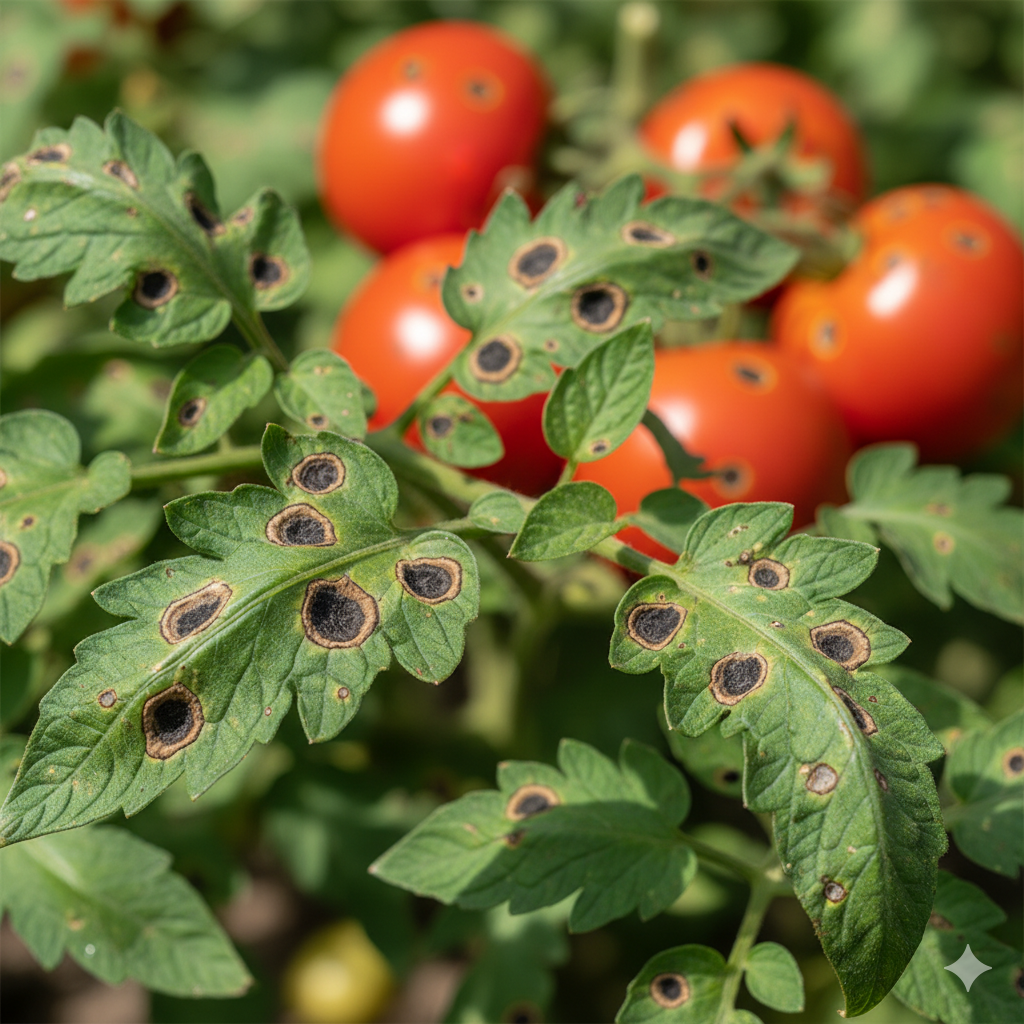
Tomato target spot is a fungal disease caused by the pathogen Corynespora cassiicola. The disease gets its distinctive name from the appearance of its lesions on leaves and fruit: dark, circular spots with concentric rings that look like a bullseye or target. This fungal infection primarily affects tomato plants but can also damage peppers, eggplants, and potatoes.
The disease is particularly common in warm, humid growing regions like Florida and can appear anywhere humidity levels remain high during the growing season. Unlike some fungal diseases that might seem minor, target spot can significantly impact your harvest. Infected fruit becomes unmarketable, and severe leaf damage can defoliate plants before the end of the season, reducing your overall yield.
It's important to note that target spot is often confused with early blight and bacterial spot because early symptoms look similar. Laboratory diagnosis can confirm the exact disease, but understanding the visual differences helps you respond faster. Tools like Plantlyze's AI plant diagnosis can help you catch early signs before symptoms worsen.
How to Identify Tomato Target Spot
Learning to recognize target spot in its various stages is crucial for early intervention. The disease doesn't announce itself dramatically. Instead, it progresses gradually through stages that experienced gardeners learn to spot quickly.
Early Stage Symptoms
When target spot first appears, you'll notice small brown flecks on the leaves. These tiny spots might look like sandblasting or weather damage at first glance. They're slightly sunken and easily overlooked, which is why many gardeners miss the disease during this window when it's most manageable. The spots typically start appearing on the lower, older leaves first.
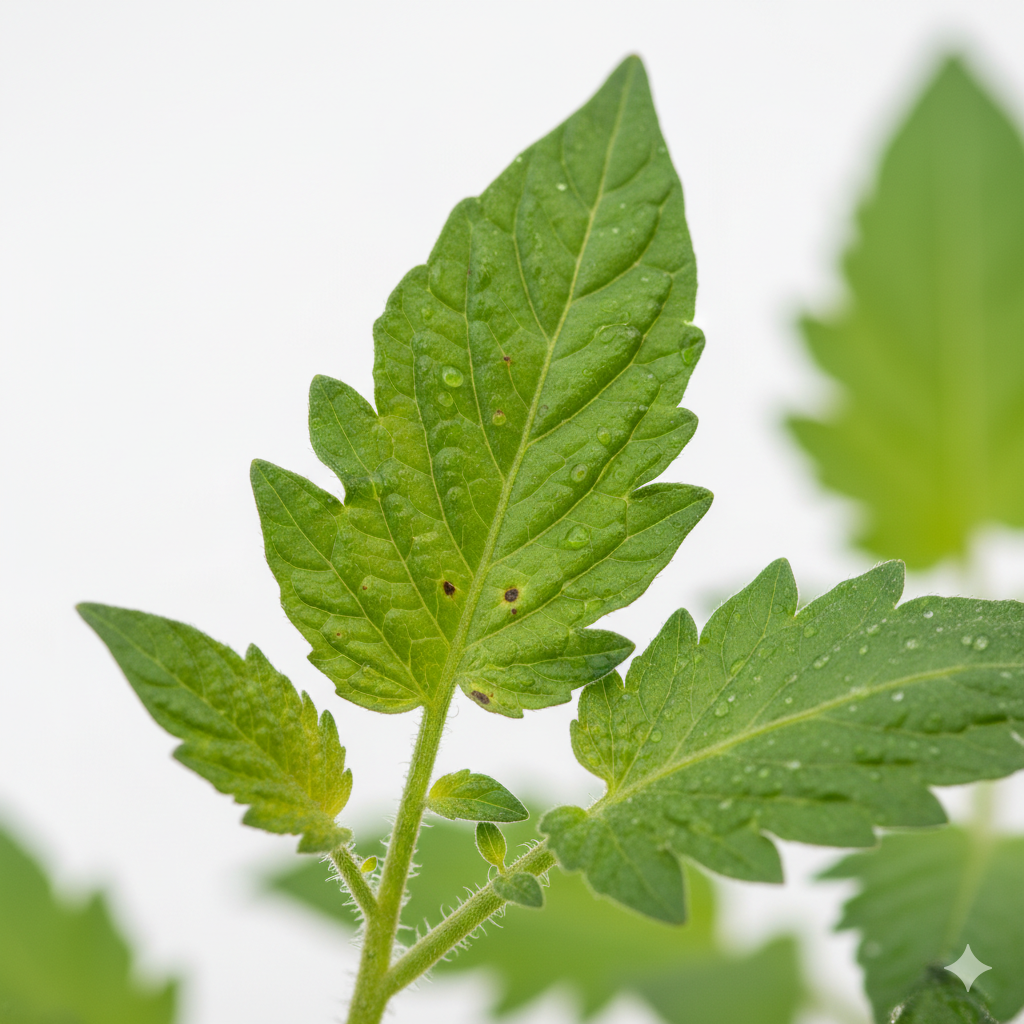
Mid to Late Stage Symptoms
As the disease progresses, those small flecks develop into larger circular lesions, usually between one quarter to one half inch in diameter. This is when the characteristic bullseye appearance becomes obvious. You'll see distinct concentric rings in darker and lighter shades of brown and gray. The center of the lesion often displays a velvety black fungal growth, which is the reproductive structure of the pathogen.
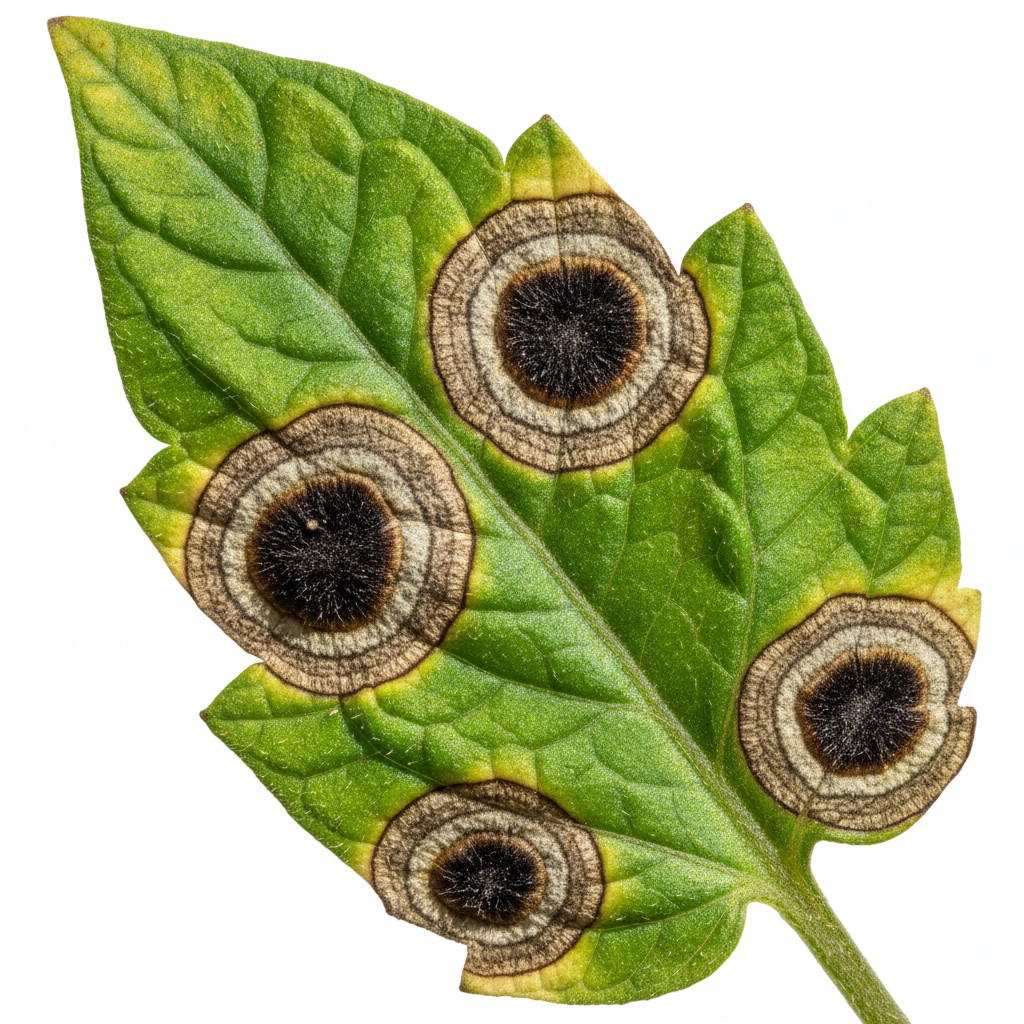
Affected leaves may start turning yellow around the lesions and eventually drop from the plant.
Fruit Damage
On green tomatoes, target spot creates small, slightly raised spots that can have a light halo around them. As the fruit ripens and turns red, these spots become more visible and problematic.
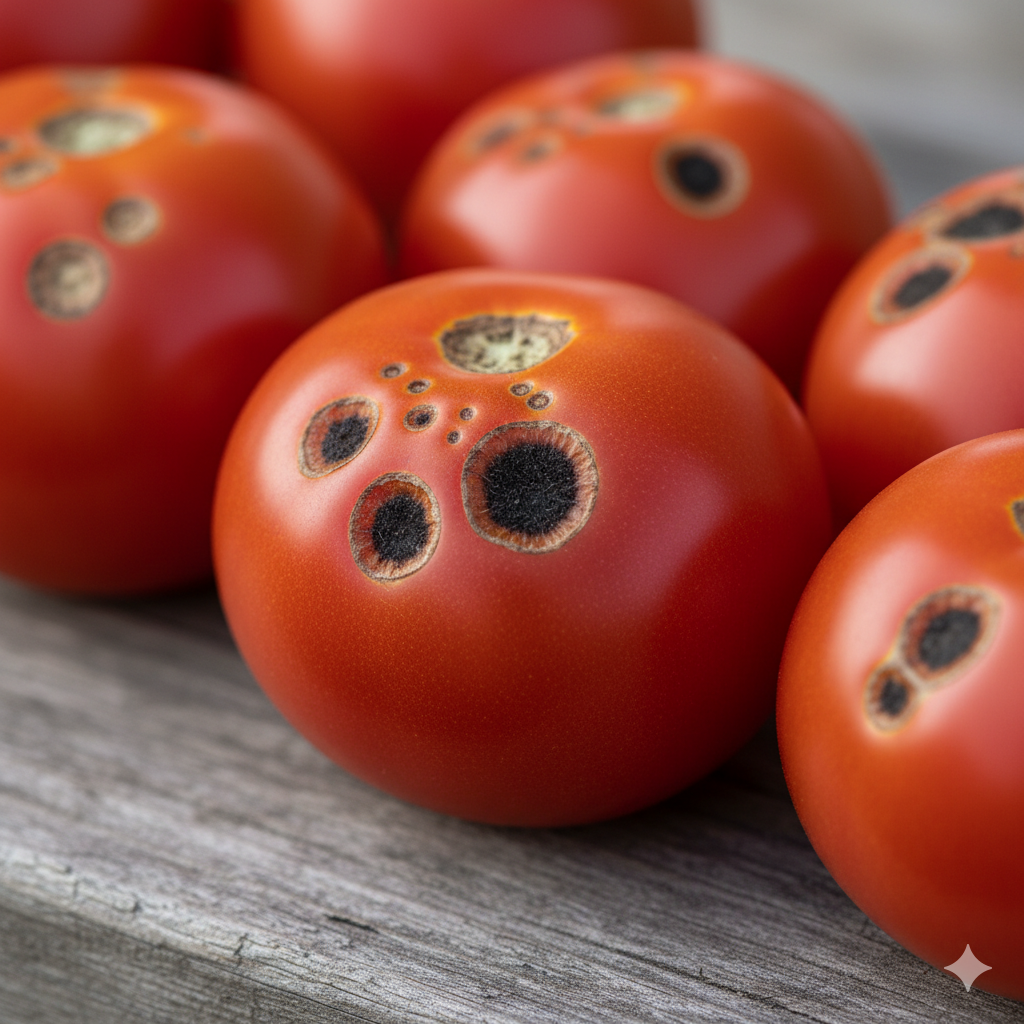
The lesions sink deeper into the fruit, creating pitted, sunken areas. On mature tomatoes, the spots can reach a quarter inch or larger, with the characteristic velvety black center visible. This fruit damage is primarily what makes target spot an economic concern for growers.
Not sure if your tomato has target spot? Plantlyze's AI powered diagnosis tool can confirm symptoms and suggest immediate actions at.
Want to see how blights and target like spots look in real life?
Why Your Tomato Plants Get Target Spot
Understanding what allows target spot to thrive helps you prevent the disease from taking hold in the first place. The disease doesn't strike randomly. Rather, specific conditions create the perfect environment for the fungus to germinate and spread.
Moisture and Humidity Are Key
Target spot thrives in wet, humid conditions. The fungus requires moist conditions to germinate and infect plant tissue. A combination of rainfall, overhead irrigation, or simply morning dew provides the moisture the disease needs. In humid climates or during hot, wet summers, the risk increases dramatically. If you notice your tomato foliage stays wet for extended periods, you're creating conditions that favor target spot development.
Temperature Range
While target spot can develop across a range of temperatures, it flourishes during warm weather. The disease is most aggressive during mid to late summer when heat combines with humidity to create optimal conditions. This is why home gardeners often see target spot appearing later in the season rather than early on.
Disease Survival and Spread
Here's what makes target spot particularly tricky: the fungus overwinters in infected plant debris in your soil. If you grew tomatoes or related plants the year before, spores may be lingering in your garden. This is why crop rotation is essential. Additionally, the spores spread through water splash from rain or overhead irrigation, moving from infected lower leaves to upper foliage.
Air Circulation Problems
Tomato plants with dense foliage take longer to dry after rain or watering. When leaves stay wet and humid for prolonged periods, the fungus has time to infect them. Crowded plantings that don't allow air to move freely create microclimates that favor disease development.
Prevention: Your Best Defense Against Target Spot
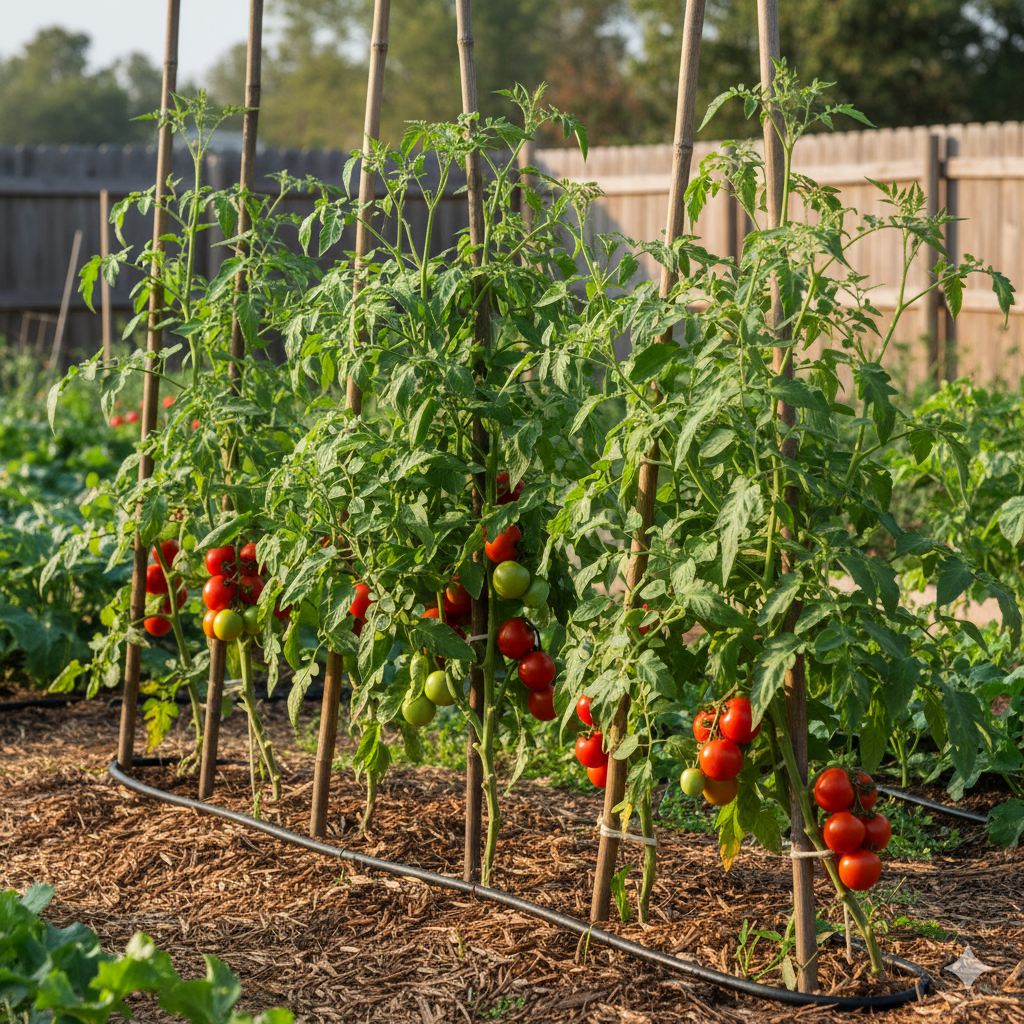
Prevention truly is easier than managing an established infection. The most successful tomato growers focus on preventing target spot through careful cultural practices and planning.
Implement Crop Rotation
Never plant tomatoes, peppers, eggplants, or potatoes in the same garden space year after year. The fungus survives in soil on infected plant debris. Most researchers recommend a three year rotation cycle before replanting these susceptible crops in the same location.
Space Plants for Air Movement
Give each tomato plant plenty of room to breathe. Plant them at the spacing your variety recommends, and never crowd plants together to fit more into a small space. Good air circulation is one of your most powerful disease prevention tools.
Prune Lower Foliage
Remove the bottom 6 to 12 inches of leaves from the main stem once the plant is established. These lower leaves are closest to the soil where spores accumulate. By removing them, you eliminate an easy entry point for infection.
Use Proper Watering Techniques
Avoid overhead irrigation. Instead, use drip irrigation, soaker hoses, or hand water at the base of plants. Keep the foliage as dry as possible.
Apply Mulch and Keep Plants Clean
Mulch around tomato plants with 2 to 3 inches of straw or wood chips. This prevents soil from splashing onto the lower leaves during rain. Keep the area around plants free of fallen leaves and debris.
Choose Resistant Varieties
If target spot is a recurring problem in your area, ask your local extension office about tomato varieties bred for resistance.
Stake or Cage Your Plants
Keeping plants off the ground and supported reduces the chance of leaves touching soil and being exposed to soil borne spores.
Maintain Proper Nutrition
A healthy plant with strong vigor is more resistant to disease than a stressed, nutrient deficient plant.
Treating Target Spot When Prevention Isn't Enough
Sometimes despite your best efforts, target spot appears. When it does, prompt action can minimize damage and keep the disease from spreading throughout your plants.
Fungicide Options and Applications
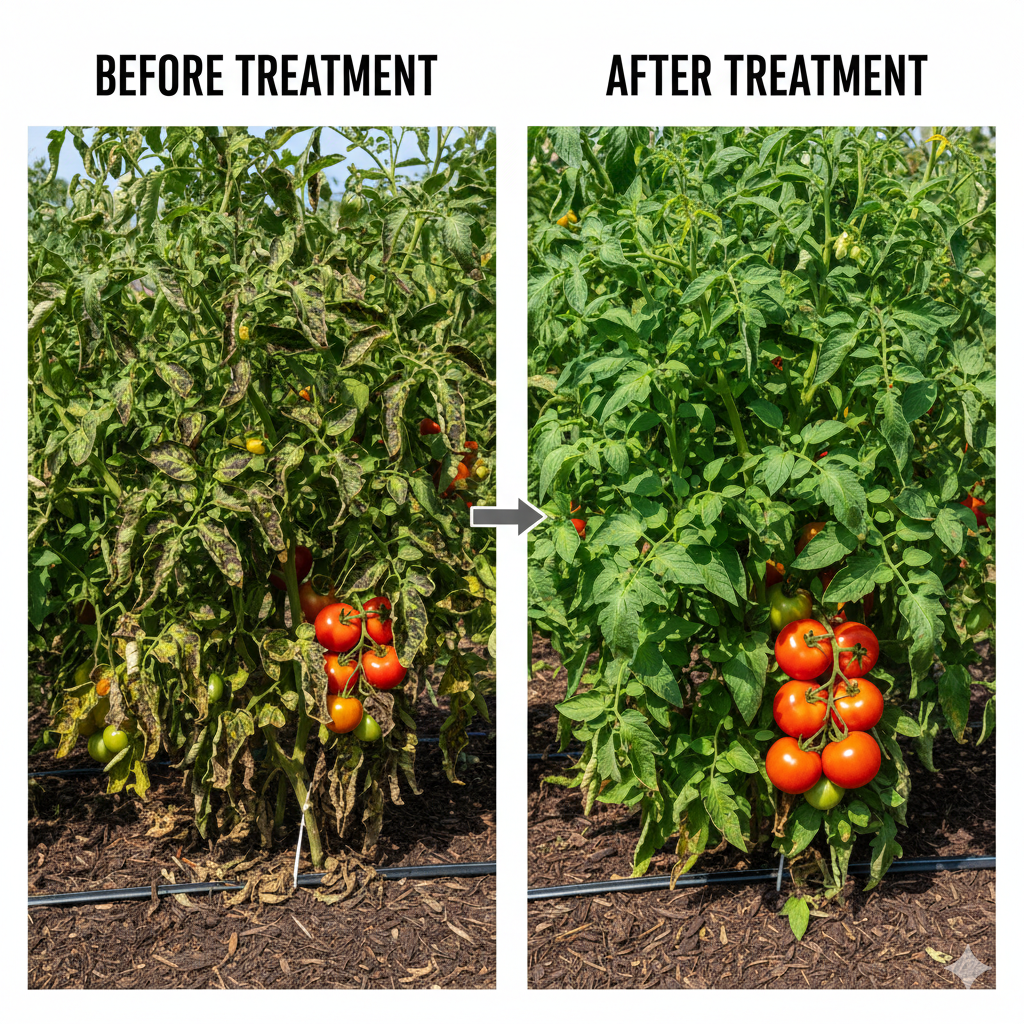
Once you confirm target spot, fungicides become a management tool. Copper based fungicides and certain strobilurin fungicides (Group 11) provide good control when applied preventively or at the first sign of disease. Apply fungicides on a regular schedule as directed on the product label, typically every 7 to 14 days depending on the product.
Important note: don't rely exclusively on any single fungicide for the entire season. The fungus can develop resistance if you overuse the same chemical. Alternate between different groups of fungicides throughout the season.
Organic Treatment Approaches
If you prefer organic methods, several options exist. Sulfur dust or spray applied regularly can suppress target spot. Neem oil also provides some disease suppression.
Defoliation Management
As target spot progresses, infected leaves will develop yellow halos and eventually drop. You can accelerate this process by removing heavily infected leaves.
Real Time Monitoring with Plantlyze
For real time disease tracking and personalized management advice, try Plantlyze to monitor your plants' health throughout the growing season at plantlyze.com.
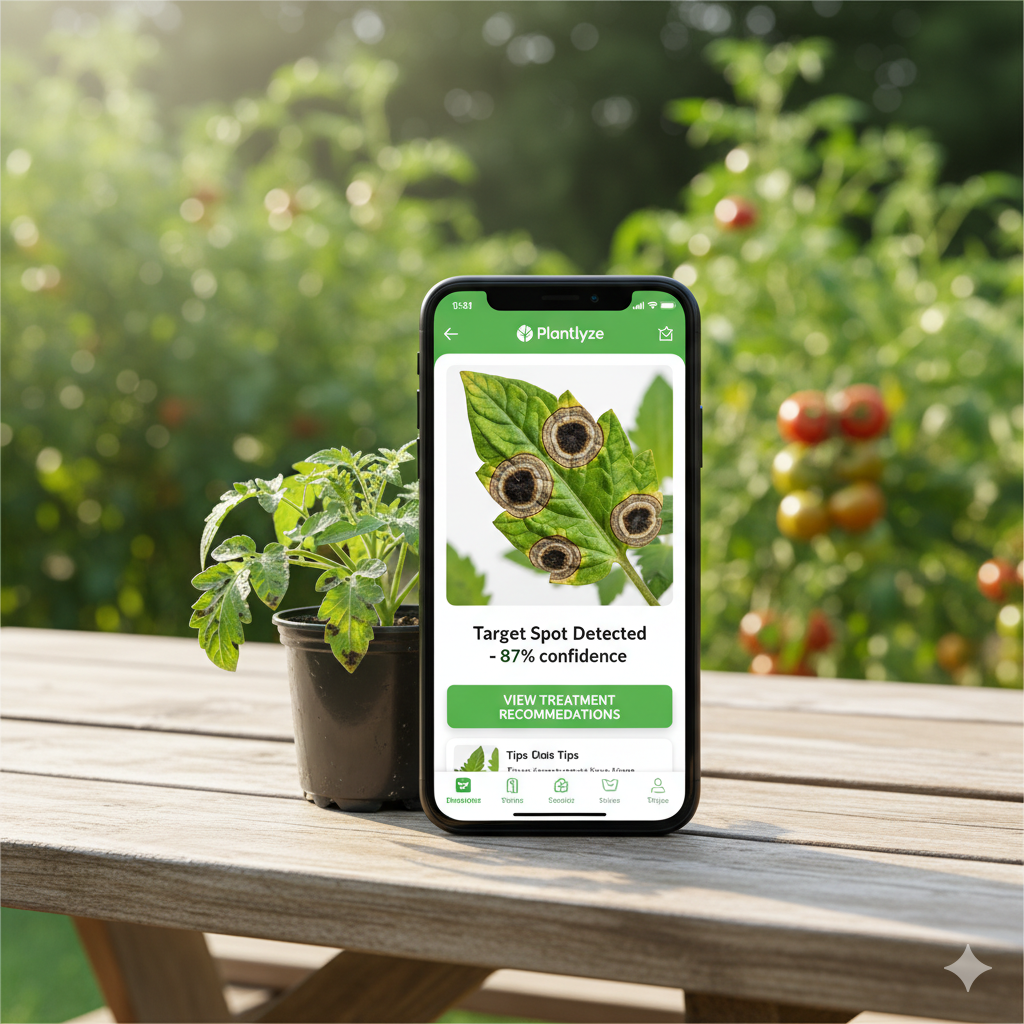
Early identification through regular monitoring allows you to respond quickly before the disease becomes severe.
Long Term Disease Control Strategy
Treating target spot is important, but your long term success depends on breaking the disease cycle each year.
End of Season Cleanup
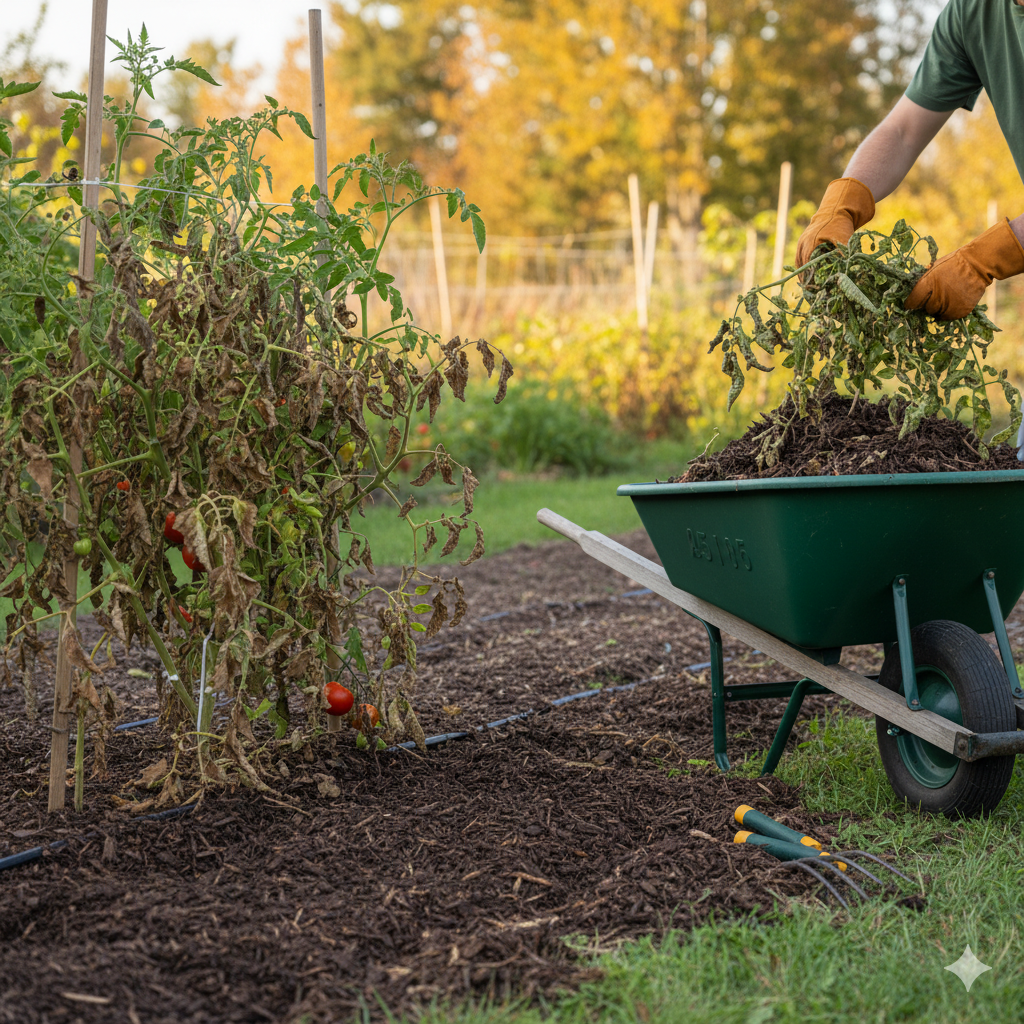
Never leave infected tomato plants in the garden at the end of the season. Remove plants completely, including roots if possible, and dispose of them in the trash or a hot compost pile.
Soil Preparation
Remove fallen leaves, stems, and any plant debris from the soil surface. A clean garden going into winter reduces the inoculum load for the next spring.
Monitor Perennial Weeds
Some wild nightshade plants like horse nettle can harbor the target spot fungus. If these weeds grow near your garden, remove them.
Plan for Rotation
Keep a simple garden map noting which crops grew where. When planning next year's garden, ensure you plant tomatoes and related plants in a different location.
Conclusion: Taking Control of Your Tomato Garden
Target spot is a real challenge, but it's not insurmountable. The key is understanding that prevention through good cultural practices works better than trying to cure an established infection. Start with the fundamentals: proper spacing, good air circulation, avoiding overhead irrigation, and crop rotation.
Monitor your plants regularly during warm, humid weather. Remove infected leaves promptly. Use fungicides preventively rather than waiting until disease is severe.
Start using Plantlyze today to diagnose plant diseases early at plantlyze.com and keep your tomato garden thriving all season long. By staying vigilant and implementing these strategies, you can enjoy a healthy, productive tomato crop year after year.
References
Growing Produce. "Take the Right Aim to Tame Target Spot of Tomato." 2020.growingproduce
CropLife Australia. "Tomato Target Spot (Early Blight)." 2025.croplife
Barmac Pty Ltd. "Target Spot in Tomato." 2015.barmac
Gardening Know How. "Target Spot On Tomato Fruit." 2022.gardeningknowhow
Agriculture Journals. "Control of Target Spot of Tomato with Fungicides." 2002.agriculturejournals
UW Vegetable Pathology. "Tomato Early Blight." 2023.vegpath.plantpath.wisc
UNL Lancaster. "Controlling Tomato Leaf Spot Diseases." 2020.lancaster.unl