If your tomato leaves look like they have been dusted with white flour in late summer, you are likely dealing with powdery mildew. This fungal disease is one of the most common problems home gardeners and commercial growers face, but the good news is that early identification and proper management can save your harvest. In this comprehensive guide, you will learn how to recognize powdery mildew, understand why it happens, and implement proven strategies to prevent and treat it effectively.
Powdery mildew can devastate tomato production, causing yield losses ranging from 10 to 90 percent depending on disease severity and environmental conditions. Beyond reduced quantity, infected plants produce fruit with lower quality, reduced flavor, and increased risk of sunburn damage. The encouraging reality is that most gardeners can prevent severe outbreaks through consistent monitoring and timely intervention.
What Is Powdery Mildew and Why It Affects Tomatoes
Powdery mildew on tomatoes is caused by fungal species from the Erysiphaceae family, particularly Golovinomyces species. Unlike many plant diseases that spread through soil or water splash, powdery mildew spores travel through the air, making it capable of reaching your garden on wind currents. This is why some years hit harder than others depending on regional conditions.
The disease thrives in specific environmental conditions. Mild temperatures between 60 and 75 degrees Fahrenheit are ideal for infection, combined with high humidity levels. Interestingly, extremely hot temperatures actually kill infected leaves faster, which is why the disease typically becomes most problematic in late summer when conditions cool and humidity rises. Stressed plants that lack proper nutrition, water, or care are significantly more susceptible than vigorous, healthy plants.
Tomato plants in both outdoor gardens and greenhouse environments can develop powdery mildew, though greenhouse and high tunnel tomatoes are particularly vulnerable due to controlled but often humid conditions. Understanding these conditions helps you recognize when your plants are at highest risk.
Identifying Powdery Mildew: What to Look For
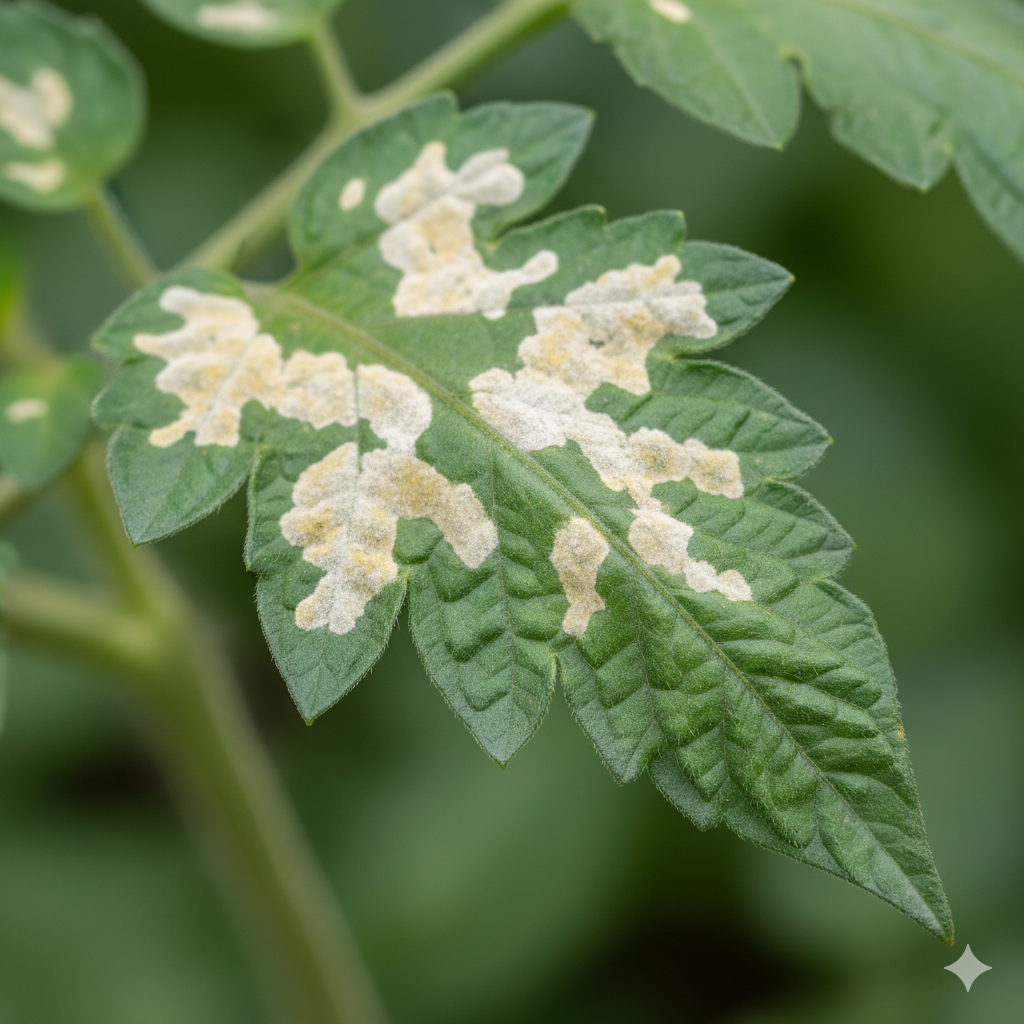
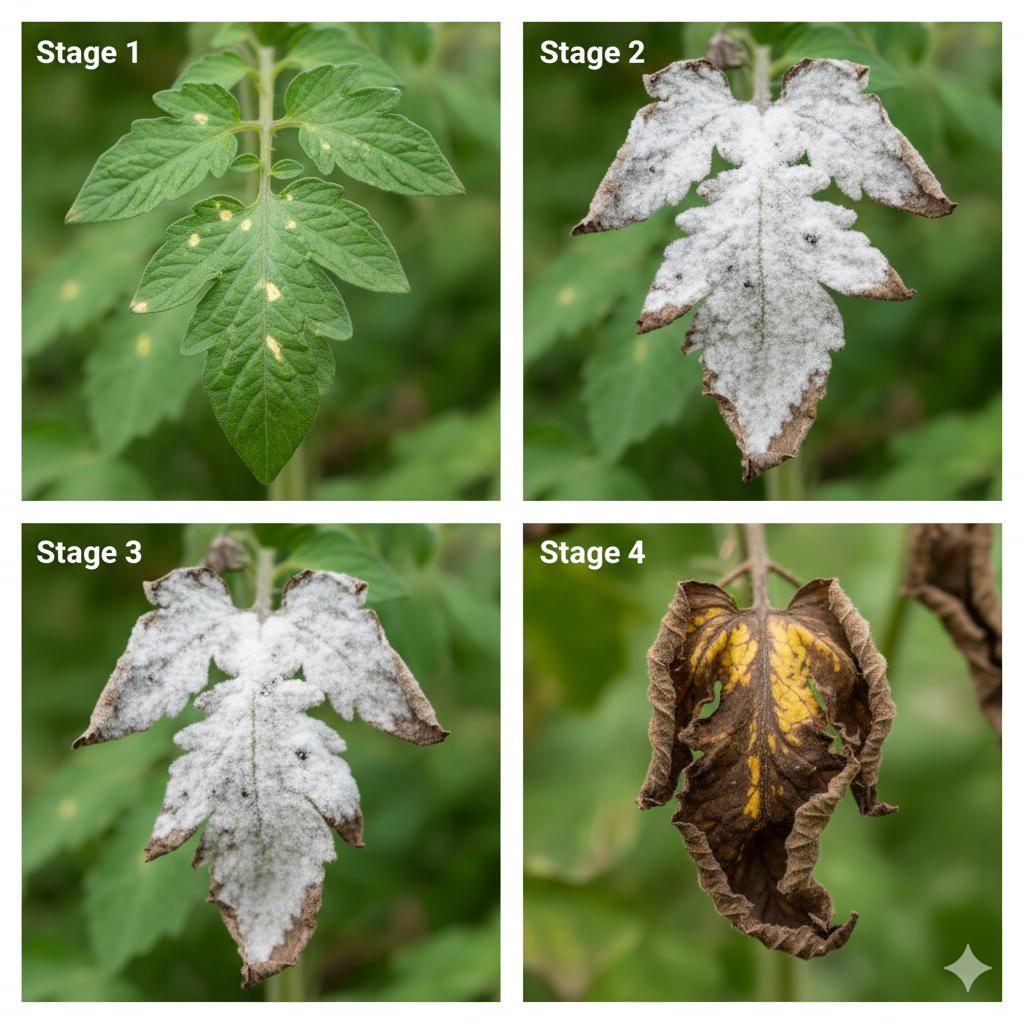
Early detection makes all the difference in managing powdery mildew successfully. The disease typically begins on lower, older leaves where humidity tends to be highest due to reduced air circulation. Look for irregular, pale yellow blotches appearing on leaf surfaces. These yellow areas will be your first visual clue that something is wrong.
As the disease progresses over several days to weeks, the characteristic white, powdery coating develops. You might notice this white substance on both upper and lower leaf surfaces. The white appearance comes from abundant spore production by the fungus. If you suspect powdery mildew, wipe your leaf gently with your finger. The white coating should come off easily, confirming the diagnosis.
Severity progression follows this pattern:
Stage 1 (Early): Pale yellow blotches with minimal white coating
Stage 2 (Moderate): Obvious white powder covering significant leaf areas
Stage 3 (Advanced): Brown, shriveled leaves becoming dry and brittle
Stage 4 (Severe): Extensive defoliation and sunburn damage on exposed fruit
As the disease advances, affected leaves eventually die and drop off. Even though they rarely remain on the plant, the damage is already done. The loss of photosynthetically active leaves means the plant cannot produce adequate energy for fruit development and ripening. Fruit that forms on heavily infected plants tastes less sweet due to reduced photosynthesis and is more likely to develop sunscald where too much direct sun exposure burns the fruit surface.
Pay special attention to plant stress indicators. Newly stressed plants, those weakened by other diseases, or tomatoes struggling with inconsistent watering or poor nutrition are always the first to show visible powdery mildew symptoms.
Why Early Action Matters More Than You Might Think
The moment you spot those first pale yellow blotches, your treatment window has opened. This window remains widest during the earliest stages when the disease is confined to a few leaves. Taking action at this point prevents the catastrophic spread that happens if you wait.
The statistics are sobering but motivating. Research from multiple agricultural institutions confirms that untreated powdery mildew causes yield reductions from 10 to 90 percent depending on plant variety, environmental conditions, and disease management approach. A cherry tomato or heirloom variety might see the upper end of losses, while determinate varieties bred for commercial production might experience less severe yield impact. But even 10 to 20 percent loss is significant when you are counting on your harvest.
Beyond yield loss, fruit quality suffers dramatically. Soluble solids concentration decreases, meaning your fruit will be less sweet and less flavorful. Combined with increased sunscald damage and the general stress to your plant, early intervention becomes clearly worthwhile. The investment of time in monitoring and early treatment pays substantial dividends.
Proven Prevention Strategies You Can Implement Today
Prevention remains the most effective and efficient approach to managing powdery mildew. Prevention is always easier than treating an established infection, and the strategies discussed here work consistently when implemented properly.
Cultural Practices That Reduce Disease Risk
Plant spacing deserves primary consideration. Proper spacing ensures adequate air circulation around tomato plants, and good airflow is your most powerful cultural tool. When plants are crowded together, humidity between the leaves stays elevated, creating perfect conditions for fungal spore germination. Space plants according to your variety recommendations, typically 24 to 36 inches apart.
Watering technique matters significantly more than most gardeners realize. Water plants in early morning at soil level, avoiding wetting the foliage. Morning watering allows any accidental leaf wetting to dry quickly as temperatures rise. Evening watering leaves foliage wet overnight, maintaining the moist leaf surface that fungal spores require for infection.
Pruning tomato plants to remove lower leaves improves airflow near the soil and reduces humidity in the lower canopy where powdery mildew often establishes first. Remove the lowest 6 to 12 inches of foliage as plants grow. This practice also improves light penetration and reduces various fungal diseases simultaneously.
Staking or trellising systems should be installed with airflow in mind. Keep tomatoes off the ground and allow space for air to move around and between plants. Indeterminate varieties especially benefit from vertical support systems that maximize spacing efficiency while maintaining good airflow.
Mulching around plants helps manage soil moisture and prevents soil splash, but leave a small gap around the plant stem to avoid creating moist microhabitats that encourage fungal development near the base.
Variety selection offers some protection. While no completely resistant varieties exist, some show better tolerance to powdery mildew than others. When selecting tomato varieties for your garden, research powdery mildew susceptibility ratings if available.
Balanced fertilization and proper irrigation stress management keep plants vigorous. Vigorous plants naturally resist disease better than weakened plants. Provide consistent moisture, avoid excessive nitrogen fertilization which promotes soft, tender growth, and maintain balanced micronutrient levels, particularly for chlorophyll formation.
Environmental Condition Management
In greenhouse and high tunnel environments, managing humidity through ventilation is crucial. Maintain relative humidity below 85 percent when possible. Install automatic ventilation systems that open on warm days to promote air exchange. Run fans during humid periods to keep air moving.
Daily observation routines catch early problems before they spread. Spend 5 to 10 minutes every morning checking your tomato plants for disease signs. This simple practice catches early powdery mildew symptoms within days of appearance rather than weeks later when treatment becomes more difficult.
Supporting Plant Health and Resistance
Maintain optimal plant nutrition, particularly micronutrients like magnesium that support chlorophyll formation and overall plant vigor. Stressed, malnourished plants simply cannot resist fungal invasion effectively. This is not theoretical. Research clearly demonstrates that plants with adequate nutrition and micronutrient availability show reduced powdery mildew severity.
Treatment Options: From Organic to Conventional Methods
Despite best prevention efforts, powdery mildew sometimes still appears. Fortunately, multiple treatment options exist, ranging from simple homemade solutions to professional fungicide applications.
Organic Treatment Methods
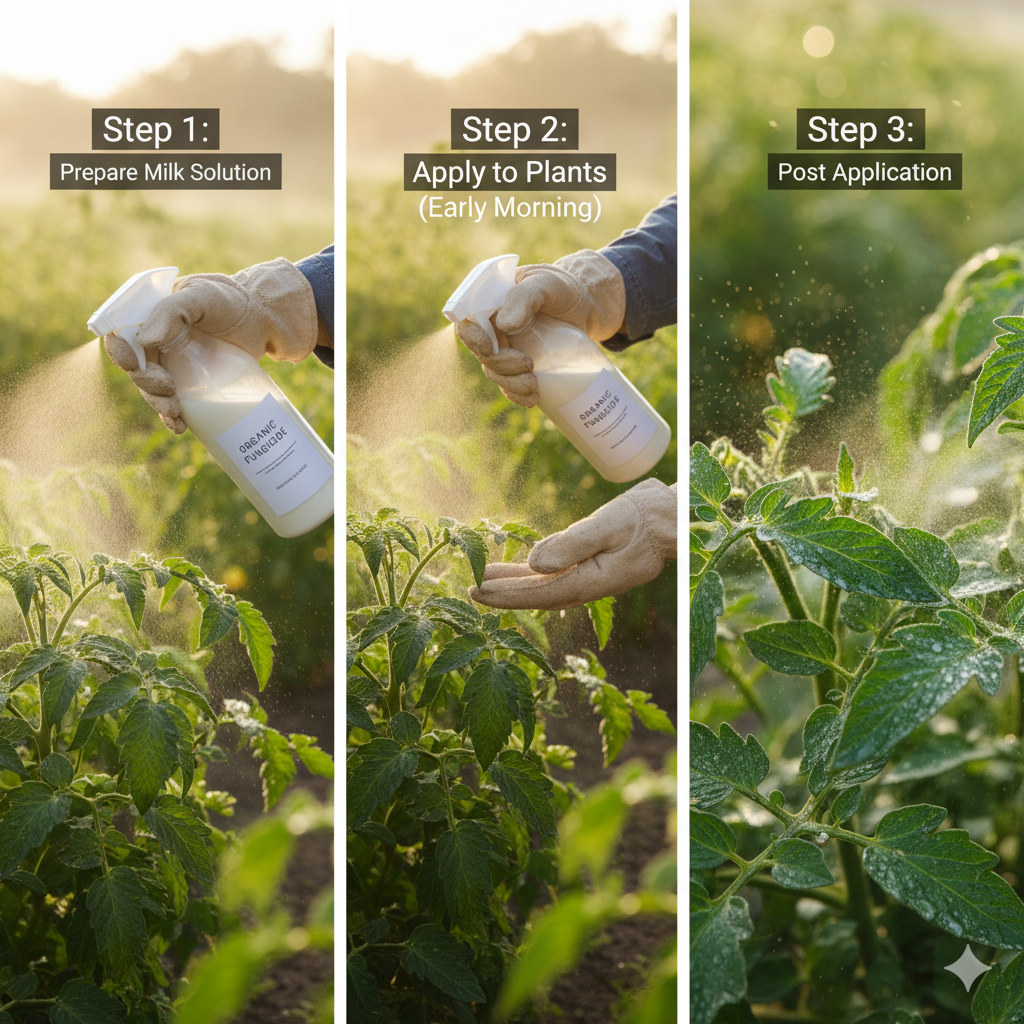
Milk spray is remarkably effective and has a long history of use by organic growers. Mix one part full-fat milk with five parts water and spray weekly on plants showing early symptoms. The mechanism is still being studied, but results consistently show good disease control. Some growers prefer a 1:2 milk to water ratio for more severe infections. Always test any spray on a single plant first since environmental factors like temperature and sunlight can affect efficacy.
Sulfur dust has been used successfully since the 1850s in vineyards and remains one of the most reliable organic options. Sulfur prevents spore germination on uninfected leaves. Apply early in the disease cycle when disease pressure is highest. However, sulfur can harm beneficial insects and soil fungi, so use it judiciously and avoid application when temperatures exceed 85 degrees Fahrenheit to prevent leaf damage.
Neem oil provides organic fungicidal properties. Apply according to product directions, typically on a weekly basis. Neem works best as a preventative rather than a treatment for established infections.
Bicarbonate solutions work similarly to milk spray. Mix one tablespoon baking soda with one tablespoon horticultural oil and one tablespoon insecticidal soap per gallon of water. Spray weekly during disease pressure periods.
Copper based treatments provide organic fungicidal action. Follow product label directions carefully as copper can accumulate in soil with repeated applications.
Biological control agents like certain fungal species and beneficial microbes offer additional options. Some commercially available biological products target powdery mildew specifically.
Apply all organic treatments in early morning or late evening to minimize leaf burn risk. Early morning application allows complete drying during the day. Weekly applications prove more effective than waiting until disease becomes severe. Once powdery mildew covers more than 50 percent of a leaf, controlling it becomes significantly more difficult.
Conventional Fungicide Options
When organic methods prove insufficient or disease pressure is extremely high, professional fungicide options provide stronger control. Multiple fungicide classes with different modes of action are available. Rotating between different fungicide classes prevents fungal resistance from developing.
Applications typically follow 7 day intervals when conditions favor disease development. Stop all fungicide applications 2 weeks before harvest to meet food safety standards. Consult product labels carefully for preharvest intervals and application rates specific to your crop.
Immediate Actions for Infected Plants
When individual leaves show powdery mildew, remove them immediately by hand. This contains spores and reduces disease spread. Place removed leaves in a sealed bag for disposal, never in a compost pile where spores could survive.
If powdery mildew appears on many leaves, harvest ripe fruit immediately from that plant. This salvages fruit production before plant stress accelerates ripening problems. For severely infected plants where most foliage is affected, removing the entire plant may become necessary to prevent spore spread to neighboring plants.
During removal or harvest, wash your hands and tools afterward to avoid spreading spores to other plants.
Monitoring and Early Detection System for Ongoing Success
Establishing a regular monitoring routine provides your best insurance against severe powdery mildew outbreaks. Weekly inspections of all tomato plants during late summer months take minimal time but yield maximum disease prevention benefits.
During each inspection:
Examine both upper and lower leaf surfaces
Focus on lower leaves where disease starts first
Note any yellow blotches or white coating
Photograph suspected symptoms for documentation
Record the date, location, severity, and environmental conditions. Over multiple seasons, you will notice patterns that help predict when to increase monitoring frequency.
Consider using Plantlyze, an AI powered plant care and diagnosis platform, to photograph your tomato leaves and get instant disease identification. Consistent monitoring combined with professional grade identification ensures early detection when intervention remains most effective. Visit www.plantlyze.com to explore how AI-powered plant diagnosis can support your gardening success.
Weather correlation tracking helps predict outbreaks. High humidity combined with mild temperatures typically precedes powdery mildew appearance by 1 to 2 weeks. When weather forecasts predict such conditions, increase monitoring frequency and prepare preventative spray materials in advance.
Real-World Impact: What Early Intervention Achieves
Gardeners who implement consistent monitoring and early intervention report dramatically different outcomes compared to those who wait until disease becomes obvious. Early action prevents the need for intensive treatments, preserves more foliage for continued fruit production, and results in higher total yields with better fruit quality.
A typical example involves two gardeners growing cherry tomatoes in similar conditions. Gardener A noticed first powdery mildew symptoms in early August and immediately began weekly milk sprays while removing affected leaves. By September, the infection was controlled and plants continued producing quality fruit through season end. Gardener B noticed the same symptoms but delayed treatment for 2 weeks, assuming the problem would resolve naturally. By the time that gardener sprayed, powdery mildew had spread to most plants. Extensive leaf removal was required to control it, resulting in severe sunscald damage and 40 percent lower final yields.
This scenario repeats across countless gardens every season. The difference between season success and season disappointment often comes down to detection speed and treatment responsiveness.
Your Action Plan for Success
This season, implement these three critical actions. First, establish a weekly monitoring routine during late summer months when powdery mildew pressure peaks. This takes 10 minutes per week and catches problems early. Second, prepare preventative materials in advance. Have milk spray ingredients or sulfur dust ready before you need them. Third, take action immediately upon detecting first symptoms. Early response prevents the cascade of problems that follows delays.
Remember that powdery mildew on tomatoes is manageable. Thousands of gardeners successfully prevent severe outbreaks every season using the strategies outlined here. Your tomato plants can be among them. Start today with one or two prevention strategies that fit your gardening style, then add others as you see results.
For personalized guidance on identifying plant diseases and receiving customized plant care recommendations, explore the tools available at www.plantlyze.com. Professional level plant diagnosis brings the expertise of agricultural specialists right to your garden.
Your best tomato season awaits. It all begins with paying attention to your plants.
References
Cornell University College of Agriculture and Life Sciences. Powdery Mildew on Tomatoes: Vegetable Pathology. 2024.
UC Davis Integrated Pest Management Program. Powdery Mildew on Field-Grown Tomatoes: Management Strategies. University of California Agriculture and Natural Resources.
Plant Pathology Journal. Powdery Mildew of Tomato and Its Management: A Review. 2019.
Epic Gardening. Powdery Mildew in Tomatoes: Identification and Prevention. 2023.
Bighaat Kisan Vedika. Organic Control Measures to Manage Powdery Mildew in Tomato Crop. 2025.