
Tomato plants are finicky. One moment your plants look vibrant and healthy, and the next you notice something troubling: the leaves are curling. Your first reaction might be panic. But don't worry. Tomato leaf curl is a common problem that gardeners encounter, and in most cases, it's manageable once you understand what's causing it.
Leaf curl can signal several different problems, ranging from viral infections to simple watering issues. The key to success is identifying the underlying cause quickly and taking action. This guide will walk you through the most common reasons your tomato leaves are curling and provide practical solutions you can implement right away.
Whether you're a seasoned gardener or growing tomatoes for the first time, understanding leaf curl will help you keep your plants healthier and more productive throughout the growing season.
What Is Tomato Leaf Curl and Why It Matters
Tomato leaf curl is exactly what it sounds like. The leaflets on your tomato plant start to curl upward, downward, or become distorted and twisted. Affected leaves may also show yellowing, unusual coloring, or a generally unhealthy appearance.
This symptom is important to recognize because it's your plant's way of signaling distress. The curling is not the disease itself, but rather a symptom of an underlying problem. Your plant could be dealing with a viral infection, insect pest, environmental stress, or nutritional issue.
The challenge with leaf curl is that multiple problems can cause the same symptom. That's why careful observation and diagnosis are so valuable. Early detection gives you the best chance of saving your plants and maintaining a productive harvest. If you notice curling leaves, take action within the first 24 to 48 hours for the best results.
Common Causes of Tomato Leaf Curl
Viral Diseases: The Most Common Culprit
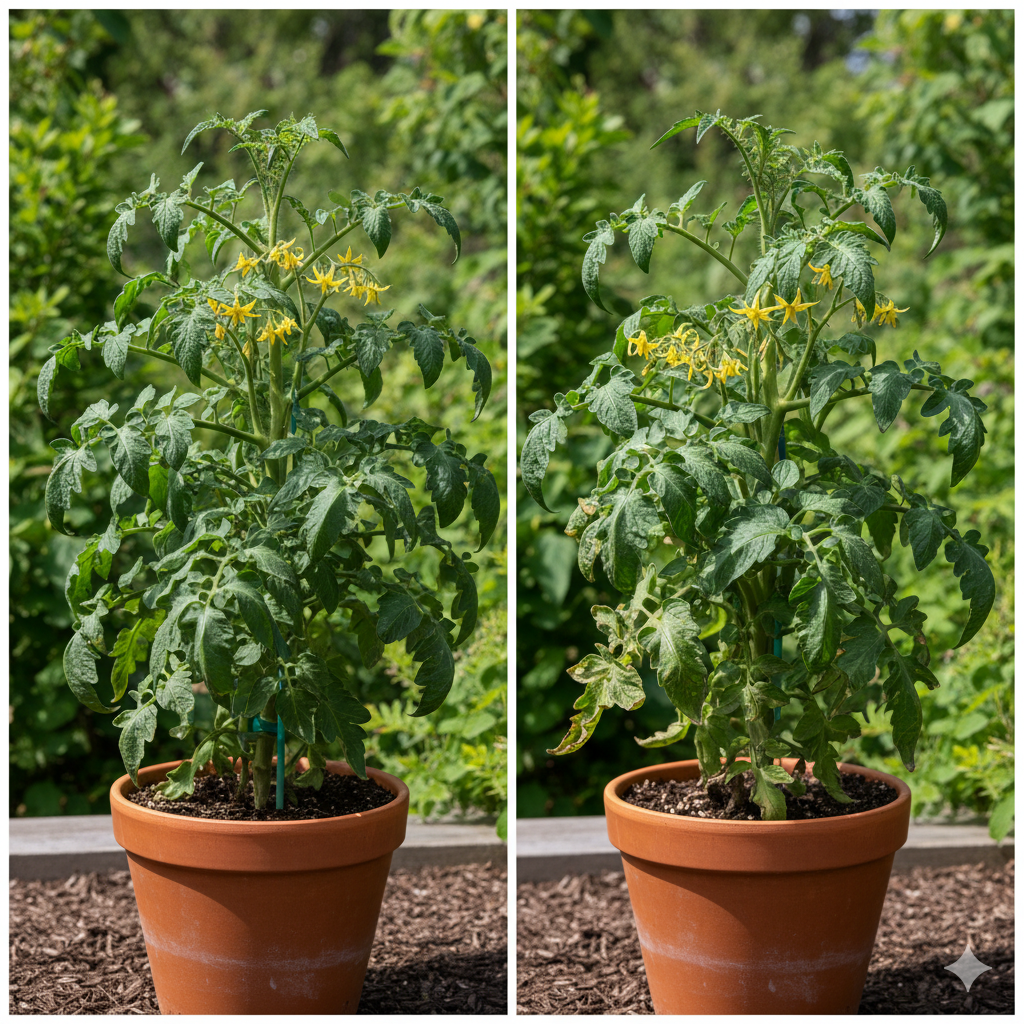
Tomato Yellow Leaf Curl Virus (TYLCV) is the leading viral cause of leaf curl in tomatoes worldwide. This virus is particularly devastating because it spreads quickly and is difficult to control once it takes hold in your garden.
When a plant becomes infected with TYLCV, the new leaves at the top of the plant curl upward significantly. You'll also notice yellowing of the leaflets and a general stunting or dwarfing of the plant. The plant produces fewer flowers and smaller fruits. In severe cases, infected plants may stop producing entirely.
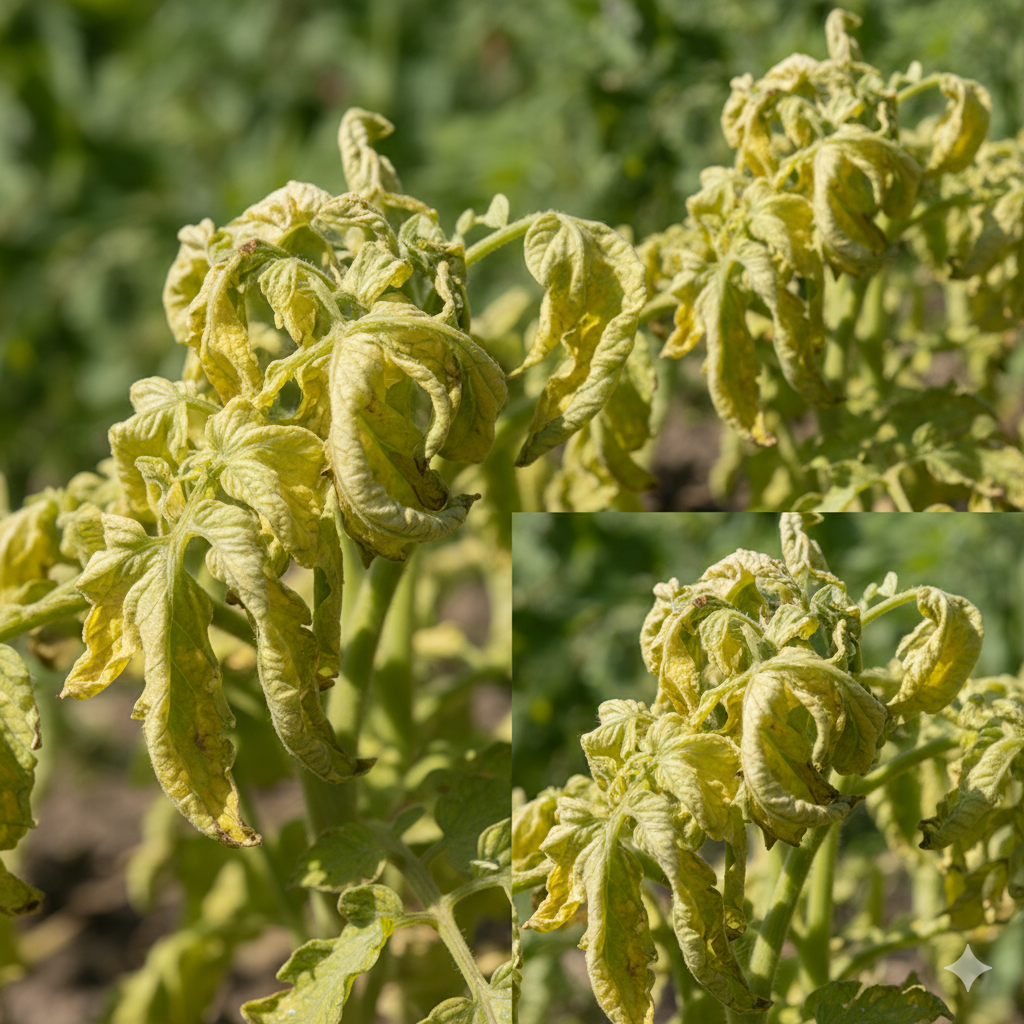
TYLCV spreads through whiteflies, tiny insects that feed on the plant's sap. An infected whitefly can transmit the virus to healthy plants in seconds. Even a single whitefly landing on your plant can cause infection. This is why whitefly control is so critical for TYLCV prevention.
Other viruses like Tomato Mosaic Virus (ToMV) and Cucumber Mosaic Virus can also cause leaf curling, though TYLCV is the most common and most damaging.
Whitefly Infestations
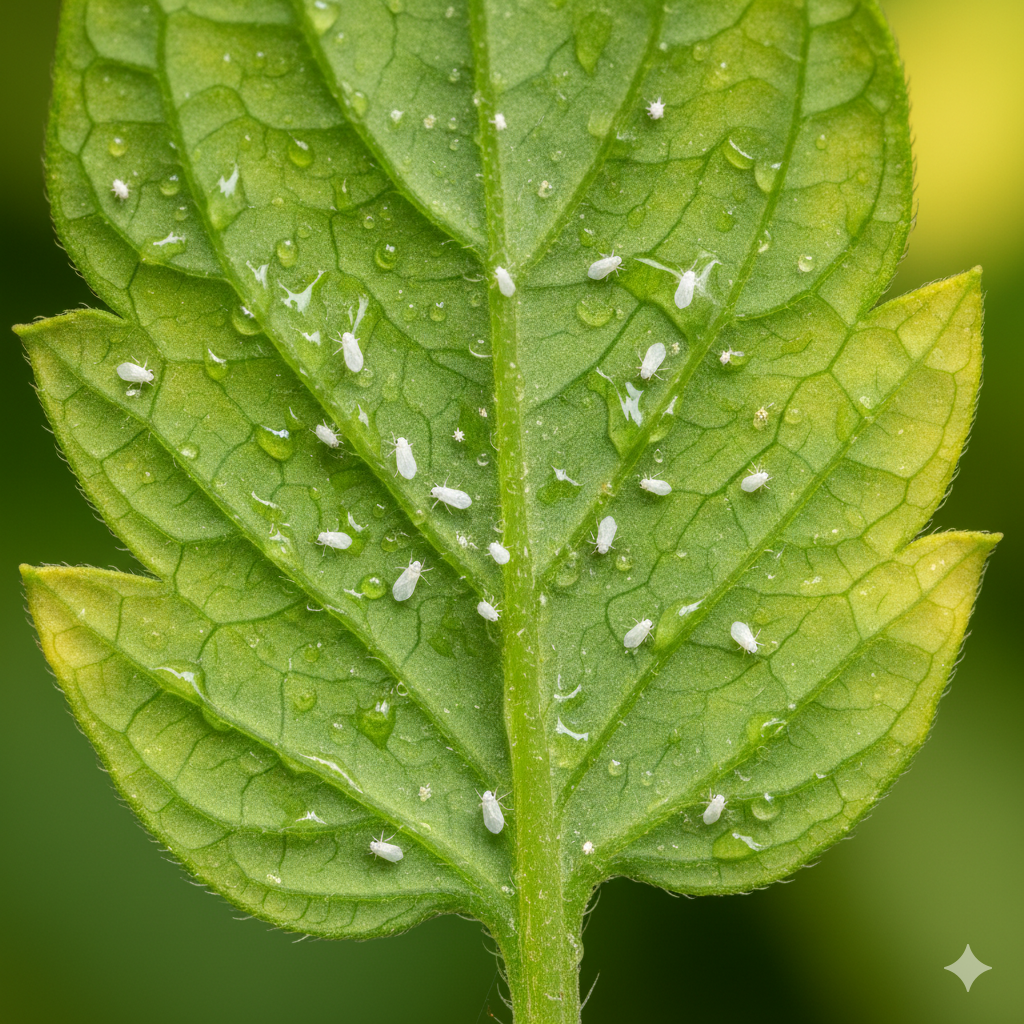
Whiteflies damage tomato plants in two ways. First, they feed directly on the plant's sap, which causes leaf distortion and curling. Second, and more importantly, they transmit TYLCV as they feed.
Whiteflies are tiny, white insects about the size of a grain of salt. When you brush a tomato plant, hundreds of them may suddenly take flight. You'll notice them congregating on the undersides of leaves. Heavy infestations cause sticky, sooty residue on leaves, which is actually honeydew secreted by the whiteflies.
Early stages of whitefly damage appear as light yellowing and mild leaf curling. As the infestation progresses, leaves become more severely curled, stunted, and discolored. The plant weakens and becomes stressed, making it vulnerable to other problems.
Environmental Stress Factors
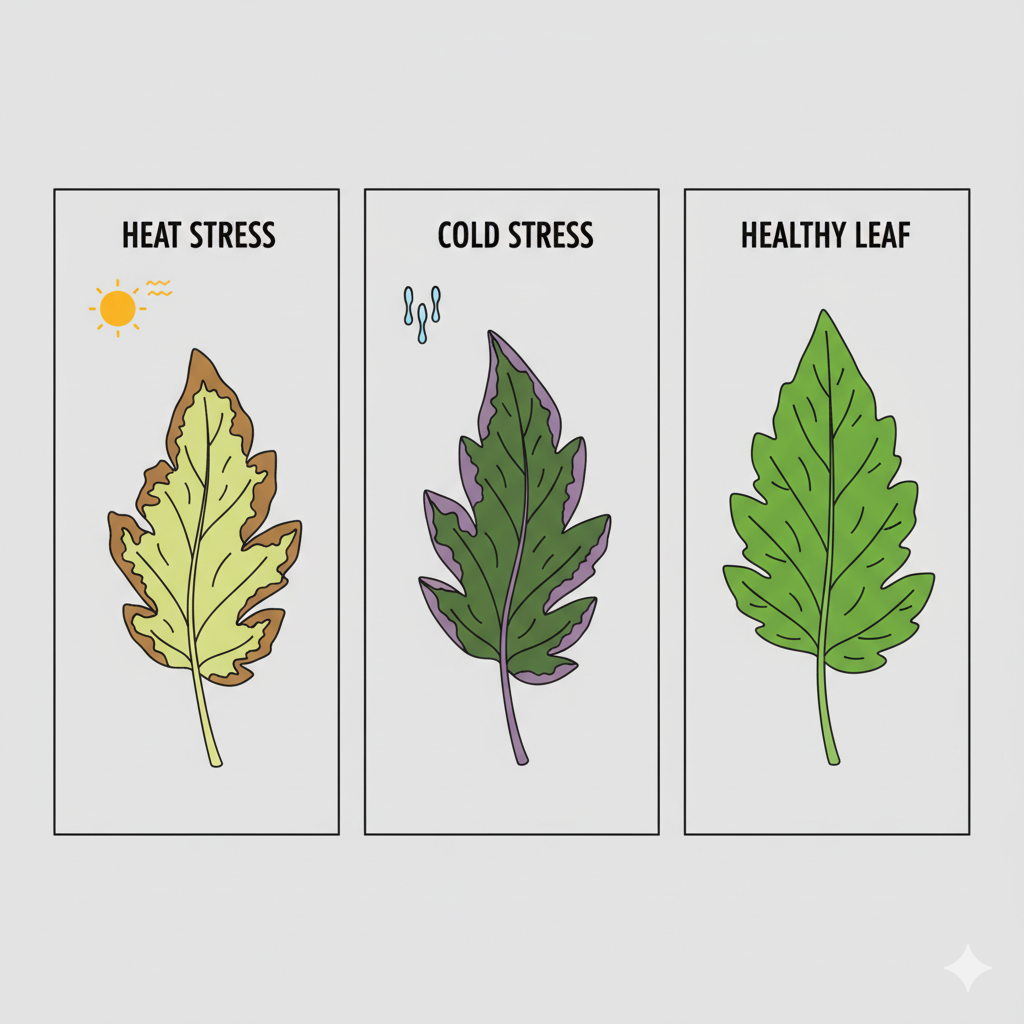
Sometimes leaf curl has nothing to do with disease or pests. Your plant might be responding to environmental conditions it finds stressful.
Temperature extremes frequently cause leaf curl. When tomato plants experience temperatures above 90 degrees Fahrenheit for extended periods, or below 50 degrees at night, they often respond by curling their leaves. This is actually a protective response. The curl reduces the leaf surface area exposed to harsh conditions, helping the plant conserve water and energy.
Watering problems also trigger leaf curl. Both overwatering and underwatering can cause this symptom. When you water inconsistently, the plant experiences stress that manifests as curled leaves. Sudden shifts from very dry soil to very wet soil are especially problematic. Tomato plants need consistent moisture. They prefer soil that is moist but not waterlogged.
Humidity levels matter too. Extremely low humidity combined with high temperature can cause stress curl. Conversely, high humidity creates conditions where fungal and bacterial diseases thrive, potentially leading to leaf curl from those sources.
Nutrient Deficiencies
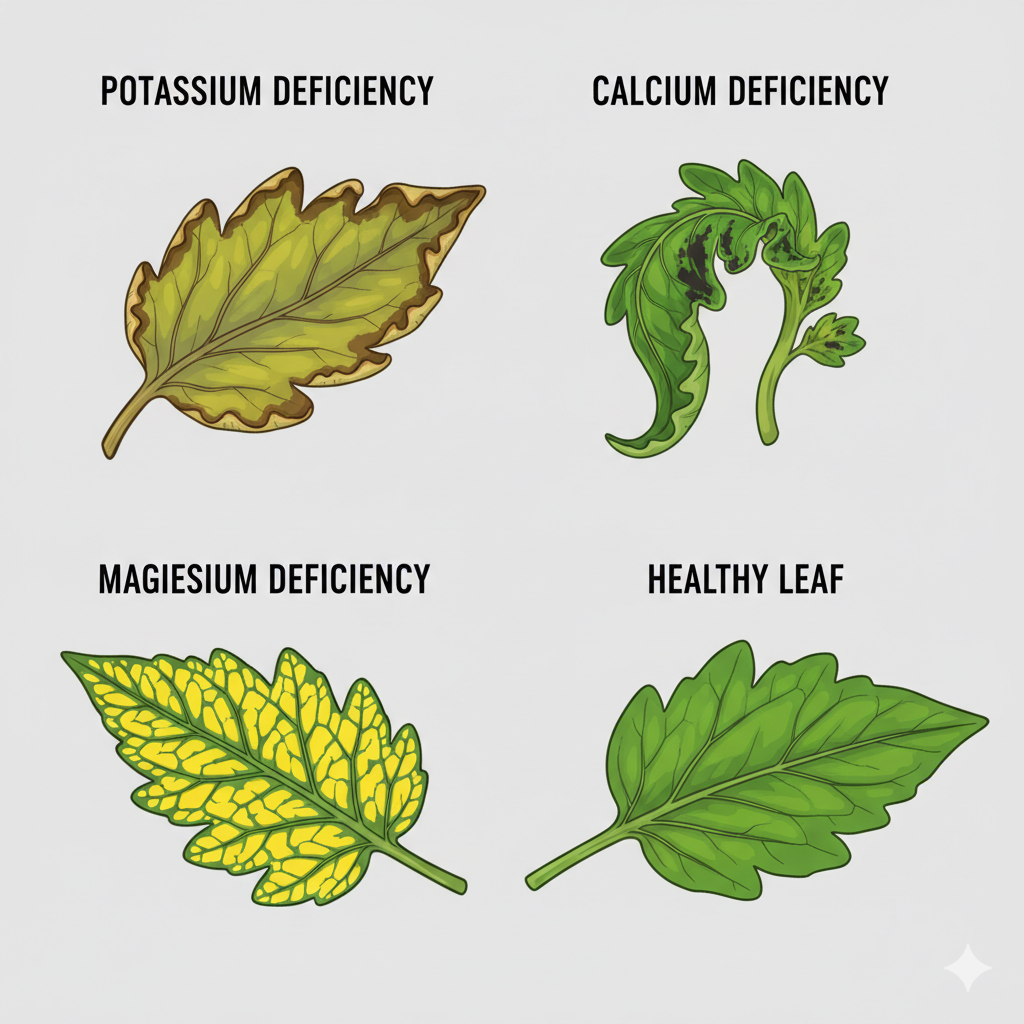
Plants are like people. When they lack essential nutrients, they show symptoms of deficiency. For tomato plants, certain nutrient deficiencies commonly cause leaf curl.
Potassium deficiency causes older leaves to curl at the margins, often with a yellowish or brownish scorching at the edges. The plant looks weak and produces smaller fruits. Adding potassium to the soil through fertilizer usually corrects the problem within 2 to 3 weeks.
Calcium deficiency creates a different pattern. You'll see curling and distortion of new growth. The plant may also develop blossom end rot, a dark, sunken spot on the bottom of fruit. Calcium deficiency often stems from inconsistent watering rather than lack of calcium in the soil.
Magnesium deficiency causes yellowing between leaf veins while veins stay green. This yellowing can be accompanied by leaf curling. This deficiency is less common but can occur in acidic soils.
How to Treat Tomato Leaf Curl: Proven Strategies
If It's a Viral Infection
When you determine that a viral infection is causing the leaf curl, your options are limited because viruses cannot be cured with chemicals. Prevention and removal are your only effective strategies.
If you catch viral infection early and only a few plants are affected, removing the infected plants is your best option. Carefully cover the entire plant with a clear or black plastic bag to prevent whiteflies from escaping. Tie the bag at the soil line. Cut the plant below the bag and allow the bagged plant to dry out completely. This kills both the plant and any whiteflies on it. Then place the entire bag in the trash. Do not compost an infected plant.
For the future growing season, select tomato varieties that are resistant to TYLCV. Seed catalogs and nurseries clearly mark resistant varieties. Choosing resistant varieties is the most economical and effective long-term strategy. Also, controlling whiteflies aggressively from transplant time onward prevents viral infection from establishing.
Managing Whitefly Problems
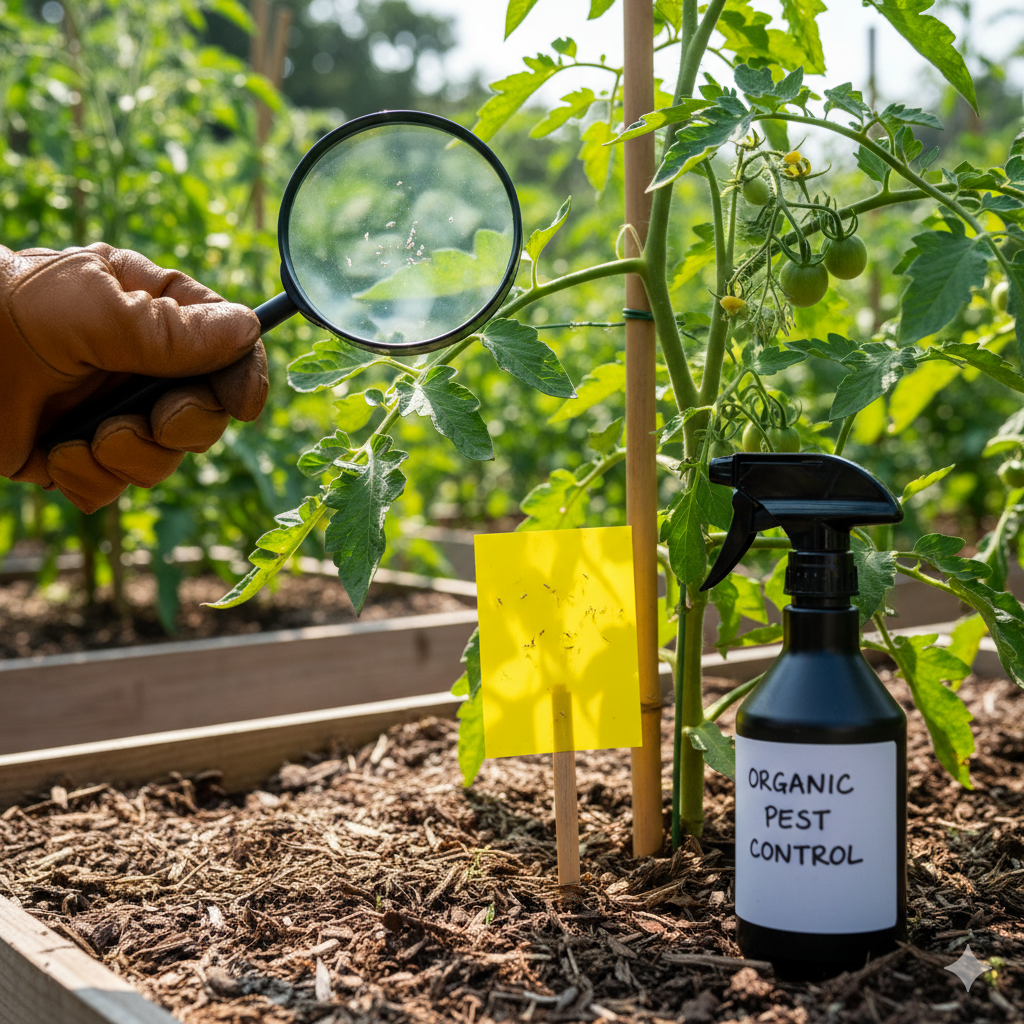
If you catch whiteflies early, before they transmit TYLCV, you can control them through several methods.
Natural treatments include insecticidal soap and neem oil. These organic options work by disrupting the insect's body coating or interfering with their metabolism. Apply these treatments directly to the plant, ensuring good coverage of the leaf undersides where whiteflies congregate. Repeat applications are necessary every 5 to 7 days. These treatments are most effective against young whiteflies.
Reflective mulches can reduce whitefly activity early in the season. Spreading aluminum foil or reflective plastic around the base of plants confuses the insects and reduces landing and feeding.
Yellow sticky traps catch adult whiteflies. Place them near plants to monitor and reduce whitefly populations. This method works better as a monitoring tool than a complete control measure.
For larger infestations, chemical insecticides may be necessary. Consult your local extension service for recommendations on approved insecticides and proper application timing. Flupyradifurone has shown excellent effectiveness in research trials for suppressing whitefly populations and reducing TYLCV transmission.
The key to whitefly management is early intervention. When you catch the problem at the first sign of insect activity, your treatment options are more effective and your plants suffer less damage.
Correcting Environmental Issues
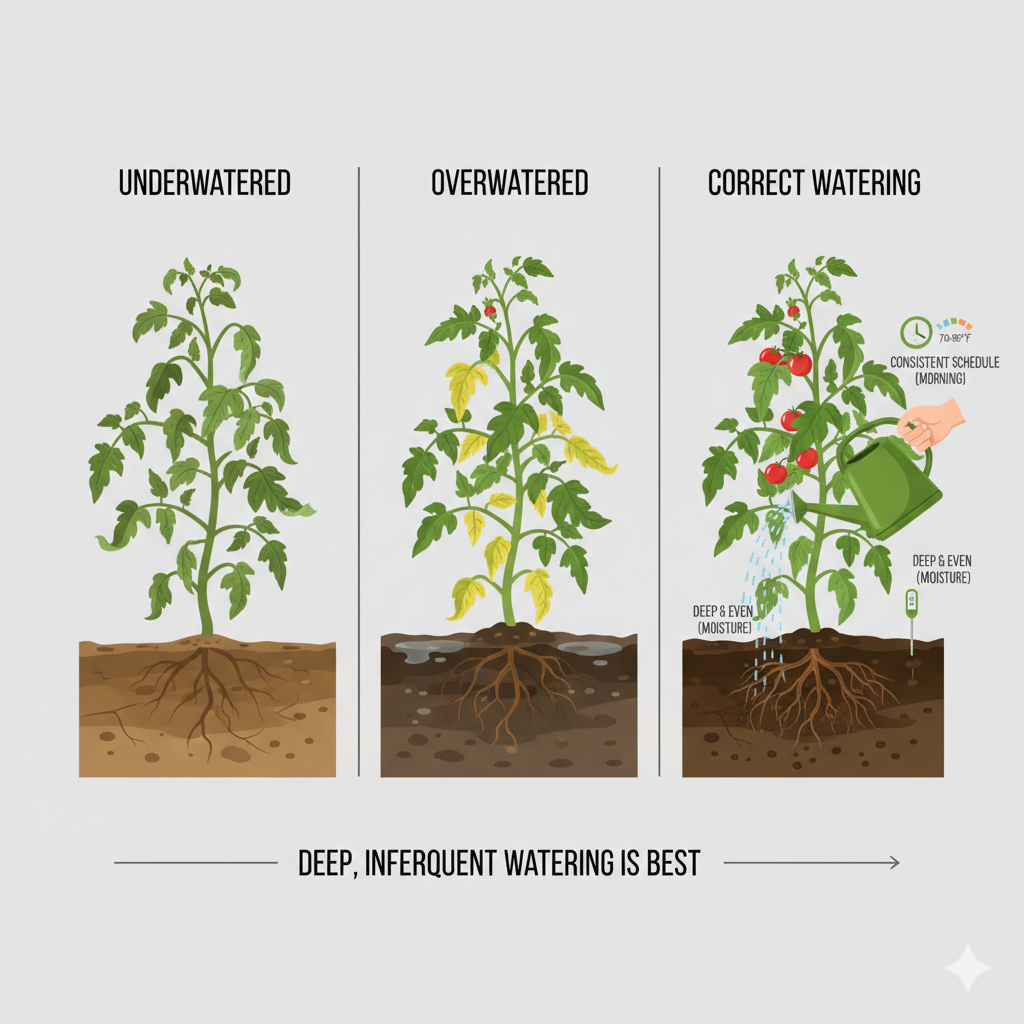
If environmental stress is causing the curl, correcting the conditions usually resolves the problem within 1 to 2 weeks.
For watering issues, establish a consistent watering schedule. Tomato plants need about 1 to 2 inches of water per week, depending on your climate. Water deeply and infrequently rather than light and frequent. Use mulch to help soil retain moisture. Check soil moisture by inserting your finger 2 inches into the soil. If it feels dry, water. If it feels moist, wait.
For temperature problems, you have limited options if you're growing in the ground. You can provide temporary shade cloth during extreme heat. You can also delay planting until soil temperatures warm or plant in spring rather than early spring to avoid cold nights.
Humidity management depends on your growing conditions. Ensure good air circulation around plants by spacing them appropriately and pruning lower branches. This reduces fungal disease pressure. In very dry climates, occasional misting during the hottest part of the day can help.
Fixing Nutrient Problems
Identifying nutrient deficiency requires careful observation. Look at where the curling appears and what other symptoms you see.
For potassium deficiency, apply a potassium-rich fertilizer following the package directions. Potassium sulfate, potassium nitrate, or a balanced fertilizer with higher potassium content all work well. You should see improvement within 2 to 3 weeks.
For calcium deficiency, ensure consistent watering is your first step. Calcium availability in soil is often not the problem. Instead, inconsistent watering prevents the plant from absorbing available calcium. Adding crushed eggshells or gypsum to the soil around the plant can help, but addressing your watering practice is more important.
Have your soil tested if deficiency symptoms appear regularly. A soil test reveals exactly what nutrients are lacking in your soil and how much amendment you need to add. This takes the guesswork out of fertilizing and saves money in the long run.
Prevention: Your Best Defense Against Leaf Curl
Resistant Varieties Matter
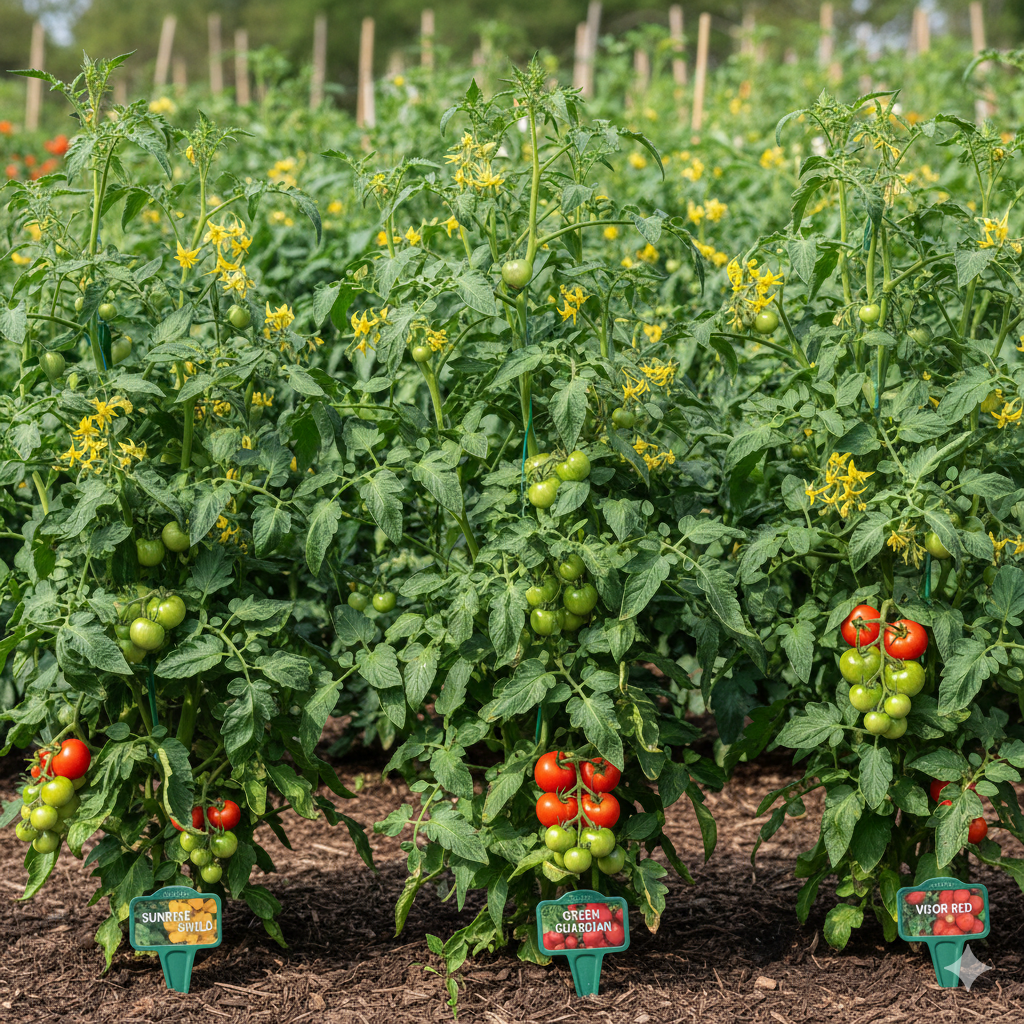
The absolute best way to avoid leaf curl caused by TYLCV is to grow resistant tomato varieties. Plant breeders have developed many excellent tomato varieties that resist this virus while still producing delicious fruit.
When you purchase seeds or transplants, check the label or description for TYLCV resistance. It's often indicated with a notation like "TYLCV R" or "Resistant to TYLCV." Planting resistant varieties is more economical than trying to manage a virus outbreak and is significantly more effective.
Resistant varieties still need whitefly management and good care, but they'll tolerate infection better and continue producing even if virus exposure occurs. This insurance policy approach to variety selection pays dividends throughout the growing season.
Garden Hygiene Practices
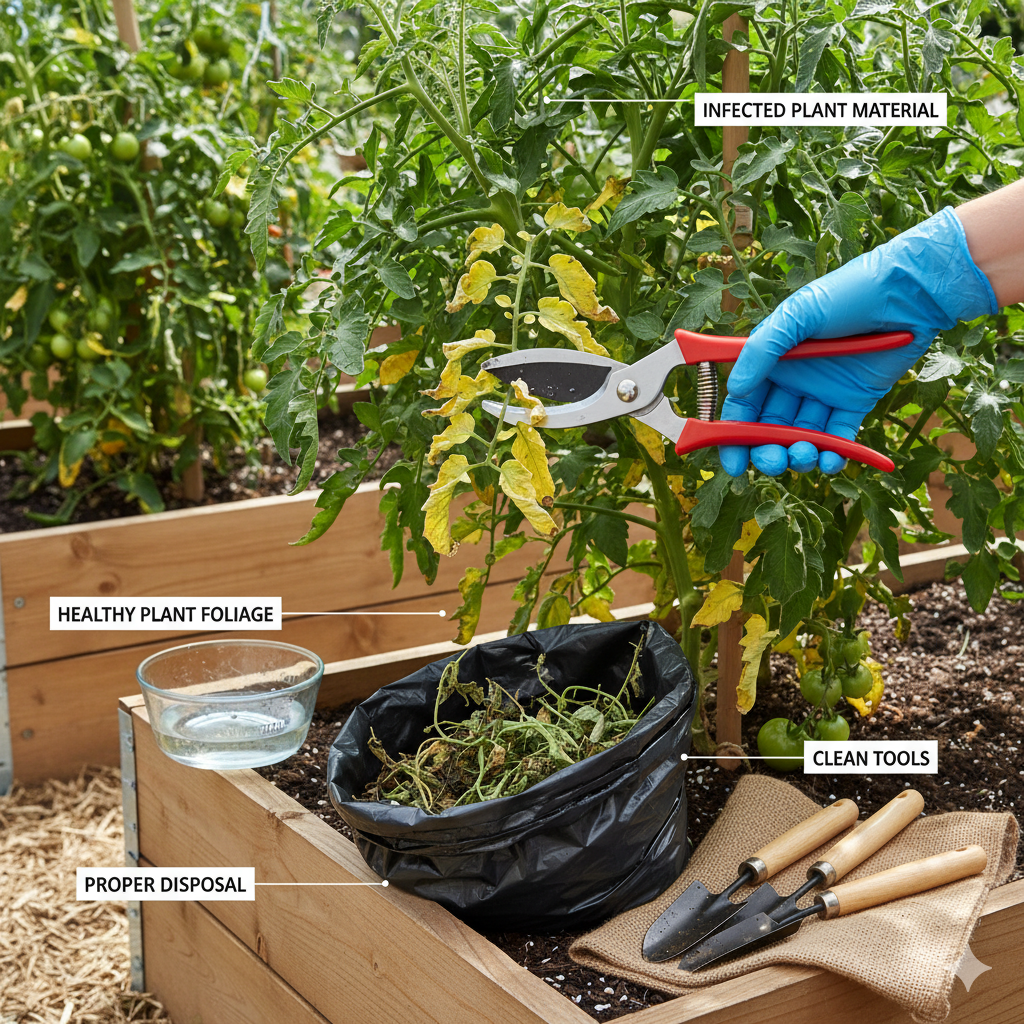
Clean gardens are healthy gardens. Several hygiene practices reduce disease pressure and insect problems significantly.
Remove crop residues at the end of the season. Old tomato plants left in the garden can harbor viruses, fungal spores, and pest eggs. Clean removal of all plant material prevents carryover of problems to the next season.
Rotate crops by not planting tomatoes in the same location for at least 2 to 3 years. This breaks the disease cycle and reduces soil borne pathogen pressure. Different plant families don't support the same diseases, so alternating crops naturally reduces disease buildup.
Remove weeds around tomato plantings. Many weed species serve as alternate hosts for viruses. Whiteflies and other insect vectors breed on weeds. A weed-free garden reduces both pest pressure and disease pressure.
Sanitize tools before moving between plants. A simple solution of one part bleach to nine parts water works well. Dip tools in this solution for 30 seconds and dry them. This prevents spreading disease from infected plants to healthy ones.
Monitoring and Early Detection
The most valuable thing you can do is visit your tomato plants frequently and look for problems.
Inspect plants at least twice per week. Look at both the upper and lower leaf surfaces. Check for insects, discolored leaves, curling, spotting, or any unusual appearance. Early detection of any problem gives you more treatment options and better success rates.
Monitor whitefly populations early in the season. This is the critical time for prevention. If you see any whiteflies in the first few weeks after planting, increase your monitoring and treatment efforts immediately. Preventing viral infection is far easier than managing it later.
Document problems with photos. Take pictures of affected plants and send them to your local extension service or use them when consulting with other gardeners. Photos help with accurate diagnosis.
Consider using AI tools for quick diagnosis. For accurate and immediate plant problem identification, visit plantlyze.com and use the AI powered plant care tool. Plantlyze helps you identify issues before they spread to other plants and provides specific management recommendations tailored to your problem. This technology removes the guesswork from diagnosis and saves time.
Conclusion
Tomato leaf curl is frustrating, but it's not a death sentence for your plants. By understanding the common causes, you can take decisive action to solve the problem.
Start with careful observation. Look at your plant closely. Are you seeing whiteflies? Is watering inconsistent? Is it very hot? The answers to these questions point toward the cause. Once you've identified the problem, implementing the appropriate solution becomes straightforward.
Remember that prevention is always easier than cure. Selecting resistant varieties, maintaining good garden hygiene, controlling whiteflies early, and providing consistent water and appropriate nutrition prevent most leaf curl problems before they start.
If you're uncertain about what's causing the curling, don't hesitate to get help. Local extension services, experienced gardeners, and modern AI tools like plantlyze.com can all help you diagnose problems quickly. The faster you identify the issue, the faster you can treat it and get your tomato plants back on track.
Your tomato plants want to thrive. By addressing leaf curl promptly and properly, you'll be rewarded with healthy plants, abundant flowers, and plenty of delicious fruit for your table.
References
University of Florida IFAS (1996). Tomato Yellow Leaf Curl Virus Management for Homeowners. https://ipm.ifas.ufl.edu/agricultural_ipm/tylcv_home_mgmt.shtml
NC State Extension Publications (2023). Tomato Yellow Leaf Curl Virus. https://content.ces.ncsu.edu/tomato-yellow-leaf-curl-virus
University of Nebraska Backyard Farmer (2024). Tomato Leaf Curl. https://byf.unl.edu/tomato-leaf-curl/
National Center for Biotechnology Information (2015). New Insecticides for Management of Tomato Yellow Leaf Curl Virus. https://pmc.ncbi.nlm.nih.gov/articles/PMC4684678/
Epic Gardening (2025). Tomato Leaf Curl: What It Is And How To Fix It. https://www.epicgardening.com/tomato-leaf-curl/
Agrio (2022). Tomato Yellow Leaf Curl Virus Database. https://agrio.app/library/TYLCV/