Introduction: Getting the Basics Right Matters More Than You Think
You're ready to plant potatoes. You've prepared your soil, gathered your seed potatoes, and found the perfect location in your garden. Then a question stops you: exactly how deep should you plant these seed potatoes?
The answer determines whether your potato crop emerges vigorously and produces abundant tubers, or struggles with poor emergence, green potatoes, or disappointing yields. Planting depth isn't glamorous or complex, but getting it right is fundamental to potato growing success.
This guide walks you through everything you need to know about planting depth, seed spacing, and the different methods available depending on your situation and goals.
Why Planting Depth Matters: The Foundation of Success
Planting depth directly affects multiple aspects of your potato crop.
Proper planting depth ensures vigorous, consistent emergence. Seeds planted too shallow may struggle to get through the soil surface. Seeds planted too deep must expend enormous energy reaching the surface, emerging weak and slow.
Planting depth also prevents green potatoes. Tubers that develop close to the soil surface become exposed to sunlight, turning green and developing solanine, a toxic compound. Adequate depth buries developing tubers in darkness, preventing this problem entirely.
Soil temperature interacts with planting depth. Cold spring soil benefits from shallower planting that allows warmer conditions near the surface to speed emergence. Hot summer conditions might benefit from slightly deeper planting that places seeds in cooler soil.
Getting planting depth right from the start is far simpler than managing problems that develop later in the season.
The Standard Approach: 4 to 6 Inches Deep
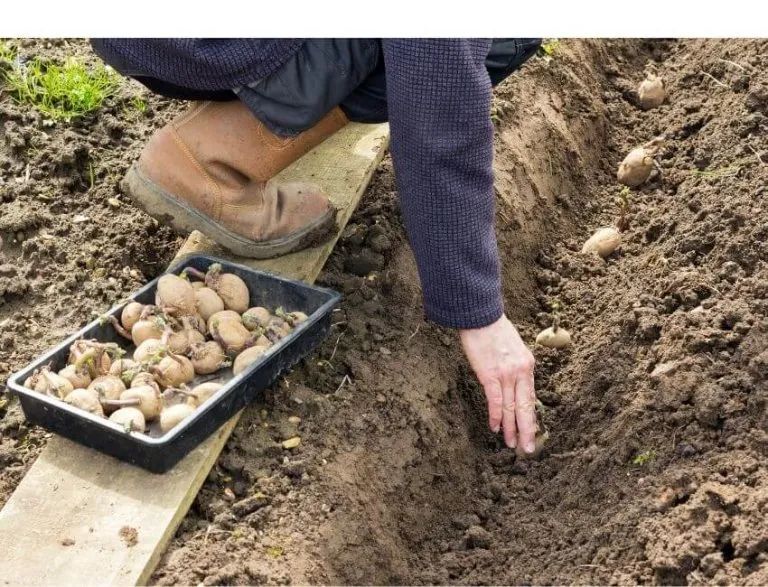
The standard recommendation for potato planting depth is 4 to 6 inches, measured from the top of the seed piece to the soil surface.
This depth provides an optimal balance. It's deep enough to prevent tubers from developing close to the surface and turning green. It's shallow enough that seed pieces emerge reliably without excessive soil burden. For most gardeners in most climates, this depth works consistently well.
Traditional Trench Method
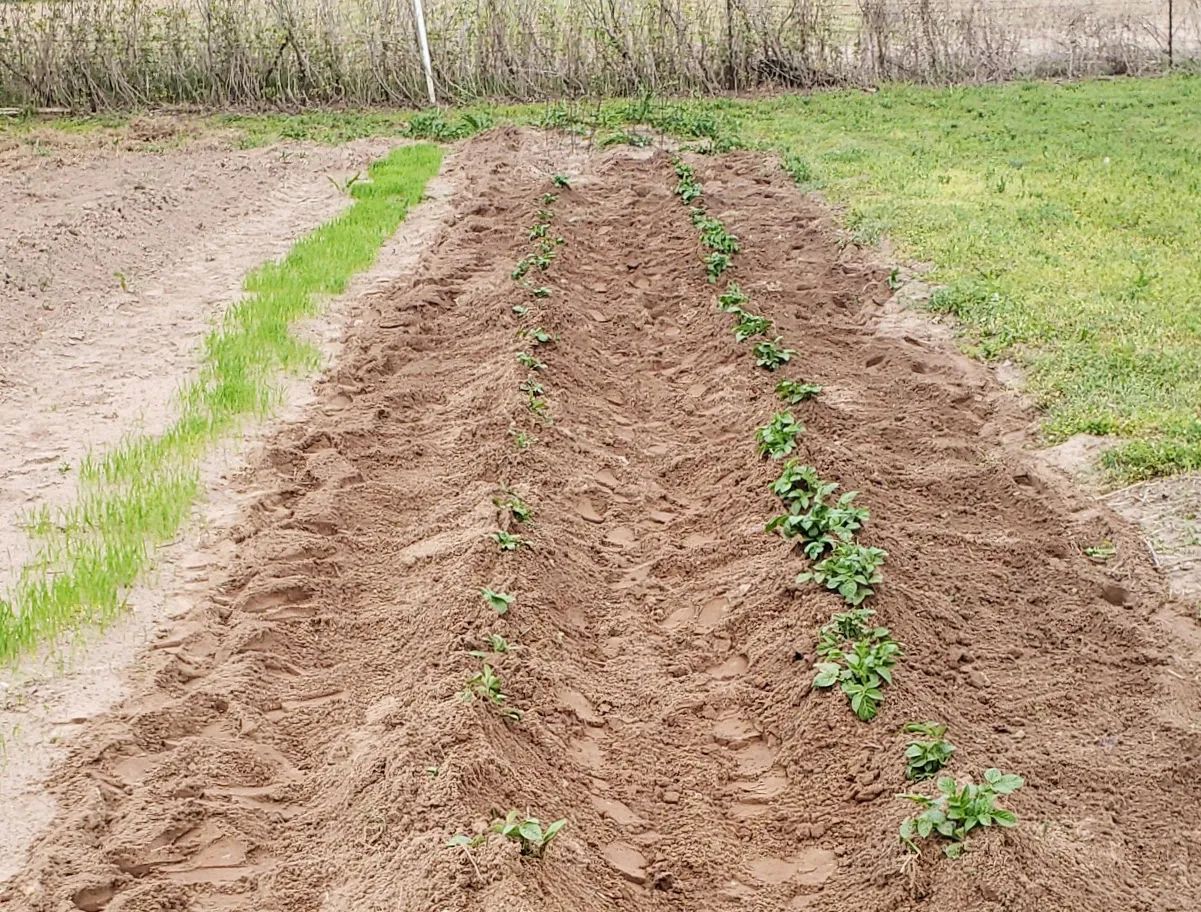
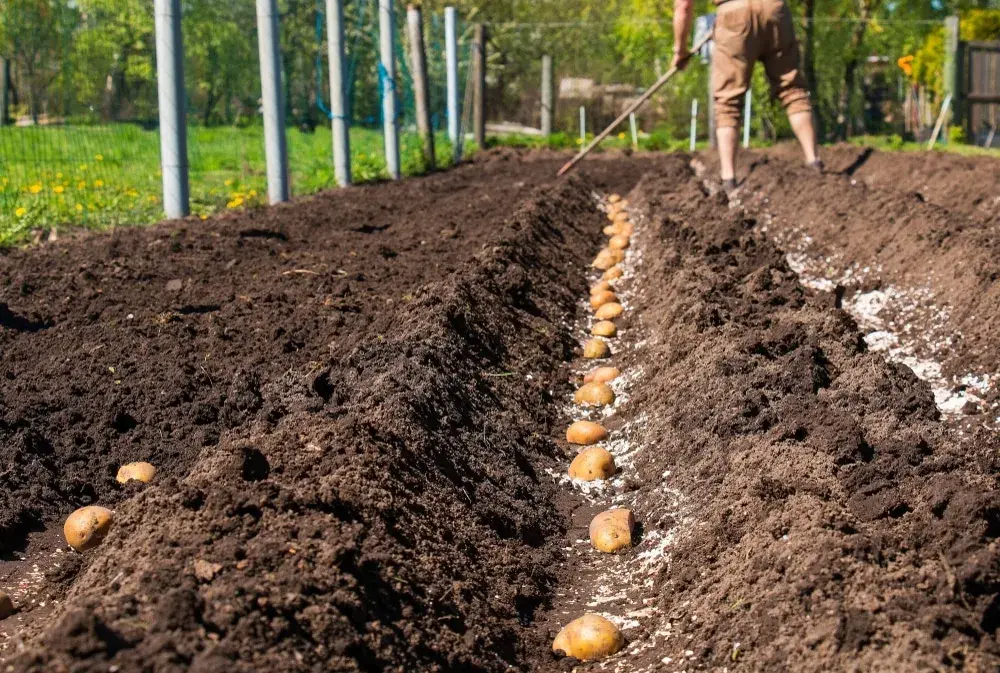
The classic planting method involves digging a trench 4 to 6 inches deep, spacing seed pieces 10 to 12 inches apart along the trench, and backfilling with soil. This method works beautifully and has been used successfully for generations.
Rows should be spaced 18 to 24 inches apart to allow space for cultivation and hilling as plants grow. Closer spacing produces more but smaller potatoes. Wider spacing produces fewer but larger tubers.
Sandy soils are fast draining and warm more quickly than clay soils. The problem here may be that the soil is merely “heavy,” and not waterlogged, meaning deeper planting is possible in very sandy soils (8 to 10 inches) without danger of waterlogging. For clay soils, stay a little closer to 4 or 5 inches to help prevent seed piece wetness.
Cold spring and planting a little shallower . Warmer summer soil can tolerate or benefit from slightly deeper planting. In general, when planting in cold soil (below 55 degrees Fahrenheit), plant shallower for faster emergence. If soil is warm and dry, plant slightly deeper to access moisture.
Understanding Your Potato Variety: This Changes Everything
Not all potatoes are planted identically. Your variety type significantly affects optimal planting depth.
Determinate Varieties: Simpler and Shallower
Determinate potatoes produce their tubers in a single layer just below the soil surface, typically at the same depth as the seed piece. Examples include Red Pontiac, Kennebec, and Yukon Gold.
For determinate varieties, a 4 inch planting depth is often adequate. These potatoes don't develop tubers at multiple levels, so you don't gain yield benefits from deeper planting. They actually prefer shallower planting that doesn't delay emergence unnecessarily.
Indeterminate Varieties: Vertical Growers and Hilling
Indeterminate potatoes form tubers all along their underground stems as they grow. Examples include King Edward, Dutch Cream, and most late-season varieties.
For indeterminate potatoes, you can plant at 4 to 6 inches, but the real benefit comes from hilling. As plants grow, you add soil around the stems, burying more of the stem and creating additional space for tuber development. This vertical growth potential allows indeterminate potatoes to produce substantially more tubers per plant than determinate varieties.
Preparing Seed Potatoes: Size, Eyes, and Curing Matter
Success starts with proper seed preparation.
Seed Piece Size and Eye Count
Seed pieces should weigh approximately 1.5 to 2.0 ounces and contain at least 2 eyes. Each eye is a bud that can produce a new plant, though typically only one or two eyes will develop into stems.
Smaller pieces (1.0 to 1.5 ounces) with 1 eye produce fewer but larger potatoes. Larger pieces (2.0 to 2.5 ounces) with more eyes produce more but smaller potatoes. For a balanced harvest, aim for the middle ground.
Very small seed pieces lack sufficient energy reserves to develop strong plants. Very large seed pieces tend to have more bruising, which increases rot risk.
Cutting and Curing
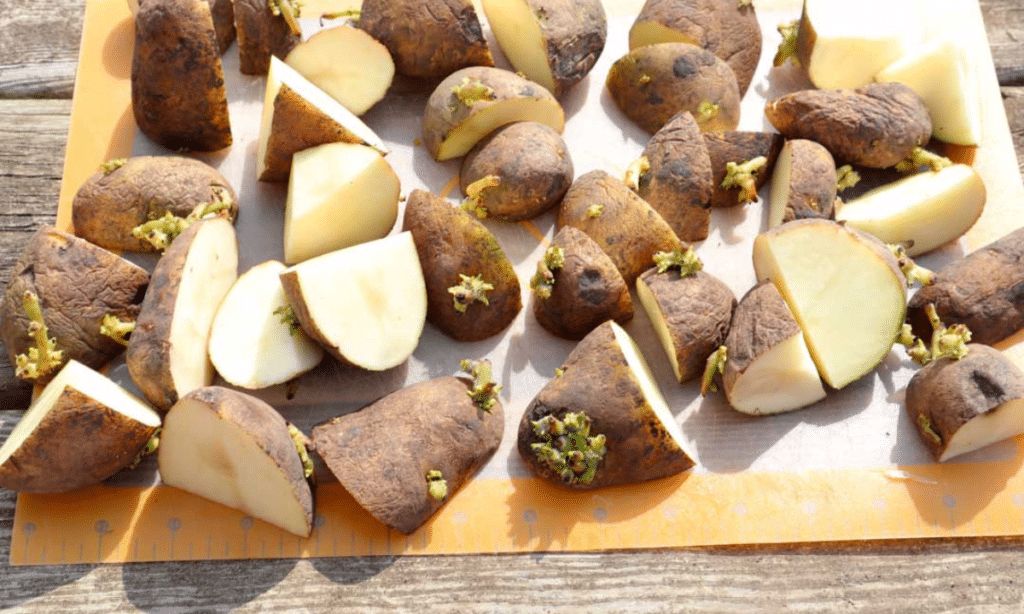
If cutting seed potatoes, cut them into blocky pieces, not thin slices. Each piece should contain at least 2 eyes. Warm seed to about 50 degrees Fahrenheit before cutting, as warm seed cuts cleanly with less tissue damage than cold seed.
After cutting, allow seed pieces to cure for 1 to 2 days in a warm, humid environment. A callus forms over the cut surface, protecting against rot and disease. Some growers dip pieces in wood ash to accelerate curing.
Chitting: The Optional Advantage
Chitting (pre-sprouting) involves exposing seed potatoes to light and warmth for 2 to 3 weeks before planting, encouraging stubby, strong sprouts. Chitted seed emerges faster, produces more vigorous plants, and sometimes yields better.
Chitting works best with whole seed potatoes or large pieces. Chitted seed should be handled carefully to avoid breaking sprouts.
Spacing: How Far Apart to Plant
In-row spacing (distance between seed pieces along a row) and between-row spacing (distance between rows) both affect yield and tuber size.
In-Row Spacing Guidelines
Standard spacing is 8 to 12 inches between seed pieces. Closer spacing (6 to 8 inches) produces higher yields but smaller potatoes. Wider spacing (12 to 14 inches) produces fewer but larger tubers. For most home gardeners, 10 inches represents an ideal balance.
Row-to-row spacing should be 18 to 24 inches for hand cultivation or 24 to 36 inches for mechanical cultivation.
Understanding Stem Density
Seed piece size and spacing together determine stem density (the number of plant stems per unit area). Higher stem density from smaller pieces or closer spacing produces more tubers but smaller individual potatoes. Lower stem density from larger pieces or wider spacing produces fewer but larger tubers.
This gives you control over harvest characteristics. Want more potatoes? Use closer spacing and smaller pieces. Want larger potatoes? Use wider spacing.
Climate and Soil: Adjusting for Your Conditions
Your location and soil type should influence your planting depth decision.
Cold Spring Soils
Plant shallower (3 to 4 inches) in cold soil. Shallower planting places seeds closer to the surface where soil warms faster. This speeds emergence and reduces disease risk from extended soil exposure in cold, wet conditions.
Warm Summer Conditions
If planting later in summer or in warm climates, plant slightly deeper (6 to 7 inches) to place seeds in cooler soil where they're less likely to rot before sprouting.
Sandy Versus Clay Soils
Sandy soils drain quickly but dry out fast. You can plant slightly deeper (up to 8 inches) in sandy soil without waterlogging concerns. Clay soils hold water and stay cool longer. Plant shallower (4 to 5 inches) in clay soil to avoid seed rot.
Well-draining soil allows deeper planting. Poor-draining soil requires shallower planting.
Three Planting Methods: Choose What Works for You
Method 1: Traditional Deep Trench (4 to 5 Inches)
Dig a 4 to 5 inch trench, space seed pieces 10 to 12 inches apart, backfill, and cover. This method is straightforward and reliable. You'll need to hill soil around plants 2 to 3 times during the season, which requires physical work but gives you control over tuber burial.
Best for: In-ground gardens with adequate loose soil.
Method 2: Shallow Planting with Straw Mulch
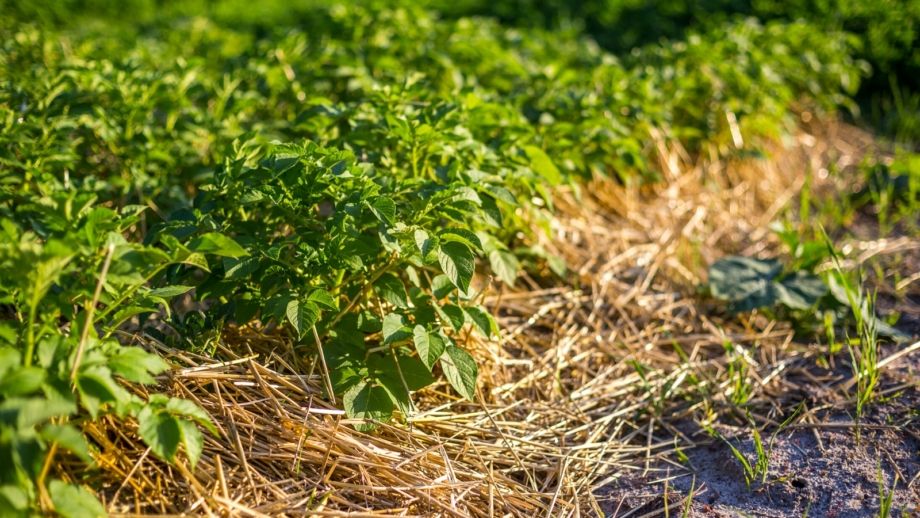
Place seed pieces just beneath the soil surface (1 to 2 inches deep) and cover with 8 inches of straw mulch. As plants grow, add more straw. This method requires no hilling, reducing labor significantly. Mulch also conserves moisture and moderates soil temperature.
Best for: Home gardeners seeking easier methods, areas with good straw availability.
Method 3: Deep Planting (8 to 9 Inches)
Plant deeply in loose, well draining soil. This method eliminates the need for hilling since tubers are already buried deeply. However, deep planting requires quality soil and results in slower emergence.
Best for: Raised beds or containers with consistently loose, draining soil.
Container and Raised Bed Planting: Different Approach
Growing potatoes in containers requires adjusted methods.
Container Depth Requirements
Containers should be at least 12 to 18 inches deep to provide adequate room for tuber development. Fill containers one third full with potting mix, place seed pieces on the mix, and cover with 2 to 3 inches of additional mix.
As plants grow 6 to 8 inches tall, add another 3 to 4 inches of potting mix. Repeat this process, burying stems and allowing the plant to continue growing upward. This progressive covering maximizes tuber production space in limited container volume.
Determinate in Containers
Determinate potatoes work well in standard containers. Fill with soil, plant at 4 inches depth, and add a light mulch layer to prevent tuber exposure.
Indeterminate in Tall Containers
Indeterminate varieties shine in tall containers or towers. Plant one piece at the bottom, bury stems progressively as they grow, and continue adding soil or straw layers throughout the season. These methods can produce substantial harvests from limited space.
Common Planting Depth Mistakes to Avoid
Planting Too Deep
Excessive depth delays emergence, increases seed rot risk, and stresses plants. Seeds planted 10 to 12 inches deep must expend enormous energy reaching the surface, emerging weak or not at all.
Planting Too Shallow
Shallow planting (under 3 inches) leaves tubers vulnerable to green exposure. Additionally, shallow planted seed is more susceptible to drying out in dry weather.
Inconsistent Spacing
Widely varying spacing creates inconsistent plant sizes. Some plants develop into vigorous producers while others remain stunted. Consistent 10 to 12 inch spacing ensures uniform plant development.
Poor Seed Preparation
Unsanitized cutting equipment spreads disease. Cutting seed too far in advance without proper curing increases rot risk. Cold, unhealed cut surfaces are vulnerable to fungal and bacterial infection.
Inadequate Soil Preparation
Hard, compacted soil is difficult for seeds to penetrate. Potatoes prefer loose, well draining soil. Preparing soil with compost before planting dramatically improves emergence and tuber development.
Monitoring and Adjustment After Planting
Emergence typically occurs 2 to 3 weeks after planting, though timing varies with soil temperature. Colder soil extends the timeline. Warmer soil accelerates emergence.
If emergence is poor or inconsistent, try increasing soil moisture or applying a thin compost mulch to retain moisture. Emergence problems usually indicate either insufficient soil moisture or delayed germination from cold soil.
For those managing larger plantings or wanting to track planting depth effectiveness, tools like Plantlyze dot com help document planting methods, record emergence dates, and compare results across seasons.
Document your planting approach, spacing, variety, and emergence date. Over time, you'll identify which methods and adjustments work best in your specific situation.
References
1. Utah State University Extension
https://extension.usu.edu/
2. University of Florida IFAS Extension
https://sfyl.ifas.ufl.edu/
3. Michigan State University Extension
https://www.canr.msu.edu/
4. University of Minnesota Extension
https://www.extension.umn.edu/
5. Colorado State University Extension
https://www.colostate.edu/
6. Purdue University Extension
https://www.purdue.edu/
7. Penn State College of Agricultural Sciences
https://www.psu.edu/
8. North Dakota State University Extension
https://www.ndsu.edu/