Introduction: Growing Disease-Free Potatoes Without Synthetic Chemicals
You're committed to organic potato production. You've invested in certified seed, you're managing your soil carefully, and you're watching your crop thrive through the early growing season. Then late July arrives, and you notice something alarming: the lower leaves of your potatoes are turning brown and dying.
You know exactly what this is. Late blight or early blight. And without synthetic fungicides, you feel unprepared. The question becomes urgent: how do you stop this disease without abandoning your organic principles?
The reality is that organic potato disease control is absolutely possible. It requires strategy, planning, and a multi-tactic approach, but you have more effective tools available than most organic growers realize. This guide walks you through proven organic methods that protect your potato crop while maintaining your commitment to sustainable farming.
Why Organic Potato Disease Management Matters
Organic potato production commands premium prices because consumers value the absence of synthetic pesticides. However, this market advantage only exists if you deliver disease-free potatoes. Disease reduces yield, compromises tuber quality, and creates storage problems that eliminate your premium positioning.
Beyond economics, organic disease management aligns with the principles of regenerative agriculture. Rather than relying on chemical interventions, organic approaches build soil health, encourage beneficial microorganisms, and create farming systems that become more resilient over time.
Potato diseases don't care about your certification status. Late blight can destroy an entire crop in days regardless of your growing philosophy. Early blight reduces yields and storage quality systematically. The difference is that organic growers must prevent these problems through cultural practices and approved materials rather than reaching for synthetic fungicides when disease appears.
Understanding Your Disease Adversaries: The Major Potato Pathogens
Success starts with knowing exactly what diseases threaten your potatoes.
Late Blight: The Most Destructive
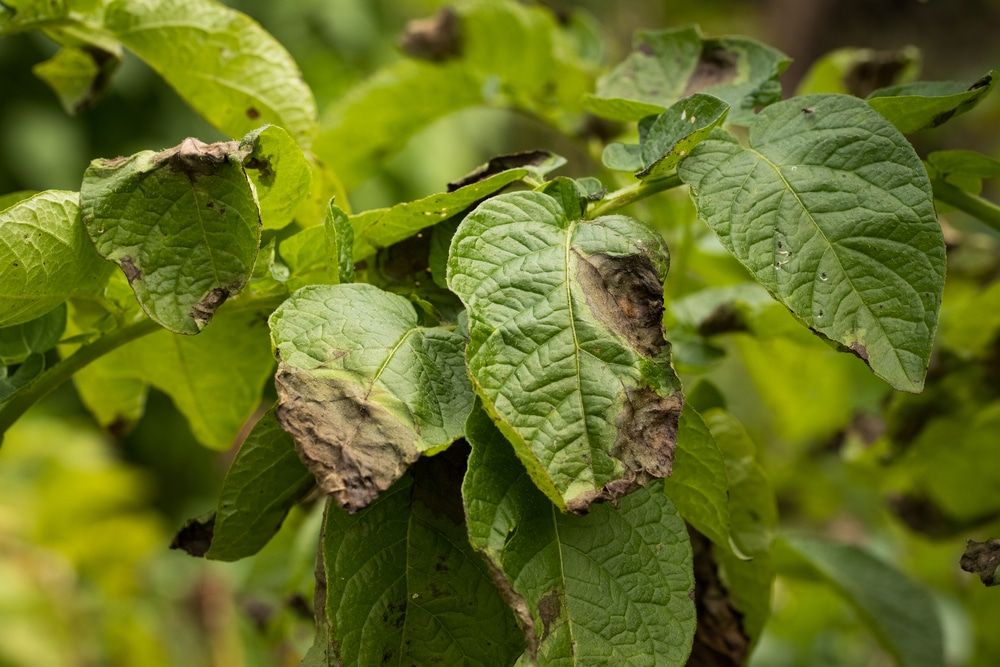
Late blight, caused by Phytophthora infestans, is the most economically significant potato disease in cool, wet climates. This pathogen thrives during extended periods of leaf wetness combined with temperatures between 55 and 75 degrees Fahrenheit.
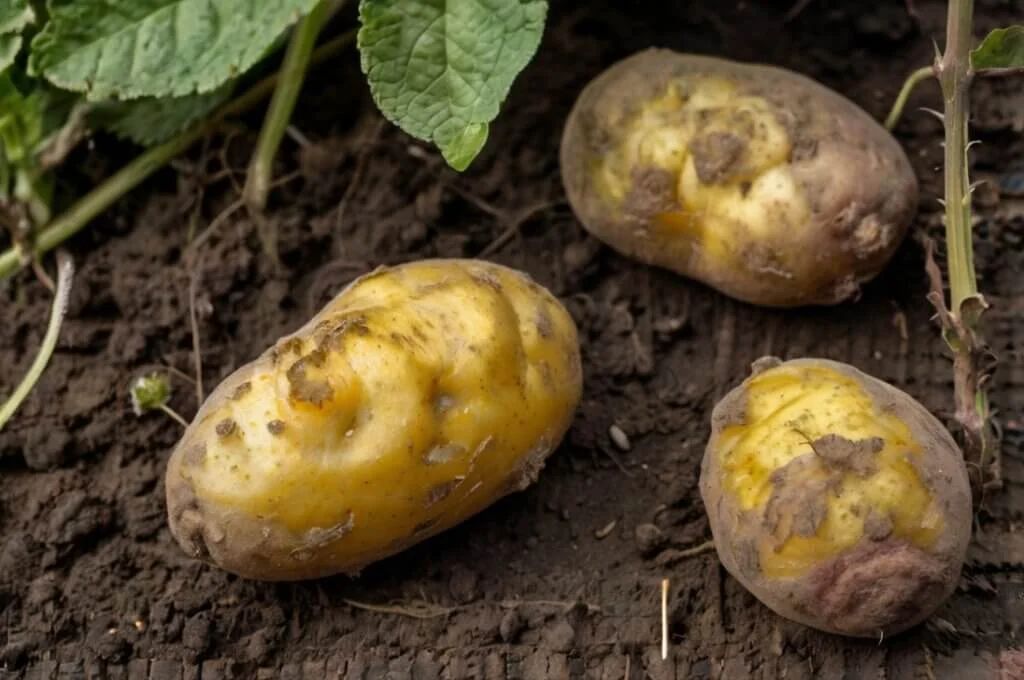
Late blight begins on lower leaves as water-soaked spots that expand rapidly. Affected leaves turn brown and eventually die. The disease moves upward through the canopy, and spores wash down through the soil profile to infect tubers. Infected tubers develop dark, sunken lesions that eventually lead to complete tuber rot in storage.
The danger with late blight is its explosive nature. Under favorable conditions, the disease progresses from isolated spots to total crop destruction in just two to three weeks. This rapid progression means preventative fungicide applications must begin before the disease appears.
Early Blight: Slower but Relentless
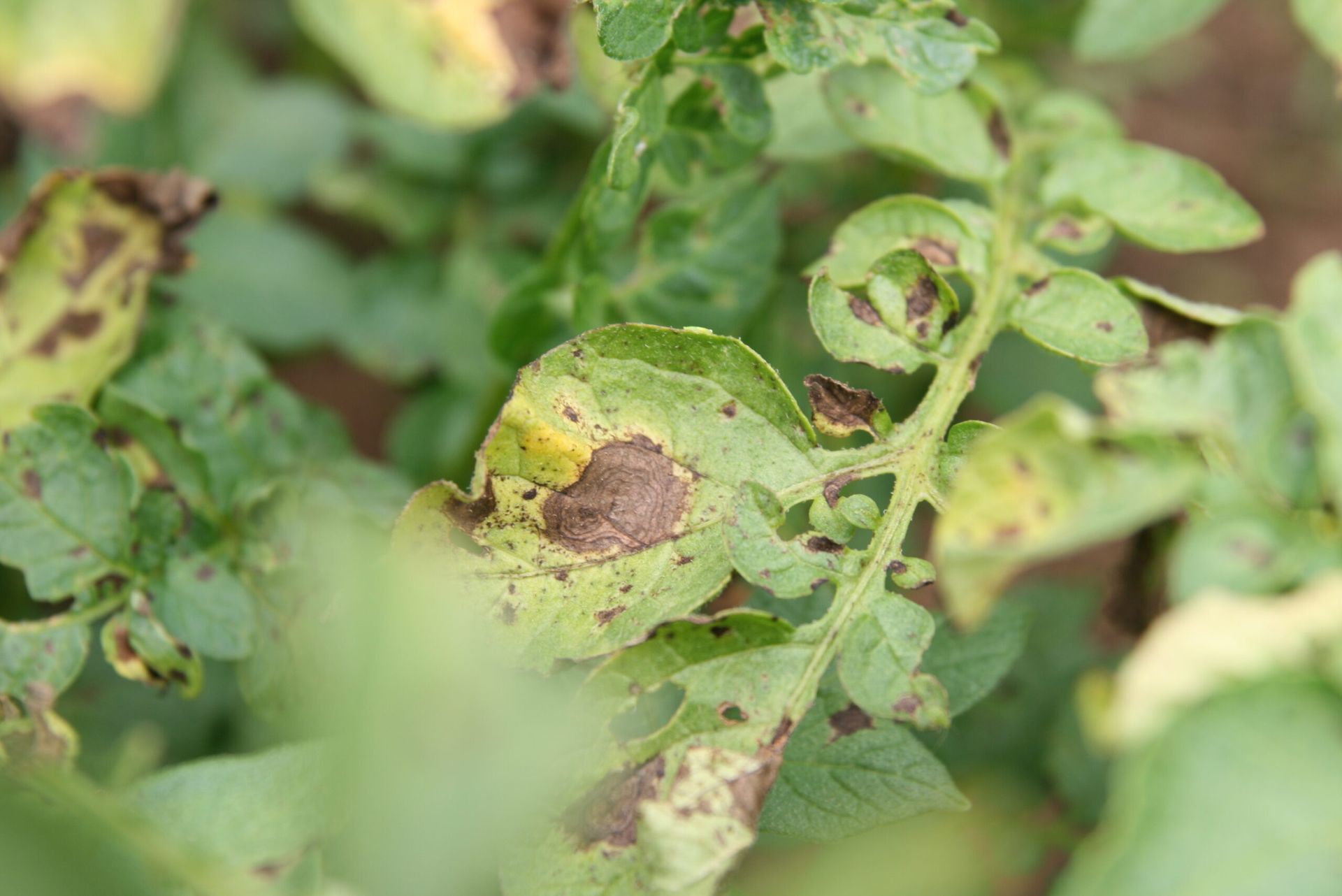
Early blight, caused by Alternaria solani, develops more slowly than late blight but creates serious problems nonetheless. This disease overwinters on plant debris and emerges from soil-borne spores during warm spring weather.
Early blight starts on lower leaves as brown spots with concentric ring patterns (like a target). Unlike late blight, early blight doesn't infect tubers in most potato varieties, but it does reduce yields by destroying foliage prematurely. As the disease defoliates plants, photosynthesis decreases and tuber development slows.
Other Disease Concerns
White mold develops near bloom stage when flowers and stem junctions become infected. Common scab reduces tuber quality without affecting yield. These diseases also require management attention, particularly in susceptible varieties or high-pressure situations.
Prevention: Your Most Powerful Tool
Disease management in organic production begins before planting.
Crop Rotation: The Foundation
Crop rotation is your single most important disease management tactic. Never plant potatoes in the same field twice in four years. Ideally, maintain five or more years between potato plantings in the same location.
Potato diseases overwinter in soil and crop debris. By removing potatoes from a field, you eliminate the primary inoculum source. In the years between potatoes, other crops use different soil niches, different nutrients, and have different pest and disease populations. This rotation breaks disease cycles that would otherwise perpetuate indefinitely.
Choose rotation crops carefully. Avoid other nightshades (tomatoes, peppers, eggplants) that share similar diseases. Instead, rotate to legumes, small grains, or cruciferous crops that provide disease relief while improving soil.
Resistant Varieties Make a Difference
Modern potato breeding has developed varieties with significantly improved disease resistance. Some varieties resist late blight completely. Others tolerate infection without severe tuber damage. Research your options carefully.
Work with your seed supplier and local extension service to identify varieties suited to your region with resistance to diseases prevalent in your area. Planting the right variety is preventative medicine that pays dividends throughout the season.
Destroy All Inoculum Sources
Volunteer potatoes from previous crops harbor disease. Remove them completely through cultivation or manual pulling. Destroy all culled potatoes properly. Never leave disease contaminated potatoes in fields or compost piles where they can produce spores.
Wild nightshade plants, hairy nightshade, and other solanaceous weeds also serve as disease reservoirs. Managing these weeds eliminates pathogen overwintering sites.
Field Sanitation and Equipment Cleaning
Clean all equipment thoroughly between fields. Soil and plant debris on machinery spread disease from infected fields to clean ground. This simple practice prevents unnecessary disease introduction.
After harvest, sanitize equipment carefully. Don't move infected plant material or soil between growing areas.
Building Disease Suppressive Soil: The Biological Foundation
Disease suppressive soil contains diverse beneficial microorganisms that outcompete or actively suppress pathogens.
Organic Matter: The Microbial Foundation
Organic matter supports the soil microorganism communities that suppress disease. Without adequate organic matter, soil lacks the biological capacity to suppress pathogens. This is why organic compost application is so critical in organic systems.
Apply compost at rates of 3 to 5 tons per acre annually. Higher quality compost made from properly composted materials provides more disease suppressive capability than low quality compost or raw organic matter.
Cover Crops and Biofumigants
Cover crops build organic matter, fix nitrogen (if legumes), improve soil structure, and increase beneficial microorganism populations. Incorporate legume cover crops in winter or early spring to decompose into the soil and provide disease suppressive benefits.
Biofumigant crops like mustard or radish release compounds that suppress soil pathogens when incorporated. Research is demonstrating that these cover crops reduce disease pressure in subsequent potato crops.
Soil Testing and Monitoring
Understand your baseline soil health. Test for overall biological activity, beneficial organism populations, and pathogen levels. This information guides your amendments and helps you measure whether your soil management practices are working.
Organic Fungicide Options: Tools When Prevention Isn't Enough
Despite excellent preventative practices, disease sometimes develops anyway. Organic certified fungicides provide essential management tools.
Copper Fungicides: Effective but Limited
Copper has been the primary organic fungicide for late blight management for decades. Copper works by denaturating fungal proteins, preventing germination and fungal growth. Applied preventatively before infection, copper provides moderate disease suppression.
Copper must be applied before infection occurs. Once disease establishes, copper has limited effect. Complete leaf coverage is essential, including undersides where pathogens typically sporulate. Multiple applications throughout the season are necessary, typically 6 to 12 applications depending on disease pressure.
Environmental concerns exist about copper accumulation in soil. Copper doesn't degrade, and repeated applications over many years can reach toxic soil levels. The European Union restricts copper use to 6 kilograms per hectare annually, recognizing these long-term environmental risks.
Sulfur Products: Secondary Option
Sulfur fungicides provide limited late blight control but moderate early blight suppression. Sulfur works best in dry conditions and loses effectiveness in wet weather when disease pressure is highest.
Sulfur can cause phytotoxicity (plant damage) at high temperatures, particularly above 85 degrees Fahrenheit, so application timing requires careful attention to weather conditions.
Biopesticides: Beneficial Organisms Working For You
Biological fungicides containing Trichoderma harzianum, Bacillus mycoides, and other beneficial fungi and bacteria suppress soil-borne and foliar diseases. These products work by competing with pathogens for nutrients, producing enzymes that degrade pathogen cell walls, or triggering plant immunity.
Biopesticides typically take several days to provide visible disease suppression, making them more preventative than curative. They work best when applied at first sign of disease, not in response to established infections.
Oil-Based Products
Paraffinic oils suppress some diseases and viruses. Effectiveness is limited for late blight and early blight, but oils provide supplementary disease management in integrated programs.
Water and Field Management: Creating Conditions for Health
Disease management isn't just about what you apply. How you manage your field environment determines whether disease can establish and spread.
Leaf Wetness Prevention
Both late blight and early blight require leaf wetness for infection. Late blight needs 8 to 14 hours of wetness at favorable temperatures. Early blight needs at least 6 hours. By minimizing leaf wetness, you prevent or reduce disease development.
Drip irrigation eliminates overhead watering that creates prolonged leaf wetness. Where overhead irrigation is necessary, apply early morning to allow foliage to dry quickly through the day. Never irrigate late afternoon or evening when leaves will remain wet overnight.
Field Design for Air Movement
Plant in wide rows oriented with prevailing winds to promote air movement through the canopy. Good ventilation dries foliage quickly after rain, reducing the leaf-wetness periods that favor disease development.
Maintain adequate spacing between rows and proper hilling height to ensure air penetrates the canopy. Avoid dense, low plantings that trap moisture.
Drainage
Poor drainage creates standing water and saturated soil conditions that favor disease. Improve field drainage through ditching, tile drainage, or land planing to remove water quickly after rain.
Monitoring Your Crop: Early Detection Changes Everything
Weekly field scouting beginning at emergence and continuing through senescence catches disease early when management options are most effective.
Scout during dry conditions when you can distinguish disease symptoms clearly. Look at the lowest leaves first, as early blight and late blight both typically appear there first. Check plants throughout the field, not just isolated areas, to understand disease distribution patterns.
When you discover disease symptoms, count the affected leaves. Early blight management begins when 5 percent of leaves show infection. Late blight requires immediate intervention to prevent spread.
Document your findings. Note the date, disease type, location in the field, and weather conditions when you discovered the disease. These records reveal patterns that inform future management decisions.
For those managing multiple fields or wanting precise tracking of disease development, AI-powered monitoring tools like Plantlyze dot com help you photograph affected plants, document symptoms over time, and receive identification assistance when you're uncertain about disease diagnosis.
Integrated Organic Management: Combining Multiple Tactics
Successful organic disease management combines prevention, monitoring, cultural practices, and fungicide applications in a coordinated system.
Start with resistant varieties and good crop rotation. Establish excellent soil health through organic matter and cover crops. Design your field for good air movement and drainage. Scout religiously and apply fungicides preventatively at first sign of favorable disease conditions.
Make decisions based on weather forecasts and disease models. Late blight decision support systems like BLITECAST predict favorable infection periods. Use these predictions to time applications rather than applying on a fixed schedule.
This comprehensive, integrated approach costs less than reactive applications to established disease and produces far better results. Prevention is always superior to cure in organic systems.
Harvest and Post-Harvest Organic Management
Allow foliage to die back completely before harvest. Living foliage keeps soil-borne pathogens viable. Once foliage is dead, wait two weeks before harvest to ensure pathogens are no longer viable and diseased tubers have decomposed.
Harvest during dry conditions. Wet soil increases disease spread. Handle tubers carefully to avoid creating wounds. Sort diseased tubers immediately, destroying them separately from healthy seed stock.
Store potatoes in cool, dry conditions with good air movement. Storage conditions don't eliminate disease, so proper tuber selection at harvest is critical.
The Path Forward: Commitment to Organic Principles and Disease Management
Organic potato disease control requires commitment, knowledge, and consistent implementation of multiple tactics. It's not as simple as applying a single synthetic fungicide when problems appear, but it's absolutely achievable.
Start now by building your soil, rotating your crops, selecting resistant varieties, and establishing a rigorous scouting program. These foundational practices prevent most disease problems before they start. When disease does appear, you'll have the tools to manage it effectively within your organic system.
Your organic potatoes represent a premium market position only if they're disease-free. The investment in proper disease management protects that value and maintains consumer confidence in your operation.
References
1. UC Davis Integrated Pest Management Program
https://ipm.ucanr.edu/
2. University of Minnesota Extension
https://www.extension.umn.edu/
3. eOrganic (University of Vermont & Oregon State University)
https://eorganic.org/
4. NC State Extension
https://www.ncsu.edu/
5. University of Wisconsin College of Agricultural and Life Sciences
https://www.wisc.edu/
6. Maine Organic Farmers and Gardeners Association
https://www.mofga.org/
7. ATTRA (National Sustainable Agriculture Information Service)
https://attra.ncat.org/
8. Purdue Extension
https://www.purdue.edu/