Introduction: When Your Potatoes Stop Growing Right
Until mid-July your potato plants were looking fabulous. The crops were lush and green, the plants were maturing on-schedule, and you anticipated a bountiful harvest. Then something changed. The leaves have yellowed, growth has slowed to a crawl and no matter how hard you try, the tubers are distinctly underwhelming.
You've discovered what every potato grower eventually faces: nutrient deficiency. But unlike some crops, potatoes demand substantial nutrient supplies, and when they don't get what they need, problems develop quickly. The challenge is identifying exactly which nutrient is missing from among the 14 essential nutrients potatoes require.
This guide walks you through recognizing nutrient deficiency symptoms, testing for specific problems, and implementing corrective solutions that get your crop back on track.
Why Potatoes Are Nutrient Demanding: Understanding the Challenge
The roots of potatoes are superficial down to 6 inches (24 cm) deep at most. This restricts the access of their root systems to nutrients at depth.
Potatoes are also relatively more nutrient demanding than most other crops. A potato crop will typically pull out 15 to 20 tons/acre and take out a significant amount of nitrogen, phosphorus, potassium and micronutrients with that production. These nutrients have to be supplied from the soil’s reserves or by an application of fertilizer.
To further complicate matters, potatoes are typically grown on sandy, well-drained soils that are naturally low in organic matter and prone to nutrient leaching. Nitrate nitrogen especially leaches rapidly through sandy soils, leaving plants hungry for this critical nutrient.
The result is that many potato soils cannot provide adequate nutrition naturally. Proper fertilization and soil management are essential for success.
Macronutrients: The Foundation of Potato Nutrition
Macronutrients are needed in large quantities and directly impact growth and yield.
Nitrogen: The Growth Engine
Nitrogen is essential for protein synthesis and overall vegetative growth. Adequate nitrogen support early in the season drives leaf development and establishes the canopy that will support tuber development.
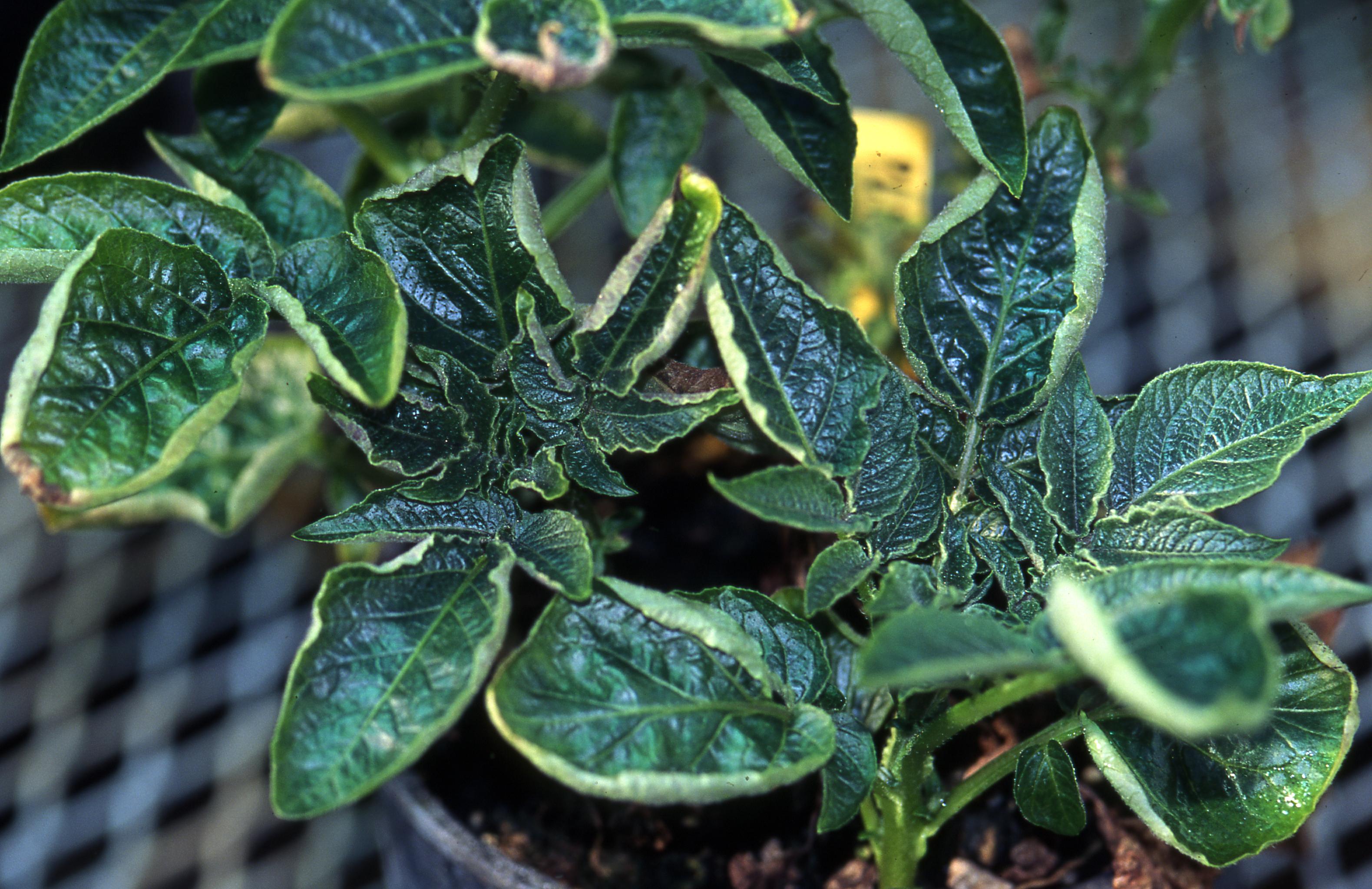
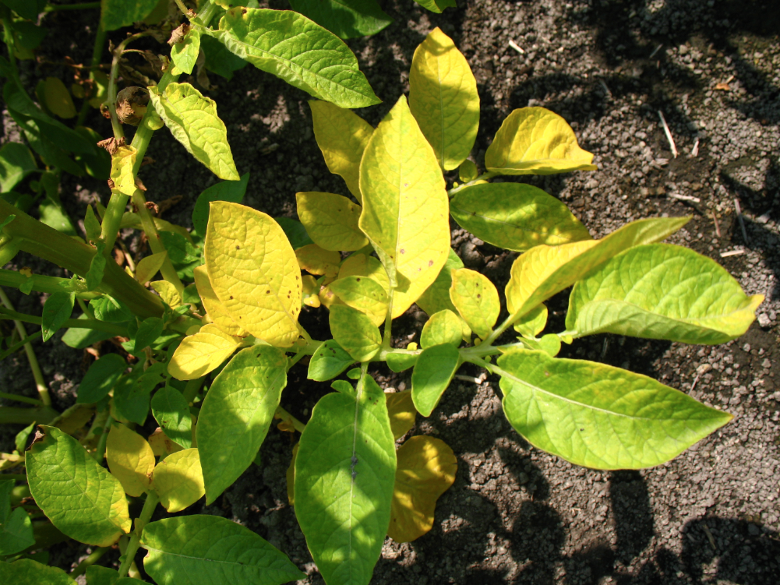
Nitrogen deficiency appears as pale green to yellowish foliage, particularly on lower, older leaves. This yellowing moves upward as the deficiency worsens. Nitrogen deficient plants are stunted with weak growth and small tubers.
Interestingly, excess nitrogen creates different problems. Too much nitrogen delays tuber maturity, produces excessive vine growth, reduces tuber specific gravity (affecting processing quality), and increases disease susceptibility.
Phosphorus: The Root and Development Nutrient
Phosphorus is vital for energy transfer, cell division, and reproductive development. Early season phosphorus availability is critical for root establishment and tuber initiation.
Phosphorus deficiency causes slow or stunted root growth and appears as purple or reddish discoloration on older leaves. Severely deficient plants show weak root systems, stunted shoots, and poor tuber development.
Potassium: The Quality and Disease Fighter
Potassium - regulates sugar translocation, activates enzymes and increases resistance to disease. Potatoes need more potassium than nitrogen, so this nutrient is crucial.
Potassium deficiency presents as leaf-edge burn or browning, especially on older leaves, leading to premature death of the plant. Small stems and the tubers are weak in the short plants. Processing quality suffers dramatically.
Secondary Nutrients: Don't Overlook These
Micronutrients are required in smaller amounts than macronutrients, although if lacking, the plant will fall short of realizing its potential.
Calcium: Structural Support
Cell wall formation and firmness (strength) require calcium. Without adequate calcium, root development and cell wall strength are compromised, while disease susceptibility increases. Symptoms of the disease are, tip dieback and early leaf senecence.
Magnesium: The Photosynthesis Heart
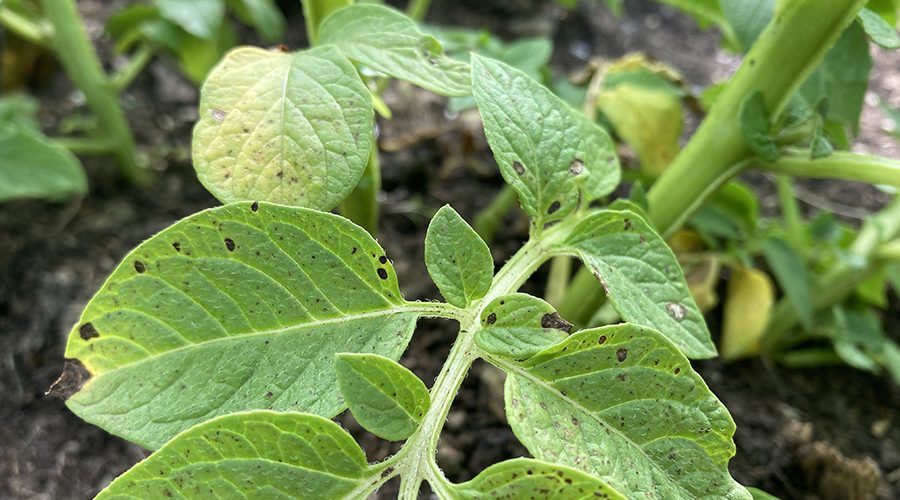
Magnesium is central to chlorophyll molecules, making it essential for photosynthesis and energy production. Magnesium deficiency appears as interveinal yellowing, particularly on older leaves. Chlorosis starts between the veins while veins remain green. Yield losses can reach 15 percent in severe cases.
Sulfur: The Disease Fighter
Sulfur is essential for amino acid synthesis and acts defensively against scab diseases. Sulfur deficiency appears as pale green to yellow foliage, particularly on younger leaves (unlike nitrogen deficiency which affects older leaves first). Plant canopy development is limited.
Micronutrients: Small Quantities, Huge Impacts
Micronutrients are needed in tiny quantity but deficiencies cause serious problems.
Iron: Interveinal Yellowing
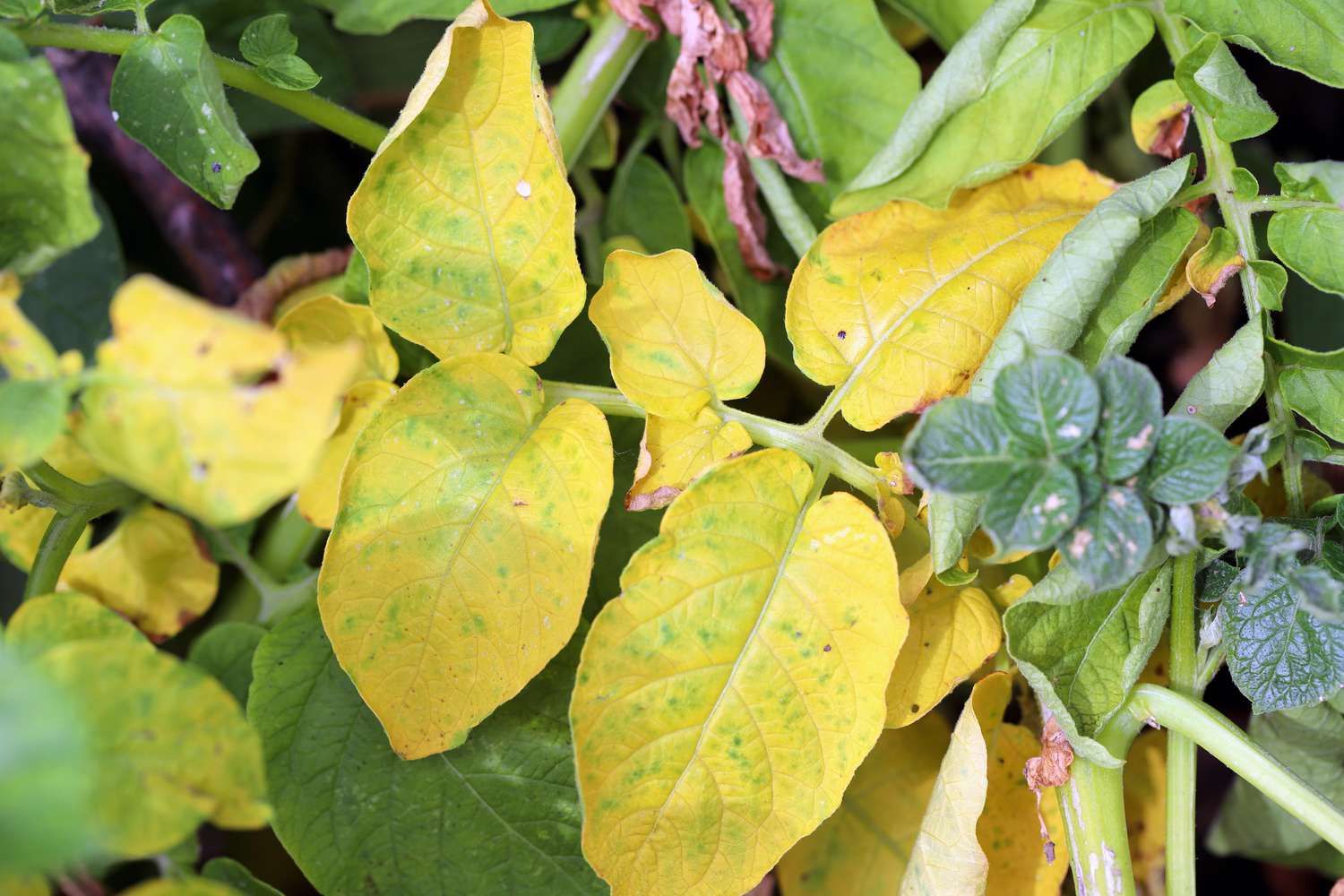
Iron deficiency typically manifests as interveinal chlorosis on youngest leaves, where tissue between veins turns yellow while veins remain green. Iron is relatively immobile in plants, so deficiency symptoms appear on new growth first.
Boron: Cell Formation and Sugar Transport
Boron deficiency impacts cell division, reproduction, and sugar translocation. Symptoms include stunted growth, browning, and deformed fruit development. Early identification and correction are essential for tuber quality.
Zinc and Manganese: Young Leaf Impacts
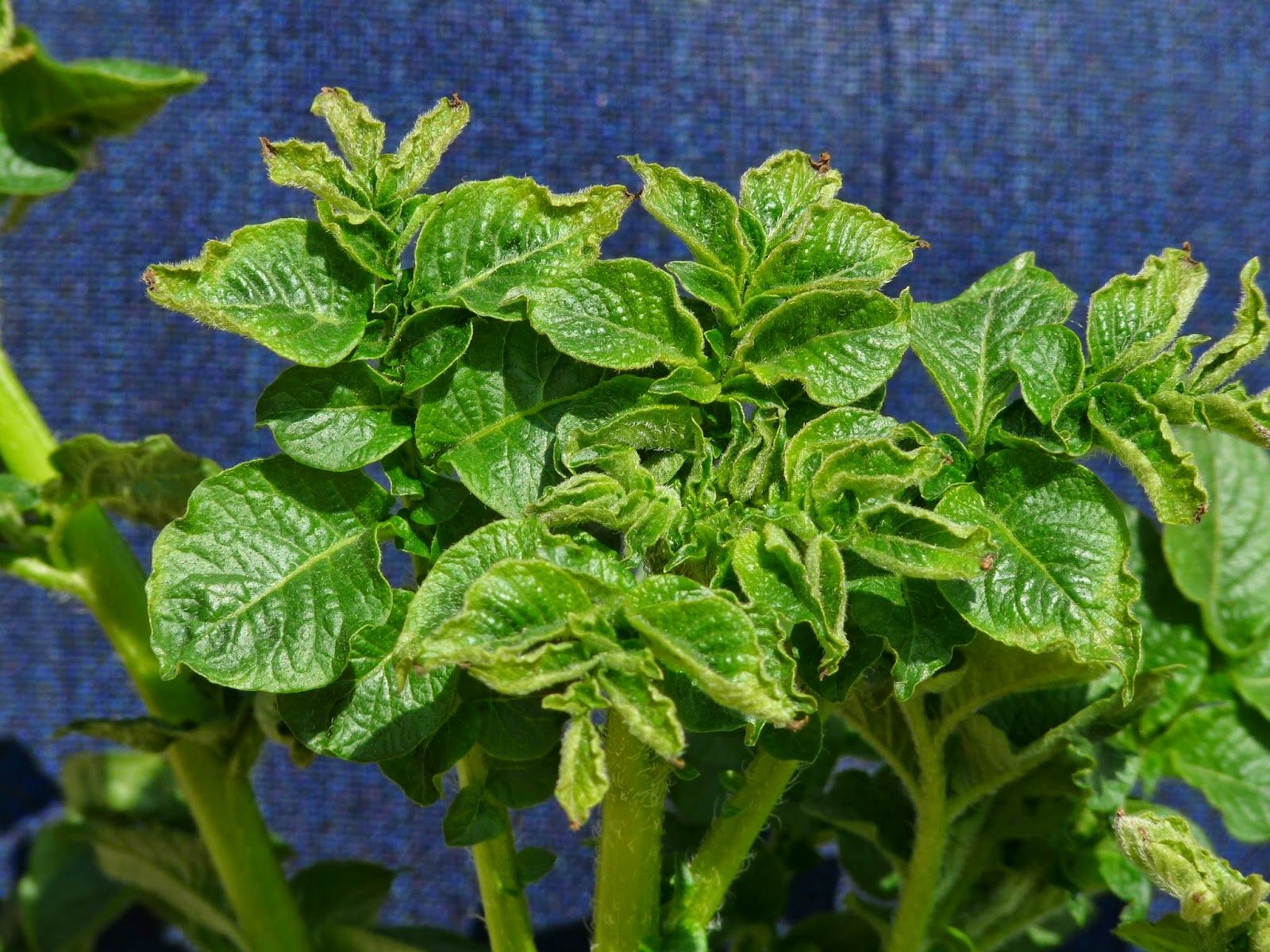
Zinc deficiency affects young tissues first, causing bleached or yellowing areas on new leaves. Manganese deficiency also produces interveinal yellowing on younger leaves but typically differs from zinc based on symptom pattern and soil conditions.
Copper and Molybdenum
Copper is essential for enzyme function and disease suppression. Deficiency causes weak growth and increased disease susceptibility. Molybdenum is needed in extremely small quantities but is essential for nitrogen metabolism. Deficiency is rare but causes serious growth problems when it occurs.
Identifying Deficiencies: Reading Your Plants
Plant symptoms provide the first clues to nutrient problems but interpreting them requires understanding where symptoms appear.
Mobile Nutrients Versus Immobile Nutrients
Mobile macronutrients like nitrogen, phosphorus, and potassium move within the plant from older to younger tissues. When these nutrients are deficient, symptoms appear first on lower, older leaves, progressing upward as deficiency worsens.
Immobile micronutrients like iron, zinc, boron, and manganese don't move within plants. Deficiency symptoms appear first on youngest, newest leaves at the top of the plant.
This distinction is essential for accurate diagnosis. If yellowing appears on older leaves, suspect nitrogen, phosphorus, potassium, or magnesium. If yellowing appears on new growth, suspect iron, zinc, boron, or manganese.
The Challenge of Similar Symptoms
Many nutrient deficiencies produce similar symptoms, making diagnosis difficult without testing. For example, nitrogen, magnesium, and sulfur deficiencies all cause foliage yellowing, but in different patterns. Iron, boron, manganese, and zinc deficiencies all produce interveinal yellowing but at different plant locations.
For those managing multiple fields or large plantings, AI-powered plant diagnosis tools like Plantlyze dot com can analyze leaf photos and suggest probable nutrient deficiencies, helping narrow the possibilities before investing in laboratory testing.
Soil Testing: The Foundation of Prevention
Soil testing before planting provides the baseline for a comprehensive nutrient management program.
Soil pH: The Master Nutrient Control
Soil pH is a key determinant of nutrient availability. Potatoes do best in a pH range of 5.5 to 7.0. At this distance, other than very mobile elements such as nitrates and boron, there are nutrients that plant take up at a high rate.
At a pH lower than 5.0, aluminum and heavy metals are released in excessive amounts to become toxic. Above a pH of 7.5, phosphorus and most micronutrients become tied up in the soil, even though they may be present in high levels.
What to Test
Test for nitrogen (though this is often not reliable as nitrate nitrogen changes rapidly), phosphorus, potassium, calcium, magnesium, sulfur, and micronutrients including boron, copper, iron, manganese, molybdenum, and zinc. Test pH and organic matter content as well.
Interpreting Results and Acting
Use soil test results to determine baseline nutrient levels and make pre-plant fertilizer recommendations. Base your fertilizer program on these recommendations rather than guessing. Over-application of some nutrients (particularly potassium) builds up in soil, eventually creating imbalances.
Plant Tissue Testing: Real-Time Monitoring
Soil testing predicts nutrient availability, but plant tissue testing reveals what plants are actually taking up during the growing season.
When and What to Sample
Sample potato leaves at tuber initiation and tuber bulking stages, typically 4 to 6 weeks apart. Sample the 4th fully developed leaf from the top of the plant. This sample represents current plant nutrient status better than other plant parts.
Hidden Hunger Detection
Plants may not be showing visible signs of insufficient nutrients before symptoms start appearing (known as hidden hunger). Tissue analysis identifies these early deficiencies before they reduce yields, and corrective measures can be taken while plants are still able to recover from the stress.
The key to knowing: Soil + Tissue = Total Nutrition. Soil testing tells you what the soil has to offer, and tissue testing tells you if your plants are really using it.
Correcting Deficiencies: Treatment Solutions
Once deficiency is identified, several options exist for correction.
Fertilizer Applications
Broadcast dry fertilizers work for phosphorus and potassium applications before planting. For nitrogen, which is mobile and prone to leaching, split applications during the season are superior to pre-plant applications. Apply nitrogen in 2 to 3 applications from emergence through early bulking stages.
Micronutrient correction typically requires 5 to 10 pounds per acre of various nutrients, applied based on specific deficiency and soil test levels.
Foliar Feeding: Quick Correction
Foliar applications deliver nutrients directly to leaf surfaces, providing rapid nutrient availability when plants are deficient. Foliar applications bypass soil problems and allow leaves to absorb nutrients directly. These applications work well for correcting mid-season deficiencies discovered through symptoms or tissue testing.
Fertigation: Precision Application
For irrigated potatoes, applying fertilizers through irrigation water (fertigation) allows precise nutrient delivery in split applications timed to crop growth stages. This system is particularly effective for nitrogen and potassium management.
Prevention: Building Soil Health Long Term
The best nutrient deficiency management is prevention through soil building.
Organic Matter: The Nutrient Bank
Soil organic matter holds nutrients, improves water holding capacity, and supports the microbial communities that help plants access nutrients. Regular applications of compost or aged manure build organic matter and improve soil health over time.
Rotation and Cover Crops
Rotating potatoes with legumes fixes atmospheric nitrogen into the soil, reducing subsequent potato nitrogen needs. Cover crops add organic matter and improve soil structure.
Monitoring and Adjustment
Keep records of soil tests, tissue tests, yield results, and nutrient applications. Over time, patterns emerge that show which nutrients your fields need, allowing you to fine-tune your nutrient management program.
Moving Forward: Your Nutrient Management Plan
Potato nutrient deficiency Overview Management of potato nutrient deficiencies begins before planting by soil testing and considering fertility planning. In season, tissue testing and plant scouting indicate a problem emerging. Remedial applications resolve specific needs easily. On the other hand, after harvest the records tell you what to do next season.
In comparison, these systems remove the guess work from this process by turning nutrient management not from reactive crisis management but into proactive optimization. The payoff is healthier plants, more yield and better potatoes.
References
1. University of Minnesota Extension
https://www.extension.umn.edu/
2. Cornell University College of Agriculture and Life Sciences
https://www.cornell.edu/
3. University of Florida IFAS Extension
https://sfyl.ifas.ufl.edu/
4. Oklahoma State University Extension
https://www.okstate.edu/
5. Michigan State University Extension
https://www.canr.msu.edu/
6. University of Idaho Extension Services
https://www.uidaho.edu/extension
7. Purdue University Extension
https://www.purdue.edu/
8. Colorado State University
https://www.colostate.edu/