Introduction: The Storage Disease That Sneaks Up on You
You had a fantastic harvest. The potatoes looked healthy coming out of the ground, and you were excited about your yield. You stored them carefully, managing temperature and humidity as you've learned. Then weeks or months later, you dig through storage to find dark, sunken lesions on tubers you were certain were clean at harvest.
You have encountered potato gangrene, one of the more insidious potato storage diseases. Unlike some storage problems, such as soft rot or wet breakdown, which form in storage and become visible after the crop is stored for a few weeks, however, gangrene frequently develops from an infection that was already present at the time of storage. An understanding of gangrene is necessary for any potato grower who wishes to protect the crop from time of harvesting till reaching storage.
This guide walks you through identifying gangrene, preventing it before it starts, and implementing management strategies that work.
What Is Potato Gangrene: Understanding the Disease
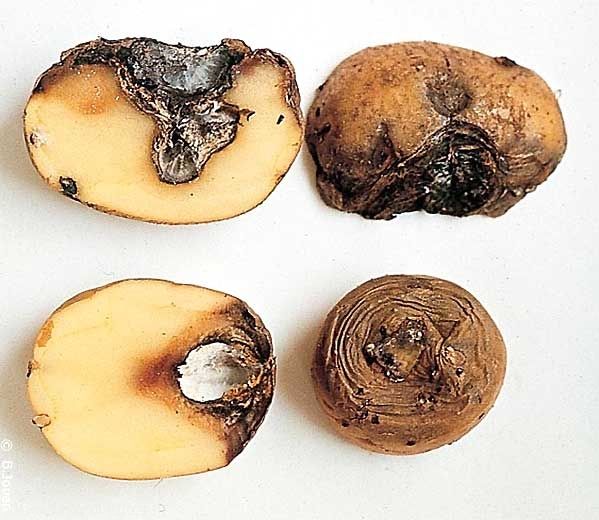
Potato gangrene is caused by the fungal pathogen Boeremia foveata (previously known as Phoma foveata) and related Phoma species.
Gangrene is a slow-growing fungal disease that develops primarily during storage, particularly in cool storage conditions. The disease favors cool climates and cool storage temperatures. This creates a frustrating situation: the same cool temperatures that preserve potatoes and prevent other storage diseases actually favor gangrene development.
The pathogen infects potatoes primarily through wounds and injuries, which is why harvest and handling practices become critically important. Once infection establishes, the fungus grows slowly but persistently, creating increasingly severe rot symptoms that can render entire tubers unusable.
Identifying Gangrene: Recognizing the Symptoms
Gangrene presents variable symptoms that can make diagnosis challenging, but learning the characteristic appearance helps with early detection.
External Symptoms
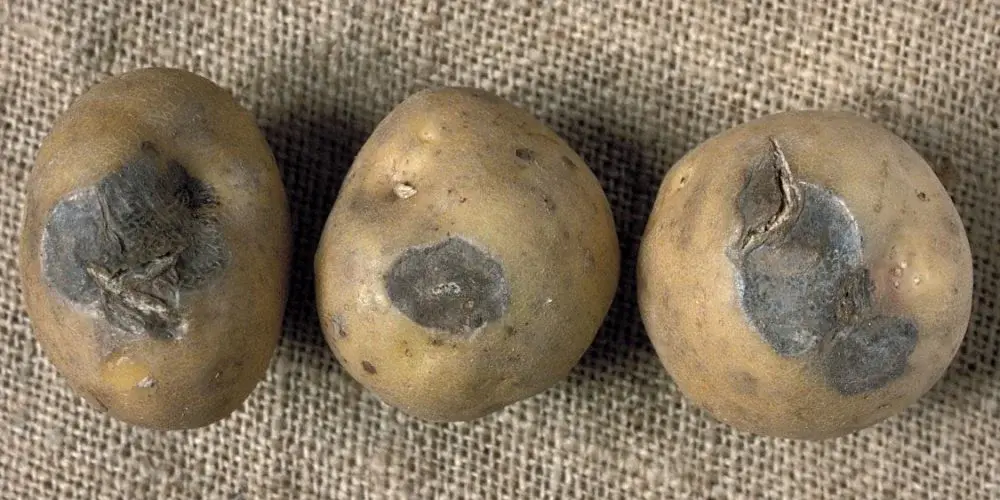
Initial symptoms of gangrene are seen as small, dark, round pits on the tuber surface. These''[1] depression/qimgs may take a grey to brown appearance, with some "wrinkling" of the lesion borders. These lesions grow and increase in size with disease progression, often overlapping to form the unique 'thumb print' pattern for which necrosis is aptly named.
A distinguishing feature is the wavey or wrinkled margin of the lesions. This differs from other storage diseases and helps separate gangrene from similar conditions like dry rot. You may also notice white pustules (small structures containing spores) on the tuber surface or within lesions.
Internal Symptoms
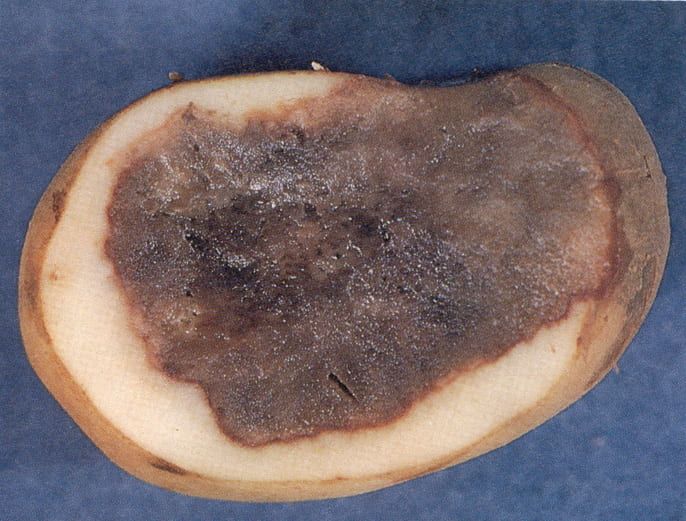
Cutting into a gangrene infected tuber reveals internal cavity development lined with fluffy white mycelium. The internal rot is typically dark purple, grey, or brown in color with a well-defined edge between diseased and healthy tissue.
The challenge is that external lesions can be deceptively small while hiding extensive internal decay. A tuber with a small surface depression may have rot extending deep into the tuber's center.
Symptom Variability: Why Diagnosis Is Tricky
Gangrene symptoms vary considerably depending on factors like potato variety, infection timing, and storage conditions. This variability makes visual diagnosis difficult, particularly when trying to distinguish gangrene from dry rot, which also creates internal cavities.
For accurate diagnosis of suspicious lesions, particularly early in disease development, laboratory testing using PCR (polymerase chain reaction) methods can definitively identify the pathogen.
Understanding Gangrene Development: How Infection Happens
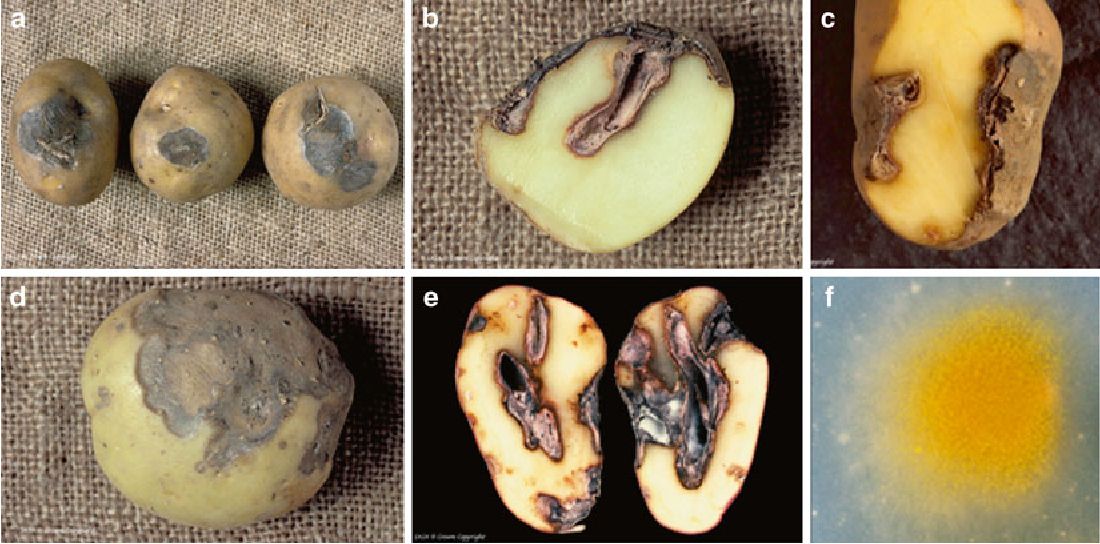
Gangrene infection begins primarily through wounding at harvest and post-harvest handling. The fungal spores are small structures called pycnidiospores that survive dormant in store dust and debris, contaminating seed tubers.
Once stored potatoes are infected, disease development is slow but inevitable under cool storage conditions. The pathogen doesn't require living plant tissue to spread. It survives in store dust, on storage containers, and on infected tubers.
A critical aspect of gangrene is that some potatoes may carry latent infections present at harvest but not showing visible symptoms until weeks into storage. These infections spread slowly during storage, eventually becoming visible as external lesions.
Low temperature storage, typically cooler than 5 degrees Celsius, actually favors gangrene development while discouraging other pathogens. This creates a management dilemma where the conditions ideal for tuber longevity promote gangrene.
Prevention: Your Most Powerful Defense
Prevention is infinitely more effective than treatment once gangrene establishes. Several approaches working together create a comprehensive prevention strategy.
Minimizing Mechanical Damage: The Critical First Step
The most important prevention measure is minimizing wounding at harvest. Most gangrene infection occurs through wounds, making damage prevention essential.
This involves taking care of harvesting equipment, verifying settings are not too aggressive, and training harvest crews in careful handling of potatoes. Proper bed preparation, including removal of stones and clods before harvest, can help to avoid rock damage. Prevention of bruising which can provide an entry for infection into potatoes is also possible during grading and storage loading by careful handling.
There are differences in susceptibility to gangrene among varieties, and some withstand mechanical injury better than others. Study the specific characteristics and susceptibility profile in your variety.
Crop Rotation and Field Management
Gangrene pathogen can survive in crop residue, making crop rotation important. Rotate potatoes to different fields, particularly fields with no history of storage disease problems.
Avoid planting in waterlogged or poorly draining fields. Well-drained fields with good soil health support vigorous plant growth that better resists disease.
Sanitation of Seed Tubers
Use only certified, disease-free seed potatoes. Inspect seed carefully for any signs of decay before planting. Remove any suspicious tubers immediately.
Pre-Harvest Management: Setting Up for Success
What happens in the field influences storage disease risk.
Spacing and Ventilation
Proper plant spacing and row orientation allows air movement through the canopy, promoting leaf drying and reducing moisture related stress. Adequate spacing also reduces the likelihood of mechanical damage if harvester contact with plants causes injury.
Water and Nutrition Management
Maintaining adequate but not excessive water and nutrients supports vigorous plant growth that tolerates stress better. Avoid creating stress conditions that weaken plants and increase disease susceptibility.
Harvest Timing
Early harvesting reduces the time potatoes spend in wet field soil where gangrene infection risk is higher. Waiting until soil conditions are good (not wet and muddy) prevents excessive soil moisture contamination on tubers.
The Critical Post-Harvest Period: Harvest Through Early Storage
The period from harvest through the early storage phase is absolutely critical for gangrene management.
Skin Set and Wound Healing: The Curing Phase
Tubers must be cured soon after harvest so that wounds can callus and tuber skin toughens. This duration needs to be met with warmth and humidity, usually 13-16 ºC for 10–14 days.
Keep relative humidity high (90 to 95 percent) and provide sufficient air flow while curing to allow for the release of natural moisture without drying tubers too much. This allows minor wounds sustained at harvest to heal before storage.
Drying and Cooling
After curing, gradually cool potatoes to final storage temperature. Never cool potatoes rapidly, as this creates condensation on the tuber surface that increases disease risk.
Adequate ventilation during cooling removes surface moisture, preventing the wet conditions that favor gangrene. A strong air flow dries tuber surfaces without over-drying the tubers.
Careful Handling Throughout
Every step from harvest through loading into storage affects gangrene risk. Minimize re-handling, avoid drops or impacts, and use gentle handling practices throughout the entire process.
Storage Management: Temperature, Humidity, and Ventilation
Three factors control storage disease development: temperature, humidity, and ventilation.
Temperature Control
Store potatoes at the coolest temperature appropriate for their intended use. Seed potatoes can be stored at 3 to 7 degrees Celsius, while table potatoes typically require 6 to 12 degrees Celsius.
Recognize that cool storage slows gangrene development but doesn't prevent it. Low temperature is one tool in your management system, not a complete solution.
Humidity and Ventilation
Maintain humidity between 85 and 95 percent to prevent tuber drying while avoiding excessive moisture. Continuous ventilation prevents condensation formation and allows spore-contaminated store air to cycle out.
Store Sanitation
Clean and sanitize storage facilities thoroughly before loading potatoes. Remove all debris, soil, and organic matter. This eliminates populations of dormant spores that would contaminate fresh potatoes.
Monitoring and Removal
Inspect stored potatoes regularly. If you discover gangrene infected tubers, isolate and remove them immediately. A single rotting tuber spreads disease to nearby tubers through spore contamination. Early removal prevents spreading.
Fungicide Treatment: When Prevention Needs Support
If gangrene risk is high or preventative measures alone seem insufficient, fungicide treatments provide additional protection.
Treatment Timing
Fungicide applications should occur within 7 to 10 days of harvest while spore populations are low. Post-harvest treatments at this timing provide the most effective disease reduction.
Available Products
Imazalil and thiabendazole are the primary fungicides approved for potato gangrene treatment. Treatment protocols vary by product and region, so follow local recommendations carefully.
Important restriction: fungicide-treated potatoes destined for human consumption or animal feed have strict regulations. Know your local regulations before treating.
Integrated Approach
Fungicide treatment works best when combined with excellent cultural control measures. Think of fungicide as supplementing strong prevention practices, not replacing them.
Early Detection: Catching Gangrene Before It Spreads
The earlier a problem is detected the better it will prevent issues such as small ones becoming catastrophic.
The primary mode of detection still is by visual examination. A weekly search of stored potatoes will detect developing infections before they become widespread. Pay particular attention to the typical ("thumb print") lesions and undulating margins favored by gangrene.
For uncertain cases, diagnostic PCR can identify the organism. For home or small plot growers, tools like Plantlyze com can be used to take a photo of affected tubers and compare symptoms with images of known diseases, narrowing the possibilities before you invest in laboratory testing.
Managing Infected Tubers
When you find a gangrene infected potatoes in storage quick action is vital to avoid further contamination.
Set affected tubers apart from healthy seed. Bring them out of hiding or put them in a different section. It blocks the transmission of spores to neighbouring potatoes.
Vent or otherwise move air such as from a fan in infested storage areas to eliminate spore laden atmosphere. Keep a close eye on neighboring tubers for the first signs of infection.
Assess if you have still other potatoes that can be used for your purpose. If disease spread is limited and minimal, most of the crop can be saved by better storage management.
Document what you discover. Report the percent of tubers infected, storage environment at time of observation, and any control measure utilized. This information will shape the strategy going into next season.
Moving Forward: Your Gangrene Management Plan
Potato gangrene is preventable through careful attention to multiple management factors. No single practice controls gangrene completely, but an integrated approach combining variety selection, mechanical damage prevention, careful handling, proper curing, and storage management creates strong protection.
Start now by committing to careful harvest practices and thorough post-harvest handling. Invest in proper storage facility sanitation. Monitor stored potatoes regularly. When you discover problems, respond immediately with isolation and increased management intensity.
The combination of these practices, implemented consistently season after season, transforms gangrene from a serious threat into a manageable challenge.
References
1. AHDB Horticulture (Agriculture and Horticulture Development Board)
https://potatoes.ahdb.org.uk/
2. Farm Advisory Service Scotland
https://www.fas.scot/
3. University of Wisconsin Extension
https://www.wisc.edu/
4. Michigan State University Extension
https://www.canr.msu.edu/
5. SRUC (Scotland's Rural College)
https://www.sruc.ac.uk/
6. RHS (Royal Horticultural Society)
https://www.rhs.org.uk/
7. Clemson University Cooperative Extension
https://www.clemson.edu/
8. University of Idaho Extension Services
https://www.uidaho.edu/extension