You are looking over your potato plants. You see something wrong in the leaves. Your heart sinks. Is it blight? For centuries, late blight has devastated harvests of potatoes and was responsible for the Irish Potato Famine.[1] But here is what most people do not realize: we can prevent blight if we know howand take actionin time. It is much easier to prevent than try to "treat" after the disease has appeared. This guide reveals exactly how to stop early and late blight before they start. Monitor plants with AI diagnostics to catch early symptoms before they spread and destroy your entire crop.
Understanding the Enemy: Early vs. Late Blight
Potato blight comes in two forms with different characteristics, prevention needs, and severity levels. Understanding which disease you're dealing with guides your prevention strategy. Each disease prefers different conditions and spreads through different mechanisms. Early recognition separates manageable problems from devastating losses.
What is Early Blight
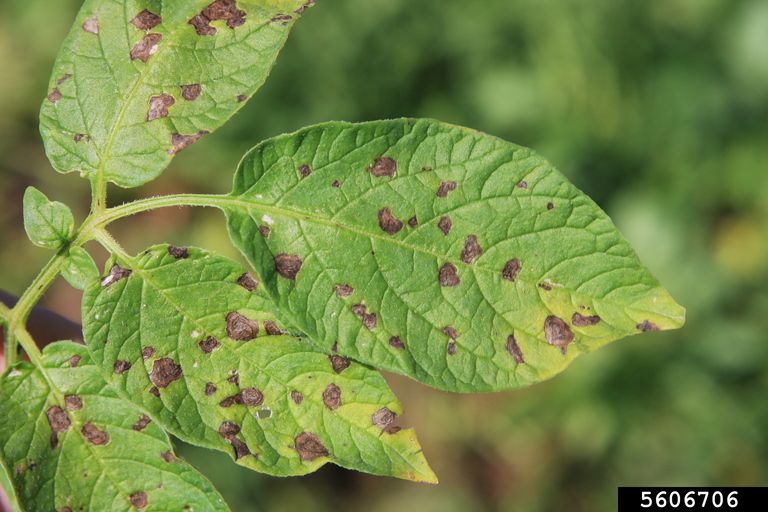
Early blight is a fungal disease, caused by Alternaria solani. The older and lower leaves are primarily attacked first, before it moves up the plant. Preferring warm dry conditions to develop (65-80 degrees F optimal) Less devastating than late blight but gives its share of problems. Distinctive concentric ring(target-board) patterns formed on leaves help in easy identification. Infected leaves turn yellow and drop from the plant. If conditions turn wet at harvest time, early blight can infect tubers creating rot in storage.
Early Blight Symptoms
Look for circular dark brown lesions on lower leaves first. These lesions have characteristic concentric rings that look like a target or bullseye. Lesions typically measure 3 to 4 millimeters diameter initially. Rings become increasingly prominent as disease progresses. Severe infections cause widespread defoliation removing most leaf surface. If tubers become infected, they show brown corky dry rot that develops during storage and spreads to nearby tubers.
What is Late Blight
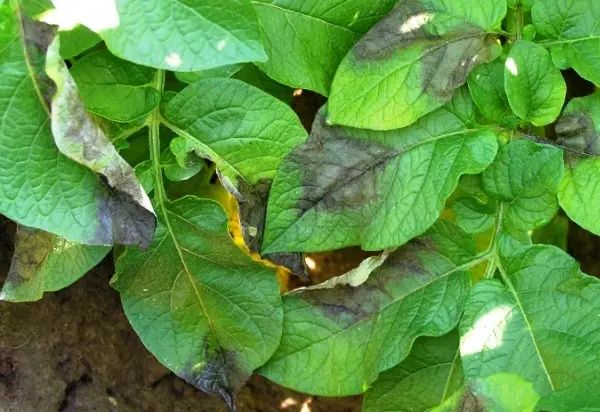
Late blight is a fungal disease caused by Phytophthora infestans. This is the most destructive potato disease known. Late blight was responsible for the Irish Potato Famine (1845-1852) in which over one million people perished. The disease prefers cool, wet conditions of 50-65 degrees Fahrenheit optimal.[23] It spreads rapidly during humid periods and can destroy entire crops within weeks if unchecked. Unlike early blight that allows a gradual development of symptoms, late blight moves explosively through plants. It infects leaves, stems, and tubers creating complete crop failure.
Late Blight Symptoms
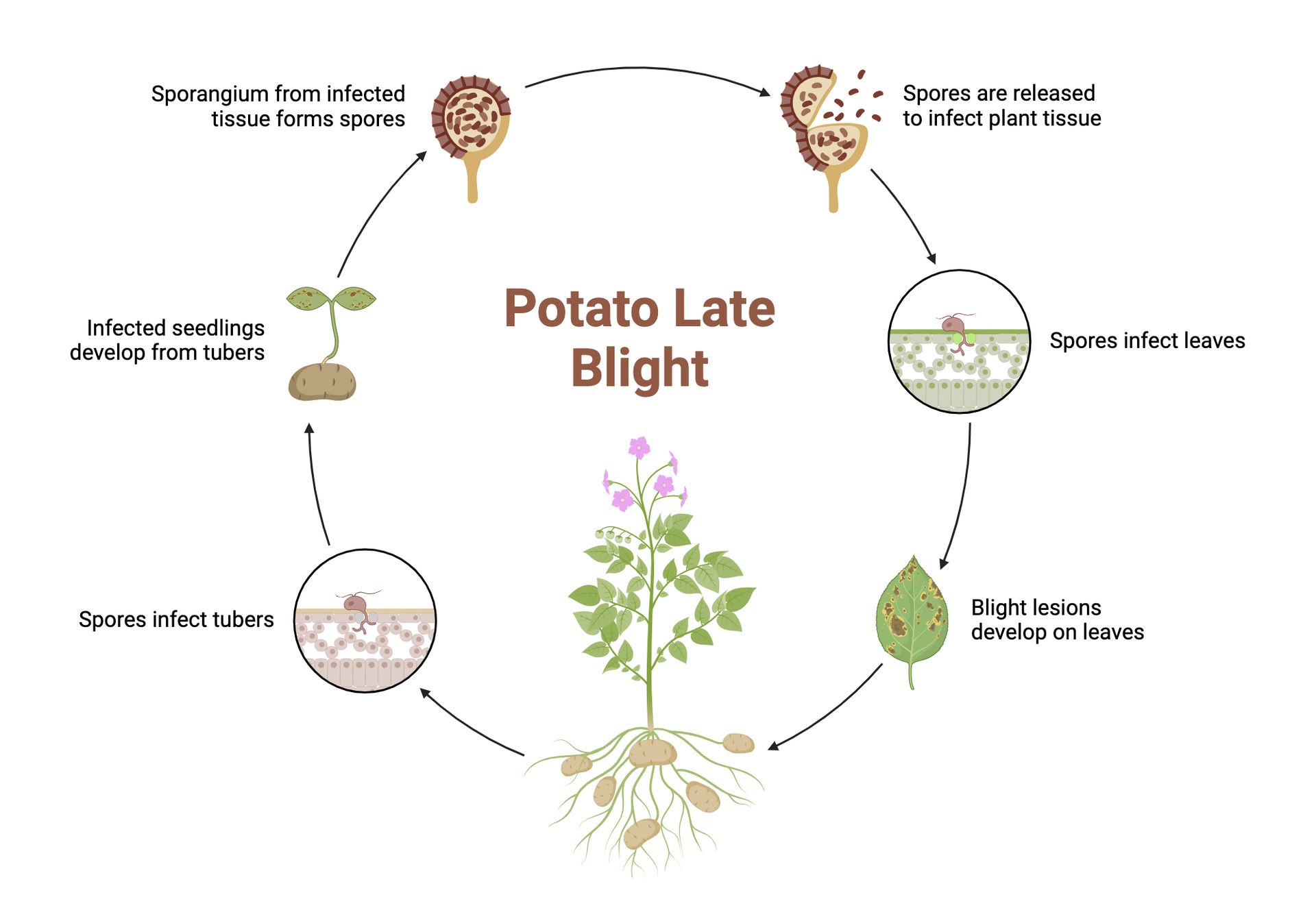
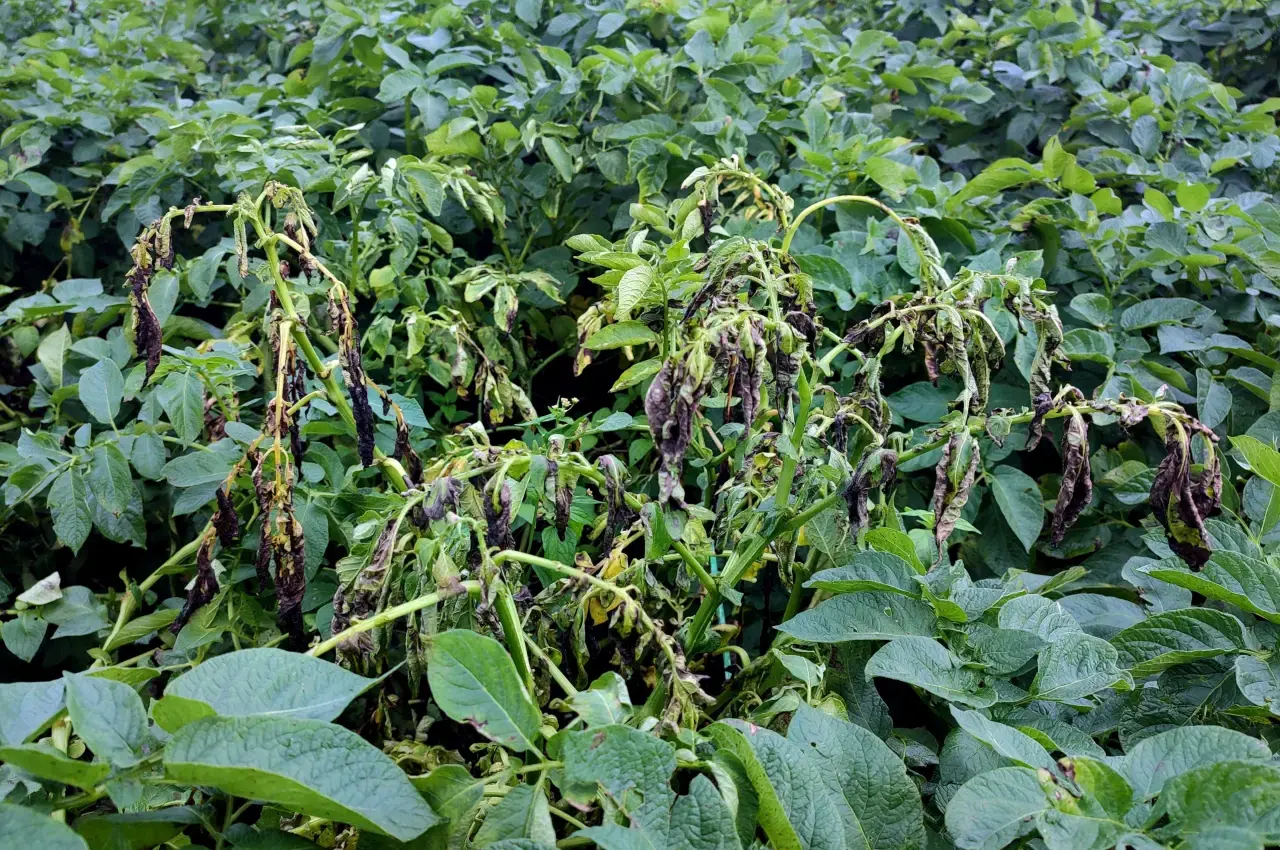
Late blight creates water-soaked lesions on leaves and stems. Look on leaf undersides for grayish-white spore growth indicating active disease. Lesions enlarge rapidly during humid conditions spreading to nearby foliage. Infected foliage collapses, shrivels, and turns brown very quickly. Leaves and stems turn to watery rot spreading throughout plant. Tubers show dark brown sunken lesions if infected. Rotten tubers develop during storage and smell distinctly bad, rotting quickly in storage.
Key Differences Between Diseases
Early blight prefers warm dry conditions while late blight prefers cool wet. Early blight attacks lower leaves progressively while late blight can hit any leaves explosively. Early blight is manageable with good cultural practices while late blight requires aggressive prevention. Understanding your regional disease pattern helps you prepare appropriate defenses.
Prevention Through Variety Selection
Choose potato varieties with built-in resistance to blight whenever possible. Resistant varieties dramatically reduce disease pressure. They allow you to skip many fungicide applications saving money and effort. Modern breeding has created numerous blight-resistant options available to home gardeners.
Kennebec, Superior, and Katahdin (moderately resistant) are among the varieties proven and recommended under different climatic conditions. Consult your local extension office for advice on suitable varieties for your area or region. In addition to those specifically mentioned as being highly tolerant of late blight, some possess both early and late blight resistance. These premium varieties cost slightly more than susceptible varieties but prevent massive disease losses.
Avoid highly susceptible varieties in areas with disease history. Plant only certified, disease-free seed potatoes. Grocery store potatoes carry disease pathogens and sprouting inhibitors. Certified seed ensures disease-free foundation for your entire crop. This simple choice prevents most blight problems before they start.
Rotate varieties year to year to prevent resistance development. Never plant same variety repeatedly in same location. Disease adapts to varieties over time. Variety rotation protects your long-term planting success for decades.
Cultural Practices: Your Foundation
Cultural practices are your first line of defense against blight. These preventive measures reduce disease pressure before it starts. Implementing them consistently prevents most blight problems from developing.
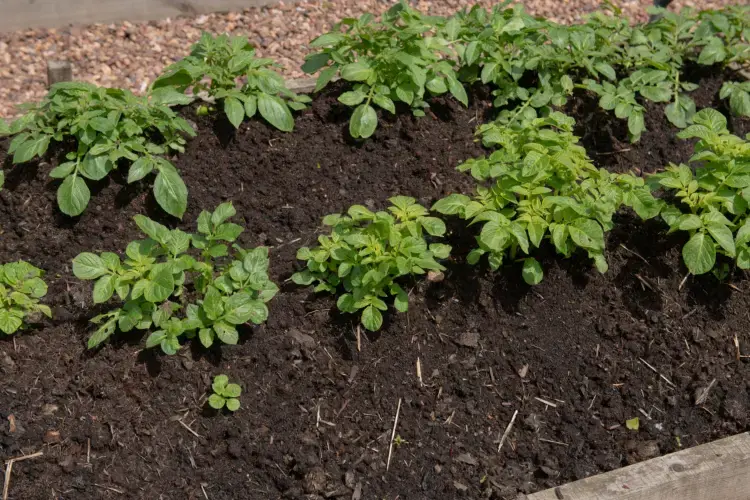
Proper spacing prevents disease spread effectively. Space plants 9 to 12 inches apart allowing good air circulation. Crowded plants create humid microclimate favoring fungal diseases. Dense foliage traps moisture promoting spore germination and spread. Proper spacing keeps foliage dry and naturally resistant.
Never water overhead at night. Wet foliage overnight is the perfect condition blight needs to thrive. Water at the soil level, using soaker hoses or drip irrigation systems. Early morning watering allows any wet leaves to dry quickly in sunlight.[1] This simple change stops most early infections before they establish.
Remove lower leaves as plants grow tall. Remove all foliage touching the ground or soil. This prevents soil-borne spore splash onto leaves. Create 12-inch gap between soil and lowest foliage. Progressive removal throughout season improves air circulation dramatically.
Practice crop rotation strictly without exception. Never plant potatoes where potatoes, tomatoes, peppers, or eggplants grew previous year. Two-year minimum rotation prevents disease buildup in soil. Three to four-year rotation is optimal for long-term soil health. Soil-borne pathogens survive in soil for many years waiting for susceptible hosts.
Sanitize equipment between plantings thoroughly. Clean all tools, stakes, and cages with bleach solution. Destroy all volunteer potato plants immediately. Remove and destroy cull piles from previous harvest. These harbor pathogens ready to infect new crops.
Monitoring: Your Early Warning System
Scout plants weekly throughout the growing season without fail. Regular monitoring catches diseases before they spread extensively. Early detection allows quick intervention before disease becomes established. Most gardeners ignore plants until obvious symptoms appear. By then, disease is well-established making control difficult.
Check both leaf surfaces for any suspicious symptoms. Look specifically at lower leaves where early blight typically starts. Note humidity levels and recent rainfall patterns. Write down observations in a garden journal. Track when conditions favor disease development in your garden.
Watch for temperature and humidity patterns throughout season. Early blight thrives when nights cool below 80 degrees F with wet foliage present. Late blight develops when temperatures range 50-65 degrees F with moisture. Understanding your specific conditions helps predict disease before symptoms appear.
Remove any suspicious leaves immediately without hesitation. Don't wait for confirmation of disease diagnosis. Infected foliage removed early prevents spread to entire plant. Destroy removed leaves completely (don't compost them). Clean hands and tools after handling any diseased plants.
Use weather data and disease prediction models freely available online. Free tools like BliteCAst forecast disease risk accurately. These models track temperature and moisture predicting optimal disease conditions. Use forecasts to time preventative fungicide applications. Monitoring plus forecasting maximizes prevention effectiveness.
Fungicide Timing and Selection
Fungicides prevent blight but only when applied properly and preventatively. Timing matters more than fungicide choice or brand. Preventative application before disease appears works reliably. Waiting for symptoms to appear means disease already established throughout plant.
Begin fungicide applications when conditions favor disease. For early blight, apply when daytime temperatures consistently exceed 65 degrees F and leaves stay wet from dew, rain, or irrigation. For late blight, apply when temperatures fall between 50-65 degrees F with moisture present. Begin applications before you see symptoms appearing.
Apply fungicides at 7 to 10-day intervals regularly. This frequency maintains protection throughout growing season. Alternate different fungicide types to prevent resistance development. Never apply same fungicide more than 2 to 3 consecutive times. Resistance develops quickly with single chemistry repeated repeatedly.
For organic gardeners, copper-based fungicides provide excellent prevention. Apply at first sign of favorable disease conditions. Copper works preventatively and curatively against early blight somewhat. Mancozeb offers additional organic option for early blight coverage. Effectiveness varies against late blight but provides baseline protection.
For conventional growers, chlorothalonil and mancozeb provide broad-spectrum protection. These contact fungicides work best preventatively before disease appears. Apply before disease appears rather than after. Systemic fungicides absorb into leaves providing internal protection. Rotate between contact and systemic types preventing resistance.
Always follow label directions exactly without exception. Apply rates specified and timing recommended by manufacturer. Reapply after heavy rainfall washes away protective fungicide residue. Weather monitoring ensures adequate protection throughout season. Document all applications in your garden journal for reference.
Resistant Varieties and Breeding
Modern potato breeding has created numerous blight-resistant varieties. Resistance genes from wild potato species protect against Phytophthora infestans effectively. Some breeders have created transgenic varieties with multiple resistance genes stacked.
Resistant varieties significantly reduce fungicide needs throughout season. You may eliminate fungicides entirely with very resistant varieties. Even moderately resistant varieties reduce fungicide applications by 50 percent or more. This saves money and reduces chemical exposure to your garden.
Resistance isn't absolute immunity from disease. Some resistant varieties show reduced susceptibility not complete resistance. They slow disease progression allowing more time for management. Disease can still develop under extreme pressure but slower than non-resistant varieties. This buying time is valuable for prevention.
New blight strains occasionally overcome resistance to previously resistant varieties. The pathogen evolves continuously adapting to resistant varieties. Some newer strains resist previously effective varieties. Planting newly resistant varieties helps but isn't permanent solution. Combination of resistant varieties plus good practices provides best protection.
Research continues on even more resistant varieties worldwide. Scientists work constantly on breeding improvements. Some varieties show promise for complete blight immunity. Future potato growing will benefit from enhanced genetics significantly. For now, use best resistant varieties available in your region.
Harvest Timing and Post-Harvest Management
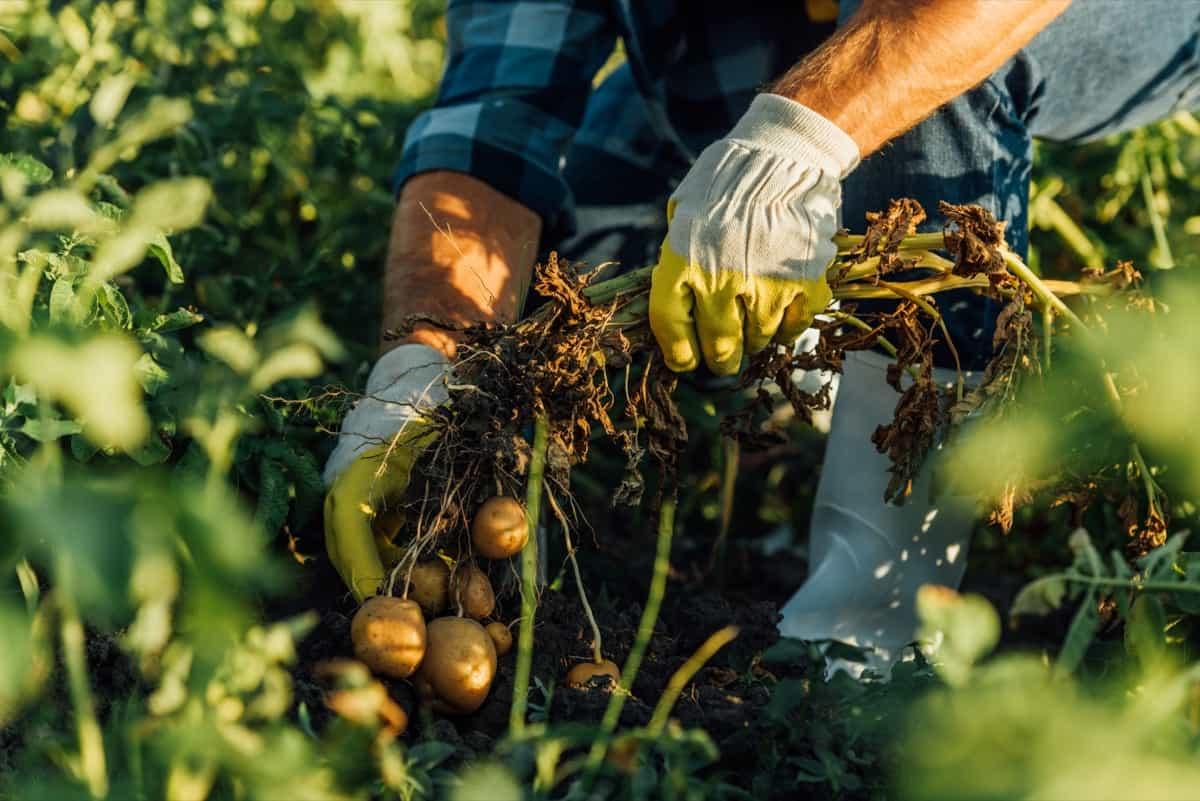
Harvest timing influences tuber infection risk significantly. Wait until foliage completely dies back before harvesting. Early harvest when foliage still alive increases tuber infection risk substantially. Spores can infect tubers during harvest through soil contact and wounds.
Stop watering 2 weeks before planned harvest date. This hardens potato skins reducing tuber infection risk. Hardened skins resist spore penetration better than soft skins. Dry conditions reduce spore viability in soil around tubers.
Destroy foliage before harvest carefully and completely. Cut stems 2 weeks before harvest to initiate skin hardening. Remove all foliage so no infected material remains in garden. Never work in wet fields harvesting. Wet conditions spread spores to tubers during harvest operations.
Harvest into dry soil to reduce disease pressure. Muddy potatoes are more likely to develop rot during storage. Store in cool, dark, well-ventilated space. Temperature of 40-45 degrees F and humidity 85-90 percent prevents sprouting and rotting. Monitor stored potatoes regularly for any rot. Remove any rotting tubers immediately before disease spreads to nearby tubers.
Smart Monitoring for Disease-Free Potatoes
Weekly scouting is essential for disease prevention but symptoms missed easily. Subtle early symptoms are easy to overlook until disease advances significantly. By time visible symptoms appear, disease has progressed extensively through plants. Plantlyze's AI monitors your potato plants continuously throughout season.
Detect early blight and late blight symptoms before visible damage occurs. Analyze leaf photos identifying disease patterns humans miss consistently. Receive alerts when suspicious symptoms detected early. Get treatment recommendations before disease spreads. Combine human expertise with machine learning accuracy. Catch blight in early stages when control is easiest. Maximize crop quality and yield through early intervention. Get Early Blight Detection Alerts from Plantlyze.
Troubleshooting: What If Blight Appears
If you notice early blight symptoms, act immediately without delay. Remove all infected leaves cutting several inches below visible symptoms. Destroy removed leaves immediately completely. Don't compost infected plant material ever. Increase air circulation by removing non-essential foliage carefully. Apply fungicides immediately and continue every 7 days. The faster you respond, the better your chances controlling spread.
If you discover late blight, your situation is more serious requiring immediate action. Early action still helps but results are less certain than early detection. Immediately remove entire infected plants completely. Destroy plants completely (don't compost any infected material). Don't harvest infected plants saving them for later. Late blight-infected tubers rot during storage creating total losses.
Apply aggressive fungicide schedule if blight detected early. Increase application frequency to every 5 to 7 days. Continue applications until frost kills foliage naturally. Even controlled spread is better than uncontrolled epidemic. Remove and destroy all volunteers from infected crop. Destroy all cull piles from harvested potatoes thoroughly. These harbor disease for next season ready to infect.
Clean all equipment thoroughly with bleach solution. Don't give up after discovering blight. Some crops can still be salvaged partially. Quick action can limit losses substantially. Future seasons will be better with proper prevention. Learn from this season and implement better practices next year.
Integration: Combining All Strategies
No single strategy prevents all blight reliably. Integration of multiple approaches provides best protection possible. Use resistant varieties as foundation for all prevention. Resistant genetics do heavy lifting alone immediately.
Add cultural practices: proper spacing, no overhead watering, sanitation, rotation. These practices reduce disease pressure from the start. They're free or minimal cost. They work year after year providing baseline protection.
Monitor closely every week without fail. Know your plants and spot changes immediately. Understand favorable disease conditions in your area specifically. Use weather data and prediction models. Apply fungicides preventatively when conditions favor disease. Preventative application before symptoms appear works better than waiting. Choose appropriate fungicides for your gardening style (organic vs. conventional).
This layered approach provides maximum protection realistically. Each strategy handles one part of disease lifecycle. Together they prevent almost all blight losses. The investment in time and materials pays massive dividends compared to crop loss.
Common Mistakes to Avoid
Mistake 1: Waiting for symptoms before acting. Preventative fungicides work reliably. Cure fungicides fail repeatedly. Act before disease appears.
Mistake 2: Overhead watering at night. This creates perfect blight conditions. Use drip or soaker irrigation at soil level. Water only in early morning if leaves must get wet.
Mistake 3: Ignoring lower leaves. Early blight starts on oldest foliage. Scout lower leaves specifically. Remove lower leaves regularly.
Mistake 4: Planting in same location repeatedly. Soil-borne pathogens accumulate over years. Rotate crops 3 to 4 years minimum.
Mistake 5: Planting grocery store potatoes. These carry pathogens and sprout inhibitors. Always use certified seed potatoes only.
Mistake 6: Using same fungicide repeatedly. Resistance develops quickly with repeated use. Rotate fungicide types and modes of action.
Mistake 7: Overcrowding plants. Dense spacing creates humid microclimate. Space properly for air circulation.
Regional Considerations
Your climate determines blight risk substantially. Cool, wet regions face serious late blight pressure. Warm, dry regions face more early blight problems. Understand your regional disease patterns first.
Northern zones with short growing seasons benefit from resistant varieties. Hot zones face pressure planting early before summer heat. Wet coastal regions need aggressive prevention. Dry inland areas can rely more on cultural practices. Talk to local gardeners and extension offices. They know regional disease patterns. They know which varieties work best locally. They understand your specific microclimate challenges. Regional expertise is invaluable.
Conclusion
Potato blight is preventable with knowledge and action. Understanding early vs. late blight guides your response. Resistant varieties provide foundation for prevention. Cultural practices cost nothing but prevent disease. Weekly monitoring catches problems early. Preventative fungicides work when applied before symptoms. Timing matters more than product choice. Integration of all strategies provides best protection. Your region determines specific challenges. Local knowledge invaluable for success.
Plantlyze monitoring detects symptoms early. Combined approach prevents almost all losses. Each season teaches valuable lessons. Healthy potatoes from season start to storage is achievable. You've got the knowledge to succeed.
References
Colorado State University Extension - Potato Late Blight History, Impacts, and Prevention
https://ag.colorado.gov/potato-late-blight-history-impacts-and-preventionUC IPM - Early Blight Prevention and Management
https://ipm.ucanr.edu/agriculture/potato/early-blight/University of Wisconsin Extension - Potato Disease Prediction Models
https://vegpath.plantpath.wisc.edu/RHS Advice - Potato Blight Identification and Control
https://www.rhs.org.uk/disease/potato-blightJames Hutton Institute - Fight Against Blight 2025
https://www.hutton.ac.uk/fight-against-blight-fab-2025/