Introduction: Why Your Peppers Wilt Despite Moist Soil
So you go out into your pepper garden and see some of the plants are wilting. You touch the soil and it’s wet. Confusion sets in. Is the plant dying? Do you need to water less? Should you water differently?
Peppers are easy to water until they aren’t. The difficulty is not only frequency but method, timing and adapting your actions to your own situation. Incorrect Watering of Peppers Many people water their peppers wrong and do not know it is hurting production or the health of the plant.
This epic guide will show you exactly how to water peppers so they grow big and produce lots of fruit. Container specific, to regional preferences, to problems and solutions, you will have a total understanding of pepper water needs.
Why Proper Watering Matters for Peppers
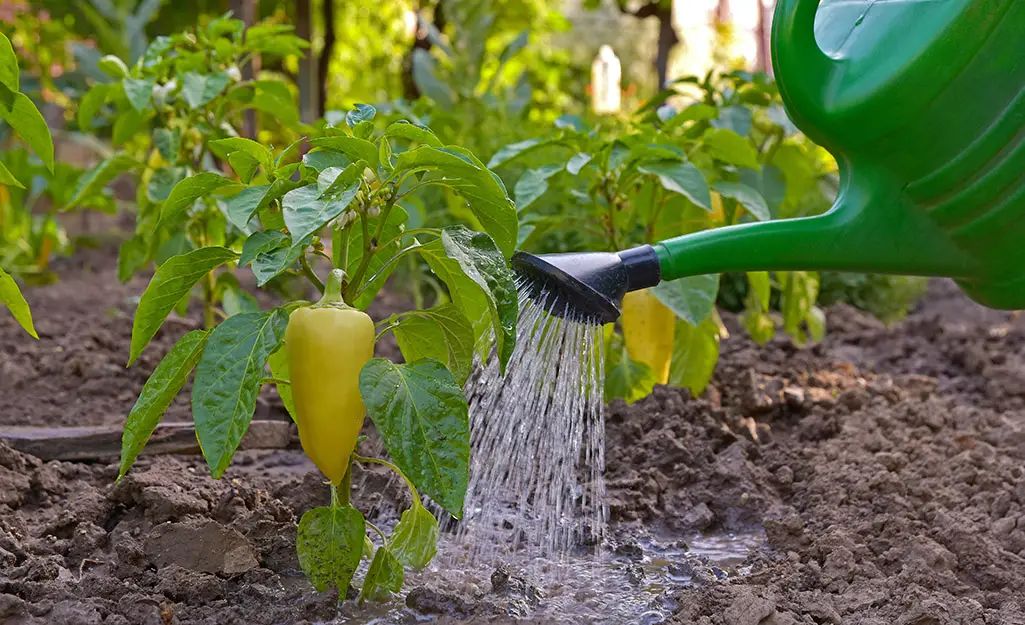
Water stress directly impacts pepper plant productivity. Inconsistent watering during flowering causes flower drop, meaning fewer peppers develop into fruit. Inconsistent watering during fruit sizing creates blossom-end rot, a calcium deficiency disorder appearing as dark sunken spots on pepper bottoms.
The connection between water stress and blossom-end rot is direct. When soil moisture fluctuates from wet to dry, plants cannot consistently deliver calcium to developing fruit. The fruit ends opposite the stem are particularly vulnerable because they are furthest from the plant's vascular system supplying nutrients and water.
Water stress also makes plants vulnerable to disease. Stressed peppers are more susceptible to fungal infections, root rot, and other pathogens. A well-watered, unstressed pepper plant resists disease far more effectively than a stressed plant.
Proper watering supports deep root development. Heavy, infrequent watering encourages roots to seek moisture deep in the soil. Light, frequent watering keeps roots shallow. Deeper roots provide better access to water during heat stress and support larger plants with greater productivity.
Understanding Pepper Root Systems
Pepper roots are both shallow and deep simultaneously. Understanding this dual nature explains why your watering method matters tremendously.
Approximately seventy percent of pepper roots occupy the top foot of soil. These shallow roots absorb water and nutrients rapidly. However, thirty percent of pepper roots develop in the second foot of soil, reaching deeper to access moisture reserves.
Under optimal conditions, pepper roots can reach three to four feet deep. These deep roots access water unavailable to shallow-rooted plants during droughts. Developing these deep roots requires heavy, infrequent watering that forces roots downward seeking moisture.
Light, frequent watering produces shallow root systems. When you water lightly every day, roots never need to search deep. They remain concentrated in the top few inches of soil. This shallow system is vulnerable to heat stress and drought, requiring constant watering to maintain plant hydration.
Soil type dramatically influences rooting depth. Sandy soils drain quickly, requiring deeper roots and more frequent watering. Clay soils retain moisture longer, supporting adequate plant hydration with less frequent watering. Understanding your soil type helps explain your specific watering needs.
Basic Watering Requirements: The General Rule
Pepper plants can benefit from the standard inch of water (or two) each week. This water consists of any proportion of rainfall and supplemental irrigation.
An inch is defined as the amount of rain or irrigation applied so that if a plant was placed in a one-inch container, it would have one-inch of water to draw on. To measure application, many gardeners rely on empty tuna cans or even a rain gauge. Consistent measurement prevents guessing.
This benchmark depends on temperature and soil type. Hot weather increases water demand. Sandy soil dries out faster than clay, so you will need to water more often. By being able to know these differences, helps us avoid overwatering and underwatering.
Heavy soaking is far better than frequent light watering. Weekly deep watering reaches deep below the soil's surface, promoting strong root growth and robust plants. Light daily sprinkling of water never penetrates to the root zone so that shallow roots exhibited and constant demand for water is made.
The idea is to get the water deep enough to water the entire root zone. Superficial watering still leaves lower roots dry even when the surface appears moist. The main advantage of deep watering is that it covers everything - the shallow and deep roots at the same time.
Watering Frequency: How Often Should You Water
Mature pepper plants typically require watering two to three times per week under normal conditions. Hot weather may require daily watering. Cool weather may allow watering just once weekly.
The frequency depends primarily on temperature and soil type. Mid-season peak production with hot daytime temperatures and rapid soil drying requires frequent checking and watering. Early season cool soil and slower evaporation reduce watering frequency.
The finger test provides the most reliable watering indicator. Insert your finger approximately one inch into the soil at the plant base. If the soil feels moist, the plant has adequate water. If the soil feels dry, watering is needed.
This simple test eliminates guessing. Different soil types, mulching, and container situations all affect how quickly soil dries. The finger test accounts for all these variations instantly.
Timing your watering benefits plant health. Morning watering allows foliage to dry, preventing fungal disease that thrives on wet leaves. Evening watering is acceptable if morning is impossible, but afternoon watering during peak heat stress is less efficient.
Young seedlings require more frequent watering than mature plants. New seedlings may need watering every one to two days initially. As plants grow and develop deeper roots, frequency decreases.
Watering Method: The Technique Matters
How you apply water matters as much as how often you water. The goal is delivering water to roots while keeping foliage dry.
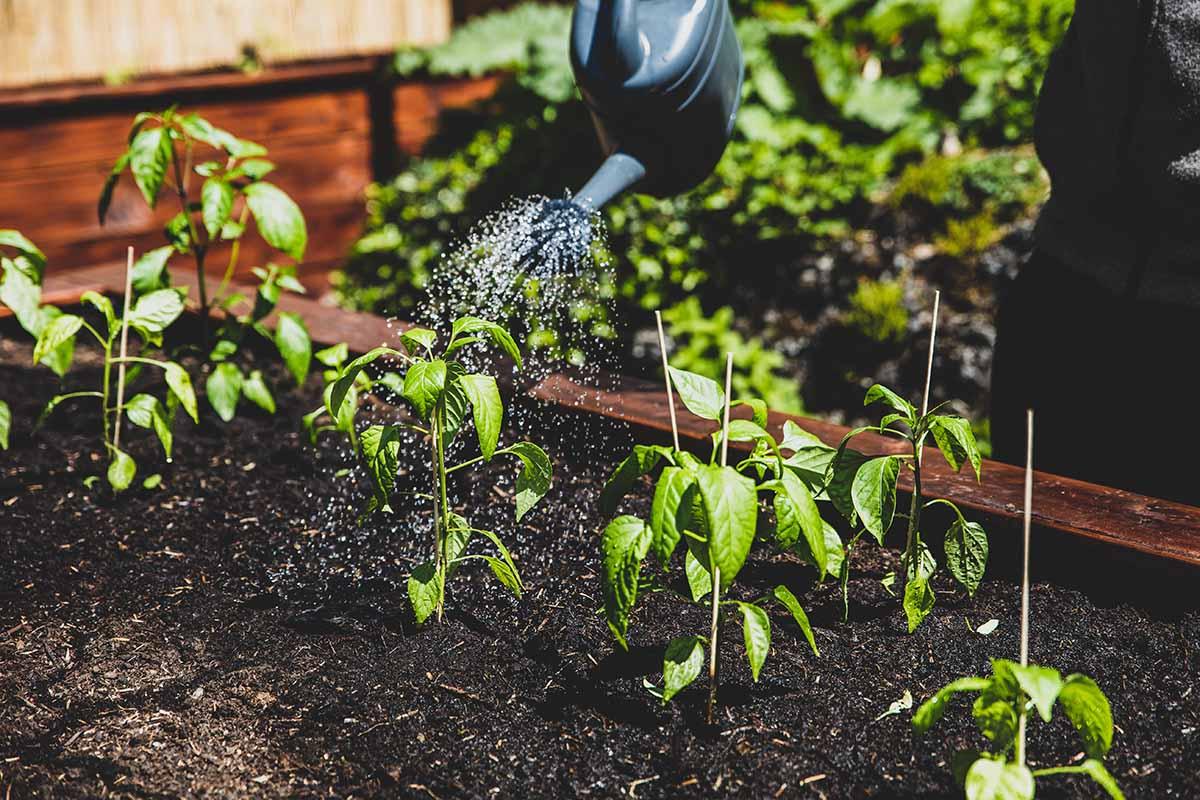
Water at the plant base, directing water toward the soil surface. Avoid wetting leaves, peppers, or fruit. Wet foliage creates ideal conditions for fungal diseases like powdery mildew and early blight. Wet peppers may develop rot in their crevices.
Use a watering can with a slow stream or a hose set to gentle flow. Hold the can or hose at the soil surface for three to five minutes, allowing water to soak deeply rather than running off the soil surface. The key is slow, steady water delivery that penetrates thoroughly.
Check soil moisture before watering every time. This habit prevents overwatering from habit rather than need. Some days the soil may still be moist from previous watering. Skipping unnecessary watering keeps soil from becoming waterlogged.
Drip irrigation represents the optimal watering system for peppers. Drip emitters deliver water slowly directly to the soil at plant bases. Morning operation for twenty to thirty minutes typically provides adequate water. Set a timer for consistency and convenience.
Drip systems require weekly checking. Emitters can become clogged from sediment or mineral buildup. Inspect each emitter to ensure water flows freely. Unclog by rubbing the emitter opening gently with your finger.

Soil Moisture: The Finger Test Method
The finger test is the most reliable soil moisture assessment method. It costs nothing, requires no equipment, and provides immediate feedback.
Insert your finger approximately one inch into the soil near the plant base. Feel the soil texture and moisture. Moist soil adheres slightly to your finger and feels noticeably wet. Dry soil is loose and crumbly.
If the soil feels moist at one inch depth, the plant has adequate water. The deeper soil below one inch is likely moist as well. Watering a moist plant waterloggs the soil and risks root rot.
If the soil feels dry at one inch depth, watering is needed. Water thoroughly to saturate the soil deeply. Deep watering encourages root development and supports strong plant growth.
Learning the finger test takes minimal practice. Within a week of consistent checking, you develop an intuitive sense of your soil moisture patterns. You learn how quickly your specific soil dries and adjust accordingly.
For deeper assessment, you can insert your finger or a stick six inches into the soil to check moisture at that depth. If deep soil is dry despite moist surface, you have underwatered. If deep soil is waterlogged and warm weather continues, you have overwatered.
Some gardeners prefer inserting a wooden stick instead of their finger. A six inch stick placed at the plant base and removed after thirty seconds reveals moisture patterns. Wet stick surface indicates moist soil. Dry stick indicates dry soil.
Regional Watering Variations
Your geographic region dramatically affects pepper watering frequency. Climate differences mean what works in the Pacific Northwest completely differs from what works in the Southwest.
Northeast and Midwest gardeners typically water peppers once or twice weekly. Regular rainfall supplements garden watering. Cool nights slow soil evaporation. Heatwaves require adjustments to daily watering temporarily, but normal conditions allow weekly schedules.
Southwest gardeners in Arizona and New Mexico face entirely different conditions. Extremely hot, dry air and intense sunlight can require daily or every-other-day watering. Soil dries rapidly in these extreme conditions. Mulching becomes essential for moisture retention. Drip irrigation with consistent scheduling is nearly mandatory in these regions.
Pacific Northwest gardeners in Oregon and Washington benefit from cool, moist springs. Frequent rainfall reduces supplemental irrigation needs. Container plants might need watering only once weekly or less during cool seasons. Late summer brings drier conditions requiring increased frequency.
California gardeners face varying conditions depending on location. Coastal areas remain cool and moderate. Interior valleys become extremely hot. Generally, two to three times weekly watering is typical during summer, with deep soaking being particularly important.
Mountain region gardeners in Colorado and Utah face cool nights despite hot days. Intense sunlight and dry air combine with rapid soil drying. Two to three times weekly watering is typical. Dry air accelerates evaporation faster than humidity-laden regions.
These regional patterns are guidelines only. Local variation within regions occurs. A yard on south facing slope dries faster than a north-facing location. Paying attention to your specific microclimate adjusts general guidelines appropriately.
Container Pepper Watering: The Additional Challenge
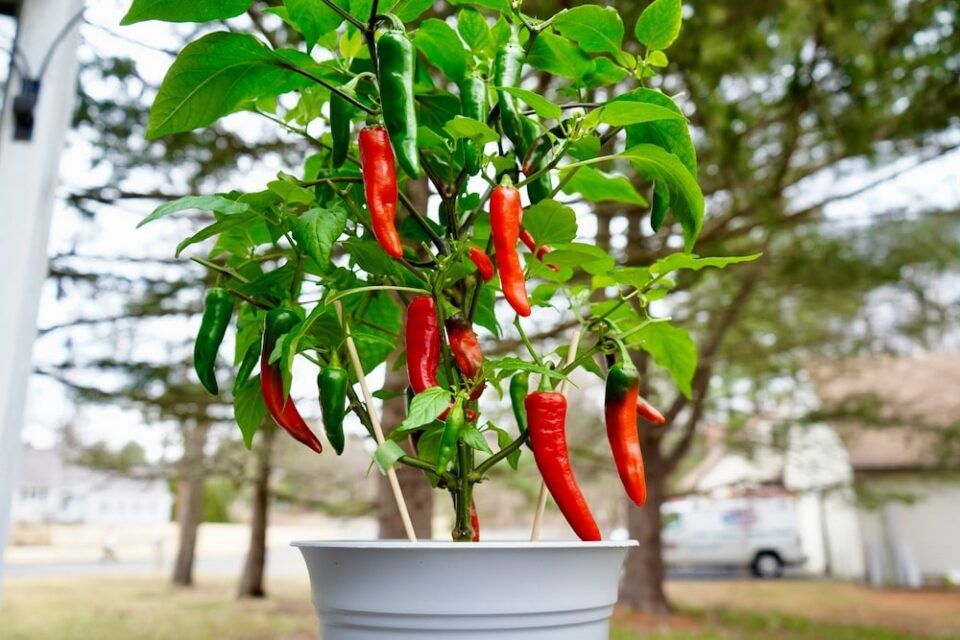
Container peppers require fundamentally different watering than ground-grown peppers. Containers dry much more rapidly, and roots have no access to underground moisture reserves.
Indoor containers typically need watering daily. The confined soil space provides no moisture buffer. Daily checking and watering maintain consistent moisture throughout the soil.
Outdoor containers require varying frequency depending on temperature. During mild weather with temperatures in the mid-60s, outdoor containers need watering approximately once daily. As temperatures rise to the mid-80s, outdoor containers typically need watering twice daily or more.
Peak summer heat may require twice daily watering or even more frequent watering for very small containers. The soil heats rapidly, accelerating evaporation. Consistent daily checking becomes essential during summer.
Container plants cannot access water below their root zone like ground-grown plants. Heavy soaking in containers drains out the bottom within hours. Daily or near-daily supplemental watering replaces constantly evaporated moisture.
Self-watering containers provide a solution for frequent travelers or busy gardeners. These containers have an internal water reservoir that maintains consistent soil moisture through capillary action. Soil remains evenly moist without daily checking.
Consistent moisture from self-watering containers prevents blossom-end rot and flower dropping. The trade-off is that self-watering containers are more expensive and require proper maintenance to avoid mosquito breeding or algae growth in the reservoir.
Standard containers require larger volumes to hold adequate water. Soil volume directly correlates with water holding capacity. Containers smaller than five gallons dry very rapidly and require frequent watering. Five-gallon containers provide much better water-holding capacity for standard peppers.
Potting soil quality affects watering frequency. Premium potting mixes with peat moss or coconut coir retain moisture well. Overly sandy mixes drain too quickly. Using quality potting soil reduces watering frequency and improves consistency.
Ground Versus Container Watering Differences
In-ground pepper gardens and container pepper gardens require substantially different watering approaches. Understanding these differences prevents costly mistakes.
Ground-grown peppers retain moisture longer because soil extends deep, creating a buffer of moisture below the surface. Deep soil rarely reaches the surface temperature of containers. Underground moisture remains accessible to roots even during rapid evaporation.
Heavy soaking once weekly often suffices for ground-grown peppers in moderate climates. The water penetrates deeply and remains available for days. Roots access this deep moisture during heat stress before needing more water.
Container peppers cannot access deep moisture reserves. All water comes from the container's limited soil volume. Surface soil heats rapidly in the sun. Evaporation depletes available water within hours in summer heat.
Daily or multiple-daily watering is standard for container peppers during warm weather. The constant watering demand seems excessive compared to ground-grown plants but is actually necessary for container conditions.
Stability differs dramatically. Ground soil moisture fluctuates slowly and moderately. Container soil moisture fluctuates rapidly and severely. Container gardeners need more frequent monitoring and quicker response to dry conditions.
Yield per plant can differ between container and ground cultivation. Container-constrained root systems typically produce fewer peppers than identical plants in-ground with unrestricted roots. The smaller root system limits nutrient and water uptake capacity.
Space efficiency favors containers for small yards. Multiple containers can create significant production in minimal space. Consistent watering discipline makes container production very successful despite the extra labor.
Seasonal Adjustments: Spring Through Fall
Watering needs change dramatically as seasons progress. Spring cool soil requires different watering than summer peak production.
Spring soil is cool and wet from winter rains and snowmelt. Caution against overwatering in spring is essential. Root rot and fungal diseases thrive in cool, wet soil. Water only when soil is truly dry.
Mulching should be delayed until soil warms to approximately 70 to 75 degrees Fahrenheit. Applying mulch to cool soil keeps soil cold, slowing root development. Wait until soil has warmed before mulching.
Early season plant growth is moderate. Watering once weekly typically suffices as plants establish and develop. As plants grow larger and flower production begins, frequency gradually increases.
Summer peak production demands consistent watering. Hottest months require daily checking of soil moisture. Frequency may increase to two to three times weekly or more. Heavy soaking during cooler morning or evening hours maximizes efficiency.
Flowering stage demands consistent moisture. Flower drop occurs when moisture swings from wet to dry. Maintaining even soil moisture encourages consistent flowering and fruit production.
Fruit sizing stage also demands consistency. Calcium is delivered with water to developing fruit. Inconsistent watering during this stage causes blossom-end rot. Even moisture throughout fruit development prevents this disorder.
Fall cooling reduces water demand gradually. As nights cool and daytime temperatures moderate, soil dries more slowly. Reduce watering frequency to maintain consistency while accommodating seasonal changes.
Late season moisture management balances continued production with frost preparation. Adequate moisture supports continued flowering and ripening. Overwatering during cool fall weather risks root rot and disease.
Mulching for Better Moisture Management
Mulch dramatically improves soil moisture retention. Two to three inches of mulch is the minimum beneficial depth. Four inches provides optimal moisture management benefits.
Organic mulches including straw, leaves, or wood chips break down slowly, enriching soil over time. Grass clippings can work but may smother roots if piled too thickly. Keep all mulch one to two inches away from pepper plant stems to prevent rot.
Mulch benefits extend beyond water retention. Mulch moderates soil temperature, keeping soil cooler in summer and protecting roots from temperature extremes. Mulch suppresses weeds that compete with peppers for water and nutrients. As organic mulch breaks down, it enriches soil structure.
Timing mulch application correctly is critical. Do not mulch cold spring soil. Wait until soil reaches 70 to 75 degrees Fahrenheit before applying mulch. Premature mulching keeps soil cold, reducing water and nutrient availability. Delayed mulching is better than early mulching.
Mid-season mulch refreshing improves moisture retention as the first layer breaks down. Adding additional mulch in mid-July or August maintains moisture benefits through peak production and late season.
Mulch reduces watering frequency by approximately thirty to fifty percent. The exact reduction depends on climate and mulch thickness. Tracking watering before and after mulching reveals the improvement in your garden.
Watering Issues and Problems
Identifying watering problems quickly prevents long-term plant damage and production loss.
Overwatering creates soggy soil and leads to root rot. Persistently wet soil drowns roots, and anaerobic conditions allow harmful fungi like Phytophthora to thrive. Symptoms include yellow leaves, wilting despite wet soil, and mushy stem bases.
Overwatering also reduces flowering and fruit production. Waterlogged roots cannot support vigorous growth. Flower production decreases dramatically as plants stress from root damage.
Underwatering causes obvious wilting and slow growth. Stunted plants fail to reach full potential. Flower dropping occurs when plants stress from water deprivation. Mature fruit sizes poorly and takes longer to ripen.
Ironically, wilting sometimes indicates overwatering rather than underwatering. Damaged roots from waterlogging cannot deliver water to leaves. Check soil moisture before assuming underwatering. Wet wilting requires completely different treatment than dry wilting.
Inconsistent watering causes blossom-end rot and fruit cracking. Alternating between dry and wet soil stresses plants and disrupts calcium delivery. Consistent moisture prevents these frustrating problems.
Correction approaches depend on the specific problem. Overwatering requires reducing frequency, checking soil before watering, and potentially improving drainage. Adding sand to clay soils or using containers with larger drainage holes improves drainage.
Underwatering requires increasing frequency and ensuring water penetrates deeply. Mulching helps retain moisture longer between waterings. Switching to drip irrigation provides more consistent moisture than manual watering.
Drip Irrigation: The Optimal System
Drip irrigation is the most efficient, effective watering method for peppers. Consistent moisture, disease reduction, and water conservation make drip systems superior to all other methods.
Drip emitters attach to tubing and deliver water slowly at the soil surface directly at plant bases. Each emitter typically delivers water at a rate of half a gallon to two gallons per hour, allowing slow, water infiltration.
Morning operation for twenty to thirty minutes typically delivers adequate water volume. Morning timing allows emitter clogging to be noticed before nightfall. Daily operation is possible under most conditions, with adjustment for temperature and seasonal changes.
System maintenance involves weekly emitter checking. Each emitter must deliver water freely. Sediment or mineral buildup occasionally clogs emitters. Gently rubbing the emitter opening removes light clogs.
Pressure adjustment ensures even flow through all emitters. Excessive pressure causes some emitters to gush while others trickle. Reducing system pressure to approximately 10 to 20 pounds per square inch creates consistent flow.
Multiple plants connect to a single tubing line with multiple emitters. One emitter per plant provides adequate water if sized correctly. The system flexibility allows customization for garden layout.
Investment cost for drip systems is moderate. Basic systems cost fifty to one hundred fifty dollars depending on garden size. The investment is recovered through water savings and increased production within a few seasons.
Water conservation through drip irrigation is significant. Minimal water waste through evaporation or runoff compared to overhead irrigation. Studies show drip irrigation uses thirty to fifty percent less water than conventional watering while improving plant health.
Container Depth and Watering Connection
Container depth directly affects watering frequency. Shallow containers require more frequent watering than deep containers because they hold less soil and water.
Minimum recommended container depth is twelve inches. This depth accommodates adequate soil volume for pepper root development. Fourteen to eighteen inches is ideal for most pepper varieties. Eighteen to twenty-four inches is optimal for maximum root space.
Five-gallon containers (approximately twelve inches deep and twelve inches wide) suit standard pepper varieties well. These containers hold adequate soil volume for healthy growth and reduce watering to once or twice daily in peak heat.
Smaller two-gallon containers work for ornamental peppers or limited space situations but require daily or near-daily watering. Production is less abundant than in larger containers due to confined roots.
Whiskey barrel containers (approximately 24 inches deep and 32 inches wide) provide excellent growing space. Multiple plants fit in large containers, creating impressive production.
Width matters as much as depth. Narrow, deep containers provide less root room than wide, shallow containers of similar volume. A twelve inch by 18 inches wide container holds more soil than a six inch by 36 inches container despite similar volumes.
Drainage holes are absolutely critical. Without drainage holes, water accumulates and creates waterlogged conditions. Even small holes allow excess water to escape while retaining adequate moisture. Use containers with drainage holes or drill holes in bottom if necessary.
Water Quality Considerations
Tap water is typically fine for pepper plants. Most municipal water supplies have neutral to slightly alkaline pH around 65 to 75, which is acceptable for peppers.
Chlorine in tap water is minimal concern. Most chlorine volatilizes within hours of being drawn. Any residual chlorine is diluted during soil application and rarely harms peppers.
Hard water with high mineral content may cause mineral accumulation over time in containers. This buildup rarely causes problems during a single season but may require container replacement or soil renewal after several years.
Rainwater collection provides chemical-free water and is excellent for pepper watering. Free or minimal-cost water from rain barrels reduces water bills significantly. Storage in food-grade containers prevents mosquito breeding and contamination.
Water temperature affects plant response. Cold water from deep wells or early morning cold taps may stress plants temporarily. Room-temperature water from morning irrigation warms in the sun as it applies to soil. Using room-temperature water prevents temperature stress.
Summer rain collection benefits from providing free, abundant water during peak production season. Storing rain from spring storms provides irrigation reserves for hot, dry summer months.
Monitoring and Adjustment
Regular monitoring throughout the season reveals your garden's specific watering patterns. Every garden has unique factors affecting moisture requirements.
Check plants every few days during cool seasons. During peak heat in summer, daily or twice-daily checking becomes necessary for containers. Consistent monitoring prevents surprise wilting and stress.
Document watering through the season. Note dates, amounts, temperatures, and plant response. This documentation reveals patterns for future seasons. Photos through Plantlyze dot com provide visual tracking of plant health and growth stage water demands.
Adjust frequency based on growth stage. Young transplants need frequent moisture. Established plants with deep roots need less frequent but heavier watering. Flowering stage demands consistency. Fruit-sizing stage continues consistency demands.
Temperature effects are immediate. Sudden heatwaves require frequency increase. Cool snaps allow frequency reduction. Wind increases evaporation. Humidity decreases evaporation rate. Observing these effects in your specific garden guides adjustments.
Flexibility in schedule maintains plant health. Rigid schedules ignoring soil moisture cause problems. If soil is moist despite the scheduled watering day, skip watering. If soil is dry early, water early. Plant needs matter more than arbitrary schedules.
Individual plant variation occurs. One plant in a container might need slightly different watering than another plant due to microclimate or root differences. Monitoring each plant individually rather than applying identical treatment to all plants improves results.
Conclusion: Consistency Beats Perfection
Successful pepper watering is not about achieving perfection. It is about consistency and adjusting for your specific conditions. Different regions, container sizes, and soil types all require different approaches.
Proper watering supports strong plant growth, abundant flowering, and maximum fruit production. Deep, heavy watering rather than light frequent watering develops strong root systems. Morning watering prevents disease. Consistent moisture prevents blossom-end rot.
The finger test provides the most reliable watering guidance. Simple soil moisture checking eliminates guessing about whether plants need water. This fundamental practice is the cornerstone of successful watering.
Regional variations mean learning your local climate and adjusting accordingly. Desert southwest pepper growers need different approaches than Pacific Northwest growers. Acknowledging these differences and adjusting your schedule prevents expensive mistakes.
Container-grown peppers require fundamentally different watering than ground-grown peppers. Daily watering is normal for containers during summer. Ground-grown peppers may need watering just once or twice weekly. Understanding these differences prevents mismanagement.
Mulching dramatically improves moisture management. Two to four inches of organic mulch reduces watering frequency while improving soil quality. The investment in mulching pays dividends through the entire growing season.
Drip irrigation automation removes watering labor while providing optimal moisture consistency. Timer-controlled systems deliver consistent water daily without manual effort. The investment in drip systems is recovered through water savings and increased yields.
This season, begin with the finger test. Check soil moisture before each watering. Adjust frequency based on your specific conditions. Monitor plant response and adjust as needed. By season end, you will have developed deep knowledge of your garden's specific watering needs.
For comprehensive documentation of your watering schedule and plant response, Plantlyze dot com provides photo based on tracking. Upload images showing soil condition, plant vigor, and growth stages. This documentation improves next season's approach based on this season's experience.
References
1. Nebraska Extension (University of Nebraska-Lincoln)
https://extensionpubs.unl.edu/publication/967/html/view
2. Utah State University Extension (Vegetable Irrigation Research)
https://extension.usu.edu/irrigation/research/vegetable-irrigation-sweet-pepper-and-tomato
3. Oklahoma State University Extension
https://extension.okstate.edu/fact-sheets/pepper-production.html
4. University of Minnesota Extension
https://extension.umn.edu/vegetables/growing-peppers