Onion wilting is one of those garden problems that can feel confusing. One day your plants look strong and green, the next they are drooping, yellowing, or entirely flat. The good news is that wilting is often manageable once you know what is happening. In this guide you will learn the most common reasons your onion leaves are wilting, how to tell what is really going on, and what you can do to fix it or prevent it next season. If you ever feel unsure, you can also let an AI‑powered plant‑care assistant like Plantlyze help you diagnose your onion by simply uploading a photo at plantlyze.com.
Normal vs Dangerous Onion Wilting
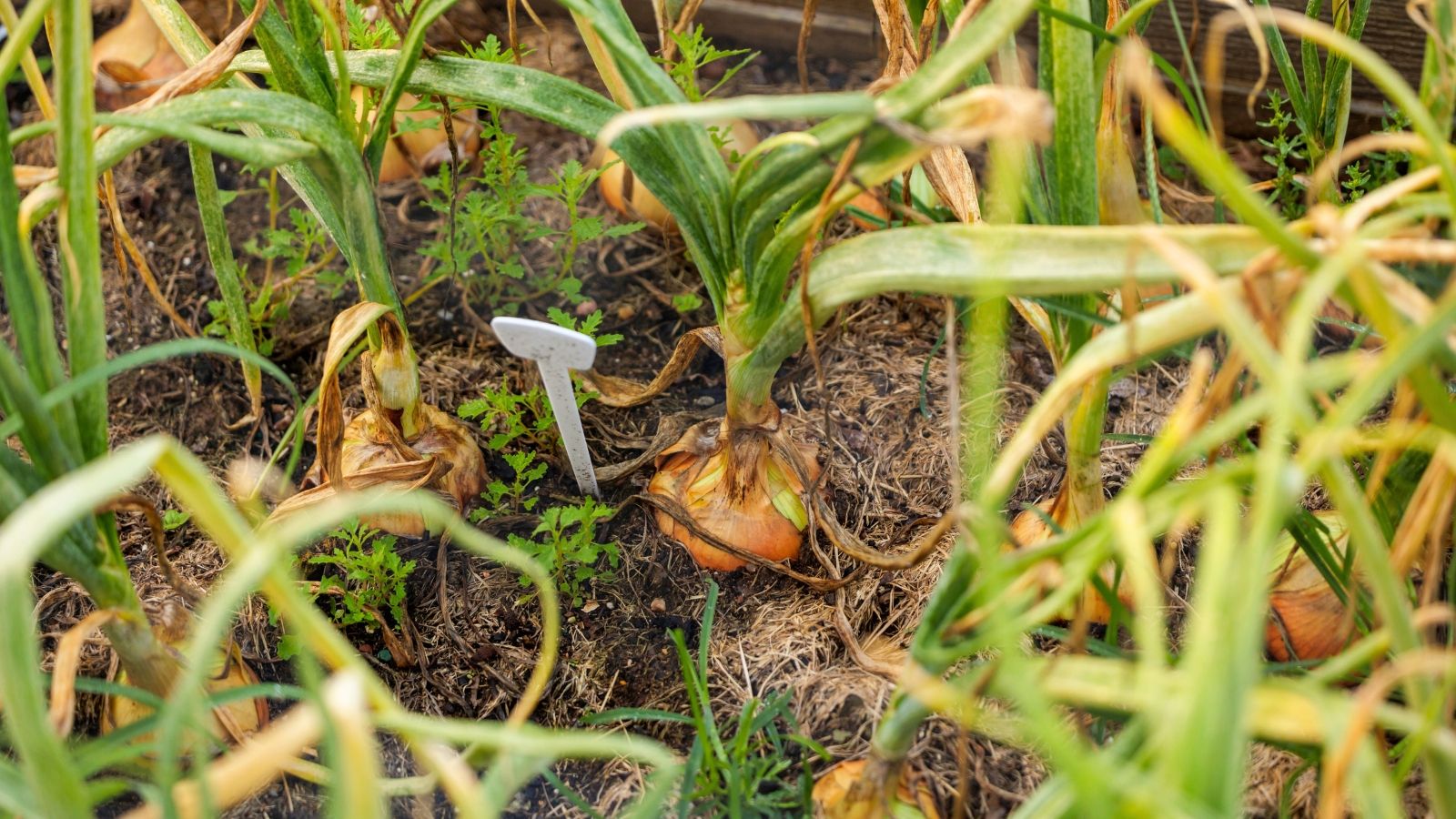
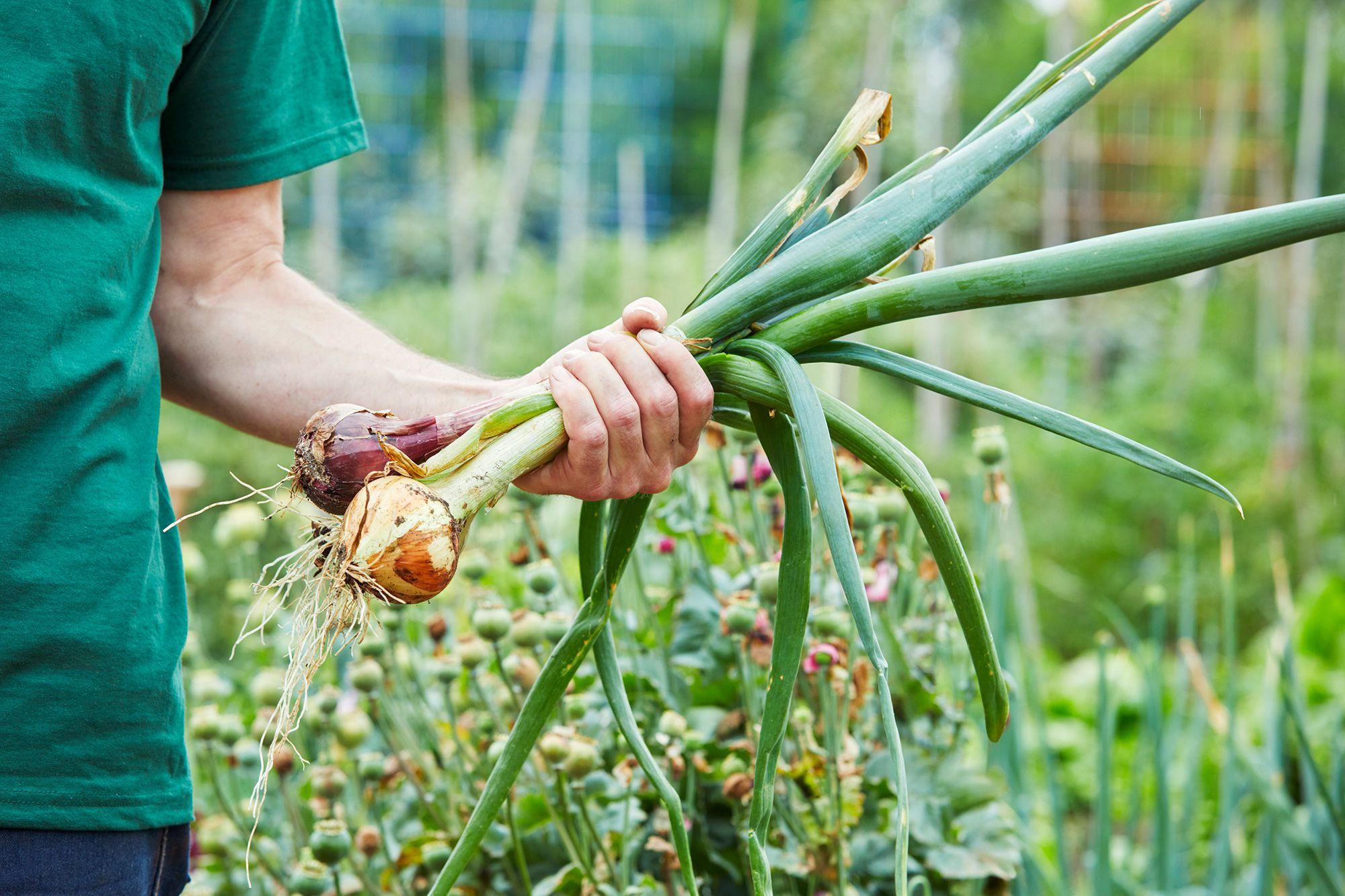
Before you panic, it is important to know that onion tops naturally wilt as the plants mature. This is a normal part of growth and not a sign of disease. What looks like a problem may actually be the plant preparing itself for harvest.
Typical signs of normal wilting include:
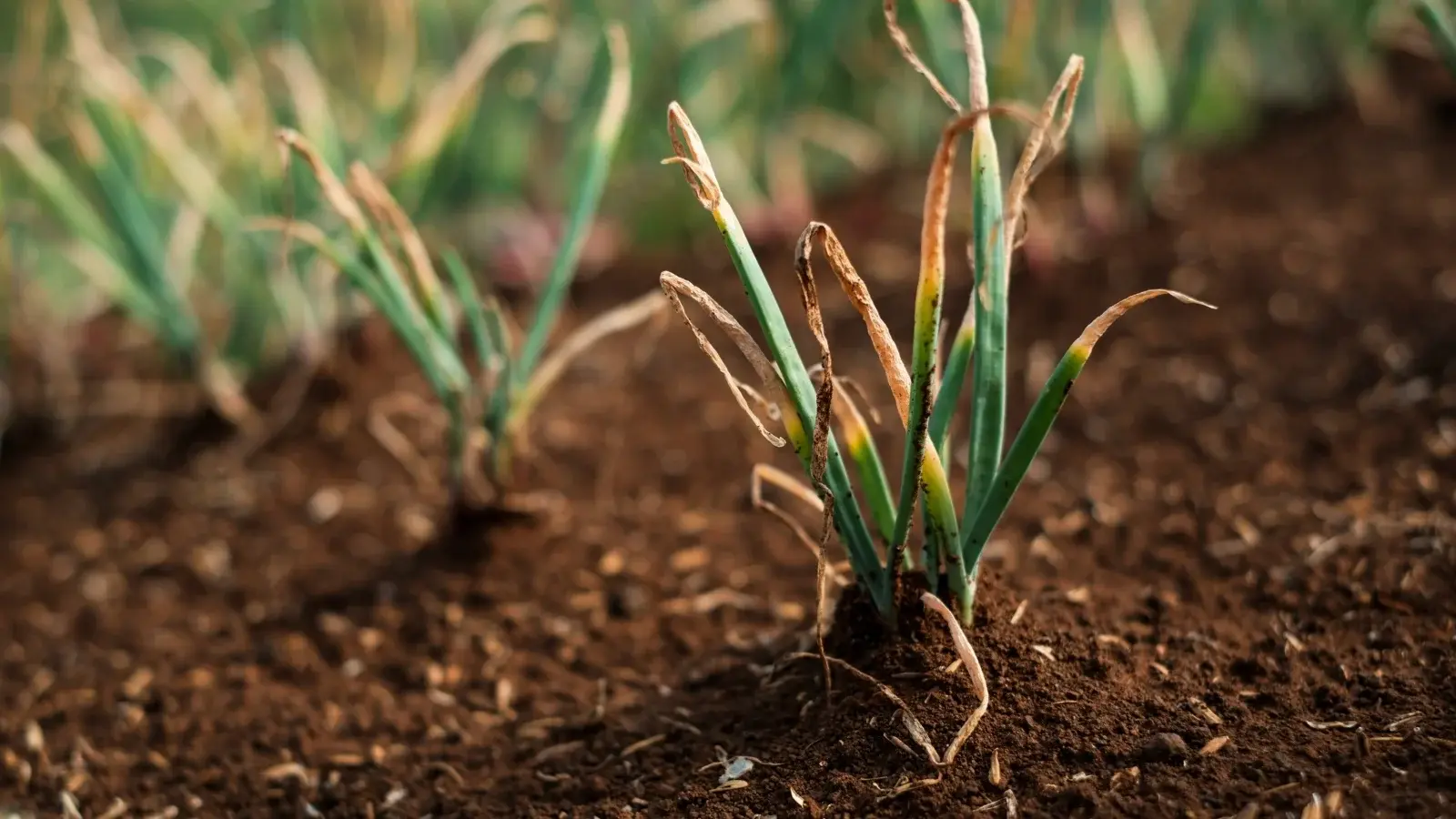
Older leaves starting to yellow and dry from the tips.
Tops gradually leaning over as the bulb matures.
Firm, healthy‑looking bulbs when you check them.
Danger signs, on the other hand, mean something is wrong:
Sudden wilting in the middle of the growing season.
Leaves turning yellow or pale from the bottom up.
Soft, mushy, or foul‑smelling bulbs.
Plants that look stressed even when the soil is moist.
If you see these symptoms, it is time to look more closely at water, pests, and diseases.
Moisture Stress: Too Little or Too Much Water
Water management is one of the biggest reasons onions wilt. Both underwatering and overwatering can cause the same outward symptom: droopy, stressed plants.
Underwatering
Onions need consistent moisture, especially in warm weather. When the soil goes too dry, the leaves start to lose turgor and may look pale, thin, or slightly papery.
To help:
Check the soil with your finger about 2–3 cm deep; if it feels dry, the plant probably needs water.
Water deeply but less frequently, aiming for around 1–2 cm per week, adjusted to your climate and rainfall.
Use a light layer of organic mulch around the plants to reduce evaporation and keep the soil cooler.
Overwatering and Poor Drainage
On the other side of the spectrum, soggy soil can be just as harmful. If the roots sit in water for too long, they start to rot and cannot take up water or nutrients, even though the ground looks wet. This often leads to wilting, yellowing, and poor growth.
To improve the situation:
Make sure the bed drains well; raised beds or mounded rows help in heavy soils.
Avoid planting in compacted or clay‑rich areas without amendments like compost.
Water less frequently and let the top layer of soil dry slightly between irrigations.
Both under‑ and overwatering can also encourage root‑rot diseases, so keeping moisture balanced is one of the best ways to protect your onions.
Fungal Diseases That Cause Wilting
If your watering looks correct but the plants still wilt, fungal diseases are a likely suspect. These problems often show themselves as yellowing, spots, or soft, rotting tissue.
Fusarium Basal Rot
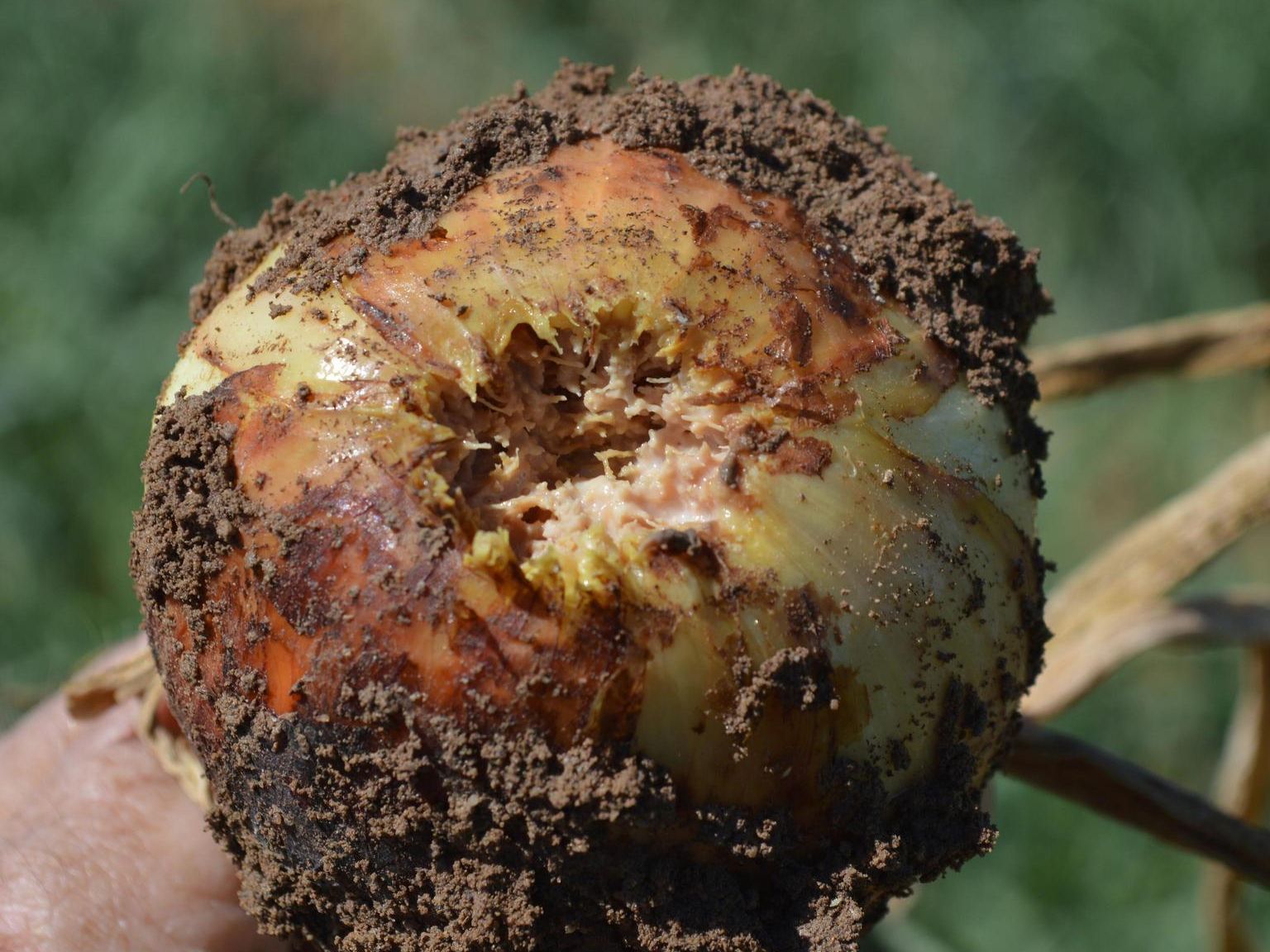
Fusarium is a common soil‑borne fungus that attacks onion roots and the base of the bulb. Early signs include:
Yellowing leaves that start to wilt.
Brown, watery decay at the base of the bulb.
Plants that pull out easily because the roots are damaged.
This disease is worse in warm, poorly drained soils and in fields where onions or other alliums have grown repeatedly. Management focuses on prevention:
Rotate crops with non‑allium plants for several seasons.
Use certified disease‑free seed and sets.
Avoid overwatering and improve soil structure with compost.
Downy Mildew and Botrytis Leaf Blight
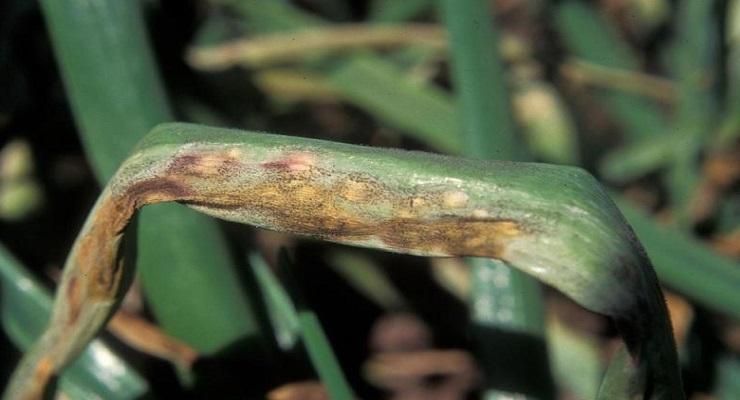
They normally look like pale or white spots on the leaves, sometimes with fuzzy growth underneath. As it spreads, whole leaves can collapse and make the plant look wilted.
Best practice to reduce risk:
Space plants so air can circulate.
Avoid overhead watering in the evening, which keeps foliage wet overnight.
Remove badly infected leaves or plants to reduce spread.
Soft Rot and Other Rots
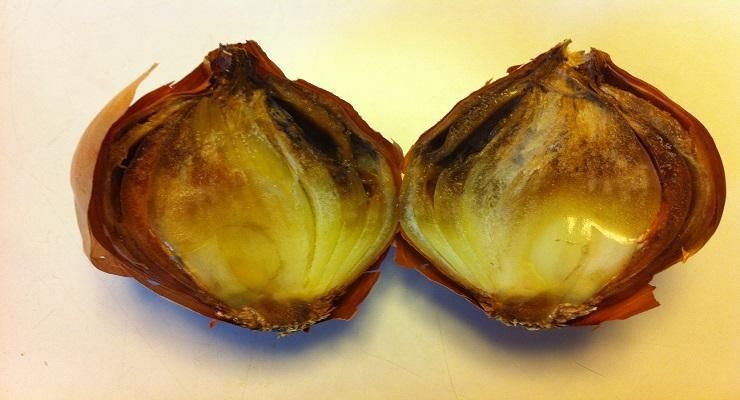
Soft rot typically starts as water‑soaked areas on the bulb that become soft and foul‑smelling. It often follows insect damage, wounds, or poor storage. Once rot sets in, the plant usually cannot recover, so prevention is essential:
Keep the growing area clean and free of old plant debris.
Avoid injuring roots and bulbs when weeding or harvesting.
Let bulbs dry properly after harvest before storing.
AI‑powered plant‑care tools such as Plantlyze can help you distinguish fungal patterns from simple nutrient stress by analyzing symptom photos and giving tailored suggestions.
Bacterial and Nematode Problems
In addition to fungi, bacterial diseases and nematodes can also cause wilting‑like symptoms.
Bacterial Wilt
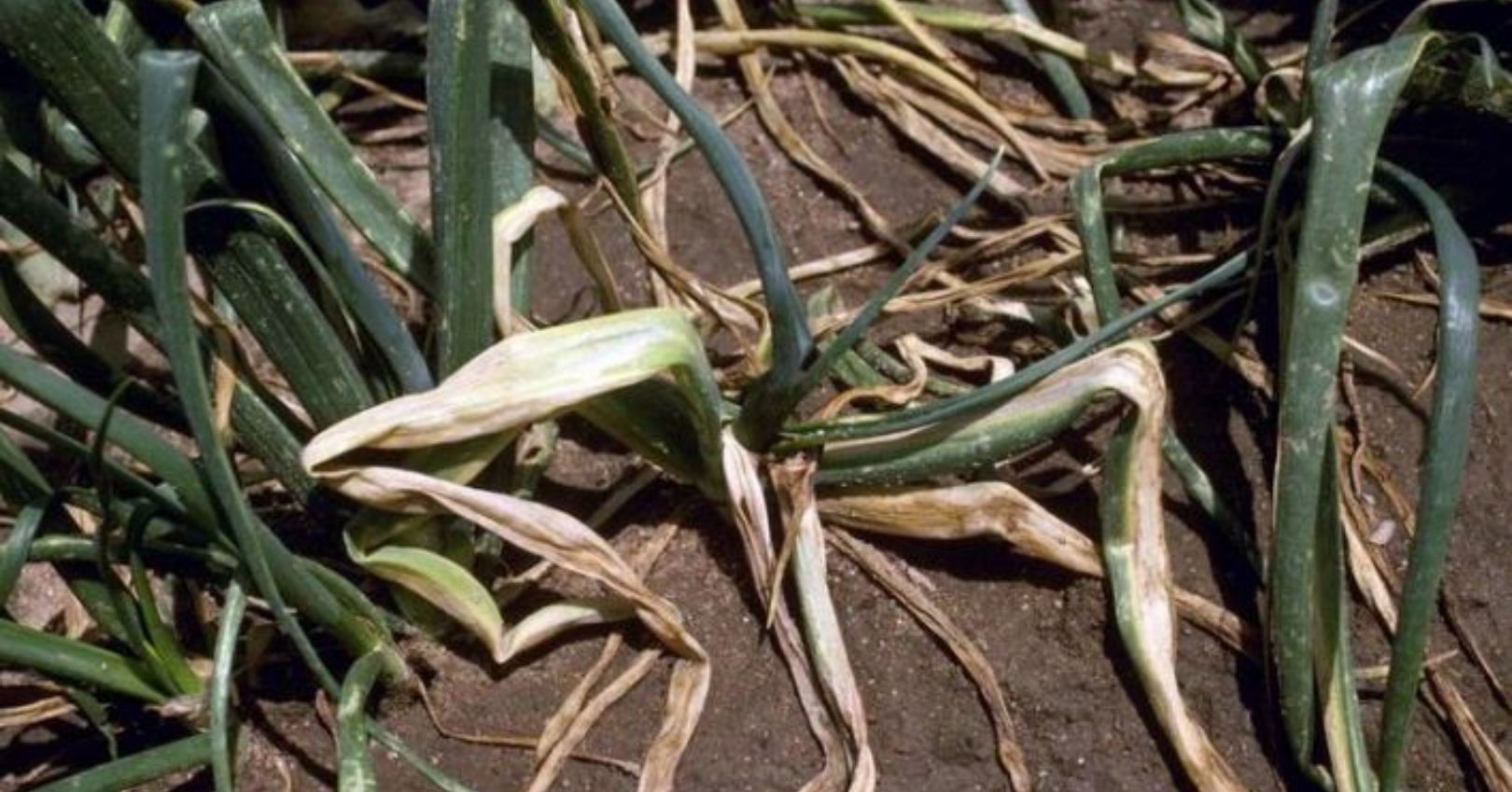
Bacterial wilt, caused by pathogens such as Ralstonia species, can make plants suddenly wilt and collapse without obvious leaf spots. It often appears in low, wet areas after heavy rain or irrigation.
Since bacterial wilt is hard to reverse once established, focus on:
Improving drainage and avoiding waterlogged beds.
Rotating crops and avoiding planting onions in the same spot year after year.
Using clean planting material and avoiding moving infested soil around.
Stem and Bulb Nematodes
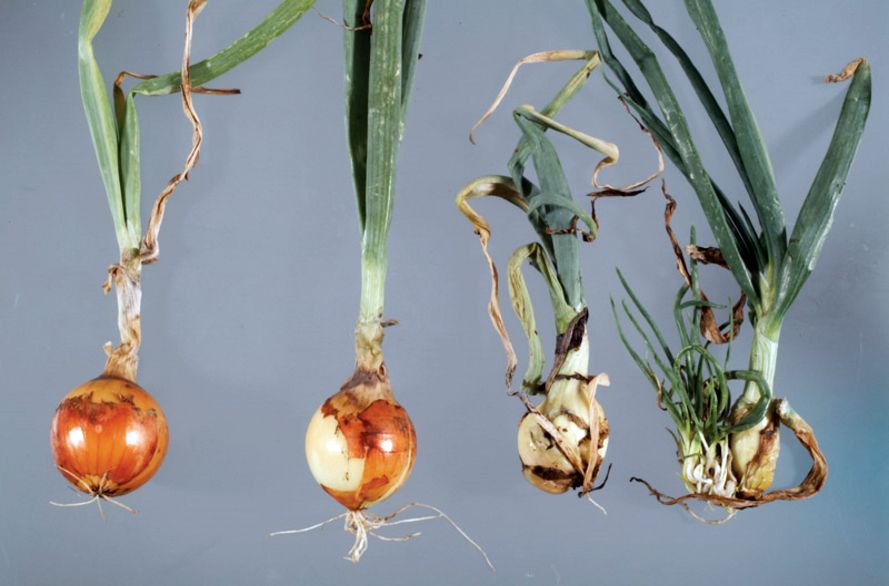
Stem and bulb nematodes are tiny roundworms that live in the soil and feed on roots and stems. Infected plants may show:
Stunted, twisted, or yellowing leaves.
Bulbs that look shriveled, cracked, or dried out.
Poor growth even when nutrients and water seem adequate.
Prevention is the main strategy:
Rotate crops and avoid planting susceptible alliums too frequently.
Use clean planting material and avoid introducing soil from infested areas.
In severe cases, solarizing the soil or fallowing the bed can help reduce nematode numbers.
Pests That Trigger Wilting
Insects can also be behind wilting onions, especially when they damage the roots or stems.
Onion Maggot
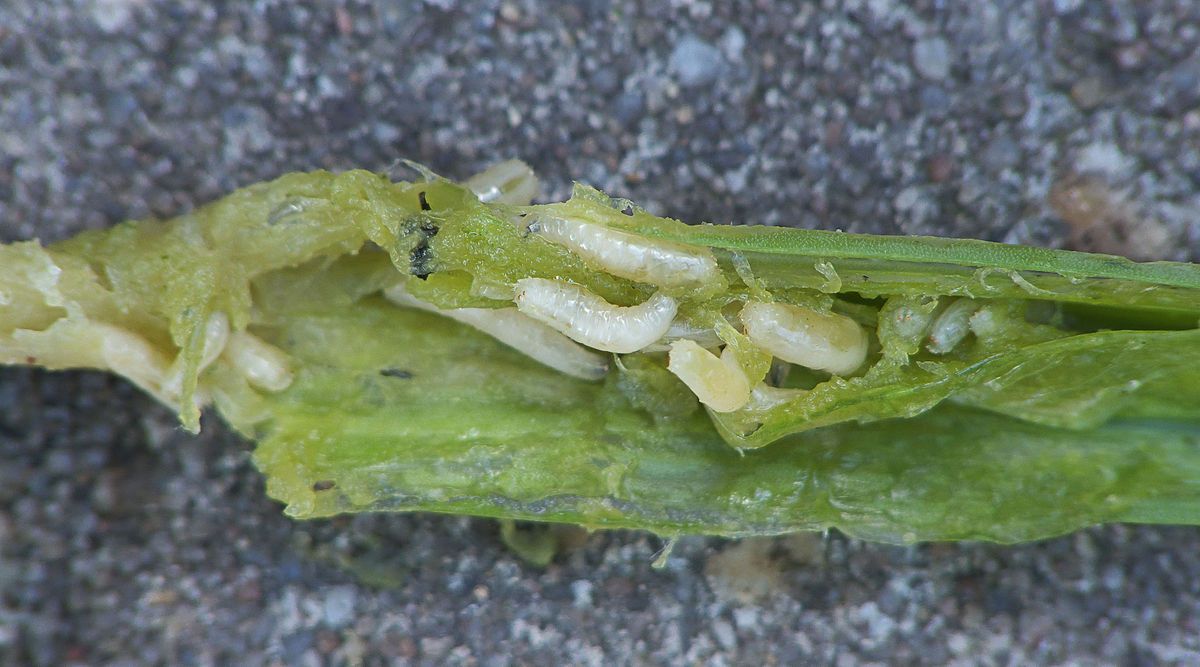
Onion maggot larvae tunnel into the base of the stem and bulbs, disrupting water and nutrient flow. Affected plants may:
Yellow and wilt suddenly.
Develop a soft, foul‑smelling base.
Break off easily at the soil line.
Management includes:
Crop rotation away from onion and related crops.
Using row covers to prevent adult flies from laying eggs.
Removing and destroying badly infested plants and avoiding composting them.
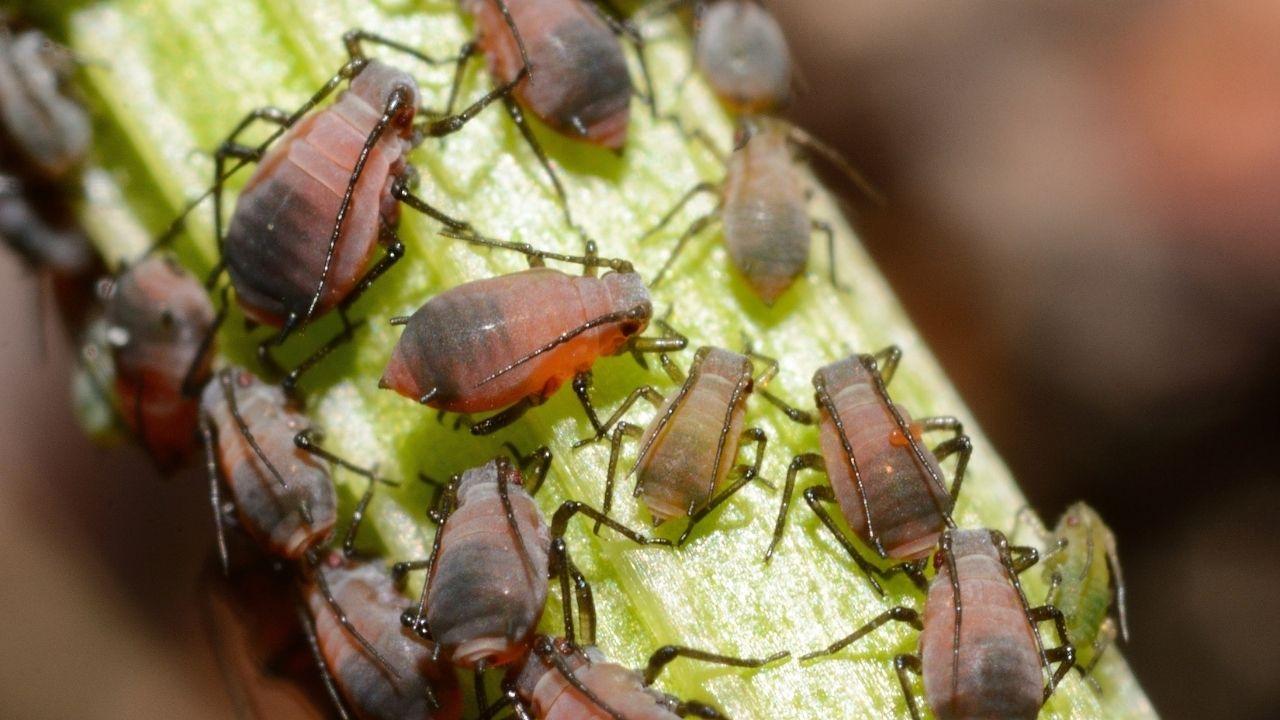
Thrips and Other Sucking Insects
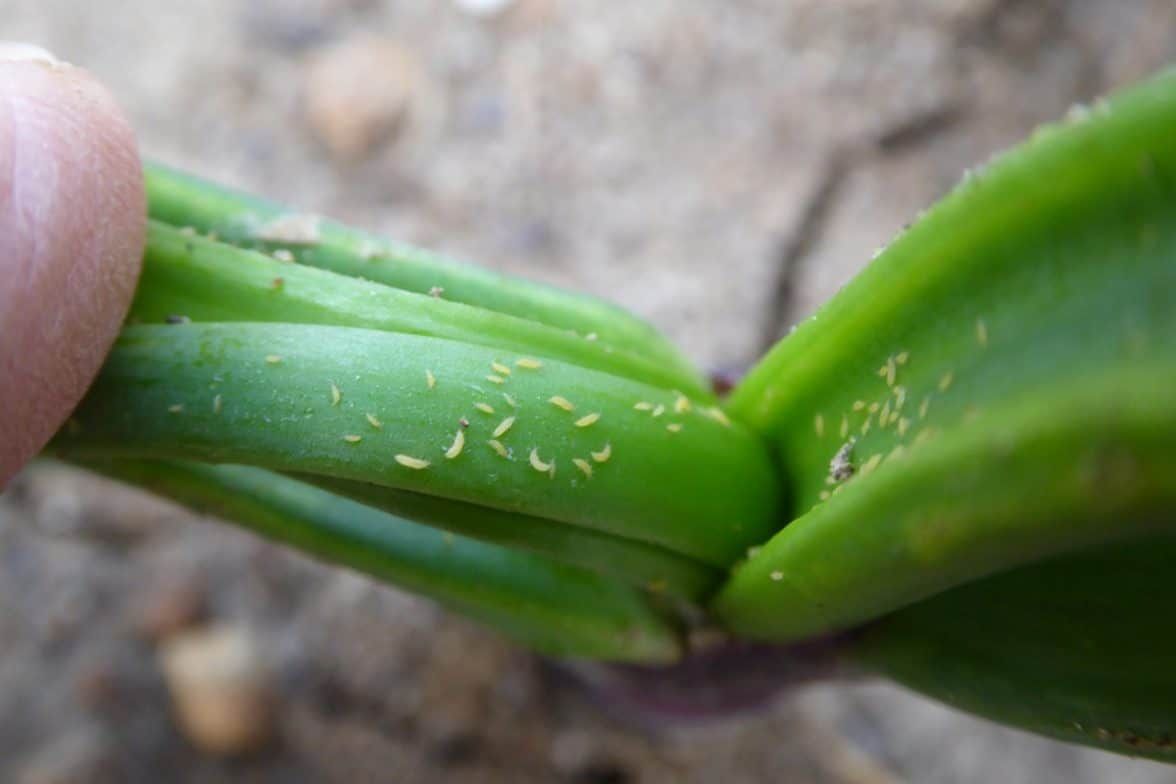
Thrips and similar pests can cause leaf distortion, silvering, and stress. They may not always cause dramatic wilt by themselves, but they predispose the plants to heat and drought stress.
Simple things you can do:
Regularly inspect the undersides of leaves.
Use insecticidal soap or neem oil if numbers are high.
Keep plants healthy and well‑watered so they tolerate minor feeding better.
Environmental and Cultural Factors
Sometimes wilting has nothing to do with disease or pests; it comes down to environment and how you grow your onions.
Heat and Sun Stress
Onions can temporarily wilt in the middle of the day on hot, sunny days. If they perk up by evening, this is usually just heat stress.
You can reduce stress by:
Mulching lightly to keep the soil cool.
Watering in the morning rather than midday.
Avoiding planting in areas with reflected heat, such as near walls or dark surfaces.
Wind and Physical Damage
Strong winds or accidental damage from tools and feet can injure stems and roots, leading to softening and wilting.
To minimize this:
Maintain a tidy bed and avoid walking on the planting area.
Use supports or wind breaks if your garden is exposed.
Soil Compaction and Poor Structure
Tightly packed soil makes it hard for roots to grow and for water to move through. This can mimic drought even when moisture is present.
Improving soil structure with organic matter, compost, and proper tillage helps the plants stay turgid and healthy.
How to Diagnose Your Wilting Onions
If your onions are wilting, follow these steps to narrow down the cause:
Check the soil moisture
Stick your finger 2–3 cm into the soil. If it feels dry, increase watering; if it is soggy, reduce it and improve drainage.
Look at the pattern of yellowing
Tip‑down yellowing without foul smell may point to water stress or minor nutrient issues.
Yellowing from the base up with soft tissue suggests disease or rot.
Inspect the roots and bulbs
Gently lift a few plants to see if roots are brown, slimy, or absent.
Check bulbs for soft spots, dark patches, or insect tunnels.
Look for pests
Examine stems and bulbs for small larvae, frass, or tiny insects.
Review recent weather and care
Think about recent heat waves, heavy rain, or changes in watering habits.
For a faster and more confident diagnosis, capturing a clear photo of your wilting onion and using an AI‑powered plant‑care assistant such as Plantlyze can help you identify the exact cause. Just visit plantlyze.com, upload your image, and get care suggestions tailored to your plant’s condition.
Treatment and Prevention Strategies
Once you know what is causing the wilting, you can take targeted steps.
Immediate fixes
Remove severely diseased or pest‑damaged plants to reduce spread.
Adjust watering to provide consistent but not excessive moisture.
Improve drainage with raised beds or added compost if the soil is heavy.
Use organic mulch to keep the soil cool and moist.
Long‑term prevention
Rotate crops so onions do not follow onions or other alliums in the same spot.
Choose disease‑resistant varieties where available.
Keep the planting area clean and free of old plant debris.
Maintain healthy soil with compost and balanced fertilization.
Schedule your onion watering. Get risk alerts and hints for caring for onions at your place with Plantlyze—with weather-based features.
Summary and call to action
So many factors, so much simplicity! From a mere watering issue to serious fungal or bacterial diseases involved when discussing wilting onions. Most cases, however, can be prevented or managed with good cultural practices and early attention. By checking soil moisture, watching for pests, and rotating your crops, you can keep your onion bed looking strong and productive.
If you ever feel unsure about why your onions are wilting, let an AI‑powered plant‑care assistant help you make sense of the problem. Plantlyze lets you upload a photo of your plant and receive guidance on diagnosis and care.
Visit plantlyze.com to start using your free plant‑care assistant today and keep your garden healthier with less guesswork.
References
PNW Plant Disease Handbook – Onion (Allium cepa) Fusarium Basal Rot
https://pnwhandbooks.org/plantdisease/host-disease/onion-allium-cepa-fusarium-basal-rotCSU Extension – Soil‑Borne Diseases of Onion
https://extension.colostate.edu/resource/soil-borne-diseases-of-onion/University of Minnesota Extension – Onion Leaves Yellow Then Wilt (Diagnosis Guide)
https://apps.extension.umn.edu/garden/diagnose/plant/vegetable/onion/leaveswilt.htmlPubMed Central – Identification of Fusarium Basal Rot Pathogens of Onion and Management Study
https://pmc.ncbi.nlm.nih.gov/articles/PMC10498799/PubMed Central – Onion Fusarium Basal Rot Disease Control by Arbuscular Mycorrhizal Fungi and Trichoderma
https://pmc.ncbi.nlm.nih.gov/articles/PMC10857072/