Onion root rot happens beneath the soil surface where healthy roots are turned into mush while the plant wilts above ground. Several fungal diseases are covered by this general term from Pythium to Fusarium basal rot, white rot, and pink root. They love wet poorly drained soils and can completely take over a bed if left unchecked. Luckily prevention works better than cure and with a little practice the early signs are easy to spot.
This guide covers the main types of onion root rot, their symptoms, causes, and practical fixes. You will also learn how tools like Plantlyze, an AI powered plant care diagnosis tool, can help you identify issues fast from simple photos.
Why onion root rot happens
Root rot in onions comes from soil borne fungi that love wet, cool, or warm conditions depending on the type. Pythium strikes in saturated soils during hot spells. Fusarium basal rot builds up after years of onion planting. White rot lingers in soil for decades. Pink root worsens with repeated crops in the same spot.
Poor drainage tops the list of triggers. Overwatering, tight clay soils or flat beds leave moisture trapped in. Cool nights with warm days also stress the roots and provide an opportunity for infection to set in. Once established, these fungi will survive as spores or sclerotia that can wait for years until new onions are planted.
Yield and quality losses take place when rot sets in. The bulbs remain small, do not store well or rot during storage and transport. Smart cultural practices beat most outbreaks before they start.
How to spot onion root rot early
The first above ground symptoms are tip and marginal yellowing of leaves which later wilt even when there is sufficient soil moisture. The plants appear stunted or seem to be leaning at the base. In wet weather conditions, the foliage remains upright but can be easily pulled from the soil.
Dig up a few to check. Healthy roots are firm and white. Rot is as a slimy black strand for Pythium, pink to red roots for pink root , reddish brown basal plates for Fusarium or white fluffy growth with black dots for white rot.
Take clear photos showing wilting plants, uprooted roots and cut bulbs. Upload them to Plantlyze at plantlyze.com. The AI detects pattern matches with common root rots and provides suggested next steps removing the guesswork.
Pythium root rot
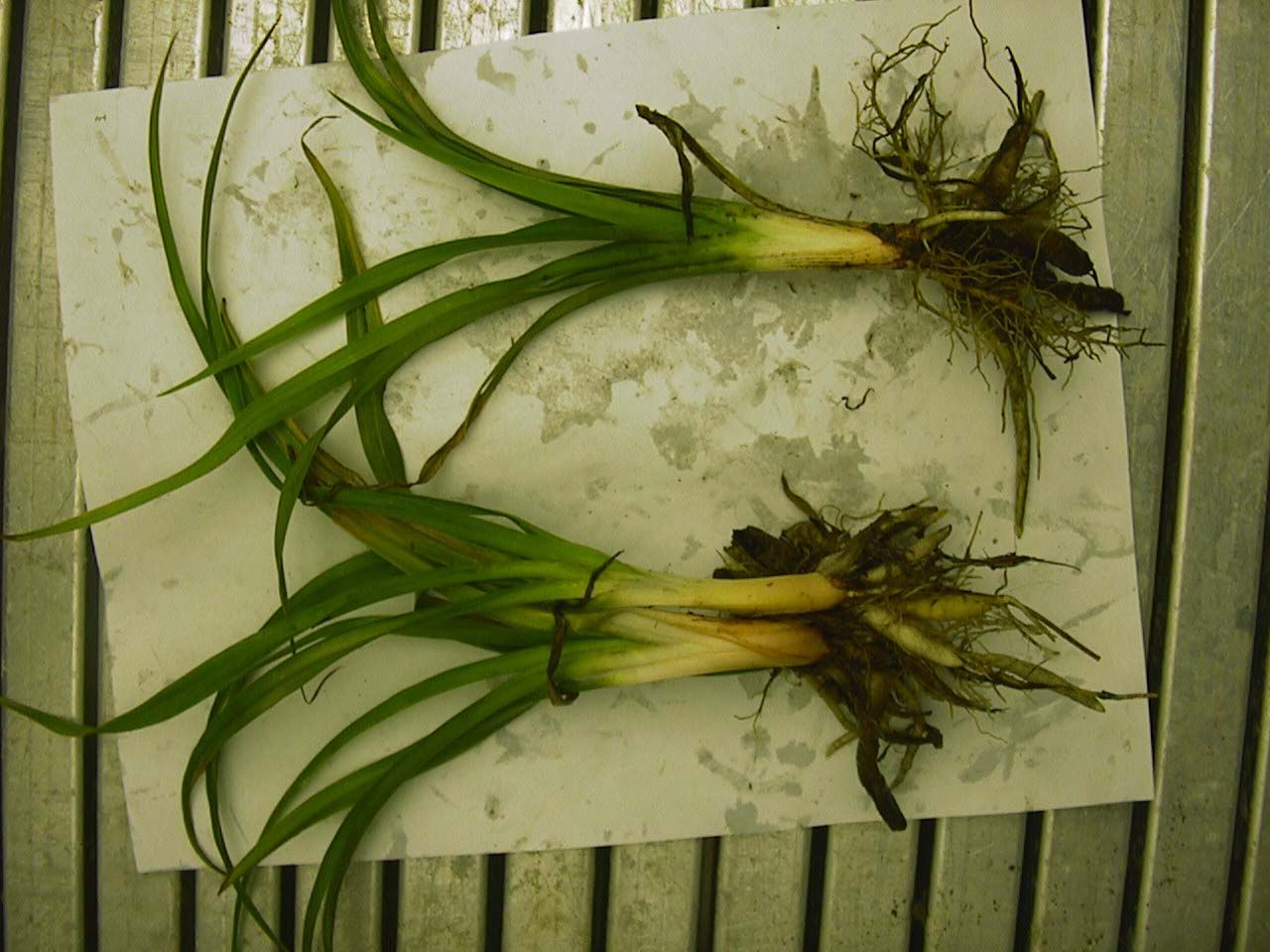
Pythium root rot hits young plants hard in warm, soggy soils. Roots turn water soaked and black within days. Above ground, tips yellow fast, and plants stunt or collapse.
This oomycete loves temperatures above 75F with constant moisture. Seedlings suffer most, but transplants can catch it too. Not all roots rot at once, so check several plants. Affected ones rarely recover fully, leading to tiny bulbs.
Raised beds help most here. Plant into fluffy, well drained soil. Water deeply but infrequently. Thin seedlings early to boost airflow. Fungicides like mefenoxam work as a last resort, but prevention rules.
Fusarium basal rot
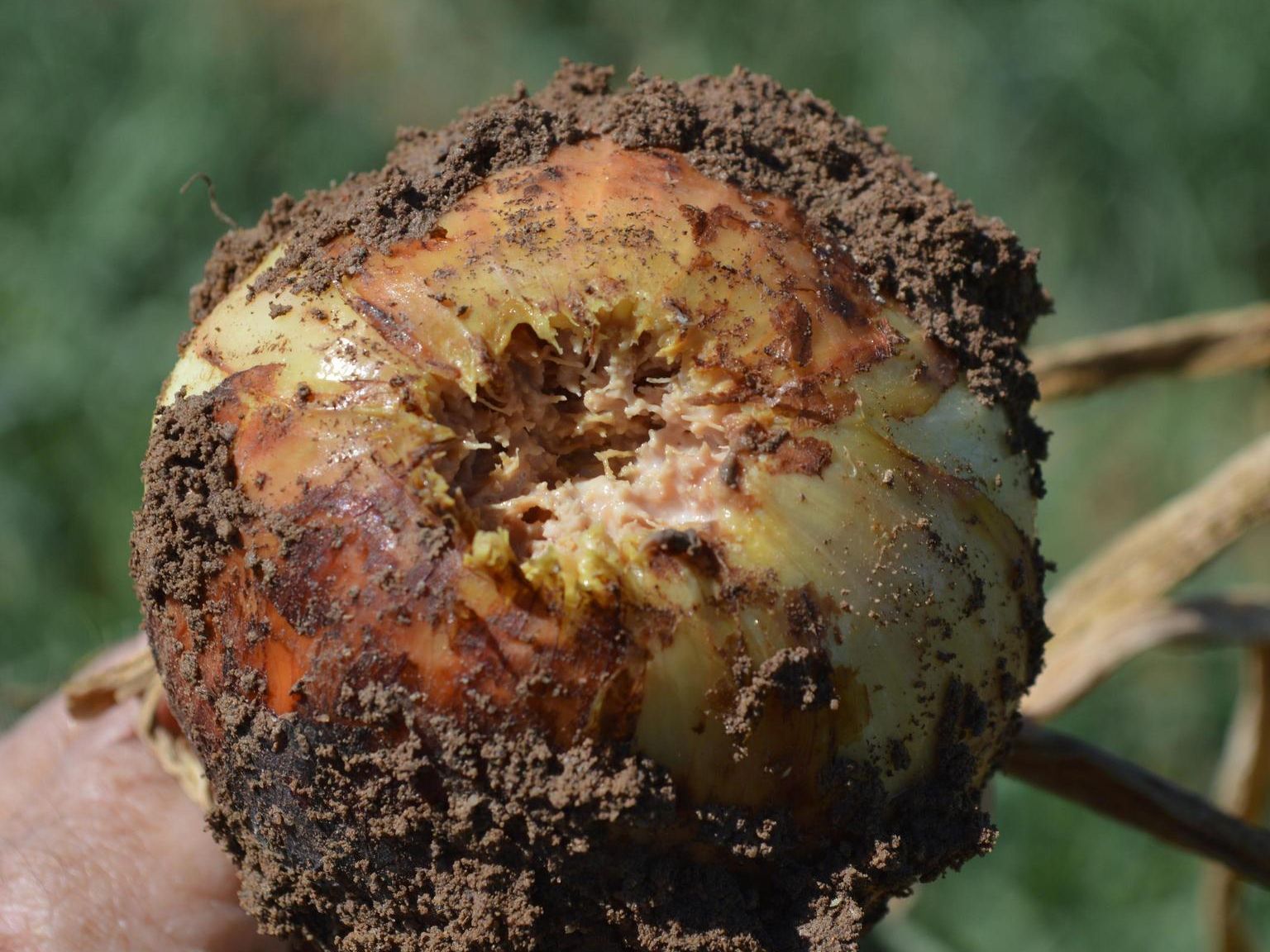
Fusarium basal rot creeps in slowly. Leaves yellow from tips inward, curving outward as they die. Pull a plant, and the basal plate shows reddish brown rot spreading up scales. Cut open, watery brown tissue appears.
Fusarium oxysporum f. sp. cepae lives in soil for years. It enters through wounds from tools, insects, or transplant shock. Warm soils above 80F speed spread. Continuous onion crops build pressure over time.
Rotate out of alliums for four years minimum. Handle transplants gently to avoid root nicks. Store bulbs cool at 39F to limit post harvest loss. Resistant varieties exist but offer partial protection only.
White rot (Sclerotium cepivorum)
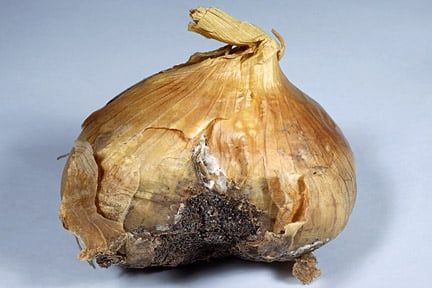
White rot announces itself with basal leaf decay and fluffy white mycelium on bulbs. Tiny black sclerotia dot the rot later. Foliage yellows and wilts, especially in dry spells. Roots rot fully, loosening plants in soil.
This Allium specialist survives 20 to 30 years as sclerotia. Cool, moist soils from 50F to 75F favor it. Once in a field, rotation alone rarely clears it. Brassicas or mustard green manures release biofumigants that suppress sclerotia.
Avoid planting alliums in suspect soil. Solarize beds in summer heat. Store bulbs dry and cool. Clean tools between fields to slow spread.
c
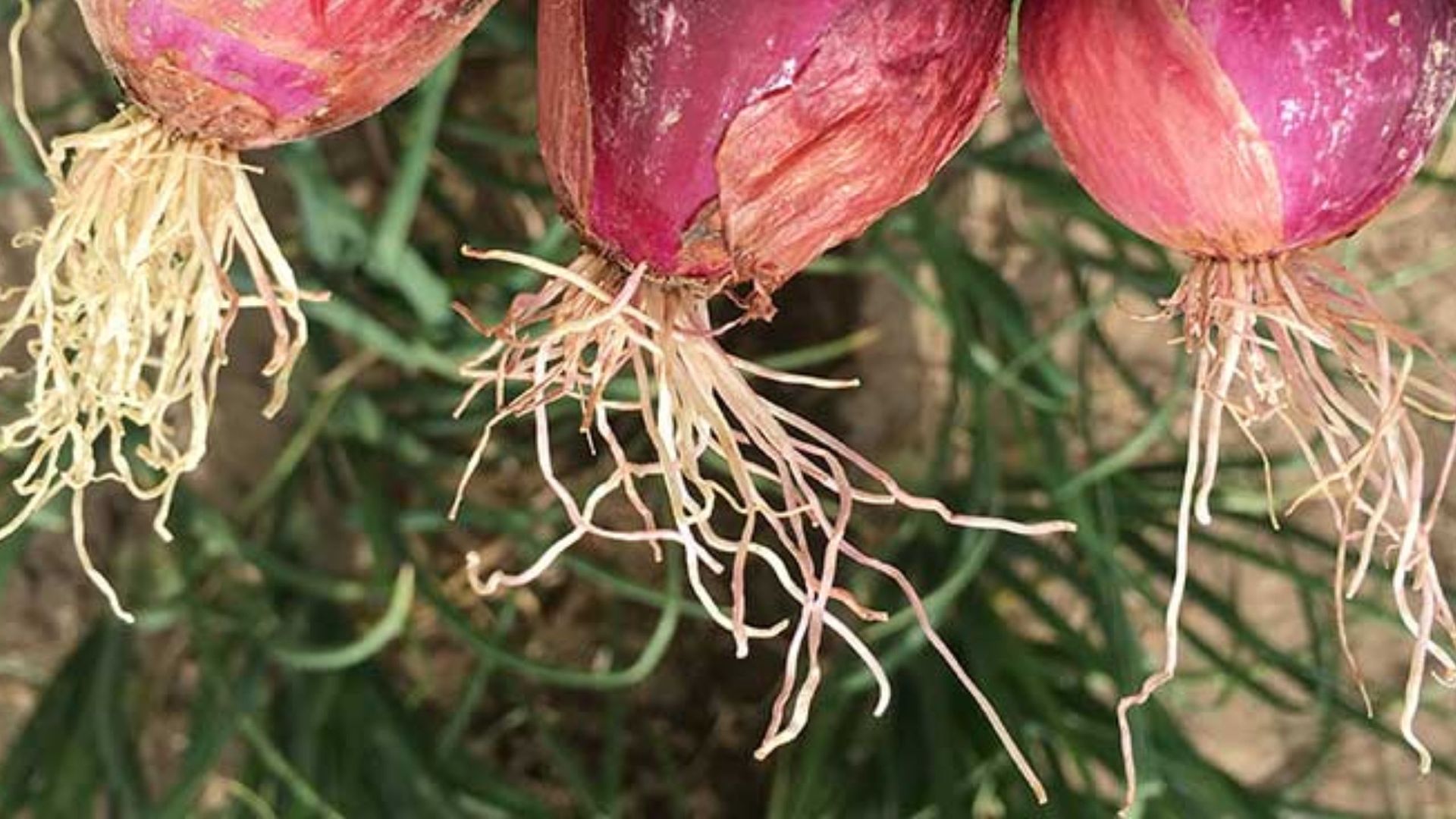
Pink root starts mild. Roots turn bright pink, then red, and blacken over time. Plants wilt slightly but keep growing. Bulbs form but stay undersized.
Phoma builds with back to back onion crops. Warm sandy soils worsen it. Unlike others, it rarely kills plants outright but cuts quality steadily. Check roots monthly in prone fields.
Rotate three to six years with grains or legumes. Choose resistant varieties like Texas Grano. Improve soil organic matter for better drainage. Fumigation helps commercial fields but not home gardens.
Prevention strategies
Prevention beats every root rot every time. Start with soil prep.
Build raised beds 8 to 12 inches high for drainage. Till in compost but avoid fresh manure, which holds water. Test soil pH and aim for 6.0 to 6.8.
Rotate crops long term. Skip alliums for three to six years based on your worst problem. Grains, corn, or beans work best. Compost old plants far from next years bed.
Plant certified clean seed or transplants. Space onions 4 to 6 inches apart for airflow. Water at soil level, not overhead. Mulch lightly to retain moisture without sogginess.
Treatment options
No magic fix exists once rot starts. Pull and destroy infected plants. Do not compost them. Solarize clean beds in off season with clear plastic for six weeks.
Fungicides like Ridomil for Pythium or tebuconazole for Fusarium help transplants in high risk spots. Apply at planting per label. They suppress but rarely eradicate soil pathogens.
Harvest early if foliage yellows widespread. Cure bulbs in warm dry air at 75F to 80F for two weeks. Store at 33F to 40F with good ventilation. Check monthly and remove any soft ones.
How Plantlyze can help you diagnose onion root rot
Root rots confuse even experts from above ground alone. Yellow tips might mean drought, nutrient lack, or fungus. Plantlyze cuts through by analyzing photos.
Upload images of wilted leaves, pulled roots, or sliced bulbs. The AI spots slimy black Pythium strands, pink Phoma roots, or Fusarium plate rot. It tracks changes over weeks too.
Spot issues before they spread. Visit plantlyze.com, snap a photo, and get insights in minutes. Pair it with your scouting for smarter decisions.
Simple check your onion patch checklist
Walk your bed weekly from transplant to harvest.
Look for yellow leaf tips spreading down. Note wilting in wet or dry weather.
Pull two or three plants. Rinse roots and check color and firmness. Slice bulbs if near harvest.
Take photos of suspects from all angles. Log dates and upload to Plantlyze for patterns.
Adjust water or rotate if early signs appear.
Final care reminder and soft CTA
Healthy onions start with dry feet and long rotations. Scout often, fix drainage, and act on first yellow flags. You will harvest firm bulbs every time.
Tools like Plantlyze make diagnosis painless. Sign up free at plantlyze.com. Build your plant health log and stay ahead of root rot all season.
References
UMass Extension – “Alliums Fusarium Basal Rot”
https://www.umass.edu/agriculture-food-environment/vegetable/fact-sheets/alliums-fusarium-basal-rotPNW Handbooks – “Onion White Rot”
https://pnwhandbooks.org/plantdisease/host-disease/onion-allium-cepa-white-rotUC IPM – “Pink Root / Onion and Garlic”
https://ipm.ucanr.edu/agriculture/onion-and-garlic/pink-root/PNW Handbooks – “Onion Fusarium Basal Rot”
https://pnwhandbooks.org/plantdisease/host-disease/onion-allium-cepa-fusarium-basal-rot