You pull an onion seedling from the soil and notice its roots are not the usual white or tan but a faint pink, then deepening to red or purple. As the plants grow, they stay small, the leaves yellow, and the bulbs never reach their full size. That is onion pink root, a fungal disease hiding in the soil and quietly weakening your crop season after season. The good news is that once you understand how pink root works, you can take steps to protect your onions and keep your beds productive. If you ever see pink or purple roots and are unsure what is happening, an AI powered plant care tool like Plantlyze can help you quickly identify the problem from a photo and suggest practical steps. Upload a clear image of your onion roots and foliage to Plantlyze.com and get a fast diagnosis plus tailored care tips.
What Is Onion Pink Root?
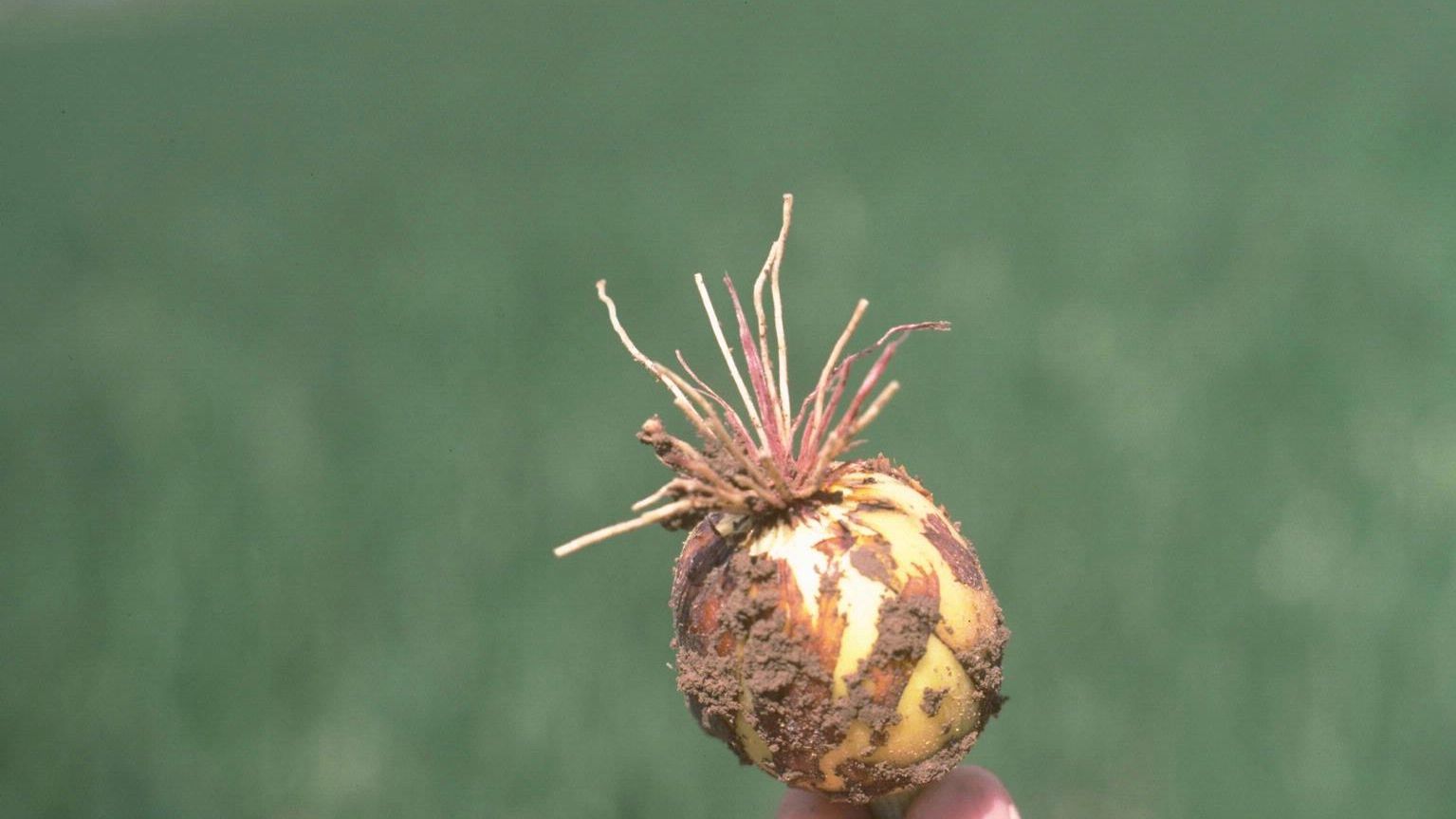
Onion pink root is a fungal disease of onion roots caused by a pathogen known as Phoma terrestris (also called Setophoma terrestris in some scientific sources). It mainly affects onions but can also infect garlic and a few other allium crops. The fungus lives in the soil and on old onion roots or plant debris, where it survives for years. Young roots are especially vulnerable because the fungus can enter without needing obvious wounds. Once established, pink root slowly starves the plant by killing roots, which makes it harder for onions to take up water and nutrients.
What Causes Onion Pink Root?
Understanding the cause helps you break the disease cycle.
The fungus Phoma terrestris in soil
The key culprit is Phoma terrestris, a soilborne fungus that can live in the soil for several years on decaying onion roots and plant debris. It infects roots directly, especially in stressed plants, and then spreads to new roots as long as conditions favor it.
Frequent onion cropping and short rotation
Growing onions in the same spot year after year allows the fungus to build up. When you plant onion after onion, you give Phoma terrestris an uninterrupted food source, which leads to more severe disease.
Soil conditions and plant stress
Pink root is worse in compacted, poorly drained soils and under stress such as drought, cold injury, or nutrient imbalance. Healthy plants with good soil structure and balanced nutrition resist infection better than weak, stressed plants.
If you want a quick sense of whether your pink roots are likely Phoma terrestris or another issue, Plantlyze can analyze your photos and help you interpret the pattern. Upload images at Plantlyze.com.
How to Recognize Onion Pink Root Symptoms
Early detection lets you adjust your management before the whole bed is affected.
Above ground symptoms
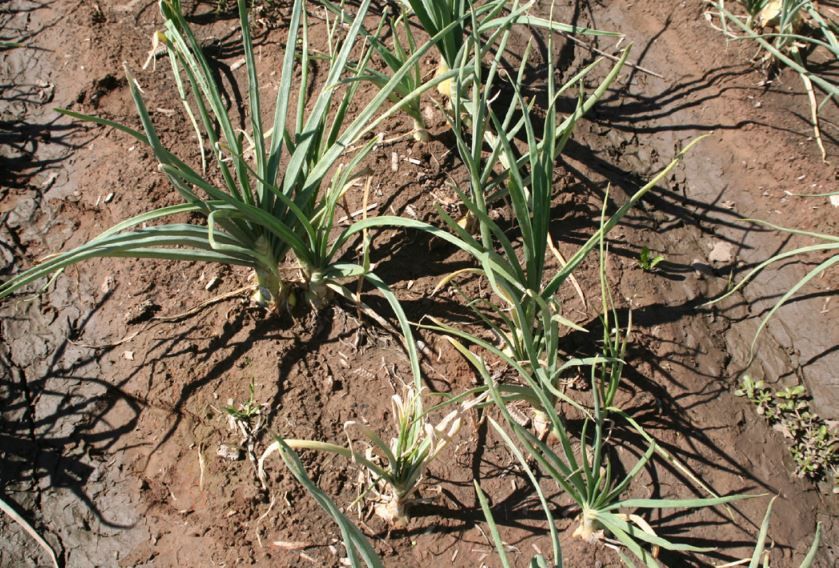
Infected plants grow slowly and stay noticeably smaller than healthy neighbors. Leaves may turn yellow or show tip dieback, and the overall look can resemble drought or nutrient deficiency. Bulbs are often undersized and may ripen unevenly or fail to fill completely.
Root symptoms
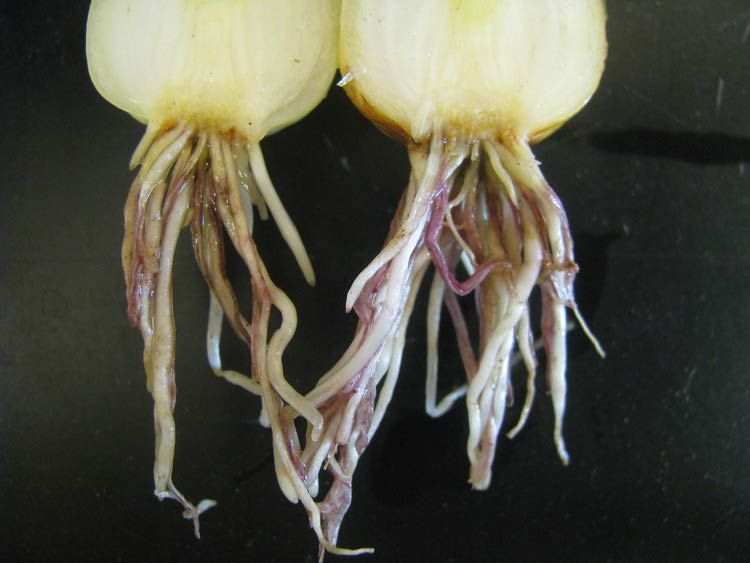
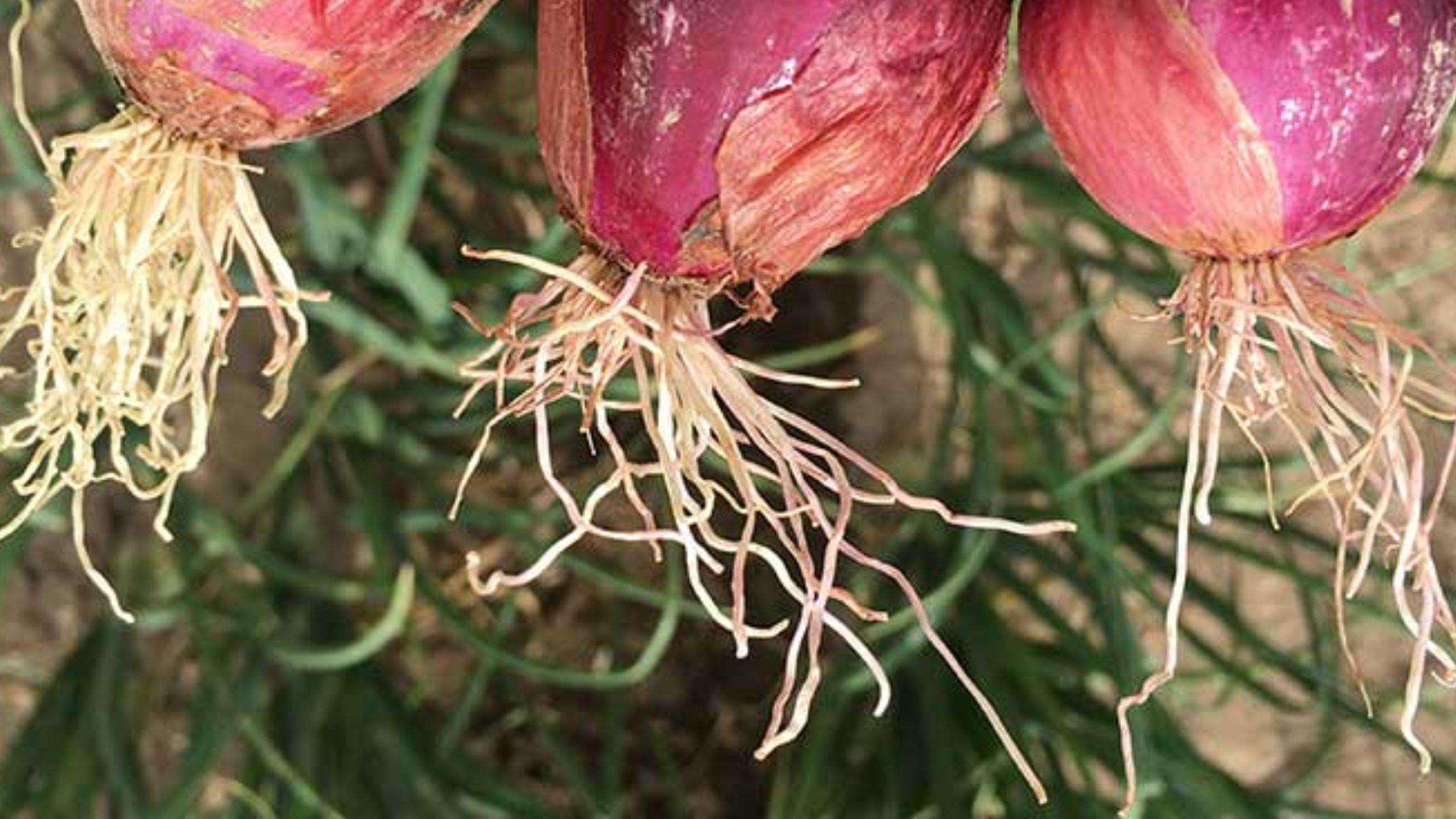
At first, roots turn light pink; as the disease progresses, the color deepens to red or purple, and the roots shrivel and die. New roots that form can also become infected, creating a cycle of weak root systems. When you pull a plant, the root system may look thin, patchy, and patchy with pink or red discoloration.
Bulb and storage signs
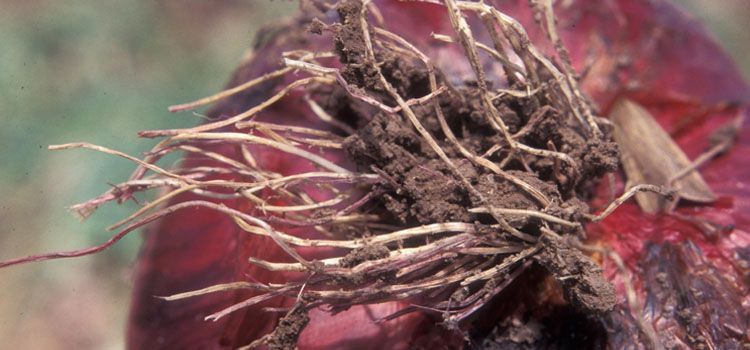
In severe cases, pink or red discoloration can extend into the outer scales of the bulb, and bulbs may decay in storage because the weakened root system never supported proper development.
If you notice pink roots, take close‑up photos of the roots and the base of the plant, then upload them to Plantlyze.com for a quick diagnosis before more plants are affected.
How Onion Pink Root Spreads and Persists
Knowing how the fungus moves helps you plan long‑term control.
The fungus spreads through contaminated soil, irrigation water, farm equipment, and infected planting material such as sets or transplants. It can also ride on windborne soil particles or in compost or manure that contains infected onion debris. Once in a field or bed, Phoma terrestris survives for years in old roots and soil, ready to infect the next onion crop.
Environmental stress such as drought, poor nutrition, or other diseases weakens plants and makes them more susceptible, which is why integrated crop health matters just as much as specific disease control measures. This is why prevention is usually more effective than trying to “cure” heavily infected plants.
How to Prevent Onion Pink Root
Because treatments are limited, prevention is the main strategy.
Practice long crop rotation
Avoid planting onions, garlic, shallots, or leeks in the same spot for at least 3–5 years. Rotate with non allium crops such as cereals, legumes, or brassicas, which break the disease cycle and reduce inoculum in the soil.
Use healthy planting material
Start with vigorous seed or disease‑free transplants and avoid planting sets with pink, moldy, or soft roots. If you grow your own transplants, keep seedling beds free of old onion debris and contaminated soil.
Improve soil structure and drainage
Use raised beds or mounded rows in heavy, clayey soils and add compost or other organic matter to improve soil structure. Avoid compacted or waterlogged soil, which favors root pathogens and weak root systems.
Balance nutrition and avoid stress
Provide balanced fertilization and keep soil pH in a range suitable for onions, generally around neutral to slightly acidic, to support healthy root growth. Maintain steady, not extreme, watering, and use mulch to reduce drought stress and soil temperature swings.
Manage insects and other diseases
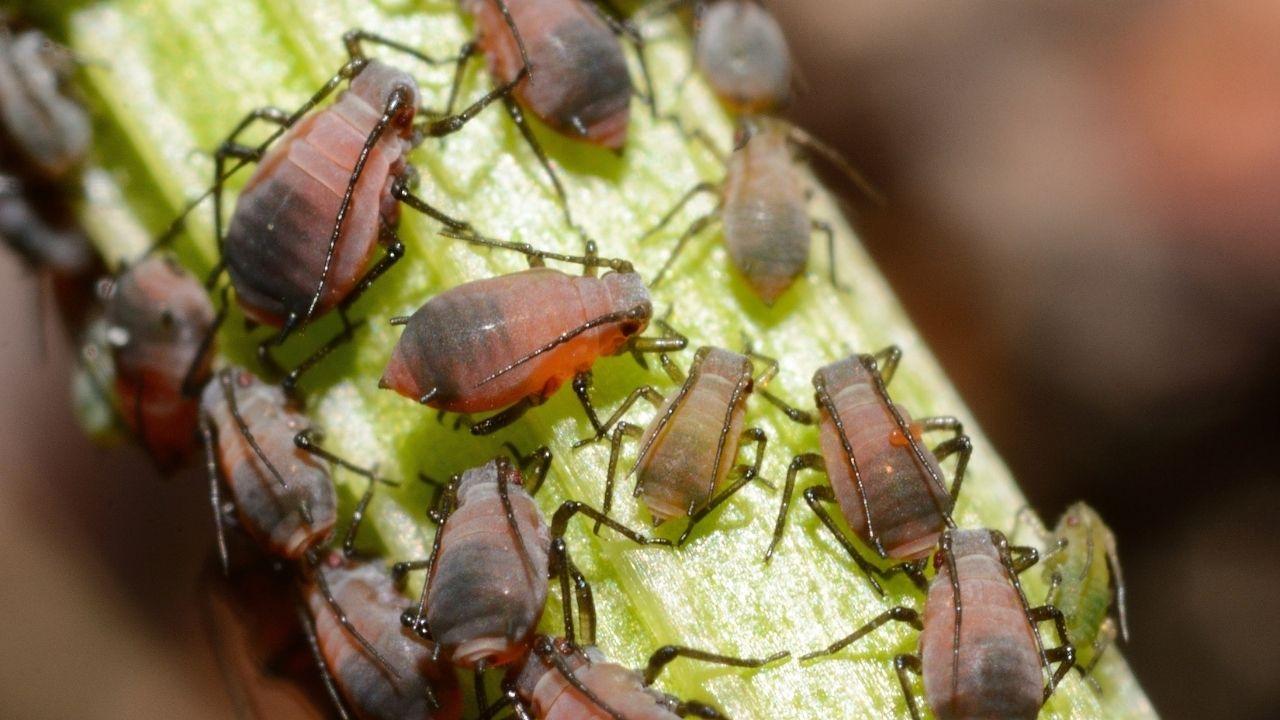
Plants weakened by insects or other diseases are more prone to pink root. Good pest management and overall plant health give onions a better chance to resist fungal attacks.
If you want to check whether your onion bed is at high risk for pink root, use Plantlyze to review your plant‑health photos and get tailored care suggestions at Plantlyze.com.
Can You Treat Onion Pink Root?
Once plants are heavily infected, options are limited.
Pink root is a soilborne fungal disease, so curative chemical treatments are rarely practical for home gardeners and are usually used only in combination with cultural controls in commercial systems. Fungicides or soil‑applied products may reduce inoculum in some cases, but they do not clear the pathogen from the soil.
The most effective approach is to remove badly infected plants, improve soil conditions, rotate hosts, and avoid planting onions in that area for several seasons. Over time, this reduces disease pressure and gives healthier plants a better chance.
If you see pink roots and are unsure of the best next step, upload clear images of the roots and leaves to Plantlyze.com for a quick diagnosis and guidance.
How an AI Plant Care Tool Can Help with Onion Pink Root
Tools that can recognize pattern from photo are making plant care easy. You want to know whether it is pink root or some other disease, or simple stress symptom-of the shape and color and distribution of damages on roots and leaves- an AI tool will tell you this; plus practical advices, long rotation suggested applied to soil amendmnets watering practices changed fertilization.
Plantlyze is an AI-powered application for home gardeners and small-scale growers. Upload clear photos of your onion roots and plants, get a simple explanation with easy care tips to follow. Not the ultimate substitute for expert advice, but much better at narrowing down possibilities than random guesswork.
If you regularly grow onions and worry about pink root staying in your soil, try Plantlyze.com. Upload a photo of your onion roots or plants and get a fast diagnosis plus personalized care tips in seconds.
References
University of California IPM – Pink root in onions and garlic
https://ipm.ucanr.edu/agriculture/onion-and-garlic/pink-root/Utah State University Extension – Pink root of onion
https://extension.usu.edu/pests/research/pink-root-onion.phpUtah State University – Pink root of onion (IPM notes)
https://extension.usu.edu/planthealth/ipm/notes_ag/veg-pink-root-of-onionPacific Northwest Plant Disease Handbook – Onion pink root
https://pnwhandbooks.org/plantdisease/host-disease/onion-allium-cepa-pink-rootColorado State University Extension – Soil‑borne diseases of onion
https://extension.colostate.edu/resource/soil-borne-diseases-of-onion/