Onions are a kitchen staple, but they are also a favorite target for a handful of persistent pests. Left unnoticed, tiny insects and maggots can dramatically reduce your yield, weaken plants, and even spread diseases. The good news is that most onion pests are predictable and manageable if you know what to look for and act early.
This article focuses on the most common onion pests ( thrips, leafminers, onion maggot, and similar fly maggots)and explains how to spot their damage, prevent infestations, and use safer, effective control methods. At the end, you’ll also see how tools like Plantlyze can help you diagnose onion pests faster from a simple photo.
Why onion pests matter
Onions are attacked by pests at multiple stages, from seedling to mature bulb. Some insects feed on tender leaves, others tunnel into or rot the bulbs underground. In severe cases, pests can cut yields by 20% or more, especially thrips heavy seasons.
Beyond just “eating” the plant, pests can open doors for fungi and bacteria. For example, onion thrips not only cause surface damage but also transmit Iris yellow spot virus, which further weakens crops. That is why early detection and integrated pest management (IPM) are far more reliable than waiting until plants look obviously sick.
How to detect onion pests early
Early detection is the cheapest control measure you have. Spend a few minutes each week walking through your onion patch and checking:
Young inner leaves for silvery streaks or tiny white trails.
The base of plants and soil for wilting, yellowing, or rotting areas.
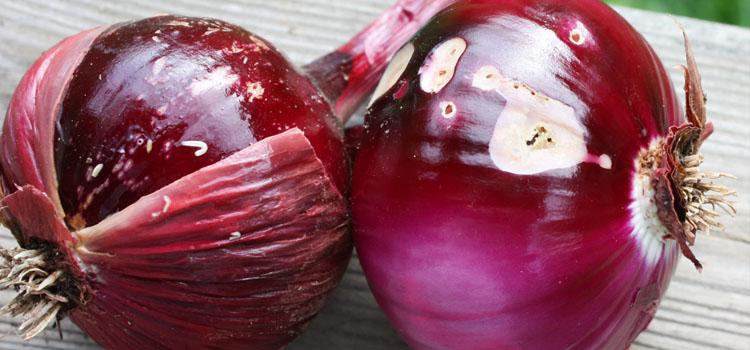
Any bulbs you pull for soft spots, tunnels, or tiny white larvae.
If you ever notice strange silvery marks or tiny worms near the bulb, take a clear photo and upload it to Plantlyze (plantlyze.com). The AI‑powered tool matches your image against known pest patterns and can help you quickly decide whether you need a cultural fix, a bio‑control spray, or a chemical treatment.
Main onion leaf‑feeding pests
Onion thrips (Thrips tabaci)
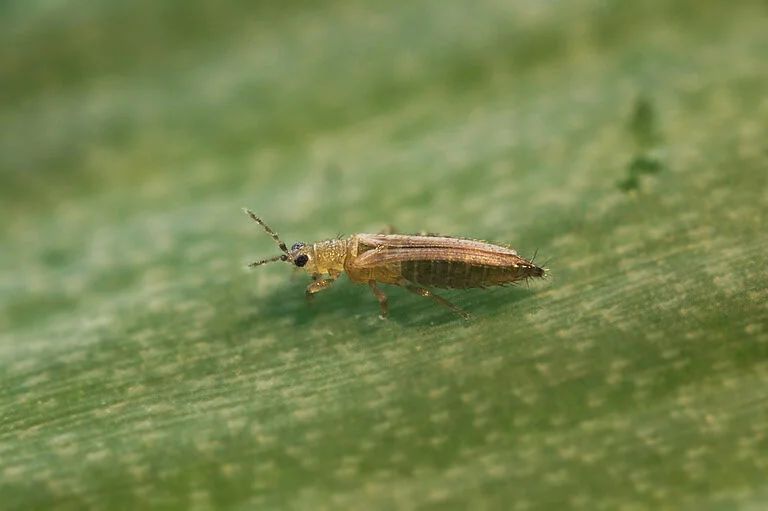
Onion thrips are tiny, pale‑yellow to brown insects that live in the leaf necks and inner leaves of onion plants. They suck sap and leave behind silvery streaks or patches that look like scraped paint on the surface of the leaves.
Thrips are especially damaging in hot, dry conditions, where populations can explode quickly. In some regions, heavy thrips pressure can reduce bulb size and quality enough to cut yields by almost a fifth. Thrips also help spread Iris yellow spot virus, which can lead to more severe foliar damage and yield loss.
Key signs to watch for:
Silvery or bleached streaks on young leaves.
Twisted or distorted leaves that feel rough when you run your fingers along them.
Plants that look pale or stunted despite good watering and sun.
Leafminers on onions
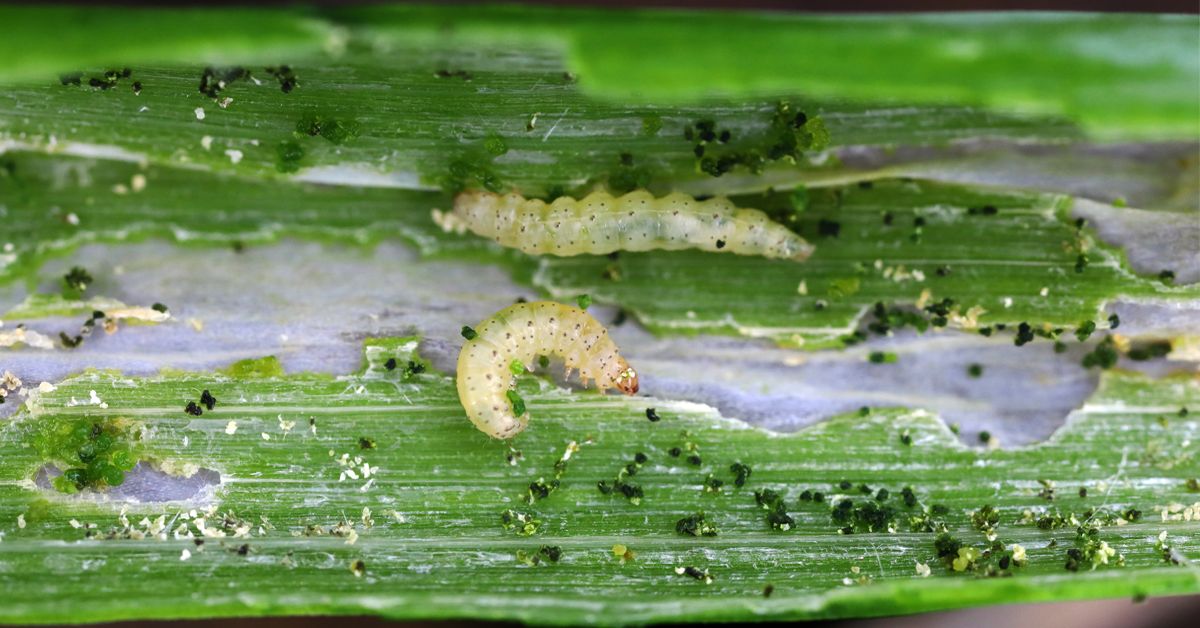
Leafminers are another common leaf‑feeder on onions. The adult is a small fly, but the damage is done by the larvae, which tunnel between the upper and lower layers of the leaf, creating white, winding roads through the tissue.
These tunnels block photosynthesis and weaken the plant, which can lead to reduced bulb size and slower growth. Unlike thrips, leafminer damage is not just on the surface; you can see the tunnel clearly from both sides of the leaf.
Key signs to watch for:
Serpentine white or pale green lines inside leaves.
Leaves that look “drawn on” with random, uneven trails.
Premature leaf drop or yellowing near the base of older leaves.
If you are unsure whether you see thrips or leafminers, remember this simple rule: silver on top usually means thrips; white roads inside mean leafminers.
Main onion bulb and root‑feeding pests
Onion maggot (Delia antiqua)
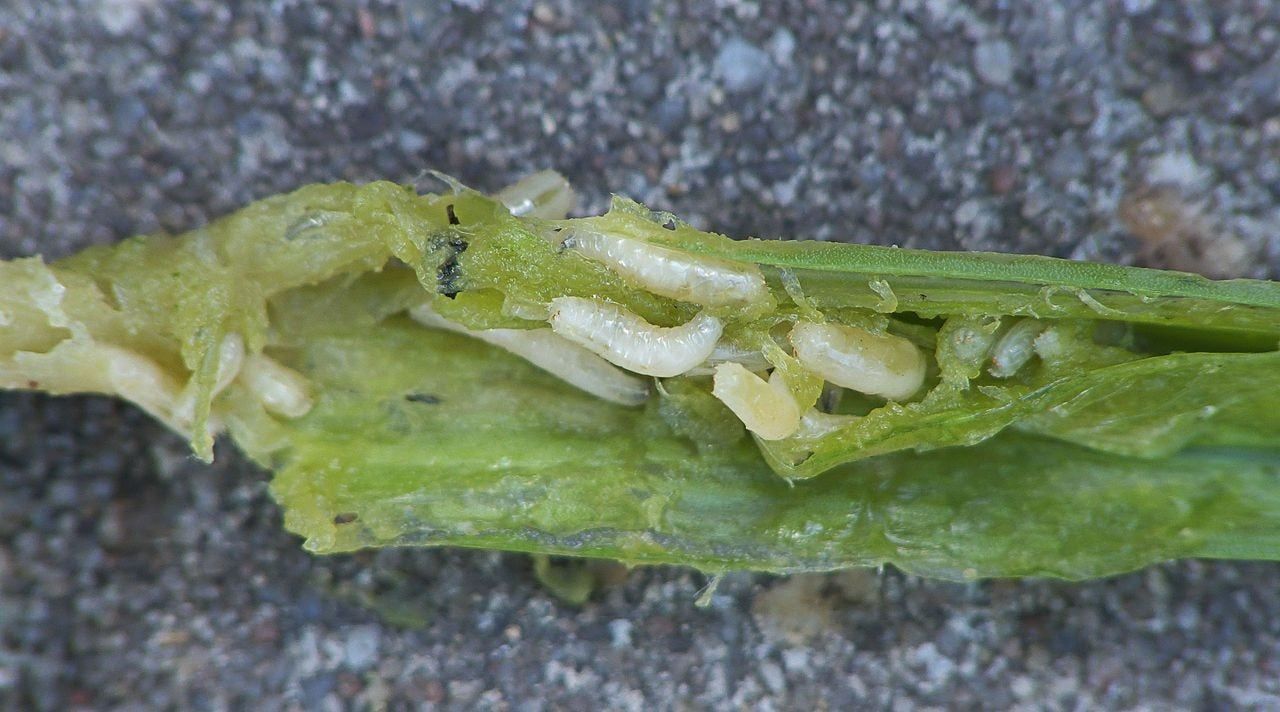
The onion maggot is one of the most feared pests in onion production. The adult is a small gray fly that lays eggs at the base of young onion plants. When the eggs hatch, the white legless larvae burrow into the roots and bulbs, feeding as they go.
Maggots can cause sudden wilting, yellowing, and collapse of seedlings or young transplants. As the larvae tunnel through bulbs, they create entry points for rotting bacteria and fungi, which can turn otherwise healthy‑looking onions into soft, smelly mush.
Key signs to watch for:
Seedlings that wilt or die for no obvious reason.
Yellowing or pale leaves on young plants.
Soft, brown lesions on bulbs and visible white maggots when you cut an onion open.
In many regions, onion maggot flies are most active in spring and early summer, so young plants are at highest risk during this window.
Seedcorn maggot and similar root maggots
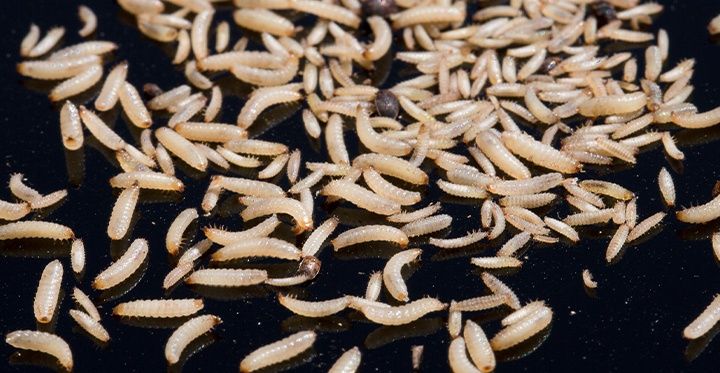
Seedcorn maggot and related species behave similarly to onion maggot: adults lay eggs in the soil, and the larvae feed on seeds and bulbs, causing poor germination and rotting plants.
Because the symptoms are similar, it is often enough to focus on management practices rather than perfect species identification. Common signs include:
Rotten or not‑growing seeds in the field.
Seedlings that emerge but then collapse quickly.
Soft, browned bulbs with small white larvae inside.
These pests are especially common where there is fresh organic matter or decaying plant material in the soil, so sanitation and crop rotation are critical.
Preventive measures: Build a pest‑resistant onion patch
The best way to deal with onion pests is to make them less likely to appear in the first place. Here are practical preventive steps you can take:
Crop rotation and sanitation
Rotate onions with non‑Allium crops (like cereals, legumes, or brassicas) to break pest life cycles.
Remove old onion plants, volunteer onions, and allium debris from the bed, because they can harbour eggs and pupae.
Balanced nutrition and soil health
Avoid over‑fertilizing with nitrogen early in the season, as this can sometimes favor pest pressure and uneven growth.
Maintain well‑drained soil to reduce conditions that favor root‑rotting organisms and maggot‑friendly dampness.
Use of physical barriers
Cover young seedlings with floating row covers to block onion maggot flies and thrips from reaching the plants.
Use sticky traps or pheromone traps in the field to monitor adult fly activity and plan interventions.
Natural and safer control methods
If you prefer to keep chemical use to a minimum, there are several effective tools in the IPM toolkit.
Biological and plant‑based options
Neem oil and Spinosad‑based sprays are among the more effective organic options for thrips and some leaf‑feeding pests.
Encourage natural enemies such as predatory bugs, lacewings, hoverflies, and predatory mites, which can significantly reduce thrips populations in many settings.
Threshold‑based insecticide use
In conventional onion production, products containing abamectin, cyantraniliprole, spinetoram, spirotetramat, and pyrethroids are used with careful rotation to avoid resistance.
Many IPM programs recommend spraying only when pest numbers cross a threshold, instead of using a fixed calendar schedule, which reduces chemical load and cost.
When and how to use insecticides
There are situations—especially in regions with intense thrips or maggot pressure—where well‑timed insecticides remain the most reliable control. However, they should be part of a broader IPM strategy, not the first or only tool.
Key points to keep in mind:
Rotate different chemical classes so pests do not develop resistance quickly.
Pay attention to pre‑harvest intervals (PHI) and re‑entry intervals (REI) written on labels.
Combine chemical sprays with scouting, barriers, and cultural practices for the best long‑term results.
How Plantlyze can help you identify onion pests faster
Many onion pests look similar at first glance. A silver streak could be thrips, mechanical damage, or sun‑burn. A wilting plant might be maggot‑damaged, or it might be suffering from drought or disease. This is where Plantlyze can save you time and stress.
Plantlyze is an AI‑powered plant‑care and diagnosis tool that helps you interpret visual symptoms from photos. You can:
Take close‑up images of damaged onion leaves or bulbs.
Upload them to Plantlyze and get insights on whether the pattern matches thrips, leafminer, maggot damage, or disease.
Store your images over time, so you can compare changes in your crop and spot trends early.
If you ever find suspicious streaks, tunnels, or suddenly wilted onion patches, try taking a clear photo and uploading it to Plantlyze at plantlyze.com. You may get an AI‑assisted diagnosis in minutes, helping you decide whether to change your watering, add a protective spray, or rotate your crop.
Simple “check your onion patch” checklist
Print or save this quick checklist and walk through your patch every week or two:
Scan the tops and inner leaves of young onions for silver streaks, shiny patches, or twisted tips (thrips).
Open a few leaves and look for white, winding trails inside (leafminers).
Observe the base of plants and bulbs for wilting, yellowing, or soft spots.
Pull one or two suspect bulbs and inspect for tunnels or tiny white larvae.
Take 2–3 photos of problem areas and upload them to Plantlyze for a second opinion.
Final care reminder and soft CTA
Consistent small habits—regular scouting, good crop rotation, and quick response to odd symptoms—can protect most onion patches from major losses. AI tools like Plantlyze are not a replacement for your own observation, but they can speed up diagnosis and help you act with more confidence.
Before your next onion patch turns into a battleground, consider signing up for a free account on Plantlyze.com. There you can build a personal, AI‑assisted plant‑health record for every crop, including your alliums, so you always know what is happening below the surface—and above it.
References
“Managing insect and plant pathogen pests with organic practices” – PMC (NIH)
https://pmc.ncbi.nlm.nih.gov/articles/PMC10711546/“Biological Control and Habitat Management for the Control of Onion Thrips” – PMC (NIH)
https://pmc.ncbi.nlm.nih.gov/articles/PMC11050518/North Carolina State University Extension – “Pests of Onion”
https://content.ces.ncsu.edu/insect-and-related-pests-of-vegetables/pests-of-onionPacific Northwest Pest Management Handbooks – “Onion Thrips”
https://pnwhandbooks.org/insect/vegetable/vegetable-pests/hosts-pests/onion-thripsRadcliffe’s IPM World Textbook – “Onion Arthropod Pest Management”
https://ipmworld.umn.edu/straub