Onions are a staple in gardens and farms around the world, but a quiet threat can sneak into your beds when you least expect it: onion downy mildew. Caused by the pathogen Peronospora destructor, this disease can quickly turn healthy green leaves into yellow, collapsed tissue and weaken your bulbs. If you are a home gardener or small‑scale grower, learning how to recognize and manage onion downy mildew early makes a big difference in saving your harvest. If you ever feel unsure about what you are seeing on your plants, you can upload a photo to Plantlyze and get AI‑assisted diagnosis in plain language at plantlyze.com.
What Is Onion Downy Mildew?
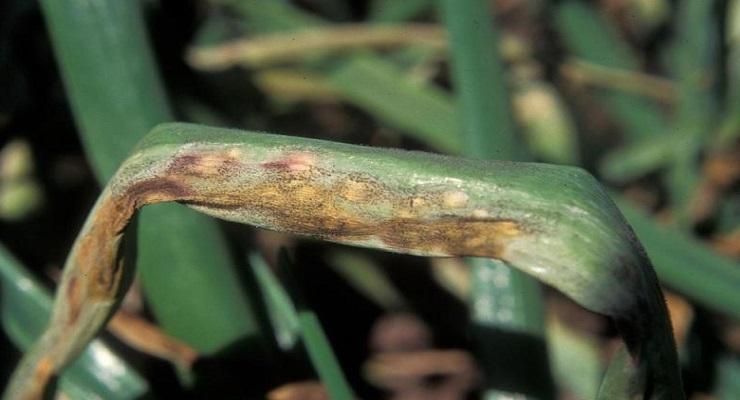
Onion downy mildew is a fungal‑like disease that affects onions, shallots, chives, leeks, and other related allium crops. It is caused by Peronospora destructor, an oomycete often referred to as a “water mold” because it develops best in cool wet conditions. The major difference between true fungi and oomycetes is that oomycetes can leave a film of water on the leaves for several hours in order to complete their very rapid life cycle and infection process.
This disease mainly targets the leaves, but severe infections can also weaken bulbs and reduce yield. In storage, bulbs that were infected in the field may rot or sprout prematurely, causing further losses. Recognizing onion downy mildew early helps you act before the whole crop is affected.
How Onion Downy Mildew Develops
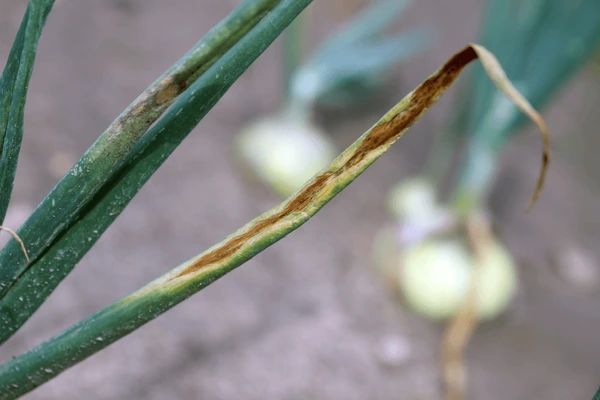
To understand how to stop onion downy mildew, it helps to know how it spreads. The pathogen survives from one season to the next in infected plant debris, volunteer onions, and cull piles. When the weather turns cool and humid, spores are released and can travel by wind to nearby onion plants.
The disease cycle usually starts when spores land on onion leaves that are wet from dew, rain, or irrigation. Under the right conditions, new infections appear within about 10 to 14 days. The pathogen prefers cool nights with temperatures around 50 to 70 degrees Fahrenheit and high humidity or prolonged leaf wetness. If these conditions persist, the disease can move quickly through a field or garden bed.
Typical Symptoms on Onion Plants
Onion downy mildew follows a clear pattern that you can learn to recognize. At first, symptoms may seem mild, but they escalate if left unchecked.
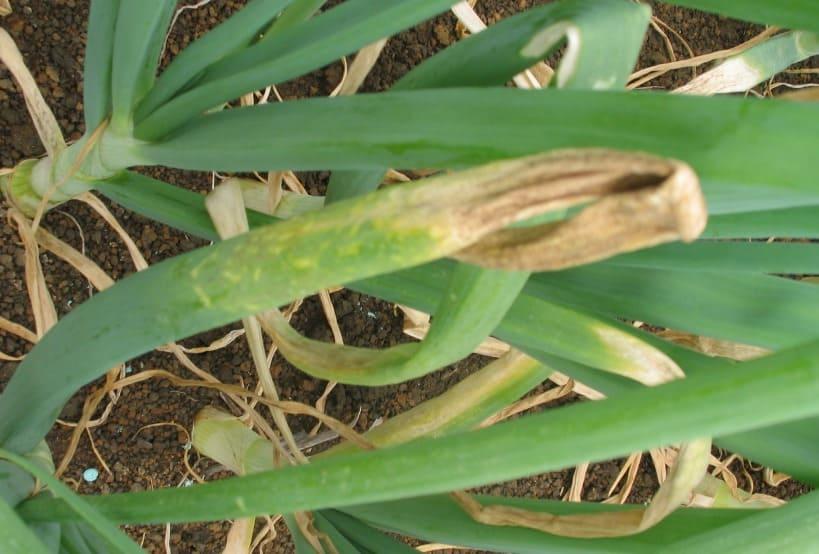
Early signs often appear as pale green or yellow spots on older leaves, usually starting near the leaf tips. These spots may be small at first but can enlarge and turn a light brown or yellowish color. Under humid conditions, the underside of the affected leaves develops a faint grayish violet or purplish fuzzy growth. This fuzzy layer is the spore‑producing stage of the pathogen and is a key sign of downy mildew.
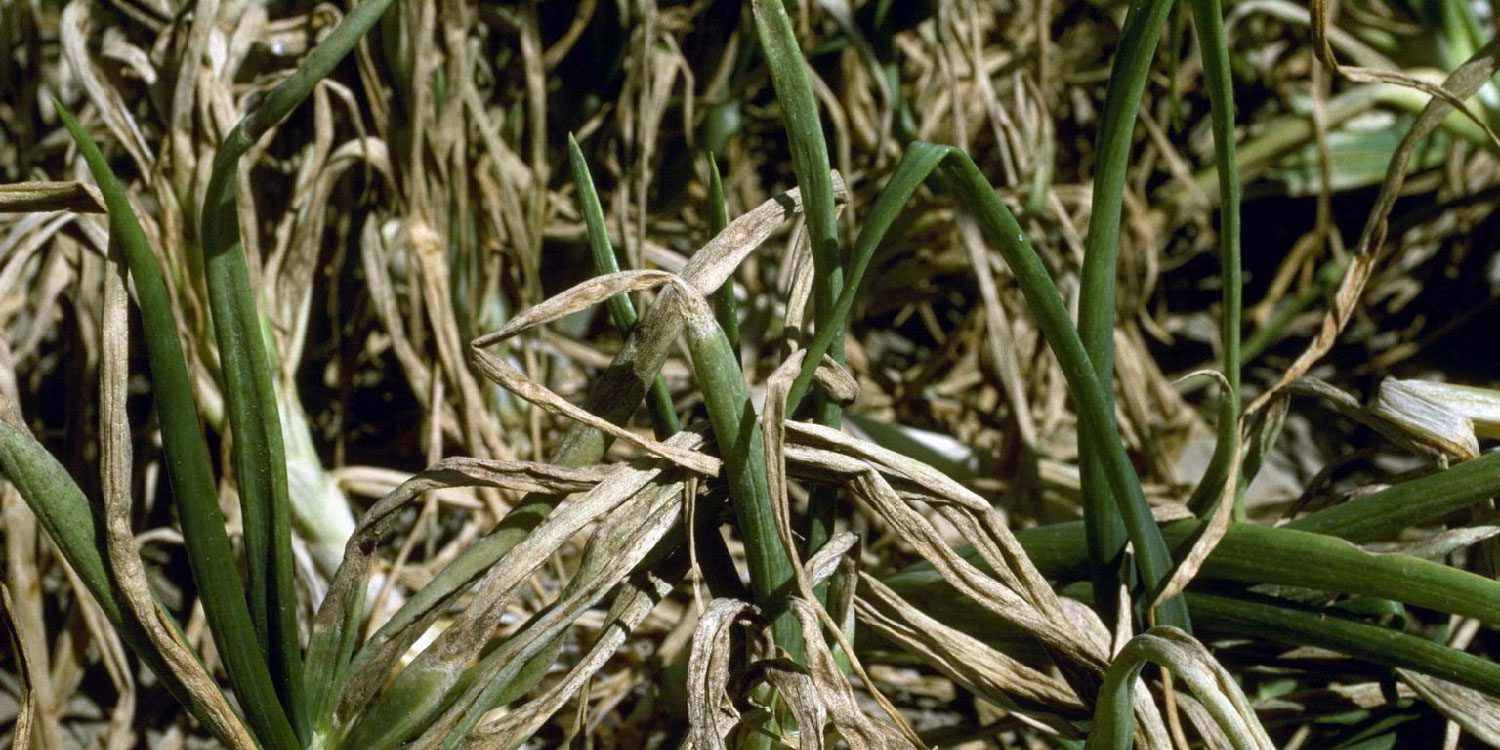
As the disease progresses, affected leaves may wilt, twist, or collapse. You may notice circular patches of yellowed, stunted plants in your field or bed, sometimes called “hot spots.” In advanced cases, the entire plant can die back, and bulbs may be smaller, softer, or more prone to rot during storage.
Conditions That Favor Onion Downy Mildew
Certain weather and management conditions make onion downy mildew more likely to appear and spread. Cool temperatures at night, especially between about 50 and 70 degrees Fahrenheit, are ideal for the disease. High humidity, frequent rain, or long periods of dew on the leaves also create a favorable environment.
Overhead irrigation, dense planting, and poor air circulation can keep onion foliage wet for extended periods, increasing the risk of infection. Gardens or fields that are shaded or surrounded by walls or trees may also have more problems because air movement is limited. Repeated planting of onions or other alliums in the same spot without proper rotation can also build up the pathogen in the soil and plant debris.
Cultural Control Methods
The best way to protect your onions is to start with strong cultural practices that reduce the chance of infection and slow the spread if it appears.
Crop rotation is one of the most effective tools. Avoid planting onions or other allium crops in the same area for at least three years. Instead, rotate with non‑allium crops such as cereals, legumes, or leafy greens to break the disease cycle. This helps reduce the amount of pathogen in the soil and nearby debris.
Proper spacing and airflow matter a lot. Plant onions far enough apart so leaves can dry quickly after rain or irrigation.Do not over crowd the plants in a row or raised bed, particularly if your area is humid. Good air flow will reduce the time of wetness on leaves and also and risk spore germination.
If possible ,use drip irrigation or soaker hoses instead of overhead sprinklers .Water early in the day so that the leaves dry before evening or night. This helps limit the length of time foliage stays wet and reduces the window for infection.
Weed and debris management are also important. Remove weeds and volunteer onion plants after harvest, since they can harbor the pathogen. At the end of the season, remove or destroy infected plant material and avoid placing it in low‑temperature compost piles that will not kill the spores. If you have a heavily infected crop, consider deep plowing or burying debris to help reduce surface inoculum.
Using healthy seed and planting material is another key step. Choose clean, certified seed or bulbs when possible and avoid planting from last year’s crop if it had visible disease. This reduces the chance of bringing the pathogen into your field or garden from the start.
Organic and Low‑Impact Treatments
For the organic gardener or those practicing low-chemical input options, several tools can be useful in managing onion downy mildew. Since this is more of a fungal-like organism than true fungi, standard copper sprays will have limited effect. However, some biofungicides as well as phosphite-type products work effectively if used early and continued on a regular basis.
Microbial products based on beneficial bacteria such as Streptomyces species can help suppress the pathogen on the leaf surface. These are often applied as foliar sprays and work best when started before symptoms appear or at the very first sign of yellowing. Repeating applications according to the label, especially during cool, humid periods, can help maintain protection.
Phosphite‑based products, which support the plant’s natural defenses, may also be used in some organic systems. They do not kill the pathogen outright but can slow its spread and help plants tolerate infection better. Always follow local regulations and label instructions, and remember that organic products still need to be timed correctly to be useful.
Combining these treatments with strong cultural practices increases your chances of success. Even the best organic products will struggle if plants are crowded, irrigated from above, and not rotated properly.
Conventional Fungicides for Commercial Growers
Commercial onion growers often rely on specific fungicides designed for downy mildew control. These products include systemic and contact fungicides that target Peronospora destructor and related pathogens. Some common active ingredients include metalaxyl or related compounds, certain phosphonates, and other systemic chemicals that move within the plant.
Timing is critical. Fungicides are most effective when applied at the first sign of disease or when weather forecasts predict cool, wet conditions favorable for infection. Spraying after plants are heavily infected or collapsed offers little benefit. Repeated applications at labeled intervals help maintain protection through the growing season.
Growers should follow integrated pest management guidelines and rotate fungicide groups to reduce the risk of resistance. Local extension services and crop advisors can provide up‑to‑date recommendations for products allowed in your region and the best application schedules for your onion crop.
Monitoring and Early Detection
Regular scouting is one of the simplest and most powerful ways to stay ahead of onion downy mildew. Check your plants frequently, especially in the morning when dew is present and lesions may be easier to see. Look for early yellowing, small spots, and any fuzzy growth on the underside of leaves.
Taking photos of suspicious plants can help you track changes over time and show them to advisors or online tools. If you are unsure whether the symptoms are downy mildew or something else, you can upload clear images to Plantlyze and get AI‑assisted diagnosis tailored to your crop. This can help you choose the right management steps faster and avoid unnecessary treatments.
When and How to Remove Infected Plants
If you find plants with clear signs of onion downy mildew, removing the most severely affected individuals can help slow the spread. Focus on plants that show extensive yellowing, collapsed leaves, or obvious fuzzy growth. Carefully pull or cut these plants and place them in a sealed bag before disposal to limit spore release.
Avoid replanting onions or other alliums in the same area for several seasons to reduce the pathogen buildup. If a whole bed is heavily infected, consider stopping allium production there and switching to non‑host crops for a few years. This gives time for the pathogen to decline in the soil and debris.
Tips for Small‑Scale and Home Gardeners
Small gardens and raised beds can be easier to manage than large fields, but they still face the same basic risks. Keep your onion areas small enough that you can inspect them closely and remove infected material quickly. Use raised beds with good drainage if you live in a humid or rainy climate, as this helps reduce standing moisture around the roots.
Mix different onion varieties in your bed and avoid planting only one type. This can reduce the chance that the entire crop succumbs to the disease at once. If you grow in containers, make sure they are well spaced and not crammed together, which helps air move freely and keeps leaves drier.
For home gardeners, cultural practices often matter more than chemical sprays. By focusing on rotation, spacing, irrigation, and hygiene, you can keep onion downy mildew at manageable levels without relying heavily on fungicides.
Plantlyze and AI‑Assisted Onion Disease Diagnosis
Modern tools can make plant disease diagnosis faster and easier. Plantlyze is an AI‑powered plant‑care and diagnosis platform that helps you identify problems like onion downy mildew from photos of leaves, stems, or bulbs. By uploading a clear image, you can receive plain‑language guidance on what the issue might be and how to manage it in your specific growing situation.
This can be especially helpful if you are unsure whether your onions have downy mildew, another disease, or a nutrient problem. If you want AI‑assisted support for your onion or other crops, you can try Plantlyze at plantlyze.com and get a step‑by‑step plan tailored to your plants.
Common Questions About Onion Downy Mildew
What does onion downy mildew look like?
Onion downy mildew usually starts as pale green or yellow spots on older leaves, often near the tip. Under humid conditions, these spots enlarge and may show a grayish violet or purplish fuzzy growth on the underside of the leaves. Affected leaves may wilt, twist, or collapse in patches.
Can you eat onions with downy mildew?
If bulbs are only slightly affected and show no soft rot, they may still be safe to eat after peeling and inspecting carefully. However, severely infected bulbs that are soft, watery, or moldy should be discarded, as they may not store well and can increase the risk of spoilage.
Is onion downy mildew the same as powdery mildew?
No. Onion downy mildew is caused by an oomycete called Peronospora destructor and thrives in cool, wet conditions. Powdery mildew is usually caused by true fungi and appears as white, powdery spots on leaves in warm, dry weather. The two diseases need different management approaches.
References
Onion Downy Mildew – UW Vegetable Pathology
https://vegpath.plantpath.wisc.edu/diseases/onion-downy-mildew/Onion (Allium cepa) – Downy Mildew – PNW Plant Disease Management Handbook
https://pnwhandbooks.org/node/3132/printDowny Mildew / Onion and Garlic – UC IPM (University of California)
https://ipm.ucanr.edu/agriculture/onion-and-garlic/downy-mildew/Peronospora destructor – an overview | ScienceDirect Topics
https://www.sciencedirect.com/topics/agricultural-and-biological-sciences/peronospora-destructorResistance to Diseases – Onion downy mildew (University of Warwick)
https://warwick.ac.uk/fac/sci/lifesci/research/vegin/onion/diseases/