You pull an onion from the ground, expecting something firm and crisp, and instead your hand meets a soft, foul‑smelling mass. That sinking feeling is onion bulb rot striking at the worst possible time. This type of decay can ruin part of your harvest, shorten storage life, and even spread to other bulbs if you do not act quickly. The good news is that onion bulb rot is usually preventable once you understand what causes it and how to adjust your care. If you ever see strange spots, mushiness, or an odd odor, an AI powered plant care tool like Plantlyze can help you quickly identify the problem from a photo and suggest tailored steps. Upload a clear image of your onion plant or bulb to Plantlyze.com and get a fast diagnosis plus care tips.
What Is Onion Bulb Rot?
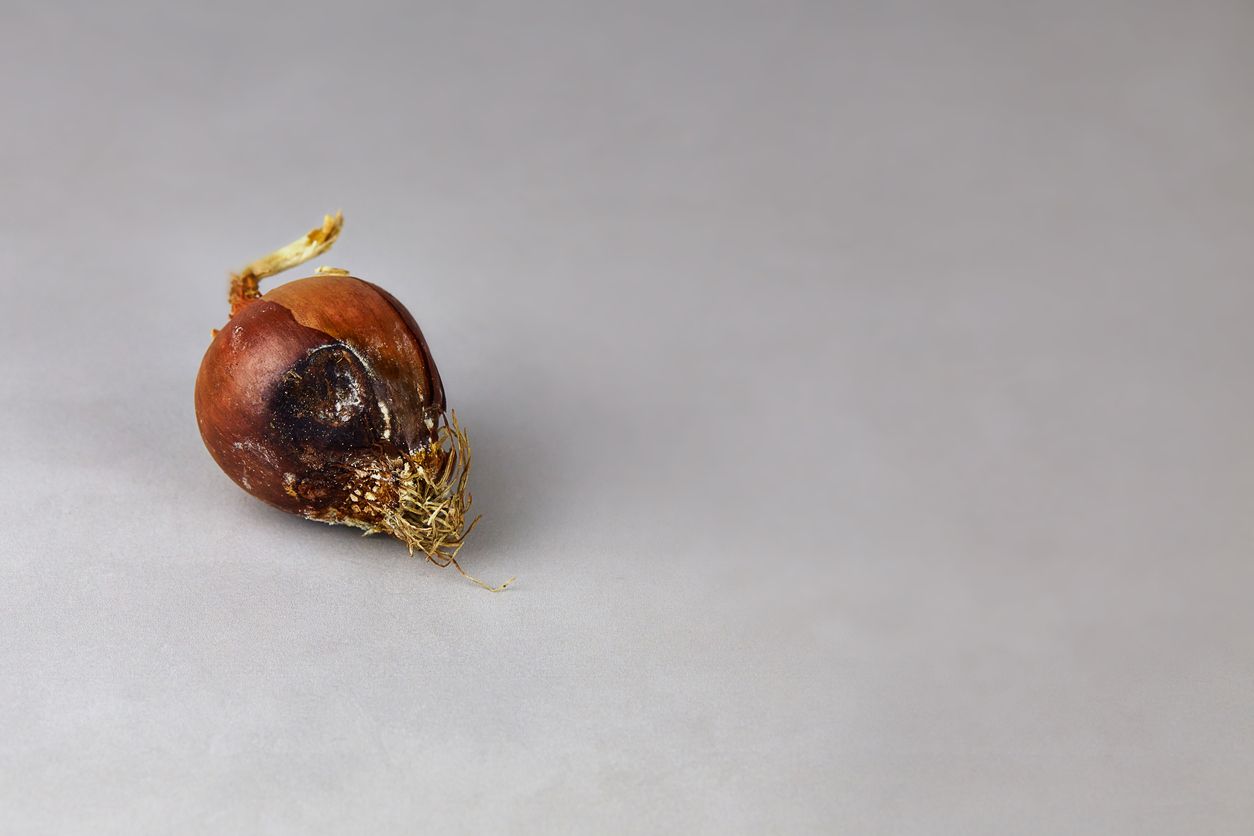
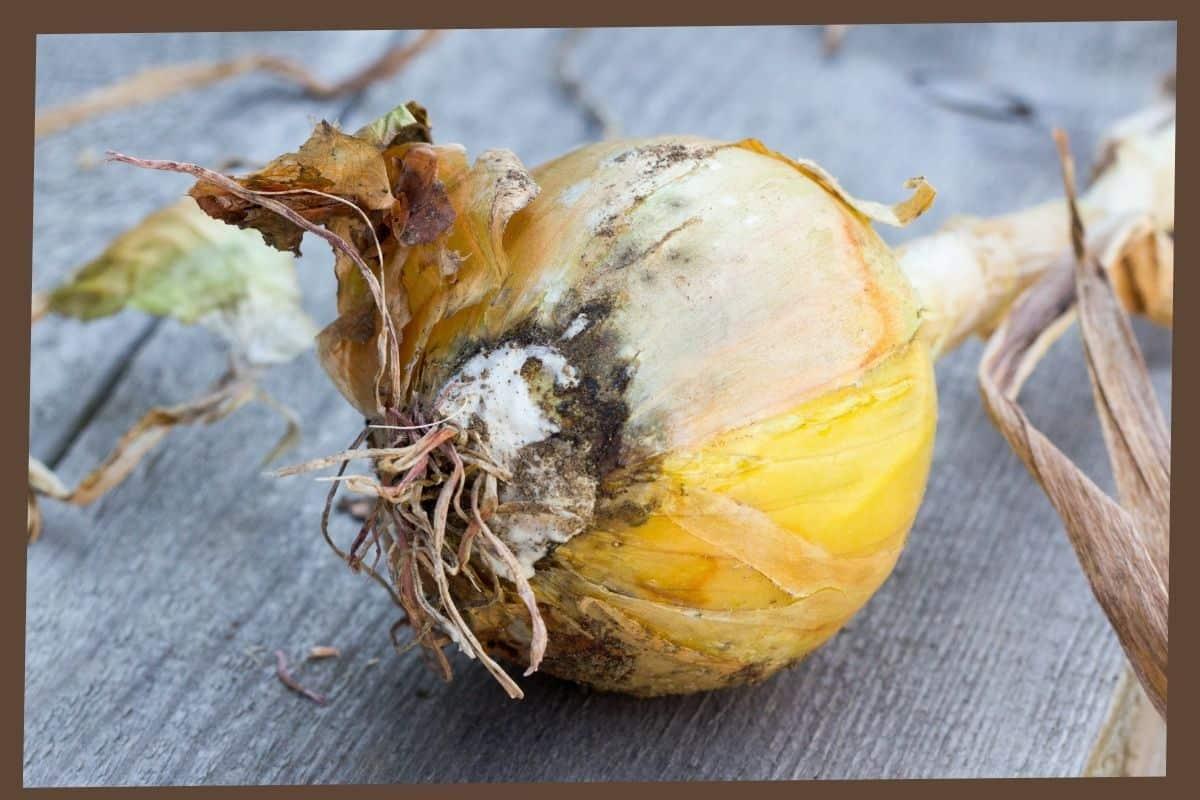
Onion bulb rot is the decay of the storage tissue inside the onion, usually caused by bacteria or fungi. The outer scales may look normal at first, but the inner layers soften, turn brown or yellow, and sometimes ooze liquid or smell rotten. Different pathogens cause slightly different symptoms, which is why visual diagnosis alone is not always enough. An AI tool can help narrow down whether the damage looks more like bacterial soft rot, sour skin, basal rot, or white rot. Onion bulb rot often starts in the field but only becomes obvious at harvest or in storage, which is why many growers feel caught by surprise.
Common Causes of Onion Bulb Rot
Several factors can “invite” rot into your onion patch. The most common triggers are excess moisture, mechanical damage, warm humid weather, soilborne pathogens, and poor nutrition.
Waterlogged soil and poor drainage are among the biggest culprits. When onions sit in soggy soil, bacteria such as Pectobacterium and Pantoea species, as well as fungi like Fusarium and Sclerotium, thrive and move into the bulb. Raised beds or improved drainage can make a big difference. If you notice your soil staying wet for days after rain or irrigation, consider amending it with compost or sand and using raised planting rows.
Wounding and mechanical damage also open the door for rot. Bulb injuries from harvest tools, rough handling, or pests like onion maggot create entry points for bacteria. Even small bruises can become infection sites that turn into full‑blown rot in storage. Handling plants gently and using sharp, clean tools reduces these injury points.
Warm, humid weather and overhead irrigation favor bacterial and fungal diseases. When leaves stay wet for long periods, bacteria spread more easily from plant to plant. Avoid watering late in the day and, if possible, choose drip irrigation over overhead sprinklers. This keeps the foliage drier while still delivering water to the roots.
Soilborne pathogens and continuous cropping are common in gardens and fields where onions, garlic, or other alliums are grown in the same spot year after year. Pathogens such as Fusarium oxysporum f. sp. cepae and Sclerotium cepivorum can survive in the soil for years. Crop rotation and removing old plant debris help break their life cycle.
Poor nutrition and imbalanced fertilization can weaken onion tissue. Excess nitrogen without enough calcium makes cells more fragile and more prone to bacterial center rot and soft rot. A soil test followed by balanced fertilization is usually more effective than heavy nitrogen applications.
If you are unsure whether your rot is bacterial or fungal, Plantlyze can analyze your onion photos and help you decide the next steps. Visit Plantlyze.com and upload a clear image of the affected bulb or plant.
Types of Onion Bulb Rot
Although all onion bulb rot looks bad, the exact cause can be bacterial or fungal.
Bacterial soft rot is caused by bacteria such as Pectobacterium and Pantoea. The bulb becomes soft, water soaked, and often gives off a foul smell. Rot usually starts at the neck or at any wound.
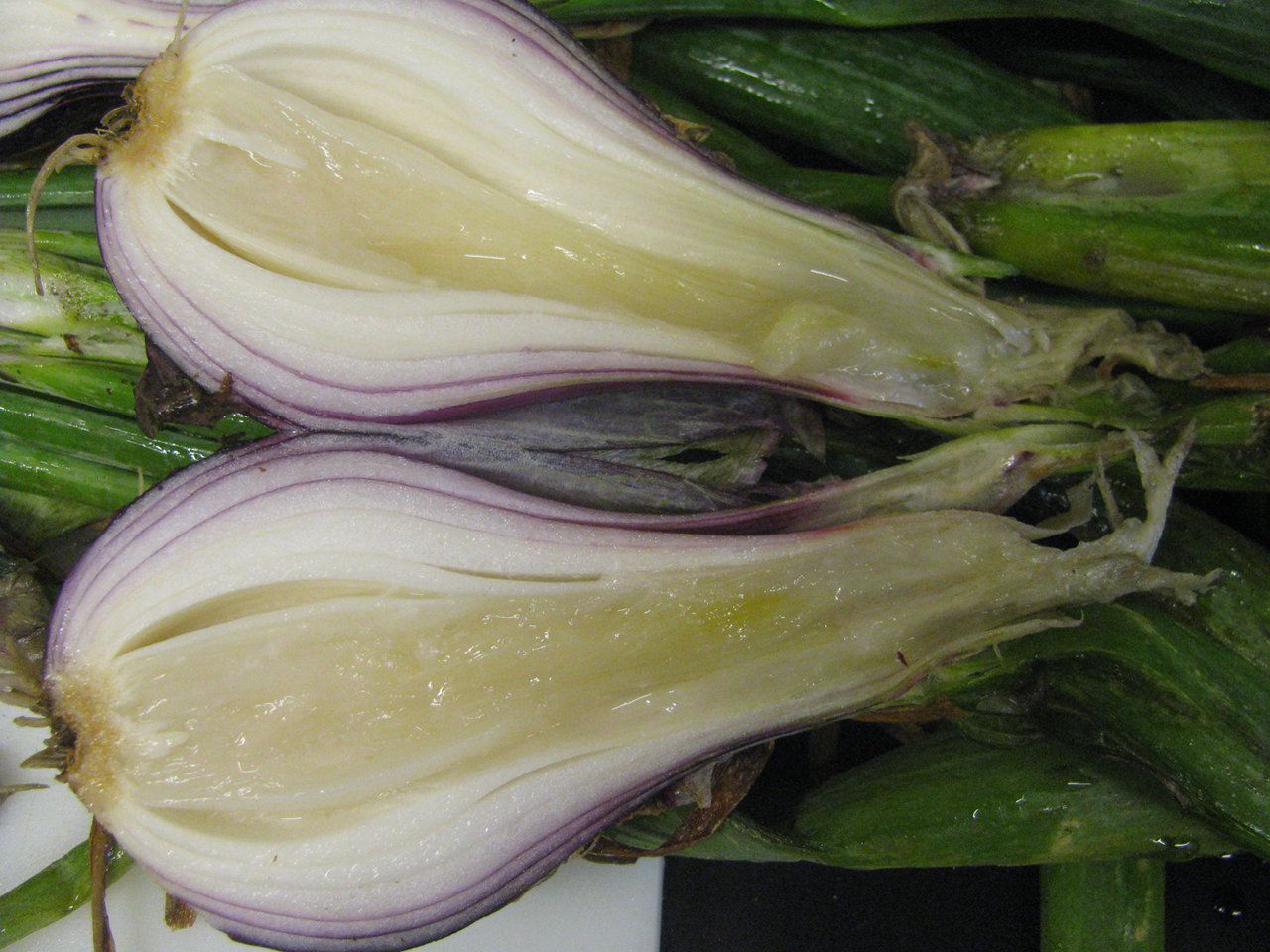
Sour skin is another bacterial disease caused by Burkholderia species. Affected bulbs have slimy, sour smelling outer scales and yellow brown discoloration under the skin. The outside may look almost normal at first glance, but the layers feel slimy when peeled.
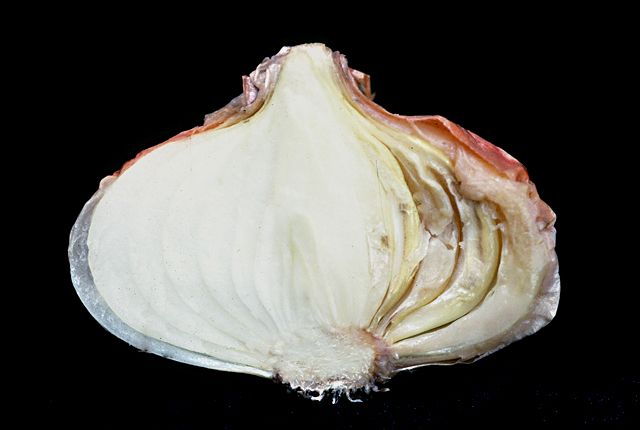
Basal rot, caused by Fusarium oxysporum f. sp. cepae, attacks the base of the bulb. The roots darken, the plant’s foliage yellows and stunts, and stored bulbs may rot from the base inward. This fungus survives in the soil and can build up over time.
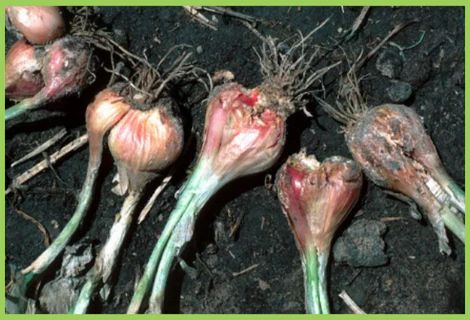
White rot, caused by Sclerotium cepivorum, shows as white fluffy mold at the base of the bulb and on the roots. Tiny white to brown specks called sclerotia can remain in the soil for years. Once established, white rot is very persistent.
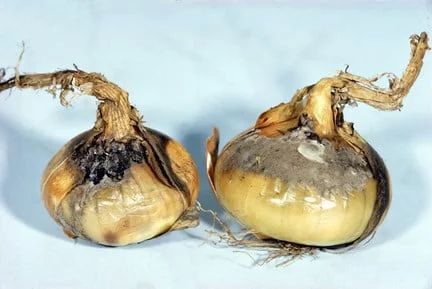
Center rot, caused by Pantoea species, begins inside the bulb while the outer scales still look normal. The inner layers soften and turn brown, and the whole bulb may collapse later. This disease often links to high nitrogen and low calcium in the soil.
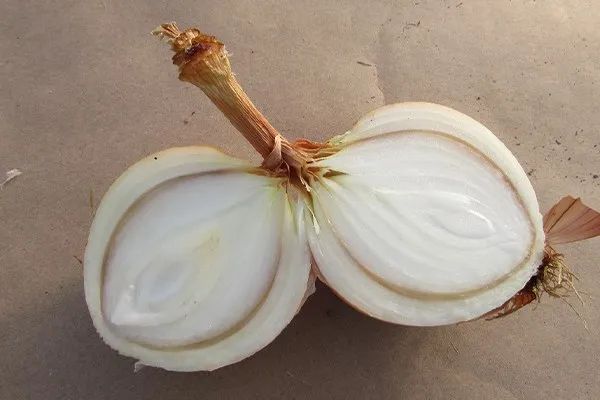
Because these diseases can look similar at first, AI driven diagnosis tools can help flag whether the rot looks more bacterial or fungal. A tool like Plantlyze can guide you toward the right cultural fixes or management steps without waiting for a lab test.
How to Recognize Onion Bulb Rot Early
Early detection greatly improves your chances of saving the rest of the crop. Watch for both aboveground and belowground signs.
Aboveground symptoms include yellowing or stunted leaves, tip dieback, and streaks or water soaked areas on the foliage. In center rot, plants may look slightly off color before the bulb starts to decay. Basal rot can cause gradual yellowing and wilting from the base upward.
Bulb symptoms are more obvious when you lift an onion. Look for softness when gently pressed, unpleasant odors, brown or yellow lesions, slimy or dried out tissue, and white or pink mold at the base. If the outer scales look fine but the inside is discolored and soft, center rot or soft rot may be the cause.
Storage‑phase signs include bulbs that feel spongy, show mold, or leak liquid. Healthy onions should stay firm and dry; any softness or moisture is a warning.
If you notice anything unusual, take clear photos of the whole plant, the base, and an opened bulb, then upload them to Plantlyze.com for a quick diagnosis before you lose more of your crop.
Step By Step Prevention of Onion Bulb Rot
Good prevention starts before you plant and continues through harvest and storage.
Choose the right soil and drainage. Grow onions in well drained soil and avoid heavy clay or compacted ground. Raised beds or mounded rows help water move away from the bulbs. If your soil stays wet for days after rain, consider amending it with organic matter to improve structure.
Practice crop rotation. Avoid planting onions, garlic, leeks, or shallots in the same spot more than once every three to four years. Fungi and some bacteria build up in the soil when alliums are grown too frequently. Rotate with non allium crops like legumes or cereals to break disease cycles.
Handle plants and bulbs gently. Use sharp, clean tools and avoid rough handling during planting, weeding, and harvest. Minimize bruising and cuts, which create entry points for bacteria. Do not drop or toss bulbs once they are out of the ground.
Perfect your watering and irrigation. Prefer drip or sub surface irrigation to keep foliage dry and reduce splash borne pathogens. Water earlier in the day so leaves can dry before evening. Avoid watering right after heavy rain if the soil is already moist.
Balance fertilization and soil pH. Use moderate nitrogen and ensure adequate calcium to strengthen cell walls. A soil test can guide you. Many extension guides recommend keeping soil pH around neutral to slightly acidic for onions, which helps with nutrient uptake and overall plant vigor.
Use healthy transplants and bulbs. Start with disease free sets or seedlings. Do not plant rotting, bruised, or misshapen bulbs. If you save your own bulbs, choose only the healthiest ones for replanting.
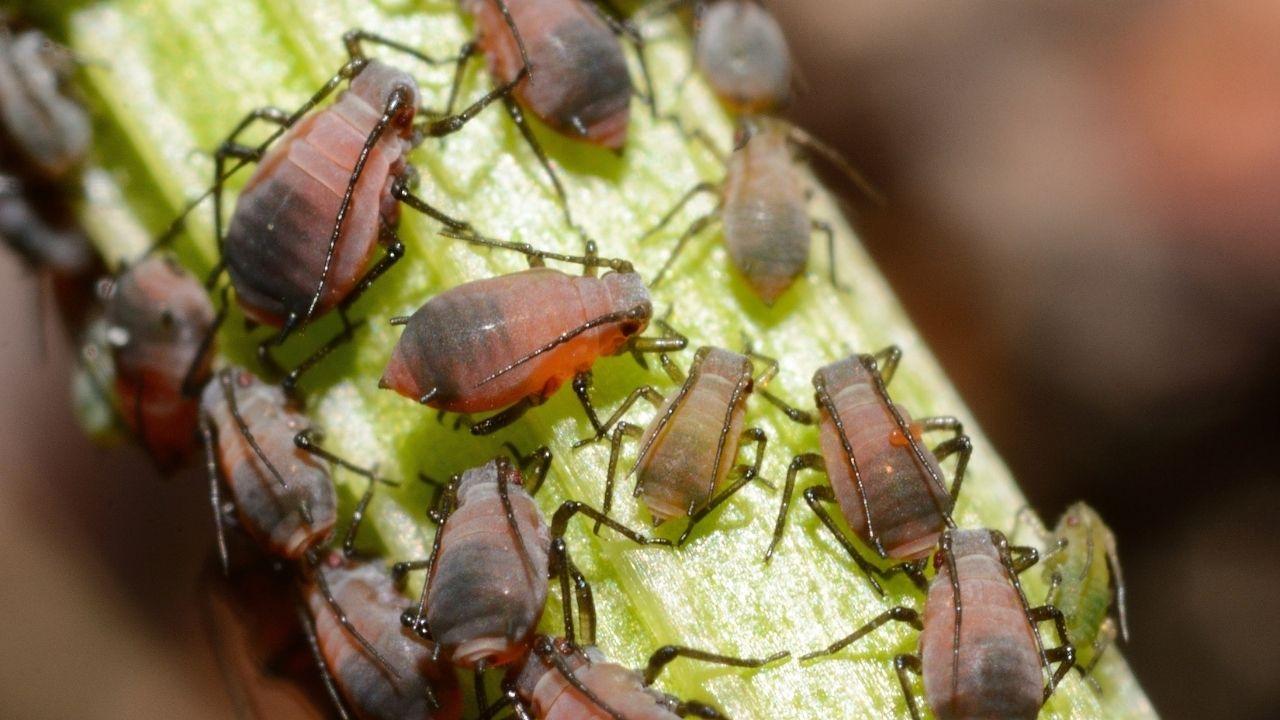
Control insects and other pests. Pests like onion maggot and thrips cause wounds and can spread bacteria. Use integrated pest management practices such as crop rotation, beneficial insects, and, when necessary, approved insecticides. Healthy, pest free plants resist rot better.
If you are unsure whether your onion plants are at high risk for rot, use Plantlyze to check their overall health and get personalized care guidance at Plantlyze.com.
What to Do If Your Onion Bulbs Are Already Rotting
If you see rot, act quickly to limit the damage.
In the field, remove badly affected plants and bulbs as soon as you notice them. Do not compost diseased material in the same garden. Adjust watering to reduce excess moisture and avoid further wounding. If the problem is widespread, consider changing your planting schedule or rotation plan for the next season.
At harvest, sort bulbs carefully. Discard any soft, leaking, or heavily discolored ones. Do not pack diseased bulbs with healthy ones, as pathogens can spread in storage. Handle bulbs gently to avoid new bruises.
In storage, cure onions thoroughly in a warm, dry, well ventilated place for several days. Once cured, store them in a cool, dry place with good air circulation. Temperatures around zero to four degrees Celsius and low relative humidity are ideal. Regularly inspect stored bulbs and remove any that show signs of rot. If the rot spreads, consider shortening storage time and using affected bulbs first.
If rot is spreading in storage, capture images of the worst affected bulbs and upload them to Plantlyze.com for a quick diagnosis and care plan suggestions.
How an AI Plant Care Tool Can Help with Onion Bulb Rot
Plant care is becoming easier with AI powered tools that can recognize patterns from photos. An AI system can help you distinguish between bacterial soft rot, fungal basal rot, and other disorders by analyzing the shape, color, and texture of the damage. It can also suggest practical steps such as improving drainage, reducing watering, or adjusting fertilization based on your symptoms and location.
Plantlyze is an example of an AI powered plant care and diagnosis tool that focuses on helping home gardeners and small scale growers. You upload a clear photo of your onion plant or bulb, and the system returns a straightforward explanation and easy to follow care tips. It does not replace expert advice, but it can point you in the right direction much faster than guessing alone.
If onion bulb rot worries you, try Plantlyze.com: upload a clear photo of your onion plants or bulbs and get a fast diagnosis plus personalized care tips in seconds.
References
University of California Statewide IPM Program – Bacterial Bulb Rots of Onion and Garlic
https://ipm.ucanr.edu/agriculture/onion-and-garlic/bacterial-soft-rot/Penn State Extension – Rotten to the Core: The Center Rot Disease of Onion
https://extension.psu.edu/rotten-to-the-core-the-center-rot-disease-of-onion/New Mexico State University Extension – Onion Diseases in New Mexico (Circular CR‑538)
https://pubs.nmsu.edu/_circulars/CR538/index.htmlAmerican Phytopathological Society – Center Rot of Onion
https://www.apsnet.org/edcenter/Pages/CenterRotOnion.aspxPurdue University Extension – Diagnosis and Control of Onion Diseases
https://extension.purdue.edu/extmedia/BP/BP-23.html