Harvesting carrots looks simple. You just pull and eat. Yet every gardener who has ever tugged up a thin orange thread instead of a plump crunchy root knows there is more to it. The moment you choose to harvest has a huge effect on sweetness, texture, size and storage life.
This guide explains how to harvest carrots step by step in a friendly, practical way. You will learn how to read the growth stages, how to tell when carrots are ready, how to pull them without breaking, and how to store them so they stay crisp. Along the way you will also see how plantlyze, an AI powered plant care and diagnosis assistant, can help you time your carrot harvest with more confidence.
Understanding Carrot Growth Stages
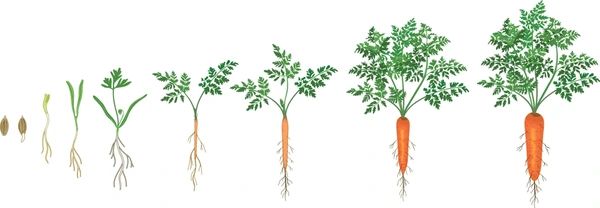
Carrots go through clear stages from seed to harvest. When you understand these stages, the decision about when to harvest stops feeling like a guess and starts to feel like a logical choice.
First is the seedling stage. Tiny feathery leaves appear and the plant puts most of its energy into building a small root system. At this point the orange root is thin and fragile.
Next comes the strong leaf growth stage. The tops become fuller and taller. The plant is capturing light and building energy. Underground the root is still relatively slim and not yet at full flavor.
Then the root bulking stage begins. The carrot root swells, storing sugars, water and nutrients. Size increases much faster now. This is when the difference between enough time and not quite enough time makes a big impact on sweetness and crunch. Cool weather during this period often helps sugars accumulate and improves flavor.
Finally the plant reaches maturity. The roots are at a good balance of size, flavor and texture. For many varieties this is roughly sixty to eighty days after sowing, but each carrot variety has its own typical number of days to maturity, which is why seed packets and catalog descriptions are so important.
If you keep a note of the sowing date and the variety name, you already have an important part of the harvest puzzle.
How to Tell When Carrots Are Ready to Harvest
There’s no single magic day that works for every garden. Instead, look for a mix of calendar clues, visual signs, touch, taste, and weather.
Use the days to maturity as a guide
Start with the variety information on your seed packet or from a trusted variety guide. If it says seventy days to maturity, begin checking a week or so before that date. Use the number as a starting point, not a strict rule, since cooler or warmer weather can slow or speed growth.
Look at the carrot shoulders
Brush the soil away gently from the top of a few carrots. You should be able to see the shoulder of the root where it meets the foliage. For many home gardens, a mature carrot shoulder is about as wide as an adult thumb, though small or baby varieties will be slimmer. Color should be fully developed, bright orange or the expected shade for your variety. Pale or very narrow shoulders usually mean the carrot needs more time.
Check the tops
Mature carrot foliage looks full and robust. The leaves are well developed, not just a small tuft. In some climates the very oldest lower leaves may start to yellow, but overall the tops should still be mostly green and vigorous. Weak sparse foliage often signals poor growth rather than maturity.
Use touch and taste
Select one sample carrot near the center of the bed. Loosen the soil gently, lift it out, wash it, then slice and taste. If the carrot is crisp and sweet and close to the size you prefer, the rest of the bed is likely ready or very close to ready. If it tastes bland, woody, or too small, give the remaining plants more time.
Watch the weather
Cooler nights and moderate days tend to produce better flavor in carrots as sugars build in the roots. Extremely hot conditions can cause carrots to become bitter or to bolt and send up a flowering stalk. If a heat wave or heavy frost is coming, you may decide to harvest a little earlier than planned to protect quality.
By combining these clues you gain a much clearer sense of when your carrots have reached their peak.
Step by Step Guide to Harvesting Carrots
Once you have decided that your carrots are ready, the actual harvesting method can still make the difference between a basket of beautiful roots and a frustrating pile of broken pieces. Follow these simple steps.
Prepare the soil the day before
Water the bed lightly a day before you plan to harvest. The goal is slightly moist, loose soil, not mud. Moist soil gives way more easily so roots slide out instead of snapping.
Remove nearby weeds or debris that could snag the foliage as you pull.
Gather your tools. For most home gardeners this means a small garden fork or hand fork, a hand trowel, and a bucket or crate to hold the harvested carrots.
Harvesting in loose or sandy soil
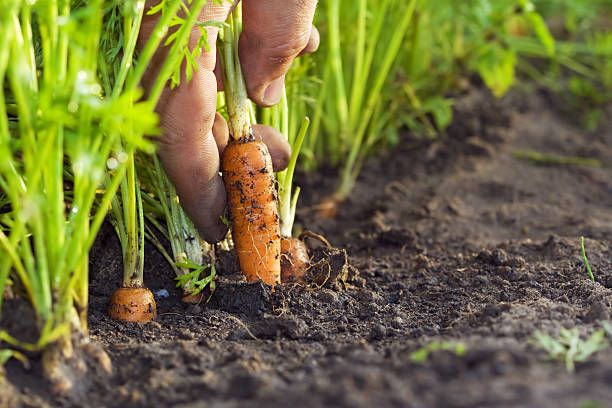
If your soil is naturally loose or sandy and you watered the day before, you can often harvest with almost no tools.
With one hand, grasp the foliage close to the crown, where the greens meet the root. Avoid pulling from the very tips of the leaves.
With the other hand, press the soil around the carrot lightly to feel how firmly it is anchored.
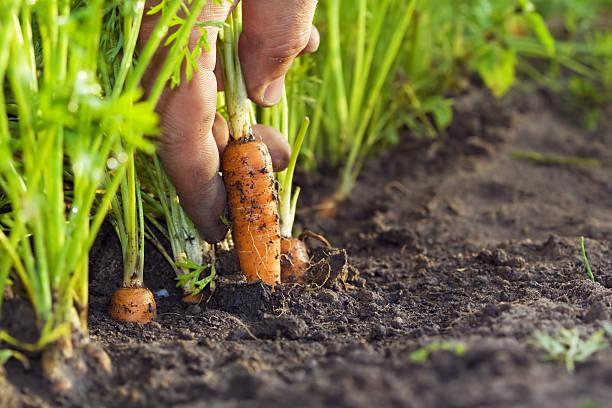
Pull straight up while making a gentle wiggling motion. Avoid sudden jerks. The slight wiggle helps free the small root hairs from surrounding soil so the carrot comes out whole.
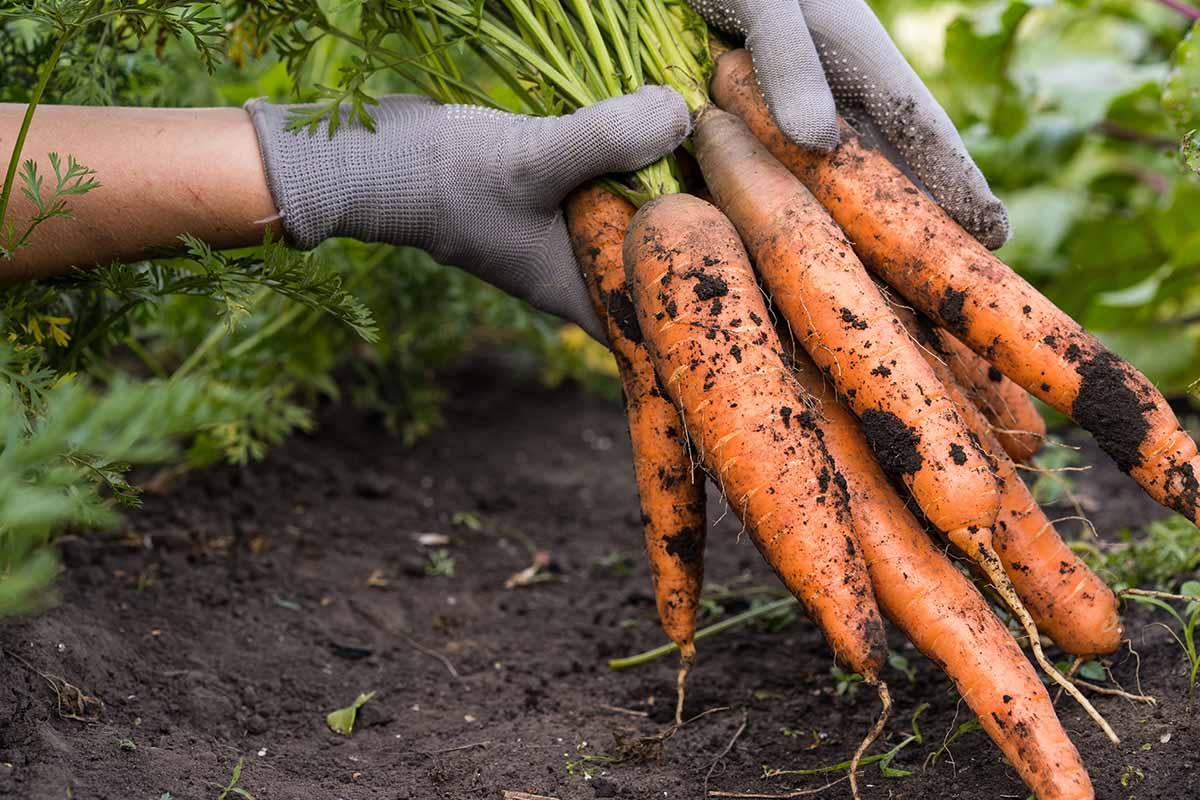
Shake or tap off extra soil and place the carrot gently into your container. Try not to toss or drop them hard, since bruises can shorten storage life.
Harvesting in heavy or compacted soil
In heavier clay soil or beds that have become compacted, yanking by the tops alone is a common way to snap the greens off and leave the root behind. In these cases rely more on tools than on muscle.
Push a garden fork or broad fork into the soil a short distance away from the row, so that you do not stab the carrots themselves.
Lean on the handle to gently lift and loosen the soil beneath the roots. You should see the bed rise slightly and cracks open in the surface.
Once the soil is loosened, grasp each carrot near the crown and pull it out with a smooth, steady motion. Most roots will slide out easily now that the soil is no longer gripping them tightly.
Work along the row in sections so you always loosen the soil before pulling in that area.
Always keep the fork tines angled away from your feet and legs, and never force the tool so hard that it might slip unexpectedly.
Harvesting baby carrots versus full size carrots
If you like tender baby carrots, begin pulling some of the largest roots earlier in the season. This thins the bed and gives remaining carrots more room to reach full size. For storage carrots or for maximum yield from limited space, let most of the bed reach near full maturity. You can still pick a few early for fresh salads while the rest continue to bulk.
Harvesting in stages
You do not have to harvest everything at once. In fact, taking the largest carrots first is often the best strategy.
Mark the earliest sowing lines when you plant so you remember where the most mature roots are.
At harvest time, pull the biggest carrots from each cluster and leave the smaller ones in place.
Over the next week or two, repeat the process as the remaining roots catch up.
This staggered harvest gives you a longer window of fresh carrots and lets the plants make full use of the space and light in your bed.
Using plantlyze to support your harvest timing
If you track planting dates and upload simple photos of your carrot bed into plantlyze, the assistant can estimate which growth stage your crop is at and remind you when the expected harvest window is approaching. You can visit plantlyze dot com, create a free account, and let the AI keep an eye on your sowing dates so you do not lose track of when to start testing for maturity.
How to Handle and Store Carrots after Harvest
Harvest is only half the story. Good handling right after you pull your carrots helps keep them crisp and sweet for weeks or months.
Immediate handling
Right after you pull the roots, shake or brush off loose soil, but do not scrub them if you plan to store them for a long time. A thin layer of soil can actually help keep the skin from drying out.
Trim the foliage down to roughly one or two centimeters above the crown. The leaves continue to draw moisture and nutrients from the root after harvest. Removing most of the tops helps the carrot keep its internal moisture and stay crisp. Use a clean knife or shears rather than tearing.
Try to keep carrots out of direct sunlight once they are out of the ground. Prolonged sun exposure can cause them to wilt and lose sweetness. A shaded bucket or crate is ideal while you work along the row.
Short term storage for fresh eating
If you will eat your carrots within one to two weeks, the refrigerator is usually enough.
Place the trimmed, lightly cleaned carrots in a perforated plastic bag or reusable container.
Store them in the crisper drawer, where humidity tends to be higher.
Avoid storing them next to fruits that release a lot of ethylene gas, such as apples, because this can lead to off flavors over time.
In a cool, moderately humid refrigerator, properly trimmed carrots stay crisp for an impressive length of time.
Long term storage
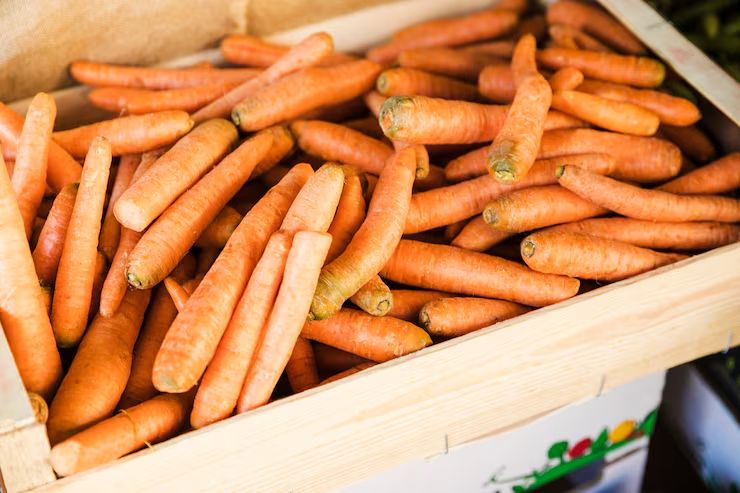
For storage over many weeks or months, conditions similar to a root cellar work best. Carrots generally prefer temperatures close to zero to five degrees Celsius and high humidity.
Pack unwashed carrots in boxes or crates filled with slightly damp sand, sawdust, or peat. The medium should feel just moist, never soggy.
Bury the roots fully so they do not dry out.
Place the boxes in a cool, dark space that stays above freezing but below typical room temperature. A dedicated cold room, cellar, or very cool garage can work.
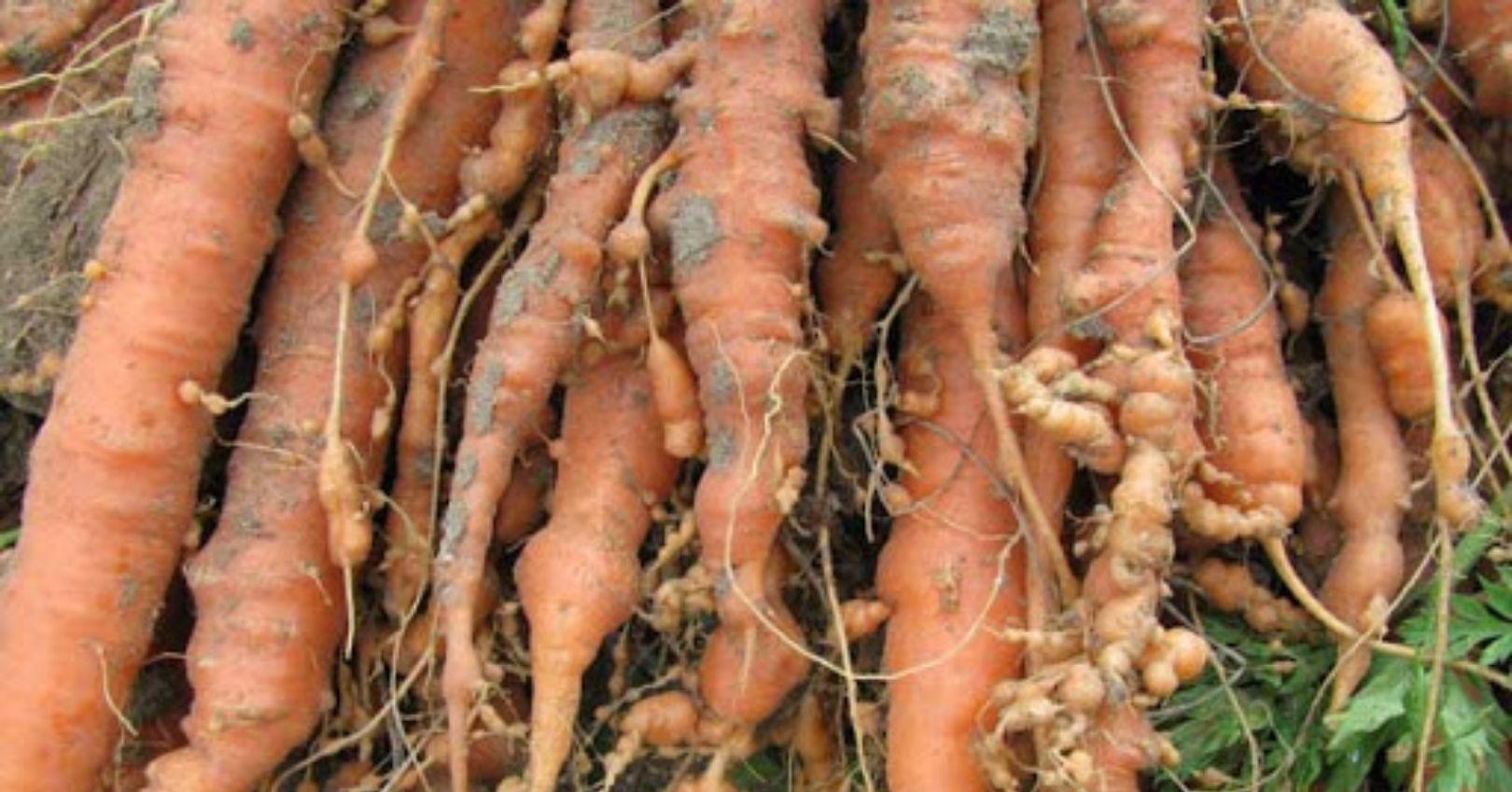
Inspect stored carrots from time to time. Remove any roots that show signs of rot, deep cracks, or severe pest damage so they do not spoil neighbors. Carrots that were damaged during harvest are best used fresh instead of stored.
You can record which storage method you used inside your plantlyze journal. Over time, this creates a personal history that the AI can use to suggest the storage approaches that work best in your specific home and climate.
Common Mistakes When Harvesting Carrots
Even experienced gardeners sometimes lose part of a carrot crop to avoidable errors. Being aware of the most common mistakes helps you sidestep them.
One frequent issue is pulling all the carrots at once without testing maturity. If you rely only on a calendar date, you can end up with many undersized roots that had the potential to become full sized with a bit more time. Always check a few sample carrots first.
Another mistake is yanking hard on the tops in dry, compacted soil. When the soil is tight and hard, the foliage often snaps, leaving the root behind. This makes harvest more difficult and increases the chances of cutting or stabbing roots while trying to dig them out. Loosening soil first with a fork and watering lightly the day before greatly reduces this risk.
A third problem is leaving carrots in very wet soil for too long. Extended periods of saturation can invite rot and certain soil borne diseases. In areas with heavy autumn rains, it is often safer to harvest earlier rather than waiting for the absolute last day of maturity.
Some gardeners also reduce storage life by piling damaged, sunburned, or deeply cracked carrots together with healthy ones. Rot can spread, and within a few weeks a whole box may be spoiled. Separate perfect roots for long storage and set aside flawed ones for immediate use, juicing, or cooking.
Finally, carrots are sometimes left lying on the soil surface in bright sun while the gardener continues working down the row. This quickly dries the skins and drives moisture out of the roots. Use a shaded container and keep harvested roots out of direct light whenever possible.
How plantlyze Can Help You Harvest Carrots at the Perfect Time
Deciding exactly when to start harvesting still feels uncertain for many people. That is where plantlyze can be a valuable companion.
Plantlyze is an AI powered plant care and diagnosis assistant designed to support home gardeners and small growers. You enter simple information such as your carrot variety, sowing date, and location, and you can add photos of your carrot bed as it develops.
With this data, plantlyze can
Estimate how many days remain until typical maturity for your specific variety and climate, based on extension style guidance and variety tables.
Compare photos of your foliage to its knowledge of carrot growth stages, helping you judge when the bed has shifted from leafy growth into serious root bulking.
Flag signs of stress in your photos, such as yellowing or pest damage, that might suggest an earlier harvest is safer than waiting longer.
Send reminders during your expected harvest window so you remember to pull sample carrots and taste test for sweetness.
Instead of wondering if you are too early or too late, you get calm, data informed suggestions. When you are ready to try it, you can visit plantlyze dot com, create a free profile for your garden, and let the assistant help track your carrot sowings from seed to harvest.
Conclusion
Learning how to harvest carrots well is one of the most rewarding skills in the vegetable garden. When you understand the growth stages, watch the shoulders and tops, listen to the signals from weather and taste, and use careful techniques to free the roots from the soil, you give yourself the best chance of lifting baskets full of sweet, crunchy carrots.
Remember the three essentials. Know your variety and its days to maturity. Check visual and touch clues before pulling the whole bed. Handle and store the roots gently so they stay crisp long after harvest.
If you enjoy growing food but sometimes feel unsure about timing, you do not have to guess alone. Plantlyze can help you record planting dates, read the signs your plants are sending, and choose the right harvest window with more confidence. Visit plantlyze dot com, add your carrot bed, and let an AI powered plant friend walk beside you from seed to storage.
References
University of Maryland Extension Growing Carrots in a Home Garden
https://extension.umd.edu/resource/growing-carrots-home-gardenIowa State University Extension Growing Carrots and Parsnips
https://yardandgarden.extension.iastate.edu/how-to/growing-carrots-and-parsnipsArkansas Cooperative Extension Service Carrots
https://www.uaex.uada.edu/publications/pdf/FSA-6064.pdfMichigan State University Extension Commercial Vegetable Production Carrots
https://www.canr.msu.edu/uploads/resources/pdfs/carrots_(e1437).pdfMinistry of Food and Agriculture Ghana Carrot Production Guide
https://mofa.gov.gh/site/images/pdf/production_guides/carrot_Production_Guide.pdfFort Lewis College High Elevation Growing Guides Winter Carrots
https://www.fortlewis.edu/Portals/38/ThemePluginPro/uploads/2024/3/26/CARROTfinalaccess%20copy.pdf