Carrots appear to be basic. Everybody grows them, don’t they? But probe beneath the surface and you will find that almost every home gardener battles with a few common problems: Short roots, forked carrots, slow germination-yes flavor! Five simple requirements-in fact fundamentals-forget about by most growers are what stand between understanding and twisted sad carrots plus sweet beautiful crunchy roots.
Growing carrots isn't difficult once you know what these roots actually need. The plants are forgiving, productive, and incredibly rewarding when conditions are right. You'll discover that carrot success hinges on soil quality, proper spacing, consistent moisture, and variety selection. Master these elements and you'll produce vegetables that taste nothing like supermarket carrots.
If you're currently struggling with carrot problems or want to prevent issues before they start, Plantlyze's AI plant diagnostic tool can identify diseases and pest damage instantly from photos, giving you actionable solutions based on what your plants actually need.
Understanding Carrot Fundamentals
Carrots are root crops, which means everything about growing them revolves around the soil. Unlike above-ground vegetables that forgive heavy clay or rocky soil, carrots demand loose, friable soil where the taproot can elongate without resistance. A carrot's success is determined largely below the surface, in the soil conditions you establish before planting even begins.
Carrots come in distinct types, each suited to different soil conditions and uses. Long, slender Imperator carrots need deep, sandy soil and take 70 to 80 days to mature. Nantes carrots are shorter, cylindrical, and beginner-friendly, maturing in just 60 to 70 days. Danvers carrots are chunky and tough, designed for heavy clay soil where longer carrots would fork and twist. Chantenay carrots are conical, stubby, perfect for shallow or rocky soil. Understanding which type fits your specific situation prevents months of frustration trying to force the wrong variety into unsuitable conditions.
Another critical insight: carrots are always direct-seeded into the ground. They don't transplant well because the taproot is easily damaged. This means planting happens directly in the field, not indoors under lights. Knowing this changes your entire planting strategy and timing.
Preparing Your Soil is Everything
Here's the fundamental truth: carrot success starts with soil preparation. This isn't something you can skip or half-do. The time you spend preparing beds before planting determines whether you harvest straight, smooth carrots or twisted, forked roots destined for the compost bin.
Dig or till your carrot bed to a depth of 12 to 18 inches for longer varieties, or 8 to 10 inches for shorter types. Longer carrot varieties require deeper soil because their taproots need unobstructed space to elongate. Use a broad fork, spading fork, or tiller to break up compacted soil layers. Remove every rock, pebble, and debris larger than a pea. These obstacles force developing roots to twist around them, creating forked or deformed carrots.
Sandy loam is the ideal soil texture for carrots. If you have heavy clay or compacted soil, amend it with compost, well-rotted leaves, peat moss, or horticultural sand. Work these amendments into the top 6 to 8 inches of soil. You're creating a loose, crumbly structure where the carrot root faces zero resistance as it grows downward. This amendment process takes time. If you're starting with poor soil, expect to spend 2 to 3 seasons gradually improving it with repeated compost applications.
Check your soil pH and adjust to 5.5 to 7.0, ideally around 6.0 to 6.8. Carrots prefer slightly acidic to neutral soil. Compost naturally buffers pH, so adding plenty of compost often solves pH problems without additional amendments. Test your soil's pH with an inexpensive test kit from any garden center.
Water your prepared bed deeply one week before planting. This settles the soil and ensures moisture is available when seeds germinate. Fresh carrot seeds have higher germination rates than older seeds. Use seeds less than two years old and store them in cool, dry conditions between seasons.
Planting Carrots: The Critical Early Phase
Plant carrot seeds directly into the prepared bed at a depth of only 0.25 to 0.5 inches. This shallow planting allows seedlings to push through easily. Space seeds about 0.75 to 1 inch apart, aiming for roughly 30 seeds per linear foot. Spacing is important because each plant needs room to develop a uniform root without competing with neighbors for nutrients.
You can plant in neat rows spaced 4 to 6 inches apart (in small beds) or up to 12 to 18 inches apart (in traditional row crops). Twin rows spaced 2.5 to 3.5 inches apart are excellent for maximizing production in limited space. Final stand density should reach 14 to 18 plants per linear foot of twin rows for optimal root development.
Cover seeds with only a light dusting of soil, compost, or fine sand. Do not compact the soil. Keep the soil evenly moist, never wet, until seedlings are 1 inch tall. Here's the critical rhyme that seasoned growers use: "If the seeds go dry, they die." Carrot seeds are small and shallow-rooted initially. If the soil surface dries even once before germination, seeds fail.
Germination takes 7 to 10 days under ideal conditions, longer in cool weather. Light, frequent watering is essential during this phase. A gentle misting twice daily works better than one heavy watering that can wash seeds away or cause crusting.
Watering and Feeding for Success
Once seedlings emerge and develop their first true leaves, switch your watering strategy completely. Carrots need deep, consistent watering rather than frequent, shallow watering. Water heavily, then allow the soil to dry out to the depth of the carrot's tip before watering again. This deep, intermittent watering encourages the taproot to grow downward in search of moisture. Frequent shallow watering keeps roots in the top inch of soil where they stay small and thin.
Maintain even soil moisture throughout the growing season. Inconsistent watering causes root cracking, splitting, and forking. Carrots grow straightest and smoothest when moisture is consistent. Drip irrigation is ideal because it delivers water directly to the soil without wetting foliage, which can promote fungal disease.
Fertilize once at planting time with a balanced, slow-release organic fertilizer, using half the recommended rate. Carrots don't need heavy feeding. In fact, excess nitrogen causes hairy roots and branching. Well-prepared soil with compost amendments provides sufficient nutrients for the entire growing season. After that initial fertilizer application, you're done. No additional feeding is needed.
Choosing the Right Carrot Variety
Your variety choice dramatically influences success. Understanding what each type does best prevents planting the wrong carrot for your soil and expectations.
Nantes carrots are the beginner-friendly choice. They mature in 60 to 70 days, grow 6 to 7 inches long, and are sweet and crisp. Popular varieties include Scarlet Nantes, Napoli, and Bolero (which offers superior disease resistance). These thrive in raised beds and loamy soil. The tradeoff is that Nantes carrots contain high moisture and don't store as long as other types. Use these for fresh eating and salads.
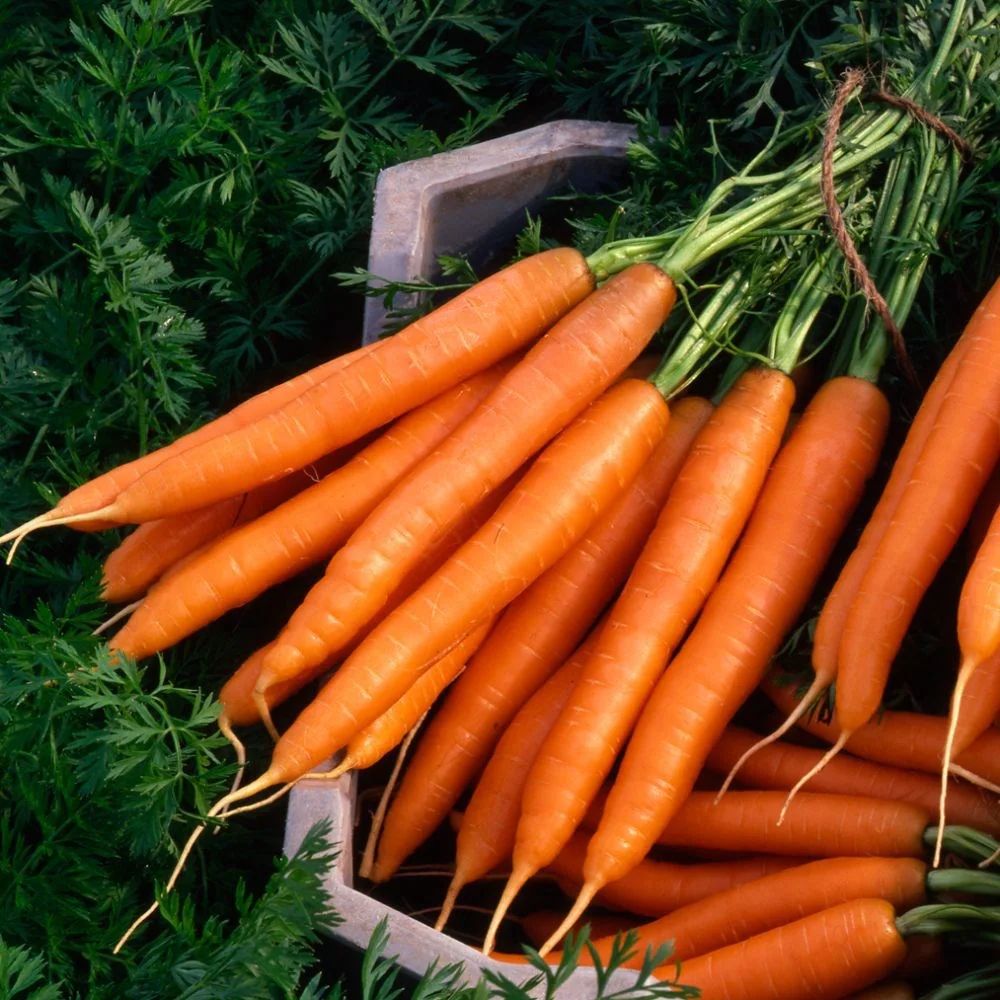
Danvers carrots are the choice for gardeners with heavy clay soil. These stockier, shorter carrots push through compacted soil where Imperators would fork and split. They mature in 70 to 80 days, have a stronger, earthier flavor, and store exceptionally well because of lower moisture content. Varieties like Danvers 126, Yellowstone, and Kyoto Red are reliable heritage varieties. These are your long-term storage and cooking carrots.
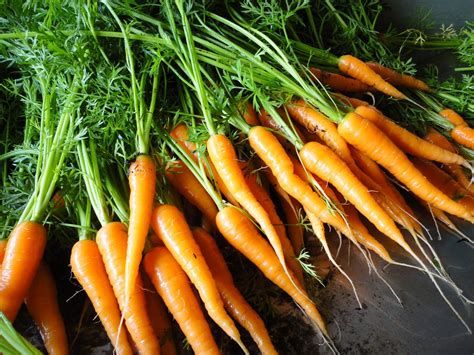
Chantenay carrots are thick, conical, and perfect for shallow, rocky, or poor soil. They mature in 65 to 75 days and work beautifully in containers. Popular varieties include New Kuroda (exceptionally sweet), Oxheart (huge and thick for storage), and Red Core Chantenay. One caveat: if you don't harvest Chantenay carrots at peak size, they become woody and tough quickly.
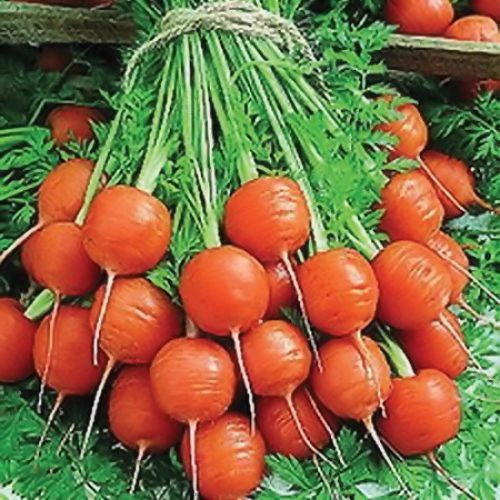
Parisian carrots (sometimes called Thumbelina carrots) are small, round, and require minimal soil depth. They mature in just 50 to 60 days and are perfect for containers, small spaces, or gardens with poor soil. These are fun, quick, and ideal if you have limited space or want a fast harvest for kids to enjoy.
Disease-resistant varieties matter if you're in a region with problematic diseases. Bolero, Caro-choice, Early Gold, and others show strong resistance to leaf blights. Check with your local extension service for disease recommendations specific to your area.
Managing Pests and Diseases
Carrots face several pest and disease challenges, but most are preventable through variety selection and good cultural practices.
Leaf blight diseases (Alternaria and Cercospora fungi) are the most common fungal problems. These appear as small lesions on foliage and can defoliate the plants if left unchecked. The best control is by using disease-tolerant varieties such as Apache, Bolero, Caropak, Early Gold, and others. Scout your plants regularly. If you notice lesions on 25% of leaves sampled then fungicide treatment is justified. Proper spacing with good air circulation together with avoiding overhead watering all reduce the severity of the disease.
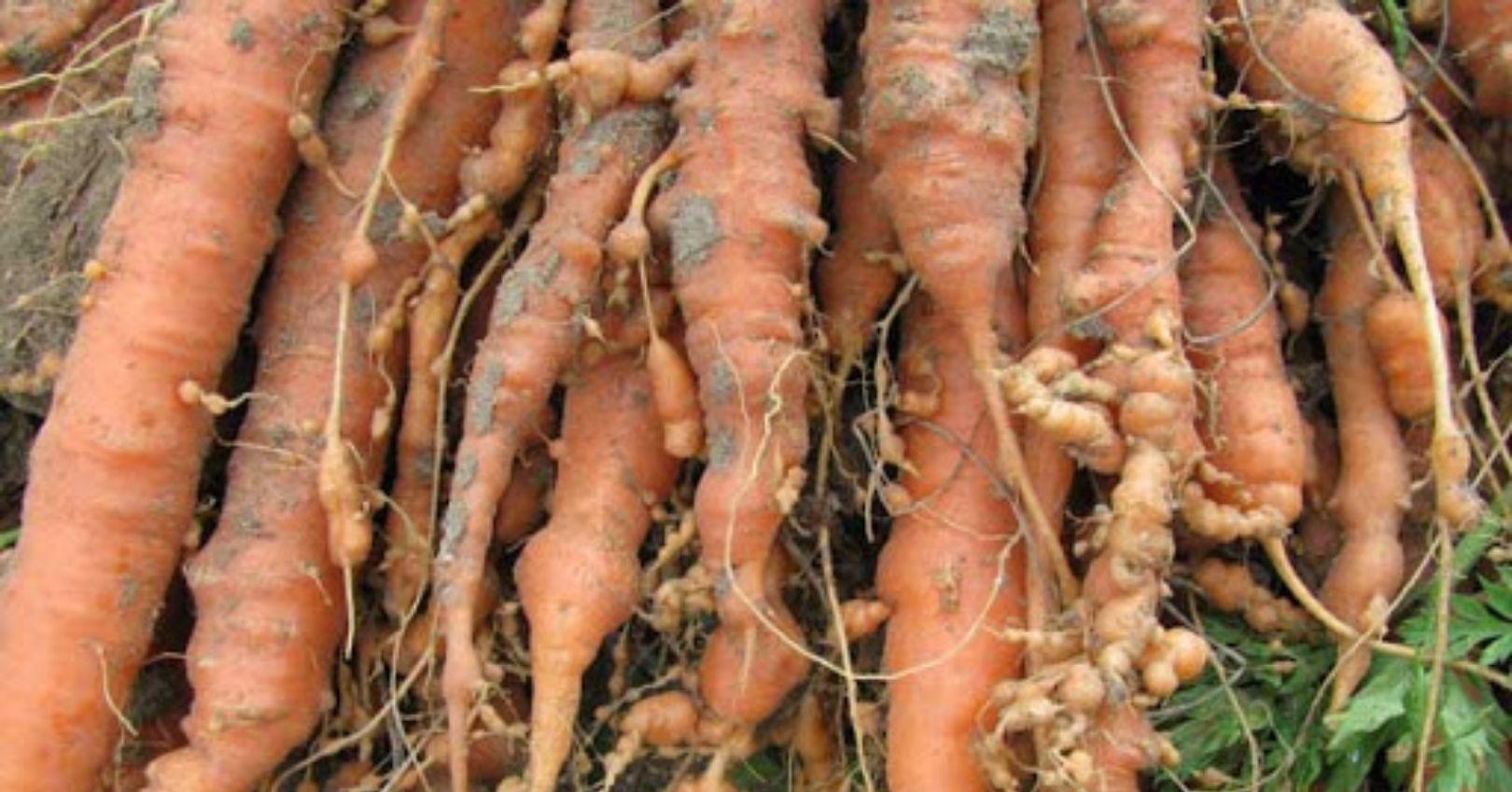
Root-knot nematodes are the second most economically damaging pest nationally. These microscopic roundworms feed on roots, causing galls and misshapen roots. Infested carrots are unmarketable. Root-knot management requires rotation to non-host crops, using resistant varieties when available, and maintaining soil health through compost and organic matter.
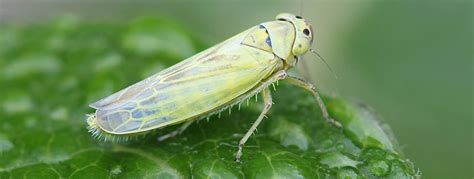
Leafhoppers transmit aster yellows, a serious disease causing stunting, yellowing, and hairy roots. This disease is harder to manage once plants are infected, so prevention through insect control and resistant varieties is critical.
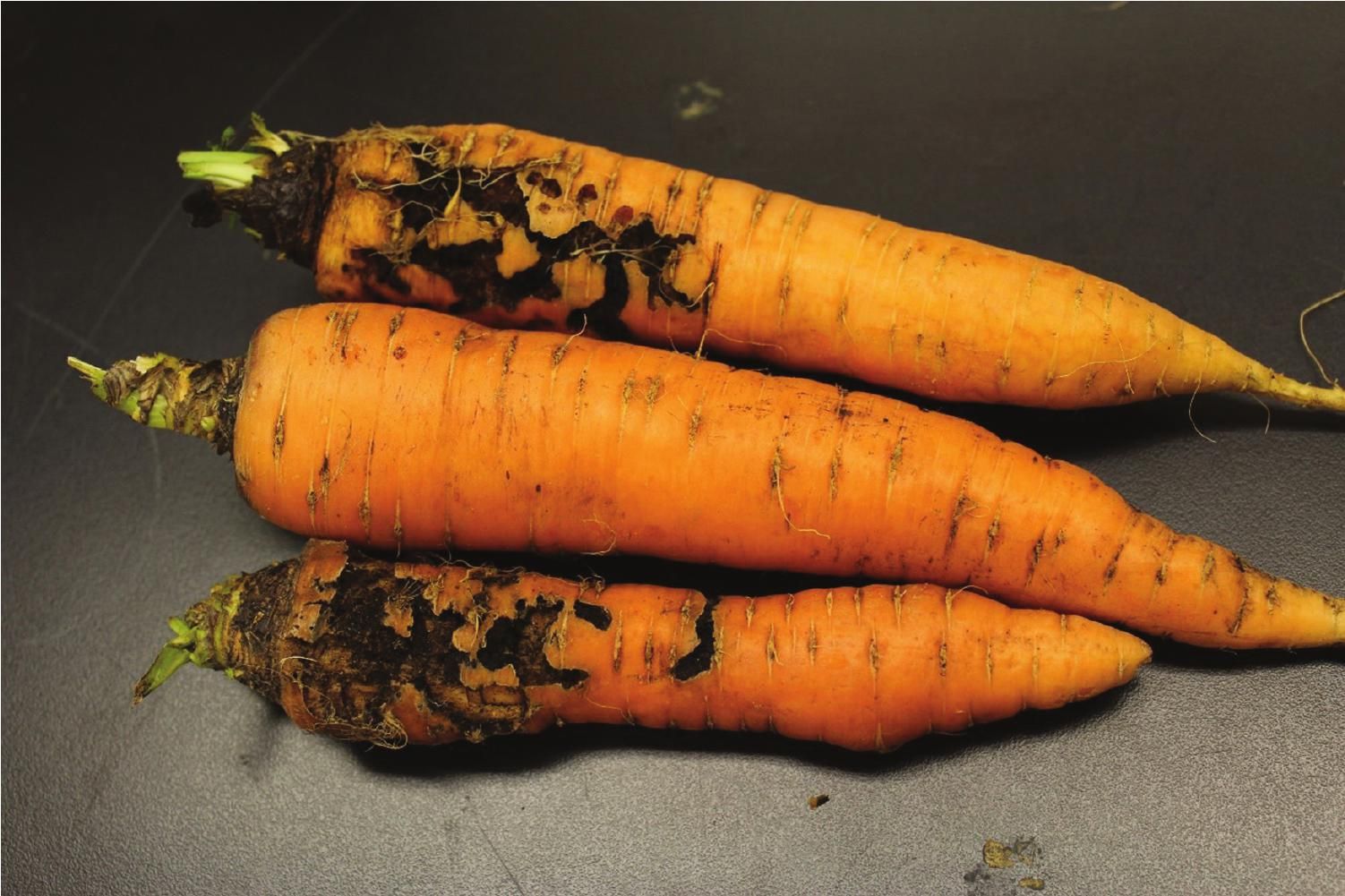
Carrot weevils are serious pests in some regions, especially the Great Lakes and Mid-Atlantic. These beetles lay eggs in plant crowns, and larvae tunnel through roots, making carrots unmarketable. Resistant varieties offer the best management. Sanitation (removing crop residue promptly) reduces population buildup.
Beneficial insects including lady beetles, lacewings, and parasitoid wasps naturally control soft-bodied pests. Encourage these helpers by avoiding broad-spectrum insecticides and maintaining diverse plantings.
Harvesting and Storage
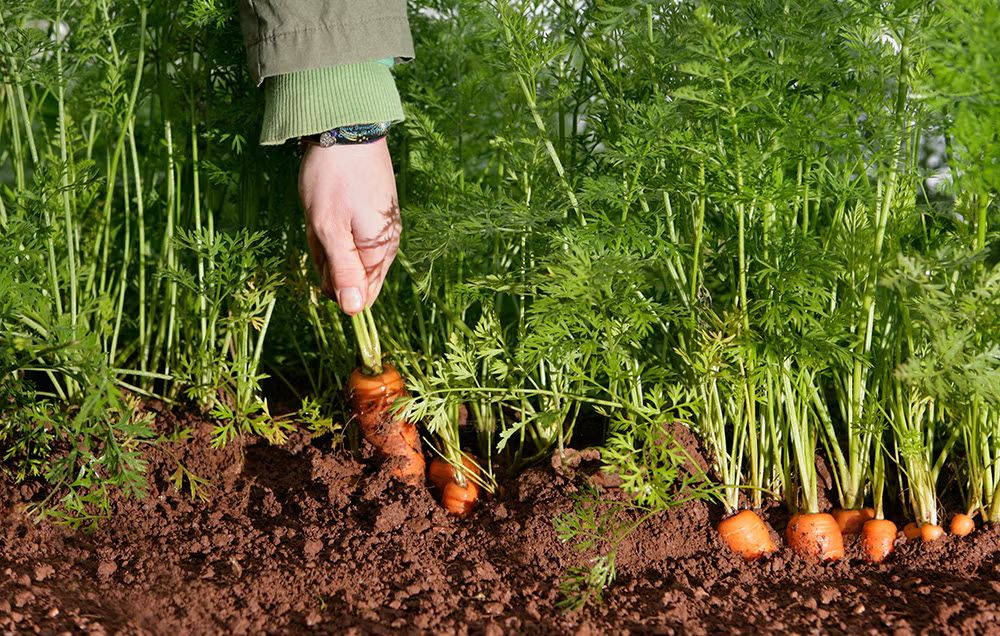
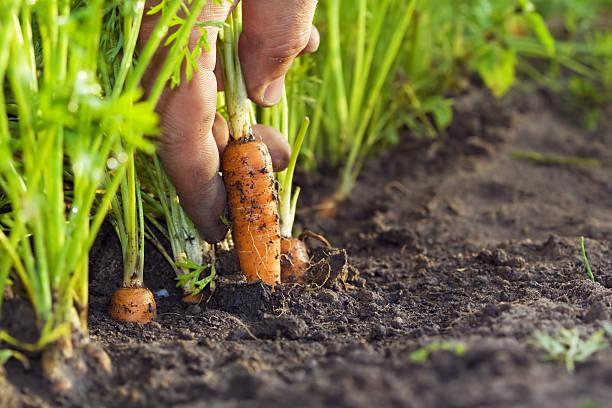
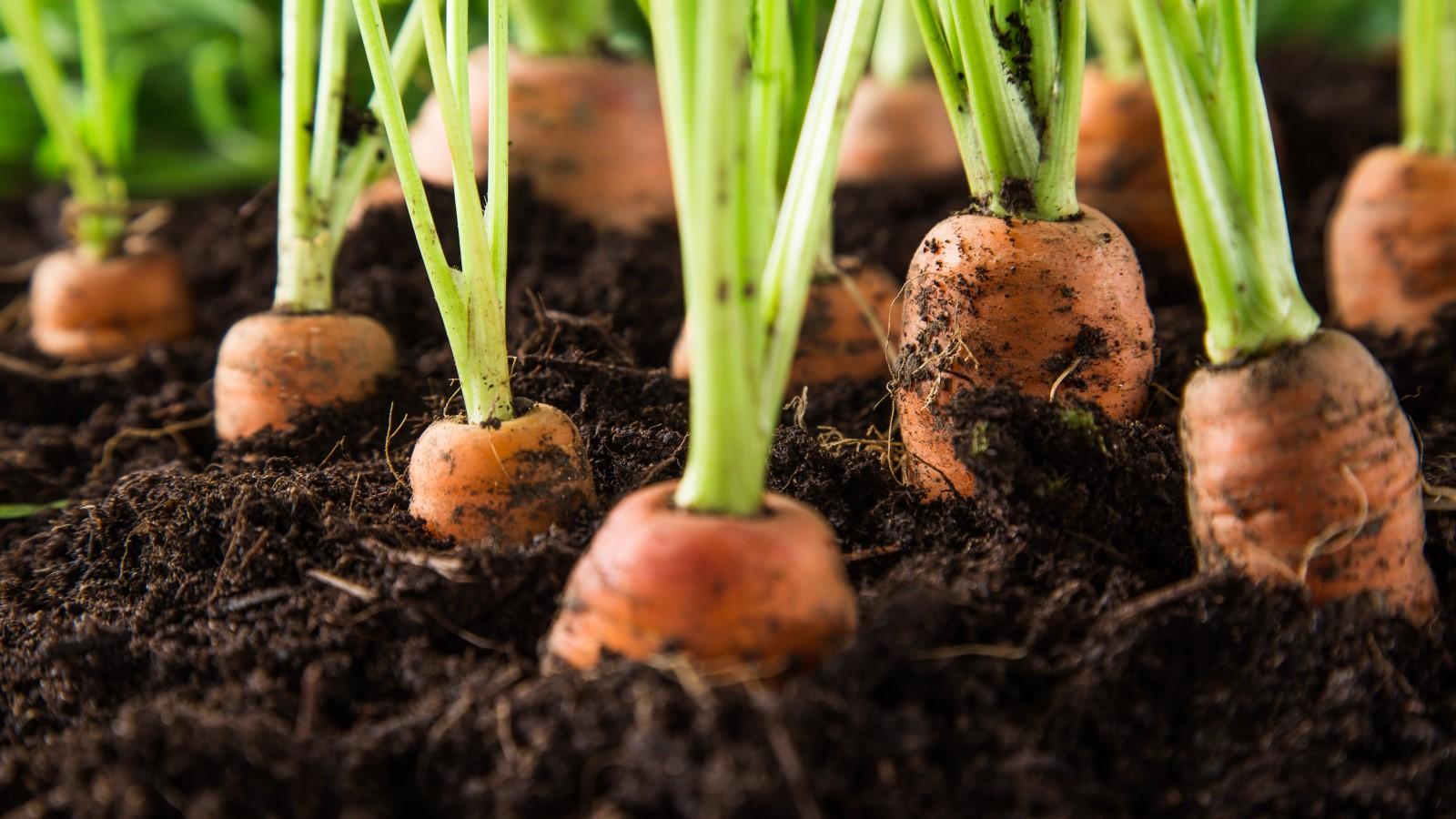
Carrots are ready to harvest when the shoulder (the top portion of the root) reaches 0.5 inch in diameter, though 0.75 inch is more optimal. Many carrots mature in 60 to 100 days depending on variety and growing conditions. Check readiness by lightly excavating the soil around the top and measuring the diameter. If carrots are too small, recover them and check again in a few days.
Harvest on a cool, cloudy day if possible, as this helps preservation. Gently loosen the soil with a broad fork before pulling to avoid breaking roots in heavy clay. Twist off the green tops before storing. The greens continue drawing moisture from roots, shortening storage life.
Carrots sweeten after experiencing frost. Cold temperatures convert starches to sugars, making late-season or overwintered carrots taste noticeably better than summer harvests. If you live in a cool climate, plan a fall seeding so carrots mature around your first frost date.
For long-term storage, carrots need cool conditions (32 to 38°F) and high humidity (around 98%). In a root cellar, basement, or cool garage, layer carrots in moist sand or sawdust in boxes or crates. Check every 1 to 2 weeks and remove any showing decay. Properly stored carrots last several months.
Shorter storage (several weeks) is fine in the refrigerator's crisper drawer. Detach greens first, as these draw moisture from roots. Carrots stored this way stay crisp for 3 to 4 weeks.
Using Technology for Early Detection
Plant problems are easiest to manage when caught early. Plantlyze's AI analysis identifies pest damage and disease symptoms from leaf photos, giving you specific information about what's affecting your carrots rather than guessing based on appearance. Early detection means intervention during the problem's early stages when control is most effective and least damaging to yield.
Unsure if leaf spots are serious or what's causing yellowing, upload a photo to Plantlyze and get answers in seconds rather than days. This technology accelerates your problem-solving and builds your growing knowledge over time.
Conclusion: Growing Perfect Carrots
Carrot success comes down to five essentials: deep, loose, well-prepared soil; proper spacing; consistent moisture; the right variety for your conditions; and disease management through resistant cultivars and good practices. Get these right and you'll grow carrots that blow supermarket vegetables out of the water.
The most common mistakes are planting in poorly prepared soil, spacing carrots too densely, watering inconsistently, and choosing varieties unsuited to your soil type. Avoid these pitfalls and you're 90% of the way to success.
Start with one variety that matches your soil and climate. Document what works. Next season, expand your plantings and try additional types. Before long, you'll be harvesting carrots throughout the season, storage varieties that last through winter, and maybe experimenting with heirloom colors like purple, red, and yellow carrots.
Ready to diagnose carrot problems before they become serious? Visit plantlyze.com and upload photos of your carrot plants to identify any issues early and get specific solutions for healthy, productive plants. Whether you're dealing with mysterious leaf spots, pest damage, or disease symptoms, early detection makes all the difference in saving your crop.
References
1. USDA IPM Database – Crop Profile for Carrots in United States
https://ipmdata.ipmcenters.org/documents/cropprofiles/uscarrots.pdf
2. Rutgers University – Controlling Fungal Leaf Blights of Carrot
https://plant-pest-advisory.rutgers.edu/controlling-fungal-leaf-blights-of-carrot-2/
3. Cornell University – Carrot Leaf Blight Diseases and Their Management
https://www.vegetables.cornell.edu/pest-management/disease-factsheets/carrot-leaf-blight-diseases-and-their-management/
4. UMass Amherst – Carrots, Identifying Diseases
https://www.umass.edu/agriculture-food-environment/vegetable/fact-sheets/carrots-identifying-diseases
5. Wikifarmer (2024) – Carrot Soil Requirements, Soil Preparation and Planting
https://wikifarmer.com/library/en/article/carrot-soil-requirements-soil-preparation-and-planting