Growing your own potatoes is one of the most rewarding gardening experiences. But here's the harsh truth: the harvest determines everything. Rush this step, and you end up with bruised, short-lived potatoes. Wait too long, and frost damage ruins your entire crop.
Proper harvest timing does three critical things. It maximizes your yield by allowing tubers to reach full size. It develops thick skins that protect potatoes during storage. And it unlocks the ability to store your harvest for months instead of weeks.
This guide gives you every tool to harvest like an experienced gardener. You'll learn exactly when potatoes are ready, how to dig without damaging them, and what to do immediately after harvest. By the end, you'll be confident your crop is safe for long-term storage.
Know When Your Potatoes Are Ready to Harvest
Let's begin with the most critical decision: timing. Getting this right transforms a mediocre harvest into a successful season.
Watch for the Yellow Foliage Signal

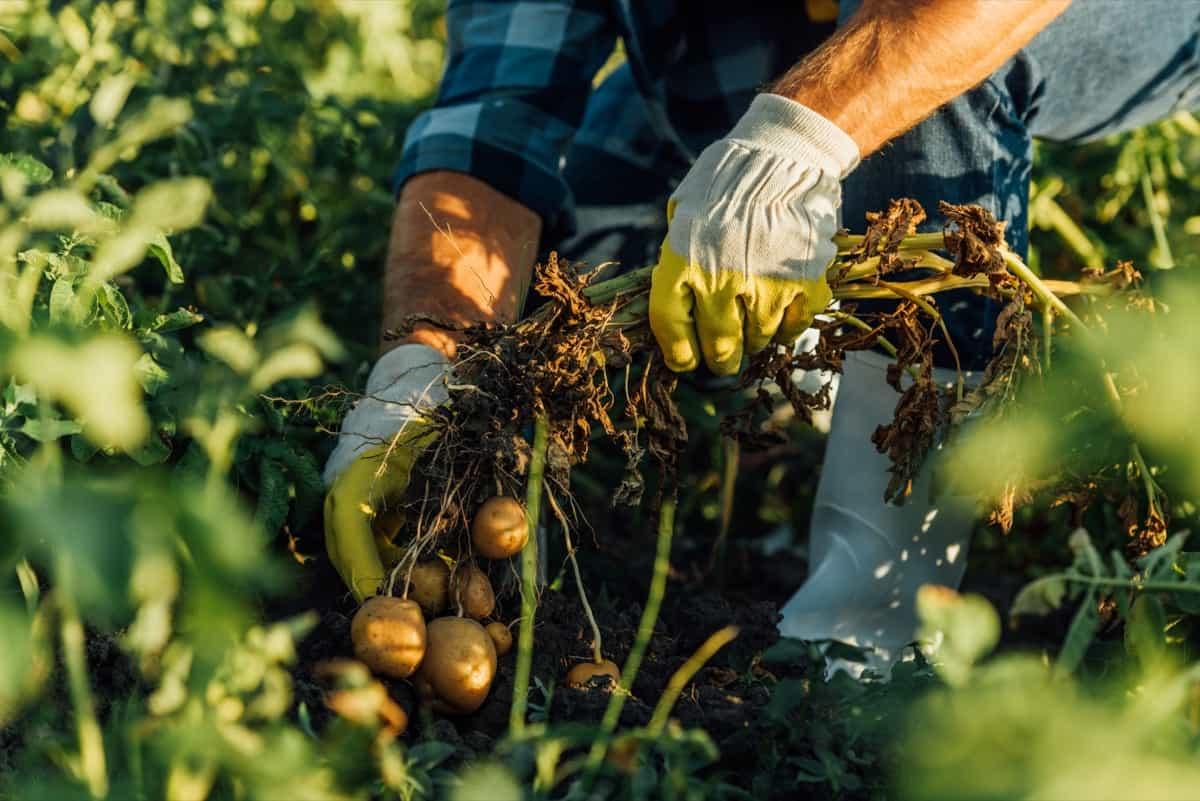
The most reliable indicator of potato maturity is foliage death. When leaves yellow, brown, and begin wilting, two important things are happening. Your potatoes have stopped growing. More importantly, they're developing thick, protective skins.
This skin development takes about 2-3 weeks after the plants flower. If you harvest before this happens, your potatoes have thin, fragile skins. These thin skins bruise easily and won't protect your harvest during storage. The result? Rot develops quickly, and you lose your crop to disease and decay.
Understand Variety and Timing Differences
Not all potatoes mature on the same schedule. Early varieties need roughly 70-90 days from planting to full maturity. Mid-season varieties require 90-110 days. Late-season varieties need 120-140 days. These aren't random numbers. They reflect how long tubers need to reach full size and develop storage-ready skins.
Check your seed potato packet. It lists the expected maturity days. Count forward from planting date, then add 2-3 weeks for full skin development. This gives you your target harvest window with confidence.
Temperature Matters for Final Harvest
Here's a fact many gardeners overlook: soil temperature affects harvest success. You should harvest before the first hard frost (below 28 degrees Fahrenheit for 4 or more consecutive hours). Frost damages potato skins and creates entry points for disease.
In areas without frost, use this rule: soil should be above 45 degrees Fahrenheit when you harvest. Colder soil damages the potatoes. Warmer soil signals it's safe to harvest without frost risk.
The ideal harvest window is usually 2-3 weeks after foliage yellows completely. Watch your local weather forecast. The moment you see frost predictions, harvest within 3-5 days.
Prepare for a Successful Potato Harvest
You know when to harvest. Now let's prepare properly so your harvest goes smoothly without damage or stress.
Gather Your Harvesting Tools
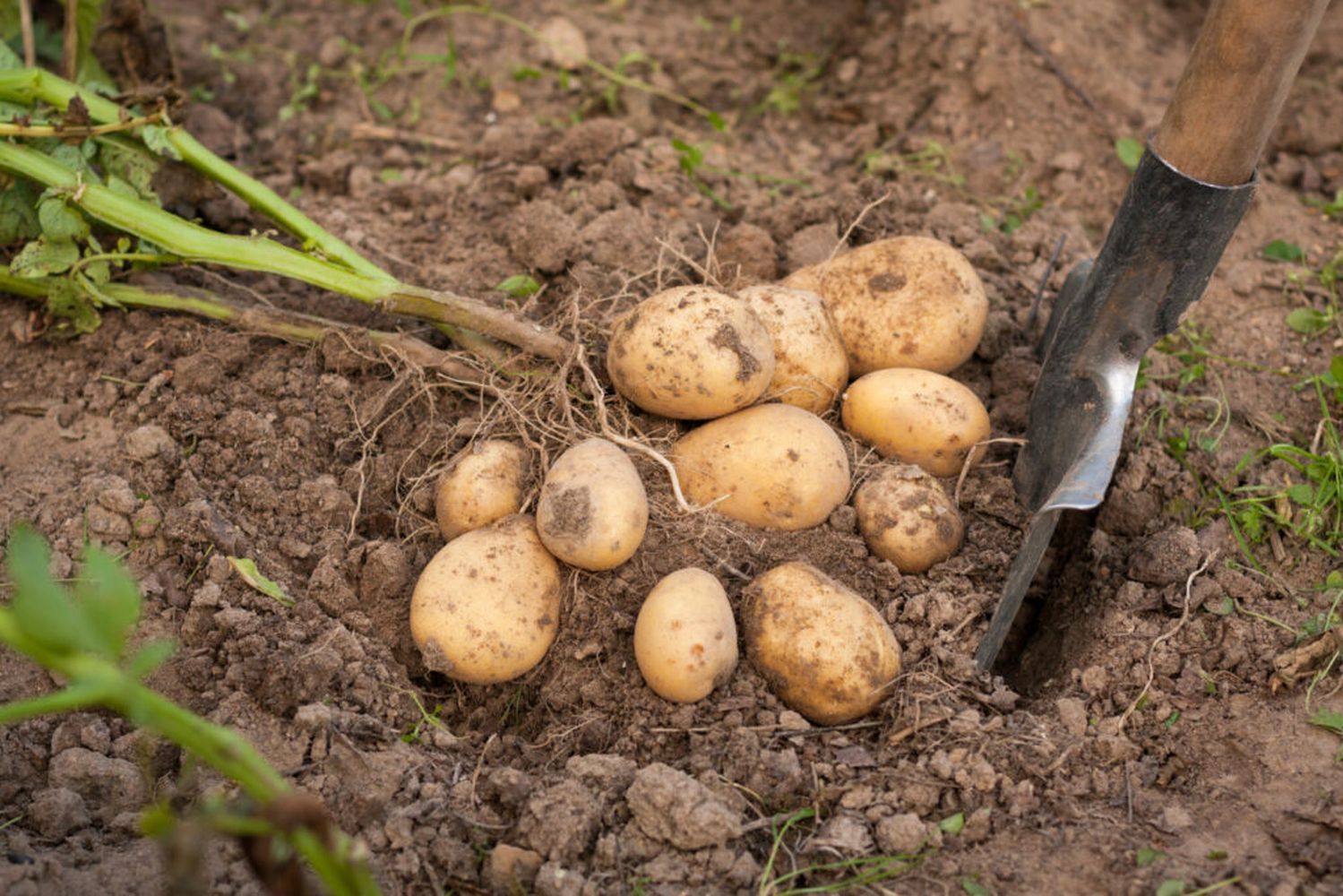
You don't need expensive equipment. In fact, simple tools work best because they're less likely to damage your potatoes. A garden fork loosens soil without cutting tubers. A spade works for larger plots. Work gloves protect your hands from blisters. A bucket or basket holds your collection.
Avoid using sharp tools that could pierce potatoes. Avoid pitchforks or shovels with pointed edges. These tools cause the very bruising you're trying to prevent.
Choose the Right Harvest Day
Timing your harvest day matters as much as timing your harvest season. Three factors make a difference: weather, time of day, and soil conditions.
Harvest on dry days when wet soil clings to tubers and increases bruising. Choose early morning or late afternoon when soil is cooler and easier to work with. Wait at least 24 hours after rain so soil is firmer and less compacted.
Why these details? Wet, compacted soil sticks to potatoes and makes them harder to clean. Plus, it increases bruising during the dig. Cooler soil is firmer and requires less force to loosen, which means gentler handling for your precious crop.
The Complete Potato Harvesting Process
Now comes the main event: actually harvesting your potatoes. There are two approaches depending on your goals. Do you want baby potatoes for immediate use? Or are you harvesting the entire crop for long-term storage? The method differs slightly for each.
Early Season Harvesting: Baby Potatoes
You don't have to wait for the entire plant to die to harvest some potatoes. Starting about 2-3 weeks after the plants flower, you can carefully dig around the plant and remove larger tubers. This leaves smaller potatoes in the ground to continue growing.
Here's the step-by-step approach:
Gently dig around the plant base with your hands or small spade. Feel for larger tubers and lift them carefully. Leave smaller tubers in place and re-cover with soil. Water the plant to help remaining potatoes continue developing.
This selective harvesting works best for early and mid-season varieties. Don't use this method with late varieties. They need the full season to develop properly. Plus, disturbing the plants repeatedly weakens them and exposes them to disease.
Full Season Harvesting: Mature Potatoes
When foliage has completely yellowed, browned, and wilted, it's time for the main harvest. This is when you dig up the entire plant and collect all potatoes at once.
The process requires patience and care. Here's the step-by-step approach. Dig a test hill first to check skin firmness before full harvest. Start digging at plant edges with a garden fork. Gently loosen soil around and under the plant. Lift the entire plant up carefully. Dig through the loose soil and mulch to find all tubers. Place each potato gently in your collection bucket.
Why test first? If skins are still thin (they rub off easily), leave the plant in the ground for 3-5 more days. This allows skin development to complete. It's worth the wait because premature harvest means storage failure.
Handle With Care to Prevent Bruising
Every bruise becomes a weak spot. Weak spots develop into rot during storage. This is why gentle handling separates successful harvests from disappointing ones.
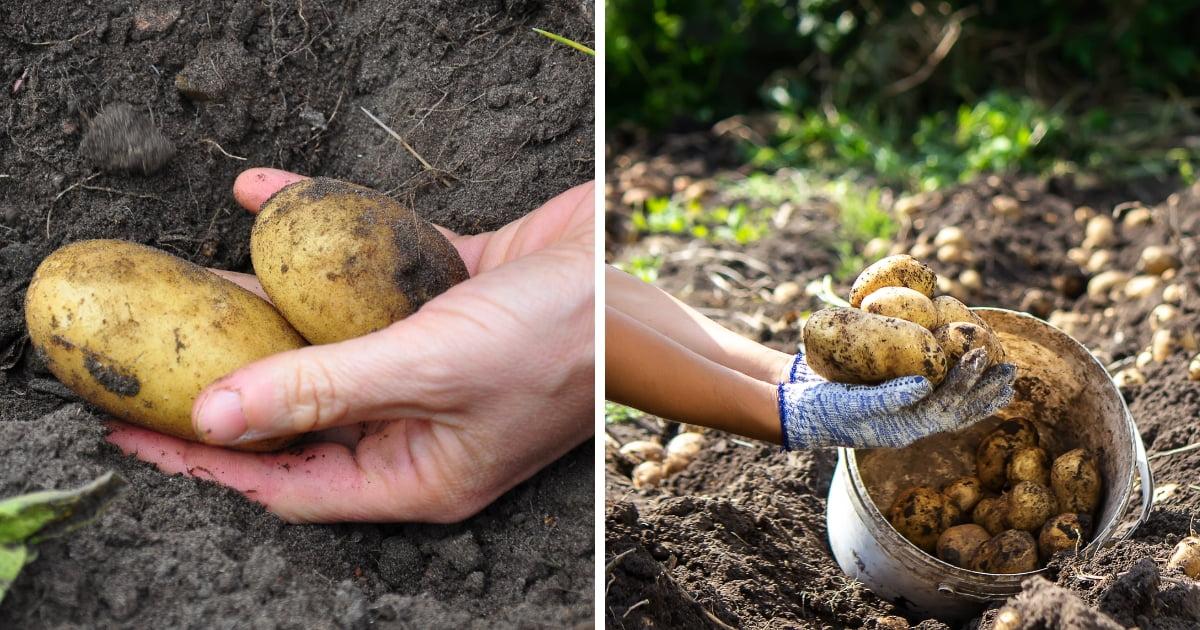
Never drop potatoes. Never throw them into piles. Never step on or lean against harvested potatoes. As you dig, place each potato gently in your collection container. Move slowly and deliberately. This feels slower than rough harvesting, but it's actually faster because you're not losing potatoes to damage.
If a potato gets bruised during harvest, set it aside for immediate use. Bruised potatoes should be eaten within 2-3 weeks. Don't try to store them. One damaged potato can spread rot to nearby potatoes in storage.
Sort Your Harvest for Different Uses
You've finished digging. Now organize your harvest into categories based on condition and size. Damaged potatoes go into one container for immediate use. Small potatoes get stored separately because they'll spoil faster. Medium potatoes are ideal for storage. Large potatoes keep longest.
Size matters because smaller potatoes have more surface area relative to volume. This means they lose moisture faster. Larger potatoes keep longer. Storing them separately helps you use them in the right order and prevents waste.
Cure and Store Your Potatoes Properly
You're not done yet. The most critical step happens after harvest: curing. This single step transforms your fragile harvest into storage-ready potatoes that last for months.
The Curing Process Explained
Curing hardens the potato skin. It also helps small wounds from harvest heal naturally. This process takes 1-2 weeks and is non-negotiable for storage success.
Here are the curing requirements. Temperature should be between 50 and 60 degrees Fahrenheit, not warmer and not colder. Humidity should be 85 to 95 percent relative humidity. Location must be dark because light exposure causes greening. You need good airflow to prevent mold.
Set potatoes in a single layer on wooden crates or mesh bags. Avoid plastic containers. Plastic traps moisture and causes rot. Check them every few days. If you see any soft spots or mold, remove those potatoes immediately.
Long-Term Storage for Months of Harvest
After curing is complete, move potatoes to long-term storage. The conditions are similar but slightly different. Temperature should be 45 to 50 degrees Fahrenheit. Darkness is essential because light causes green spots and toxins. Maintain 85 to 95 percent humidity. Continue good ventilation. Keep them in breathable bags or crates, never plastic.
Check stored potatoes monthly. Remove any that show sprouting or soft spots. This prevents one spoiled potato from affecting the entire batch. With proper storage, homegrown potatoes can feed your family for 4-6 months. Some gardeners get 8 months of storage from a well-managed harvest.
The key is consistent monitoring. Use older potatoes first, storing newer ones longer.
Avoid Common Harvesting Mistakes
Learning from others' mistakes saves time and frustration. Here are the most common errors that damage potato harvests.
Harvesting too early: Immature potatoes have thin skins that bruise easily. You'll end up with a short storage life and low yield.
Harvesting too late: Frost damage ruins potatoes. Even a single hard freeze can make tubers unusable.
Bruising during harvest: Rough handling creates damage spots. These spots become rot in storage, costing you your harvest.
Skipping the curing step: Uncured potatoes sprout quickly and develop diseases. The shelf life drops from 4-6 months to 2-3 weeks.
Storing in warm locations: Warm temperatures trigger sprouting. Your potatoes shrivel and spoil within weeks.
Leaving damaged potatoes with good ones: Disease spreads quickly. One bad potato ruins an entire storage container.
Prevention is simple. Confirm complete foliage yellowing before main harvest. Monitor weather forecasts for frost. Use proper tools that won't puncture potatoes. Handle gently from dig through storage. Never skip the curing period. Store in cool, dark locations only. Check stored potatoes monthly. Use damaged potatoes first.
Ready to Harvest With Complete Confidence
You now have everything needed to harvest potatoes like a seasoned gardener. The process isn't complicated. It requires patience with timing and gentleness with handling. That's it.
Remember these three principles. First, wait for complete foliage yellowing before main harvest. Second, handle potatoes gently throughout the entire process. Third, never skip the curing step. Follow these three rules, and your harvest will exceed expectations.
The most successful gardeners aren't the ones with fancy equipment. They're the ones who understand timing and respect the delicate work of harvesting. That's now you. Your next harvest will be better than your first.
Want to eliminate harvest guessing? Use Plantlyze to track your potato growth stages in real-time. Get notifications when foliage begins yellowing. Identify any plant health issues before harvest. Visit Plantlyze.com today and transform your gardening confidence.
References
University of Maine -- https://extension.umaine.edu/potatoes/
North Carolina State University Cooperative Extension -- https://www.ces.ncsu.edu/
University Extension Service -- https://www.extension.org/