Introduction: When Your Healthy Cucumber Patch Gets Invaded
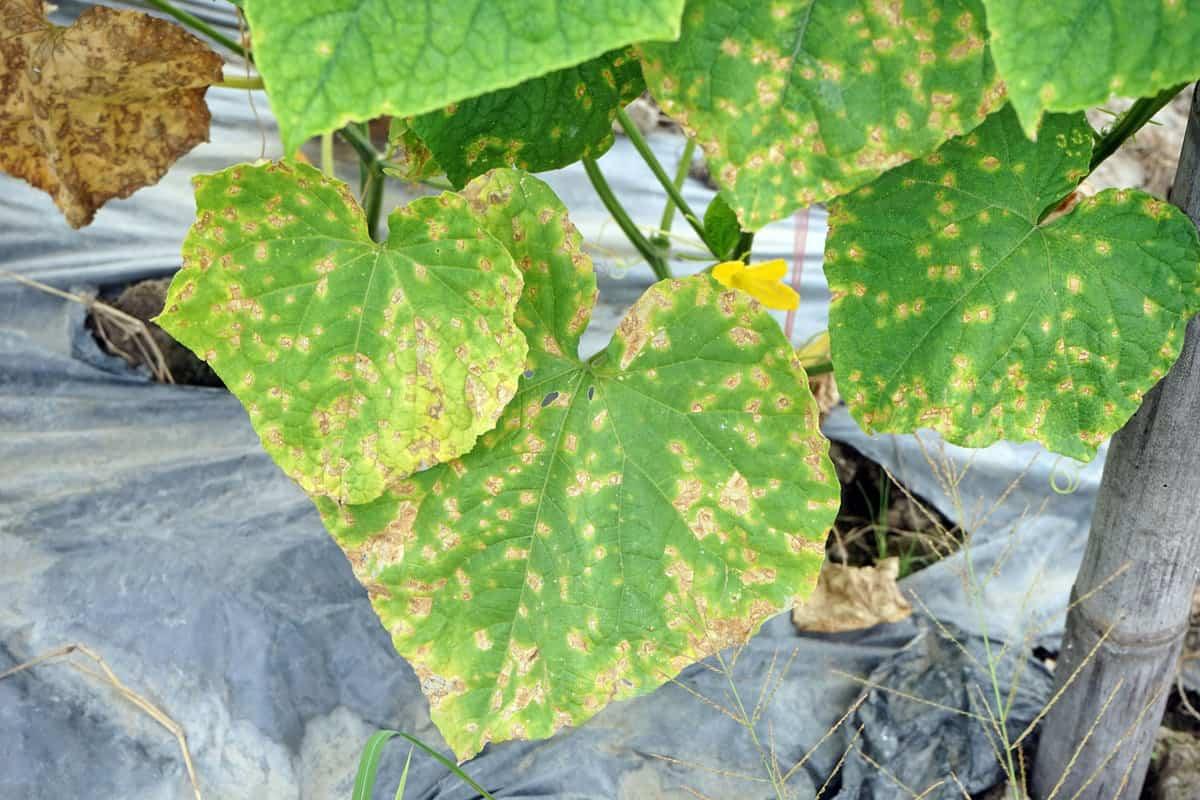
Your cucumber plants were thriving last week. This week, you notice something alarming: leaves riddled with holes, plants stunted and yellowing, visible insects clustering on stems and leaves. Panic sets in. Is the entire crop doomed?
The good news is no. Most cucumber pests can be controlled with early detection and the right approach. The better news is that you do not need harsh chemicals or endless spraying. By understanding which pests attack cucumbers, recognizing them early, and using integrated pest management strategies, you can protect your plants and harvest successfully.
This guide walks you through identification, prevention, and organic control methods that actually work.
Understanding Integrated Pest Management (IPM): Prevention Over Panic
Integrated pest management is a strategic approach that combines multiple methods to keep pest populations below damaging levels. It is not about eliminating every single pest you see. Instead, IPM is about managing pest populations intelligently.
The IPM framework works like this: prevent problems first through resistant varieties, crop rotation, and sanitation. Monitor plants regularly to catch problems early when populations are small. When pests appear, use the least toxic control method that works. Only escalate to stronger options if gentler methods fail.
This approach is superior to reactive spraying because it stops problems before they become crises. It saves money through prevention. It protects beneficial insects. Most importantly, it delivers consistent results year after year.
The foundation of successful pest management is understanding that some pest pressure is normal and acceptable. Your goal is not a pest-free garden. Your goal is keeping pest populations below the economic damage threshold where losses become unacceptable.
Identifying the Major Cucumber Pests
Cucumbers attract several significant insect pests. Understanding which pest you are facing determines your management strategy.
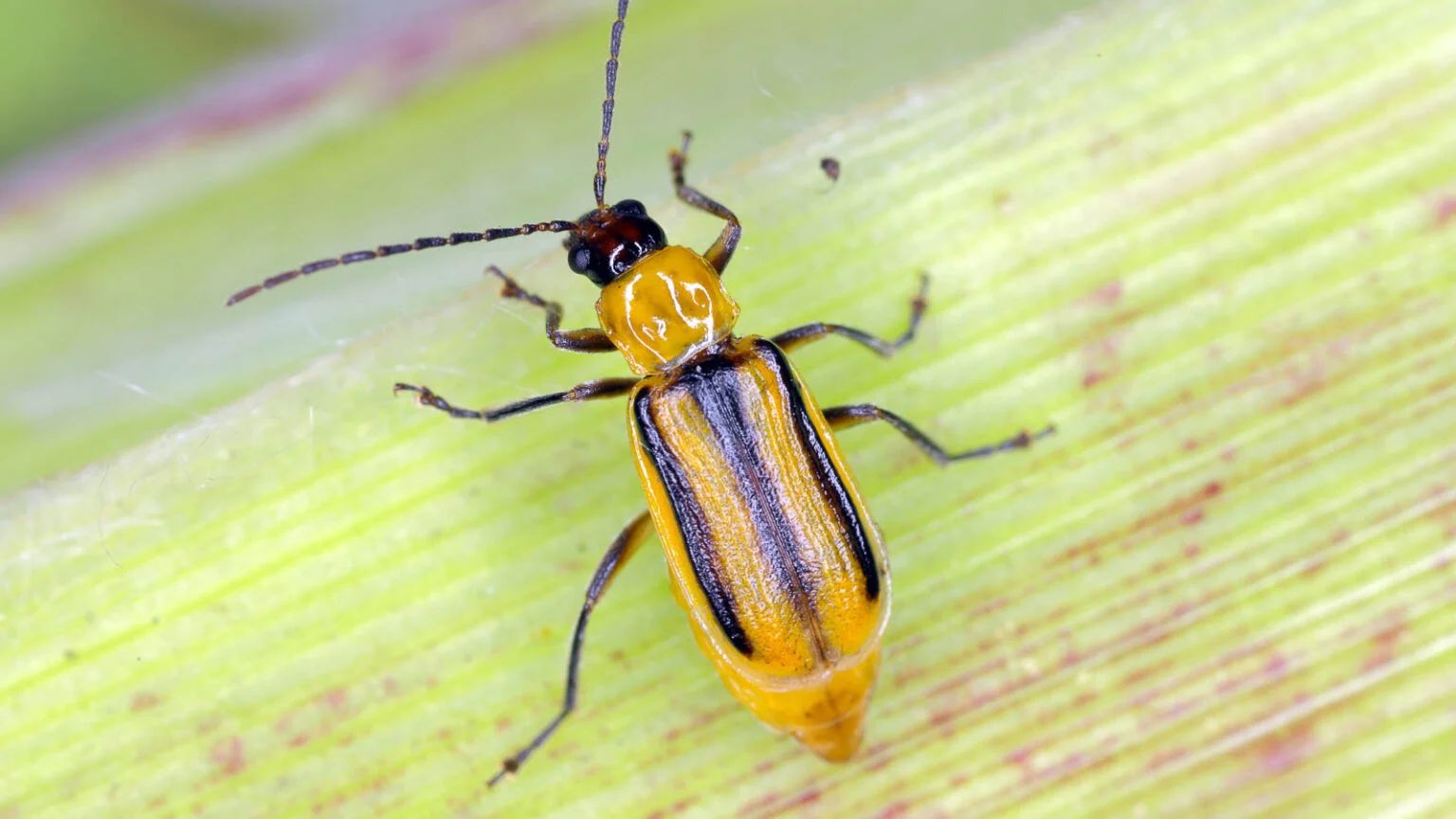
Cucumber beetles (both striped and spotted varieties) are arguably the most destructive pest of cucumbers. They feed on leaves, flowers, and fruit. Young seedlings can be killed by beetle feeding. Adult beetles transmit bacterial wilt, a disease that can devastate entire plantings.
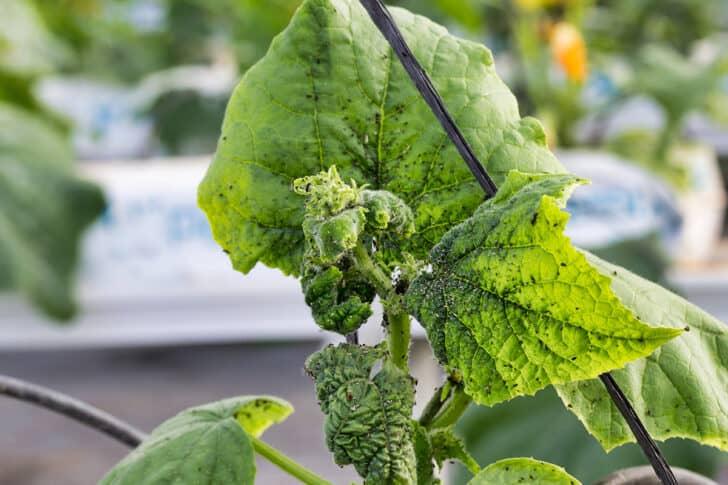
Aphids, primarily the green peach aphid and melon aphid, appear during cool weather in spring and fall. They multiply rapidly in moderate temperatures, particularly if natural enemies are scarce. Their feeding causes yellowing leaves and sticky honeydew residue.
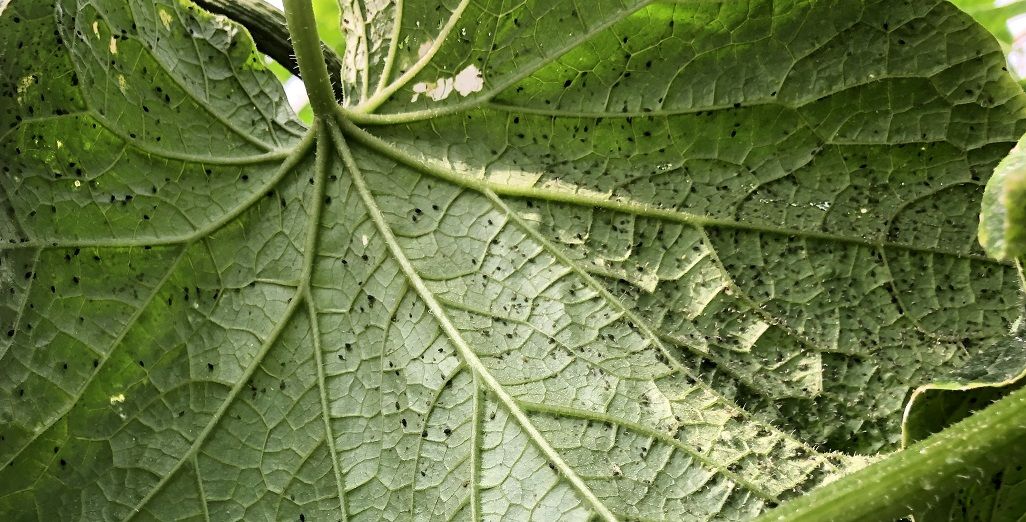
Spider mites are tiny arachnids (not insects) that explode in populations during hot, dry weather. They cause stippled leaves and fine webbing on undersides. Spider mite infestations can develop from a few individuals to overwhelming populations within just 1 to 2 weeks.
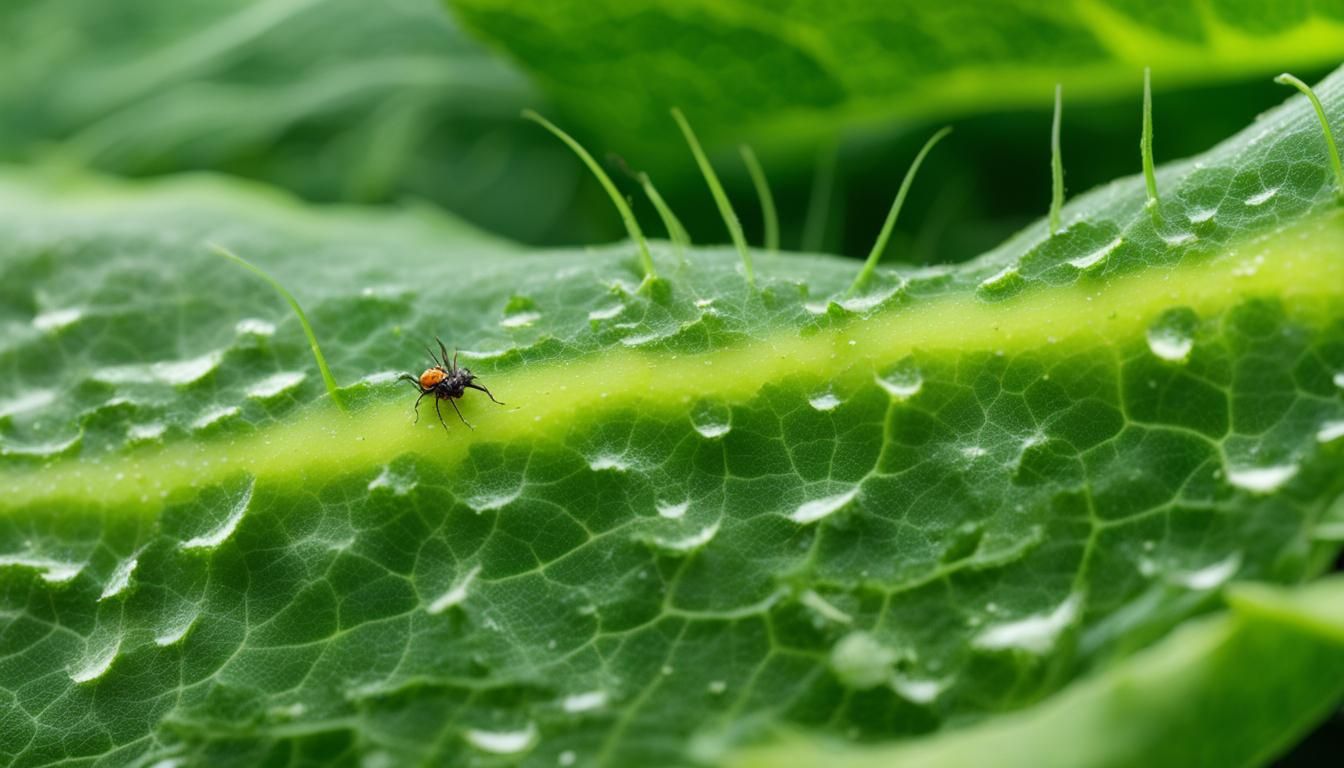
Squash bugs cluster around the crown and stems of plants, feeding on plant juices. Whiteflies congregate on leaf undersides. Pickleworms and melonworms are caterpillars that appear mid to late season and tunnel into fruit.
Cucumber Beetles: The Most Destructive Pest
Cucumber beetles are your biggest threat. Understanding them thoroughly transforms your ability to manage them successfully.
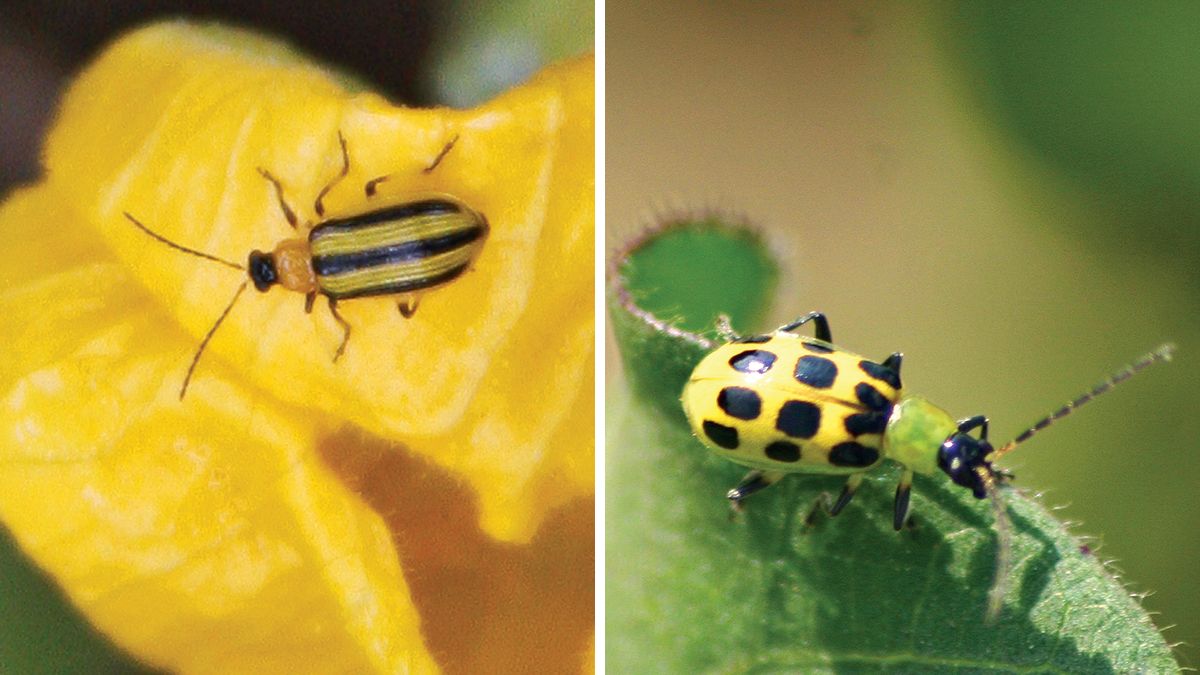
The striped cucumber beetle has a yellow wing cover (called an elytra) with three bold black stripes running lengthwise. The spotted cucumber beetle is yellow with 11 to 13 black spots. Both are roughly one quarter inch long and instantly recognizable once you know what to look for.
More damaging than their direct feeding, cucumber beetles transmit bacterial wilt disease through their saliva when feeding. This disease causes dramatic plant wilting despite adequate water. Plants infected early in the season are often lost completely. This disease transmission is why controlling beetles early is so critical.
Beetle life cycles vary by region but generally follow this pattern: beetles overwinter in soil debris. They emerge in spring when soil temperature reaches 60 to 65 degrees Fahrenheit. They immediately begin feeding on young seedlings and transplants. Females lay eggs in soil near cucumber plants. Larvae develop through four to five weeks, feeding on roots, then pupate in soil. Adults emerge and cause leaf damage for the remainder of the growing season.
The action threshold for striped cucumber beetles on cucumbers and melons is one to five beetles per plant. Scout your plants thoroughly and frequently. When beetle populations reach this threshold, treatment is recommended. For squash and pumpkins, the threshold is higher (five to ten beetles) because these plants are more tolerant of beetle damage and less susceptible to bacterial wilt transmission.
Prevention Methods
Resistant varieties are your first and best defense. Varieties like Shintokiwa, County Fair, Arkansas Little Leaf, and Little Leaf are reported to have bacterial wilt tolerance or resistance. Choosing these varieties dramatically reduces losses if beetles appear.
Crop rotation is essential. Rotate cucurbits (cucumbers, melons, squash, pumpkins) to different locations annually, ideally with a minimum three-year gap before returning to the same location. This breaks beetle life cycles by eliminating their food source when they emerge in spring.
Sanitation after harvest is critical. Remove all plant debris from your garden and either plow it down or incorporate it into the soil. Chop or shred debris to facilitate faster decomposition. This eliminates overwintering sites for adult beetles.
Organic Control Methods
Floating row covers deployed at planting time create a physical barrier preventing beetle access. Cover row covers should remain on plants until flowering begins (approximately 3 to 4 weeks). Remove covers once flowers appear so pollinators can access blossoms. Studies show that delaying row cover removal by 10 days after flowering begins can significantly reduce bacterial wilt incidence without reducing yields.
Kaolin clay, marketed as Surround, is a naturally occurring mineral that creates a chalky white film on plant surfaces. This film builds up in beetle antennae, disorienting them and making feeding difficult. Kaolin clay does not kill beetles but rather repels them. Apply approximately twice weekly early in the season as a preventive treatment rather than a rescue treatment when populations are already high.
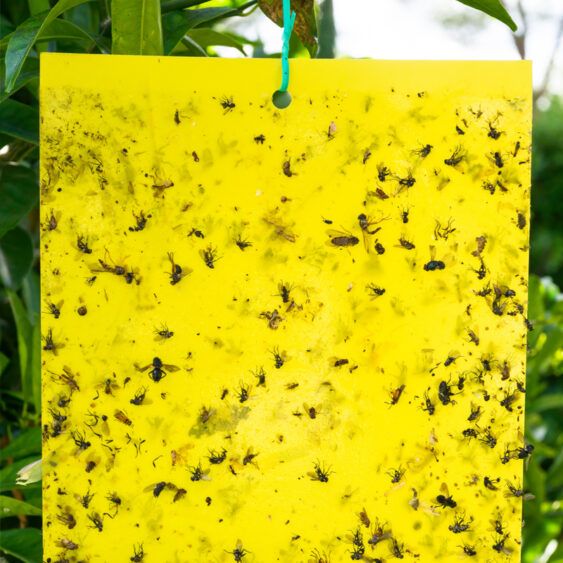
Yellow sticky traps exploit beetle attraction to the color yellow. Suspend yellow sticky tape above the plant canopy to trap beetles. These traps provide excellent monitoring and capture some beetles, reducing pest pressure.
Trap cropping uses beetle preferences strategically. Blue Hubbard squash contains high levels of the attractant compound cucurbitacin. Plant Blue Hubbard squash completely around your cucumber patch. Beetles congregate on the trap crop instead of your cucumbers. Concentrate any insecticide applications on the sacrificial trap crop, protecting your food-producing cucumber plants.
Aphids: Small But Mighty Problems
Aphids appear suddenly and multiply rapidly under favorable conditions. Early detection and action prevent explosive population growth.
Green peach aphids are tiny (about one sixteenth inch), pear shaped, and distinctly green. Melon aphids are similar but may be slightly yellow or pink. Both cluster on new growth and leaf undersides, feeding by inserting their needle-like mouthparts into plant tissue and drinking sap.
Their feeding causes yellowing and curling leaves. As they feed, they excrete sticky honeydew that accumulates on leaves and stems. Sooty mold fungus grows on this honeydew, blackening leaf surfaces. Severe infestations stunt plant growth and reduce yields.
Aphids thrive in cool to moderate temperatures with high humidity. Spring infestations in cool weather are typical. Populations decline as temperatures warm above 80 degrees Fahrenheit. Fall aphid pressure increases again as temperatures cool.
Natural enemies like ladybugs, lacewings, and parasitic wasps suppress aphid populations effectively during cool seasons. This is why spring infestations are usually lower in years following cool, moist springs when natural enemy populations thrive.
Organic Control for Aphids
Beneficial insects are your first control option. Ladybugs, green lacewing larvae, and parasitic wasps actively feed on aphids at all life stages. Release beneficial insects early in the season or maintain habitat that attracts them naturally.
If aphids appear despite beneficial presence, spray with insecticidal soap, a contact insecticide effective against soft-bodied insects. Apply before populations become very high. Make two applications five days apart. Do not spray during direct sun or if plants are drought-stressed, as the soap can burn leaves.
Alternatively, spray affected leaves with soapy water (mild dish soap and water), then rinse with clear water. This removes aphids mechanically. Repeat every 5 to 7 days as needed.
Reflective mulches and aluminum foil-covered beds confuse aphids and reduce landing and feeding. Yellow water pans partially filled with soapy water trap and kill aphids.
Spider Mites: The Summer Scourge
Spider mites appear benign in small numbers but explode rapidly during hot, dry weather. They cause visible damage before you can control them if you are not vigilant.
Spider mites are not insects but arachnids (relatives of spiders). They are so tiny they are barely visible to the naked eye. Their first sign is a fine webbing on leaf undersides or between stems. Look closely and you will see thousands of tiny moving dots. Infested leaves appear stippled with yellow or tan discoloration.
Heavy infestations cause complete leaf desiccation. Leaves become brown and papery. In extreme cases, entire plants shrivel and die. Spider mites thrive in hot, dry conditions and reproduce rapidly. A small population can become an overwhelming infestation in just two weeks during peak summer heat.
Organic Spider Mite Control
The first response to spider mites is a strong spray of water. Use a hose to spray infected plants thoroughly, hitting leaf undersides where mites hide and produce webbing. The force of water knocks mites off plants, reducing populations. Repeat every 2 to 3 days as needed.
Beneficial predatory mites eat spider mites. These tiny predators (invisible to unaided eyes) completely consume spider mites without harming plants. Release predatory mites when spider mite populations are still low.
If infestations progress, spray with neem oil extract or insecticidal soap. These soft chemical controls have minimal toxicity to people and pets but effectively kill spider mites on contact. Repeat applications every 5 to 7 days may be necessary.
Other Common Pests: Quick Reference
Squash bugs are large brown insects that congregate at the plant crown and beneath leaves. Hand-pick them early when nymphs are small. Place cardboard or heavy boards under plants. Squash bugs congregate underneath for shelter. Lift the boards and crush the bugs. Remove egg clusters by hand when you find them on leaf undersides.
Whiteflies are tiny white flying insects that congregate on leaf undersides. Yellow sticky traps capture flying adults. Reflective mulches confuse them. Insecticidal soap controls nymphs.
Pickleworms and melonworms are green caterpillars that tunnel into fruit and feed on flowers. Spinosad, an organic insecticide, provides control when sprayed every 7 days starting when first buds or flowers appear. Spray in the evening to minimize pollinator impact. Avoid broad-spectrum chemicals that kill beneficial parasitic insects that naturally control these pests.
Prevention: Your First Line of Defense
Prevention stops problems before they start. An hour spent preventing problems prevents weeks of frustration managing infestations.
Variety selection dramatically impacts pest pressure. Choose resistant varieties for common problems in your area. Consult your local extension office for regional recommendations.
Crop rotation breaks pest life cycles. Move cucurbits to different locations each year. Minimum three-year gaps between plantings in the same location eliminate overwintering pest populations.
Sanitation removes pest habitat. Remove all plant debris after harvest. Chop residues to facilitate decomposition. Clean trellises and containers where insects might shelter.
Floating row covers create physical barriers during vulnerable seedling and early growth stages. Covers remain effective until flowering begins when pollinators access blossoms.
Proper spacing ensures air circulation, reducing pest pressure and disease problems. Crowded plants create humid microenvironments favoring pests.
Mulching with reflective plastic or straw provides multiple benefits. Reflective mulches confuse some insects. Straw mulch harbors beneficial insects. Either type reduces soil splash that spreads disease.
Cultural and Physical Control Methods
Delayed planting adjusts crop timing to avoid pest emergence. Spring-planted crops escape some late-season pests. Delaying planting by 2 to 3 weeks sometimes misses early beetle emergence windows.
Floating row covers require careful timing. Leave them on through early growth stages. Remove at flowering to permit pollinator access. Leaving covers on for 10 days after flowering begins (in some crops) reduces disease transmission significantly.
Hand-picking and crushing works for squash bugs, beetles on small plants, and concentrated beetle populations. A few beetles crushed daily prevents population explosions.
Yellow sticky traps monitor pest populations and trap adults. Replace frequently as traps become covered with debris and lose effectiveness.
Kaolin clay requires repeated applications (approximately twice weekly) throughout early season. It prevents rather than cures problems.
Insect vacuums remove concentrated beetle populations mechanically. Some growers create inexpensive vacuums from modified leaf blowers. While expensive to purchase commercially, they provide effective removal of high-population situations.
Water sprays remove spider mites effectively, especially hitting leaf undersides where mites hide. Repeat every 2 to 3 days during spider mite season.
Flame weeding concentrated beetle populations on sacrificial plants destroys bugs without chemicals. Useful only when populations are highly localized.
Beneficial Insects and Biological Control
Beneficial insects provide free, self-sustaining pest control when populations flourish.
Ladybugs consume massive quantities of aphids at all life stages. A single ladybug may eat hundreds of aphids during its lifetime. Green lacewing larvae also feed voraciously on aphids and small caterpillars. Parasitic nematodes applied to soil around cucumber plants attack cucumber beetle larvae, reducing next-generation populations.
Assassin bugs and ground beetles are predatory insects that feed on various cucumber pests. These beneficial populations naturally increase when you avoid broad-spectrum chemicals that kill indiscriminately.
Natural enemy populations thrive during cool, moist springs. These conditions favor beneficial insect reproduction and effectiveness. Conversely, hot, dry periods reduce natural enemy populations and increase pest pressure, particularly spider mites.
You can purchase and release beneficial insects commercially. Release timing matters. Release early in the season before pests become numerous. Repeat releases may be necessary if pest pressure continues.
The investment in beneficial insects often costs less than repeated chemical sprays while providing more effective long-term control.
Organic Spray Options and Timing
When cultural controls and beneficial insects are insufficient, organic spray options provide effective additional management.
Pyrethrin is a contact insecticide derived from chrysanthemum flowers. It kills most insects on contact, including beneficials and pollinators. Spray early morning or late evening to minimize pollinator exposure. Pyrethrin breaks down quickly in sunlight, becoming non-toxic within hours.
Spinosad is derived from a naturally occurring soil bacterium. It provides excellent control of beetles, caterpillars, and squash bugs. Spray in the evening for maximum effectiveness and minimal pollinator impact. Spinosad has very low toxicity to humans and mammals.
Neem oil is extracted from neem tree seeds. It disrupts insect feeding and reproduction. Apply every 7 to 10 days as needed for spider mites and soft-bodied insects. Neem is most effective when applied regularly as a preventive rather than waiting until populations explode.
Insecticidal soap kills soft-bodied insects like aphids, spider mites, and whiteflies. Apply only to thoroughly wet leaves, especially undersides. Do not spray in direct sun or when plants are drought-stressed. Repeat every 5 to 7 days as needed.
Kaolin clay works as a preventive repellent rather than a kill-on-contact spray. Early and regular application throughout early season is essential. Twice-weekly applications are typical.
Critical spray timing guidelines: Always spray early morning (before 8 AM) or late evening (after 6 PM) to minimize pollinator exposure during their active hours. Avoid spraying during flowering unless absolutely necessary. Read and follow all label directions carefully.
When to Call in Stronger Control
If organic methods fail to keep pest populations below action thresholds, escalation may be necessary.
Seed treatments containing systemic insecticides like thiamethoxam provide maximum protection for approximately 2 to 3 weeks after seedling emergence. These work best for direct-seeded crops. Transplanted crops receive little benefit from seed treatments, and residual insecticide in pollen and nectar can harm bees despite insufficient concentration to kill insects directly.
Conventional foliar insecticides provide rapid knockdown of heavy pest populations. If organic methods and beneficial insects have not controlled pests after reasonable time for effectiveness, conventional options become justified.
Calculate economic damage thresholds. If pest damage costs less to accept than control measures cost, sometimes accepting some damage is the right business decision.
When pest pressure becomes overwhelming, sometimes the best decision is removing infected plants and replanting a different crop in a different location. This breaks pest cycles and prevents ongoing problems.
Monitoring and Early Detection
Weekly scouting through the growing season catches pest problems early when control is easiest.
Scout thoroughly every 7 days. Check 48 plants distributed throughout your planting area. Look at leaf tops and undersides. Check stems and the plant crown. Look for insects, damage symptoms, and early disease signs.
Use visual inspection as your primary scouting method. Look for damage patterns, sticky residue, webbing, or insect presence.
Deploy yellow sticky traps to monitor flying pests and catch some individuals in the process. Check traps weekly, counting trapped insects to gauge population trends.
Document findings with photos and written notes. Over time, patterns emerge revealing pest arrival dates, populations peaks, and effectiveness of your control methods. This information refines your management strategy year after year.
For uncertain pest identification, use Plantlyze dot com to upload plant photos. The AI-powered platform can help confirm pest identification and suggest management approaches specific to the pest and your situation.
Seasonal Pest Calendar
Timing varies by region, but general patterns hold across most areas:
Spring (4-6 weeks after last frost): Cucumber beetles emerge from soil as temperatures warm above 60 to 65 degrees Fahrenheit. Scout frequently and consider preventive kaolin clay applications or floating row covers. Aphids appear as weather cools to 60 to 70 degrees Fahrenheit. Deploy beneficial insects or monitor for natural enemies.
Early summer (6-10 weeks after planting): Spider mites increase as heat intensifies. Whiteflies may appear. Continue beetle monitoring and control. Maintain row covers until flowering begins.
Mid to late summer (10-16 weeks after planting): Spider mite populations peak during extreme heat. Pickleworms and melonworms appear (region dependent). Beetle pressure typically decreases but is not gone.
Late season (16-20 weeks after planting): Aphids reappear as temperatures cool toward fall. Beetle populations again increase as they seek overwintering sites.
Common Mistakes in Pest Management
Relying on single control method almost always fails. IPM combines multiple approaches for reliability.
Spraying only visible pests misses young stages developing under leaves or in soil. Thorough coverage and repeat applications hit multiple life stages.
Ignoring prevention and waiting until crisis forces reactive emergency spraying. Prevention is always cheaper and more effective than crisis management.
Spraying during flowering hours inadvertently kills pollinators. Spray early morning or late evening.
Not scouting before spraying wastes time and money on unnecessary applications. Always scout first.
Overusing single pesticides encourages resistance. Rotate between different control options.
Using broad-spectrum pesticides indiscriminately destroys beneficial insects. Target specific pests with minimal toxicity options.
Conclusion: Sustainable Pest Management
Cucumber pest management succeeds through an integrated approach combining prevention, monitoring, and selective treatment. Early action prevents pest explosions. Resistant varieties reduce pressure. Beneficial insects provide free control. Organic sprays handle situations beyond other methods.
Your pest management improves every growing season through experience and documentation. Patterns emerge. You learn your specific pest pressures and their timing. You optimize management for your unique situation and climate.
The investment in monitoring and early action pays immediate dividends through higher yields and healthier plants. Over seasons, the strategy becomes intuitive. You transition from frustration to confident management.
For quick pest identification when you are unsure what you are facing, use Plantlyze dot com. Upload photos of affected leaves and receive AI-powered identification suggestions, helping you make informed management decisions quickly.
References
University of Minnesota Extension
https://blog-fruit-vegetable-ipm.extension.umn.edu/2020/06/managing-tricky-vegetable-pests-in-2020.htmlClemson University Extension
https://hgic.clemson.edu/factsheet/cucumber-squash-melon-other-cucurbit-insect-pests/ATTRA NCAT (National Center for Appropriate Technology)
https://attradev.ncat.org/wp-content/uploads/2022/06/cucumberbeetle.pdfKoppert US (Biological Control Specialists)
https://www.koppertus.com/crops/protected-vegetables/cucumber/Ohio State University Extension
https://u.osu.edu/vegnetnews/2025/05/24/be-alert-to-early-season-cucurbit-pests/UC IPM (University of California Integrated Pest Management)
https://ipmdata.ipmcenters.org/documents/pmsps/DEpickle.pdfUSDA IPM Data
https://ipmdata.ipmcenters.org/documents/pmsps/DEpickle.pdfUniversity of Massachusetts Extension
https://www.umass.edu/agriculture-food-environment/integrated-pest-management/ipm-guidelines/cucumber