Introduction: Feeding Hungry Plants for Abundant Harvests
Your cucumber vines are growing well, but you notice something concerning: flower production slows down, or worse, flowers fall off without setting fruit. You water consistently, provide full sun, but production disappoints.
Chances are good that your cucumbers are simply hungry. Cucumbers are notorious heavy feeders that demand substantial nutrition throughout their growing season. Understanding proper fertilization transforms weak, unproductive plants into vigorous producers that reward you with abundant harvests.
This guide walks you through every aspect of cucumber fertilization from pre-plant preparation through the entire growing season, ensuring your plants have the nutrition they need exactly when they need it.
Understanding Why Cucumbers Are Heavy Feeders
Cucumbers are greedy plants in the best possible way. A single healthy plant produces dozens of flowers and fruits over a 60 to 80 day growing season.
Each flower requires energy, each developing fruit demands nutrients. The plant must simultaneously maintain vigorous vine growth, produce new flowers, and ripen fruit. This multitasking puts tremendous nutrient demands on plants. Soil that was perfectly adequate for less demanding crops simply cannot keep up with cucumber needs.
Additionally, container growing compounds the problem. Container soil contains finite nutrients that get depleted quickly as the plant grows. Rain or irrigation water constantly leaches nutrients from containers. This combination means container plants need significantly more frequent feeding than in-ground cucumbers.
Understanding that cucumbers are hungry helps you approach feeding systematically rather than guessing.
Understanding NPK Ratios: Reading the Numbers
Every fertilizer package displays three numbers like 10-10-10 or 5-10-10. These numbers aare for for NPK – – nitrogen (N), phosphorus (P), and potassium (K).
Each nutrient serves specific functions. Nitrogen will encourage luxuriouswill encourage luxurious green foliage and sappy sappy growth. Phosphorus is needed for root growth and flowering. Potash increases fruits setting is needed for root growth and flowering. Potash increases fruits setting, flavor and its its resistance against disease against disease.
A balanced fertilizer such assuch as 10-10-10 holds 10 percentholds 10 percent of each nutrient, promoting healthy plant growth. But cucumber wants are different at various points promoting healthy plant growth. But cucumber wants are different at various points in the growing season. Early SSeason: Early season development is primarily root and foliage, so it requires nutrition that's balanced: Early season development is primarily root and foliage, so it requires nutrition that's balanced. Once flowering sets sets in, setssets production as primary goal and it as more potassium thanas primary goal and it as more potassium than nitrogen.
For instancinstance, a 5-10-10 ratio has lesshas less nitrogen but moremore potassium and phosphorus and is suited and is suited for the flowering oror fruiting phase. Recognizing these shifts in ratios and utilizphase. Recognizing these shifts in ratios and utilizing the correccorrect fertilizer for your crop at each of these stages can have a direct effect on the yields you seefor your crop at each of these stages can have a direct effect on the yields you see.
Pre-Plant Preparation: Building the Foundation
Proper pre-plant fertilization sets up your season for success.
Soil Testing First
Before adding any fertilizer, test your soil to understand what nutrients are already present. Soil tests reveal pH, existing nutrient levels, and organic matter content. This information allows you to apply fertilizer precisely rather than guessing or over-applying.
Cucumbers prefer slightly acidic soil with pH between 6.0 and 6.8. Test results guide pH adjustments if needed.
Adding Organic Matter and Balanced Fertilizer
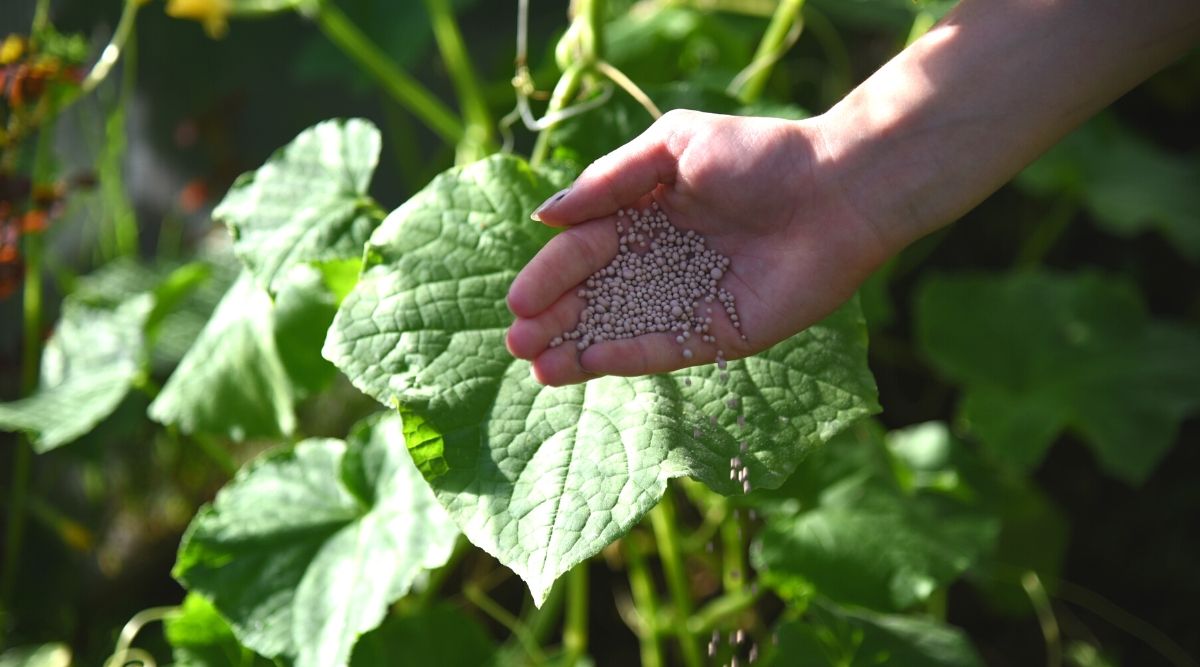
Mix 2 to 3 inches of compost(https://www.planetnatural.com/soil-amendment/compost/) or well-aged manure into the top 6 to 8 inches of soil. This material adds organic matter to the soil which is beneficial for improving structure, drainage, and providing nutrients to soil micro-organisms.
Also incorporate a balanced fertilizer such as 10-10-10 or 5-5-5 at the rate on the label. For 10-10-10 fertilizer, a typical recommendation is 3 pounds per 100 square feet.
In on the planting through with slow-release granules. These not only release nutrients slowly, over 6 to 8 weeks to promote plant growth throughout the early season.
Using Quality Manure
If you're using manure, make sure it's well-rotted and aged. Green manure scorches plants and introduces weed seeds. While aged manure (manure that has been sitting in a compost bin for months or even years) is safe and makes nutrients available to the plants slowly, it will not provide all the necessary macronutrients.
The smell test is helpful: fresh manure stinks pungent and hot, a sign of active decomposition. Old manure has an earthy, crumbly scent meaning it’s ready to be used.
Early Season Feeding: Supporting Young Plants
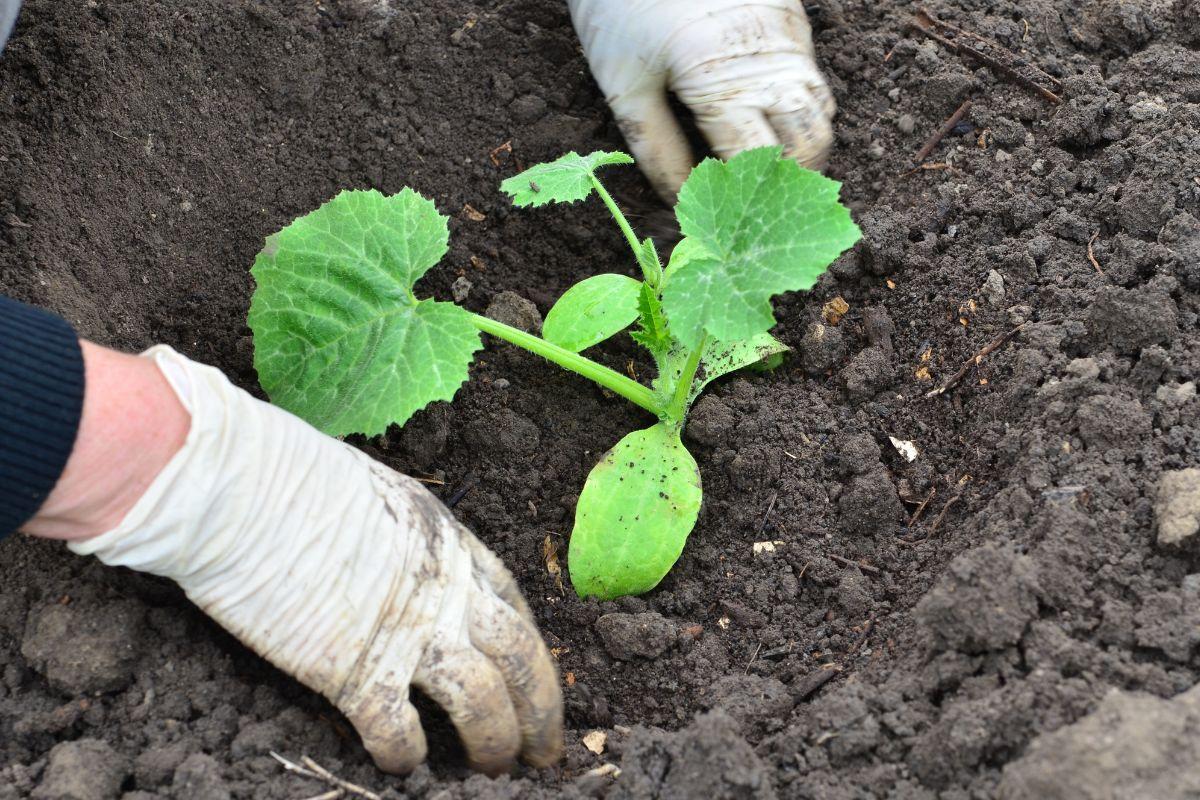
Once plants emerge and grow to 6 inches tall, begin light feeding.
For seedlings transplanted into containers, use compost (typically 4-4-4 NPK) or a dilute liquid balanced fertilizer. Very young plants can be damaged by strong fertilizer, so light, frequent feeding works better than heavy applications.
Container seedlings benefit from balanced nutrition that supports overall development without pushing excessive foliage at the expense of root development.
The Critical Switch: Transitioning to Flowering Stage Nutrition
Around 4 to 6 weeks after planting, when the first flowers appear, everything changes.
At this point, shift from balanced nitrogen-phosphorus-potassium feeding to higher potassium fertilizers like 5-10-10 or even more dramatic shifts like 3-10-10. Higher potassium supports abundant flowering and fruit set.
Many experienced growers use tomato fertilizer at this stage, as tomato feeds are specifically formulated for fruiting crops with high potassium levels.
Continue with higher potassium feeding through the entire fruiting season. This consistent emphasis on potassium keeps flowers developing and fruit setting continuously rather than slowing production.
Side-Dressing: The Mid-Season Boost
Side-dressing applies fertilizer directly beside the plant during the growing season, providing mid-season nutrition boosts.
First Side-Dress (3 to 4 Weeks After Planting)
When vines are actively running but before flowering, apply the first side-dress. Sprinkle granular fertilizer in a band around each plant, about 4 to 6 inches from the stem and 4 to 6 inches deep in the soil. Cover the fertilizer with soil and water thoroughly.
Use roughly 1 pound of high nitrogen fertilizer per 10-15 plants, or follow package directions. This application provides nitrogen when vine growth is most vigorous.
Second Side-Dress (6 to 7 Weeks After Planting)
Apply a second side-dress approximately 3 weeks after the first one. This maintains nutrient levels as the plant grows and beginning flowering starts.
Continued Fertilization During Harvest
Once harvesting begins, switch to higher potassium fertilizers and apply side-dressing every 2 to 3 weeks. This frequency maintains fruiting production throughout the season.
Use banded applications: draw the fertilizer into a furrow beside the plant, about 6 inches to the side, at least 4 inches deep. Cover with soil immediately to prevent leaching and nutrient loss.
Organic Fertilizer Options: Nature's Nutrients
For gardeners preferring organic approaches, several options provide excellent cucumber nutrition.
Compost
Quality finished compost is perhaps the single best organic fertilizer. It provides balanced nutrition (typically 4-4-4), improves soil structure, supports beneficial microbial communities, and releases nutrients gradually. Apply 2 to 3 inches at planting and repeat smaller applications as side-dress throughout the season.
Well-Rotted Manure
Aged cow, horse, or chicken manure provides nitrogen, phosphorus, and potassium along with organic matter. Use 1 to 2 pounds per 4 to 5 square feet at planting.
Fish Emulsion and Seaweed
Liquid fish emulsion provides quick-acting nitrogen and trace elements. Apply every 2 weeks during the growing season at full or half strength as directed.
Liquid seaweed provides potassium, trace elements, and growth hormones. Use during the flowering and fruiting stages for production enhancement.
Natural Nitrogen Sources
For organic side-dressing nitrogen, use blood meal (approximately 10 percent nitrogen) or feather meal. These release nitrogen gradually as soil microorganisms break them down.
Container Cucumber Feeding: More Frequent Care
Container cucumbers need substantially more frequent feeding than in-ground plants.
Limited soil volume in containers holds fewer nutrients. Additionally, each watering leaches nutrients from the soil through drainage. The combination means nutrients disappear quickly.
Feed container cucumbers weekly or biweekly with dilute liquid fertilizer. A common approach is to mix liquid fertilizer at half strength and apply at each watering.
Alternatively, incorporate slow-release granules into the potting mix at planting time, providing a baseline. Supplement with biweekly liquid feeding.
Larger containers (10 to 15 gallons) need less frequent feeding than smaller 5-gallon containers. Adjust frequency based on plant size and growth vigor.
Liquid Fertilizer: Quick Action for Fruiting Stages
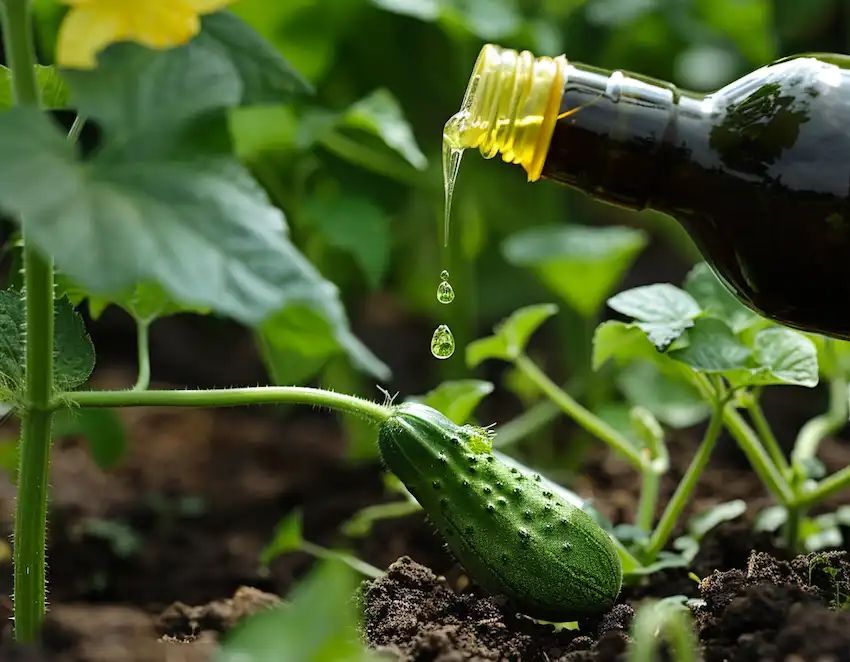
Liquid fertilizers act faster than granular options, making them ideal during the critical flowering and fruiting stages.
Mix liquid fertilizer as directed on the label and apply when watering. Apply in early morning when plants aren't stressed by heat.
The frequency depends on the product. Some recommendations suggest weekly application, others biweekly. Follow label directions to avoid over-application, which builds up salt concentrations at plant roots.
A simple approach: use liquid fertilizer every 2 weeks during the flowering and fruiting stages, combined with side-dressing every 3 to 4 weeks.
Avoiding the Over-Fertilization Trap
Too much fertilizer causes more problems than too little.
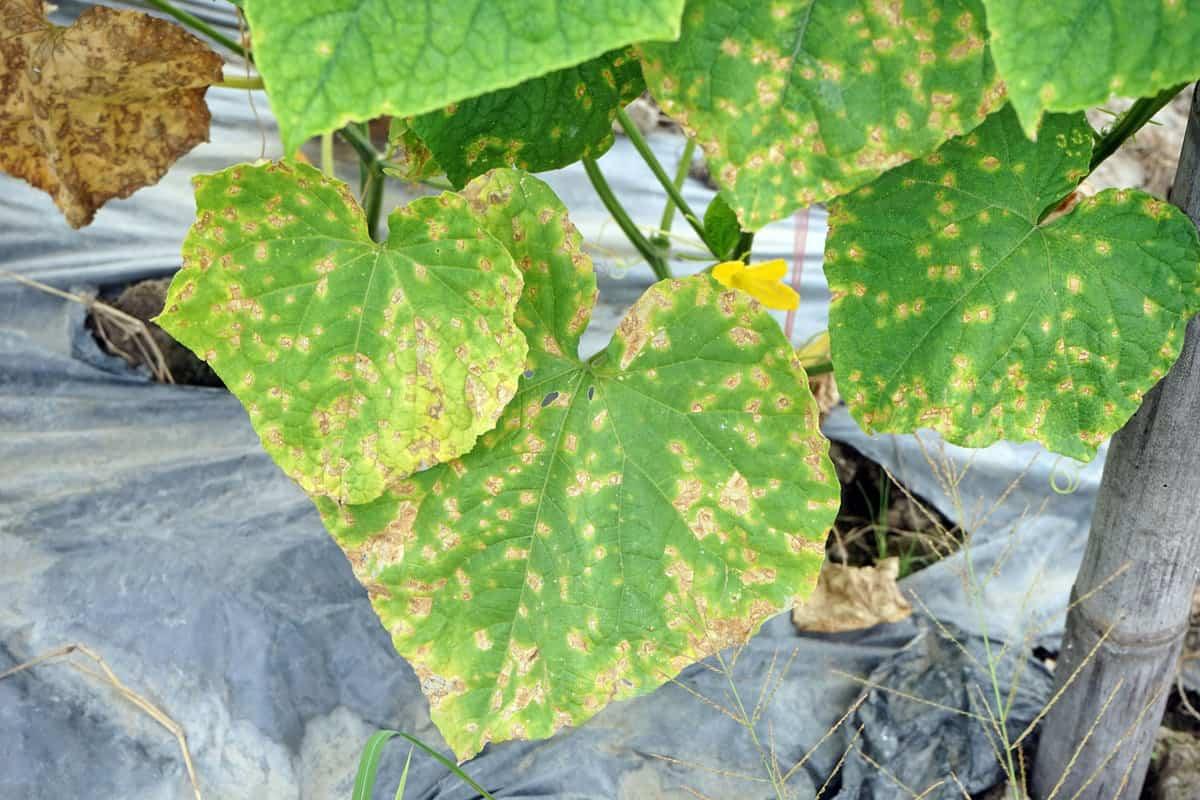
Excess nitrogen produces lush vine growth with minimal flowering. The plant invests energy in foliage production at the expense of flowers and fruit. This frustration reversal occurs after flower production begins: reducing nitrogen feeding promotes flowering while excess nitrogen suppresses it.
In containers, accumulated salts from repeated fertilizer applications burn plant roots and damage foliage. Flush containers occasionally with extra water to leach accumulated salts.
Always follow label directions. The recommended rate is the maximum, not a starting point. Using less than directed is safer than using more.
For those managing larger plantings or wanting detailed tracking of fertilization schedules and responses, tools like Plantlyze dot com help document fertilizer applications, monitor plant growth responses, and adjust schedules based on what works in your specific climate and soil.
Moving Forward: Your Fertilization Plan
Begin with a soil test to understand your baseline nutrient levels. Incorporate 2 to 3 inches of compost and add balanced pre-plant fertilizer.
Side-dress when vines begin running and again 3 weeks later. Switch to higher potassium fertilizers once flowering begins.
Continue biweekly to triweekly fertilization throughout the fruiting season. For containers, increase frequency to weekly or biweekly feeding.
Document your approach. Record which fertilizers you use, application timing, and results. Over seasons, you'll develop an intuitive sense for your specific situation, transforming guesswork into predictable success.
References
University of Hawaii College of Tropical Agriculture and Human Resources
https://www.ctahr.hawaii.edu/Kansas State University
https://www.k-state.edu/Purdue University Extension
https://www.purdue.edu/University of Florida IFAS Extension
https://sfyl.ifas.ufl.edu/Colorado State University Extension
https://www.colostate.edu/University of California Davis
https://www.ucdavis.edu/Michigan State University Extension
https://www.canr.msu.edu/