Introduction: When Something Isn't Right With Your Cucumbers
Your cucumber plants were thriving yesterday. This morning, you notice something alarming: yellowing leaves with spots, a white powder covering the foliage, or vines that wilt during the heat of the day despite adequate water.
The frustration is immediate. Is it a disease? An insect problem? A nutrient deficiency? And more importantly, what do you do about it?
The good news is that most cucumber diseases follow recognizable patterns. By learning to read the visual clues your plants are sending, you can identify problems quickly and take action before they spiral out of control. This guide teaches you exactly what to look for and how to narrow down possibilities to the most likely culprits.
Reading Plant Symptoms Like a Detective: The Three-Clue Approach
Successful disease identification starts with a simple framework: location, appearance, and timing.
Location: Where Symptoms Appear First
Different diseases favor different plant parts. Downy mildew typically appears on lower, older leaves first, then progresses upward as the disease spreads. Powdery mildew often starts on mid-canopy leaves and can appear on new growth simultaneously.
Wilt diseases might show initial symptoms throughout the plant randomly, while stem diseases create lesions at specific points like leaf nodes or along the main stem.
Appearance: Shape, Color, and Pattern
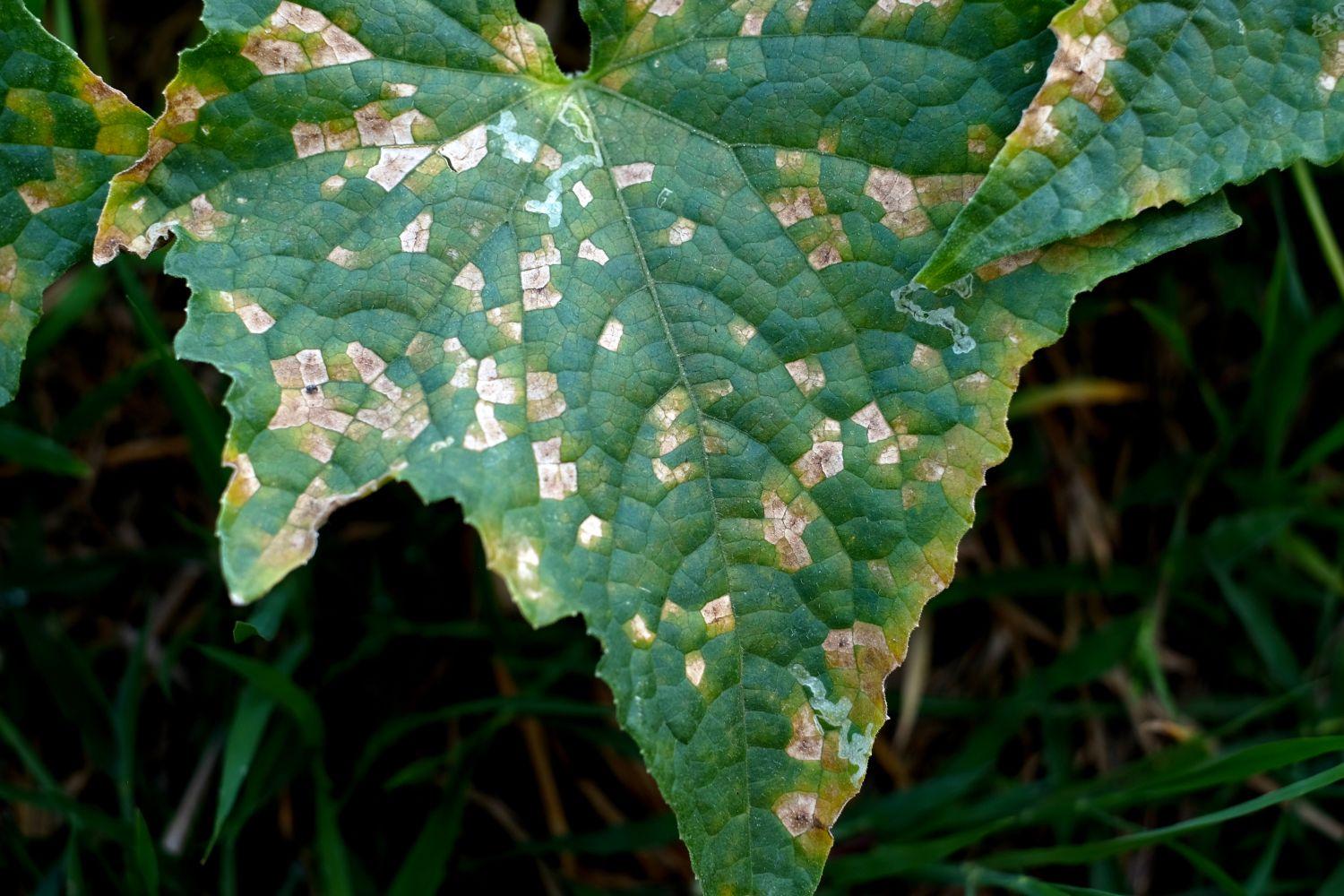
Pay attention to exact visual characteristics. Angular leaf spots have sharp, geometric shapes restricted by leaf veins. Circular spots with concentric rings suggest anthracnose. White powder covering the entire leaf surface indicates powdery mildew. Gray or purplish fuzzy growth on leaf undersides points to downy mildew.
These visual differences are your disease identification fingerprints. Each disease leaves a distinctive mark.
Timing: When Symptoms Appeared
Note the weather patterns during the week before symptoms became visible. Cool, wet weather followed by leaf spots suggests downy mildew or angular leaf spot. Hot, dry weather with white powder on leaves indicates powdery mildew. Sudden wilt after beetles appeared suggests bacterial wilt.
Weather is often the biggest clue to disease identity.
Major Leaf Diseases: Your Identification Guide
Downy Mildew: The Angular Intruder
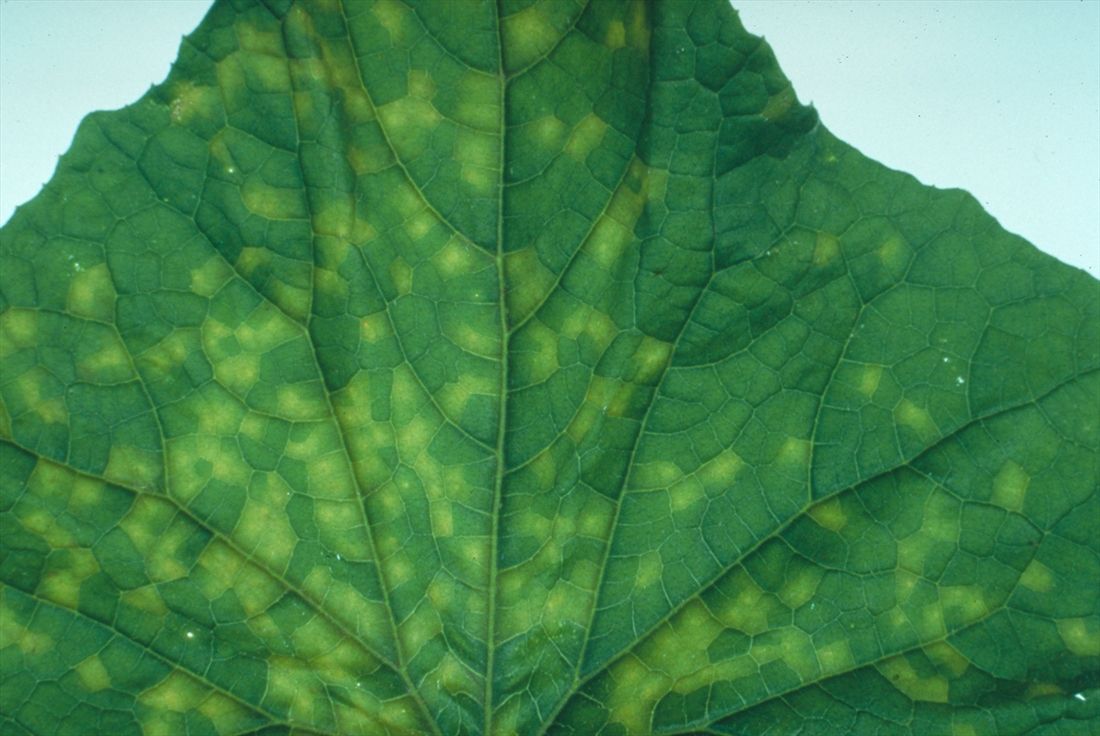
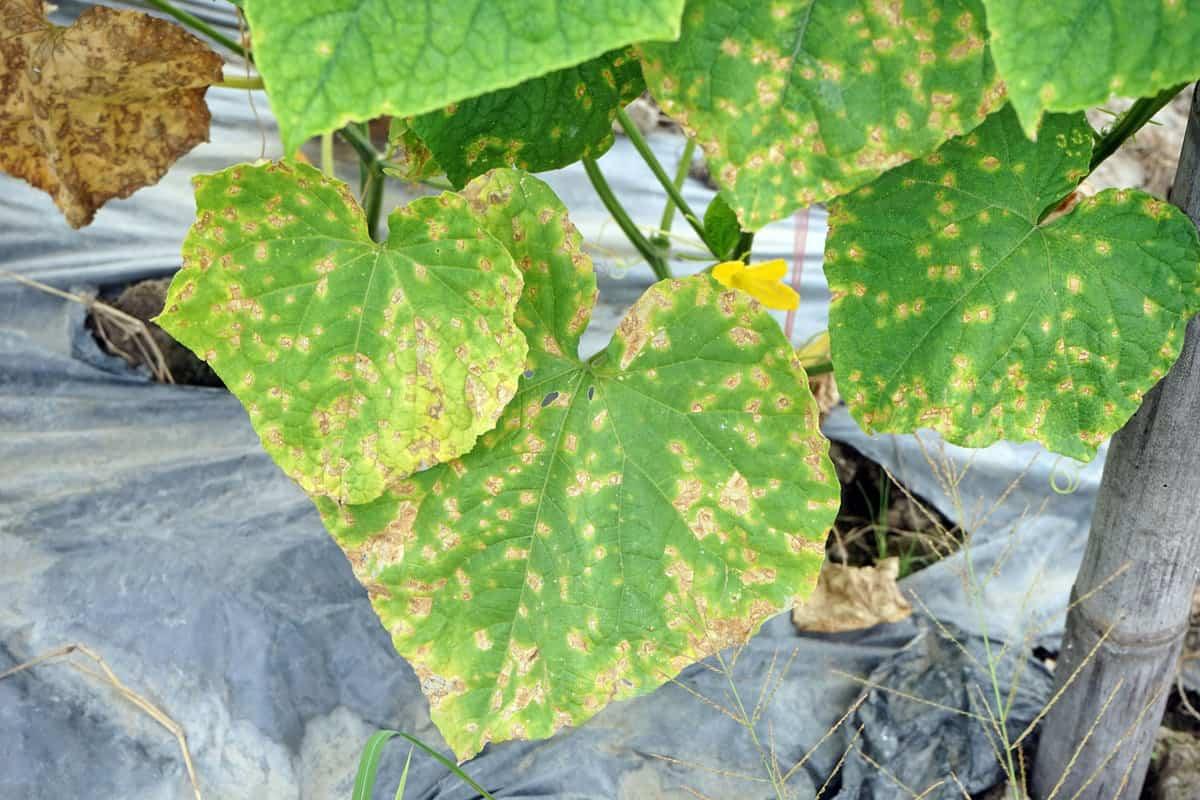
Downy mildew appears as angular yellow or tan spots on the upper leaf surface, with the angle created by leaf veins restricting disease spread.
The distinctive feature: flip the leaf over. You'll see gray or purplish fuzzy fungal growth on the underside, visible especially in humid morning conditions.
Downy mildew thrives in cool to moderate temperatures (55 to 75 degrees Fahrenheit) with high humidity and frequent rain. It spreads rapidly under these conditions, potentially devastating a crop in just 1 to 2 weeks.
Powdery Mildew: The White Takeover
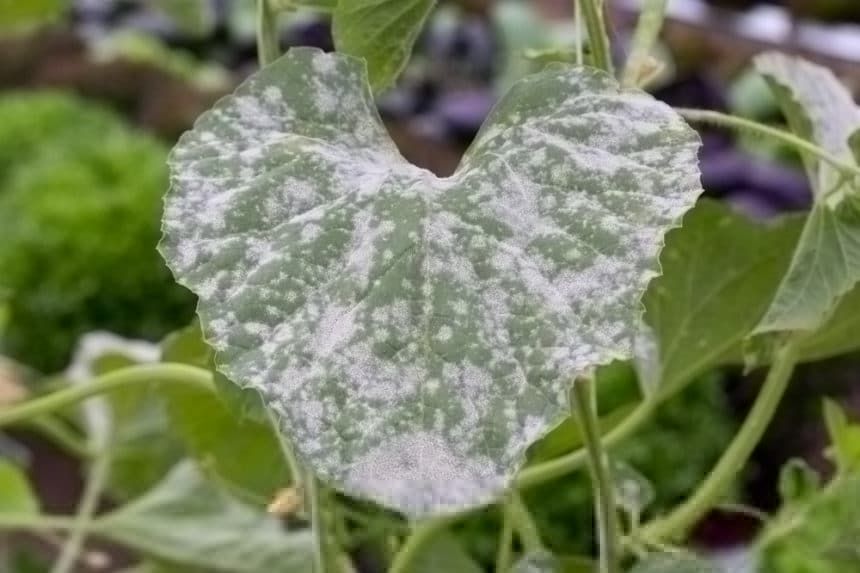
Powdery mildew appears as white, powdery coating that covers leaves. Unlike downy mildew's underside fuzz, powdery mildew covers both leaf surfaces uniformly. The coating looks like someone dusted the leaves with talc powder.
Powdery mildew often appears mid to late season during warm days followed by cool nights. It prefers moderate humidity, not the extreme wetness that downy mildew loves.
The key distinction: powdery mildew spots are not restricted by leaf veins. The white powder spreads across entire leaves without geometric patterns.
Angular Leaf Spot: The Bacterial Threat
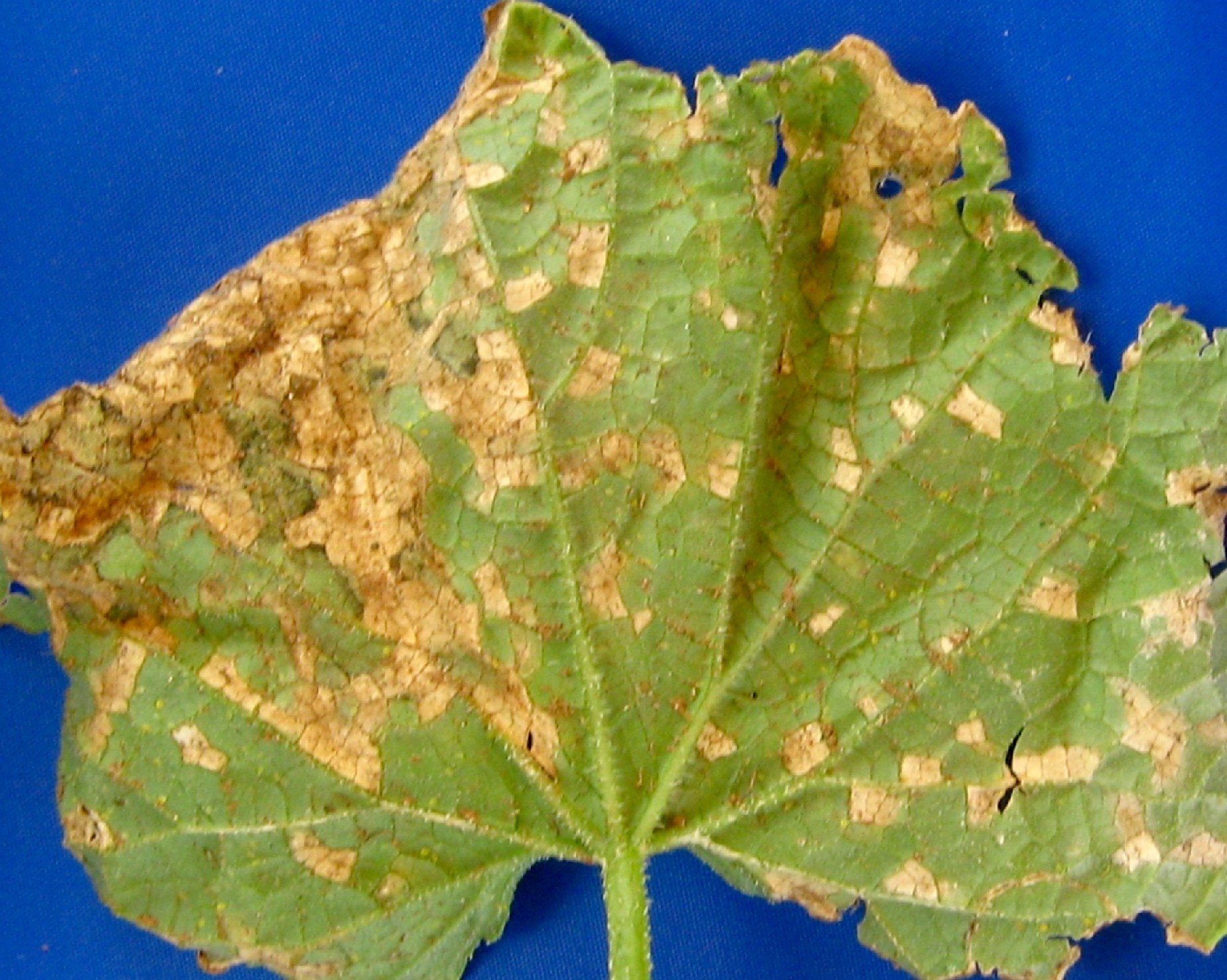
Angular leaf spot begins as water soaked spots that gradually turn tan or brown. These spots are sharply angular, restricted by veins in a geometric pattern similar to downy mildew.
The clinching clue: flip the leaf. Look closely for a milky bacterial ooze on the underside, which dries into a white crust. As tissue dies, you may see a "shot hole" effect where dead tissue falls away, leaving holes in the leaves.
Anthracnose: The Ring Pattern
Anthracnose produces circular brown lesions that sometimes have target-like concentric rings. Affected fruit develops sunken dark spots that may have salmon-colored spore masses.
Anthracnose thrives during warm, wet weather. It's particularly problematic in areas with overhead irrigation that keeps foliage wet.
Wilt, Stem, and Root Problems: Harder to See, Easy to Miss
Bacterial Wilt: The Beetle's Gift
Bacterial wilt, transmitted by spotted and striped cucumber beetles, creates a distinctive pattern. Early symptoms include dull, grayish-green foliage that wilts noticeably during the heat of the day but recovers overnight when temperatures cool.
As the disease progresses, wilting becomes permanent. Affected leaves develop brown margins and the entire plant collapses despite adequate water.
A diagnostic test: cut a stem and slowly pull the two pieces apart. If sticky bacterial strands form between the pieces (like spider webbing), you have bacterial wilt.
Gummy Stem Blight (Vine Decline): Lesions with Exudate
Gummy stem blight, also called vine decline, creates distinct lesions at stem nodes and along vines. These lesions are tan to gray colored and often exude amber or brown gummy droplets.
Leaves may show V-shaped or circular brown lesions. Fruit develops circular water-soaked spots that become black and leathery with gummy centers.
Root Rots and Crown Diseases: The Hidden Killers
Root and crown diseases (caused by Pythium, Phytophthora, or other water molds) are harder to diagnose because symptoms appear above ground as general plant collapse and wilting.
The clue: check the root system and crown (where stem meets roots). You'll find water soaked, mushy, or discolored tissue. These diseases thrive in poorly drained soil or conditions with excessive moisture.
Fruit and Viral Problems: Beyond the Leaves
Scab: The Corky Lesions
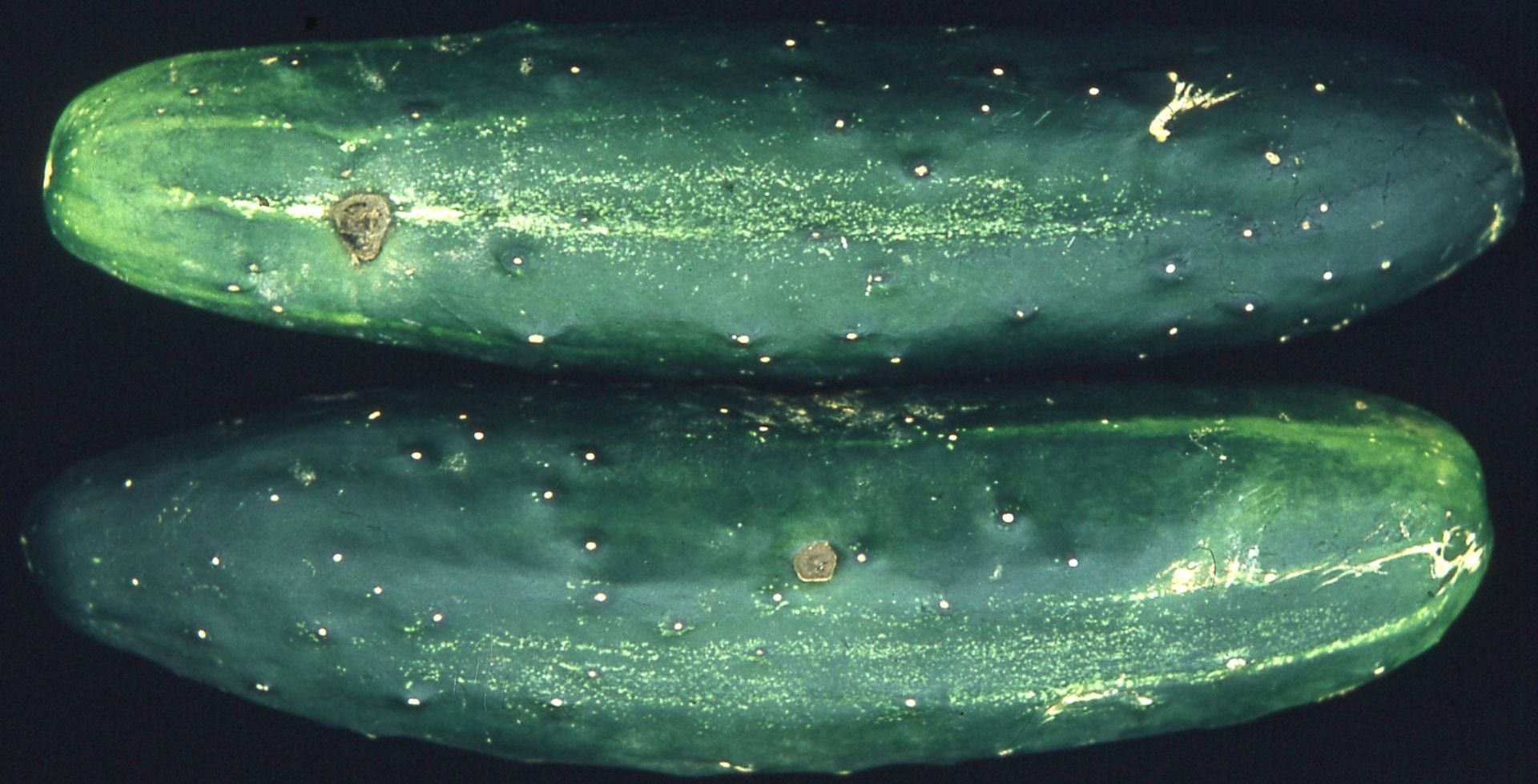
Scab appears as raised, corky, tan-colored lesions on fruit. These lesions are sometimes surrounded by a halo of discoloration. Scab can also appear on leaves as small spots.
Cucumber Mosaic Virus: The Stunted Mottler
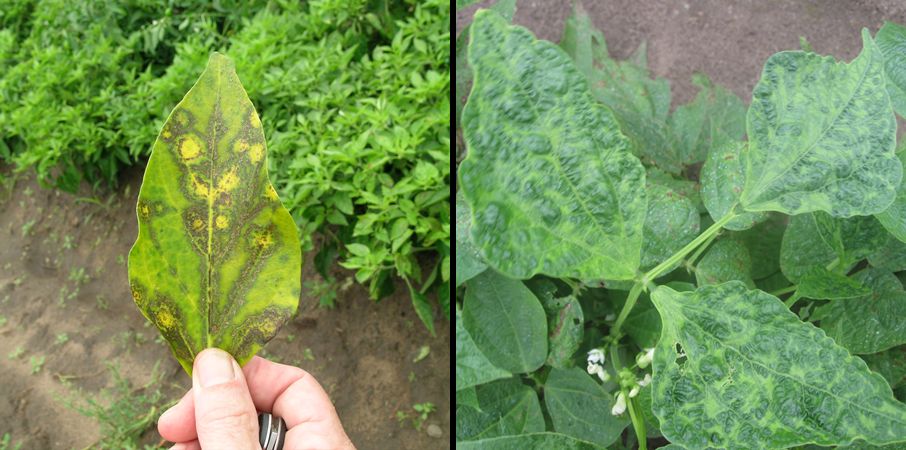
Cucumber mosaic virus (CMV) creates a distinctive mottled pattern of light and dark green on leaves. The leaves often show puckering and distortion. Young growth appears stunted and misshapen.
Affected plants are typically small, unthrifty, and produce reduced yields. CMV is spread by aphids and several weed hosts. Once a plant is infected, the virus cannot be cured. Prevention through resistant varieties and early aphid control is essential.
Distinguishing Disease From Other Problems
Not every leaf spot or unusual appearance indicates disease. Sunscald creates bleached white or tan patches on fruit exposed to intense direct sun. Misshapen fruit typically results from poor pollination or water stress during fruit development rather than disease.
Yellowing leaves can indicate nutrient deficiency rather than disease. Check plant vigor and look for disease specific signs (spots, wilting, lesions) before concluding it's disease.
Step-by-Step Disease Identification Workflow
Use this practical approach when you discover something wrong.
Step 1: Document the Weather
Note the weather patterns during the past 7 to 10 days. Cool nights with high humidity favor downy mildew and fungal diseases. Hot, dry weather favors powdery mildew. Variable conditions with beetles present suggest bacterial wilt.
Step 2: Decide Which Plant Part Is Primarily Affected
Is the problem on leaves, stems, fruit, or is it general plant wilting? This narrows down possibilities immediately.
Step 3: Match Visual Characteristics
Look at specific symptom details: color, shape, pattern, presence or absence of fuzzy growth or gummy exudate. Compare what you see to the descriptions above.
Step 4: Check for Insect Vectors
Look for cucumber beetles (spotted or striped) that transmit bacterial wilt. Check for aphids that transmit viruses. The presence of these insects combined with specific symptoms confirms disease type.
Step 5: Confirm Your Diagnosis
If uncertain, photograph affected leaves and fruit clearly. Take photos of the underside of affected leaves showing any fuzzy growth or exudate. Note recent weather and plant history.
For photo-based diagnostic assistance, tools like Plantlyze dot com allow you to upload plant images and receive AI-powered disease identification suggestions, helping you confirm your diagnosis or catch problems you might have missed.
Prevention and Early Management: Your Best Defense
Disease-resistant varieties eliminate many problems before they start. Choose varieties with resistance codes for the diseases most common in your area.
Resistant variety selection is the single most powerful prevention tool available.
Cultural practices support disease prevention. Space plants adequately for air circulation. Water at soil level, never overhead. Remove infected leaves immediately. Mulch to prevent soil splash onto foliage. Rotate cucumber growing locations yearly.
Early detection through regular plant monitoring makes treatment possible before disease spreads widely. Scout plants 2 to 3 times weekly during the growing season. Catching problems early makes them manageable.
When you discover disease, isolate affected plants from healthy ones. Remove the entire plant if the disease is advanced, rather than allowing spread to nearby plants.
When to Seek Help: Resources Available
If you cannot identify the problem with confidence, local university extension offices provide disease identification services. Many will diagnose problems from photos or physical samples.
University plant pathology departments are specialized resources when home identification methods leave you uncertain.
For quick photo-based initial assessment, tools like Plantlyze dot com can analyze images of affected leaves and suggest likely disease identities, helping you decide whether to pursue professional identification or begin treatment with more confidence.
Common Misdiagnosis Traps: Avoiding False Alarms
Not every leaf problem is disease. Nutrient deficiency creates yellowing similar to some diseases, but typically shows a pattern. Nitrogen deficiency yellows older leaves first. Iron deficiency shows interveinal yellowing on new growth.
Environmental stress from drought, excessive heat, or temperature fluctuations can create leaf discoloration and wilting that mimics disease. The key difference: environmental stress typically affects all plants in an area uniformly, while disease often concentrates on certain plants.
Insect damage can be mistaken for fungal spots. Examine suspected spots closely. Fungal spots have clean edges or specific patterns. Insect damage often shows irregular tearing, holes, or chewing patterns.
Before concluding you have disease, consider whether the problem could be environmental stress or insect damage. Each requires different management.
Moving Forward: Your Monitoring Plan
Begin with preventive variety selection. Choose disease-resistant varieties suited to your region's disease pressure.
Scout plants regularly during the growing season. Document what diseases appear, when they appear, and which management approaches work.
When problems emerge, use the identification framework: location, appearance, weather timing. Narrow down possibilities and take action quickly.
Over seasons, you'll develop an intuitive sense for disease identification in your specific growing conditions, transforming confusion into confident management.
References
1. University of Maryland Extension
https://extension.umd.edu/resource/key-common-problems-cucumbers
2. Clemson University Cooperative Extension
https://hgic.clemson.edu/factsheet/cucumber-squash-melon-other-cucurbit-diseases/
3. Purdue University College of Agriculture
https://ag.purdue.edu/department/arge/swpap/cucumber-diseases.html
4. NC State University and USDA Cucumber Disease Handbook
https://cucurbitbreeding.wordpress.ncsu.edu/cucumber-breeding/cucumber-disease-handbook/cucumber-disease-descriptions/
5. University of Florida IFAS Extension
https://plantpath.ifas.ufl.edu/u-scout/ewExternalFiles/IST_Cucurbits_2018_C-2.pdf
6. New England Vegetable Management Guide
https://nevegetable.org/crops/cucumber-muskmelon-and-watermelon/disease-control
7. Michigan State University Extension (Downy Mildew News)
https://veggies.msu.edu/downy-mildew-news/
8. PNW Handbooks - Oregon State University
https://pnwhandbooks.org/plantdisease/host-disease/cucumber-cucumis-sativus-gummy-stem-blight-vine-decline