You dig up your potato plants eagerly, ready to harvest the fruit of your labor. But instead of smooth, clean tubers, you find rough, scabby patches coating the surface. This is common scab, and it affects potato growers worldwide, significantly reducing both harvest quality and market value.
Common scab is a soil-borne bacterial disease caused by Streptomyces species. This guide will walk you through identifying the disease, understanding the conditions that cause it, and implementing proven prevention strategies. By the end, you'll have a complete action plan to protect your potatoes in every season ahead.
Understanding Common Scab: The Culprit Behind Rough Potatoes
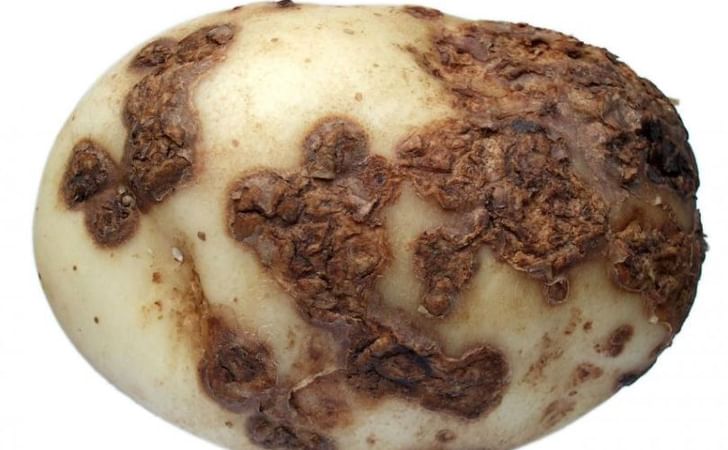
Common scab is caused by filamentous bacteria called Streptomyces. These pathogens attack potato tubers during a critical growth phase called tuberization. The disease doesn't usually reduce your overall yield, but it significantly impacts the quality and marketability of your harvest.
Four main Streptomyces species cause common scab: S. scabies, S. acidiscabies, S. turgidiscabies, and S. caviscabiei. Each species thrives under slightly different conditions, which is why prevention strategies must be tailored to your region. The lesions develop during a specific window when tubers are forming and conditions favor bacterial growth.
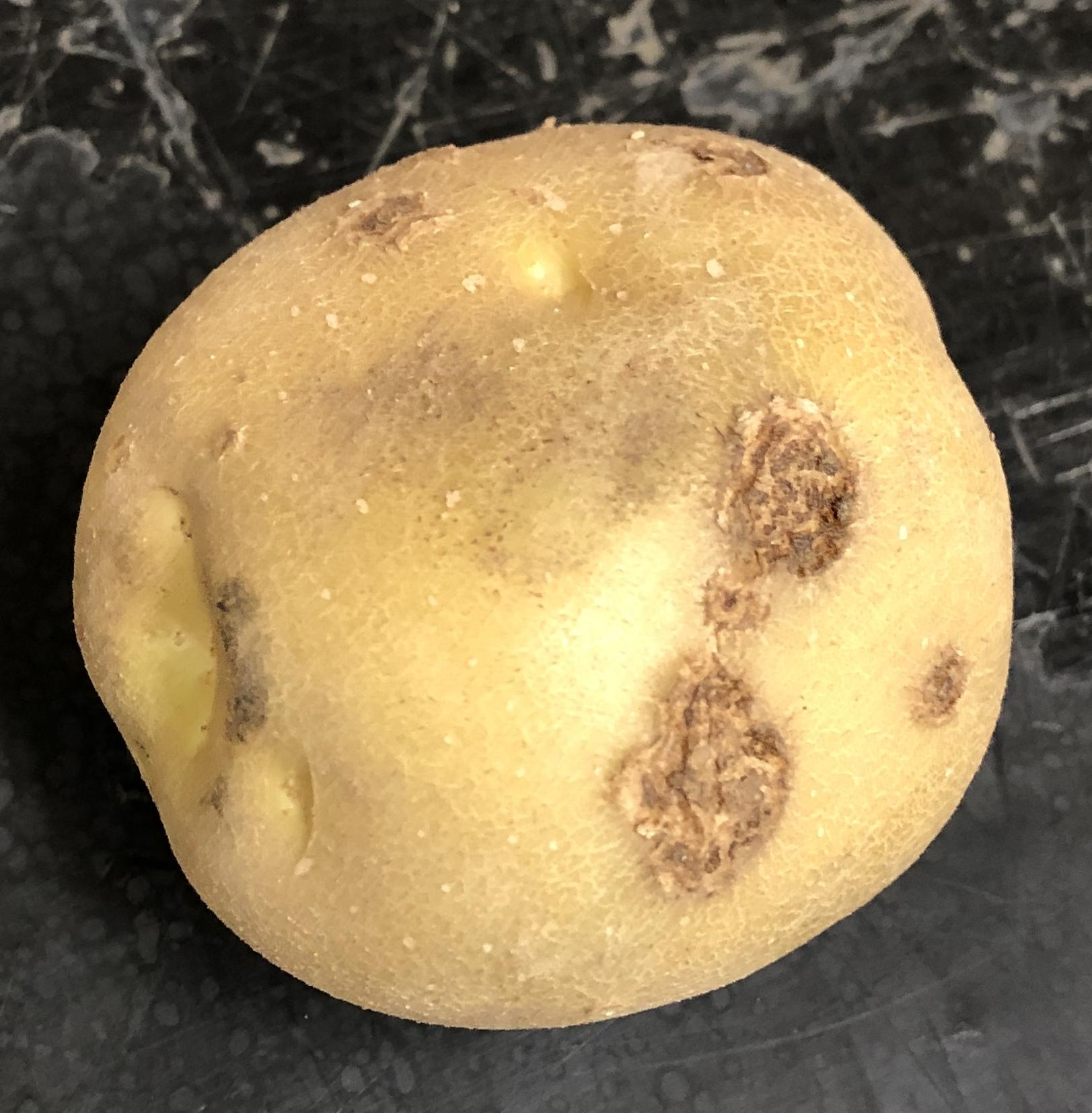
The disease appears on potato tubers as rough, corky patches. These lesions make potatoes unsuitable for fresh market sales, processing, or seed production. Once infected, the damage is permanent and cannot be reversed through cleaning or storage.
Spot the Signs: What Common Scab Looks Like
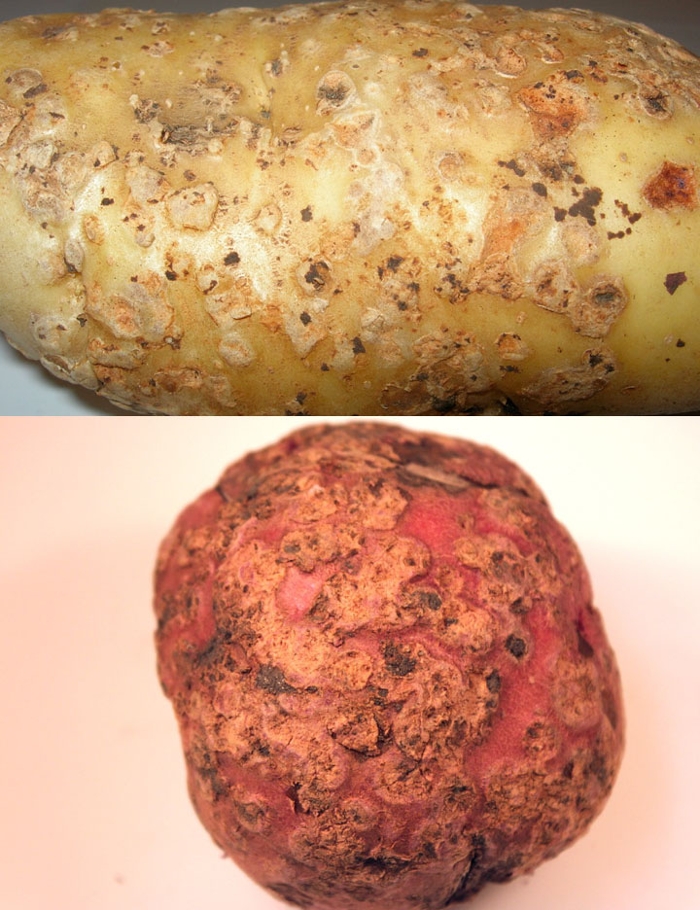
Common scab presents in three distinct forms, each with different visual characteristics. Recognizing these types helps you identify the disease early and take preventive action for future seasons.
Russet scab appears as superficial tan to brown corky patches on the potato skin. These lesions sit on the surface and can often be rubbed off with your fingers. While they look unappealing, they typically don't penetrate deeply into the tuber flesh.
Pitted scab creates depressions beneath the potato surface with cork-like borders. These lesions are more serious because they extend deeper into the tuber. The pitting makes potatoes unsuitable for market and creates entry points for secondary infections.
Raised scab appears as cushion-like, warty protrusions on the tuber surface. This type is less common but equally damaging to crop quality. The raised lesions give potatoes an uneven, diseased appearance that reduces market appeal completely.
Not sure if your potatoes have common scab? Use Plantlyze's AI-powered diagnosis tool to identify symptoms instantly and get recommendations customized to your situation. Visit plantlyze.com to confirm your diagnosis and explore management options specific to your potato variety and growing region.
The Perfect Storm: Conditions That Favor Common Scab

Understanding what causes common scab reveals the most effective prevention strategies. Three environmental factors create the ideal conditions for disease development: soil pH, soil moisture, and soil type.
Soil pH is your most powerful weapon against common scab. Streptomyces bacteria thrive in neutral to alkaline soils (pH 6.0 and higher). However, when soil pH drops below 5.2, the bacterial population declines dramatically. This acidic environment suppresses the pathogen's ability to infect tubers. This is why soil pH management is the single most controllable factor for prevention.
Soil moisture during tuberization creates the second critical condition. The tuberization window spans just 4 to 6 weeks after planting, and this is when tubers become most vulnerable to infection. Dry soil conditions during this period favor Streptomyces significantly. In contrast, maintaining soil moisture at 80 to 85 percent field capacity suppresses disease development substantially. Moist soils favor beneficial bacteria that compete with Streptomyces for nutrients and space on the tuber surface.
Soil type influences disease susceptibility more than many growers realize. Light textured soils (sandy soils) favor infection far more than clay soils. Clay and silt loam soils naturally suppress the disease better because they retain moisture more consistently. Fresh organic matter actually increases scab problems, which surprises many gardeners. However, aged compost or well rotted manure improves microbial competition and disease suppression. This is why soil building through proper amendments takes time but pays dividends for disease management.
Temperature and seasonal timing also matter. Summer conditions favor disease development more than spring or fall. Earlier planting can help crops avoid peak infection periods in some regions. Understanding your local weather patterns helps you time irrigation and management activities strategically.
Take Control: Proven Prevention Strategies
Prevention is more cost effective than treatment. Here are six proven strategies to protect your harvest and dramatically reduce common scab problems.
Soil pH management is the most effective approach. Before planting, test your soil pH. Target a pH below 5.3 for maximum scab suppression. If your soil is too alkaline, use elemental sulfur to lower pH gradually. Apply sulfur 2 to 3 months before planting so it has time to convert into sulfuric acid. This single adjustment addresses the root cause of the disease and provides benefits for multiple growing seasons.
Irrigation management during tuberization is equally critical. Begin irrigation when tubers start forming, typically 3 to 4 weeks after planting. Maintain soil moisture at 80 to 85 percent field capacity throughout the 4 to 6 week tuberization window. Drip irrigation or soaker hoses are superior to overhead sprinklers because they deliver moisture directly to the root zone without wetting foliage. Consistent moisture suppresses Streptomyces growth and favors beneficial soil microbes.
Plant resistant potato varieties from the start. Resistance is your best long term protection against common scab. Different varieties show varying resistance levels depending on which Streptomyces species exists in your soil. Research your local pathogen before selecting varieties.
Recommended resistant varieties include Ambo (excellent early maturing with good disease resistance), Nicola (high resistance to both common and powdery scab), Golden Wonder (very high dry matter content with excellent flavor), Superior (the Northeast standard for consistent resistance), and Keuka Gold (reliable resistance across multiple pathogen species). Each variety performs differently in different regions, so check with your local agricultural extension office for area specific recommendations.
Crop rotation significantly reduces soil pathogen populations. Rotate potatoes with non-host crops like buckwheat, canola, or rye. A minimum 3 year rotation is beneficial, though longer rotations provide even greater suppression. This strategy works because Streptomyces populations decline when their host crops aren't present.
Seed treatment offers added protection when combined with other strategies. Bacillus subtilis, a naturally occurring beneficial bacterium, reduces scab by approximately 56 percent when applied as a seed treatment. This biological approach is safe for organic growers and complements other prevention methods. Sulfur fungicides also work but are less precise than biological treatments.
Soil amendments build long term disease suppression. Avoid fresh manure, which actually increases scab problems by feeding Streptomyces. Instead, use aged compost to build soil microbial communities that suppress pathogens. Potassium sulfate provides additional sulfur while improving plant nutrition. Build soil health gradually through proper amendments, and you'll see disease pressure decrease steadily over seasons.
Create a customized prevention plan with Plantlyze based on your specific soil conditions, climate, and potato varieties. Plantlyze provides personalized recommendations for your region based on your local pathogen types. Visit plantlyze.com to develop a strategy tailored to your unique growing situation.
When Prevention Isn't Enough: Treatment Options
If prevention strategies weren't implemented earlier in the season, several treatment options can minimize current season damage and protect future harvests.
Chemical seed treatments provide reliable fungicide coverage at planting time. Fludioxonil reduces scab incidence by approximately 58 percent when applied to seed pieces before planting. Other fungicides like fluazinam and chlorothalonil also show effectiveness. Chemical treatments work best as preventive measures rather than curative solutions for existing infections.
Biological control agents offer a sustainable alternative. Bacillus subtilis competes with Streptomyces on the tuber surface during tuberization. This beneficial bacterium reduces scab by 56 percent in trials. Biological controls are most effective when applied early as preventive treatments. Once lesions form, biological agents cannot reverse the damage, but they reduce future infection spread.
Sulfur applications boost beneficial soil microbes that suppress Streptomyces. You can apply sulfur at planting time, as a foliar spray, or incorporated into seed treatments. Sulfur effectiveness varies with soil pH and application timing. This sustainable option aligns well with organic growing practices.
Boric acid treatments show promise in emerging research. When combined with Bacillus subtilis applications, boric acid treatments reduced disease incidence to 33 to 39 percent in trials. This combined approach addresses the pathogen through multiple mechanisms simultaneously.
Integrated Pest Management (IPM) combines multiple strategies for maximum effectiveness. The most effective approach pairs resistant varieties, soil pH management at or below 5.2, and proper irrigation moisture levels simultaneously. Review and adjust your strategy yearly based on results. An IPM approach provides reliable, long term disease control that doesn't depend on any single tactic.
Your Best Defense: High Resistance Potato Varieties
Some potato varieties offer natural resistance to common scab. Here are the best options based on recent research and proven performance across growing regions.
Ambo is an excellent early maturing variety with good foliage and tuber blight resistance. This variety matures earlier, which helps it avoid peak infection periods in some regions. Ambo produces high yields and is suitable for both fresh market and processing.
Nicola shows high resistance to both common and powdery scab. This versatile variety works well in diverse growing conditions and soil types. Nicola maintains consistent resistance across most Streptomyces species.
Golden Wonder offers very high dry matter content and excellent flavor characteristics. This variety is popular for specialty markets and fresh consumption. Golden Wonder demonstrates reliable common scab resistance in trials.
Superior is the Northeast standard for consistent resistance across growing regions. This variety has a long track record of reliable performance and farmer acceptance. Superior produces good yields with dependable disease suppression.
Keuka Gold shows reliable resistance to multiple pathogen species. This emerging variety offers promise for growers seeking newer resistance genetics. Keuka Gold is worth testing in small plots to evaluate performance in your specific region.
Additional resistant varieties to consider include Cardinal (lowest susceptibility in recent trials), German Butterball (excellent storage with common scab resistance), Gold Rush (early maturing with good resistance), Russet Burbank (solid resistance with long storage life), Midnight (moderate resistance with high yield), and Norland (good resistance with consistent yields).
Importantly, resistance to one Streptomyces species doesn't guarantee resistance to all species. Research your local pathogen before committing to variety selection. Consult your local agricultural extension office, which can identify which pathogen species predominates in your region. Test new varieties in small plots first before planting large acreage.
Source resistant seed potatoes from specialty seed companies, agricultural extension services, or certified disease free suppliers. Request specific resistance information from seed suppliers to ensure you're getting the protection you expect.
Protect Your Harvest: Your Action Plan
You now have proven strategies to control common scab. The key is implementing them together and adjusting based on your results. Prevention is better than treatment, and the combination approach works far better than any single tactic.
Start immediately with these five specific action steps:
Test your soil pH before your next planting season. This single test reveals your most critical control point. Select a resistant variety suited to your specific region. Plan your irrigation schedule with moisture timing in mind during the 4 to 6 week tuberization window. Consider biological seed treatment for added protection. Scout your crop regularly and document any symptoms for future planning.
Monitor your potato crop throughout the growing season using Plantlyze's disease tracking features. Early detection enables faster management and better outcomes. Visit plantlyze.com to protect your harvest and implement a customized monitoring plan for your region.
Start with soil testing and resistant variety selection. These two steps alone will dramatically reduce your scab problems in the coming season. Build on this foundation by adding proper irrigation management and beneficial soil amendments. Over time, implementing all six strategies together will give you the consistent, effective disease control that protects both your crops and your bottom line.
References
Royal Horticultural Society (RHS) - Potato Scabs
https://www.rhs.org.uk/disease/potato-scabsCornell University - Potato Scab
https://www.vegetables.cornell.edu/pest-management/disease-factsheets/potato-scab/UC Davis Agriculture - Common Scab of Potato
https://ipm.ucanr.edu/agriculture/potato/common-scab/NCBI/Frontiers in Plant Science - Streptomyces Research
https://pmc.ncbi.nlm.nih.gov/articles/PMC11984041/Victoria State Government - Agriculture Victoria
https://agriculture.vic.gov.au/biosecurity/plant-diseases/vegetable-diseases/common-scab-of-potatoes