
You pull up a carrot during harvest and find tiny orange maggots tunneling through the root. You discover small holes in seedling leaves as if someone shot them with a tiny gun. You notice clusters of small insects on foliage. You wonder what is happening and whether your crop is doomed.
Carrot pests fall into several categories: leaf eating insects, root damaging insects, and flying insects that lay eggs in soil. Most carrot pests can be prevented or managed if caught early. Missing them or waiting to act means watching your crop disappear before your eyes.
This guide covers the most common carrot pests, how to spot each one, and what to do about them. By the end, you will know how to scout for problems, identify pests correctly, and choose between organic and chemical control. You will also learn that early detection is the difference between a small problem and a crop disaster.
Why Early Pest Detection Saves Crops
Carrot pests reproduce rapidly once established in a bed. A few adult insects can become hundreds or thousands within weeks. Pest damage compounds as the season progresses. What starts as a small cluster of aphids becomes a massive infestation that weakens all your plants.
Waiting to see if the problem goes away usually results in crop failure. Pests do not just disappear on their own. They multiply and spread and consume. Early detection when pest populations are small allows for faster action with less damage.
Preventing pests from establishing is far easier than controlling them once widespread. A row cover placed before carrot flies arrive prevents egg laying entirely. A few sprays in early summer stop aphids before they explode. Scouting beds weekly catches infestations at the earliest stage when action is still possible.
The gardener who discovers pest damage on day one can stop it. The gardener who discovers it three weeks later is already defeated. Early action saves time, money, and frustration.
The Most Destructive Carrot Pests and Their Damage
Several pests target carrots. Knowing what each one does helps you respond appropriately.
Carrot fly and rust fly are the most destructive
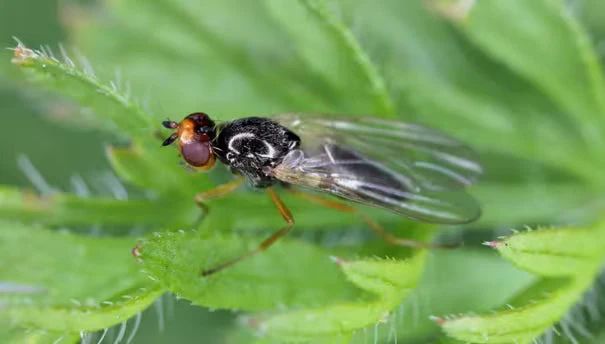
The carrot fly is a small orange or reddish fly that lays eggs in soil near carrot plants. Eggs hatch into maggots that tunnel into carrot roots, creating orange stained tunnels and rust colored damage. Infested roots become inedible and unusable for storage.
Carrot fly has multiple generations per season, so early control prevents mid season reinfestation. The rust fly is similar, causing the same root damage. Both flies have multiple generations in warm regions, so season long control is necessary.
Imagine pulling a carrot and seeing the flesh riddled with tiny tunnels. That is carrot fly damage. One maggot might not ruin a root. Ten maggots destroy it completely.
Root knot nematodes create deformed roots
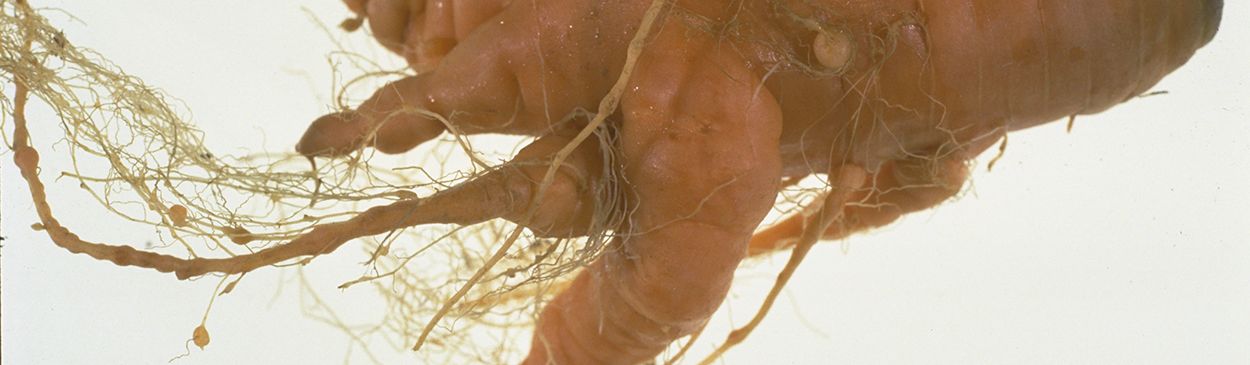
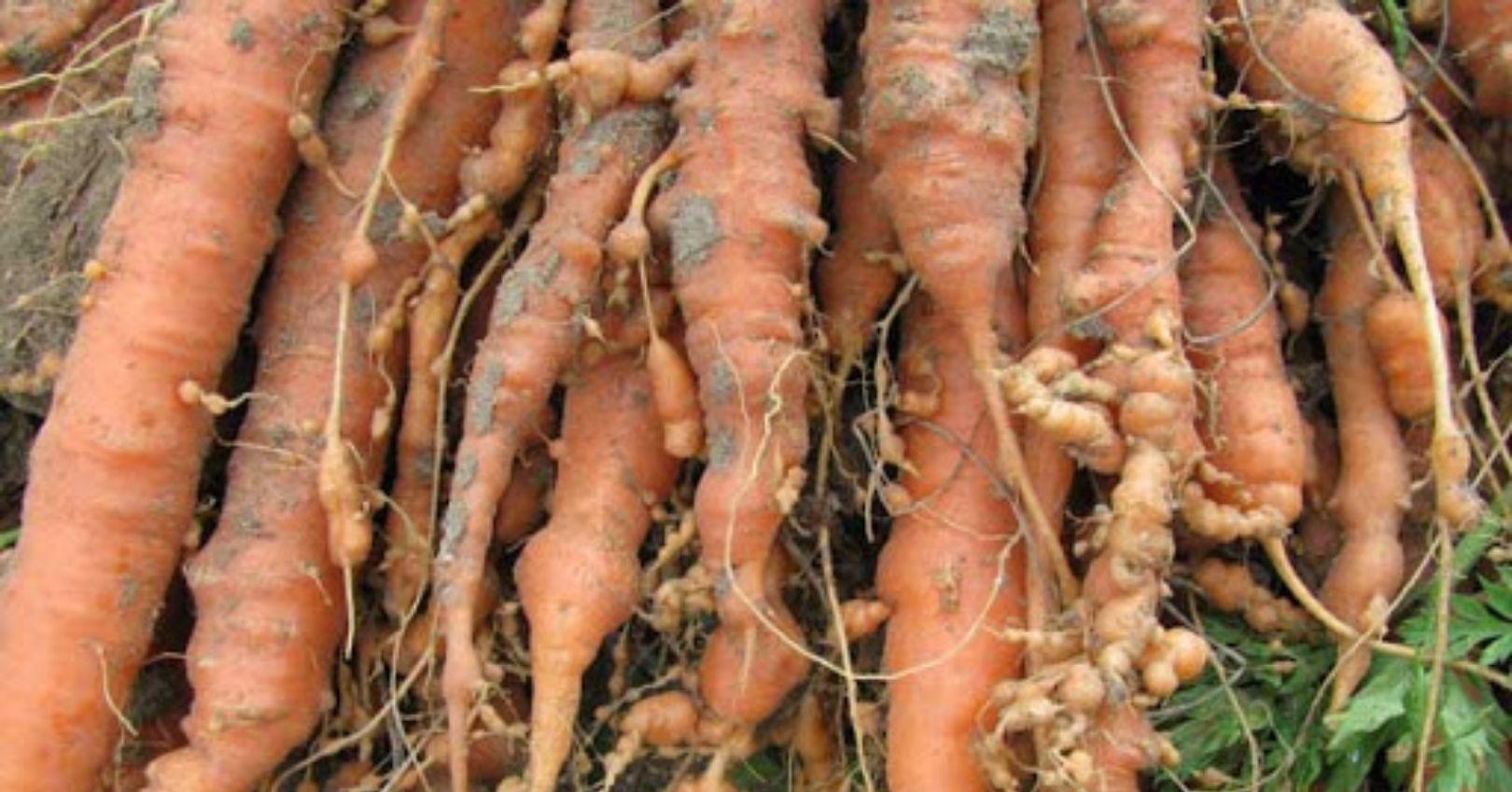
Root knot nematodes are microscopic creatures like worm that feed on root cells. Damage appears as galls or knots on carrot roots, making them deformed and unusable. Nematode damage is cumulative and soil borne, so crop rotation is critical. Nematodes persist in soil for years, making prevention essential.
Roots covered in small bumps and galls look diseased even though the damage is from pests. Storage becomes impossible as the deformed roots crack and spoil quickly.
Wireworms tunnel through roots
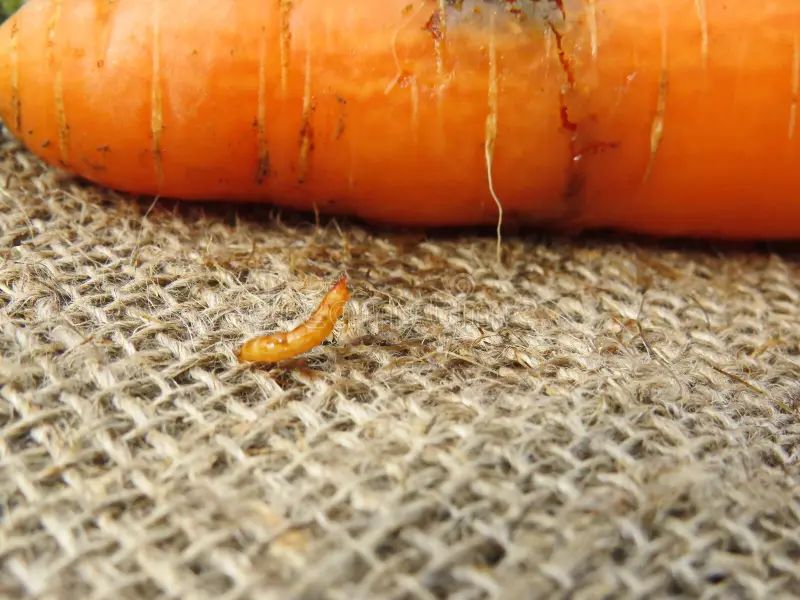
Wireworms are the larval stage of click beetles. They are thin, hard bodied larvae that tunnel through roots, creating irregular holes and galleries. Wireworm damage is most severe in soil that was recently converted from grass or pasture. Wireworms prefer moist soil, so drainage management helps reduce them.
A carrot sliced open shows the telltale wireworm holes running through the flesh. The damage makes the root useless for storage or even for fresh eating in some cases.
Aphids weaken plants and spread viruses
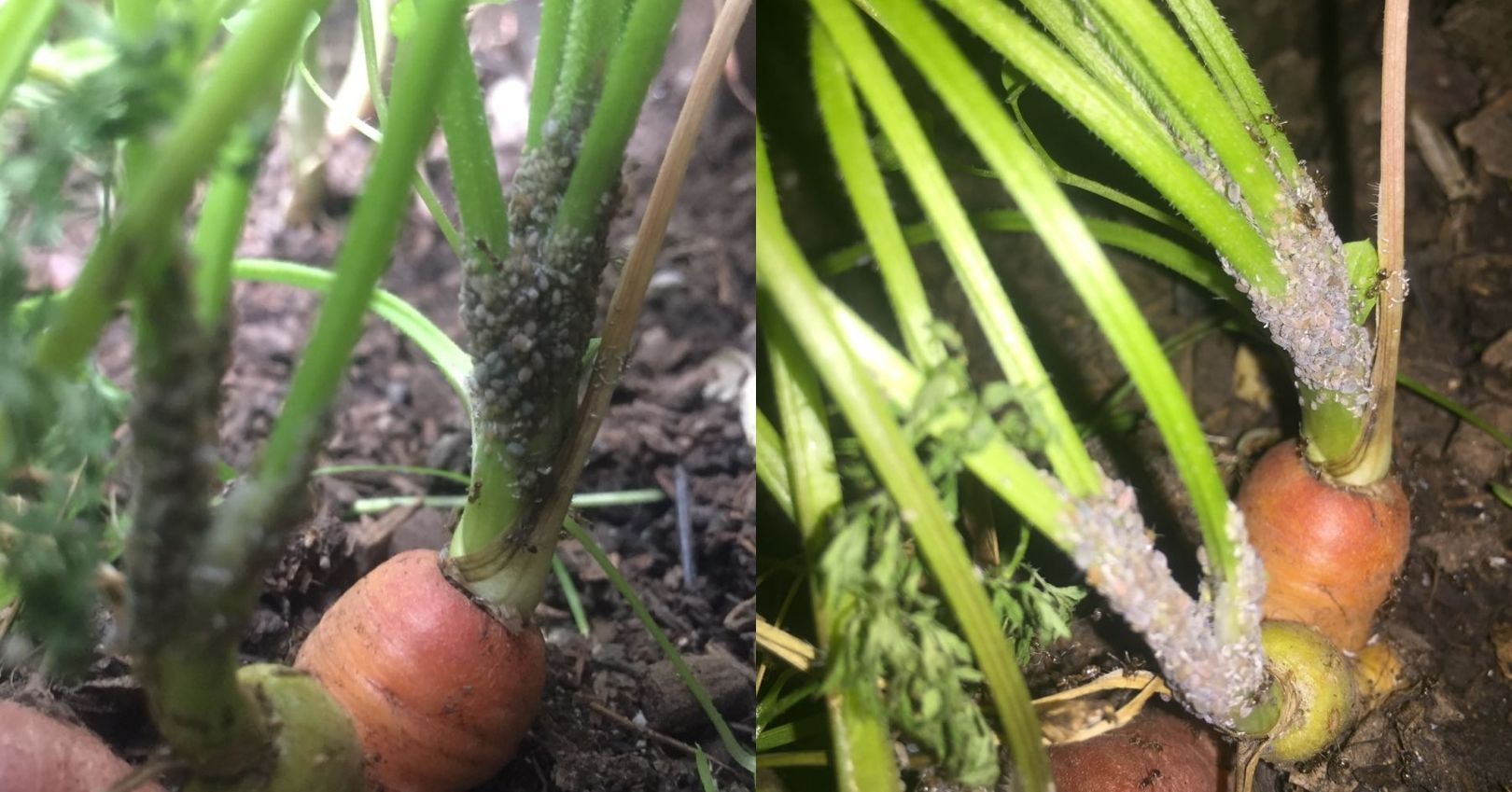
Aphids are small, soft bodied insects that cluster on foliage. They suck plant juices, weakening plants and causing yellowing and wilting. Aphids also transmit viral diseases to carrots, so controlling them prevents virus spread. Some aphids are green and some are black, making them easy to spot if you look closely.
A carrot bed covered in aphids in mid summer is a common sight. The damage starts subtle. Yellowing leaves. Slow growth. Then suddenly the plants stop growing and virus symptoms appear.
Flea beetles damage seedling foliage
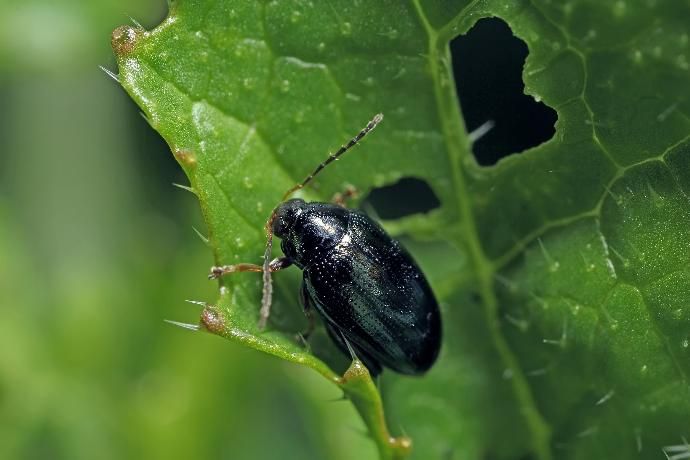
Flea beetles are tiny, black, shiny insects that jump when disturbed. They chew tiny holes in seedling leaves, creating a shotgun pattern of damage. Heavy flea beetle damage on young plants can kill seedlings outright. Flea beetles are mostly a problem in early spring on young plants.
Walk past a newly emerged carrot bed attacked by flea beetles and you see leaves riddled with tiny holes. The seedlings look diseased but they are just under heavy insect pressure.
Carrot weevils feed on foliage and roots
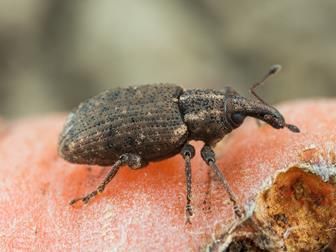
Carrot weevils are small brown insects with curved snouts. Adult weevils chew foliage and lay eggs in roots. Larvae develop inside roots, creating cavities and making roots inedible. Carrot weevils are regional, so check if they are present in your area.
Carrot weevil damage inside roots is heartbreaking. You pull a carrot that looks perfect on the outside, slice it open, and find it hollow inside from larval tunneling.
How to Identify Pest Damage Versus Disease Damage
Distinguishing between pests and disease is critical because the responses are completely different.
Pest damage appears as holes and tunnels. Round or irregular openings where insects have chewed. Tunnels through roots created by maggots or larvae. These damage patterns are physical and sudden. Taking clear photos helps with identification.
Disease damage appears as spots and wilting. Circular or angular spots with distinct borders. Wilting that is gradual and involves whole plant involvement. Disease often has visible fungal growth or bacterial ooze. Disease spread pattern is different from pest damage pattern.
Live pests are visible if you look. Insects on foliage are visible with close inspection. Eggs and larval stages may be harder to spot but are present if damage is active. No live pest usually means disease, not pest damage. Using a magnifying glass helps see small pests.
Root damage timing indicates pest type. Early season root damage suggests wireworms or nematodes. Mid to late season root damage suggests carrot fly or rust fly maggots. Timing narrows down the pest responsible. Different pests require different control approaches.
Organic Pest Control Methods That Work
Several effective non chemical options exist for home gardeners.
Row covers prevent egg laying insects
Row covers are lightweight fabric placed over plants to exclude pests. Row covers prevent carrot fly from reaching plants to lay eggs. Row covers must be in place before pests arrive, so early deployment is critical. Row covers also protect from flea beetles and other flying insects.
Remove row covers when plants flower to allow pollination or after pest season ends. In cooler climates, row covers can stay on the entire season since carrots do not need insect pollination.
Neem oil and organic sprays control aphids and beetles
Neem oil is an organic insecticide from neem tree seeds. It disrupts insect reproduction and feeding. Timing is important as sprays work best on young pests before they reach adulthood. Netting and pruning heavily infested leaves is also effective.
Apply neem oil early in the morning or late in the evening to avoid harming beneficial insects. Repeat applications may be necessary as the effect is temporary.
Encouraging beneficial insects stops pests naturally
Beneficial insects like parasitic wasps and ladybugs feed on carrot pests. Planting flowers nearby attracts beneficials to the garden. Avoiding broad spectrum pesticides that kill beneficials helps maintain natural control. Patience allows natural predators time to control pests.
A garden that welcomes beneficial insects becomes self regulating. Pests still appear but natural enemies keep them in check.
Crop rotation breaks pest cycles
Rotating carrots to different beds each year is one of the most powerful pest management tools. Pests that overwinter in soil cannot find host plants if beds rotate. Three year rotation is ideal for most pests. This method prevents pest buildup over time.
A pest that has no carrot plants to colonize starves or moves on to find host plants elsewhere. Rotation is prevention in its purest form.
Hand picking and removal works for small populations
Manually removing visible pests and infested leaves is effective for early detection when pest populations are small. Destroying infested material prevents spread to healthy plants. This is labor intensive but effective for small beds.
Spend an hour removing aphids by hand early in the season and you prevent weeks of chemical spraying later.
Soil amendments like diatomaceous earth control soft bodied pests
Food grade diatomaceous earth is a powdery substance damaging to soft bodied insects. It is safe for plants and people when used correctly. Dusting foliage with diatomaceous earth controls aphids and beetles. It must be reapplied after rain as water reduces effectiveness.
Diatomaceous earth works by cutting tiny holes in insect exoskeletons, causing dehydration. It is mechanical not chemical, making it very safe for beneficial insects.
Conventional Chemical Control Options
When organic methods are not enough, conventional pesticides offer effective alternatives.
Pyrethroids are effective broad spectrum options
Pyrethroids are synthetic versions of natural pyrethrins from chrysanthemum flowers. They control most carrot pests including flies, beetles, and aphids. They break down quickly in sunlight, reducing environmental persistence. Following label directions closely is essential for safety.
Pyrethroids are broad spectrum, meaning they kill many types of insects. This is powerful but also risky if beneficial insects are present.
Insecticidal soap targets soft bodied insects
Insecticidal soap is a low toxicity option for aphids and young insects. It works by disrupting insect cell membranes. Coverage is critical so all infested areas must be sprayed. Repeated applications may be needed as the effect is temporary.
Insecticidal soap does not harm beneficial insects because they are not soft bodied. It is selective in what it kills.
Timing and application matter for success
Spray in early morning or late evening to avoid harming beneficial insects. Following label recommendations for application timing and frequency is necessary. Spraying when pests are present is more effective than preventive spraying. Alternating chemical classes prevents resistance development in pests.
Pests develop resistance quickly if the same chemical is used repeatedly. Rotate between different classes to maintain effectiveness.
Environmental and safety considerations are not optional
Protect water sources by not spraying near streams or ponds. Wear protective gear during application to prevent exposure. Store pesticides safely away from children and pets. Reading and following all label directions is both legally required and necessary for safety.
Pesticides are tools. Tools are dangerous if misused. Respect the danger and follow directions exactly.
Prevention Strategies That Reduce Pest Pressure
These strategies prevent pest problems before they start.
Choose pest resistant varieties when available. Some varieties have resistance to root knot nematodes. Check seed catalogs and extension guides for variety recommendations that resist common pests in your region.
Start with clean seed and disease free transplants to avoid introducing pests. Practice crop rotation so soil dwelling pests do not accumulate. Improve soil health through compost and organic matter, which supports beneficial soil organisms that control pests.
Remove plant debris at season end to eliminate pest overwintering sites. Space plants properly for air circulation, which keeps foliage dry and discourages pest activity. Water at soil level, not from above, to keep foliage dry.
Scout beds regularly to catch pests early before populations explode. Use row covers in spring to prevent early season pest damage. Plant flowers nearby to attract beneficial insects that feed on pests.
Encourage birds by providing water and shelter as birds eat many carrot pests. Avoid using broad spectrum pesticides that kill beneficial insects. These strategies work together, creating a garden where pests are managed naturally.
How to Scout and Monitor for Pests
Systematic scouting is the foundation of early detection.
Scout beds once per week during growing season. Consistency catches problems at the earliest stage. Early morning scouting when insects are most active is ideal. Keep a simple scouting log to track pest pressure over time.
Check both upper and lower leaf surfaces carefully. Pests often hide on leaf undersides. Use a magnifying glass to spot tiny insects. Brush foliage and watch for insects to fall into a white cloth to aid detection.
Look for adult flies near plants, especially at dusk when they are most active. The presence of flies indicates egg laying is likely happening. Simple yellow sticky traps near plants catch flying insects. Monitoring trap catches helps time control applications.
Carefully examine roots during harvest for pest damage. Maggot tunnels and galls indicate active infestations. Damage patterns help identify the pest responsible. Document pest presence to help plan control for next season.
Upload photos of pest damage to plantlyze for identification. The AI tool can suggest what pest caused the damage. This speeds up identification compared to manual research. Keeping records in plantlyze builds a history of pest problems in your garden.
How plantlyze Helps Identify Pest Damage and Injury
Uncertainty about what pest you are seeing wastes precious time. Plantlyze is an AI powered plant diagnosis tool that recognizes pest damage from photos. Users can upload photos of damaged carrot foliage or roots and get suggestions on what pest caused the damage.
The tool narrows down possibilities based on damage patterns, location, and timing. It can also suggest appropriate control methods based on the pest identified. Visit plantlyze dot com, create a free account, and upload a photo of damaged carrots whenever you find pest injury. The AI will help you identify the culprit and suggest the best control approach.
Having a quick, accurate pest identification means you can act fast instead of wasting days trying to figure out what is wrong.
When to Give Up and Replant Versus Trying to Save a Crop
Sometimes the pest damage is so severe that salvaging makes no sense.
If more than 30 to 40 percent of plants show severe pest damage, consider replanting. If pest damage appears very late in the season with harvest weeks away, accept the loss. If pests are still reproducing and control methods are not working, replanting may be more practical.
Calculate whether salvaging the damaged crop costs more in time and materials than replanting. Remember that the goal for this season becomes learning for next season. Document what pests appeared, when they appeared, and what worked or did not work. Use this information to adjust prevention and variety selection next year.
One failed crop provides valuable data for future success. That knowledge is worth money next season.
Conclusion
Scout regularly. Identify pests correctly. Act fast. These essentials prevent crop loss.
Early detection prevents disaster. Most carrot pests are manageable with consistent attention. Learning what pests appear in your garden each season helps predict and prevent them next year.
The gardener who scouts regularly, identifies pests early, and acts quickly saves their crop. The gardener who waits and hopes does not. This is not luck or magic. This is simply how pest management works.
Track pest damage with plantlyze dot com so you build a personal guide to pest management in your specific location. Over seasons, you will develop intuition about what pests to expect and when. That knowledge transforms you from a reactive gardener to a proactive one.
References
University of Wisconsin Extension Integrated Pest Management for Vegetables
https://vegpath.plantpath.wisc.edu/Cornell University Vegetable Pest Management Resources
https://www.vegetables.cornell.edu/pest-management/UC IPM Carrot Pest Management
https://ipm.ucanr.edu/agriculture/carrot/North Carolina State University Extension Vegetable Pest Management
https://content.ces.ncsu.edu/extension-gardener-handbook/Rutgers University Extension Vegetable Pest Management
https://plant-pest-advisory.rutgers.edu/University of Massachusetts Extension Carrot Production and Pest Management
https://www.umass.edu/agriculture-food-environment/Ohio State University Extension Carrot Pest Control
https://extension.osu.edu/ask-an-expert/search?q=carrot+pests