You wake up one morning to find your carrot plants yellowing, wilting, or covered in spots. No obvious pest. No sign of neglect. Just disease. Your first thought is panic. Your second thought is confusion. What is wrong? What do you do?
Carrot diseases fall into several categories: fungal, bacterial, viral, and soil borne. Each looks different, spreads differently, and requires a different response. Identifying the correct disease is half the battle. The other half is acting fast. Most carrot diseases can be prevented or managed if caught early, but missing them leads to total crop loss and contaminated soil that causes problems for years.
This guide covers the most common carrot diseases in home gardens, how to spot each one, and what to do. By the end, you will know how to read your plants like a book, diagnose problems before they spread, and take action to save what you can. You will also learn that prevention through good practices stops disease before it ever starts.
Why Disease Prevention Matters More Than Treatment
Once a carrot disease takes hold in the bed, stopping it is difficult and often impossible. Fungal spores, bacterial cells, and viruses spread through soil, water, and even handling, making isolation hard. Carrot leaves and roots are relatively weak defenders compared to other vegetables, which is why they succumb so quickly to infection.
Treating a disease after symptoms appear requires strong chemicals or results in partial crop loss. You spray, you remove infected plants, you adjust watering, and you hope. But hope is not a strategy. Prevention through soil health, spacing, watering practice, and variety selection is far more effective.
Here is the harsh truth. A diseased crop in year one leads to contaminated soil in year two, making problems worse next season. Once a disease is present in soil, crop rotation and soil amendments become necessary. The goal is never to grow disease in the bed in the first place.
This mindset shift from treatment focused to prevention focused is the single most important lesson any carrot gardener can learn.
Fungal Diseases Affecting Carrots
Fungal diseases are the most common carrot problems in home gardens. They thrive in warm, humid conditions and spread through water splash and airborne spores. Spotting them early makes all the difference.
Cercospora leaf blight is the most common fungal threat
Cercospora leaf blight is one of the most common carrot diseases in warm, humid climates. The symptoms are distinct and easy to recognize. Small circular brown spots with gray centers appear on lower leaves first. As the disease progresses, spots enlarge and coalesce until entire leaves turn brown and die.
The disease spreads upward and inward through the plant like a slow fire. Conditions of high humidity and warm nights, around 65 to 75 degrees Fahrenheit, favor the disease. If you live in a humid climate or grow carrots through a wet summer, this disease is your main concern.
The fungus lives in plant debris and soil, so crop rotation is critical. If you leave infected leaves in the bed, the spores overwinter and infect next year's crop. Fungicides help slow the spread, but removing lower leaves when spots appear is often enough to manage the disease without chemicals.
Alternaria leaf blight is similar but with concentric rings
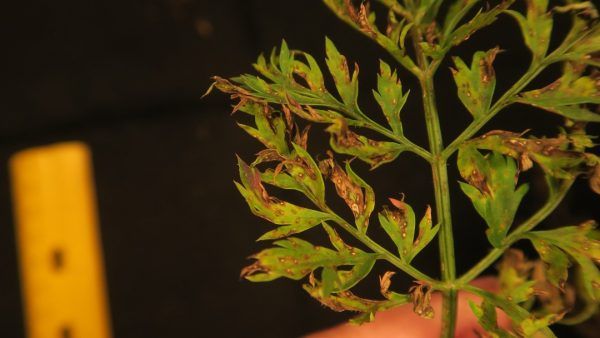
Alternaria is similar to cercospora but creates distinct concentric ring patterns in the spots. Dark brown spots with rings on older leaves appear first. The disease is less common than cercospora but equally damaging in warm, wet seasons.
Alternaria also overwinters in plant debris and soil, so the same prevention strategies apply. If you see alternaria one year, expect it again unless you remove debris and rotate crops.
Powdery mildew is rare but signals stressed plants
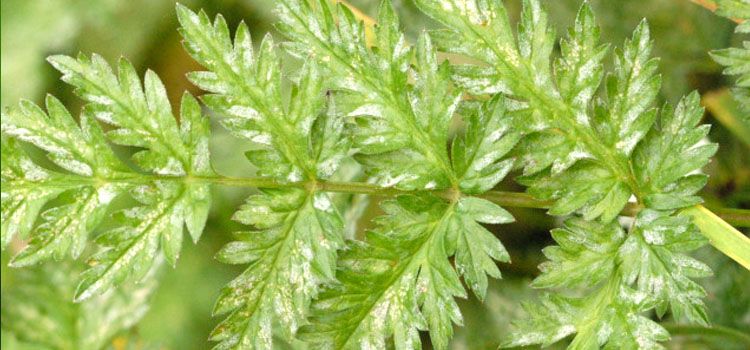
Powdery mildew is rare on carrots compared to other plants, but it does occur. Symptoms are distinctive: white powder on leaves, usually on upper leaf surfaces. The powder looks like flour and rubs off easily.
Damage is generally mild, but powdery mildew indicates stressed plants and poor air circulation. Improving spacing and reducing humidity usually resolves it without chemicals. Simply removing affected leaves and increasing air flow often stops the problem.
Root rot and damping off attack seeds and young seedlings
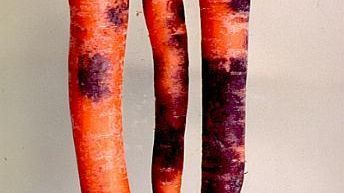
Root rot and damping off are soil borne fungal diseases affecting seeds and young seedlings. Damping off causes seedlings to collapse at soil line just after sprouting, as if cut off by an invisible knife. Root rot affects older plants, causing roots to turn soft, mushy, and black.
These diseases thrive in waterlogged soil and poor drainage. If your soil stays soggy after rain, these diseases will find you. Improving soil drainage and avoiding overwatering are the best defenses. Fungal seed treatments and sterile starting soil help with seedlings, but the real solution is good drainage.
Bacterial Diseases Affecting Carrots
Bacterial diseases are trickier than fungal because no spray stops them. Once bacteria establish, removal is usually the only option.
Bacterial leaf spot creates water soaked lesions with yellow haloes
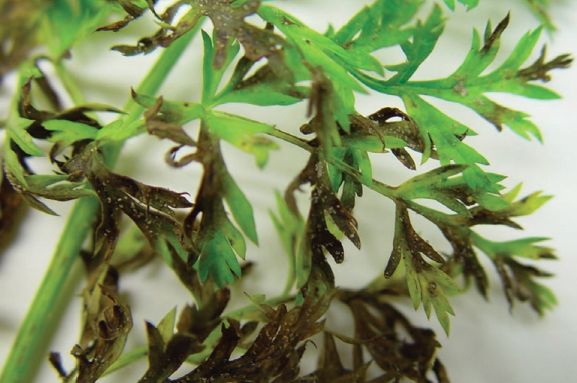
Bacterial leaf spot is caused by Xanthomonas bacteria. Symptoms start as small, dark, water soaked spots that eventually develop a yellow halo. As the disease progresses, spots coalesce and leaves yellow and die.
The bacteria spread through wet foliage, so overhead watering increases risk dramatically. No fungicide stops bacteria, so prevention through sanitation is essential. Removing infected plants immediately and sterilizing tools with bleach between plants prevents spread to healthy neighbors.
Bacterial soft rot affects stored carrots more than growing plants
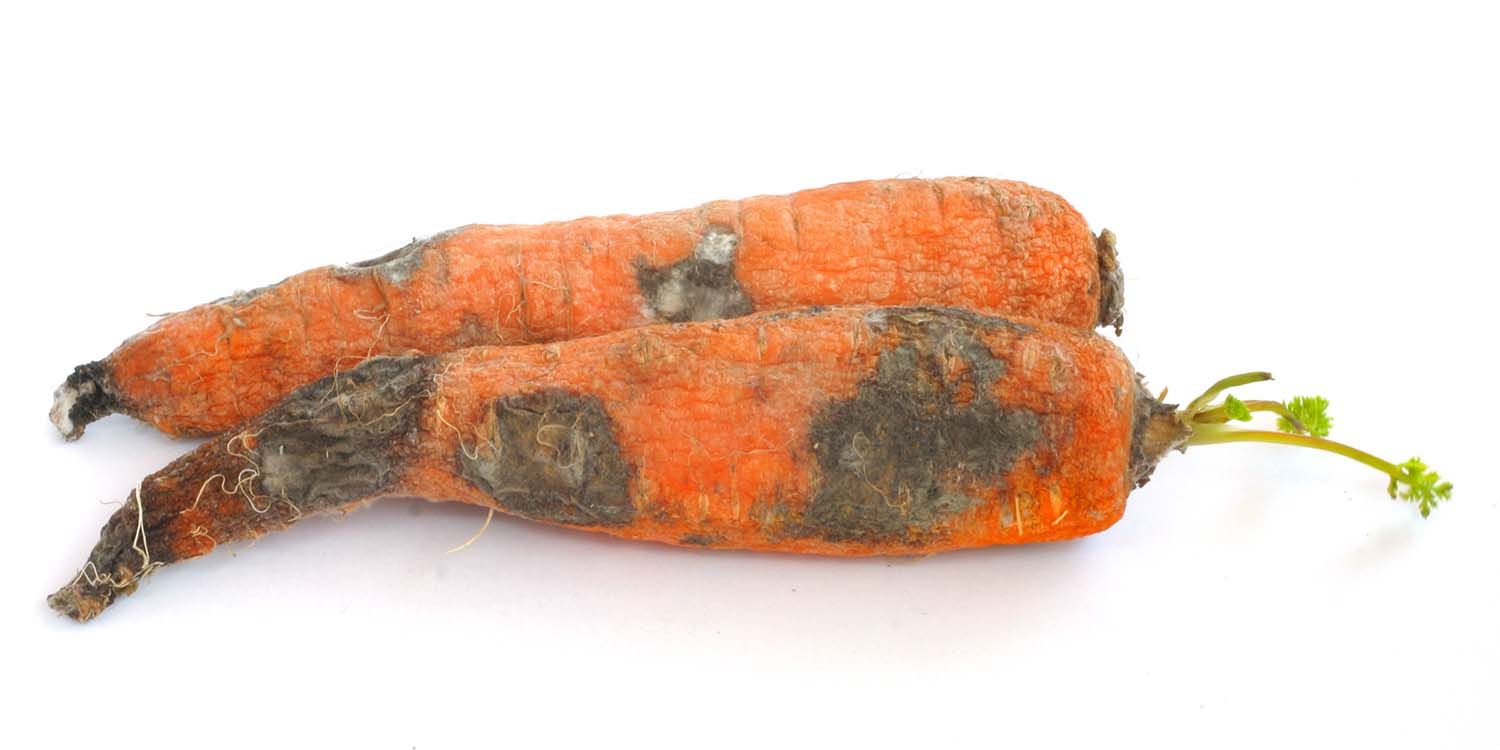
Bacterial soft rot appears as soft, mushy areas in harvested roots, often after storage begins. The bacteria gain entry through wounds and cracks in the root. Careful harvest handling and storing only healthy roots prevents this disease.
Temperature and humidity control in storage are critical. Keep stored carrots cool around 32 to 40 degrees Fahrenheit and maintain high humidity. Inspect stored roots regularly and remove any that show soft spots immediately before rot spreads to other roots.
Viral Diseases Affecting Carrots
Viral diseases cause stunting, mottling, and yellowing that cannot be reversed. Once a plant is infected, removal is the only answer.
Aster yellows is transmitted by leafhoppers and causes stunting
Aster yellows is a viral disease transmitted by leafhoppers. Symptoms begin as yellowing of older leaves first, followed by stunting and failure to bulk. If the disease appears early in the season, roots stay small and may be hairy or misshapen.
The disease is spread by insect vectors, so screening or insecticide sprays offer some protection. But once a plant is infected, removal is necessary. There is no cure. The goal is prevention through early season leafhopper control.
You can reduce leafhopper populations through early season sprays or by covering young plants with row covers. Either approach reduces the chance of aster yellows infection.
Carrot motley dwarf virus causes mosaic patterns and severe stunting
Carrot motley dwarf virus creates mosaic patterns on leaves with light and dark patches. Severely affected plants are stunted and fail to develop properly. The virus is transmitted by aphids, so managing aphid populations helps prevent it.
Removing infected plants early limits spread to other plants. Scout regularly in early summer when aphids emerge and spray if populations build up.
Carrot red leaf virus causes reddening and stunting
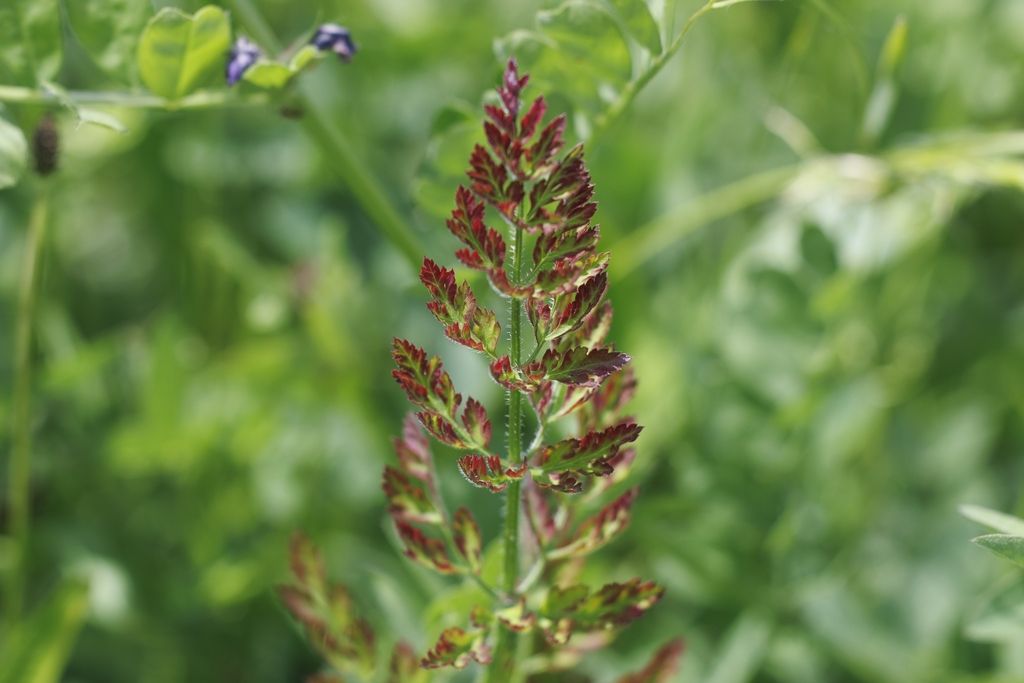
Carrot red leaf virus is less common than other carrot viruses but equally damaging. Leaves turn red and the plant becomes severely stunted. Like other viral diseases, it spreads by insects and has no cure once established.
Root and Soil Borne Diseases
These diseases hide in soil and emerge during the season or at harvest. They are the trickiest to spot because symptoms appear late.
Cavity spot appears just before or after harvest as sunken lesions
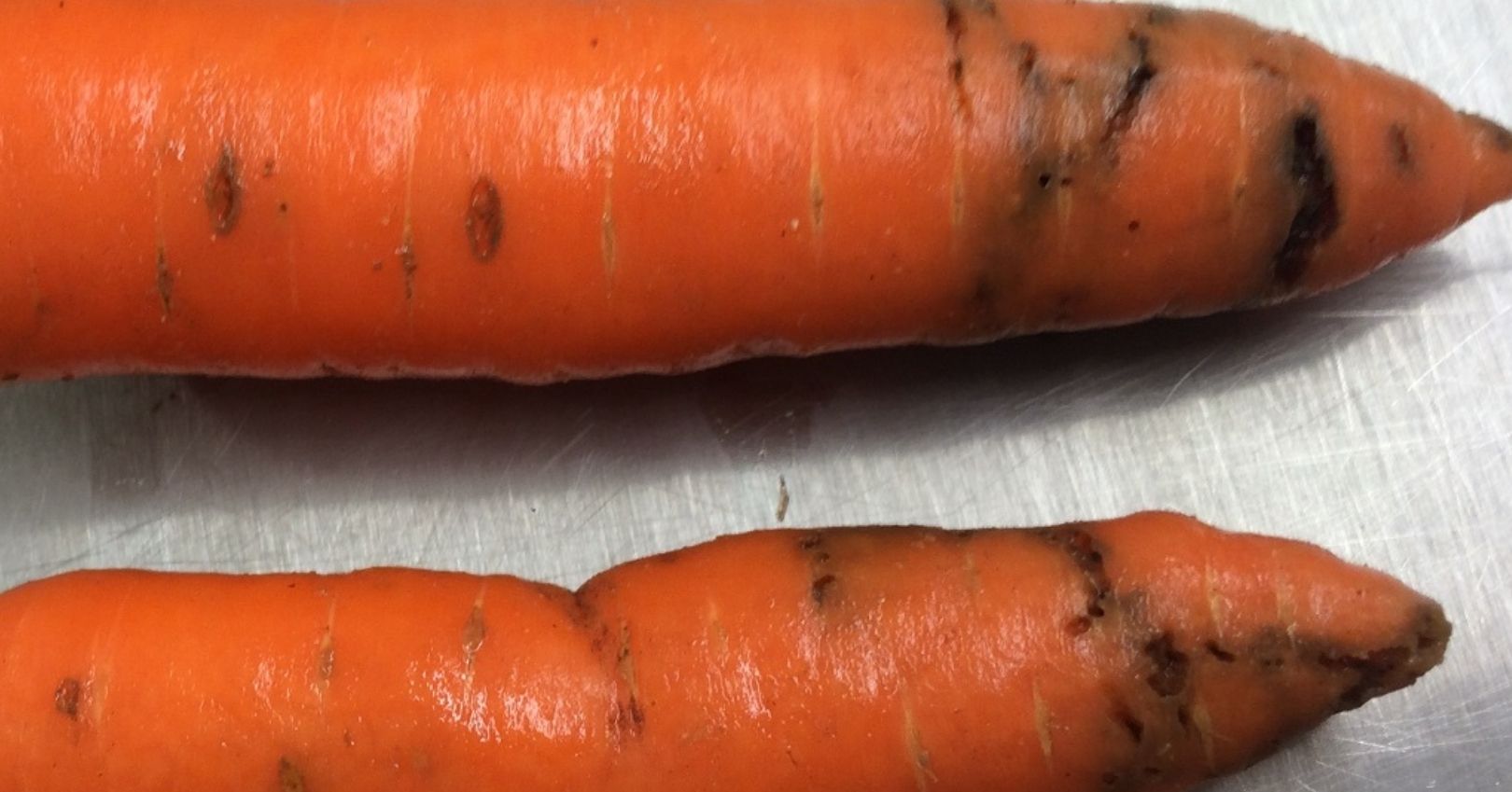
Cavity spot is caused by bacteria and appears late in the season. Symptoms are small brown, sunken lesions or cavities on the root surface. The cavities appear just before harvest or after harvest, making roots unsellable or spoiled.
The disease is soil borne and favors cool, wet conditions. Crop rotation and improved drainage are the best management strategies. If you had cavity spot one year, grow carrots in a different bed the next year and improve drainage in the original bed.
Sclerotinia rot affects roots in storage or late in season
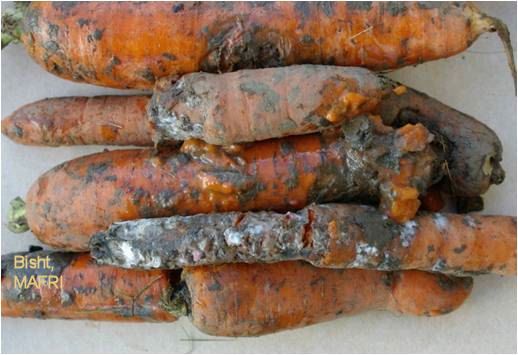
Sclerotinia rot is a fungal disease that affects roots in storage or late in the season. Symptoms are soft, watery rot often with white fungal growth inside. The disease thrives in cool, humid conditions.
Storing carrots at proper temperature and humidity prevents this disease. Keep roots at 32 to 40 degrees Fahrenheit and maintain humidity around 90 to 95 percent. Good air circulation in storage also helps prevent rot.
Rhizoctonia causes seed rot and seedling damping off
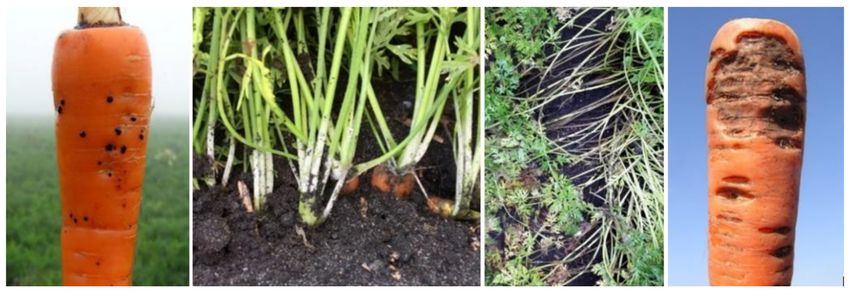
Rhizoctonia is a soil borne fungus causing seed rot and seedling damping off. It also causes root cankers and surface lesions on mature roots. The disease is favored by warm soil and poor drainage.
Seed treatments and soil improvement help prevent infection. Make sure to use sterile seed starting mix and improve soil drainage before planting.
How to Diagnose Carrot Diseases Using Visual Signs
When you spot something wrong on your carrot plants, systematic observation narrows down the possibilities quickly.
Look at the pattern of spots
Are spots circular, angular, or irregular? Do they have rings, haloes, or concentric patterns? Some diseases create distinct patterns that narrow diagnosis immediately. Cercospora spots are circular with gray centers. Alternaria spots have concentric rings. Bacterial spots have yellow haloes.
Comparing the pattern to disease guides helps confirm identity. Take a clear photo and look at it carefully. Match it to examples you find online or in extension guides.
Check the location
Does the disease appear on lower leaves first or throughout the plant? Does it affect only foliage, roots, or both? Location often indicates the disease type.
Fungal diseases usually start on lower leaves where humidity is highest. Viruses cause whole plant stunting and mottling. Soil borne diseases affect roots first, with foliage symptoms coming later if at all.
Look at the color and texture
Are spots brown, gray, white, or reddish? Is there visible fungal growth such as spores or mycelium? Is affected tissue wet and mushy or dry and papery?
Texture helps distinguish bacterial rot, which is slimy and mushy, from fungal rot, which is dry and crumbly, from viral stunting, which simply stops growth. These differences matter for diagnosis.
Observe the pattern of spread
Do affected plants cluster together or scatter throughout the bed? Clustered disease suggests soil borne or pest borne transmission. Scattered disease suggests airborne fungal spores or wind blown bacteria.
Understanding spread pattern helps guide prevention next season. If disease clusters around one area, the soil in that spot likely has high disease pressure. If it scatters, air borne spores were probably the culprit.
Use plantlyze for visual confirmation
Taking clear photos of affected foliage from multiple angles and uploading them to plantlyze allows AI powered diagnosis to suggest disease possibilities. This narrows down choices and helps confirm what you suspect. It saves time on research and guesswork.
Visit plantlyze dot com, upload a photo of your carrot plant, and get instant disease suggestions based on visual symptoms.
Treatment Options Organic and Conventional
Once you identify the disease, action depends on what you are dealing with.
Fungal disease treatment focuses on removal and fungicides
Removing heavily infected lower leaves is an immediate action that slows spread. Improving air circulation through better spacing and pruning helps dry foliage faster, which limits fungal growth.
Sulfur sprays are organic fungicide options for many fungal diseases. Copper based fungicides also work against some fungal diseases. Conventional fungicides are more effective but require more caution and protective gear.
The key point is that any fungicide works best as prevention before disease appears, not after symptoms are visible. If you know a disease is likely in your garden, spray preventively in early summer.
Bacterial disease treatment relies on removal and sanitation
No fungicide or antibiotic spray effectively stops bacteria on carrots. Removal of infected plants is the most practical approach. Once you confirm bacterial disease, pull the affected plants and destroy them in trash, not compost.
Sterilize tools with bleach after handling infected plants to prevent spread. Avoiding overhead watering, which wets foliage and spreads bacteria, also helps reduce bacterial diseases.
Viral disease treatment is prevention only
No cure exists for viral diseases, so prevention is the only option. Removing infected plants immediately prevents spread to healthy neighbors. Manage insect vectors like aphids and leafhoppers with sprays or row covers to prevent infection from reaching your plants.
Destroy infected plants in trash, not compost, to prevent disease persistence in your garden.
When to give up on treatment
If more than 20 to 30 percent of a bed is infected, treatment usually fails. At that point, removing and replanting is often more practical than trying to save a heavily infected crop.
The goal for this season becomes learning for next season. Document what went wrong, what the symptoms looked like, and when they appeared. This information helps prevent the same disease next year.
How plantlyze Can Help Diagnose Carrot Diseases
Uncertainty about what disease you are seeing wastes precious time. Plantlyze is an AI powered plant diagnosis tool that recognizes disease symptoms from photos. Users can upload photos of affected carrot foliage or roots and get instant suggestions on what disease is likely present.
The tool narrows down possibilities based on symptom patterns, color, texture, and location. It can also suggest whether the disease is fungal, bacterial, or viral, which changes the treatment approach entirely.
Visit plantlyze dot com, create a free account, and upload a photo of your carrot plants whenever you notice symptoms that worry you. The AI will help you identify what is happening and suggest next steps. Having a quick, accurate diagnosis means you can act fast instead of wasting days trying to figure out what is wrong.
Prevention Strategies That Actually Work
The best disease is the one that never appears. These strategies prevent disease before it starts.
Choose resistant varieties when available. Some carrot varieties have resistance to leaf blight or aster yellows. Check seed catalogs and extension guides for variety recommendations that resist common diseases in your region.
Start with clean seed or seed treated with fungicides to prevent seed borne diseases. Treated seed costs a bit more but eliminates one major disease source.
Test and amend soil to improve drainage and reduce waterlogging, which favors fungal disease. Good drainage is your best disease insurance.
Rotate crops so carrots do not grow in the same bed more than once every three years to break disease cycles. Move your carrot bed every year or at least every other year.
Space plants properly for air circulation and quick drying of foliage after rain or watering. Crowded plants stay wet longer and disease spreads faster.
Water at soil level, not from above, to keep foliage dry and reduce fungal and bacterial spread. Splash from soil splashing bacteria onto leaves when you water from above. Drip irrigation or soaker hoses solve this problem.
Remove plant debris and fallen leaves from the bed to eliminate fungal and bacterial overwintering sites. At the end of the season, clean up thoroughly. Do not leave any diseased leaves or stems in the bed.
Sterilize tools and stakes between uses, especially when handling diseased plants, to prevent spread. A quick wipe with bleach takes seconds and prevents disease transmission.
Scout the bed weekly, looking for early signs of disease so problems can be stopped before spreading. Early detection is the difference between managing a disease and losing a crop.
Remove infected plants immediately and destroy them. Do not compost. Burn them or place them in trash. Compost piles often do not get hot enough to kill disease spores.
Conclusion
Identifying carrot diseases early allows for quick action. Prevention through good practices stops disease before it ever starts. Most carrot diseases are manageable if you stay alert, scout regularly, and respond fast.
Keep records of which diseases appeared, when they appeared, and what you did about them. This personal history helps you make better variety choices and timing decisions next year. Over seasons, you learn which diseases are your garden's weak point and which you rarely see.
Whenever you notice plant symptoms that worry you, use plantlyze dot com to get quick accurate diagnosis. Having a confident answer to the question "What is wrong with my carrots?" means you can act fast, save what you can, and plan better for next season. Disease is part of gardening, but it does not have to derail your carrot crop.
References
Cornell University Carrot Leaf Blight Diseases and Their Management
https://www.vegetables.cornell.edu/pest-management/disease-factsheets/carrot-leaf-blight-diseases-and-their-management/University of Wisconsin Vegetable Pathology Carrot Alternaria and Cercospora Leaf Blights
https://vegpath.plantpath.wisc.edu/diseases/carrot-alternaria-and-cercospora-leaf-blights/North Carolina State University Extension Gardener Handbook Diseases and Disorders
https://content.ces.ncsu.edu/extension-gardener-handbook/5-diseases-and-disordersTexas A&M Plant Disease Handbook Carrot
https://plantdiseasehandbook.tamu.edu/food-crops/vegetable-crops/carrot/UC IPM Carrot Pest Management Guidelines
https://ipm.ucanr.edu/pdf/pmg/pmgcarrot.pdfRutgers University Plant and Pest Advisory Controlling Fungal Leaf Blights of Carrot
https://plant-pest-advisory.rutgers.edu/controlling-fungal-leaf-blights-of-carrot-2/UMass Amherst Carrots Identifying Diseases
https://www.umass.edu/agriculture-food-environment/vegetable/fact-sheets/carrots-identifying-diseasesUniversity of Minnesota Extension Carrot Leaves Spots on Leaves
https://apps.extension.umn.edu/garden/diagnose/plant/vegetable/carrot/leavesspots.html