Of all the challenges confronting carrot producers throughout the season, few diseases are as silent and destructive in their progress as cercospora leaf blight. This fungus attacks carrot foliage with a vengeance reducing yields and making carrots unmarketable if its attack goes unchecked. The disease loves warm wet conditions therefore it can spread rapidly within fields thus making it very critical to identify even at an early stage so that intervention measures can be taken to protect the harvest.
Understanding cercospora leaf blight is not just about recognizing symptoms. It requires knowledge of how the disease develops, what environmental conditions favor its spread, and which management strategies work best in your specific growing conditions. This comprehensive guide walks you through identification, disease biology, and proven management techniques that growers worldwide use to maintain healthy carrot crops.
What is Cercospora Leaf Blight?
Cercospora leaf blight is a fungal disease, scientifically identified by the pathogen Cercospora carotae. The most devastating effects of this disease are primarily on the foliage of carrots, creating characteristic lesions on leaves that can be completely defoliated if unchecked. The carrot crop grows well in temperate and subtropical regions around the world-in North America, Europe, and Asia-where it is also affected by this disease.is a fungal disease caused by the pathogen Cercospora carotae. This devastating disease primarily targets the foliage of carrot plants, creating characteristic lesions on leaves that can eventually lead to complete defoliation if unchecked. The disease affects carrots grown in temperate and subtropical regions worldwide, including North America, Europe, and Asia.
The fungal pathogen Cercospora carotae is specific to carrot tissues, making an infection particularly vulnerable in domestic carrots. Susceptibility is high in young rapidly growing plants. The main problem with the disease occurs during seasons of long warm spells accompanied by high humidity that would favor the development and spread of fungus .
Cercospora leaf blight can reduce carrot yields by 20 to 50 percent depending upon the severity of the disease and stage of the crop when infection takes place. Most damages occur if infections set in during the establishment phase, while later season infections may have less dramatic impacts on yield but still affect crop quality and marketability.
How to Identify Cercospora Leaf Blight
Accurate identification is the first step in managing cercospora leaf blight effectively. The disease produces distinctive visual symptoms that become progressively more visible as the infection advances.
Early Stage Symptoms
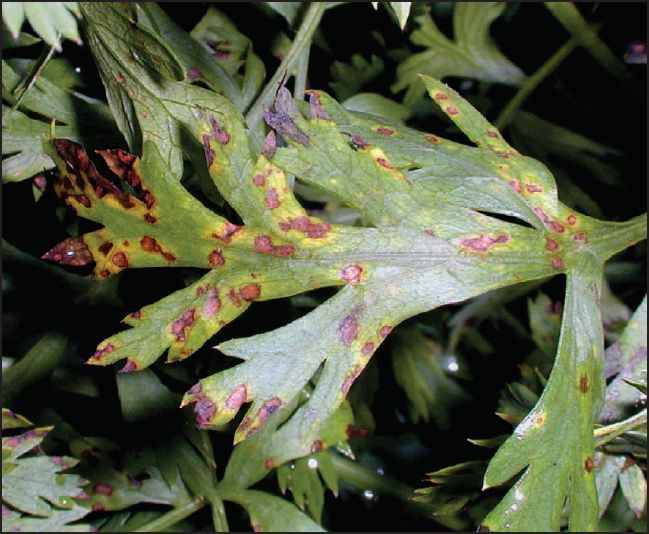
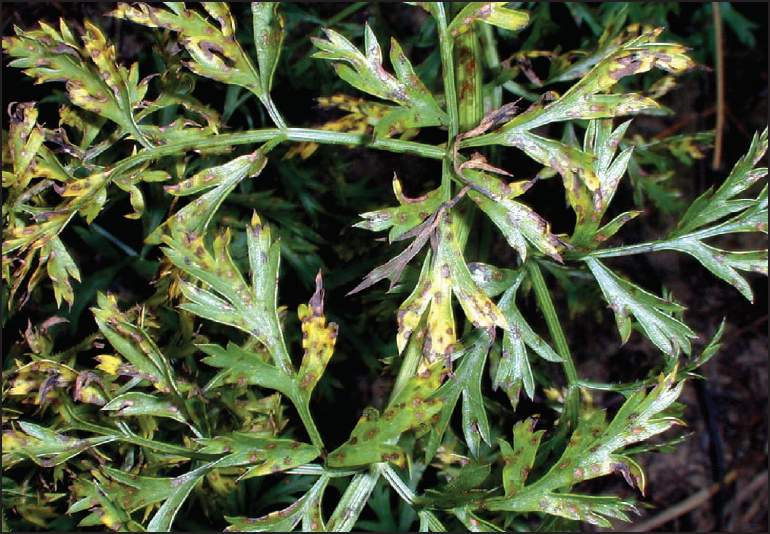
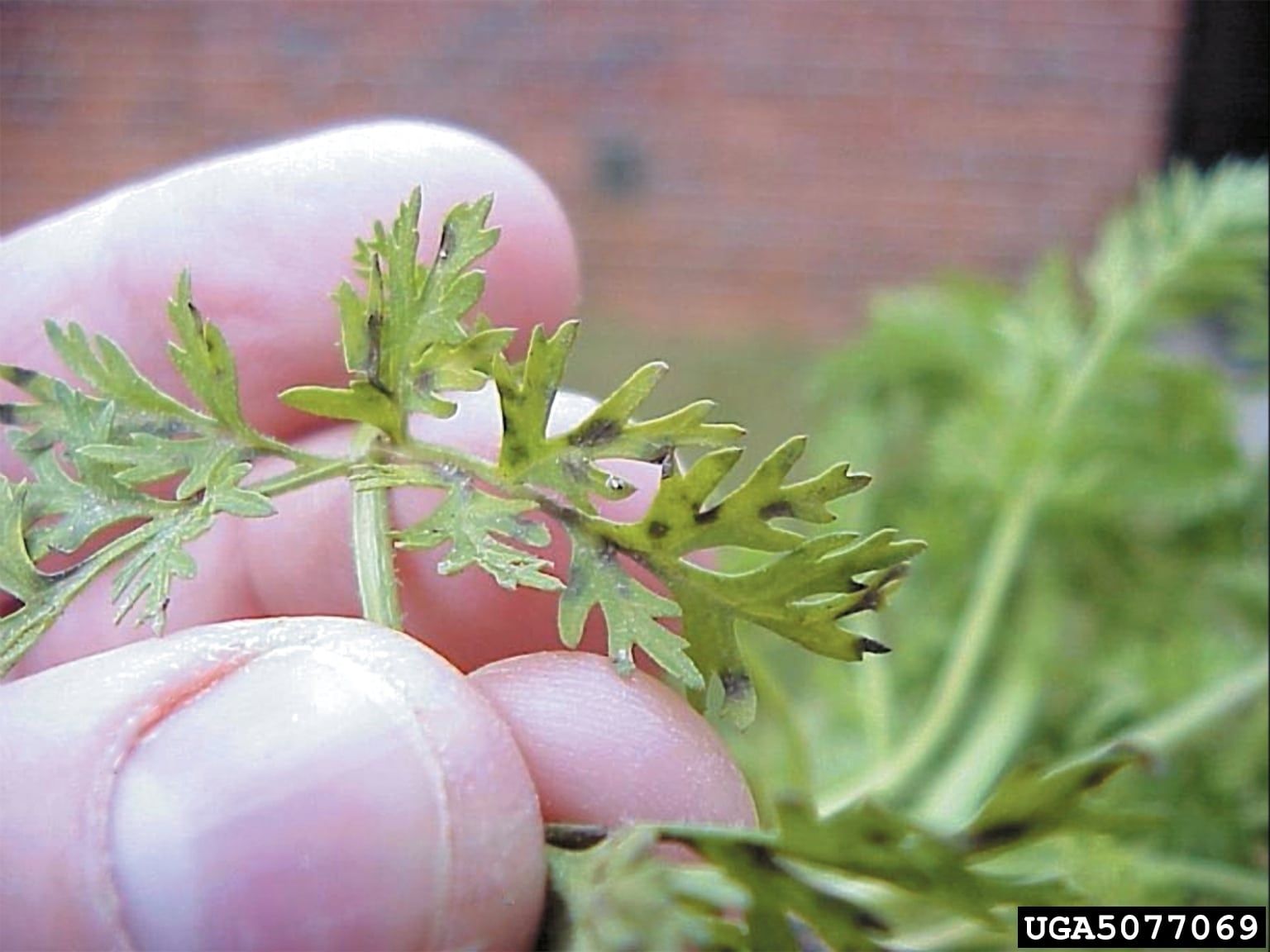
When cercospora leaf blight first appears, look for small tan lesions on the lower leaves of carrot plants. These initial spots are often circular or irregular in shape, measuring 2 to 5 millimeters in diameter. The lesions typically have a characteristic appearance with a tan or cream colored center surrounded by a dark brown or black border. This distinctive ring pattern makes cercospora easy to distinguish from other leaf diseases.
Early symptoms usually appear on the oldest leaves first, then progress to younger foliage. You might notice the lesions only on lower, more mature leaves while upper leaves remain clean. This pattern helps confirm cercospora infection rather than other foliar diseases.
Advanced Stage Symptoms
As the disease progresses, lesions continue to develop and expand. Multiple lesions coalesce on individual leaves, creating larger affected areas. Advanced infections result in extensive leaf browning and necrosis, with severely affected leaves eventually yellowing and dropping from the plant. In severe cases, entire plants can become nearly defoliated.
The centers of advanced lesions often develop a gray or whitish appearance with concentric rings visible inside the darker border. This gives the lesion a target-like appearance. Under moist conditions, a fine grayish fungal growth (sporulation) becomes visible on leaf surfaces, particularly on the undersides of affected leaves.
Stem and Petiole Symptoms
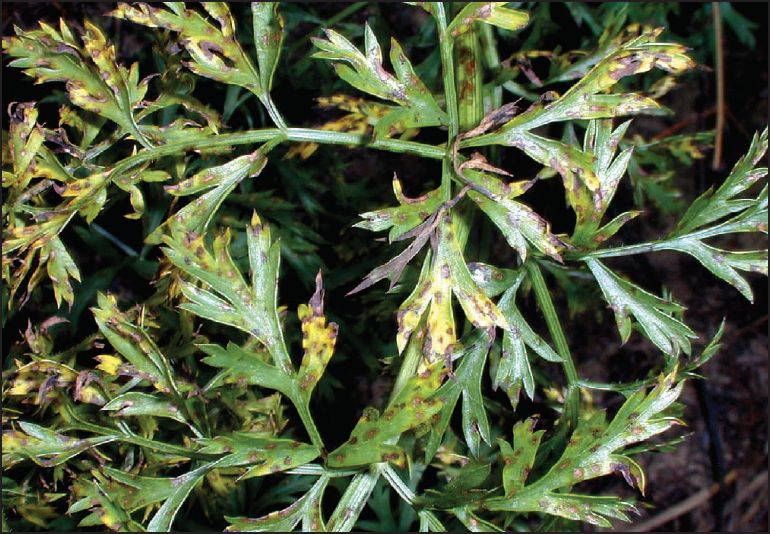
Cercospora infection can extend beyond leaf blades to affect petioles (the stems that attach leaves to the main plant) and even the main leaf stems. On these structures, you'll see similar tan lesions with dark borders, sometimes forming elongated streaks. Heavily infected petioles may become completely girdled, eventually causing attached leaves to wilt and drop.
To quickly verify cercospora symptoms on your plants, upload photos to Plantlyze.com for instant AI powered disease diagnosis. This confirms your field observations and ensures you're treating the right disease before implementing management strategies.
Environmental Conditions and Disease Development
Cercospora leaf blight requires specific environmental conditions to thrive. Understanding these triggers helps you predict when disease pressure will be highest and time management interventions accordingly.
Temperature Requirements
Cercospora carotae develops most aggressively at warm, but not hot, temperatures. Optimal disease development is between 20 and 28°C (68 to 82°F). Development can occur at lower temperatures but much more slowly.<br>High temperatures begin to inhibit development at about 30°C. However, very high temperatures have also been reported for the survival and spread of the pathogen.
These temperature ranges mean that disease pressure typically peaks during mid-summer in temperate regions and during cooler seasons in subtropical and tropical areas. Spring plantings may escape the worst disease pressure if harvest occurs before peak summer months.
Moisture and Humidity Factors
Moisture is absolutely essential for infection and the spread of cercospora. The minimum number of hours that can be estimated for the initiation of an infection by this pathogen would be twelve hours of leaf wetness. This leaf wetness may be from rainfall, irrigation water, or even dew in the early morning associated with humid conditions. Long periods where the foliage remains wet are very high-risk conditions for the disease.
High relative humidity above 85 percent creates ideal conditions for fungal spore production and dispersal. Humid conditions also extend the duration of leaf wetness, increasing the likelihood of infection. Fields with poor air circulation due to dense planting or surrounding structures experience higher disease pressure than fields with good air movement.
Seasonal Patterns
There is a defined season for the activity of most diseases. In temperate regions, cercospora develops most actively during summer months of warm temperatures and abundant moisture provided by frequent rains or irrigation. The pressure from other diseases that have defined seasons typically begins in early fall when daytime temperatures are moderate to warm and nighttime dew becomes heavier.
Spring infections may occur early in the season if warm, moist conditions develop soon after planting. Understanding your region's typical weather patterns helps predict when cercospora pressure will be highest and allows you to time preventive measures for maximum effectiveness.
Disease Cycle and Transmission
Understanding how cercospora spreads is essential for implementing effective prevention strategies and breaking the disease cycle from year to year.
Overwintering and Survival
Cercospora carotae persists through unfavorable seasons in plant debris left after harvest, as carrot leaves, stems and roots infected by the fungus carry viable spores and mycelium of the fungus over winter even under cold climatic conditions. The organic matter of soil containing infected plant material also harbors and supports survival of the pathogen.
The fungus can also be hosted and carried over on wild species of carrots, particularly Daucus carota (Queen Anne’s lace). These hosts act as reservoirs for the disease to allow cercospora in regions where commercial carrots are not grown but later planted with the crop to thrive well. Therefore, it is very important to remove wild carrot plants from field margins.
Seed and Planting Material Transmission
Cercospora carotae is a seedborne pathogen, meaning the fungus can contaminate carrot seeds and be transported to new locations through seed trade. Infected seed can introduce disease to previously uninfected fields or regions. This is why using certified disease free seed is critical for disease prevention, particularly in countries where cercospora has not yet been documented.
Seedborne infection typically occurs when seeds are harvested from infected plants or when seeds contact contaminated plant debris during seed production and processing. Even if seeds do not harbor high levels of the fungus, they can carry low populations that establish infection once they germinate in favorable conditions.
Spore Dispersal and Infection Spread
During favorable conditions, Cercospora carotae produces abundant fungal spores on infected leaves. These spores are primarily dispersed by wind and water splash from rain or irrigation. A single infected leaf can produce thousands of spores, which travel on air currents to nearby susceptible leaves.
Water splash proves particularly important for short distance spore spread within fields and from one plant to another. Overhead irrigation systems actually accelerate disease spread by creating extended periods of leaf wetness and facilitating spore movement through water droplets.
Effective Management Strategies
Successfully managing cercospora leaf blight requires an integrated approach combining multiple tactics. No single strategy provides complete protection, but combining practices creates a robust defense that minimizes disease impact on crop yield and quality.
Cultural and Preventive Practices
Disease free certified seed is the foundation of cercospora management. Always insist on seed certified free from Cercospora carotae. Reliable seed companies test their seed lots and can provide documentation to support any claims of disease free status made by them or their distributors further down the supply chain. Clean seed will not introduce the pathogen into areas where it does not currently exist.
Crop rotation is essential for reducing disease pressure over time. The pathogen survives in plant debris, so rotating carrots with non host crops for at least 2 to 3 years reduces the population of Cercospora carotae in soil. Ideal rotation crops include cereals, legumes, or other vegetables that cercospora cannot infect. Avoid rotating with other plants in the Apiaceae family (parsnips, celery, parsley) which can host the pathogen.
Remove crop debris immediately after harvest. Plow under all carrot plant material to bury infected leaves and stems deep in the soil where pathogen survival is reduced. Do not leave infected plant material on the soil surface where spore production can continue and spread to adjacent fields.
Wider plant spacing improves air circulation between plants. That means a shorter duration of wetness on the leaves and low humidity around the foliage. Spacing that allows quick drying of the foliage after rain or irrigation is reducing conditions favorable for infection. Consider increasing row widths and plant density to improve air movement, though balance this against other production considerations.
Remove wild carrot plants from field margins and surrounding areas where they could serve as disease reservoirs. These wild hosts maintain cercospora populations that can spread to commercial carrot plantings.
Resistant and Tolerant Varieties
A few varieties of carrots demonstrate partial resistance or tolerance to cercospora leaf blight. The plants can be infected, but the recovery from infection is quick with mild symptoms as compared to fully susceptible varieties. Check on available varieties and select those noted for tolerance to cercospora when possible.
Variety selection alone cannot prevent cercospora completely, but resistant varieties reduce disease severity and extend the interval between fungicide applications. Combine varietal selection with other management practices for best results.
Monitoring and Scouting Guidelines
Regular scouting is the only way to ensure early detection of cercospora before widespread infection. Scouting should be done at least once a week during the growing season and more frequently in warm, moist weather conducive to rapid development of the disease.
Begin by examining lower leaves where symptoms usually appear first. Characteristic tan lesions with dark borders should be sought.[1] Even if only one or two lesions are found, this indicates that the fungus is present and conditions favor its rapid spread.
Record the percentage of leaves with symptoms per plant observed. When twenty-five percent (25%) of the leaves observed have symptoms, twenty-five percent (25%) disease incidence, this means that there is already enough pressure for fungicides to be applied. This threshold will result in effective control and at the same time commensurate with the cost of fungicide thereby reducing unnecessary applications.
Chemical Control Options
Several fungicides effectively control cercospora leaf blight when applied at appropriate timing. These include:
Azoxystrobin (Quadris) - A strobilurin fungicide providing preventive and curative activity with 7 to 14 day residual activity
Chlorothalonil (Bravo) - A broad spectrum fungicide offering preventive activity, best applied before disease symptoms appear
Copper hydroxide - Accepted for organic production, provides preventive activity with frequent reapplication required
Pyraclostrobin (Cabrio) - A strobilurin fungicide combining preventive and curative modes of action
Trifloxystrobin (Flint Extra) - Provides excellent activity against cercospora with extended residual
Penthiopyrad (Fontelis) - A carboximide fungicide with both preventive and curative activity
Boscalid and Pyraclostrobin (Pristine) - A combination product offering broad spectrum protection
Apply fungicides on a 7 to 14 day schedule depending on disease pressure and product labels. During high pressure periods with frequent rain or irrigation, apply more frequently. Rotate between different fungicide classes to prevent resistance development. Never apply the same fungicide repeatedly as this selects for resistant fungal populations.
Organic Management Alternatives
Organic growers cannot use synthetic fungicides, but several effective alternatives exist. Hot water seed treatment at 50 degrees Celsius for 25 to 30 minutes kills fungal spores on seed surfaces, reducing seedborne transmission. This relatively simple treatment prevents seed borne infection without damaging seed viability.
Copper based fungicides like copper hydroxide provide preventive activity acceptable for organic production. These require more frequent application than synthetic fungicides, often every 7 to 10 days. Apply before disease symptoms appear for best effectiveness.
Sulfur based products may offer some protection when applied preventively, though effectiveness against cercospora is moderate compared to other fungicides.
When to Start Treatment
Timing fungicide applications correctly maximizes effectiveness while minimizing costs and environmental impact. Application decisions should balance disease pressure with treatment thresholds.
Disease Incidence Levels to Watch
Start spraying fungicide when you notice 25% or more of the leaves showing cercospora symptoms. This is essentially an action threshold because at this point, the disease is actively spreading and there will be significant damages to unsprayed crops.
Scout regularly to track disease progression. If disease incidence is approaching the threshold but hasn't reached it yet, increase scouting frequency to catch the trigger point quickly. Starting treatment slightly early prevents the more aggressive fungicide schedules required when disease reaches advanced stages.
Weather Based Treatment Decisions
Apply fungicides slightly below threshold levels of disease incidence when forecasts predict extended wet periods with rain or high humidity. Cercospora develops rapidly under wet conditions therefore preventive applications during high risk periods are more cost effective than waiting until the infection has well established before commencing control measures.
If dry weather with low humidity and little rain is predicted, postpone fungicide applications even if the application threshold has almost been reached. The fungus cannot effectively spread without leaf wetness; therefore, a dry period results in a significant decrease of pressure.
Conclusion
Cercospora leaf blight poses a genuine threat to carrot production in regions where conditions favor the disease. However, this threat is entirely manageable through integrated disease management combining multiple strategies.
Success requires clean seed, proper crop rotation and good sanitation practices, tolerant varieties where available and regular monitoring of fields for any diseases that may develop. In areas with high disease pressure, timely application of fungicides from different chemical groups can be very effective in controlling the diseases.
Monitor environmental conditions, stay aware of how quickly the disease develops under such conditions and remain vigilant in field scouting so that an appropriate action can be taken as soon as the disease reaches its management threshold. Integrated management practices ensure healthy carrot crops with minimum effects of cercospora on yield and its marketability.
Visit Plantlyze.com to diagnose plant diseases instantly. If you are not sure about the symptoms or want to record how the disease develops in your crop during the growing season, Plantlyze will help you manage diseases. Its AI powered platform allows uploading images of affected plants for instant identification guidance and management recommendations.
References
1. UC IPM (University of California Integrated Pest Management)
https://ipm.ucanr.edu/agriculture/carrot/cercospora-leaf-blight/
2. University of Wisconsin Extension - Plant Pathology
https://vegpath.plantpath.wisc.edu/diseases/carrot-alternaria-and-cercospora-leaf-blights/
3. Cornell University Department of Plant Pathology