Watching your carrot crop develop dark, sunken lesions can feel like a setback to any gardener. Carrot black rot is a fungal disease that sneaks up quietly during the growing season and can wreak havoc both in the field and in storage. If you've noticed blackened crowns or brown spots spreading across your carrot leaves, you've likely encountered Alternaria radicina, the pathogen responsible for this damaging condition. Understanding what causes this disease and how to manage it effectively will help you protect your harvest and ensure healthy carrots from planting through storage.
What is Carrot Black Rot?
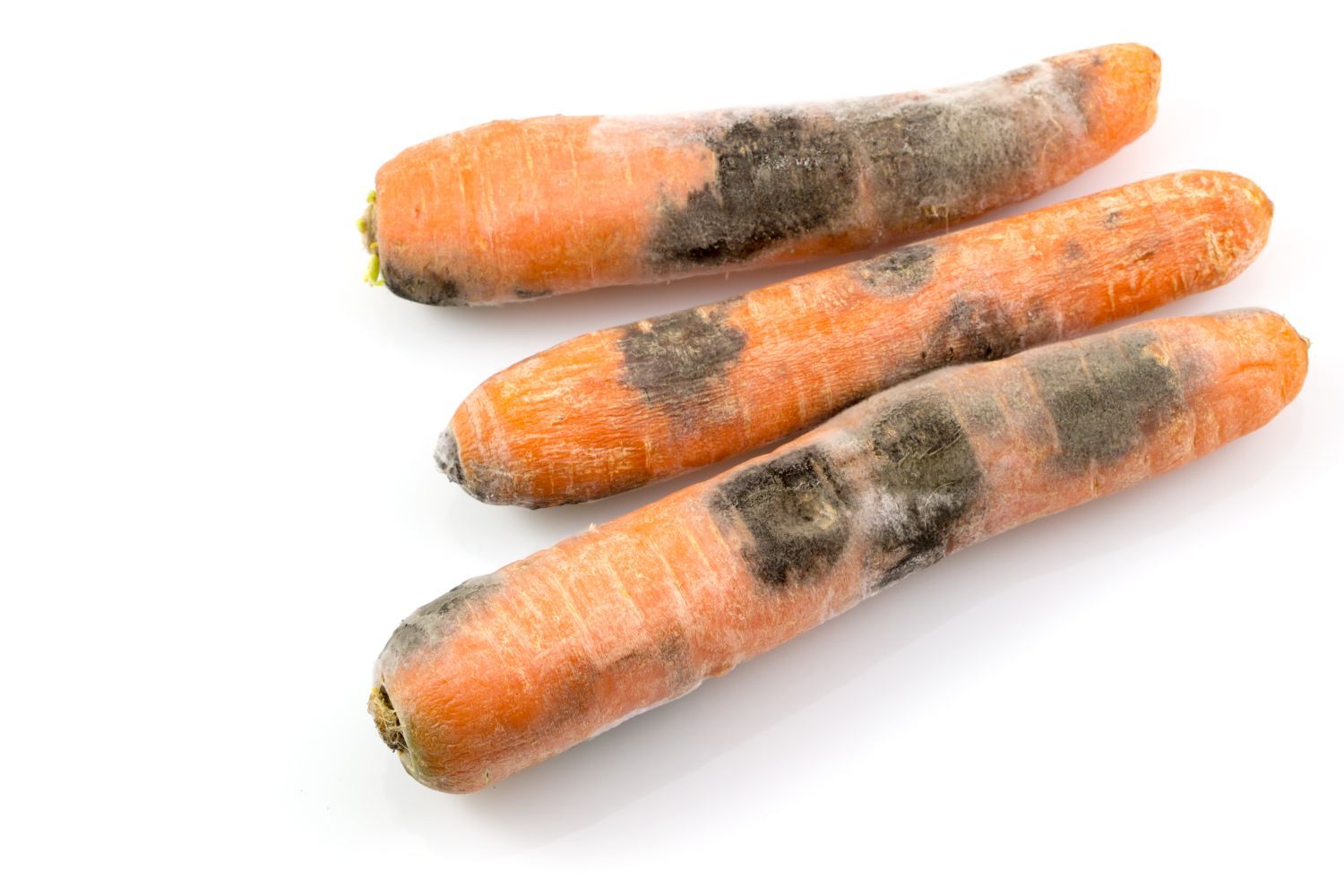
Carrot black rot is a fungal disease that primarily affects the crown and root tissues of carrot plants at any growth stage. The disease gets its name from the characteristic dark, sunken lesions that appear on affected plants. What makes this disease particularly concerning is its ability to develop during the growing season and continue progressing through the storage period, sometimes rendering entire storage batches unusable.
The economic impact of black rot extends beyond just lost carrots. The affected roots are unmarketable, more monitoring is imposed in the storage facilities and growers impose more intensive disease management practices. The disease has been found all over the world wherever carrots are grown either commercially or just home gardens thus it is a concern to carrot producers in different climates.
It occurs most intensely during wet and cool or moderately warm seasons. The greatest risk comes with spring planting and fall harvest in regions of rainfall consistency, or irrigated fields where overhead irrigation systems maintain constant wetness on the foliage.
Understanding the Pathogen Behind Black Rot
Alternaria radicina is a soil-and plant debris-inhabiting fungus. It is waterborne and soil-borne, besides being seed-borne; it can also be carried on implements used in farming operations from one field to another. The fact that this particular species does not require an entry point or wound but can penetrate directly through healthy tissue makes it more difficult to manage than most other diseases.
The life cycle of Alternaria radicina begins when spores land on carrot foliage or enter the crown area. Under favorable conditions of moisture and warmth, these spores germinate and the fungus begins colonizing plant tissues. The pathogen produces special structures called xylanase enzymes that help break down plant cell walls, allowing deeper infection.
Where this fungus survives is crucial for long term management. Alternaria radicina persists in soil for extended periods and can survive on carrot debris left in fields or compost piles. Infected seeds are another major source of inoculum, which is why seed quality and treatment matter so much for disease prevention.
Identifying Black Rot Symptoms Early
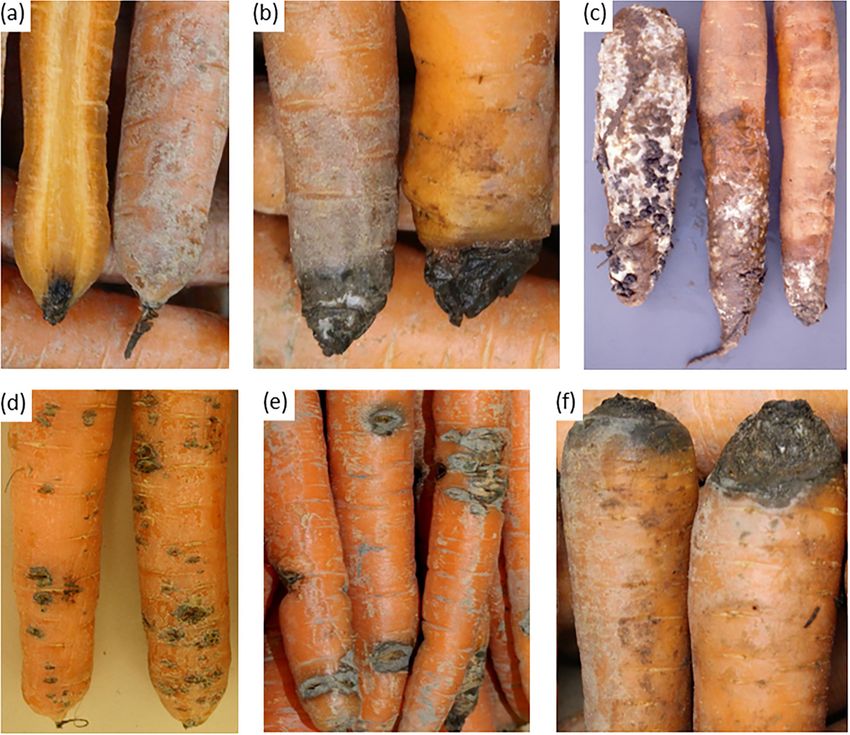
Early detection gives the best chance to control its spread. The first symptoms are small dark brown to black spots on the leaves with a distinctive lesion having concentric rings, almost a target pattern, which makes it possible to differentiate black rot from other diseases of carrots.
With the advanced stage of infection, symptoms are apparent at the crown area (top of the root, where petioles are attached). The crown becomes dark and may be sunken. This crown rot is very destructive because it means that the fungus has already attacked the root tissues; hence, it will be difficult to prevent its spread to the whole root.
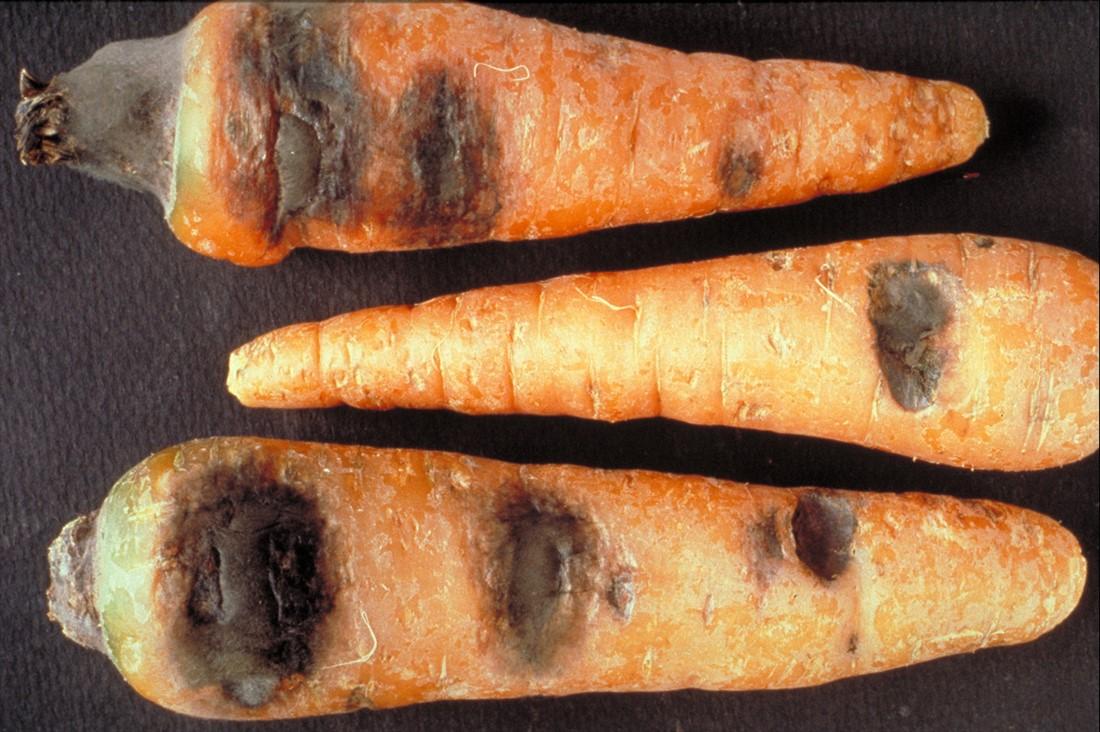
On the actual carrot root, black rot appears as dark brown to black, sunken lesions. These can begin at any point on the surface of the root but commonly occur in the shoulder area near the crown. The tissue then becomes soft and may give an offensive smell due to secondary bacteria occupying the damaged area.
Most visible symptoms of black rot areStorage stage is where the disease often becomes most visible. Carrots that appeared totally healthy at harvest can, during storage, suddenly rapidly rot with lesions expanding quickly and spreading to adjacent roots-healthy-at-harvest appearing carrots become obvious because this characteristic makes careful post investment inspection and storage conditions critical to protecting your investment.
Contributing Factors That Promote Disease Development
Environmental conditions play a gigantic role in whether black rot becomes a problem in your carrot patch. The disease favors cool, wet conditions of about 50 to 70 degrees Fahrenheit. This high humidity and leaf wetness-from rain or irrigation-provides the moisture demand for spore germination and infection.
Soil moisture deserves special attention because it directly impacts disease development. Soil moisture is directly related to the development of the disease, therefore, deserves special attention. Over-watering carrot soils allow the roots to become stressed; hence a quick attack and infection by the pathogen. A poorly drained soil area adds up to the problem since it keeps the soil saturated with water-ideal conditions for this pathogen to come in strong on weakness imposed by waterlogged plants.
Your method of irrigation is far more important than you may have thought. Overhead irrigation that wets foliage, particularly when applied in evening hours, creates extended periods of leaf wetness that favor spore germination. These wet conditions can persist for hours, giving Alternaria radicina plenty of opportunity to infect your crop.
Plant stress from any source increases susceptibility. Nutritional deficiencies, pest damage, or crowding that restricts air circulation all weaken plant defenses and make infection more likely. A stressed carrot plant cannot mount effective resistance against the invading fungus.
Prevention Strategies That Really Work
The most effective approach to black rot management emphasizes prevention because stopping the disease before it starts beats trying to control it once your crop is infected. Start with disease free seed from reputable suppliers who use rigorous seed testing protocols. Many seed companies offer seed that has been chemically or biologically treated to eliminate Alternaria radicina contamination.
Crop rotation stands as one of your strongest tools against this fungal pathogen. Since Alternaria radicina survives in soil and plant debris, growing carrots in a different location each year prevents pathogen buildup. A rotation of at least three years away from carrot family crops in the same soil dramatically reduces disease pressure.
Resilient carrots, healthy carrots. A little tweak in the way we manage our soils shall make a big difference to carrot health and resilience. Ensure good drainage because carrots do not like wet feet; add compost, peat moss or well-rotted manure to heavy clay soils so that water can move through them more freely.Calcium for cell strength! Maintain adequate levels of calcium in your soil since it is involved in forming strong cell walls within plants making them less susceptible to infections.
Change your method of irrigation to drip systems that directly water the soil beneath plants instead of wetting their foliage. In case you have no option but to use overhead irrigation, then apply it early enough in the morning so that foliage can dry within a short time. Do not time your irrigation such that it leaves the leaves wet during late evening hours when most fungal spores germinate.
Sanitation practices prevent disease spread between fields and seasons. Clean farming equipment with hot water before moving between fields, disinfect storage facilities before bringing in harvested carrots, and remove and destroy carrot residues promptly. These simple steps eliminate many opportunities for the fungus to survive and spread.
Select varieties with genetic resistance when available. Some carrot cultivars show better tolerance to black rot than others. Your local extension service can recommend resistant varieties proven to perform well in your region.
Treatment Solutions for Active Infections
Early detection combined with prompt action gives you the best chance of limiting black rot damage. If you spot symptoms on growing plants, remove and destroy affected foliage immediately to prevent spore spread. This rapid response can slow disease progression significantly.
FThis quick response can significantly delay the development of the disease.
Fungicides are to be applied when conditions favor rapid development of the disease or in a situation where symptoms have occurred in spite of all preventive measures. Fungicides which are effective against Alternaria radicina attacking foliage and crown of carrots should be applied at regular intervals either slightly before appearance of the disease or on first observation of its symptoms , strictly following all label directions.
Organic gardeners have options too. Copper based fungicides provide some control of black rot when applied preventively. Biological agents containing beneficial microorganisms can offer suppression of the pathogen. Sulfur applications work best in cooler weather and help reduce fungal populations on leaf surfaces.
Timing matters enormously with fungicide applications. Begin applications before disease appears if weather conditions are favorable for infection. Continue applications at recommended intervals throughout the growing season to maintain protective coverage.
Plantlyze can help you make informed treatment decisions by providing real time disease identification through its AI powered plant diagnosis system. Simply photograph your carrot plants and upload the image to Plantlyze at plantlyze.com to get instant confirmation of whether black rot is actually present and receive tailored management recommendations.
Managing Black Rot During Storage
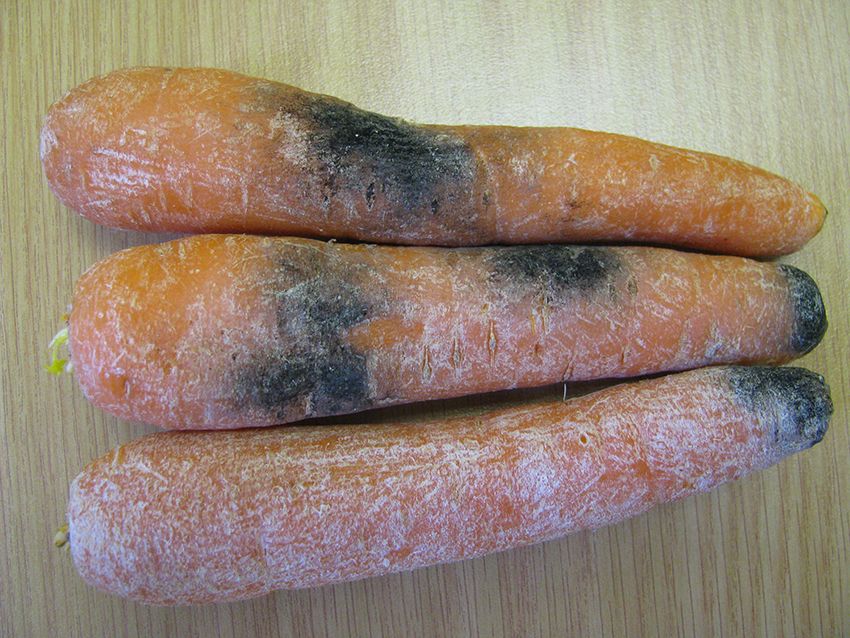
Storage management determines whether your harvest remains healthy or deteriorates rapidly after picking. Start with careful pre-harvest and harvest practices that minimize injury. Cracked, bruised, or cut carrots are far more susceptible to rot development, so handle carrots gently from field through storage.
Inspect carrots thoroughly before storage and remove any showing black rot symptoms or suspicious lesions. This culling step prevents introducing infected roots that will spread disease to healthy carrots during storage. Don't skip this step thinking diseased carrots will improve in storage; they won't.
Temperature control is critical for storage success. Store carrots at temperatures between 32 and 40 degrees Fahrenheit to slow fungal growth. At these cool temperatures, black rot development slows dramatically even if some spores are present on the roots.
Humidity management goes hand in hand with temperature control. Maintain humidity between 90 and 95 percent to prevent carrot shriveling while avoiding excessive moisture that promotes rot. Condensation on stored carrots indicates too much humidity and risk of disease spread.
Regular inspection throughout storage catches developing problems early. Check stored carrots weekly for signs of rot development or spreading lesions. Remove any carrots showing new symptoms to prevent them from infecting their neighbors.
Sanitation of storage facilities prevents carrot to carrot disease transmission. Clean storage structures thoroughly before use, disinfect with bleach solutions or commercial disinfectants, and repair any damage that could harbor fungal spores.
Using Plantlyze for Disease Management
Staying ahead of carrot diseases requires confidence in accurate diagnosis. Plantlyze is an AI powered plant care and diagnosis tool that helps you identify diseases like black rot in real time. Rather than guessing whether leaf spots signal black rot or another condition, you can photograph your plants and get instant AI powered analysis that confirms your diagnosis.
Regular monitoring with Plantlyze throughout your growing season catches problems early when intervention is most effective. Upload photos of your carrot foliage monthly to track plant health and catch disease before symptoms become severe. This proactive approach means you'll implement treatments before your crop suffers significant damage.
Visit plantlyze.com to start protecting your carrots with precision diagnosis today. The tool's simple interface requires just a photo and provides expert level disease identification in seconds.
Moving Forward with Confidence
Carrot black rot doesn't have to derail your gardening ambitions. Understand the infection process and catch it early, together with some effective prevention methods, your carrots will be happy and healthy from planting all the way to storage. Begin with clean seed, rotate crops, improve your irrigation technique practicing great hygiene- black rot has very little chance without all its predisposing factors.
Where diseases develop in spite of all control and preventive measures, their prompt detection and immediate remedial action will check them from spreading widely. This implies regular observation or monitoring of the crop to enable any problem to be detected at an early stage when it is still easy to manage. Good storage practice that involves keeping harvested carrots cool with high relative humidity ensures healthy carrots for the entire season up to consumption.
Remember that preventing black rot is far easier and more economical than managing an active infection. Focus your energy on creating conditions where your carrots thrive and the pathogen cannot. With knowledge and the right tools at your disposal, you'll successfully overcome this challenge and harvest carrots that make your gardening efforts worthwhile.
References
1. PubMed Central (NIH)
Alternaria radicina; unveiling the cause, spread, and molecular mechanisms
https://pmc.ncbi.nlm.nih.gov/articles/PMC11719364/
2. PubMed (National Library of Medicine)
Alternaria radicina xylanase is required for the occurrence of carrot black rot disease
https://pubmed.ncbi.nlm.nih.gov/40451480/
3. UC IPM Program (University of California)
Carrot Pest Management Guidelines
https://ipm.ucanr.edu/agriculture/carrot/
4. PubMed (NIH)
Complete genome sequence of the carrot black rot pathogen
https://pubmed.ncbi.nlm.nih.gov/37871854/
5. Cornell University
Organic Production and IPM Guide for Carrots
https://ecommons.cornell.edu/bitstream/handle/1813/42892/2016-org-carrots-NYSIPM.pdf