Introduction
Carrots are among the most valuable vegetable crops worldwide, but they face numerous threats from fungal diseases. One disease that can significantly impact your carrot harvest is alternaria leaf blight, caused by the pathogen Alternaria dauci. If left unchecked this fungal disease can destroy entire crops all over yield substantial losses and economic damage to growers in any region. The good news is that with proper understanding and management practices, you can protect your carrot plants and keep healthy harvests. This is a comprehensive guide on recognition, prevention, and management of carrot alternaria leaf blight disease.
What Is Alternaria Leaf Blight?
Alternaria leaf blight is a fungal disease that specifically targets carrot plants and represents one of the most significant threats to commercial and home carrot cultivation worldwide. The disease is caused by the fungus Alternaria dauci, a pathogen that was first documented in Germany in 1855. This fungal disease has since spread globally and is now found wherever carrots are commercially cultivated.
The pathogen attacks the foliage of carrot plants rather than the roots, meaning the damage occurs primarily on the leaves and stems. Alternate to certain other carrot diseases, alternaria leaf blight does not directly attack the edible root part but severe defoliation can drastically reduce its ability to fully fill out quality carrots within the plant. The fungus thrives best under specific environmental conditions and can quickly move through a field of carrots when those conditions exist. Understanding what this disease is all about forms the first critical step toward keeping your crops safe and having successful harvests season after season.
Recognizing the Symptoms: Initial Signs to Watch For
Early detection of alternaria leaf blight is crucial for successful disease management. The key to catching this disease before it becomes severe is learning to recognize the early warning signs in your carrot fields or garden. The first symptoms typically appear as small, greenish brown lesions on the lower, older leaves of the carrot plant. These initial lesions are often the size of a pinhead or slightly larger and may go unnoticed by casual observers.
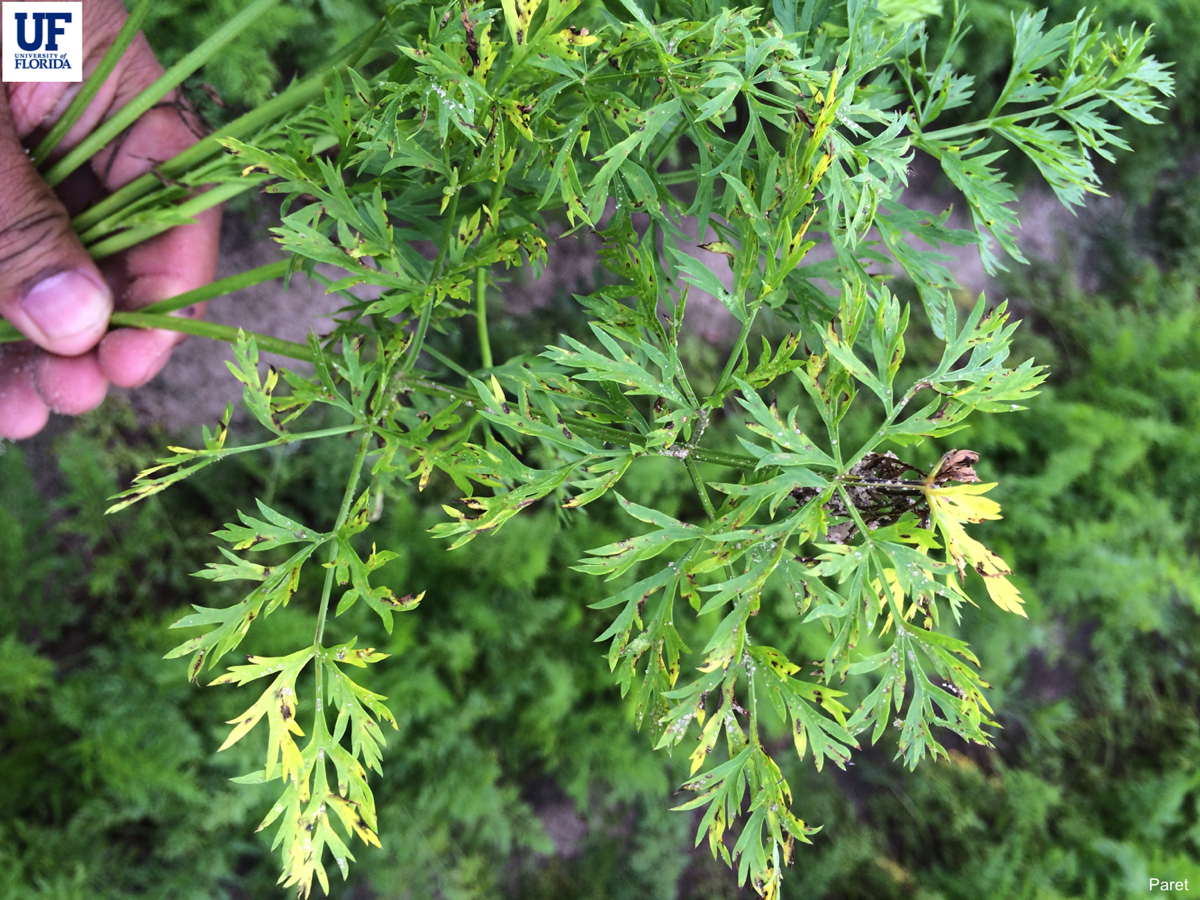
As the disease progresses over the first week or two, the lesions become more distinctive and easier to identify. The lesions develop a characteristic appearance with concentric rings that give them a target-like or bullseye pattern. These distinctive patterns are one of the hallmark features that help growers distinguish alternaria leaf blight from other leaf diseases affecting carrots. Around the lesions, you may notice a yellow halo, which indicates that the fungal infection is beginning to affect the plant tissue beyond the visible lesion itself.
Another important early symptom is a water soaked appearance on the affected leaf areas, particularly when humidity levels are high or dew is present on the plants. This water logged appearance often precedes the formation of visible lesions and can serve as an early warning that infection has occurred.
Advanced Stage Indicators
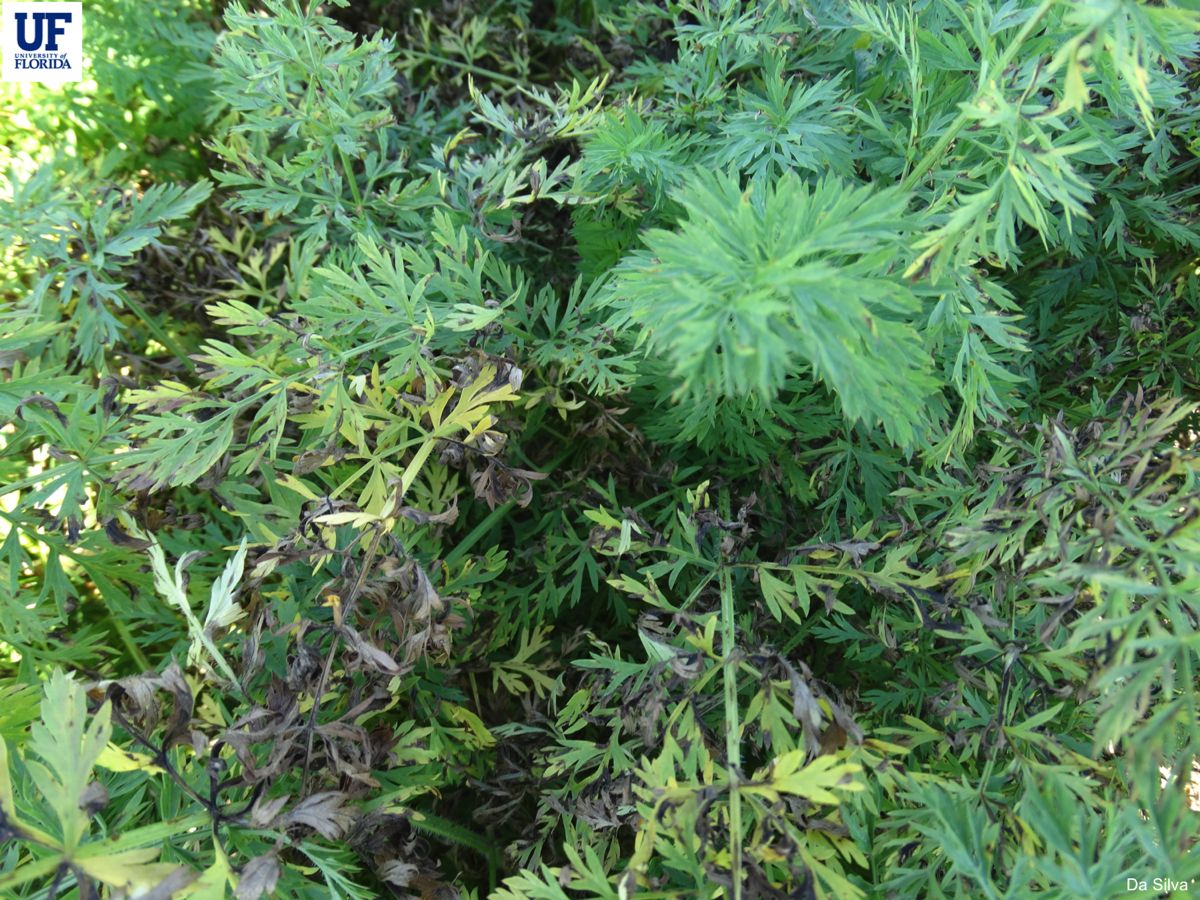
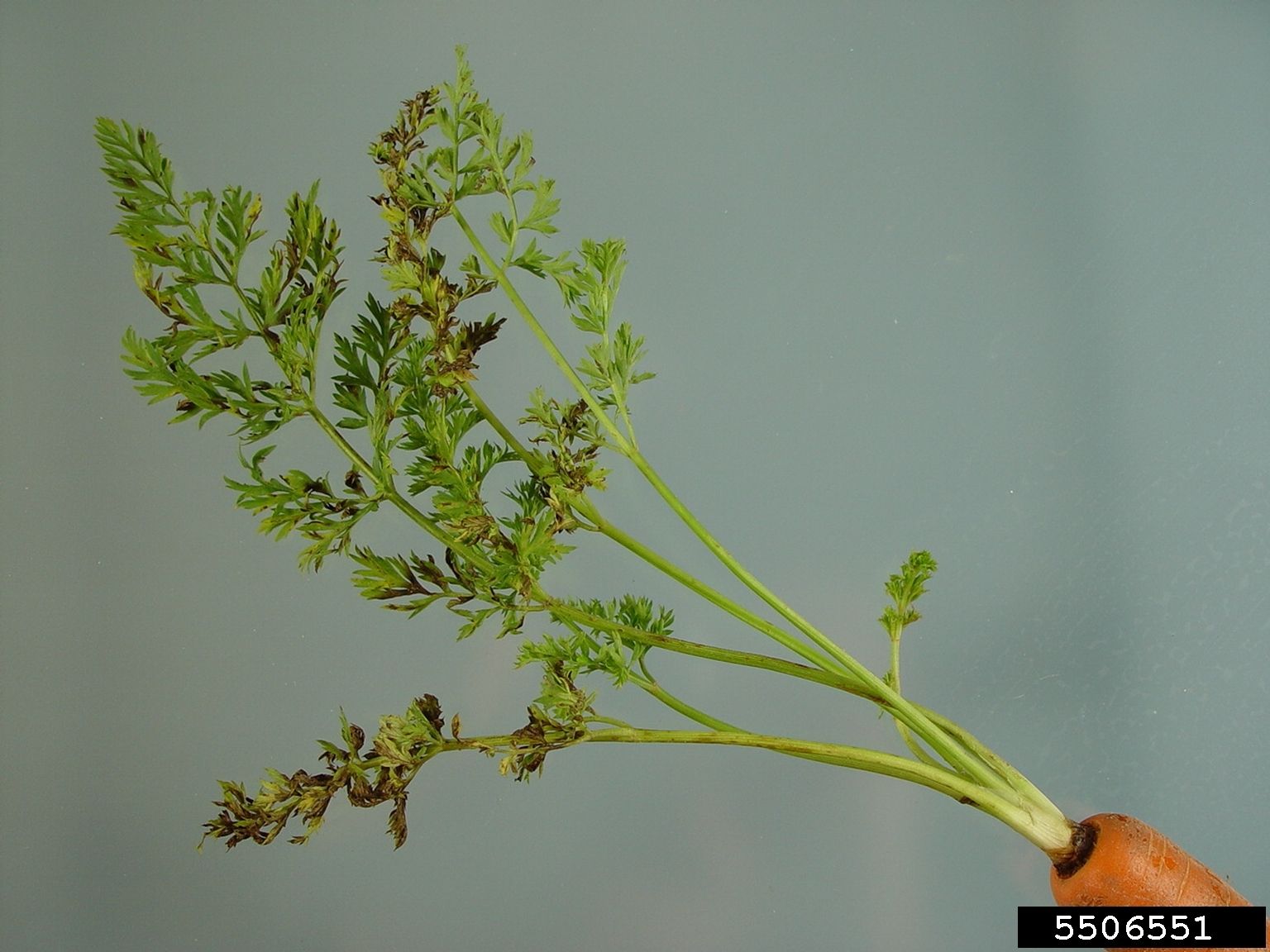
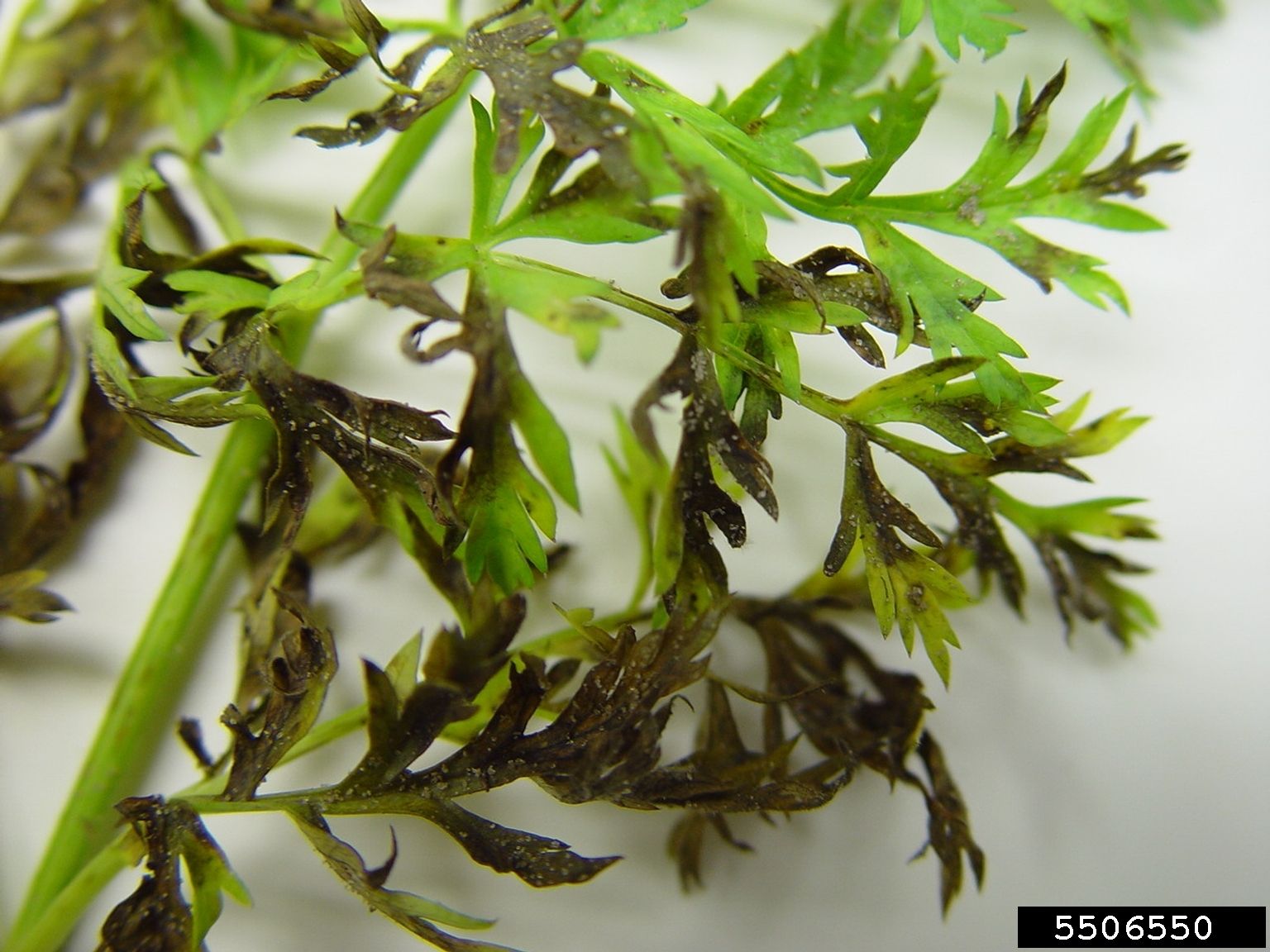
As the disease progresses without intervention, the symptoms become much more severe and visually obvious. The lesions enlarge and may coalesce together, eventually covering large portions of individual leaves. The affected leaf tissue takes on a burnt or scorched appearance as large areas become necrotic and die. The leaves may turn brown and eventually yellow before dropping from the plant entirely.
In advanced stages of the disease, severe defoliation occurs as leaves are killed by the fungal infection and drop to the ground. This defoliation can progress from the lower canopy upward, progressively stripping the plant of its photosynthetic capacity. When defoliation becomes severe enough, the plant loses the ability to produce and accumulate sugars in the root, resulting in poor quality carrots that are smaller than normal and often unmarketable.
Not only do you see damage on the leaves, but you may also notice the fungal lesions appearing on the petioles (leaf stems) and the main plant stems as well. These infections on stems and petioles can be particularly damaging because they can girdle the stem, cutting off nutrient and water flow to the upper portions of the plant.
Understanding the Disease Lifecycle and How It Spreads
Understanding how the disease transmits from one plant to another and between seasons will help you know when to implement prevention strategies. It shall also make you realize why certain management practices are important, thereby enhancing your general alternaria leaf blight control knowledge.
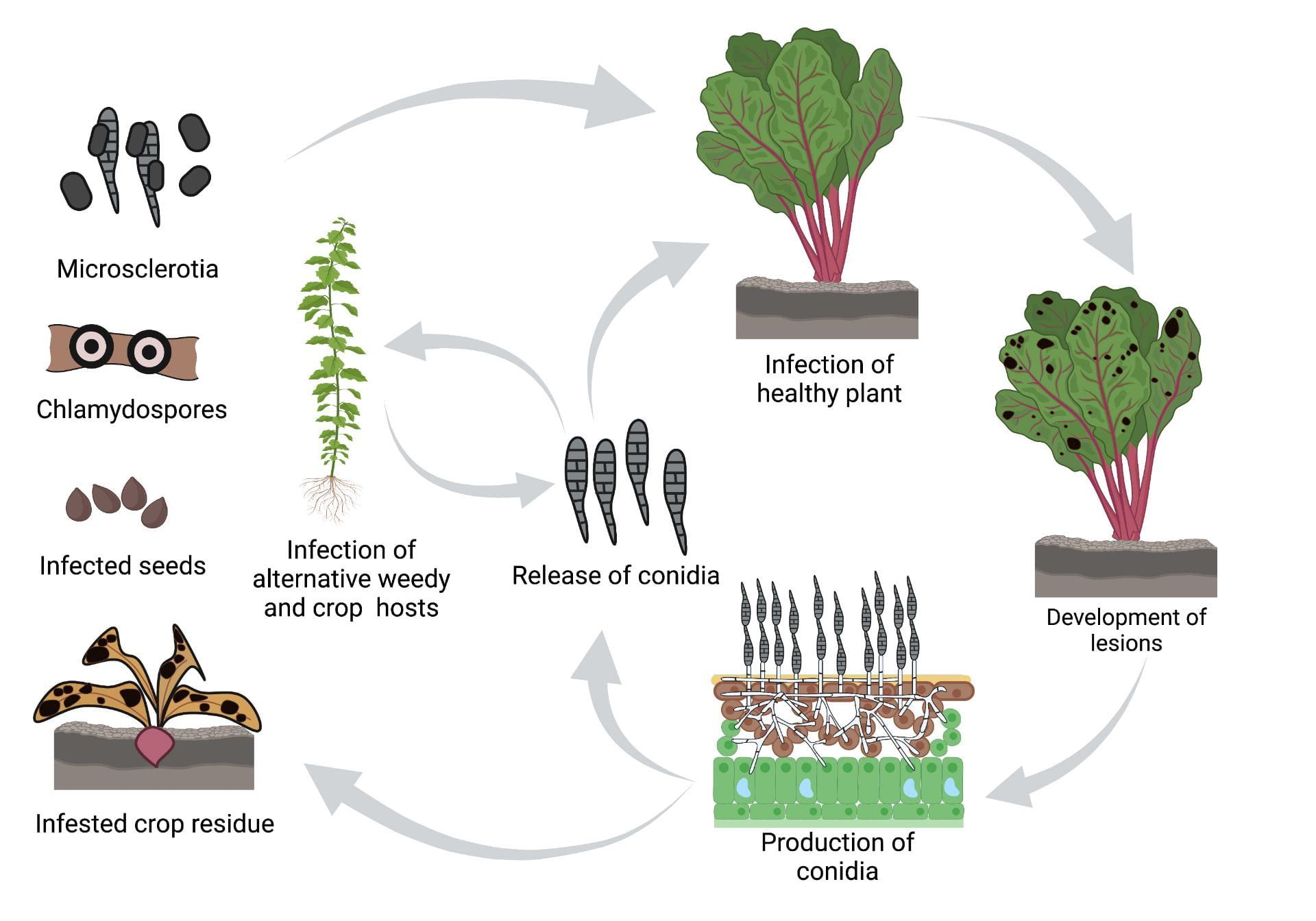
The fungus of Alternaria dauci overwinters in infected crop debris, carrot leaves and stems are left in the field after harvest. The fungal spores remain viable within this debris for a long time, up to 52 weeks in residue. This means that if you fail to properly remove or destroy infected plant material, the fungus can persist in your field throughout the winter and early spring, creating a reservoir of infection for the next crop.
When conditions become favorable and a new carrot crop is planted nearby, the fungus begins producing spores. These spores are known as conidia, and they are the infectious units that spread the disease. The spores are extremely tiny. They can be carried by water or by air currents or insects. Water is one of the most important means for its dispersal, since it moves with rain splash or overhead irrigation from an infected leaf to a healthy one through morning dew on plant leaves. Spores can also be carried by wind over longer distances, though this is typically less important than water splash for short distance dispersal.
Once a spore lands on a healthy carrot leaf, infection does not occur immediately. Rather, the spore must germinate, and the fungus must penetrate the leaf's protective waxy coating. This infection process requires specific conditions. Research has shown that infection requires incubation at temperatures between 16 and 28 degrees Celsius (approximately 61 to 82 degrees Fahrenheit) with 100 percent relative humidity and leaf wetness lasting at least 24 hours. If these conditions exist in your field, infection will likely occur.
Once infection occurs, the fungus grows inside the leaf tissue and begins producing new spores. This process typically takes about 8 to 10 days after infection. These newly produced spores then become the source for spreading the disease to other leaves on the same plant and to neighboring plants. A single infected leaf can produce enormous numbers of spores, which explains why the disease can spread so rapidly through a field once it becomes established.
Contaminated carrot seed is another important source of initial infection. If your planting seed is infected with Alternaria dauci, the disease may be present on the seed coat or even internally within the seed tissue. This seed borne inoculum can germinate along with the carrot seed and infect the young seedlings as they emerge.
Environmental Conditions That Favor Disease
The fungus clearly prefers moderate to warm temperatures. The optimal temperature for both infection and spore production is around 25 degrees Celsius (77 degrees Fahrenheit). However, the fungus can survive and reproduce across a range of temperatures, with the minimum temperature for spore production being about 8 degrees Celsius and the maximum being somewhat higher.
Humidity and leaf wetness are absolutely critical for this disease. The fungus requires free water on the leaf surface for both spore germination and penetration into the leaf. This is why overhead irrigation systems that wet the plant foliage in the evening can dramatically increase disease pressure. Similarly, periods of high humidity combined with dew formation or light rain create ideal conditions for rapid disease spread.
Interestingly, research shows that disease severity actually increases during periods of cooler temperatures combined with high humidity in the fall months. This means that late season carrot crops can be particularly vulnerable to severe alternaria leaf blight infections as autumn conditions develop.
Factors That Increase Your Disease Risk
Not all carrot fields develop serious alternaria leaf blight problems, even in years when the pathogen is present in the area. Understanding which factors increase your risk helps you prioritize your management efforts on your most vulnerable crops.
Environmental Risk Factors
Geographic location and local climate significantly influence your disease risk. If you are located in regions with moderate to warm temperatures and relatively high humidity during the growing season, your disease pressure will naturally be higher. Coastal areas, regions with frequent fog, and areas that receive significant rainfall during the growing season all face higher risks. Conversely, dry, arid regions typically experience much lower disease pressure from alternaria leaf blight.
The specific season also matters tremendously. Carrot crops planted in spring and harvested in summer typically face less severe disease pressure than crops planted for fall harvest. This is because the cooler, more humid conditions of autumn are more favorable for the fungus. If you are a fall harvest focused grower, understand that your risk is inherently higher and plan your management strategies accordingly.
Management Practices That Increase Risk
Several management decisions can inadvertently increase your alternaria leaf blight pressure. One of the most significant is the use of overhead sprinkler irrigation systems. While overhead irrigation provides excellent water distribution, it also keeps the plant foliage wet, creating the exact conditions the fungus loves. Switching to drip or furrow irrigation systems is one of the most effective management changes you can make to reduce disease pressure.
Poor crop spacing that results in dense plant populations creates a microenvironment of high humidity within the plant canopy. This humidity allows the disease to flourish. Similarly, excessive nitrogen fertilization promotes dense, succulent foliage that is highly susceptible to fungal invasion. A balanced fertility program that maintains adequate but not excessive nitrogen is important.
Failing to remove infected crop residue from your fields is perhaps the most significant management mistake. If you leave infected carrot debris in the field after harvest, you are essentially maintaining a fungal inoculum source right there in your production area. The fungus will overwinter in this debris and be ready to infect your next crop.
Finally, insufficient crop rotation allows the pathogen to persist in your field year after year. If you grow carrots in the same field annually or in consecutive years, you will have progressively worse disease problems. Rotating to unrelated crops for at least one year is essential.
Integrated Disease Management Approach
Successful management of alternaria leaf blight requires a comprehensive, integrated approach that combines multiple strategies. No single tactic will completely eliminate the disease, but combining several approaches will minimize your losses and keep the disease manageable.
Prevention as Your First Line of Defense
The most cost effective disease management begins before planting. Always start with clean, certified seed from reputable sources. Certified seed is tested and verified to be free of Alternaria dauci pathogens. Using non certified seed of unknown quality is an invitation to problems.
Selecting disease resistant carrot varieties is one of your most powerful management tools. Several commercial carrot varieties offer resistance to alternaria leaf blight. Bolero and B5280 are two excellent commercial cultivars that have demonstrated clear resistance to Alternaria dauci. Bolero specifically offers multiple disease resistances including alternaria leaf blight, bacterial leaf blight, cercospora leaf spot, cavity spot, and powdery mildew. Other resistant or intermediate resistant varieties include Valor, Presto, Apache, Siroco, Purple 68 F1, Maverick F1, Malbec, Miami F1, Orange Blaze, Ruby Queen, and Soprano. Consult with your seed supplier about which resistant varieties are best suited to your specific growing region and market requirements.
Implementing proper crop rotation is equally essential. Do not grow carrots in the same field in consecutive years. Rotating to unrelated crops such as grains, legumes, or brassicas will break the disease cycle. Most research indicates that one year of rotation is the minimum, though two years is better when possible. This practice allows any remaining fungal inoculum to deteriorate naturally over time.
Cultural Practices for Disease Reduction
How you grow your carrots has a massive impact on disease severity. One of the most important changes you can make is switching from overhead irrigation to drip or furrow irrigation systems. This single change removes the favorable moisture conditions the fungus requires. If overhead irrigation is your only option, schedule irrigation for early morning when dew will dry quickly rather than evening when leaf wetness will persist through the night.
Beyond irrigation, proper crop spacing is critical. Space plants to allow adequate air movement through the canopy. Good air circulation reduces humidity levels within the canopy and allows plant foliage to dry more quickly after rain or irrigation. This reduces both the duration and frequency of free water on leaves.
Maintain balanced soil fertility, paying particular attention to nitrogen levels. Excessive nitrogen promotes tender, succulent growth that is particularly susceptible to fungal attack. Follow soil test recommendations and avoid over fertilizing. Many growers find that applying potassium can improve plant resistance to the disease, so ensure your potassium levels are adequate.
Timely removal of infected leaves can reduce disease spread. Early in the disease development, you can manually remove infected lower leaves and dispose of them in a way that prevents spores from spreading. This labor intensive approach works best on small scale operations. For large commercial fields, this may not be practical.
Thoroughly clean equipment between fields. The fungal spores can travel on soil and plant material stuck to harvesting equipment, tillage implements, and other machinery. Washing equipment or moving through a clean zone between fields prevents moving infected material from one location to another.
Excellent sanitation at the end of the season is absolutely essential. After harvest, remove all carrot debris from your field. Do not leave infected plant material in the field over winter. Either remove the material completely, incorporate it deeply into the soil where it can decompose, or completely destroy it. This practice eliminates the primary survival mechanism for the pathogen.
Fungicide Applications: Timing and Selection
When cultural practices alone are insufficient, fungicide applications become necessary. Understanding when and how to apply fungicides correctly maximizes their effectiveness and helps prevent the development of fungicide resistance.
Begin monitoring your carrot fields regularly once the plants are established. Early symptoms may appear on lower leaves first, so examine the lower canopy carefully. Begin fungicide applications before disease becomes widespread. Research has shown that starting fungicide sprays when disease incidence reaches about 25 percent is a reasonable threshold for intervention.
Several fungicides have proven effective against Alternaria dauci. Chlorothalonil (Bravo) is a broad spectrum contact fungicide that has been used successfully for many years. Mancozeb (Dithane) is another contact fungicide that provides good disease control. Azoxystrobin (Amistar) is a strobilurin fungicide that provides both protective and curative activity. Difenoconazole (Score) is a demethylation inhibitor (DMI) fungicide that offers excellent disease control, though caution must be used to prevent resistance development.
Iprodione (Rovral) is another option of DMI fungicide available in most areas. These fungicides differ from each other in mode of action, efficacy as well as the toxicity profile. Consult your local agricultural extension office or crop consultant to know which fungicides are appropriate for your specific situation and region.
The key to maintaining effectiveness is never applying the same fungicide or any fungicide with the same mode of action twice in succession. Always ensure a different active ingredient and mode of action whenever changing products. For example, an application of azoxystrobin should be followed by chlorothalonil, then difenoconazole before returning to azoxystrobin. This rotation prevents the fungus population from developing resistance to any particular fungicide class.
Apply fungicides thoroughly to ensure complete coverage of the plant foliage, including both leaf surfaces. Proper spray coverage is critical for effectiveness. Apply fungicides every 10 to 14 days depending on environmental conditions and disease pressure. During periods of high humidity and frequent rain, more frequent applications may be necessary.
Organic and Alternative Management Methods
For organic growers or those preferring to minimize synthetic fungicide use, several alternative methods show promise. Essential oils, particularly oregano oil, have demonstrated effectiveness against Alternaria dauci. These can be applied as sprays according to product directions.
Biocontrol organisms offer another approach. Bacillus subtilis is a bacterium that produces compounds inhibiting fungal growth and has shown effectiveness for alternaria leaf blight management. Trichoderma species, particularly Trichoderma harzianum and Trichoderma atroviride, are fungi that produce enzymes degrading fungal cell walls and can enhance plant defenses against alternaria infection.
Research has also identified certain plant resistance inducing biopesticide products that enhance the plant's own defense mechanisms. Products like Bion, Sonata, and Rhapsody have shown effectiveness in protecting carrots against alternaria leaf blight through this mechanism. These products work by triggering the plant's systemic acquired resistance, essentially training the plant to defend itself more effectively against infection.
Plant extracts including garlic extract and neem oil have traditional use and some scientific support for disease management. These alternatives may not provide complete disease control on their own but can be valuable components of an integrated management program.
Diagnostic Tips and When to Take Action
Accurate diagnosis ensures you are taking the right management actions for the actual problem in your field. While alternaria leaf blight has characteristic symptoms, other carrot diseases can produce similar looking damage, so careful observation is important.
Early Detection Saves Your Crops
The most critical factor in successful disease management is early detection. Scout your carrot fields regularly, at least weekly during the growing season. Walk through your fields, carefully examining plants, and paying special attention to the lower canopy where symptoms typically appear first. Look for the characteristic target-like lesions with concentric rings and yellow halos that typify alternaria leaf blight.
Do not confuse alternaria leaf blight with cercospora leaf blight, another fungal disease of carrots. Cercospora lesions are typically smaller and lack the prominent concentric rings characteristic of alternaria. Cercospora also tends to produce more angular lesions, while alternaria lesions are more circular.
Early action is far more effective than waiting until disease is widespread. Once the disease reaches 50 or 60 percent of the foliage, management becomes much more difficult and losses become inevitable. Catching the disease at 10 to 25 percent disease incidence puts you in control of the situation.
If you are uncertain about disease identification, take samples of affected plant material and consult with your local agricultural extension office or use Plantlyze, an AI powered plant care and disease diagnosis tool available at plantlyze.com. Plantlyze provides instant disease identification and management recommendations, helping you confirm that you are dealing with alternaria leaf blight and get specific guidance tailored to your situation.
Conclusion
Carrot alternaria leaf blight is a devastating disease of carrots worldwide. However, integrated management can control the disease if properly understood and implemented. Certified clean seed, resistant varieties such as Bolero or B5280, proper crop rotation and irrigation management with good field sanitation throughout the season-all these practices set up success for more advanced levels of integrated alternaria management.
When disease pressure is high or cultural practices alone are insufficient, well-timed fungicide applications using properly rotated products will provide effective control. For organic growers, biocontrol organisms and plant resistance inducers offer viable alternatives. The key is starting with prevention, monitoring your crops regularly, and taking action promptly when the disease appears.
By implementing the strategies outlined in this guide, you will protect your carrot harvests, maintain productivity, and keep alternaria leaf blight from becoming a limiting factor in your production. Remember that each field and each season presents unique conditions, so be flexible in your approach and adjust your strategies based on what you observe. Get instant disease confirmation and customized management recommendations with Plantlyze at plantlyze.com, your AI powered partner in protecting carrot crops from fungal diseases.