We have all been there. You spend months nurturing your tomato seedlings from tiny sprouts. You water them, stake them, and watch with pride as the first green fruits appear. You wait patiently for that perfect shade of red. Finally, the day comes to harvest your first prize tomato. You reach into the foliage, pull the fruit gently from the vine, and turn it over.
Your heart sinks.
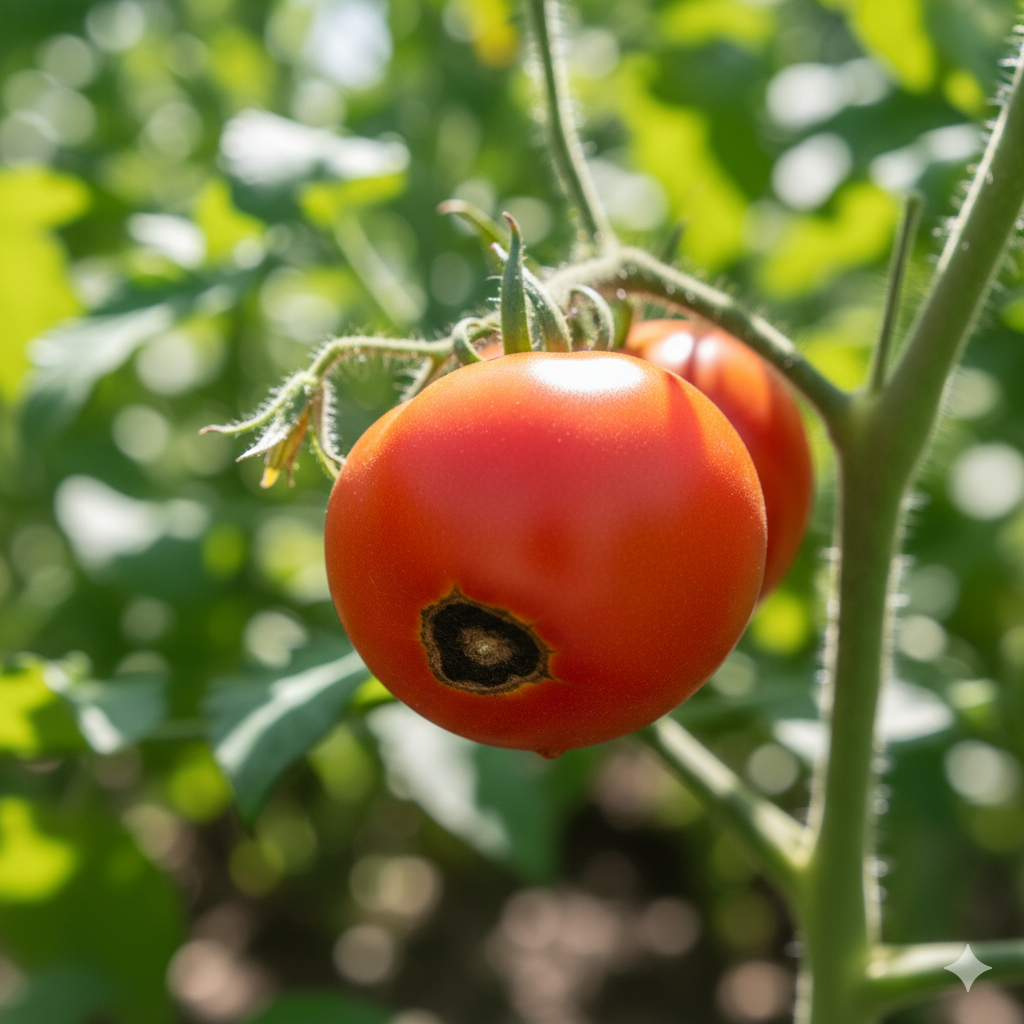
The bottom of the tomato is not red and round. It is flattened, black, and leathery. It looks like someone burned it with a cigar. This is the heartbreak of the summer garden, and every grower faces it at some point. It feels personal, like you failed your plants, but the reality is quite different.
This condition is called Blossom End Rot.
Before you panic and rip out your plants, take a deep breath. This is not a virus that will wipe out your entire garden. It is not a fungus that will spread to your cucumbers or peppers. It is a physiological disorder, which is just a fancy way of saying your plant is stressed out and hungry for a specific nutrient. It is fixable, and you can still have a fantastic harvest this season.
If you are looking at your plants right now and feeling unsure if this is actually blossom end rot or something scarier like blight, you do not have to guess. You can snap a quick photo using Plantlyze. It is an incredibly smart AI powered tool that analyzes plant symptoms instantly. It can tell you in seconds if you are dealing with a nutrient issue or a disease, giving you peace of mind immediately.
Identifying the Symptoms: Is It Really Blossom End Rot?
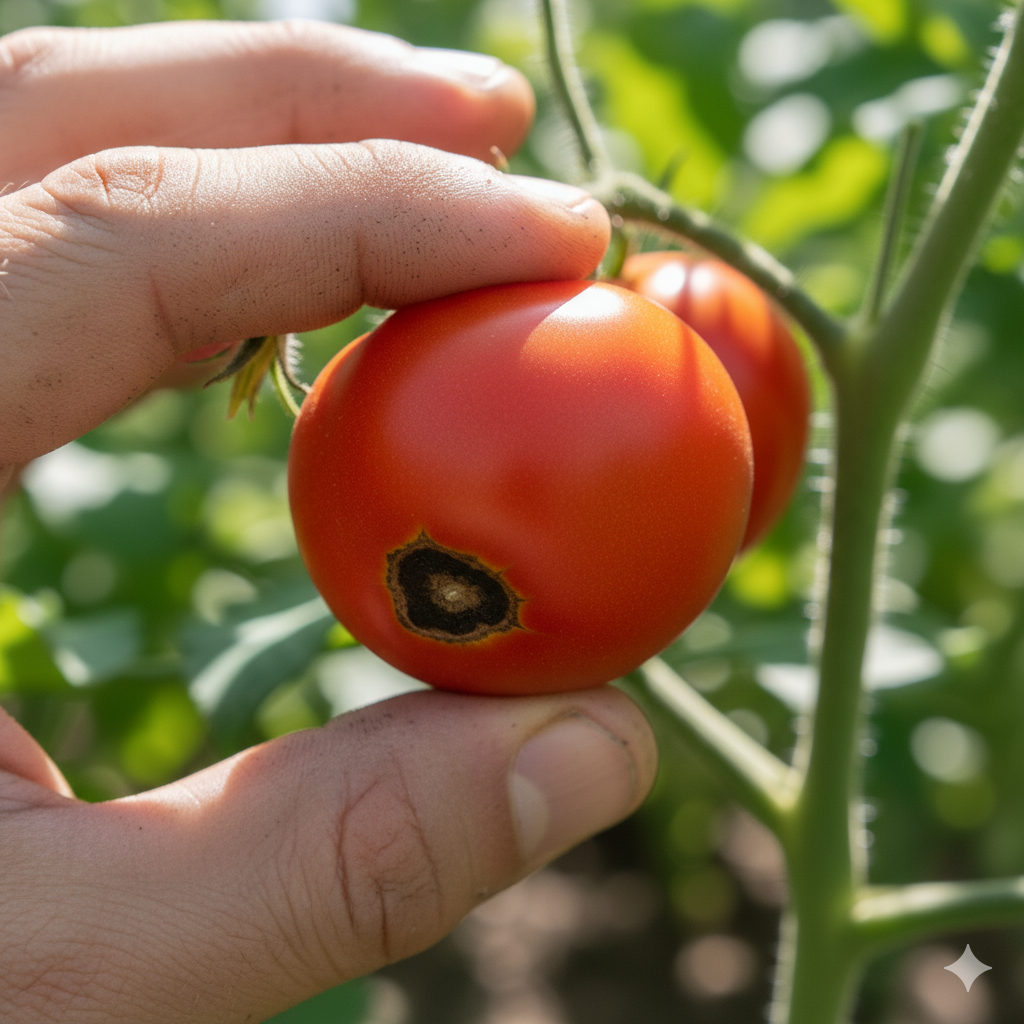
Diagnosing this issue is actually quite straightforward once you know what to look for. The name "blossom end rot" gives you the biggest clue. The damage almost always appears on the blossom end of the fruit. This is the bottom side where the flower fell off, directly opposite the green stem.
In the early stages, you might notice a small, watery spot that looks like a bruise. It might be pale green or yellowish at first. As the tomato grows, this spot expands and changes rapidly. It dries out, shrinks, and turns dark brown or black. The affected tissue becomes tough and leathery, often causing the bottom of the tomato to flatten out or look sunken.
Unlike many fungal diseases, blossom end rot usually does not have a fuzzy mold on it unless the fruit has been rotting for a long time and secondary bacteria have moved in. It is generally a dry rot.
It is crucial to distinguish this from other common tomato killers. Early Blight usually starts with yellowing leaves that have bullseye rings on them. Late Blight creates greasy looking, mushy spots on the leaves and fruit that can appear anywhere, not just the bottom.
If you are struggling to tell the difference, this is where Plantlyze becomes a garden saver. By uploading a picture to the Plantlyze app, you can avoid treating your plant for a fungus when it actually needs calcium, or vice versa. Getting the diagnosis right is the first step to saving your crop.
The Science Behind the Rot (Simplified)
To fix the problem, we need to understand what is happening inside the plant. Do not worry, we will keep the science lesson simple.
Blossom end rot is caused by a lack of calcium in the developing fruit.
Think of calcium as the glue that holds the cell walls of your tomato together. As the fruit grows, its cells divide and expand rapidly. They need a steady supply of calcium to build strong walls for these new cells. If the calcium supply runs out even for a few hours during a growth spurt, the cell walls collapse. This tissue death is the black spot you see.
Here is the tricky part. Your soil might be full of calcium. You might have crushed eggshells or added lime, yet your tomatoes still get the rot. Why?
It comes down to how plants drink. Calcium is an immotile nutrient. This means it does not move around the plant easily. It can only enter the plant dissolved in water. It rides the "water elevator" from the roots up to the leaves and fruit.
However, the leaves are much stronger than the fruit. They have large surface areas and lose water through transpiration (sweating) all day long. This creates a strong suction that pulls water and calcium up to the foliage. The fruit, which does not sweat as much, has a very weak suction force.
When water is scarce, the leaves hog all the moisture and the calcium dissolved in it. The fruit gets bypassed. The developing tomatoes are left starving for calcium, their cell walls break down, and blossom end rot begins. In short, this is almost always a water problem disguised as a calcium problem.
The 5 Main Causes of Blossom End Rot
Understanding the triggers helps you stop them. While we know the mechanism is a calcium shortage, usually one of these five factors is the real culprit preventing that calcium from reaching the fruit.
1. Inconsistent Watering
This is the number one cause of blossom end rot worldwide. If you water your garden heavily on Monday and then forget about it until Friday when the soil is bone dry, you are inviting trouble. When the soil dries out, the calcium transport system shuts down completely. Then, when you flood the soil, the plant grows rapidly, but the calcium supply cannot catch up fast enough. This "feast or famine" cycle is devastating to tomato fruit.
2. Root Damage
Your tomato plants drink through tiny, microscopic feeder roots. If you cultivate or hoe the weeds too aggressively around the base of your plants, you can slice through these delicate roots. Without them, the plant cannot take up water or calcium, even if the soil is wet. Pests like nematodes or waterlogged soil that causes root rot can also destroy the root system's ability to function.
3. High Nitrogen Fertilizer
We all want big, lush plants, but too much nitrogen can backfire. If you use a fertilizer that is super high in nitrogen (the first number on the fertilizer bag), your plant will explode with leafy green growth. These new leaves are incredibly thirsty and greedy. They will steal every bit of calcium available, leaving nothing for the tomatoes. This is why a balanced fertilizer is better for fruiting plants.
4. Soil pH Imbalance
Chemistry matters in the garden. Tomatoes prefer a slightly acidic soil, ideally with a pH between 6.2 and 6.8. If your soil is too acidic (low pH) or too alkaline (high pH), nutrients get chemically "locked up." The calcium might be physically present in the dirt, but the plant roots cannot chemically access it. It is like having a pantry full of food but losing the key to the door.
5. Cold Soil
Planting your tomatoes too early in the spring is a common mistake. If the soil is still cold, the root metabolism slows down. The roots simply cannot work efficiently in cold temperatures. They stop absorbing nutrients, and the young fruits suffer. This is why blossom end rot is often most severe on the very first tomatoes of the season and then disappears as the ground warms up.
Immediate Fixes: Can I Save My Tomatoes?
You have found the black spots. You know the causes. Now, what do you do to save the rest of your harvest?
First, pick the affected fruit.
It hurts to pull them off, but you must do it. A tomato with blossom end rot will not heal. The black spot will not turn red again. By leaving it on the vine, you are forcing the plant to pump energy and sugars into a ruined fruit. Remove it and throw it in the compost (unless it is rotten). This tells the plant to direct its resources to the new, healthy flowers and smaller fruits.
Second, stabilize your watering.
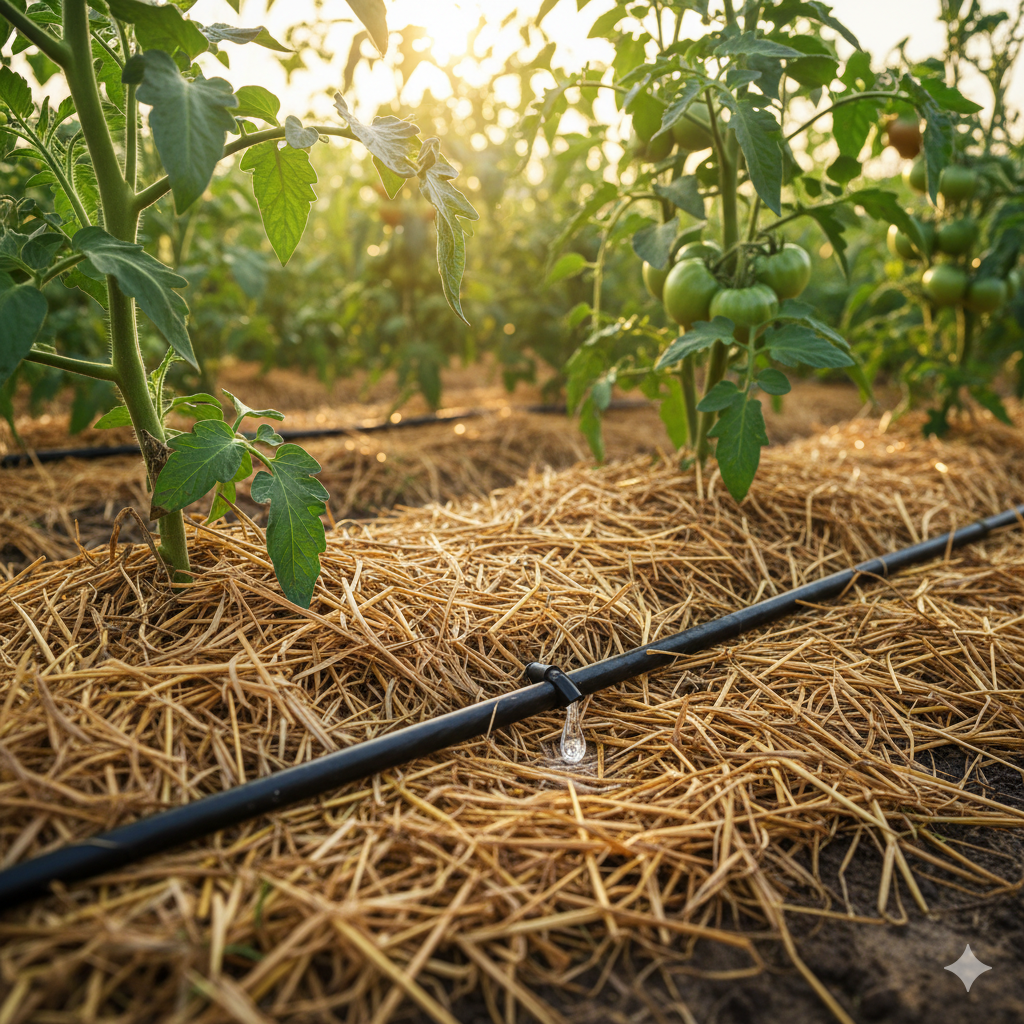
This is the most critical step. You need to keep the soil moisture evenly consistent. It should feel like a wrung out sponge, never soggy and never dusty dry. If you can, install a drip irrigation system or a soaker hose. This provides a slow, steady supply of water right to the roots. If you water by hand, do it in the morning and water deeply. Shallow sprinkling encourages shallow roots that dry out quickly.
Third, consider a calcium spray.
You can buy liquid calcium products at the garden center, often labeled as "Rot Stop." You spray these directly on the leaves and developing fruit. Ideally, the plant absorbs the calcium right where it is needed. While some scientists argue about how effective this is long term, many gardeners find it acts as a good emergency band aid to save the current batch of tomatoes.
Fourth, stop fertilizing for a while.
If you have been feeding your plants heavily, stop. Let the plant use up the nitrogen already in the soil. You do not want to encourage any more rapid leaf growth until the calcium levels stabilize.
Long Term Prevention for Next Season
The battle against blossom end rot is best won before you even plant your seeds. Here is how to bulletproof your garden for next year.
Perform a Soil Test
Do not guess what your soil needs. In the fall or early spring, send a soil sample to your local extension office or use a home test kit. This will tell you your exact pH and calcium levels. If your pH is too low, you can add garden lime. If your pH is fine but calcium is low, you can add gypsum. Gypsum adds calcium without changing the pH.
Apply Mulch Heavily
This is the secret weapon of master gardeners. Apply a thick layer (three to four inches) of straw, shredded leaves, or untreated wood chips around the base of your tomato plants. Mulch acts as an insulator. It keeps the soil cool and, more importantly, prevents evaporation. This keeps the soil moisture levels remarkably steady, preventing the drought stress that triggers the rot.
Choosing the Right Varieties
Some tomatoes are just more sensitive than others. Paste tomatoes like Roma and San Marzano are notorious for getting blossom end rot because of their elongated shape. Slicing tomatoes are moderately susceptible. Cherry tomatoes, however, rarely get it because they are small enough that the plant can easily fill them with calcium. If you struggle with this every year, try planting more cherry varieties or look for hybrids bred for resistance.
Frequently Asked Questions
Is it safe to eat tomatoes with blossom end rot?
Yes, absolutely. The black part is just dead tissue, not poison. If the rot is small, you can simply cut off the bottom half of the tomato and eat the top red part. It might taste slightly less sweet than a perfect tomato, but it is perfectly safe for salads or sauces. However, if the black spot looks moldy or mushy, toss the whole thing.
Will the plant recover?
Yes. Blossom end rot is a disorder of the fruit, not the whole plant. The green leaves and stems are usually perfectly healthy. Once you correct the water and calcium supply, the new flowers that open will produce healthy, perfect fruit. Do not pull up the plant!
Can I put eggshells in the hole to fix it?
Eggshells are great, but they work very slowly. It takes months or even years for an eggshell to decompose enough to release usable calcium for the roots. Adding eggshells at planting time is a good habit for future years, but it will not release calcium fast enough to save the tomatoes currently growing on your vine.
Conclusion
Finding blossom end rot in your garden is discouraging, but it is not the end of the world. It is simply your plant's way of telling you it is thirsty and needs a steady drink. By understanding the connection between water and calcium, you can stop the rot in its tracks.
Remember the golden rules: keep the soil moisture even, mulch your plants heavily, and do not go crazy with the nitrogen fertilizer. With a little adjustment, you will be back to harvesting beautiful, blemish free tomatoes in no time.
Gardening is a learning process. Every season brings new challenges, but also new rewards. If you ever feel overwhelmed or just want a smart assistant in your pocket to track your watering schedules and health checks, visit Plantlyze.com. The Plantlyze tool is designed to help gardeners like you grow smarter, not harder.
Happy gardening, and here is to a red and rot free harvest!
References
Connecticut Agricultural Experiment Station. Blossom End Rot of Tomato. Available at CT.gov.ct
Clemson Cooperative Extension. Tomato Diseases and Disorders. Available at Clemson.edu.earthbox
University of Georgia Extension. Blossom End Rot of Tomatoes. Available at UGA.edu.youtube
Royal Horticultural Society. Blossom End Rot Causes and Cures. Available at RHS.org.uk.shiftingroots