
Croton
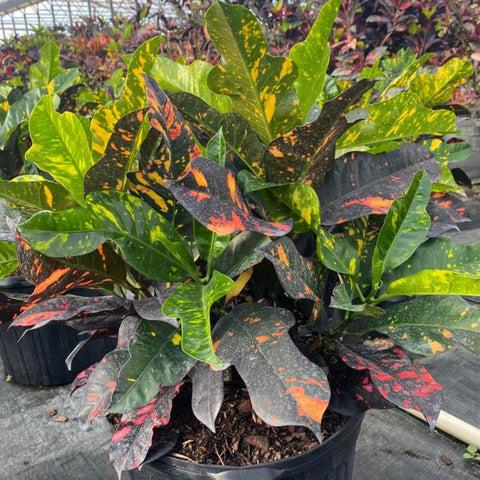
A showstopping tropical plant with brilliant multicolored leaves that transform any space into a vibrant garden retreat.
Video Tutorials
Watch these helpful videos to learn more about Croton care.
About Croton
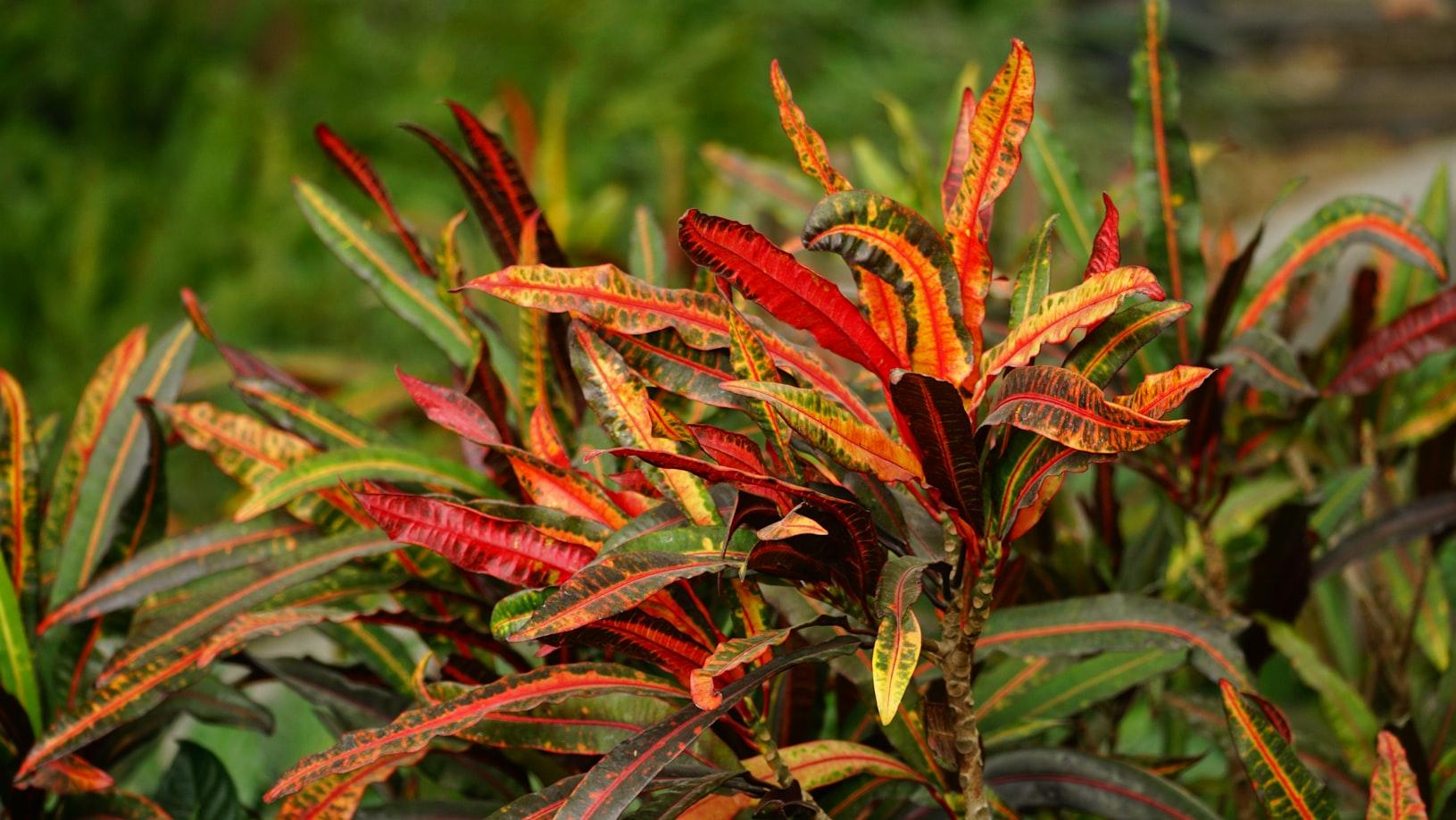
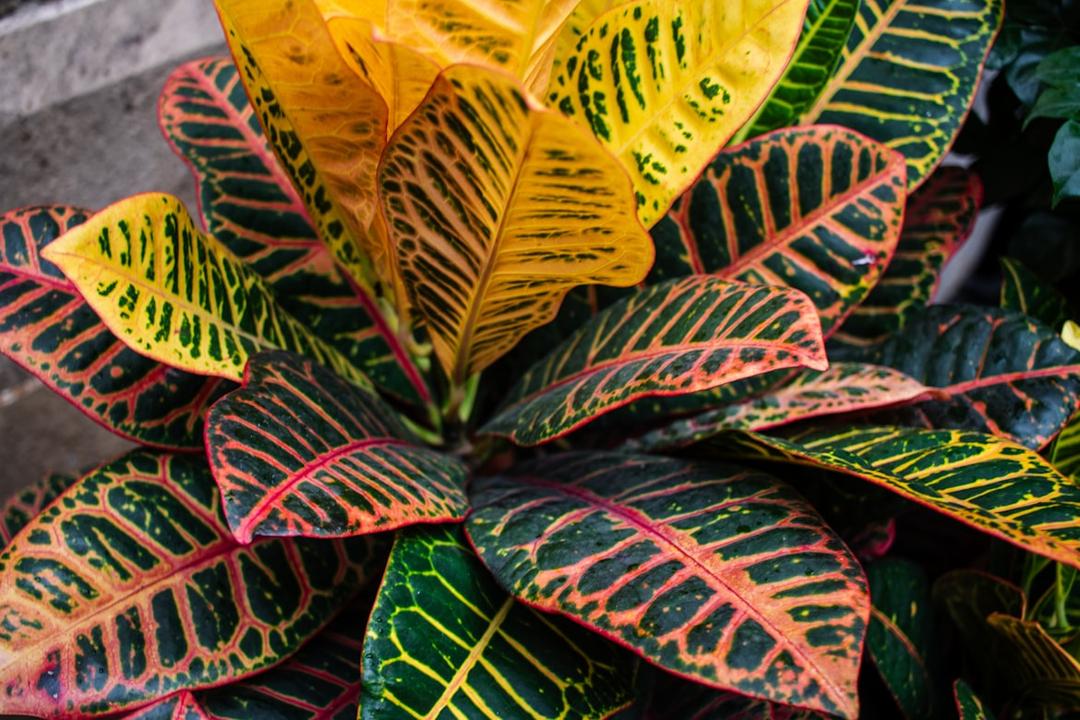
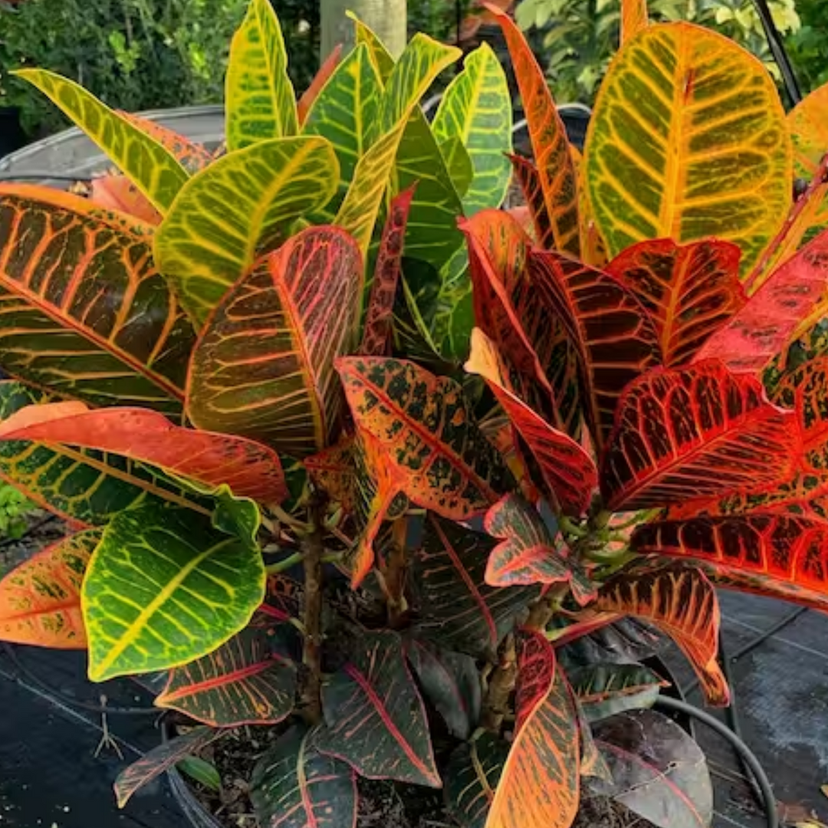
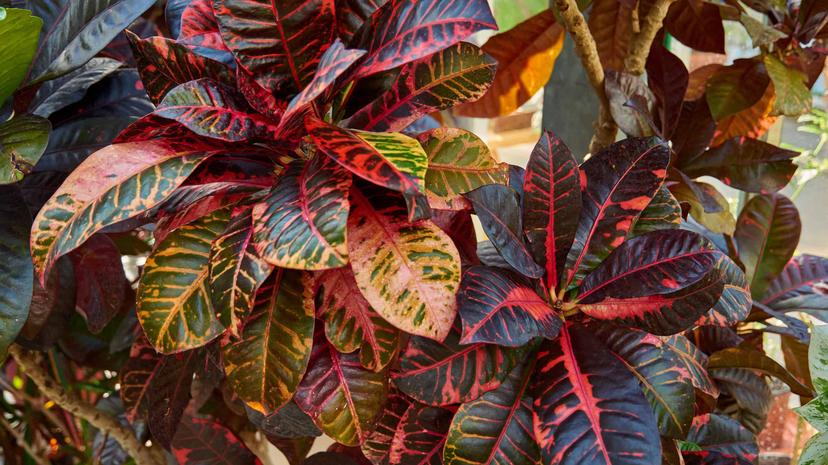
Croton plants are prized tropical treasures celebrated for their jaw-dropping foliage that rivals any artwork. Native to Indonesia, Malaysia, Australia, and the Pacific Islands, these vibrant shrubs display an incredible range of colors from deep greens to fiery reds, golden yellows, and rich purples. Whether grown as a statement houseplant or garden accent, crotons bring instant tropical flair and color that changes with light exposure. Their popularity stems from their bold personality and the visual impact they deliver to any indoor or outdoor space.
In their natural tropical habitat, crotons thrive in warm, humid rainforests where they receive dappled sunlight filtered through canopy layers. These conditions shaped their preference for bright but indirect light, high humidity, and consistent warmth. The plant's remarkable color transformation happens in response to light intensity, temperature, and maturity, creating a living palette that evolves throughout the year.
As houseplants, crotons reward attentive care with stunning displays of multicolored leaves that make them stand out from typical green foliage. While they demand specific conditions and won't tolerate neglect, their longevity is impressive. Well-maintained crotons can thrive indoors for many years, becoming focal points that guests immediately notice. Success comes from understanding their tropical nature and mimicking their native growing environment.
Watering Schedule
Crotons need consistent moisture to thrive, but they're sensitive to overwatering. The key is keeping soil evenly moist without letting it become soggy. Water when the top inch of soil feels dry to the touch.
Common Problems & Solutions
Here's how to identify and fix the most common Croton problems.
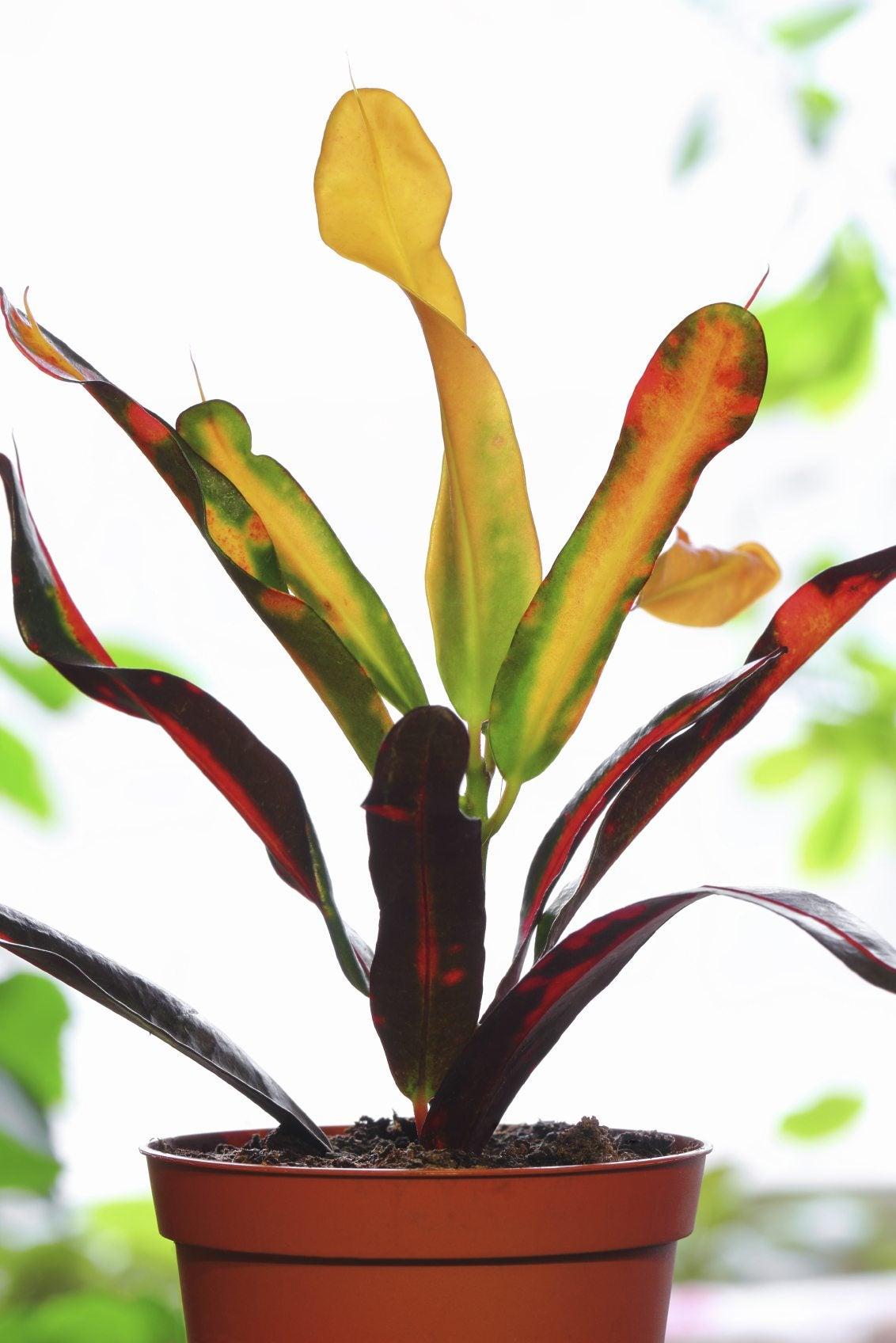
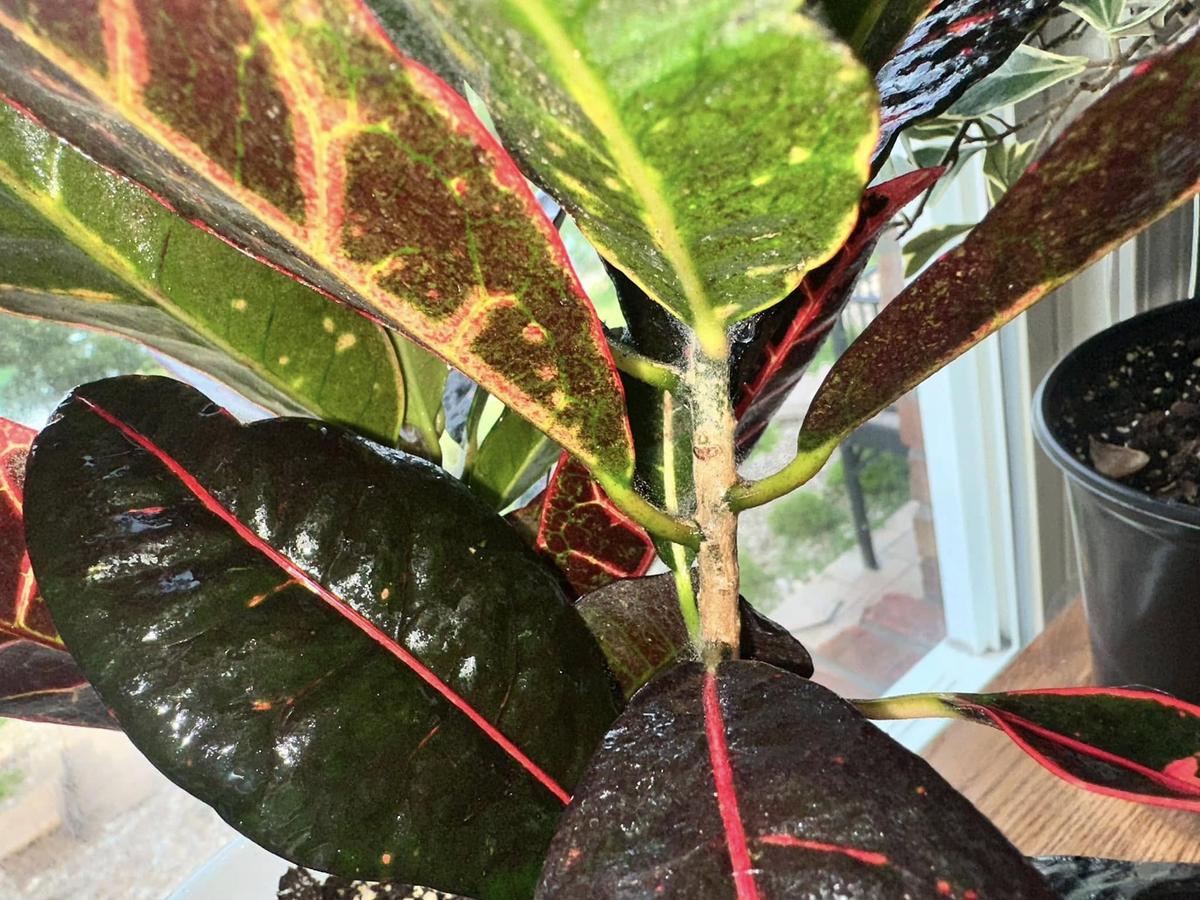
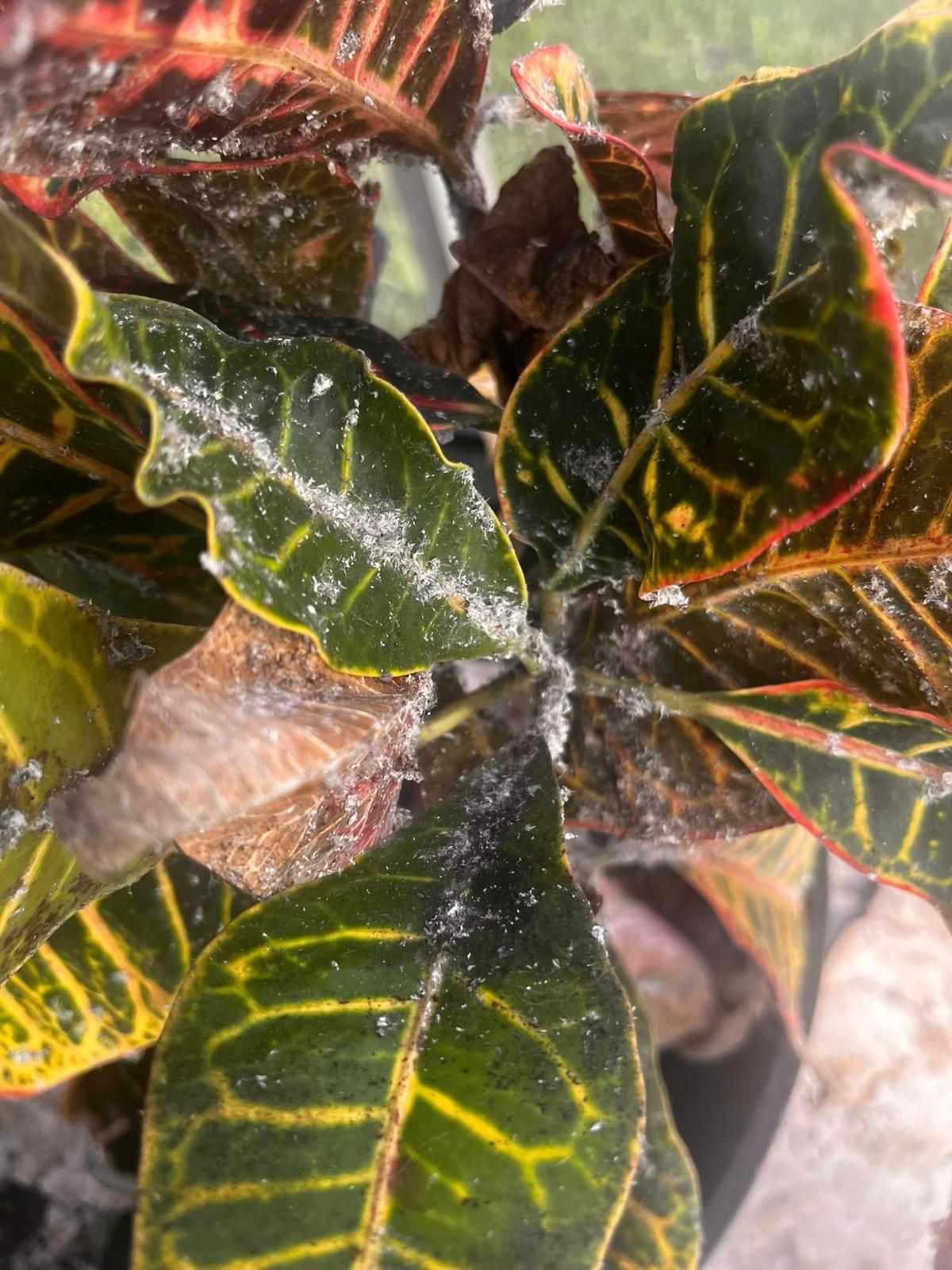
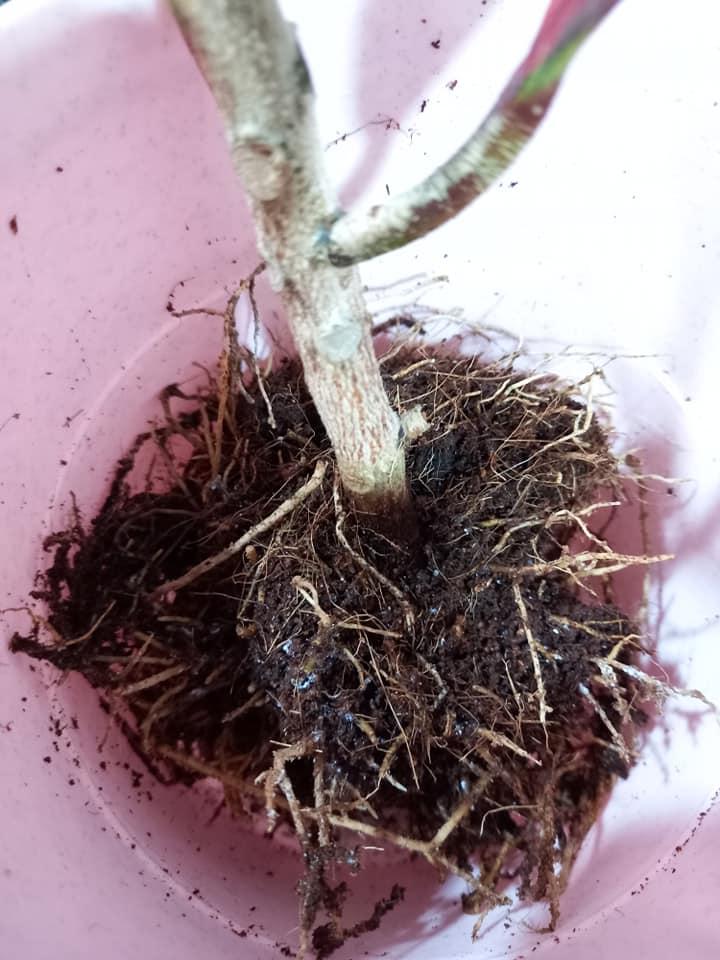
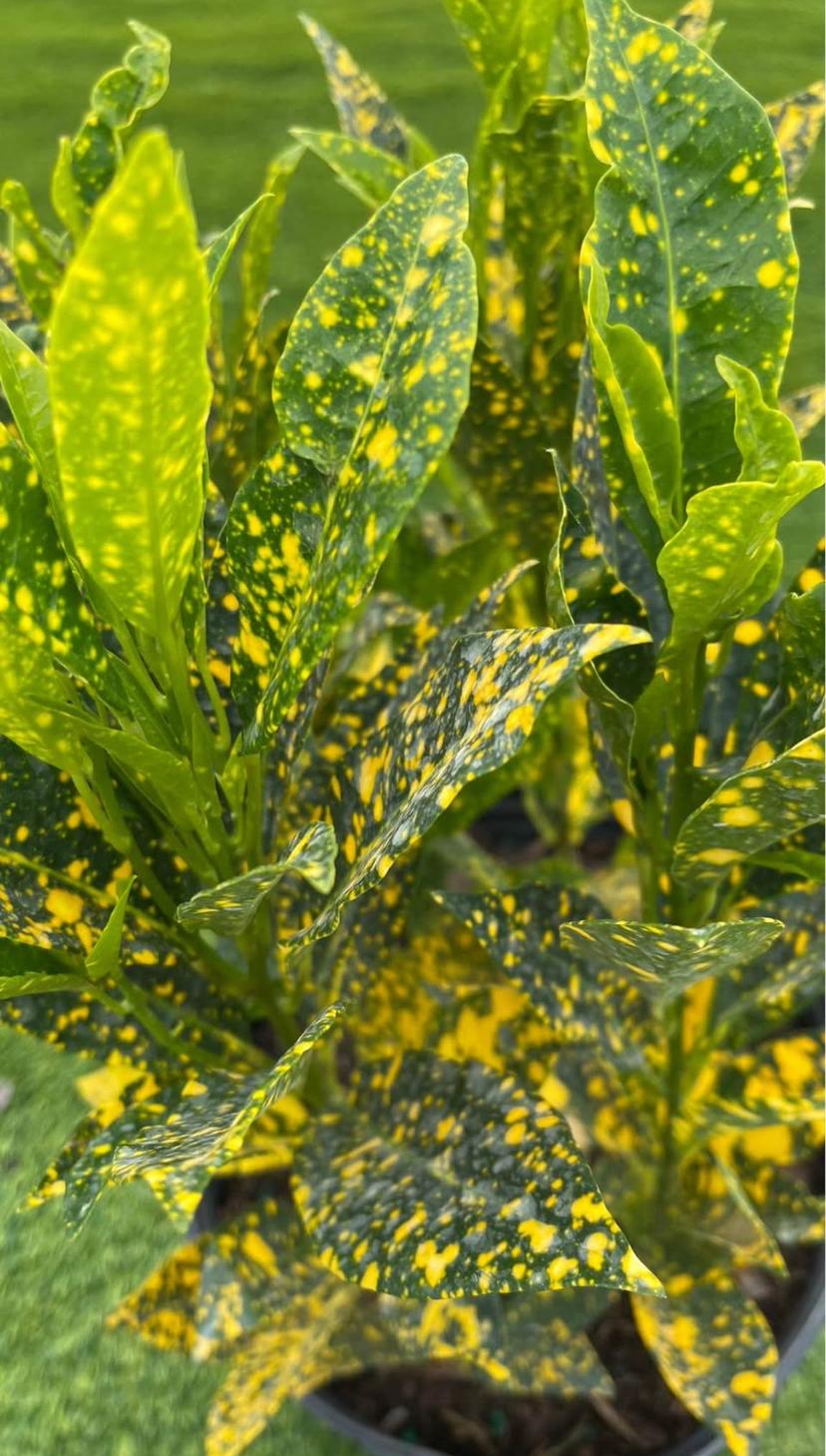
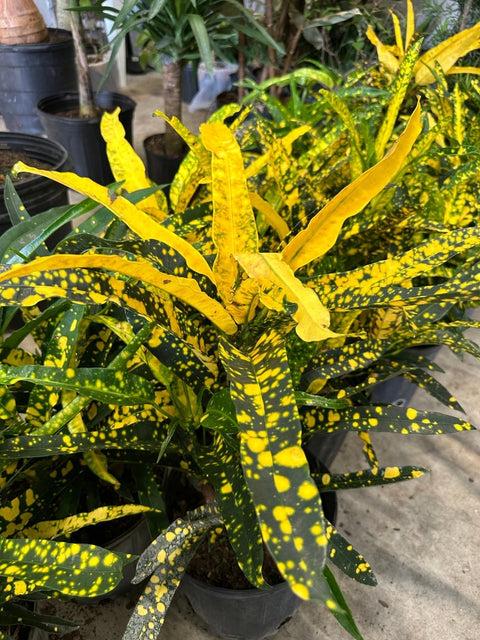
Popular Varieties
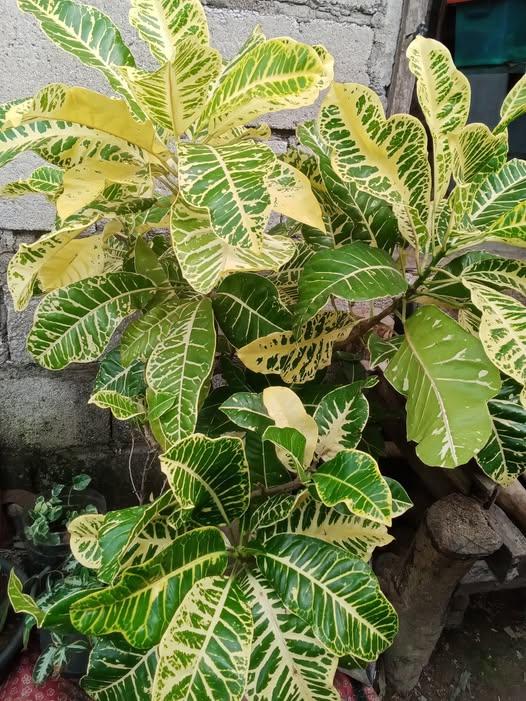
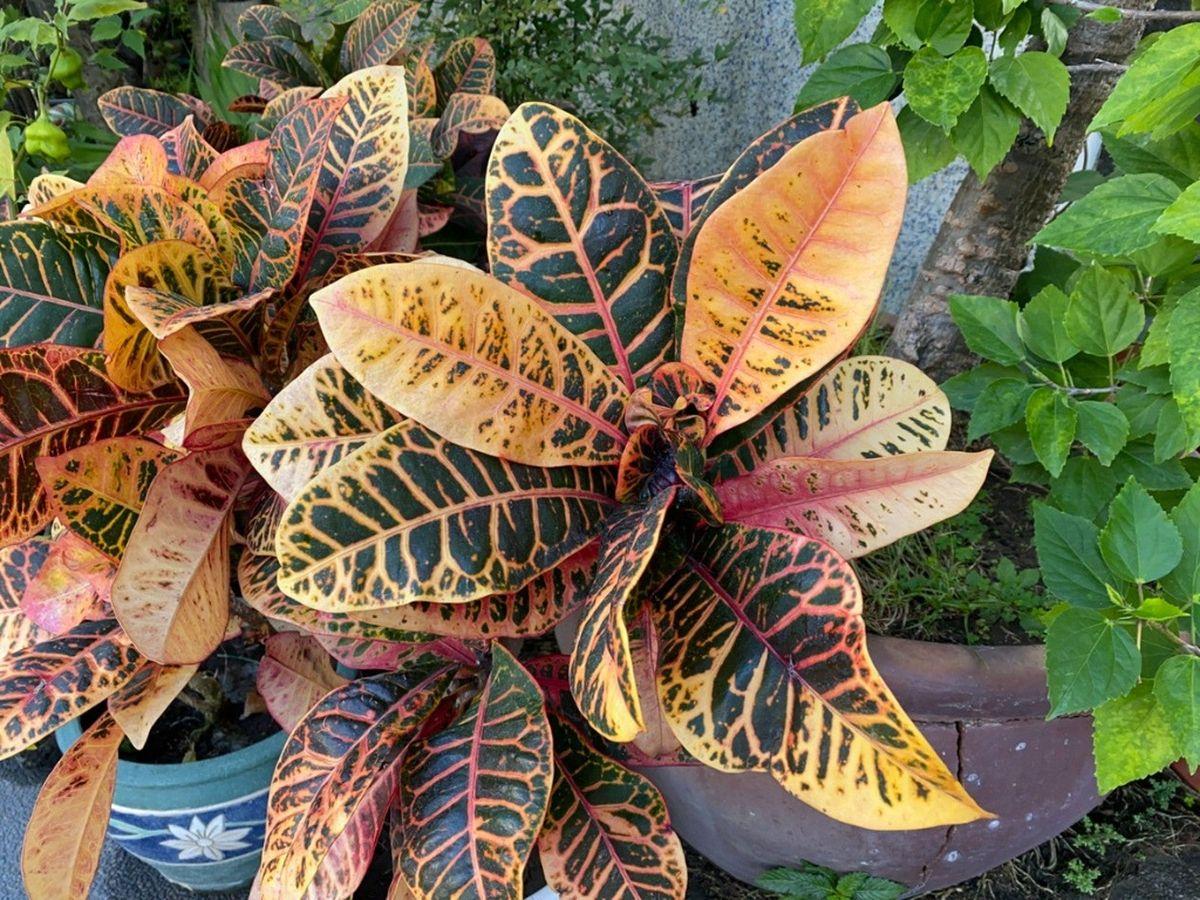
Explore different Croton varieties and find your perfect match.

Care Tips & Best Practices
Humidity
Mist leaves 2-3 times weekly with distilled water, place on pebble trays filled with water, or position near a humidifier to maintain 40-80% humidity. Higher humidity prevents spider mites and promotes vibrant leaf colors.
Feeding Schedule
Feed monthly with balanced liquid fertilizer (NPK ratio 8-2-10 or 3-1-2) diluted to half strength during spring and summer only. Never fertilize in fall or winter. Overfertilizing causes salt buildup that damages roots and causes leaf drop.
Cleaning Leaves
Wipe leaves gently with a damp, soft cloth every 1-2 weeks to remove dust that blocks sunlight and hides spider mites. Dust accumulation reduces photosynthesis and dims the beautiful leaf colors.
Support and Pruning
Prune dead or yellowed leaves anytime to redirect energy to healthy growth. Light pruning encourages bushier, fuller plants. Wear gloves when pruning to protect skin from irritating sap. Pruning is rarely needed for shaping unless plant becomes leggy.
Temperature Management
Keep crotons between 60-85°F, never below 50°F which causes rapid defoliation. Protect from cold drafts near windows in winter and avoid placing near AC vents. Sudden temperature swings stress the plant more than consistent cool conditions.
Rotation for Even Growth
Rotate the plant 90 degrees every week to ensure even light exposure and prevent one-sided growth toward the window. Rotation also distributes heat and humidity evenly, promoting balanced, compact development.
Care Checklist
10 Common Mistakes to Avoid
Overwatering
Why it's bad: Excess water waterlogging roots causes root rot, fungal diseases, and rapid leaf drop that kills the plant.
Do this instead: Water only when top inch of soil feels dry. Use well-draining soil and pots with drainage holes. Check moisture daily before watering.
Placing in low light locations
Why it's bad: Insufficient light causes foliage to revert entirely to green, growth slows dramatically, and plant becomes weak.
Do this instead: Position within 3-5 feet of bright windows. Provide 6-8 hours daily of bright indirect light. Use grow lights if windows are unavailable.
Allowing temperature to drop below 50°F
Why it's bad: Cold stress triggers massive leaf drop and dieback. Crotons cannot survive freezing temperatures or extended cold exposure.
Do this instead: Maintain 60-85°F range. Protect from cold drafts, AC vents, and exterior windows in winter. Move indoors if outdoor temps drop.
Ignoring humidity levels
Why it's bad: Low humidity below 40% creates ideal conditions for spider mites and causes crispy leaf edges and drop.
Do this instead: Mist 2-3 times weekly, use a humidifier, or place on pebble trays. Aim for 40-60% humidity minimum indoors.
Moving the plant constantly
Why it's bad: Frequent relocation causes shock stress that leads to leaf drop and slow recovery even with perfect care.
Do this instead: Choose one bright location and leave the plant there for months. Rotate weekly for even light but avoid relocating.
Repotting too frequently or using oversized pots
Why it's bad: Unnecessary repotting stresses roots and causes leaf drop. Oversized pots trap moisture that causes root rot.
Do this instead: Repot only yearly for young plants, every 2-3 years for mature plants. Use pots only 1-2 inches larger.
Fertilizing in fall or winter
Why it's bad: Winter feeding disrupts natural dormancy, causes salt buildup, and stresses the plant during low-light seasons.
Do this instead: Feed only March through September using diluted liquid fertilizer monthly. Never fertilize sleeping plants.
Using softened or hard tap water
Why it's bad: Mineral salts in treated water accumulate in soil, causing leaf yellowing, brown tips, and root damage.
Do this instead: Use filtered water, distilled water, or collect rainwater. Let tap water sit 24 hours before using if necessary.
Ignoring pest infestations
Why it's bad: Spider mites and mealybugs reproduce rapidly, spread to other plants, and seriously weaken or kill infected crotons.
Do this instead: Inspect weekly, treat immediately with alcohol or insecticidal soap. Isolate infected plants from other houseplants.
Letting dust accumulate on leaves
Why it's bad: Heavy dust coating blocks sunlight, reduces photosynthesis, dims colors, and hides pest infestations completely.
Do this instead: Wipe leaves gently with damp cloth every 1-2 weeks. Misting also helps remove dust and boosts humidity.
Frequently Asked Questions
Why are my croton leaves turning brown and crispy?
Brown crispy edges indicate low humidity or underwatering. Mist daily, increase humidity to 50-60%, and water when top inch of soil feels dry. Hard water minerals can also cause brown tips; switch to filtered or distilled water.
Can I grow a croton indoors without a window?
Yes, but you'll need bright artificial light. Position a grow light 6-12 inches above the plant for 12-14 hours daily. Growth will be slower than with natural light, and colors may be less vibrant without sun exposure.
How often should I repot my croton?
Young plants need repotting yearly as they grow quickly. Mature plants need repotting every 2-3 years or when roots emerge from drainage holes. Use pots only 1-2 inches larger than the current root ball.
Why is my croton losing all its leaves?
Leaf drop happens from temperature stress below 60°F, sudden location changes, overwatering, or drafts. Check if the stem is still green underneath by gently scratching it. If green tissue remains, the plant may recover with proper care and patience.
Is croton safe to keep if I have cats or dogs?
No, croton is toxic to all pets. The sap causes mouth sores, digestive upset, and skin irritation if ingested or contacted. Keep plants out of reach on high shelves or separate rooms where pets cannot access them.
How can I make my croton more colorful?
Increase light exposure significantly. The more bright light the plant receives (6-8+ hours daily), the more vibrant and varied the leaf colors become. Move closer to south or east-facing windows or supplement with grow lights.
What's the best way to propagate croton cuttings?
Take 6-8 inch softwood cuttings in spring or summer. Remove lower leaves, dip in rooting hormone, and place in water or moist perlite. Water propagation shows root development in 4-5 weeks before potting into soil.
Can I move my croton outside for the summer?
Yes, but acclimate gradually over 1-2 weeks before moving outdoors. Place in bright, dappled shade to prevent leaf scorch. Bring back indoors before temperatures drop below 60°F at night in fall.
Why won't my croton produce new leaves?
Stunted growth indicates insufficient light, temperatures below 65°F, low humidity, or overwatering stress. Move to brighter location, warm up the environment, mist regularly, and adjust watering to let soil dry slightly between sessions.
How do I treat spider mites on my croton?
Spray the entire plant with 50-50 water and isopropyl alcohol solution every 2-3 days for 2 weeks. Increase humidity to 60%+ by misting daily. Treat undersides of leaves thoroughly where mites hide. Repeat treatments to break lifecycle.
References & Sources
Information in this guide is based on these trusted sources.